Modern Alternatives to Traditional Weddings: 12 Customs, Origins and Swaps
Discover modern alternatives to traditional weddings: where 12 customs came from, from the 1840 white dress to the unity candle, plus swaps that fit you.
13 min readUpdated Sep 21, 2026Pix Wedding Team
The short version
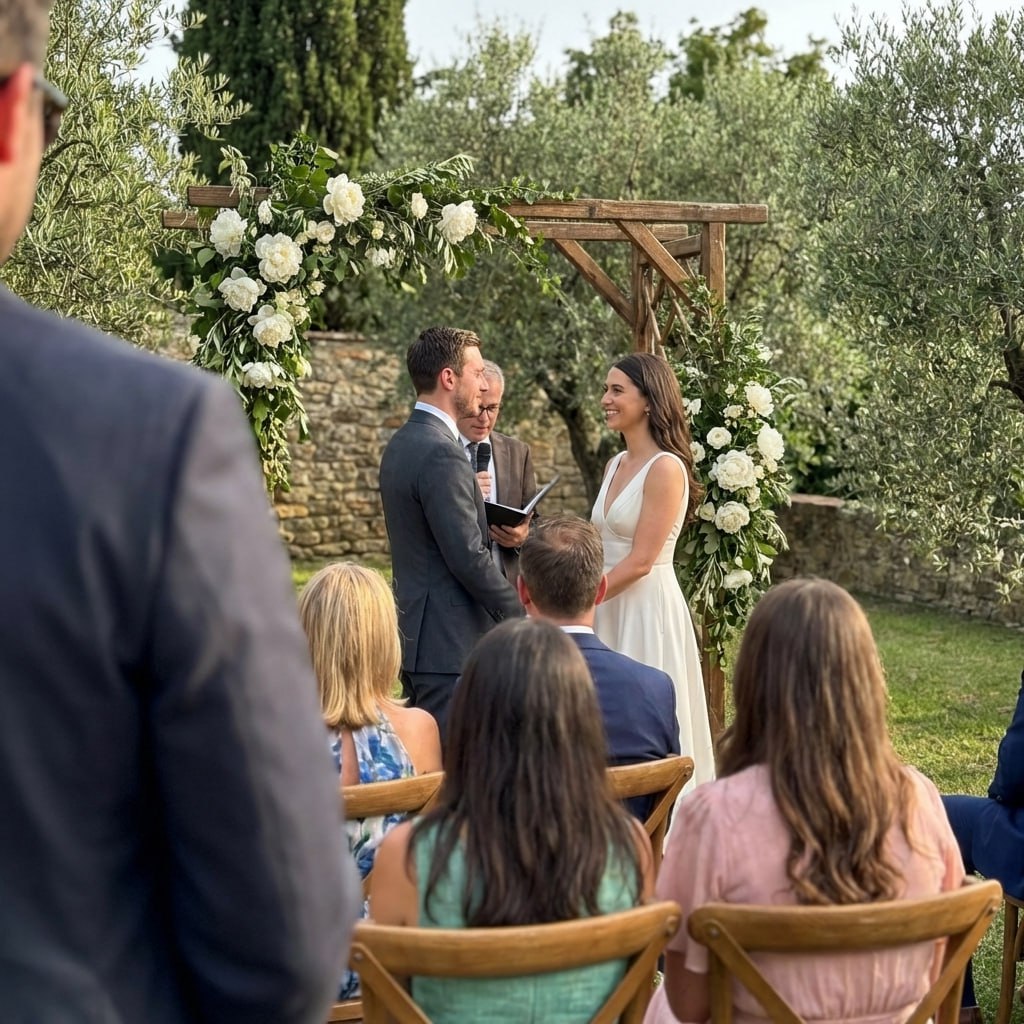
Modern alternatives to traditional weddings keep the meaning of an old custom and change the part that no longer fits. Walk in together instead of being given away, warm the rings instead of lighting a unity candle, hand the bouquet to the longest-married couple instead of tossing it, and let guests upload photos to one shared album instead of leaving cameras on the tables. Many of these traditions are younger than your grandparents think: the white dress took off in 1840 and the unity candle in the late 20th century.
1What are modern alternatives to traditional weddings?
A modern alternative is a new version of an old custom, built to carry the same meaning for the people you have now. The garter toss started as a scramble for the bride's clothing. The registry started as a way to tell relatives which china pattern to buy. The unity candle may owe its fame to a soap opera. Knowing where a tradition came from makes it much easier to decide whether it still means anything to you.
This guide takes 12 customs most American and British weddings still include, gives the verified origin of each and then lists alternatives that keep the useful part. It stays away from wedding formats (see our small wedding ideas for those) and from one-off originals (covered in unique wedding ideas). If you want to know what couples are copying this year, read our 2026 wedding trends report.
Keep the tradition when
It still does a job for you
A parent or grandparent has been waiting years for it
It gives someone you love a clear role
You like the moment itself, not just the photo of it
It connects you to a family or faith you care about
Removing it would cost more goodwill than it saves
Swap it when
The original purpose is gone
Its original meaning makes one of you uncomfortable
It singles out guests who would rather stay seated
It only exists because every wedding you have been to had it
It costs money that would mean more somewhere else
Neither of you can say why it is in the program
2When did common wedding traditions start?
The dates below come from the history of each custom. Read them in order and a pattern shows up: much of what feels ancient was set in the Victorian era or later, and a fair amount of it was shaped by royalty, department stores and television.
Ancient RomeCouples share a wedding cake
Roman weddings appear to have involved the bride and groom eating a cake together, according to the history of the wedding cake.
1546The word honeymoon appears in English
It first described the sweet period right after a marriage, not a trip. The travel came three centuries later, per the history of the honeymoon.
1662The ring finger is written into the prayer book
The Book of Common Prayer tradition places the wedding ring on the fourth finger of the left hand, tied to the legend of a vein running to the heart. See the wedding ring history.
1840Queen Victoria marries in white lace
Before her, royal brides usually wore heavy brocade, and other brides wore blue, yellow, black, brown or gray. See the history of the white wedding.
1876The earliest full record of the rhyme
A Lancashire newspaper describes a bride wearing something old, something new, something borrowed and blue, according to the history of the rhyme.
1882The first fully edible tiered cake
Prince Leopold's wedding cake is described as the first that could be eaten top to bottom. Tier pillars followed about two decades later.
1924Marshall Field's opens a bridal registry
The Chicago store let couples record their chosen china, silver and crystal patterns, per the wedding registry history.
1981A soap opera lights a unity candle
A General Hospital episode may have helped popularize the unity candle, which spread in American Protestant weddings in the late 20th century. See the unity candle history.
Where bridal traditions came from, in 12 minutes
A history channel's walk through the origins of wedding cakes, bridesmaids, bouquet tosses and the white dress. Watch it with the timeline above if you want the stories behind the dates before you decide what to keep.
3Which ceremony traditions have modern alternatives?
The ceremony is where traditions feel heaviest, because they come with words, music and family expectations. It is also where a small change carries the most meaning. Here are five customs, where each one came from and what couples do instead.
1. The white dress
White was a status signal before it was a symbol of innocence. A white gown was hard to clean and impossible to wear again for daily work, so it showed that a family could afford waste. By the end of the 19th century it was the choice of wealthy brides in Britain and America, but middle-class brides only adopted it fully after World War II. In other words, the white dress has been the standard for about as long as your grandparents have been alive, not for centuries.
A color that means something to you: blue was a common bridal color before 1840, and many cultures marry in red or gold. Use our wedding dress style quiz to test silhouettes first, then pick the color.
A restyled family gown: a seamstress can shorten, re-line or remove the sleeves of a parent's dress so it fits your era and your body.
Two looks: a traditional outfit for the ceremony and a lighter one for dancing, which also solves the practical problem of long trains on a dance floor.
A suit or jumpsuit: tailored separates in ivory, champagne or any color, for brides who never pictured a gown.
A dress you will wear again: a well-cut cocktail dress or a formal gown in a color you can wear to other events, which fits the original thrift of pre-Victorian brides.
2. Being given away
In the Church of England marriage service, the minister asks, "Who giveth this woman to be married to this man?" and the father answers by handing his daughter over. The words come from a time when a daughter passed from her father's household to her husband's. Many couples still love the walk itself and the minute alone with a parent, and simply drop the handover language.
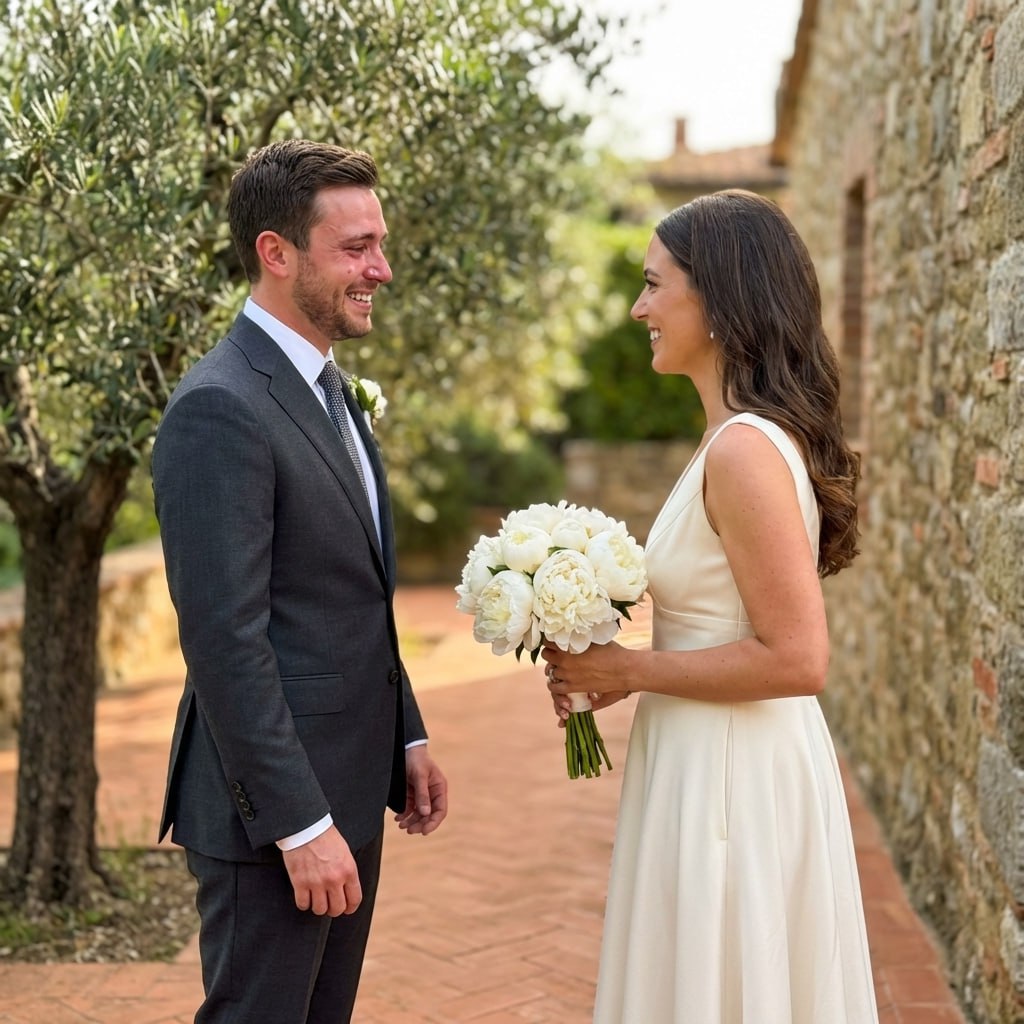
Walk in together: the couple enters side by side, which also means neither of you waits alone at the front.
Both parents escort: in many Jewish weddings both parents walk each partner down the aisle. Anyone can borrow the idea.
Meet halfway: walk the first half alone or with a parent, then your partner meets you and you finish the aisle together.
Ask the whole room instead: replace "who gives this woman" with "who will support this couple?" and have every guest answer "we will".
Walk alone: a clear, confident choice, especially for couples who marry later or have lost a parent. Choose a song that carries the moment.
3. The unity candle
The unity candle feels old but is one of the newest customs on this list. It became popular in American Protestant weddings in the second half of the 20th century, and a 1981 episode of General Hospital may have helped spread it. There is no record of it in scripture. That makes it one of the easiest traditions to replace, because nobody's great-grandmother lit one.
Ring warming
Before the vows, the rings travel along the rows in a small pouch or tied to a ribbon. Each guest holds them for a moment and makes a silent wish. Works with any guest count if you start it early, during the processional music or the opening words, and ask an usher to keep the rings moving.
Handfasting
The officiant ties the couple's joined hands with a cord or ribbon while they say their vows. In medieval England, joining hands and making vows could itself be a valid marriage until the Marriage Act of 1753. The ribbon ceremony most couples use today is a revival from the late 1960s onward.
Plant a tree or shrub
Each of you pours soil or water into one pot during the ceremony, then plant it at home. It grows with the marriage and suits outdoor venues that ban open flames.
Sign a framed declaration
Write a short promise to each other, sign it at the ceremony table and ask two important people to add their names. It becomes the first piece of art in your home.
Check with your officiant first
The unity candle is not part of the Catholic wedding liturgy, and some parishes ask couples to move it to the reception. The same applies to any added ritual in a religious ceremony. Ask your officiant which additions are welcome before you print the program, and ask your venue about open flames and loose ribbons outdoors.
How a ring warming works, with a sample script
Celebrant Maureen Cotton explains the meaning of a ring warming and reads a sample script. Useful for your officiant, and a good way to check whether the pace suits your guest count before you commit.
Before these rings are exchanged, they will pass through your hands.
As you hold them, take a moment to make a quiet wish or say a small blessing for this marriage.
When they return, they will carry the love of everyone in this room.
Please keep them moving, and keep them safe.
Start the rings on their way during the opening words so they are back before the vows.
Officiant script for a handfasting
Please join hands.
With this cord I bind the promises you make today.
It is not the cord that holds you together, but the choices you make every day from now on.
Say your vows to each other while your hands are tied.
Use a cord long enough to wrap three times. Ask someone to hand it to the officiant at the right moment.
Replacing "who gives this woman"
These two have chosen each other, and they come to you now as family and friends.
Will all of you do everything in your power to support them in this marriage?
If so, please answer: We will.
Print the answer in the program so guests know their line.
4. Rings on the left hand, and only for her
The fourth finger of the left hand is linked to the vena amoris, a supposed vein running straight to the heart. It is a legend, not anatomy. The custom that only the wife wears a ring is recent too: in the United States and Canada, rings became customary for both spouses during the 20th century, while in Germany both partners have worn one since at least the 1870s. Renaissance couples had their own twist, poesy rings, silver bands engraved with a short poem.
Engrave a line inside: the modern poesy ring. A date, a coordinate, an inside joke or a line from your vows, visible only to the wearer.
Rings for both of you, in different styles: matching is optional. Pick bands that suit each hand.
Remake heirloom gold: a jeweler can melt a grandparent's band into new rings, so the old metal carries on without the old fit.
Wear it where it is practical: surgeons, climbers and electricians often wear a silicone band at work or a ring on a chain.
5. Something old, something new, something borrowed, something blue
The rhyme comes from Lancashire in the north of England, and its earliest full recorded version appears in an 1876 newspaper wedding report. The line about a sixpence in the bride's shoe is a later Victorian addition. Each item had a purpose, and the modern version keeps the purpose but opens it to both partners.
What each item meant
The Victorian reading
Old: protection for a baby to come
New: optimism for the future
Borrowed: good fortune, ideally from a happily married couple
Blue: purity and fidelity
Sixpence in the left shoe: prosperity
A modern take
Same idea, any partner
Old: a watch, cufflinks or brooch from a grandparent
New: something you bought together for the day
Borrowed: a small item from the couple whose marriage you admire most, returned with a thank-you note
Blue: a thread in the lining, the ink of your vows, your shoes
Coin: a coin minted in the year you met
4What replaced disposable cameras on the tables?
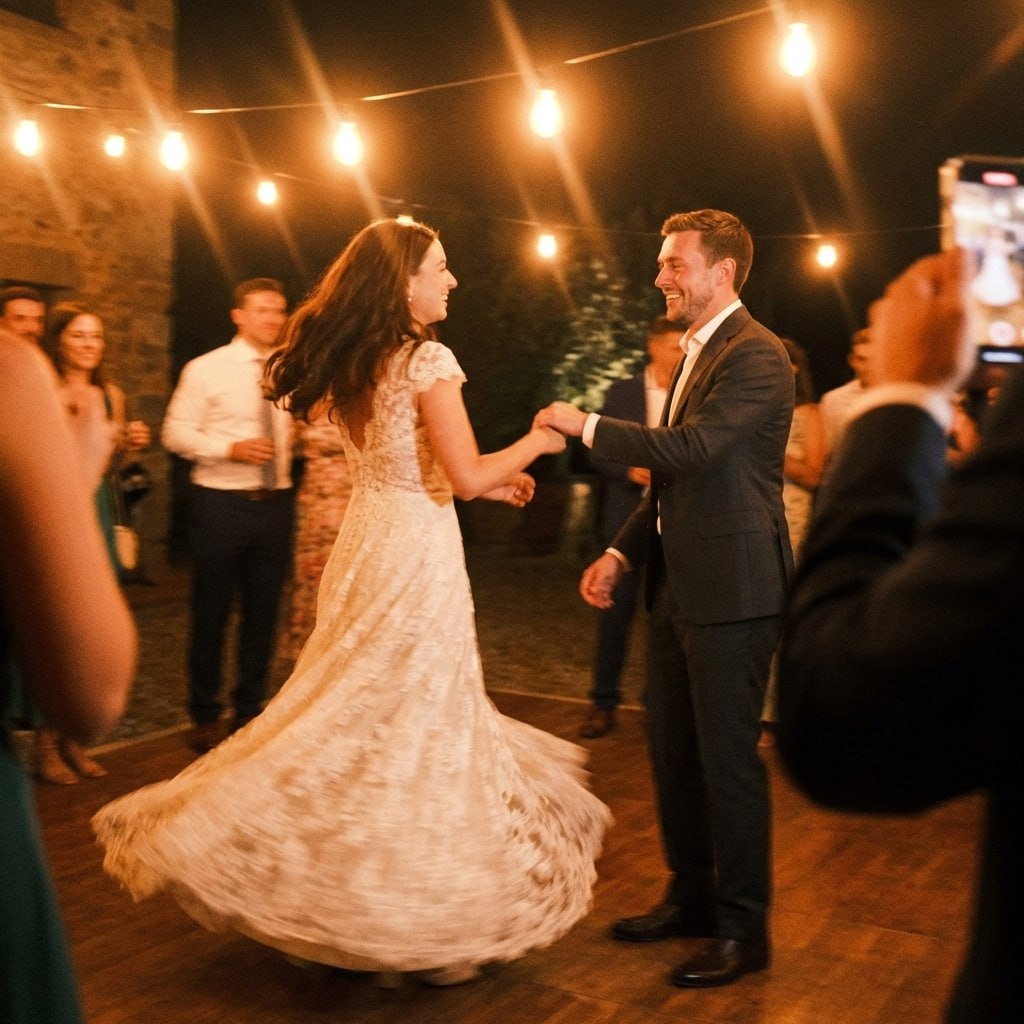
For years the tradition was simple: the photographer covered the official moments, and a disposable camera sat on each table for everything else. Guests took a few frames, often of the centerpiece, and the couple waited weeks for prints, many of them blurry. Meanwhile every guest had a better camera in their pocket, and those photos stayed on their phones.
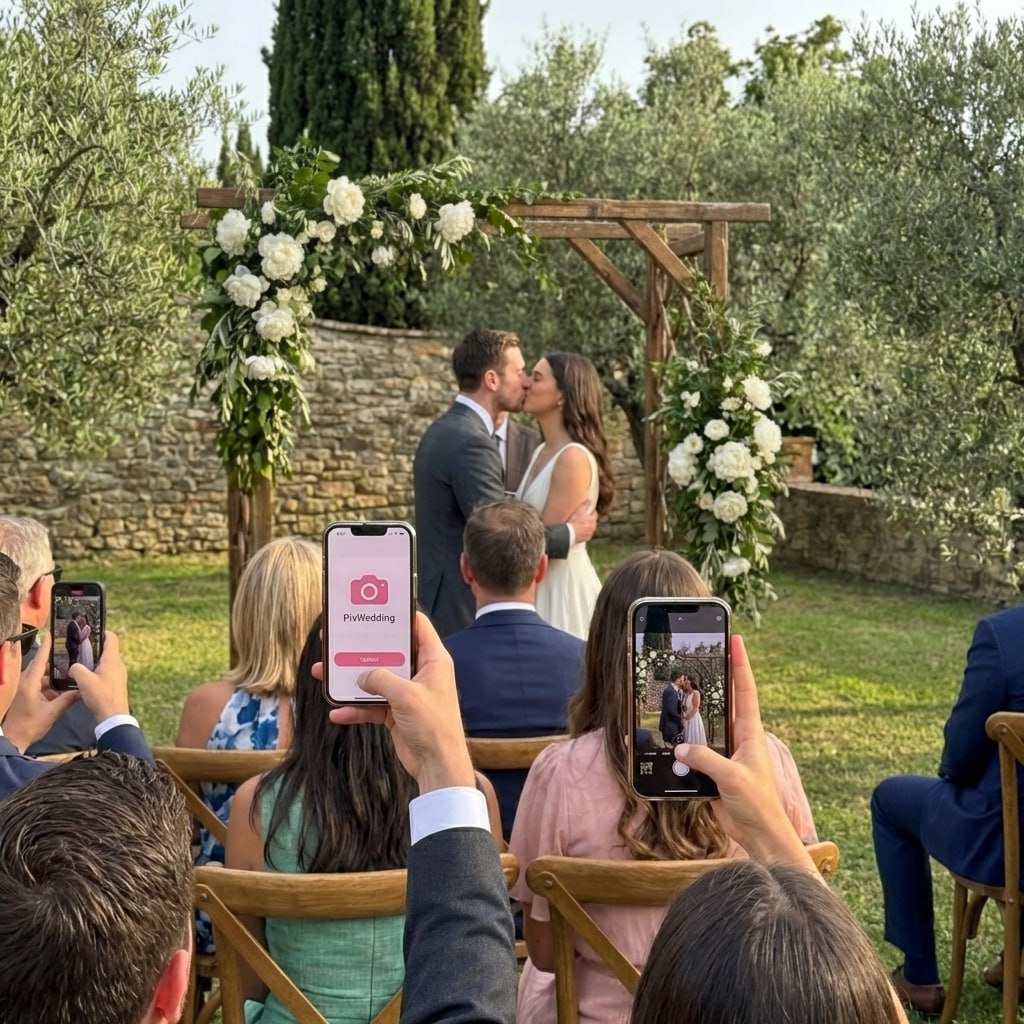
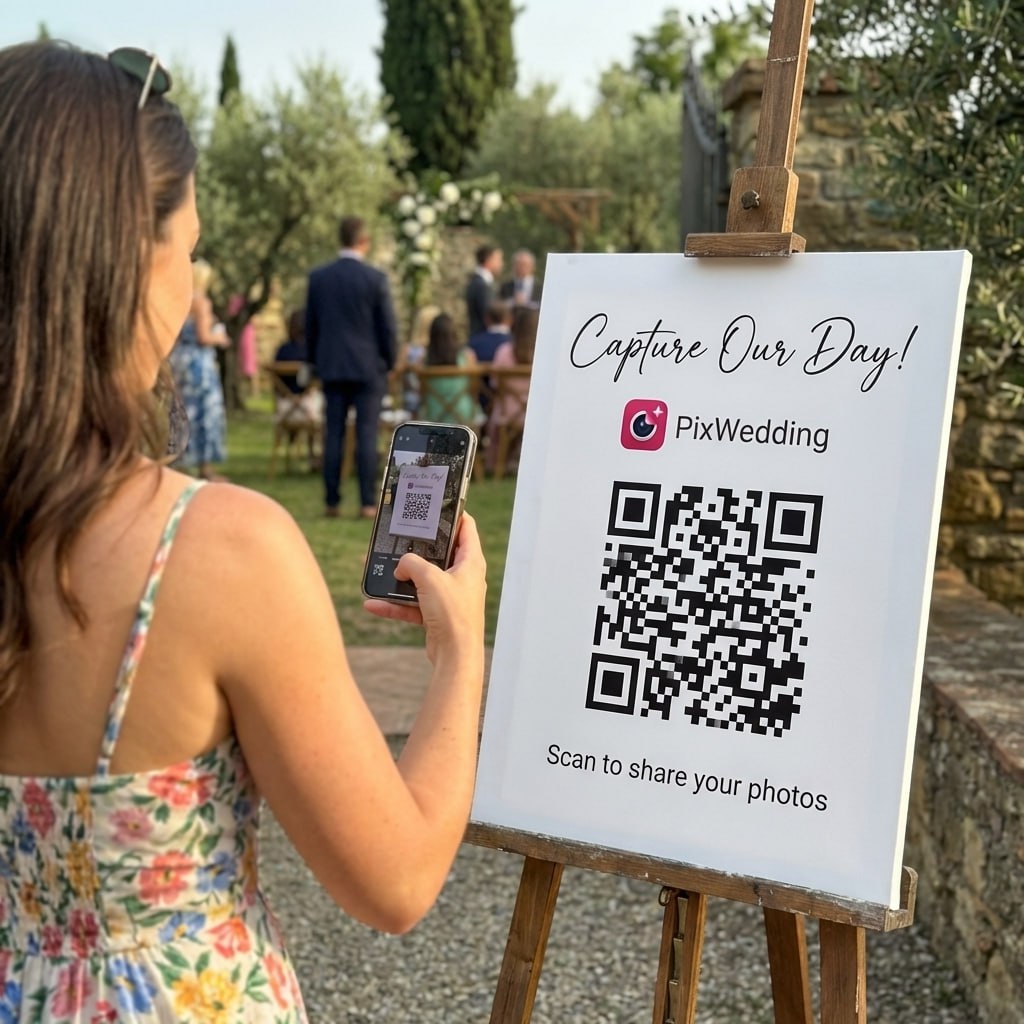
The modern version is one shared album. A QR code on each table opens an upload page in the phone browser, guests add photos and short videos without an app or an account, and the couple sees everything the same night. In our dataset of 203 weddings, the median album collected 149 photos from 8 guests, and the largest reached 1,365 photos. The full numbers are on our guest photo upload statistics page.
Disposable cameras
The old table habit
Best for: Couples who want the film look and accept a small, surprising set of prints.
Nostalgic, tactile, fun for older guests
No phone needed
Limited frames per table
Development costs and a wait of days or weeks
No video, and many shots miss the moment
Shared QR album
The modern swap
Best for: Couples who want every guest's photos and videos in one place, the same night.
Guests use the phone they already carry
Photos and videos arrive in full quality
One place to download everything after
Needs a sign or table card with the QR code
Works best when someone announces it early in the evening
One QR code on the tables and guests upload photos and videos from their phone browser, no app and no account. Free for 20 uploads, no card needed. One payment from $49 unlocks unlimited uploads and a full download.
5What can you do instead of the reception traditions?
Reception traditions are the easiest to change, because most guests only notice what happens, not what is missing. The four below are the ones couples question most.
6. The bouquet and garter toss
The garter toss began as something rougher. In the Middle Ages, groomsmen would rush at the new bride to take her garters as a prize, and guests treated pieces of her clothing as good luck. Throwing a garter and a bouquet to single guests is the tamer version that stuck. Many guests today would rather not be marched onto the dance floor to have their single status announced.
Hand the bouquet to the longest-married couple
Invite all married couples to the floor, then ask them to sit down in stages by years married until one couple is left. The bouquet goes to them, with a request for one piece of advice. Our guide to the order of dances shows where it fits in the evening.
Give the bouquet to someone you want to honor
A grandmother, a friend who helped plan everything, or a person who could not have a wedding of their own. Do it with a short, unannounced word from the microphone.
Keep the bouquet
Order a smaller toss bouquet if you still want the toss, and keep your real one. Our guide on how to save a wedding bouquet covers pressing and drying.
Drop the garter entirely
It is the easiest tradition to skip, and few guests ask where it went. If one of you wants a playful moment, replace it with a short dance-off between the two families.
7. The cake cutting and the saved top tier
The shared cake goes back to Rome, and medieval English couples stacked buns as high as they could and tried to kiss over the pile for luck. In the 16th and 17th centuries many weddings served a savory bride's pie, sometimes with oysters inside. White icing became known as royal icing after Queen Victoria used it, and the first cake that could be eaten top to bottom was made for Prince Leopold's wedding in 1882. Victorians also started saving the top tier for the first anniversary or the first christening.
A small cutting cake plus the dessert you love: keep the moment and the photo, then serve pie, gelato or a family dessert to guests. Plan portions with the wedding menu builder.
Cut a dessert that has family history: a grandmother's pie, a cheese wheel stack or a tray of your culture's celebration sweets.
Bake the recipe again instead of freezing it: skip the year-old frozen tier and ask the baker for the recipe, or order a fresh small version for your first anniversary.
A bride's pie for savory fans: a nod to the 17th century and a good fit for couples who would rather have a savory centerpiece than cake.
8. The toast lineup
A traditional British reception runs the speeches in a set order: the father of the bride, then the groom, then the best man. Nobody wrote a rule that the bride stays silent, but the classic lineup left no slot for her, and none for mothers or the maid of honor. Modern couples rebuild the list around who has something to say.
The bride speaks: our bride speech guide has structure and examples if you have never given a toast.
One joint speech from the couple: thank everyone together, alternate lines and keep it under five minutes.
Both families get a voice: one parent from each side, or a mother and a father instead of two fathers.
Spread the speeches across dinner: one after each course, so no one sits through 40 minutes of toasts with a cold main.
The oldest explanation is protective: the bride and her attendants dressed alike and veiled their faces to confuse jealous suitors and evil spirits. When Queen Victoria married in 1840, her bridesmaids matched her white gown, which set the Victorian standard. The modern habit of identical dresses paid for by the attendants is a much later development.
A palette instead of one dress: give attendants two or three colors and a length, and let them choose a dress they will wear again.
Mixed attendants: men of honor, bridesmen and a best woman are common now. Choose people, not genders.
No wedding party at all: ask a few people to do readings, carry the rings or run the photo album instead.
Pay for what you ask for: if you want a specific dress, cover it, or at least cover the alterations.
6What are the alternatives to a registry and a honeymoon?
10. The store registry
Marshall Field's in Chicago created the bridal registry in 1924 so couples could tell family and friends which china, silver and crystal patterns they had chosen. Target launched the first self-service electronic version in 1993. The idea was to help guests buy a household for a couple who did not have one yet. Many couples today already live together and own the toaster.
A cash or honeymoon fund: guests give toward something you will remember instead of something you will store.
Experience gifts: a cooking class, concert tickets or a night at a place that matters to you.
A charity registry: ask for donations to a cause you both care about, and tell guests which one and why.
A short, practical list anyway: some relatives feel uneasy giving cash. A few physical gifts give them an option. Our wedding registry checklist helps you keep it short.
11. The honeymoon
The word honeymoon dates to 1546, but the trip is younger. In early 19th century Britain, upper-class newlyweds took a bridal tour, sometimes with friends or family, to visit relatives who had not been able to attend the wedding. By the late 1800s it had become a leisure trip and one of the first examples of mass tourism. Today the trip is a question of timing and money as much as romance.
Minimoon now, big trip later
Split it
Best for: Couples short on vacation days or saving after the wedding.
Three or four quiet days right after the wedding
Time to plan and save for the longer trip
The big trip can slip for years if you do not book a date
The modern bridal tour
Back to the 1800s
Best for: Couples with grandparents or relatives who could not travel to the wedding.
Visit the people who missed the day and show them the photos
Often cheaper than a resort
Less rest than a beach
Needs a clear end date
Bring the guest album on a tablet so relatives see the day through everyone's eyes.
Delayed honeymoon
Pick the season
Best for: Couples who married in a season that does not suit the destination they want.
Better weather and prices at the destination
Something to look forward to after the wedding
Loses the right-after-the-wedding feeling
12. The thank-you card that arrives months later
Handwritten thank-you notes are worth keeping. What is worth changing is the generic printed photo inside. With a shared album you can pick a photo each guest took or appears in, and write a line about that moment. The free thank-you note generator gives you a starting draft for each guest when the pile feels endless.
7How do you decide whether to keep, tweak or replace a tradition?
Sit down together with the list of customs your families expect and sort each one into three piles. The goal is to spend your energy on the few traditions that mean something and make the rest easy.
Keep
As it is
Best for: Customs that carry family or faith meaning for you or someone you love.
Zero explaining to do
Makes an older relative happy
Make sure it is a choice, not a default
Examples: the walk with a parent, the rings, a family blessing.
Tweak
Same moment, new detail
Best for: Customs you like but with a part that feels dated.
Keeps the familiar shape guests expect
Easy to explain to family
Needs a short note to the officiant, DJ or planner
Examples: the walk without the handover words, a cake cutting with a small cake.
Replace
New custom
Best for: Customs whose original purpose is gone or makes you uncomfortable.
Gives you a moment that is yours
Often costs less than the original
Tell family early
Needs a script so it runs smoothly
Examples: ring warming for the unity candle, a bouquet handoff for the toss.
Five questions for each tradition
Answer them together, honestly, before you put anything in the program.
8How do you tell your family you are skipping a tradition?
Most family pushback comes from surprise, not from the change itself. Tell the people it matters to before they read it on the wedding website, explain what you are keeping and give them something to do in the new version. The wording below covers the three conversations couples dread most.
When you are not being given away
We want you to be part of the ceremony, and that has not changed.
We are walking in together, and we would love you to walk with us to the front.
Instead of the question about giving me away, the officiant will ask everyone to support us, and we would love you to answer first.
Can we talk about which song you would like?
Say it in person or on a call. A text feels like a decision you were not part of.
When you are dropping the bouquet toss
We are doing something new with my bouquet this year.
At the end of the anniversary dance, it goes to the couple who have been married the longest.
I would love you to be on the dance floor for it.
Replacing a tradition with a role for the person who liked it works almost every time.
FAQ entry for guests
Will there be a bouquet toss?
We are skipping the toss and the garter, so no one gets pulled onto the dance floor.
Instead, we will honor the longest-married couple in the room. Bring your years.
A light line on the website stops the question at every table.
When a parent is paying
If a parent is covering part of the budget, they will feel more ownership over traditions. Talk about the two or three customs they care about most before you decide anything else, and protect those if you can. Use the wedding budget allocator to show where the money goes, so the conversation is about priorities rather than control.
9What mistakes do couples make when replacing traditions?
Replacing everything at once
A ceremony with no familiar anchor can feel like a performance to older guests. Keep at least two or three customs recognizable.
No time in the schedule
A ring warming for 150 guests needs to start early, and a longest-married dance takes several songs. Put each new custom on your wedding timeline with real minutes.
Nobody explains it
Guests will not know what a handfasting is. One sentence from the officiant or a line in the program is enough.
Forgetting the person who loved the old version
The grandmother who wanted to see the bouquet toss is the right person to receive the bouquet. Give the tradition's fans a role.
No plan to capture the new moment
Your photographer knows where to stand for a cake cutting, not for a ring warming. Add every new custom to your photo shot list and tell guests where to upload their angles.
Writing your own vows instead of the standard ones?
Our free AI vow generator turns a few details about your story into a first draft you can edit. No sign-up needed.
Once you have sorted the list, put it on one card and share it with your officiant, planner and DJ. Everyone who runs the day should know which customs are in, which have changed and who is responsible for each one. For more on writing the words that replace the old script, read our guide on how to write your own vows.
Our traditions planFill it in together, share it with your officiant and DJ
1. Keeping as it is: ______
2. Tweaking (and how): ______
3. Replacing with: ______
4. Family members who get a new role: ______
5. Who tells whom, and by when: ______
6. Guest photos: one shared album, QR code on every table
Your QR
Two or three changes that mean something beat twelve that do not.
FAQ
Frequently Asked Questions
What are some modern alternatives to old wedding traditions?
Popular swaps include walking down the aisle together or with both parents instead of being given away, a ring warming or handfasting instead of a unity candle, handing the bouquet to the longest-married couple instead of tossing it, a cash or experience fund instead of a store registry, and a shared guest photo album instead of disposable cameras on the tables. The best alternative keeps the original meaning and changes the part that no longer fits.
How old are most wedding traditions?
Younger than most people think. The white dress took off after Queen Victoria wore white lace in 1840, the earliest full record of the something old, something new rhyme is from 1876, the first department store registry opened in 1924 and the unity candle spread in American weddings in the second half of the 20th century. Only a few customs, like sharing a cake, go back to ancient Rome.
Is it rude to skip wedding traditions?
No. Guests rarely notice a missing garter toss, and most will not miss a receiving line. What can hurt feelings is skipping a tradition that a parent or grandparent was looking forward to without telling them. Tell the people it matters to early, explain what you are doing instead and, where you can, give them a role in the new version.
What can replace a unity candle?
A ring warming, where the rings are passed among guests so each person can hold them and make a silent wish, works for any venue and any guest count. A handfasting, where the couple's hands are tied with a cord or ribbon, suits couples who want something visual. Planting a tree or signing a framed declaration are options if the venue does not allow open flames.
Do we have to do a first dance, a cake cutting or a bouquet toss?
None of them is required. Many couples keep the cake cutting as a short photo moment with a small cutting cake and serve something else for dessert. The bouquet toss can become a bouquet handoff to someone you want to honor, and the first dance can be shared with parents or opened to the whole room after the first minute.
How do we tell our parents we are not doing a tradition?
Tell them in person or on a call, before it appears on the website or the program. Explain the meaning you want to keep, describe what you are doing instead and offer them a role in it. Parents usually react to being surprised more than to the change itself.
What replaces disposable cameras at a modern wedding?
Many couples now use a shared online album with a QR code on the tables. Guests scan it with their phone camera and upload photos and videos from the browser, so the couple sees them the same night instead of waiting for film to be developed. Pix Wedding offers this free for 20 uploads, with one-time plans from $49.
 wedding