Disposable Camera Cost for a Wedding in 2026: Per Photo, Developing Included, vs a QR Album
What a disposable camera costs per photo in 2026, camera plus lab, why film prices rose, and how the math compares with a flat-fee QR album at your wedding.
8 min readUpdated Sep 22, 2026Pix Wedding Team
The short version
A disposable camera costs about $31 per camera in 2026 once you add drugstore developing to the camera price, which is roughly $1.15 for each of its 27 frames. Ten cameras run about $310, fifteen about $465. A QR code album is a flat fee: free for up to 20 guest uploads, or a one-time $49 to $89 with no cap on photos, so the price per photo falls the more guests share. Film wins on look and ritual, QR wins on cost per photo, speed and coverage.
1What Does One Disposable Camera Cost in 2026, From Box to Scans?
Most comparisons quote a camera price and stop there. The bill has two parts: the camera you buy before the wedding, and the lab fee you pay after it. We checked current list prices for both so the math below rests on numbers you can click, not on estimates.
The Darkroom (mail-in): from $14 per 35mm roll plus $6.95 round-trip shipping per order, negatives returned
Kubus Photo's 2026 guide lists CVS at $16.99 to $18.99 and Walmart at $14.96 to $16.96 (price guide)
Higher-resolution scans and extra prints are add-ons at most labs
Put the FunSaver list price next to the Walgreens processing price and one camera comes to $30.99 before tax. The mail-in route is similar: $15 plus $14 is $29 per camera, and the $6.95 shipping is spread across the whole order. For a deeper walk through labs and turnaround, see our guide on how to develop disposable cameras.
2Why Are Disposable Cameras So Expensive Now?
If you remember disposables as a cheap impulse buy at the pharmacy checkout, the current prices sting. Four things push them up, and none of them is in your control.
Silver got expensive
Colour film uses silver halide. Kodak Alaris raised prices from 1 February 2026 by 1% to 39% depending on the product and blamed "significant increases in the cost of silver and other components" (Analog Space report).
Two price rises in two years
The 2026 rise came on top of a January 2025 increase that covered films and single-use cameras, with consumer films such as Gold and UltraMax up around 8% (Kosmo Foto).
Niche volume
Film went from a mass product to a hobby and back to a trend. Factories no longer run at the volumes that once made a disposable a few dollars, so the unit cost stays high even as demand returns.
The lab is a second bill
The camera price never includes developing. Every roll still has to be chemically processed and scanned, which roughly doubles what one camera costs you.
3Cost per Photo, Worked Out for 10, 15 and 25 Cameras
Cost per frame is the number that makes the comparison fair. A camera gives you at most 27 frames, and you pay for all of them whether guests shoot every one or leave half the roll blank. A QR album charges once, however many photos come in. The figures below use the $30.99 drugstore route and are illustrative, before tax and before any prints.
Disposable cameras (drugstore route)
$15 camera + $15.99 processing = $30.99 each
10 cameras: $309.90 for up to 270 frames
15 cameras: $464.85 for up to 405 frames
25 cameras: $774.75 for up to 675 frames
Per frame: about $1.15, every size, because the cost scales with each camera
Blank or blurry frames: still paid for
QR photo album (Pix Wedding)
One flat price, no per-photo charge
Free tier: up to 20 guest uploads, no card
Starter: $49 once for unlimited photos and videos
At 149 photos: about 33 cents a photo (149 is the median in our dataset)
At 253 photos: about 19 cents a photo
Videos: included, which film cannot record at all
The 149 and 253 figures come from our own dataset of 203 real Pix Wedding weddings: 149 guest photos is the median, and the middle half of weddings landed between 70 and 253. That also sets a realistic expectation. Guests do not upload thousands of photos to a QR album, but a typical wedding collects more than a stack of ten cameras could ever hold, at a fraction of the price per photo.
Your first 20 guest uploads are free and need no card. After that, a single $49 payment opens the album to unlimited full-resolution photos and videos, with a ZIP download of everything.
4What Can a Phone Catch That a 10-Foot Flash Cannot?
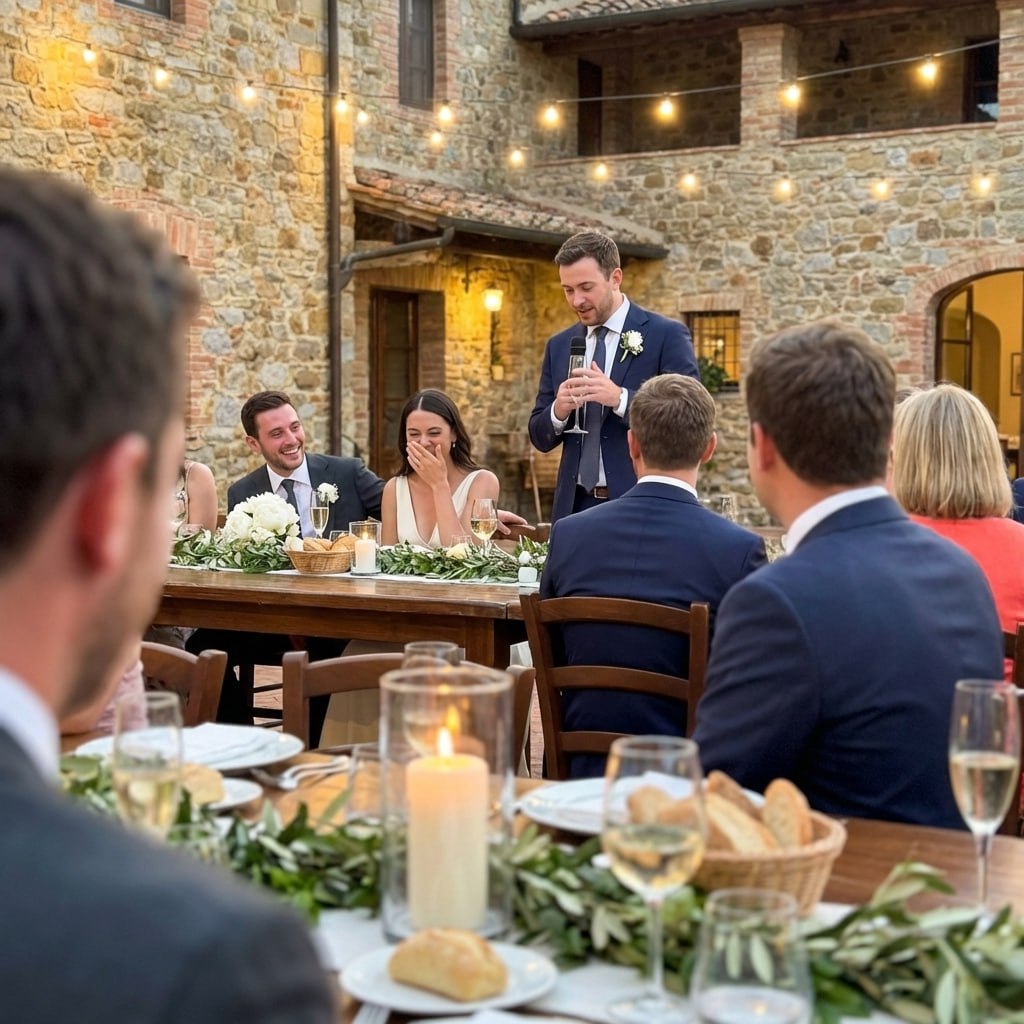
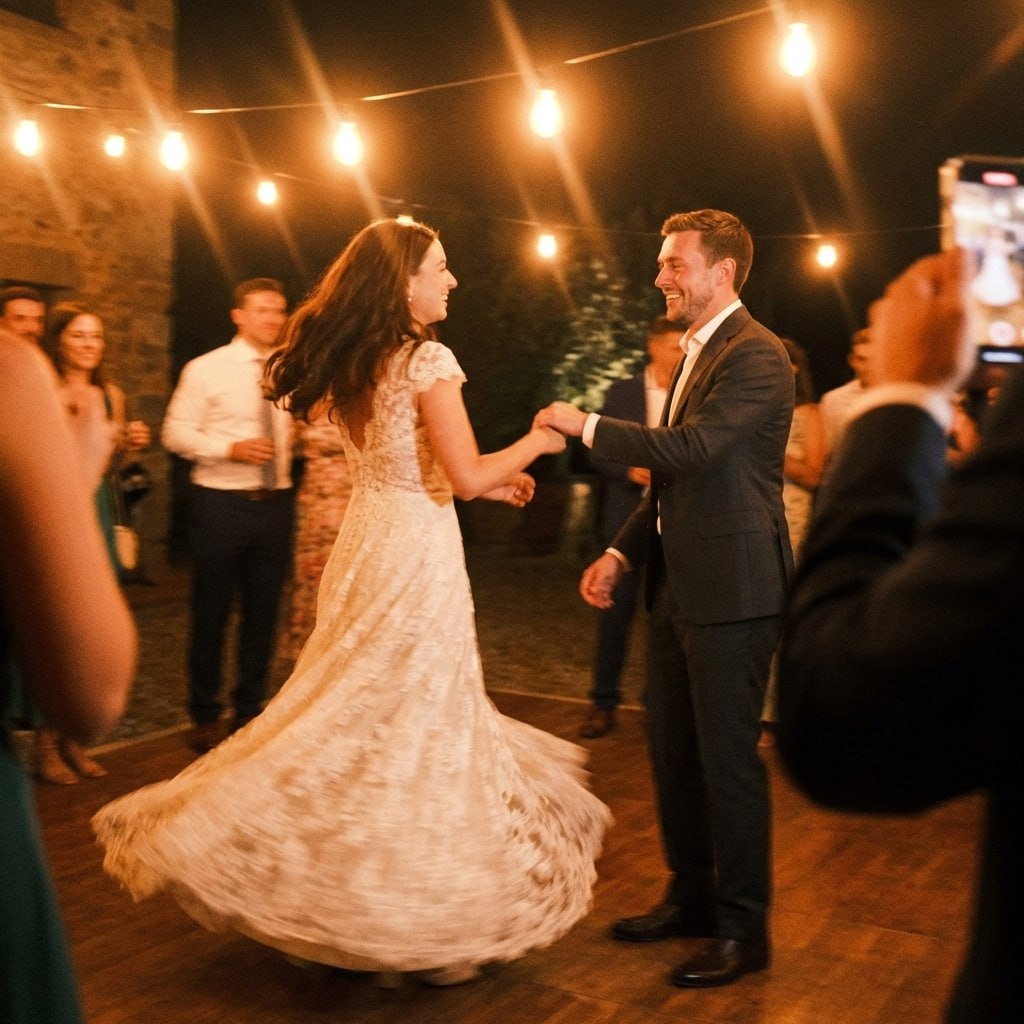
The price gap matters less than what each camera can physically do in a dark reception room. Fujifilm's own bulletin for the QuickSnap Flash 400 lists a plastic 32 mm f/10 focus-free lens, a 1/100 second shutter, and a flash that reaches only 3.3 to 10 feet (1 to 3 metres). Anything farther away than a table's width, after sunset, goes dark.
A current phone plays a different game. Apple's iPhone 16 specs list a 48MP main camera that saves 24MP photos by default, with optical stabilisation. A standard film scan from The Darkroom is 1024 x 1536 pixels, which the lab itself recommends for prints up to 5x7. That is fine for a keepsake print, thin for a large canvas.
Moments a disposable usually misses at night
Each of these happens beyond flash range or in movement, where a phone with autofocus and night processing has the edge.
Film still has a place. In daylight, outdoors and close up, a disposable gives grain, colour and flash-lit faces that no filter fakes convincingly. The practical takeaway is to use film where it shines and not ask it to cover the whole night.
5What Happens to the Film After the Last Dance?
This is the part couples rarely plan. The cameras do not develop themselves, and someone has to gather them from tables, bathrooms and coat pockets before the venue closes. Here is the typical path from reception to scans.
Step 1Collect every camera before guests leave
Name one person (not the couple) to sweep the tables and ask at the bar. A camera that walks out in a handbag is $15 you paid for and 27 frames you never see.
Step 2Drop off or mail the rolls
At a drugstore you hand them over the counter. With a mail-in lab you ship them; The Darkroom says mail reaches its Southern California lab in 2 to 5 days from most of the US.
Step 3Wait for processing
Walgreens quotes 3 to 5 business days for pickup. The Darkroom scans most 35mm colour orders within 2 to 4 days of receiving them.
Step 4Receive prints, scans and maybe negatives
Walgreens gives you prints and a photo CD and keeps the negatives. The Darkroom uploads scans to your account and returns the negatives by mail.
Step 5Sort the keepers and put them somewhere shared
Most couples then post a few favourites and email scans around. Uploading them into the same guest album as the phone photos keeps the whole day in one place.
Keep the negatives if you can
A negative is the original. If you ever want a bigger print or a better scan, you need it. Drugstore processing that discards negatives is cheaper today and final forever, so pick a lab that returns them for any roll you care about.
A film photographer hands disposables to her own wedding guests
Teri Bocko shoots weddings professionally, and for her own wedding she handed out disposable cameras instead of hiring a film setup. She walks through which cameras she used, where she placed them and the candid results she got back from the lab. It is an honest look at what the film side of this comparison delivers.
6And What Happens to QR Uploads After the Wedding?
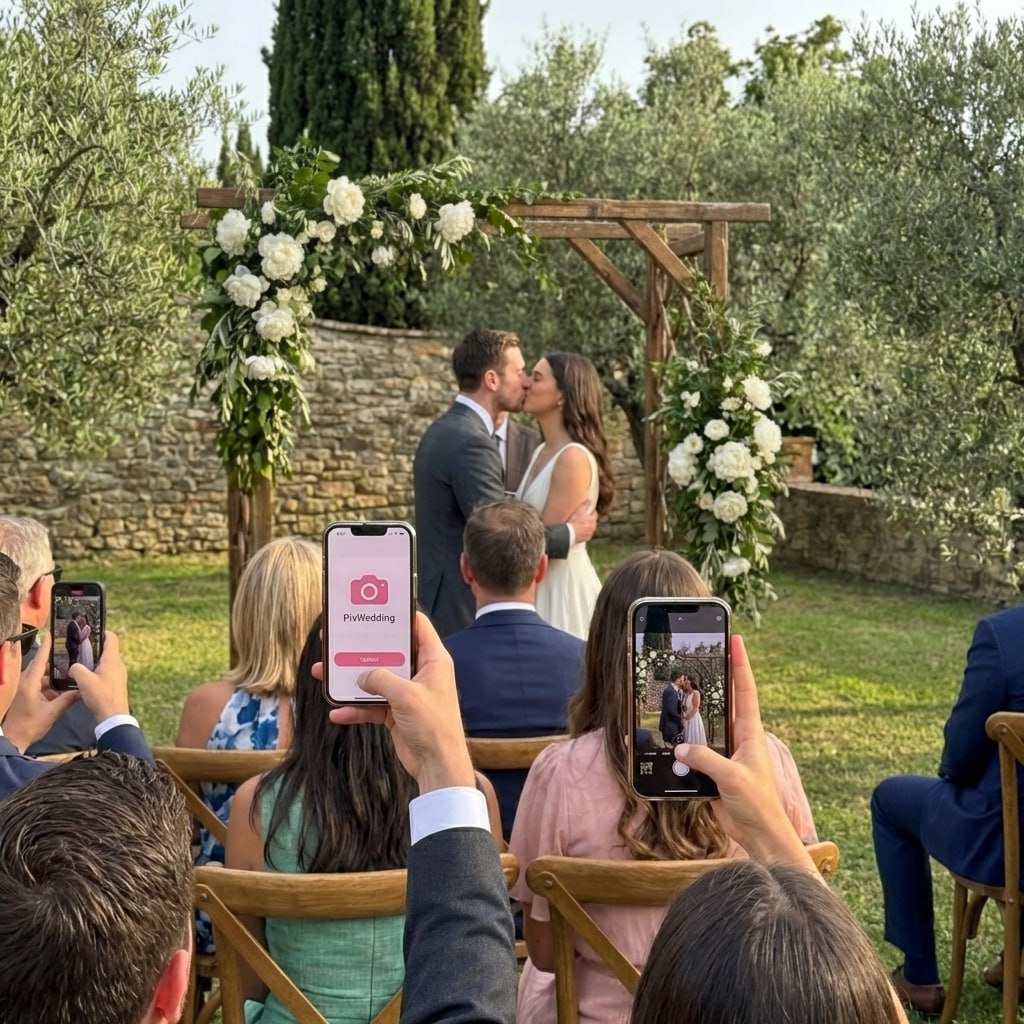
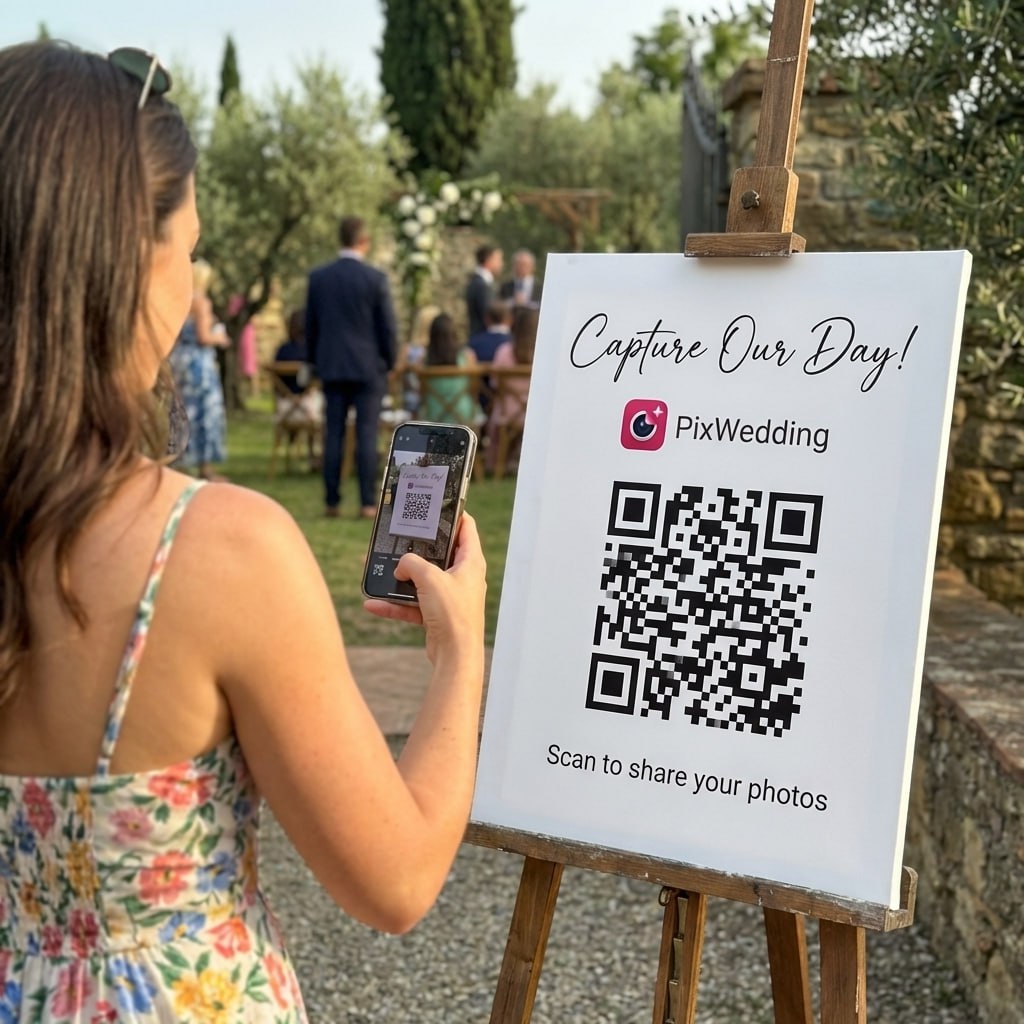
With a QR album there is no collection step. Guests scan the code on a table sign, the album opens in their phone browser, and they upload from their camera roll without an app or an account. Photos arrive during the reception, so you can scroll the album in the car on the way home. Open the demo upload page on your phone to see what guests see, then check the demo album it feeds.
What you receive is the file each guest shot, in full resolution, plus any videos. On paid plans you can download the whole gallery as a ZIP. Uploads also keep coming after the wedding, because many guests only open their camera roll the next morning.
How long guests can upload
Starter ($49): 3-month upload window
Standard ($59): 6-month upload window
Pro ($89): 12-month upload window
Free tier: up to 20 guest uploads
How long the album is stored
Starter: 6 months of storage
Standard: 12 months of storage
Pro: 24 months of storage
Download the ZIP before the storage window ends
That storage window is the digital version of keeping the negatives. Download the ZIP once uploads slow down and keep it with your professional gallery. Both are the originals you will want in twenty years.
7What Film Costs at 30, 100 and 150+ Guests
The math shifts with the size of the wedding, because film cost grows with every camera while a QR album stays flat. These are illustrative setups using the prices above, not rules.
Around 30 guests
Film can carry a small, daytime party on its own. Four to six cameras cost about $124 to $186 developed. If only a handful of guests will upload, the free QR tier (20 uploads) covers them at no cost.
About 100 guests
Ten cameras at $309.90 put film on half the tables at best. A $49 album covers every table and the dance floor, and three or four cameras at one film spot add the look for about $93 to $124.
150 guests and up
Twenty-five cameras reach $774.75 and still leave some tables without one. Here a QR album does the coverage and film becomes a small, curated extra.
Outdoor daytime wedding
The one case where film performs close to its best. Bright light means sharper frames, so a few more cameras earn their price here.
8The Hybrid Setup: Film for the Look, QR for Coverage
Most couples who love film do not need to choose. Put the cameras where they perform best and let phones handle the rest. The full plan for combining both lives in our film plus QR hybrid guide; this is the short version tuned for cost.
A lean hybrid in six steps
Prefer the film feeling without the film bill? Pix Wedding includes a film roll mode on every paid plan: a shot limit and a reveal time you set, so guests shoot a limited roll and the photos appear later. Our digital disposable camera app comparison covers that style of app in detail.
Seven ways guests ruin disposable film, and the fixes
Anjroo runs through the most common mistakes people make with disposable film cameras and how to avoid them. If you do put a few cameras out, the fixes here are the tips worth printing on a small card next to them. Fewer wasted frames means a lower real cost per keeper.
At about $31 a camera, fifteen tables is $465 before a single frame is judged. Fewer cameras in better light usually return more keepers.
Forgetting the lab fee in the budget
The camera price is roughly half the cost. Budget for processing and shipping at the time you buy, not the week after.
No one assigned to collect
Cameras vanish at the end of the night. For QR, the equivalent mistake is one tiny sign by the door that nobody sees.
Letting the originals expire
Drugstore processing may discard negatives; album storage has an end date. Download and keep the originals either way.
Never telling guests
A thirty-second mention from the DJ or MC does more for uploads than any sign. Ask them to mention the QR code after dinner.
Expecting film to cover the whole night
Speeches, the first dance and the exit happen beyond flash range. Plan phone coverage for those, and use a photo shot list for your photographer.
11So Which One Should You Pay For?
If the film look is part of your wedding style, buy a few cameras and put them where the light is good. You will pay about $1.15 a frame for photos that feel like a memory. If you want the whole night covered, videos included, a QR album does that for a flat fee that works out to cents per photo at typical guest numbers. Plenty of couples do both and spend less than they would on cameras alone.
Whichever way you lean, look at the social side too: our comparison of wedding hashtag vs QR code explains why a hashtag alone rarely gets you the files.
FAQ
Frequently Asked Questions
How much does one disposable camera cost for a wedding in 2026, including developing?
Using two published list prices, a Kodak FunSaver at $15 from Reformed Film Lab plus $15.99 for Walgreens processing, one camera lands at about $31 before tax. Mail-in labs such as The Darkroom start at $14 per roll plus $6.95 round-trip shipping per order. Either way, plan on roughly $29 to $35 per camera once developing is included.
Why are disposable cameras so expensive now?
Film is a niche product again, so makers no longer get mass-market volume, and the raw materials cost more. Kodak Alaris raised prices on its films and single-use cameras on 1 January 2025 and again on 1 February 2026, citing significant increases in the cost of silver and other components. Developing is a separate charge on top of the camera.
What does a disposable camera cost per photo?
A 27-exposure camera at about $31 all-in works out to roughly $1.15 per frame, and unused or blank frames cost the same. A flat-fee QR album spreads one payment across every upload, so the cost per photo drops as guests share more.
Do you get the negatives back from a drugstore?
Walgreens states that negatives are not returned with film processing orders; you get prints and a photo CD. Mail-in labs such as The Darkroom return negatives to you. If you ever want larger prints or rescans, pick a lab that sends the negatives back.
How long does it take to see disposable camera photos after the wedding?
Walgreens quotes 3 to 5 business days for pickup once the film is in. The Darkroom scans most 35mm orders in 2 to 4 days after the film arrives, and mail takes 2 to 5 days to reach the lab. Add the time it takes you to collect every camera and send them off.
Can I use disposable cameras and a QR code at the same wedding?
Yes, and it keeps film affordable. Put a few cameras at one or two spots for the film look and a QR code on every table for full coverage, then upload the film scans into the same album once they come back from the lab.
 wedding