
How to Write Vows that sound like you
To write your own wedding vows, aim for 150 to 250 words, about 1 to 2 minutes out loud: open with their name, tell one story only you two share, make 3 to 6 promises you can keep and close with one line about the future. Below: memory prompts, five edit passes, templates and what religious ceremonies require.
Checked 3 October 2026 against Zola, Joy, The Knot and the Catholic rite. Names and drafts in the examples are illustrative.
How do you write your own vows?
Brainstorm memories for 15 minutes, check with your officiant whether any wording is required, then draft four parts: an opening line with their name, one story, three to six promises you can keep and a short closing line. Edit until every line could only be about your partner, read it aloud until it fits 1 to 2 minutes, and print it.
61%
of couples married in 2025 wrote their own vows, up from 44% in The Knot's 2019 study
150-250
words is the range Zola and Joy give, about 1 to 2 minutes aloud
3 to 6
promises, the range one New York officiant recommends
63%
of 2026 couples told Zola AI has no place in writing vows
Sources: The Knot 2026 Real Weddings Study and the 2019 study, Zola, Joy, Robyn Walker of Robyn Ashley Weddings and the Zola First Look Report 2026 (over 11,500 couples). Checked 3 October 2026.
Four parts, promises in the middle
Almost every good vow has the same skeleton: an opening line, one story, a handful of promises and a close. The bars below show how the words split in the example vow further down this page. The promises take the most room, because a vow without promises is a speech.
- 01
Open
1 to 2 sentencesSay their name and one line about who they are to you. You are talking to your partner, not performing for the room.
about 7% of the words - 02
Story
4 to 6 sentencesOne memory only the two of you share: when you knew, or an ordinary day that stuck. This is the part that makes the vow yours.
about 42% of the words - 03
Promises
3 to 6 promises, the heaviest partSpecific actions you can keep on a Tuesday. "I will listen before I answer" beats "I will always support you."
about 40% of the words - 04
Close
1 to 2 sentencesOne short line about the life ahead, then stop. The last line is the one people repeat back to you afterwards.
about 10% of the words
If it has no "I will", it is a toast
- Spoken to one person, eyes on them
- Has at least three "I will" lines
- Short enough to say without notes running out
- Ends on a promise or a line about the future
- Told to the room about a person
- Lists qualities, stories and thank-yous
- Gets laughs from the crowd, not a reaction from your partner
- Ends on a toast
This is where most vows go vague, and vague is where guests check out.
Mine your memories first
Blank-page panic usually means you are trying to write and remember at the same time. Split the jobs. Pick a prompt below and write whatever comes for five minutes, then come back to the vow later with a pile of raw material.
When did you first think "oh, this is someone"? Where were you standing, and what were they doing?
Write the place and the time of day. Those two details do most of the work.
Six timed exercises, 60 minutes in total
Do them over a week if an hour is too much. You will use maybe a fifth of what you write, and that is the point.
- 15 min
The letter you will not send
Write them a letter as if this were your only chance to say it. Then skim it for the two lines that made you stop typing. Those are vow material.
- 10 min
What makes us us
List things that are only true of the two of you: places, phrases, routines, a running argument about the thermostat.
- 10 min
Who I am now
Write how you have changed since you met them. One honest change is worth more than a page of compliments.
- 10 min
Promise brainstorm
List 15 promises, big and small, serious and silly. You will keep the best three to six, so quantity first.
- 5 min
The hard part
In two sentences, name one difficult stretch you got through together and what they did during it.
- 10 min
Memory mine
Scroll your camera roll from one year together and note three moments you had forgotten. Photos bring back details memory drops.
Swipe for all six exercises.
How to write vows in 8 steps
Give yourself about six weeks. The writing itself takes a few evenings; the rest is time for the draft to sit, so you can hear what is wrong with it.
- 01
Brainstorm for 15 minutes without editing
Use the prompts above or the letter exercise. Bad sentences are welcome. You are collecting material, not writing vows yet.
- 02
Ask your officiant what is required
Before you draft, ask whether any wording is fixed, whether personal vows fit the ceremony at all, and how long they should run.
- 03
Agree on length and tone with your partner
Settle a word range and how serious or playful you will be, so one vow does not dwarf the other. You can keep the words themselves a surprise.
- 04
Sort your notes into four parts
Open, story, promises, close. Most first drafts have too much story and too few promises, so check the balance before you draft.
- 05
Write an ugly first draft in one sitting
Write it the way you would say it in the car. Start with the story and promises, and write the opening line last, once you know what it opens.
- 06
Run the five edit passes
Specificity, promise, ear, length, audience. Each pass asks one question, and each one usually cuts something.
- 07
Read it aloud and time it
Read at a calm pace with a timer running. Aim for 1 to 2 minutes. If you trip on the same phrase three times, rewrite the sentence.
- 08
Print it and hand your officiant a copy
Print in large, double-spaced type or copy it into a vow book, and give a spare to your officiant so a lost card is never a crisis. Zola says you do not have to memorize it.
Swipe for all eight steps.
Prefer to watch? The same process in seven minutes
A walkthrough from brainstorming memories to shaping promises and practicing the delivery. Useful to play once before your 15-minute brainstorm.
Watch on YouTube150 to 250 words, 1 to 2 minutes
Word counts are easier to hit than times, because you can see them while you write. The table converts one into the other at three speaking speeds. Most people speak faster when nervous, so time yourself at a calm pace and expect to run a little short on the day.
Words to minutes, read aloud
Most advice lands hereMinutes:seconds, rounded. Pace bands from the National Center for Voice and Speech figure of about 150 wpm for everyday speech and the 125 to 150 wpm commonly advised for public speaking.
188 words
Reads in 1:30 at a calm 125 words a minute, and 1:15 at an everyday 150. Inside every range above.
The ranges disagree a little. A Practical Wedding suggests about one minute or less per person, Zola and Joy say 1 to 2 minutes, and Ellert-McDermott sets 3 minutes or 500 words as a maximum, not a target. Joy notes that vows running past 3 minutes often lose the room. Speaking rates: Lumen Learning, citing the National Center for Voice and Speech, and Wikipedia. Checked 3 October 2026.
Five passes, one question each
Do not edit while you draft. Finish the whole ugly version first, then read it five times, each time hunting for one thing only. Every pass should cut something.
- 01Pass 1
Specificity
AdjectivesCould this line be said about anyone?
If yes, swap the adjective for a detail only your relationship would produce: a place, a time, something they said.
- 02Pass 2
Promise
Always and neverIs every promise an action you can keep on an ordinary Tuesday?
Promise the behavior, not an outcome. "I will notice when you are not okay" beats "I will always make you happy."
- 03Pass 3
Ear
Words you never sayDoes it sound like you when you say it out loud?
Read it aloud. If you trip on the same phrase three times, the sentence is the problem. Cut words you never use, like cherish, embark or henceforth.
- 04Pass 4
Length
The second storyDoes it fit in 1 to 2 minutes at a calm pace?
Time it. Cut the weakest promise or the second story whole, rather than trimming every line until nothing has room to land.
- 05Pass 5
Audience
Private detailsWould any line confuse or embarrass your eldest relatives in the front row?
Move it to a private letter you give them the morning of the wedding. Exes, private fights and medical details go there too.
Lines to strike on sight
- "You complete me"A film line. Say what they added instead.
- "You are my soulmate"Named by speechwriter Heidi Ellert-McDermott as a generic line to drop.
- "Nothing made sense until you came into my life"Also on her list. Your life made sense before; say what changed.
- "My better half"Fine in a toast, flat in a vow.
- "From the moment I met you, I knew"Most people did not. The real turning point is a better story.
- "You are my everything"Too big to be specific. Pick one thing.
Source for the two named lines: Fox News interview with Heidi Ellert-McDermott.
If a line would confuse or embarrass your eldest relatives in the front row, move it to a private letter.
Cut whole pieces, not every line
If you are 80 words over, delete the weakest promise or the second story outright. Shaving a few words off every sentence leaves a vow that is shorter and also flatter.
Eight common vow mistakes
- 01
Talking to the room
Vows are to your partner. Lines aimed at getting a laugh from the crowd belong in the reception speech.
- 02
Inside jokes with no context
If a reference needs a backstory, give it one sentence or save it for later.
- 03
Borrowed lines
Generic quotes from the internet are the first thing a speechwriter cuts. Your own plain sentence works better.
- 04
The laundry list
Ten qualities in a row read like a reference letter. One trait shown through one story is enough.
- 05
Promise inflation
Promises nobody can keep ("always", "never", "every single day") sound hollow. Promise behavior.
- 06
Retelling the whole relationship
Ellert-McDermott says vows should not be a complete retelling of the relationship. One story, not the timeline.
- 07
Skipping the read-aloud
A line that reads well can trip you up spoken. Practice is where you find it, not the altar.
- 08
Ignoring required wording
If your ceremony has fixed text, confirm it before you fall in love with a draft that does not fit.
Check what your ceremony requires first
This is the one step that can throw out a finished draft, so do it before you write. Some ceremonies fix the vow wording entirely, some fix part of it, and some leave every word to you.
The consent uses fixed texts from the rite
A teaching aid published by the US Conference of Catholic Bishops explains that an option for couples to write their own vows existed for a short period years ago, but it is no longer permitted, because self-written words often did not clearly state the needed content. The rite offers two sets of texts. Couples can say the words themselves or answer "I do" to the vows posed as questions by the priest.
- Fixed
- The words of consent, chosen from the two approved texts
- Your words
- Ask your priest. Many couples share personal vows privately, at the rehearsal dinner or in a letter instead
Sources: USCCB teaching aid (PDF), For Your Marriage. Checked 3 October 2026.
Other religious ceremonies
Rules vary by tradition, denomination and the individual officiant. Some keep a fixed formula and leave room for personal words around it; others leave the wording to you. Ask early, and ask what is fixed, what is optional and how long personal vows may run.
Civil ceremony
A registrar, clerk or judge usually runs a short legal part. Ask what words are required where you marry and whether there is time for personal vows alongside it.
Secular, interfaith or friend-officiated
The words are usually yours. With two traditions in the room, ask each officiant or family what matters to them, and send whoever leads the ceremony your final copy.
- A fixed or time-tested text means one less decision under pressure
- Older relatives recognize the rhythm
- Required, in part or in full, in some religious ceremonies
- Nothing to memorize, the officiant can lead you line by line
- Says something only your relationship could say
- Lets you name specific moments, jokes and promises
- Tends to be what guests quote back to you later
- Takes real drafting time and a willingness to sound exposed
"I N. take thee N. to my wedded wife, to have and to holde from this day forwarde..."
The 1549 Book of Common Prayer set English vows in print, largely following the medieval Sarum rite. Many couples keep a line of it inside personal vows. Marriage vows, BCP 1549.
Fill in the blanks, then make it yours
Templates are scaffolding. Fill the brackets with real details from your prompts, then rewrite any line that still sounds like it came from a template. Below them is one full example vow in the four-part shape, then openers and closers to adapt.
The classic
Balanced, works for most ceremonies- 1[Name], from the first time I [specific moment], I knew [what you realized].
- 2I love the way you [small habit only you notice].
- 3I promise to [concrete action] when [real situation].
- 4I promise to [concrete action], even when [honest hard day].
- 5Whatever comes next, I promise to [forward-looking line]. I love you.
The light touch
One playful line, then sincere- 1[Name], I promise to laugh at your [running joke], even the hundredth time.
- 2I promise to [small everyday compromise], even when I would rather not.
- 3Underneath all of that, I promise to [serious promise], on purpose, every day.
- 4That is the whole plan. I love you, and I choose you.
The faith-inclusive
For ceremonies where personal words are allowed- 1Before [God / our families / this community], I promise to be your faithful partner.
- 2I will [specific promise rooted in your shared values or faith].
- 3I promise to forgive quickly and to build a home rooted in [value].
- 4With [God / our community] as witness, I give you my heart today and every day after.
One vow, start to finish
188 words, 1:30 at a calm pace. Three promises, one story, nothing borrowed. Names and events are invented.
Sam, for weeks I tried to write this, and every draft started with you.
The night our flight got cancelled in Denver, I was ready to sleep on the airport floor. You rented the last car at the counter, found the one gas station still selling coffee at midnight, and drove eleven hours so we would make your sister's birthday dinner. Somewhere in Nebraska you handed me the coffee and the aux cable and said, "You pick, I drive." That is when I knew I wanted every long drive to be with you.
So here is what I promise. I will listen before I answer, even when I think I know what you are about to say. I will still make you coffee first, on the good mornings and the bad ones. I will tell you when I am struggling instead of waiting for you to guess. And when a plan falls apart, I will be the one next to you at the counter asking what we do next.
I do not know everything this life will bring us. I cannot wait to find out what we become.
Opening lines
- [Name], I want to start with something simple: you are my person, and I am about to make that official.
- A few years ago, I could not have imagined standing here, saying this, to you. Now I cannot imagine anything else.
- There is a version of this where I list your qualities. The better version is shorter: I am the luckiest person here today.
- I did not plan on falling in love with my best friend, and I would not change a single part of how it happened.
Closing lines
- Whatever this life brings us, I want to bring it home to you first.
- I am not only marrying you today. I am choosing you, on purpose, for every day after this one.
- So here is my whole plan: to keep showing up, exactly like this, for the rest of my life.
- This is the easiest yes I have ever said, and I would say it again tomorrow.
Want more starting points? The opening lines guide has more than 25 first sentences to adapt, and the free AI vow generator can draft a shape for you to rewrite with your own details.
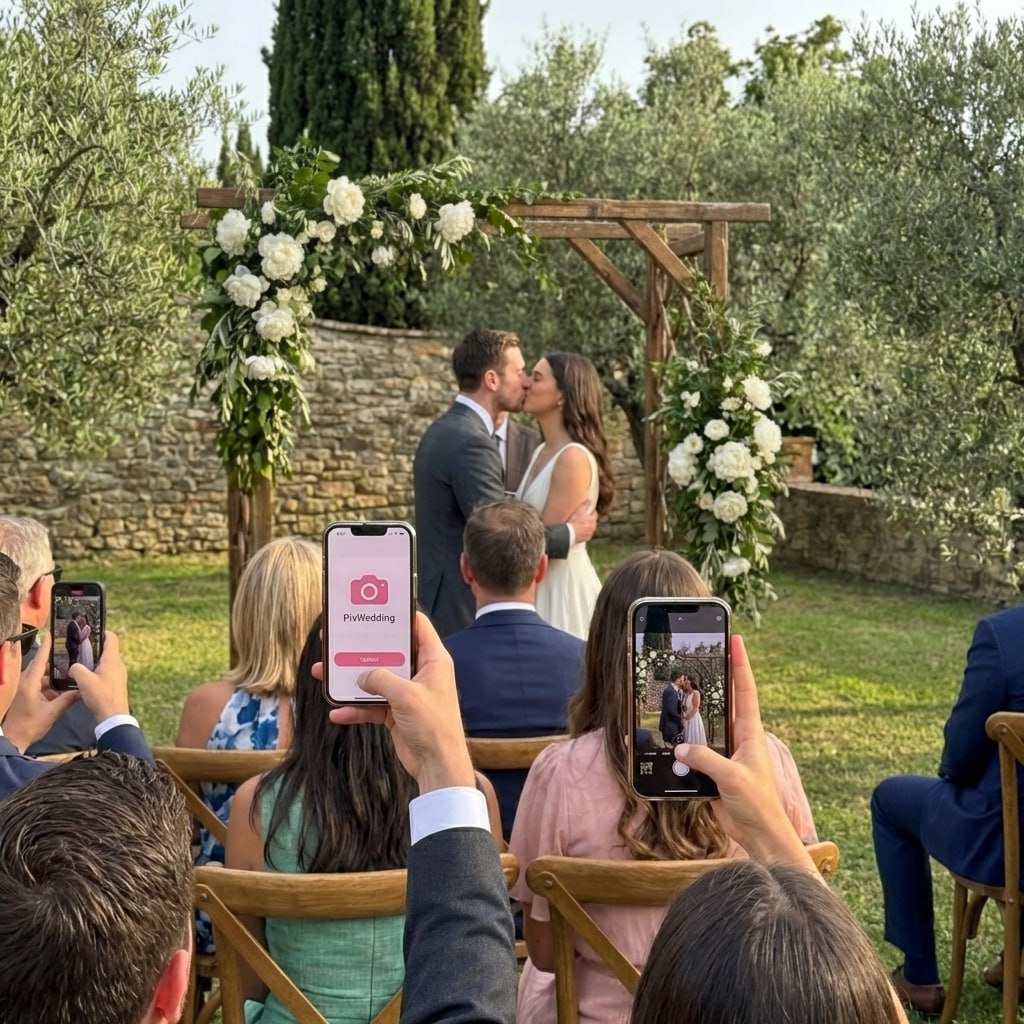
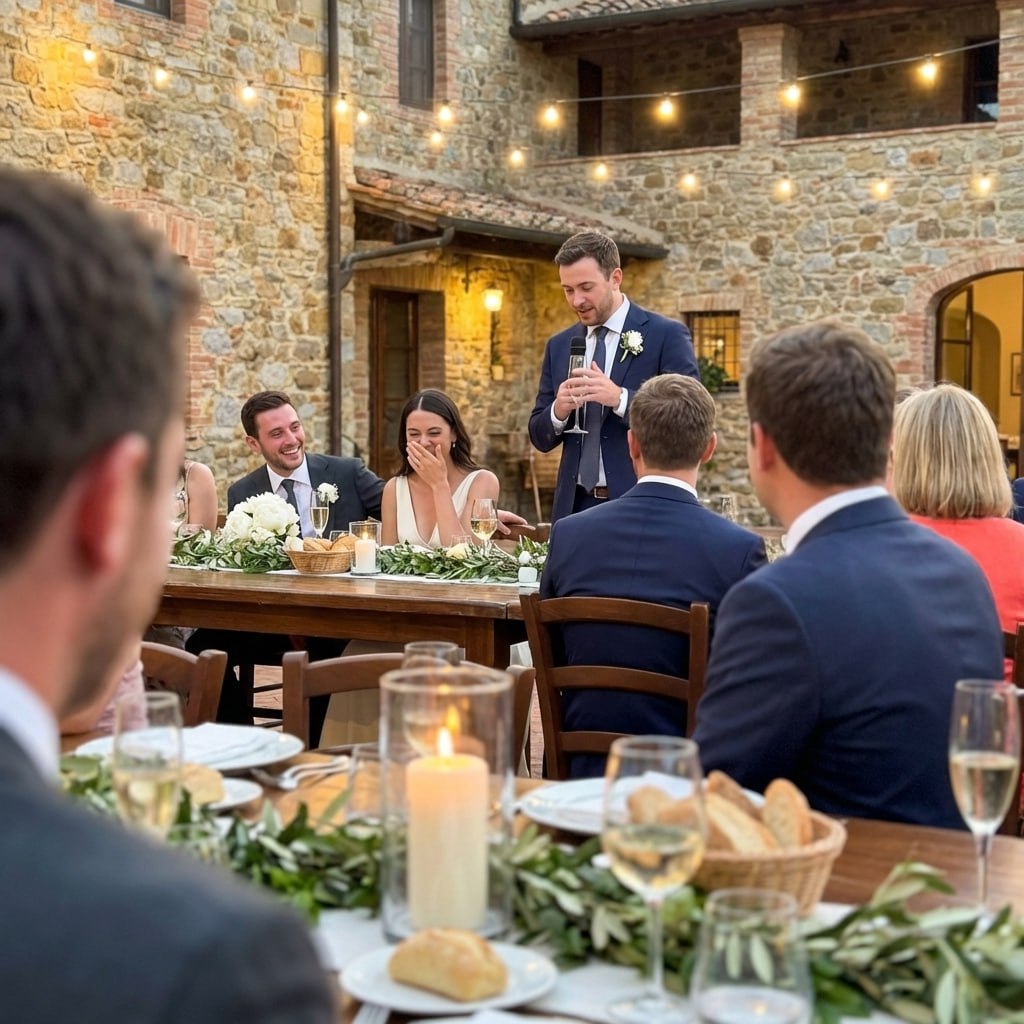
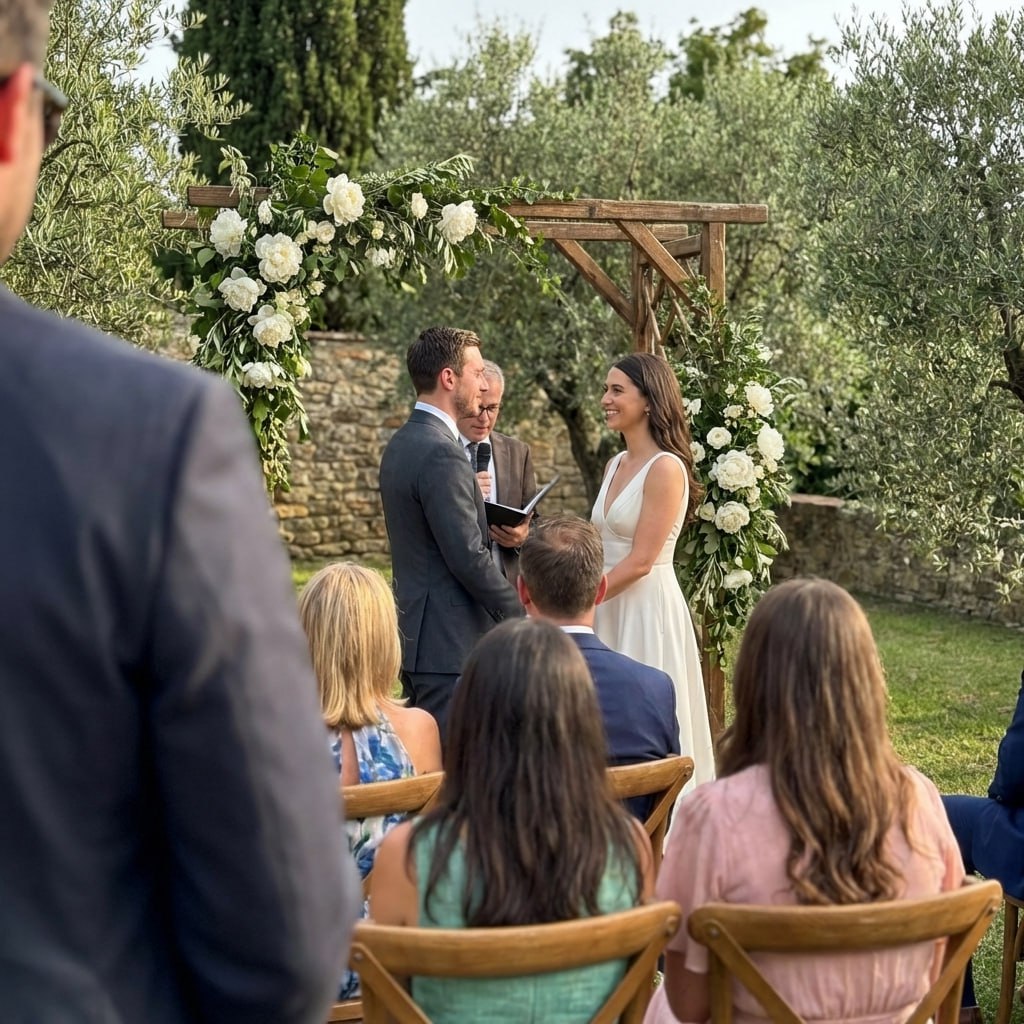
You will be watching each other. Guests catch the rest
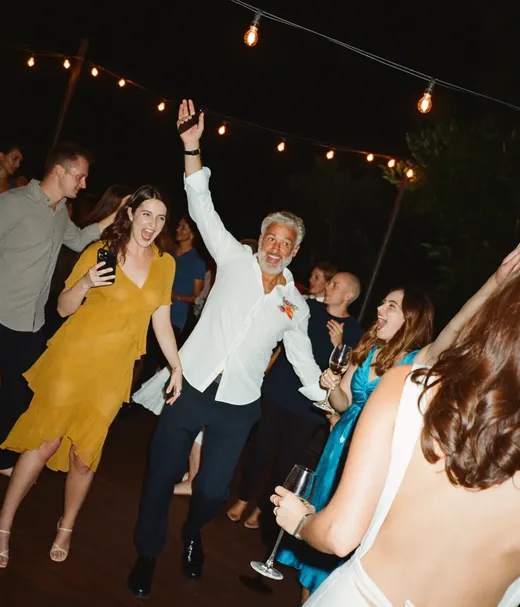
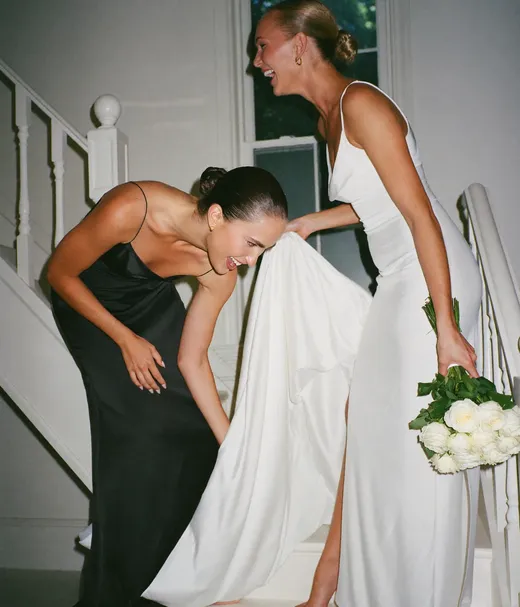
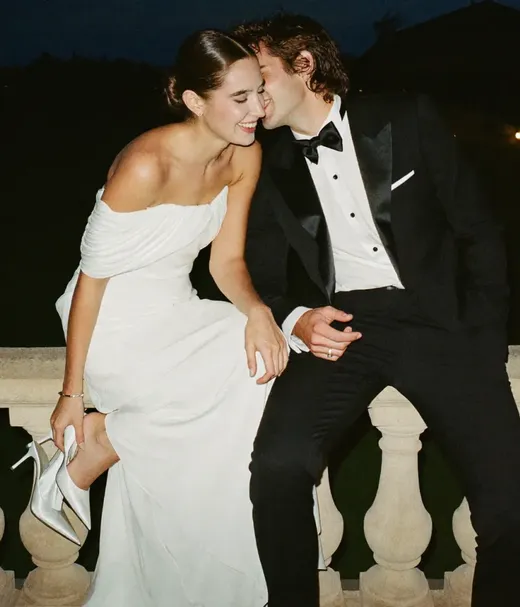
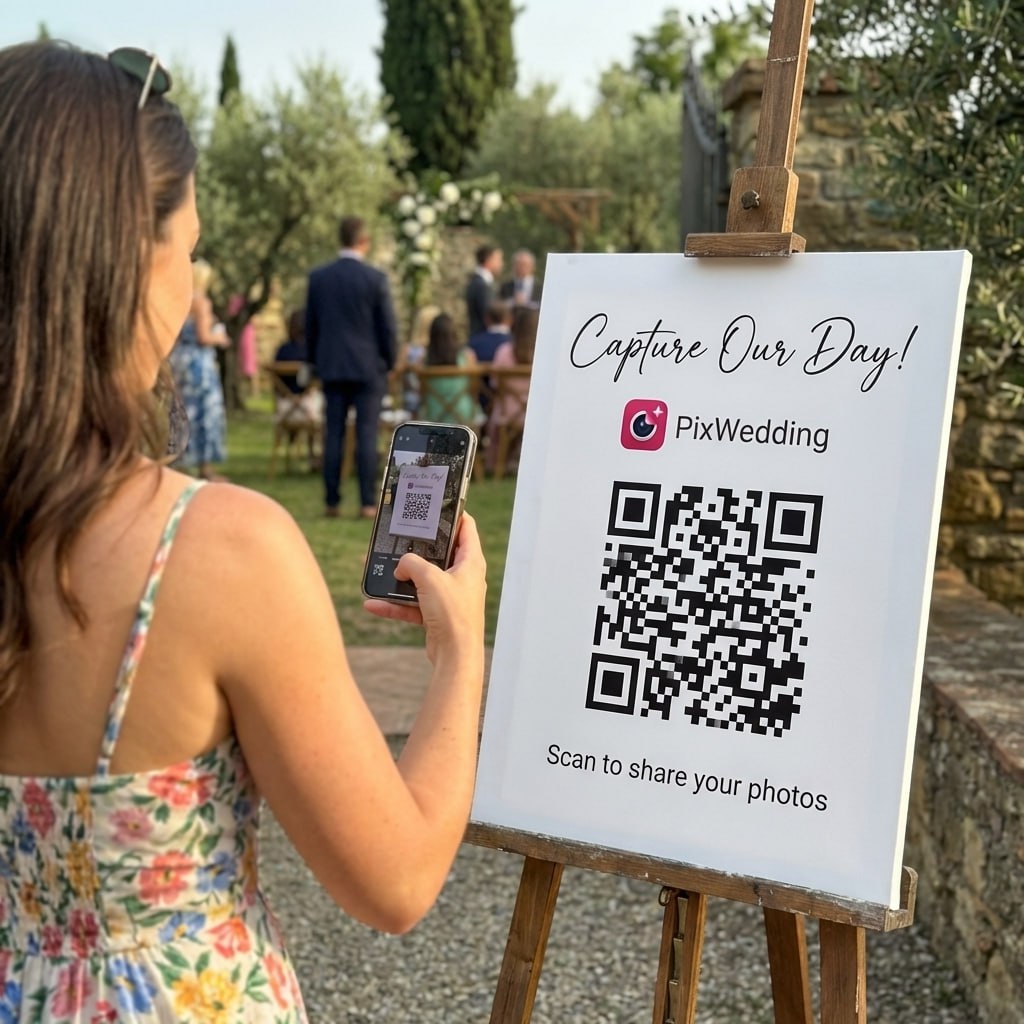
The best photos of your vows come from the rows behind you. Put a QR code on the tables and every guest adds their photos and videos to one album, with no app and no account.
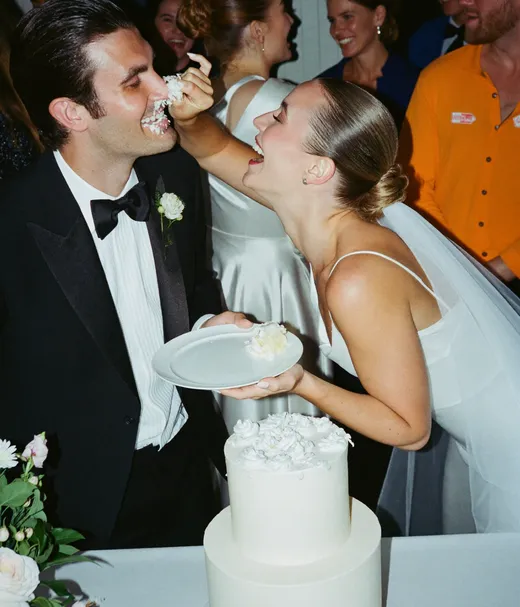
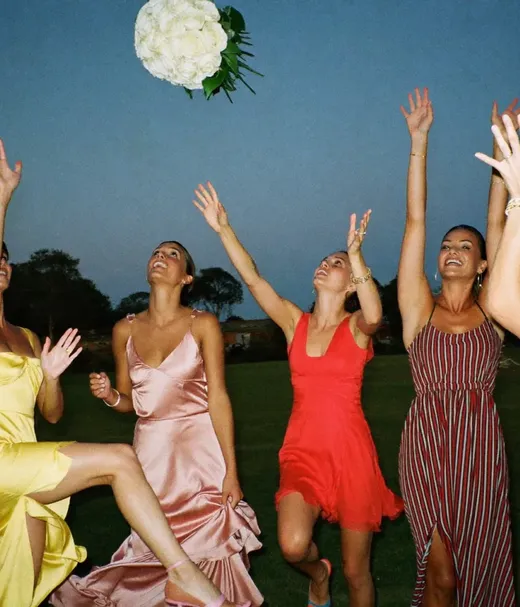
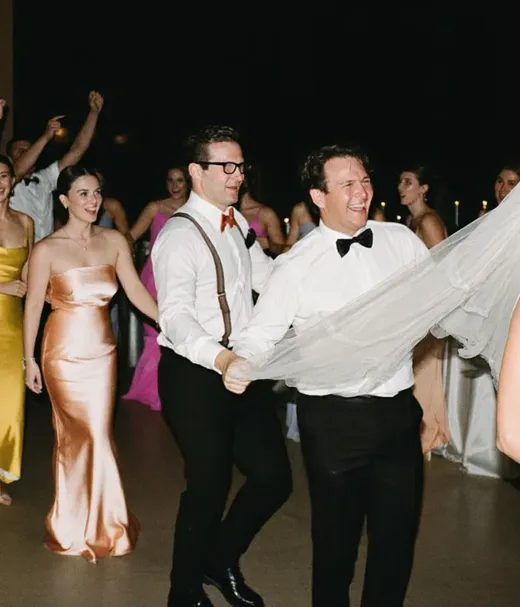
Scan to join the album
No app, no account
UPLOADING
Saving your moment
THE ALBUM
Emma & Jack
June 21, 2026
647 photos · 95 guests
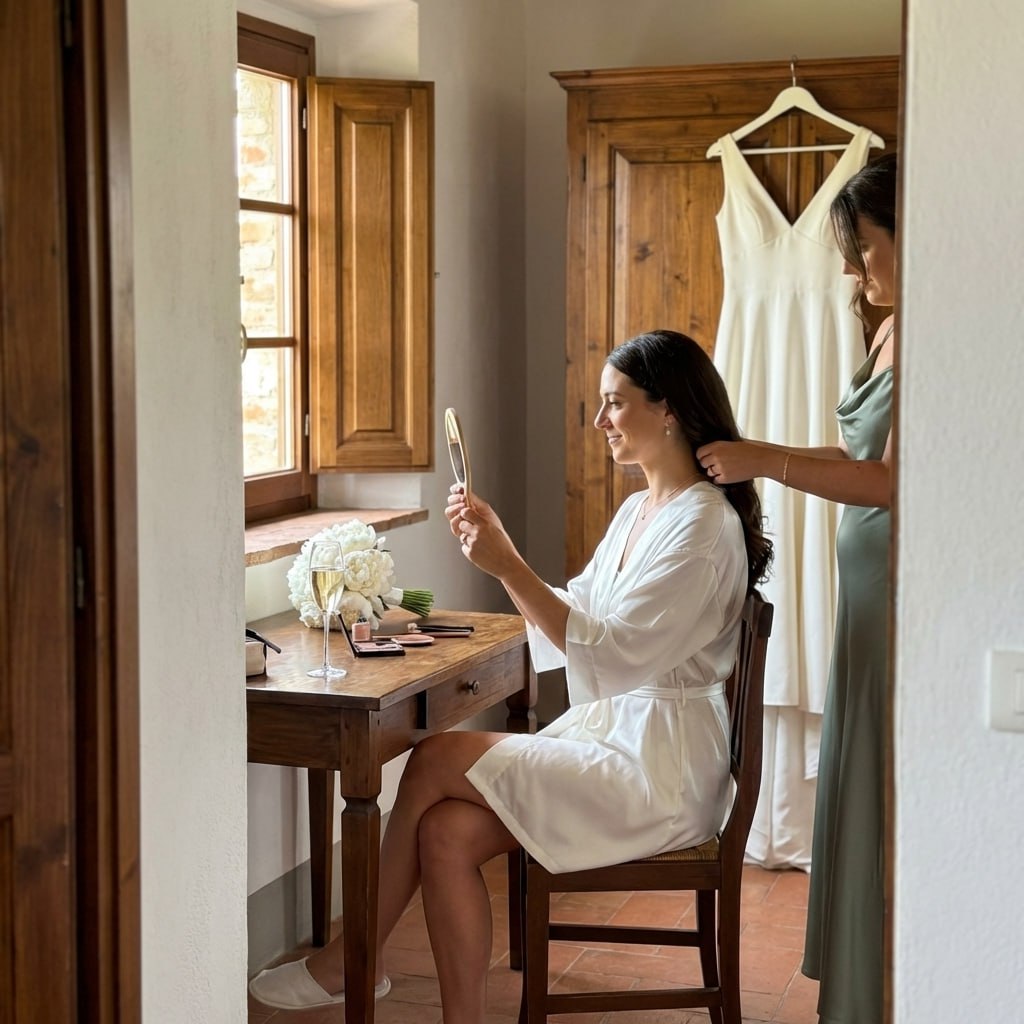
Stories, inside jokes and the brave line
Personal does not mean private. The aim is a vow your partner hears as written only for them, which the back row can still follow. Pick one story from the six kinds below, then decide whether you want one braver line.
The first meeting
Use it if something small and specific happened, not if the honest version is "we matched on an app".
A hard season
A job loss, an illness, a move. Keep the focus on what they did, not the details of the hardship.
A small daily habit
The coffee, the voice memo, the door check. Habits make the strongest openers.
The turn
The moment it stopped being casual. Often a quieter story than the first meeting, and a better one.
The apology
A fight you came through and what it taught you. Shows the room you know marriage has hard days.
A promise only you two would get
Built from a running joke or shared routine, with one sentence of context for everyone else.
Swipe for all six kinds of story.
The one-sentence rule
An inside joke works if one sentence of context lets the room in on it. If it needs two sentences or more, keep it for the speech or the letter. "Since the trip where I tipped us both into the lake, I promise to always let you steer" works. "And of course, the canoe" does not.
Four ways to say one braver thing
- 01
Name what changed
Say one thing that is different about you because of them. "I used to leave when things got hard. I do not anymore."
- 02
Admit a need
Say one thing you rely on them for. It is a promise in reverse, and it lands just as hard.
- 03
Credit them for growth
Name something they worked on and got through. Only if they would be glad to hear it said in public.
- 04
Say the unsaid thing
One sentence you have meant to say and never have. Keep it kind, keep it short, and do not surprise them with anything painful.
Scan. Upload.
Every reaction, caught.
You will be looking at your card and at each other. Your guests will be looking at both of you. Watch how a guest scans the QR code and adds photos and videos from the phone browser in seconds, with no app and no account.
WEDDING ALBUM
Jordan & Sam
Example album
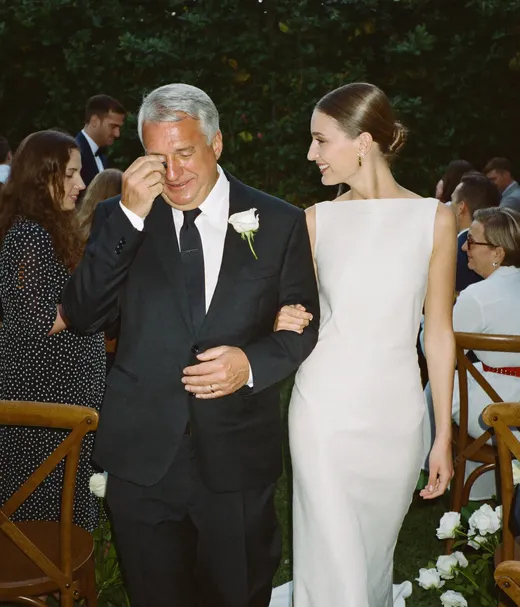
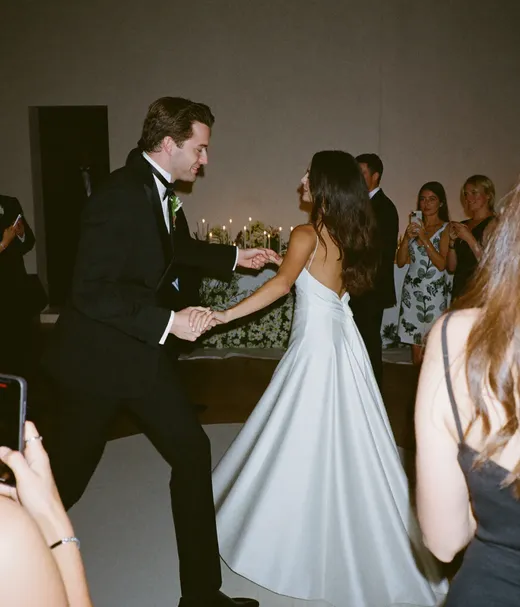
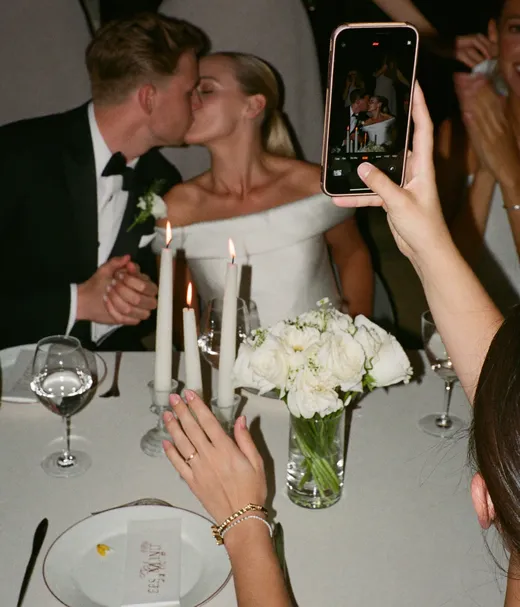
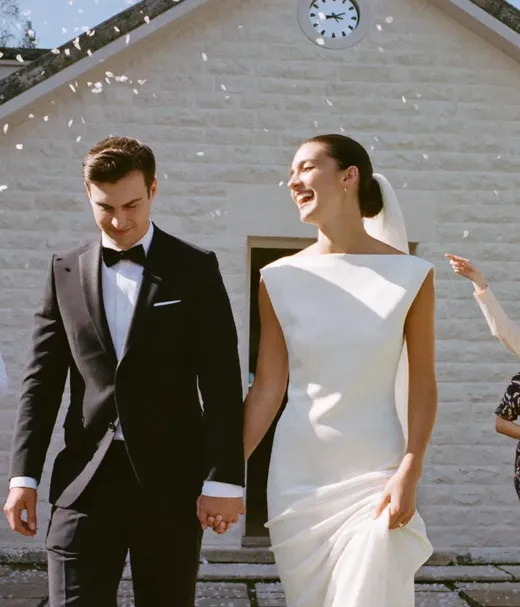
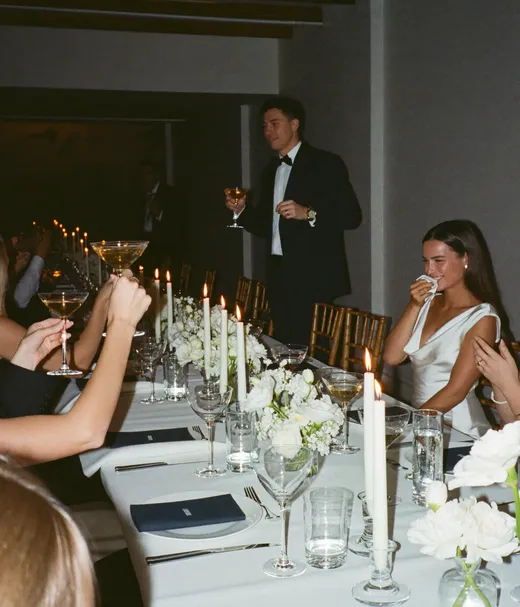
The second you both teared up
From row two
You will remember the words. Guests will catch every reaction.
Put one QR code on the tables and every guest can add the photos and videos they took during your vows, straight from the phone browser with no app and no account. The first 20 uploads are free, no card.
From a guest
Scan to join the album
No app, no account
UPLOADING
Saving your moment
THE ALBUM
Jordan & Sam
Example album
149 photos · 41 guests
SCAN TO TRY
pix.wedding/
your-wedding
Writing Your Own Vows: Common Questions
Quick answers on structure, length, religious wording, writing together or apart, AI and nerves.
Four parts work for almost every couple: open with your partner's name and who they are to you, tell one short story only the two of you share, make three to six specific promises, then close with one line about the future. The promises should carry the most weight. In that shape most vows land between 150 and 250 words.
Aim for 150 to 250 words, which is about 1 to 2 minutes read aloud at a calm pace; Zola and Joy both give that range. NYC officiant Robyn Walker allows up to 300 words per person, and speechwriter Heidi Ellert-McDermott puts the outside ceiling at about 3 minutes or 500 words. Shorter is safer than longer.
Yes, and it is now the norm: The Knot found 61% of couples married in 2025 wrote their own vows, up from 44% in its 2019 study. The main exception is a Catholic wedding, where the consent uses fixed texts from the rite. For any religious ceremony, ask your officiant before you start writing.
Some do. In a Catholic wedding the couple chooses between two approved texts, either saying the words themselves or answering "I do" to questions from the priest, and self-written vows are no longer permitted in the rite. Other traditions and individual officiants vary widely, so ask yours what is fixed and what is flexible before you draft.
Often, but alongside the required parts rather than in place of them, and in a Catholic wedding not in place of the consent at all. Ask your officiant early where personal words could fit. If the ceremony has no room for them, read them to each other privately, at the rehearsal dinner or in a letter on the morning of the wedding.
Roughly, yes. You do not need identical words, but a similar length and a similar balance of serious and lighthearted keeps one vow from overshadowing the other. Agree on a word range and a tone before either of you starts drafting.
Most couples write separately after agreeing on a word range and tone, so the words are a surprise but the vows still match. Writing together removes the risk of a mismatch and helps a partner who dreads speaking. A hybrid works too: plan the structure and a shared closing line together, then write the personal middle apart.
Most couples keep the exact wording a surprise but agree on length and tone in advance. A common middle path is to have your officiant read both privately and flag a big mismatch. If either of you is anxious about the moment, reading them to each other the night before is fine too.
Replace every adjective with a detail: a place, a time, something they did or said. Ask yourself whether each line could be said about anyone, and if it could, rewrite it until it could only be about your partner. Memory prompts help, for example what they do when they think nobody is watching.
It can help with structure or a blank page, but the memories and promises have to come from you. In Zola's 2026 survey of over 11,500 couples, 63% said AI has no place in writing vows. If you use a tool such as our free AI vow generator, treat the result as a shape to rewrite in your own words.
Practice out loud, at least five times as Joy suggests, and print the vows in large type instead of reading from a phone. Mark breath points where you choked up in practice and pause there on purpose. If you do cry, stop, breathe once, look at your partner and carry on.
Skip the blank page. Answer a few memory prompts for 15 minutes without editing, pick the best story and three to six promises, and put them in the open, story, promises, close order. Write the opening line last.
Related guides
Openers, length, vows for each partner, short and funny versions, and how long the whole ceremony runs.
Sources, checked 3 October 2026
- The Knot 2026 Real Weddings Study
- The Knot 2019 Real Weddings Study
- Zola: how to write wedding vows
- Zola First Look Report 2026
- Joy: wedding vows and promises
- Robyn Ashley Weddings: write wedding vows
- A Practical Wedding: vow examples
- Fox News: vows advice from a speechwriter
- USCCB: teaching aid on the marriage rite
- For Your Marriage: rite within Mass
- Lumen Learning: speaking rate
- Wikipedia: words per minute
- Wikipedia: marriage vows
- Wikipedia: Book of Common Prayer (1549)
- YouTube: wedding as a project
The couple names, the example vow, the before and after rewrites, the worked example and the counts in the phone mockups on this page are illustrative. Photos are from our own library.
More free tools for the words
Draft a vow shape, a speech or the thank-you notes, then rewrite them in your own voice.
AI Vow Generator
Write "banger" vows in seconds.
AI Speech Pro
Banger toasts for Best Man & more.
Hashtag Generator
Create unique wedding hashtags.
Thank You Notes
Generate personalized thank you notes.
Father of the Bride Toast
Full example toasts, structure, and delivery tips.
Invitation Wording
Perfect wording for your invitations.
Couple Name Combiner
Blend your names into the perfect couple name.
Photo Sharing QR
The best way to collect guest photos.