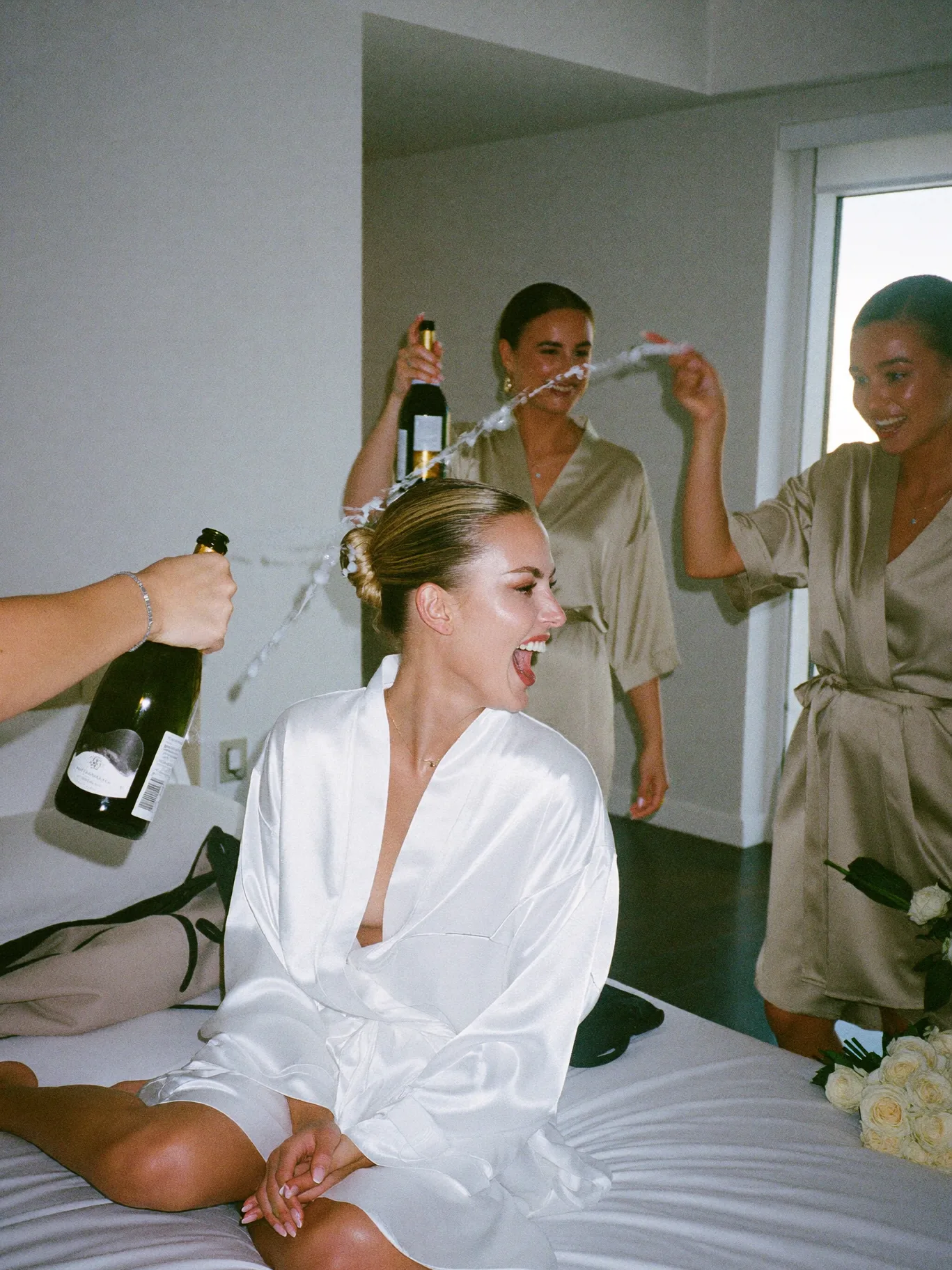





My sister got married two months before us and told us to get Pix. Best advice she ever gave. One time payment, no subscription, that was the deciding factor for us
Trevor G. · Des Moines, IAVerified couple · July 2025
 wedding
Enter your total budget and guest count. You get a dollar line for venue and catering, photos, attire, flowers, music, a planner, stationery and a buffer, plus your cost per guest. Free, no sign-up.
Start with one total, then give about half to venue and catering, 12% to photography and video, 10% to decor and flowers, 8% each to attire and entertainment, 5% to a planner, 3% to stationery and keep 4% as a buffer. Divide the total by your guest count to check it is realistic.
That is the split this calculator uses. It is a starting point: move money toward the two or three things you care about most, and keep the total fixed.
Watch a guest scan the QR code and add photos from the browser, no app and no account. It costs a fraction of your photo line and keeps everything your guests shot.
WEDDING ALBUM
Example album
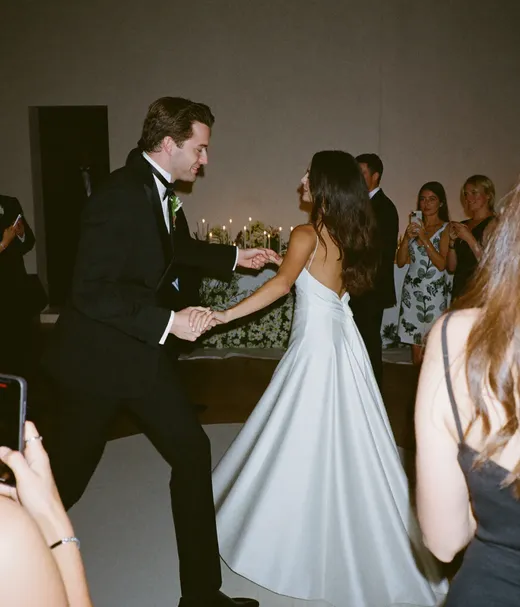

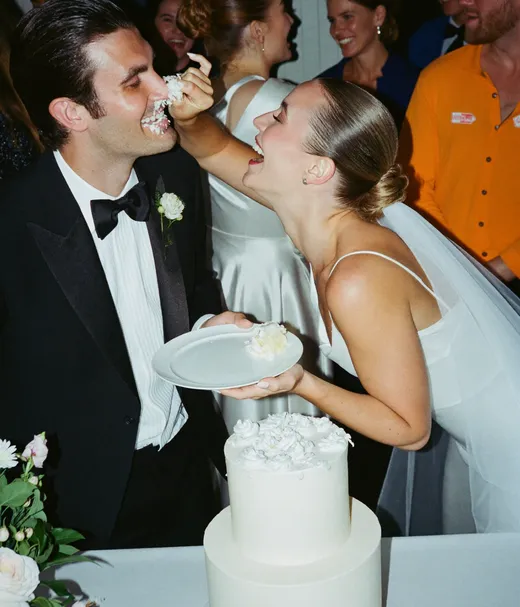
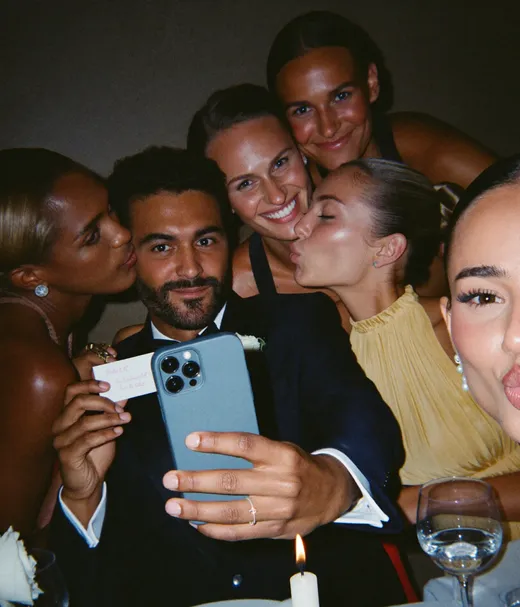





Here is the split the calculator uses, applied to the 2026 national average. Use it to sanity check vendor quotes: if one quote eats far more than its line, something else has to give.
The Knot 2026 Real Weddings Study, based on couples who married in 2025.
Source: The KnotThat works out to about $292 per guest when you divide the average cost by the average guest count.
Source: The KnotZola's First Look Report surveyed more than 11,500 couples marrying in 2026.
Source: Zola via PR Newswire| Category | Share | At $34,200 | What it covers |
|---|---|---|---|
| Venue & Catering | 50% | $17,100 | Reception venue, food, alcohol, rentals |
| Photography & Video | 12% | $4,104 | Photographer, videographer, prints |
| Attire & Beauty | 8% | $2,736 | Dress, suit, hair, makeup |
| Decor & Flowers | 10% | $3,420 | Flowers, lighting, decor |
| Entertainment | 8% | $2,736 | DJ, band, MC |
| Planner / Coordinator | 5% | $1,710 | Day-of or full planning |
| Stationery & Misc | 3% | $1,026 | Invites, save the dates, gifts |
| Emergency Buffer | 4% | $1,368 | Costs nobody saw coming |
| Total | 100% | $34,200 | About $292 per guest at 117 guests |
Average cost and guest count from The Knot 2026 Real Weddings Study. Shares are the calculator's own starting split, rounded to the dollar the same way the tool rounds. Checked 6 October 2026.
Illustrative splits from the calculator, so every column adds up to its total. Guest counts are examples to show the cost per guest; enter your own above.
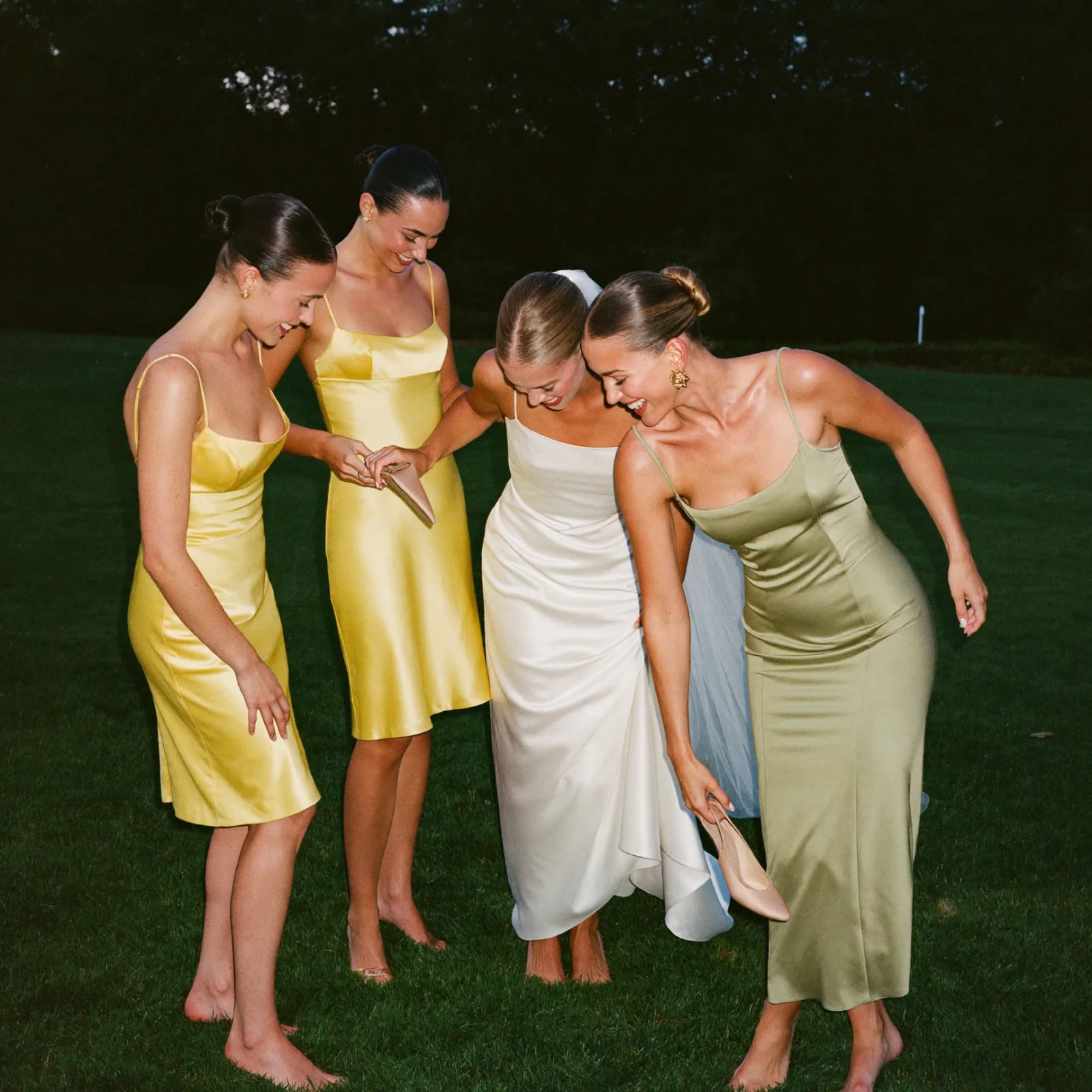 50 guests, $200 per guest
Venue and food get $5,000, so a daytime meal, a park or a family garden, and a short guest list do most of the work.
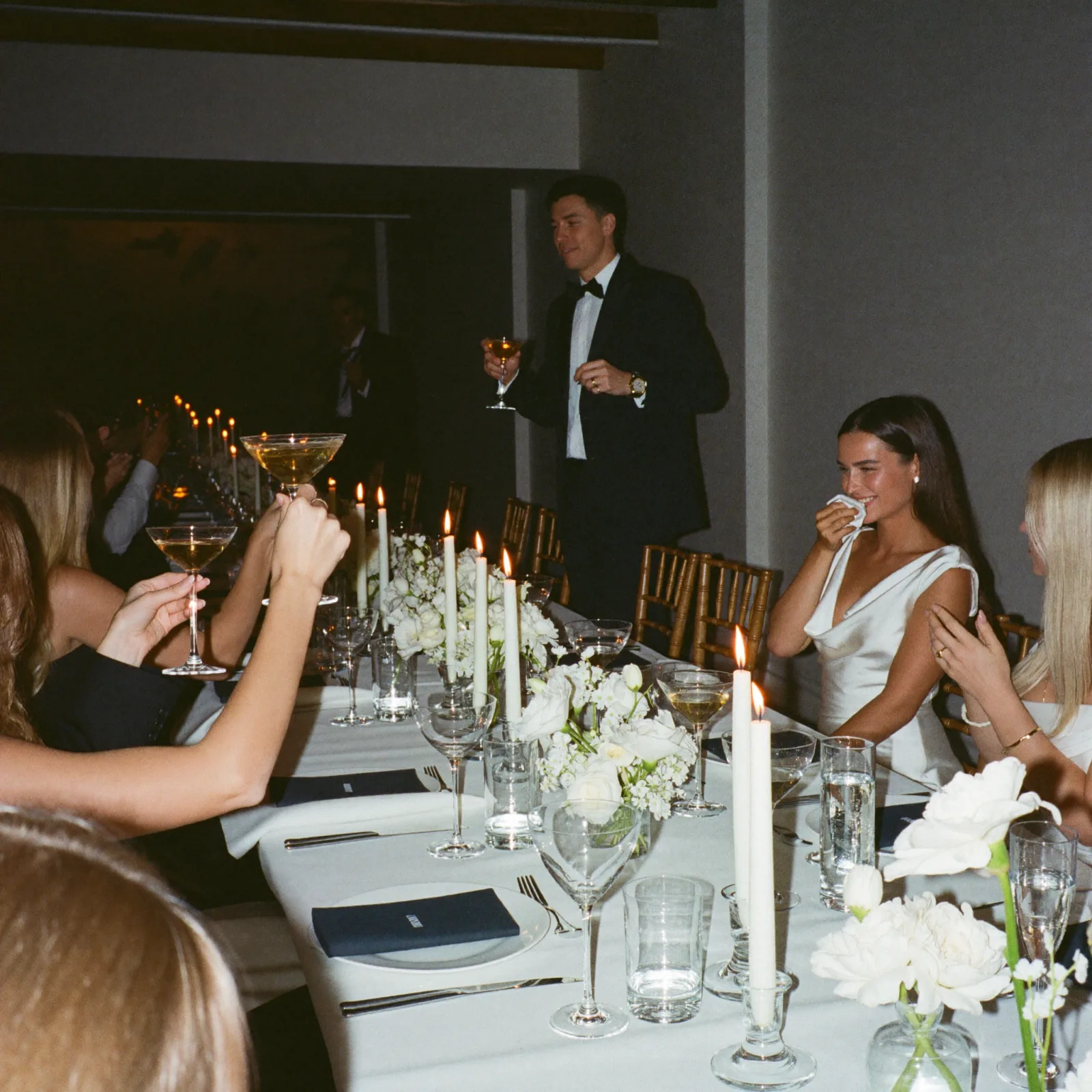 100 guests, $300 per guest
Close to the national average. The $3,600 photo line covers an average photographer ($3,000), not a photographer plus a videographer.
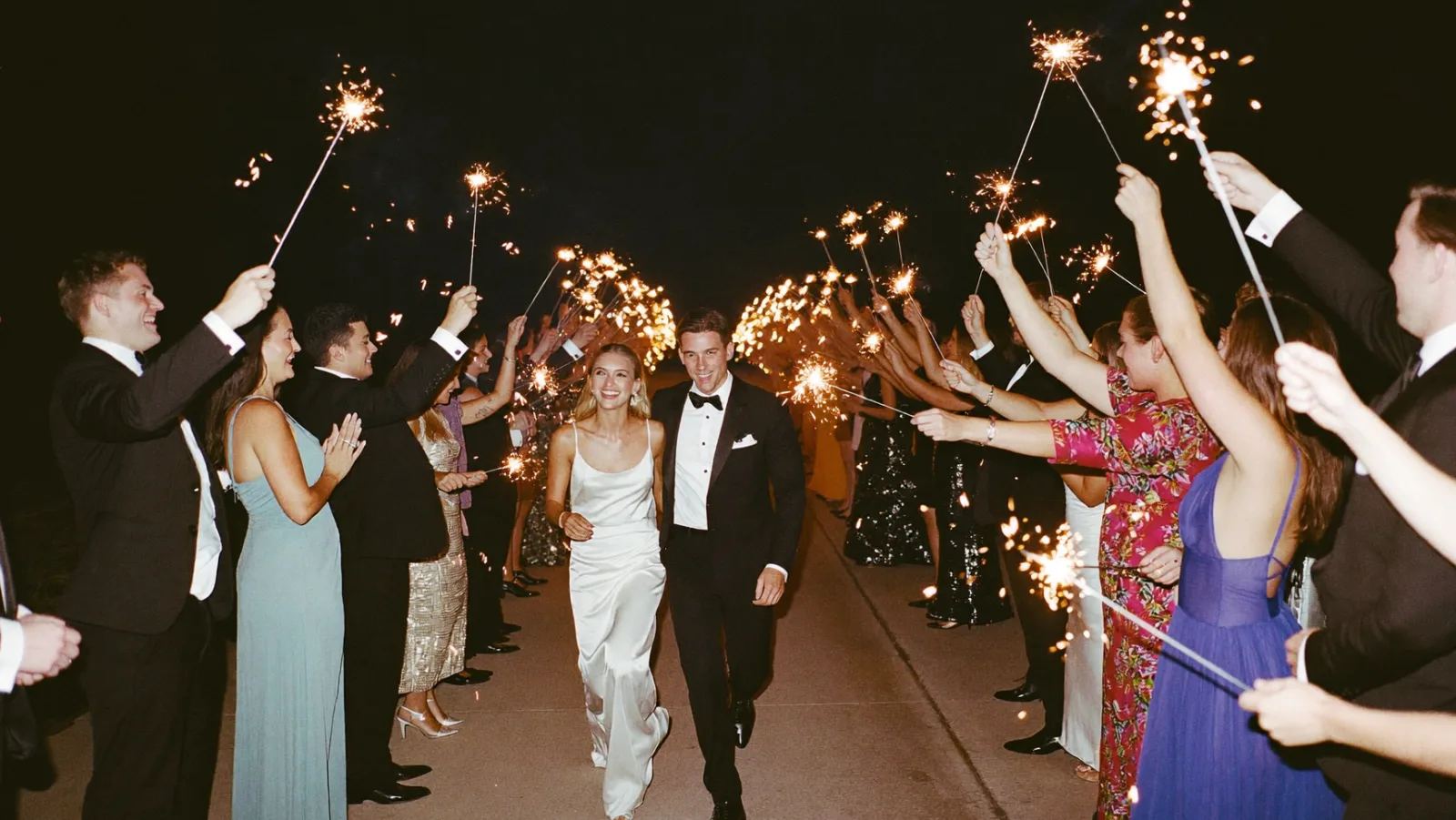 150 guests, $333 per guest
The $6,000 photo line now covers both an average photographer and videographer, and the $4,000 entertainment line reaches toward a live band.
Want the same tiers with saving tips and scripts for talking to vendors? Our wedding budget guide covers $5K to $50K+, and how to plan a wedding on a budget lays out $5K to $20K plans line by line.
The Knot's 2026 averages for the vendors couples book most, matched to the calculator line they fall under. Compare these to your lines to see where your budget is tight.
| Vendor or item | 2026 average | Calculator line |
|---|---|---|
| Reception venue | $12,900 | Venue & Catering |
| Catering | $80 per person | Venue & Catering |
| Alcohol | $2,800 | Venue & Catering |
| Event rentals | $2,000 | Venue & Catering |
| Wedding cake | $540 | Venue & Catering |
| Photographer | $3,000 | Photography & Video |
| Videographer | $2,300 | Photography & Video |
| Wedding dress | $2,100 | Attire & Beauty |
| Hairstylist | $150 per person | Attire & Beauty |
| Makeup artist | $150 per person | Attire & Beauty |
| Flowers | $2,800 | Decor & Flowers |
| Lighting and decor | $1,900 | Decor & Flowers |
| Reception band | $4,500 | Entertainment |
| Reception DJ | $1,800 | Entertainment |
| Additional entertainment | $1,500 | Entertainment |
| Wedding planner | $2,100 | Planner / Coordinator |
| Officiant | $260 | Stationery & Misc |
| Transportation | $1,100 | Stationery & Misc |
Each figure is an average among couples who paid for that item. Not every couple books a band, a planner or a videographer, so adding every line gives far more than the average wedding.
Use them per line instead. At an average size, the venue ($12,900) plus catering for 117 guests at $80 each ($9,360) comes to $22,260, about 65% of $34,200. If your venue and guest count look like that, the calculator's 50% line will be tight and the other lines have to give.
Budget these on their own, or take them off your total before you enter it.
All averages from The Knot 2026 Real Weddings Study, as listed in AOL's roundup of the study (29 April 2026). Hair and makeup are per person. Checked 6 October 2026. For each line explained in depth, see the line-by-line wedding cost breakdown.
The calculator handles step 3. The rest is a conversation between the two of you, and anyone else putting money in, before you book a single vendor.
Add up what the two of you can save before the date and any money family has offered. Ask family for a fixed amount, not a promise to cover a vendor, so the total does not move later.
The calculator's 8 categories cover the wedding day. Rings, the rehearsal dinner and the honeymoon are not in them, so either budget those separately or take them off the total before you enter it.
Type both into the calculator above. You get a dollar line for each category and an estimated cost per guest, which is the fastest reality check on your guest list.
The Knot's 2026 average for catering alone is $80 a person. If your number per guest is not far above that, the guest list is the lever to pull before anything else.
The calculator uses a fixed starting split. Write down which lines matter most to you, then move money between lines in your own sheet: raise the ones you care about and trim the rest by the same amount.
Before you sign, check the full quote, including tax, service charges and delivery, against the line for that category. If it is over, decide which other line pays for it.
Leave the emergency line alone until the last month. Use the email option under the calculator to send yourself the breakdown so both of you work from the same numbers.
For step 5 you need somewhere to move money between lines. Copy your numbers into our wedding budget template for Google Sheets, which tracks paid, pending and remaining money per category.
Guests shoot the toasts, the dance floor and the moments your photographer is not facing. A QR code on each table sends their photos and videos to one album.
Scan to join the album
No app, no account
UPLOADING
THE ALBUM
June 21, 2026
647 photos · 95 guests







Going over is common, and most of it comes from costs that were never in a quote. These are the ones to ask about before you sign.
Wealthsimple survey of more than 1,200 people in Canada, reported August 2026.
Source: Global News41% somewhat over and 14% very over, in the same Wealthsimple survey.
Source: Global NewsZola's 2026 First Look Report, up 12% from the year before.
Source: Zola via PR NewswireVenue and catering quotes are often shown before the service charge and sales tax. Ask for the all-in total in writing.
Tips for the catering staff, hair and makeup team, drivers and musicians are usually paid on the day and rarely sit in a quote.
Alterations are usually billed separately from the dress price, so give them their own small line under attire.
Photographers, planners and band members working a full day often need a meal in their contract. Count them in the catering number.
Rentals, florals and cake can carry delivery and setup fees, and running past the end time can add overtime for the venue and vendors.
Heavy or square invitations can cost more to mail, and reprints for late guests add up. Keep a little room in the stationery line.
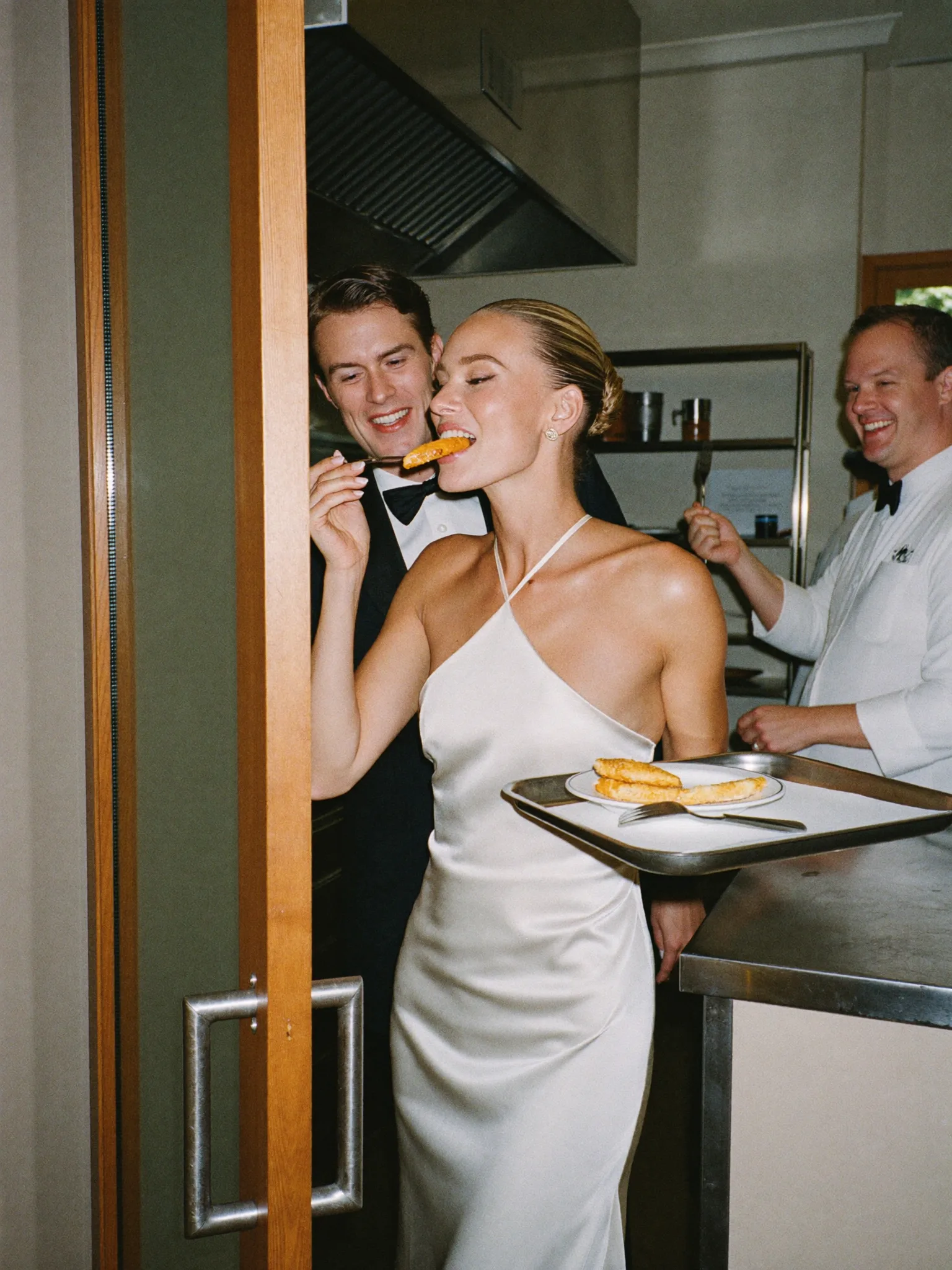
Catering is the line where service charges, tax, tips and vendor meals pile up, so ask for the all-in number.
Your cost per guest from the calculator tells you which lever to pull. Compare it to the national average of about $292 per guest, then use the moves below.
| Your cost per guest | Compared to the average | First move |
|---|---|---|
| Under about $150 per guest | About half the national average of roughly $292 per guest. | Shorten the guest list first, then look at a daytime meal, a weekday date or a venue that includes food and rentals. |
| About $150 to $300 per guest | Around the national average. | The split above works as a starting point. Pick your two priorities and shave the lines you care about least. |
| Over about $300 per guest | Above the national average. | You have room to raise the lines you care about most, for example a band instead of a DJ, or a videographer as well as a photographer. |
The real saving sits between the two: food, drinks, rentals and stationery shrink with the list, while the venue fee and the photographer mostly do not.

The calculator sets 12% for photography and video. Here is what that line buys at different totals, measured against The Knot's 2026 averages of $3,000 for a photographer and $2,300 for a videographer.
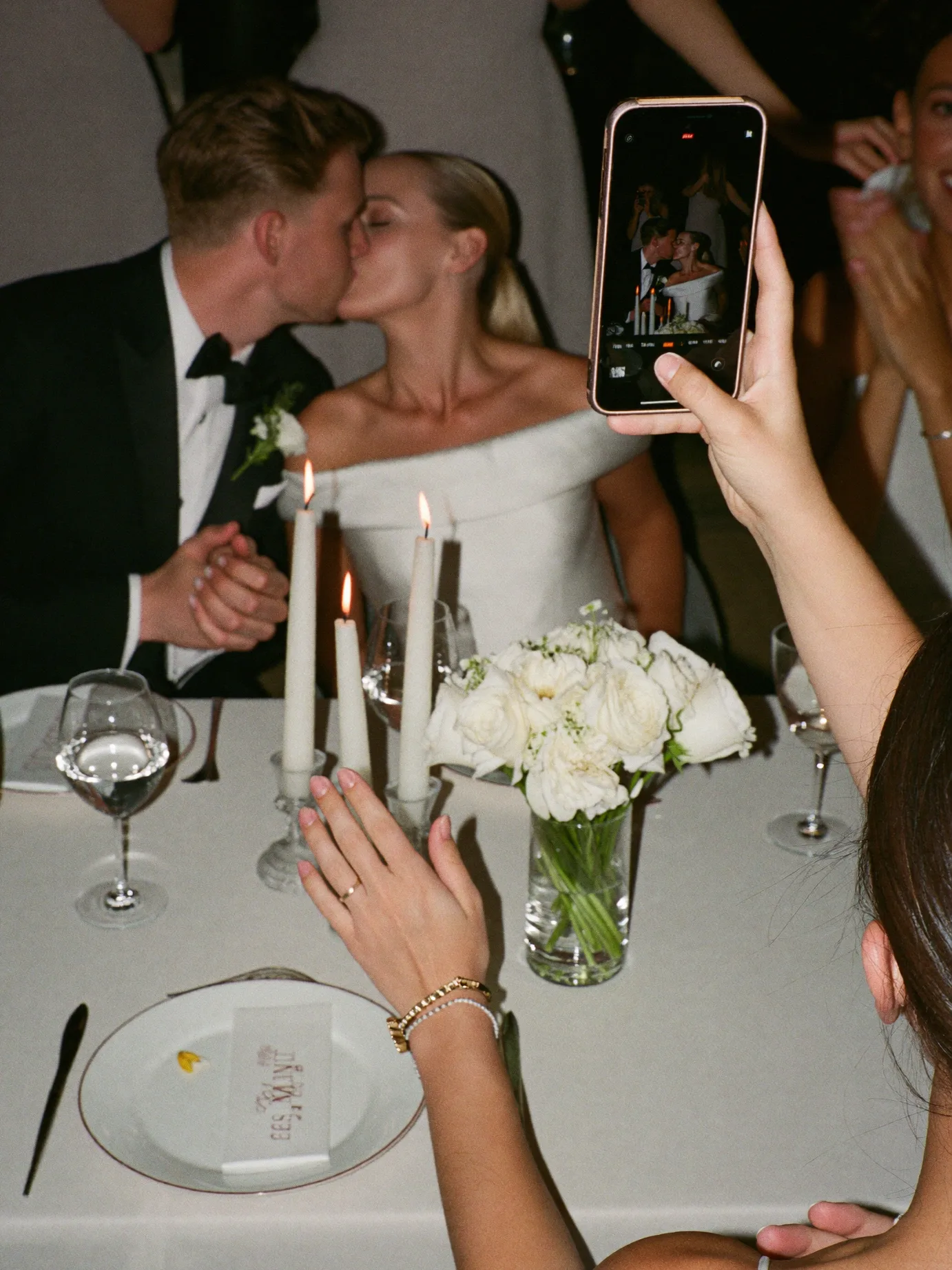 Shot by a guest
Your guests already carry cameras. A shared album collects what they shoot from their own seats: the toasts, the dance floor, the after party. It does not replace a photographer, but it fills the gaps for far less than a second shooter.
With Pix Wedding, guests scan one QR code and upload from the browser, no app or account. You can start free with 20 guest uploads and no card; paid plans are a one-time $49, $59 or $89 with unlimited guests.
Photographer and videographer averages from The Knot 2026 Real Weddings Study. Bars are scaled to $6,000. Need a closer estimate for the photographer alone? Try the wedding photographer cost calculator.

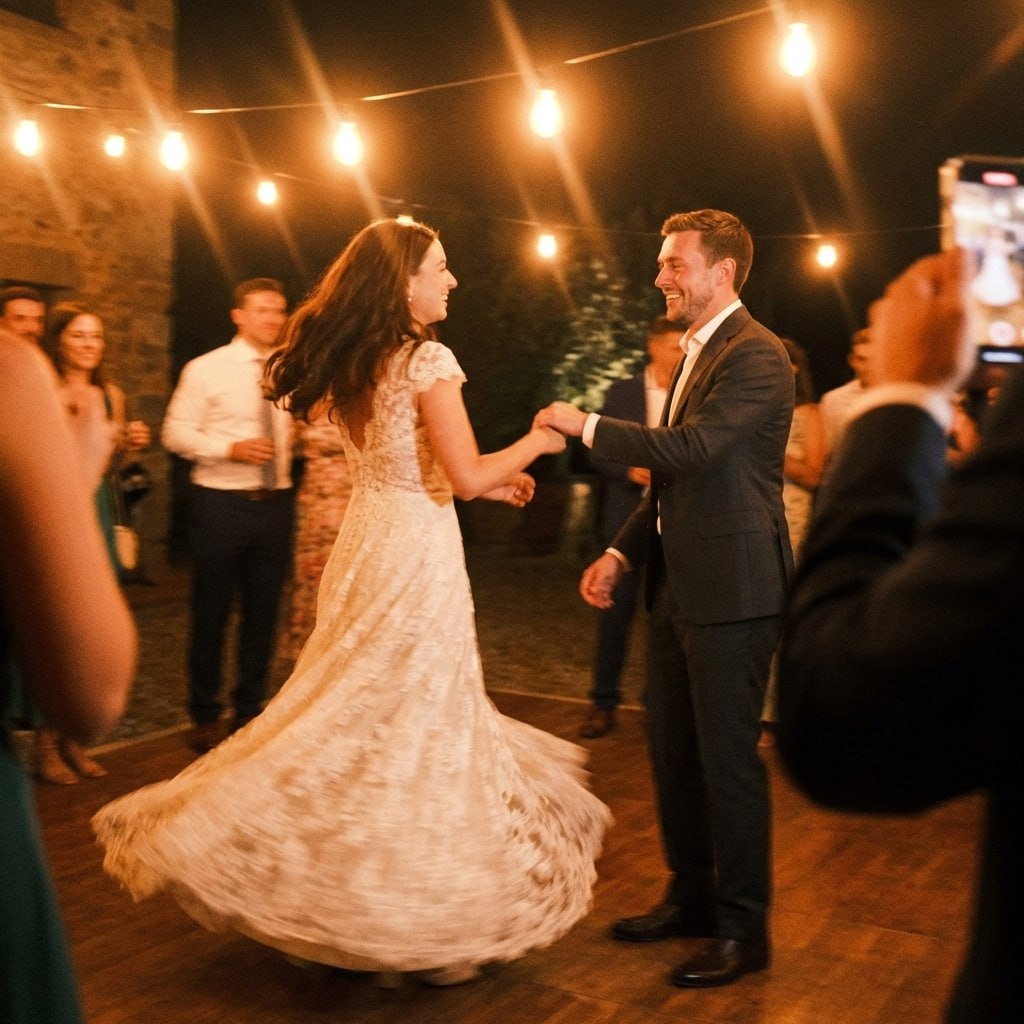
First dance
You guys!!
Guests scan one QR code and add their photos and videos to one album from the browser, no app and no account. Start free with 20 guest uploads, no card.
From Mom
Scan to join the album
No app, no account
UPLOADING
THE ALBUM
June 21, 2026
647 photos · 95 guests
SCAN TO TRY
pix.wedding/
your-wedding
This calculator answers one question: I have this much, how do I split it? If you are at a different step, one of these fits better.
The wedding cost calculator estimates a total and cost per guest from your state or city, guest count and style.
Wedding cost calculatorThe wedding budget guide walks through realistic tiers from $5K to $50K+ with saving tips and negotiation scripts.
Wedding budget guideThe Google Sheets template tracks paid, pending and remaining money per category, with formulas and charts.
Budget template for Google SheetsThe wedding budget breakdown article goes vendor by vendor, with hidden costs and what each line usually includes.
Line-by-line cost breakdownOur roundup compares Zola, WeddingWire, The Knot and other budget trackers on price, platforms and features.
Wedding budget apps comparedStep-by-step plans for $5K, $10K, $15K and $20K weddings, line by line, with what to cut and what to keep.
Plan a wedding on a budgetZola walks through dividing a wedding budget across each vendor category, starting from the average US wedding cost in its own data. Watch it with the calculator open and compare its lines with yours.
Watch on YouTube (7 min)My sister got married two months before us and told us to get Pix. Best advice she ever gave. One time payment, no subscription, that was the deciding factor for us
My wife was skeptical because we paid for a really expensive photographer. Now she says Pix is her favorite part of the whole day. Candids no photographer could ever get, her aunts taking selfies in the bathroom, the kids hiding under the table lol
Our photographer charged extra for raw files and even then we got maybe 400 edited shots. Pix got us way more from our friends, unedited but so real. Different vibe, same value, tbh maybe more
What couples ask while they set a budget: percentages, the photo line, cost per guest and what the calculator leaves out.
This calculator puts venue and catering together at 50% of the total, because most quotes bundle the space, food, drinks and rentals. On its own, The Knot's 2026 average venue cost of $12,900 is about 38% of the $34,200 average wedding. If venue and food come in above half your total, trim the guest list or other lines to make room.
The calculator sets 12% for photography and video. The Knot's 2026 averages are $3,000 for a photographer and $2,300 for a videographer, so a $30,000 budget gives $3,600, enough for an average photographer but not both. If you want both, move money in from decor or entertainment, or plan for a budget nearer $45,000.
With this calculator's split, $30,000 becomes $15,000 for venue and catering, $3,600 for photography and video, $3,000 for decor and flowers, $2,400 each for attire and entertainment, $1,500 for a planner, $900 for stationery and $1,200 as a buffer. At 100 guests that is $300 per guest.
The Knot's 2026 Real Weddings Study puts the average wedding at $34,200 with 117 guests, which is about $292 per guest. Catering alone averages $80 per person. Enter your own total and guest count above to see your number.
It splits the money for the wedding day itself. Wedding rings ($3,000 on average), the rehearsal dinner ($2,800), the engagement ring ($4,600) and the honeymoon ($5,500) are not in its categories, according to The Knot's 2026 averages. Budget those separately or take them off the total before you enter it.
The calculator keeps 4% as an emergency buffer. Overspending is common: in a 2026 Wealthsimple survey reported by Global News, 55% of married couples said they went over their wedding budget. Leave the buffer untouched until the final month, and treat it as the line that pays for surprises.
No. The calculator uses a fixed starting split so you get a clear answer in seconds. To shift money between categories, copy the numbers into our Google Sheets wedding budget template and adjust the lines there, keeping the total the same.
Not quite. A calculator like this one splits a total into category lines in one step, with no account. A budget app tracks quotes, deposits and payments over months. If you want a tracker, see our comparison of wedding budget apps for 2026.