
Order of Speeches at a Wedding Reception
Who speaks first, when each toast lands in the meal, and how long every speaker should talk before handing it off to the next.
The short answer
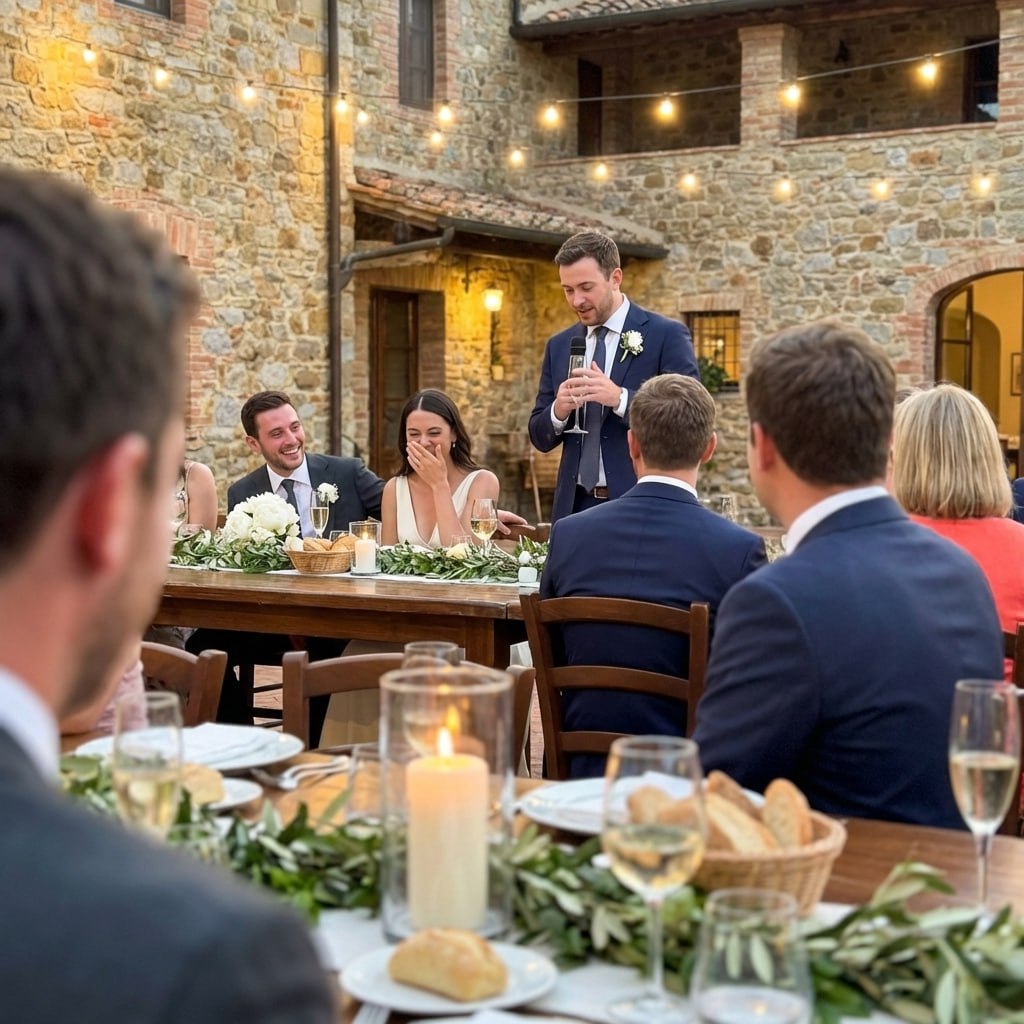
The traditional order is: whoever is hosting the wedding (usually the father of the bride) opens with a welcome toast, then the best man, then the maid of honor, then the groom, then optionally the bride. Each speech runs two to five minutes and the toasts are spread between courses rather than delivered all at once.
According to The Knot's wedding speech order guide, the host or the bride's parents traditionally kick off the toasts since it is their role to welcome guests, with the best man and maid of honor following. Plenty of couples flip the best man and MOH order or skip a speaker entirely. This page covers who speaks, in what order, and for how long. For the full run of ceremony and reception events beyond the speeches, see the complete order of wedding reception timeline.
The Traditional Speaking Order
This is the classic lineup most receptions still follow. Each entry below is who speaks and why they go in that spot, not just a name on a schedule.
- 1
Host or Father of the Bride
Whoever is hosting the wedding traditionally opens the toasts, since it is their role to welcome guests and thank them for coming. In most families this is the father of the bride, though it can be both parents, a parent of the groom, or another host figure.
- 2
Best Man
Speaks next with a story about the groom, a welcome to the new partner, and a toast. This is usually the most anticipated speech of the night, so it works well early while energy is high.
- 3
Maid of Honor
Follows the best man with a story about the bride and their friendship, welcoming the partner into her life. Some couples flip the best man and MOH order; either sequence works as long as it is decided in advance.
- 4
Groom
Thanks both families, the wedding party, and the guests, then toasts to his new spouse. This is the point in the traditional order where the couple starts to speak for themselves.
- 5
Bride
A closing toast from the bride is optional but has become increasingly common. It gives the couple the last word and lets her thank guests and family in her own voice.
When Each Speech Lands in the Meal
Spacing speeches between courses keeps the room from sitting through 20 straight minutes of standing and clapping. Here is the placement and suggested length for each speaker.
| Speech | When in the Meal | Suggested Length |
|---|---|---|
| Host or Father of the Bride | Right after everyone is seated, before the first course arrives | 2 to 3 minutes |
| Best Man | Between the first and second course | 3 to 5 minutes |
| Maid of Honor | Immediately after the best man | 3 to 5 minutes |
| Groom | Between the second course and dessert | 2 to 4 minutes |
| Bride | Right after the groom, same window | 2 to 3 minutes |
Total speech time across all five speakers usually lands between 12 and 20 minutes. Cutting the lineup to two or three speakers is common and keeps the whole block under 12 minutes.

First dance
You guys!!
The lineup is set. Now save what they said.
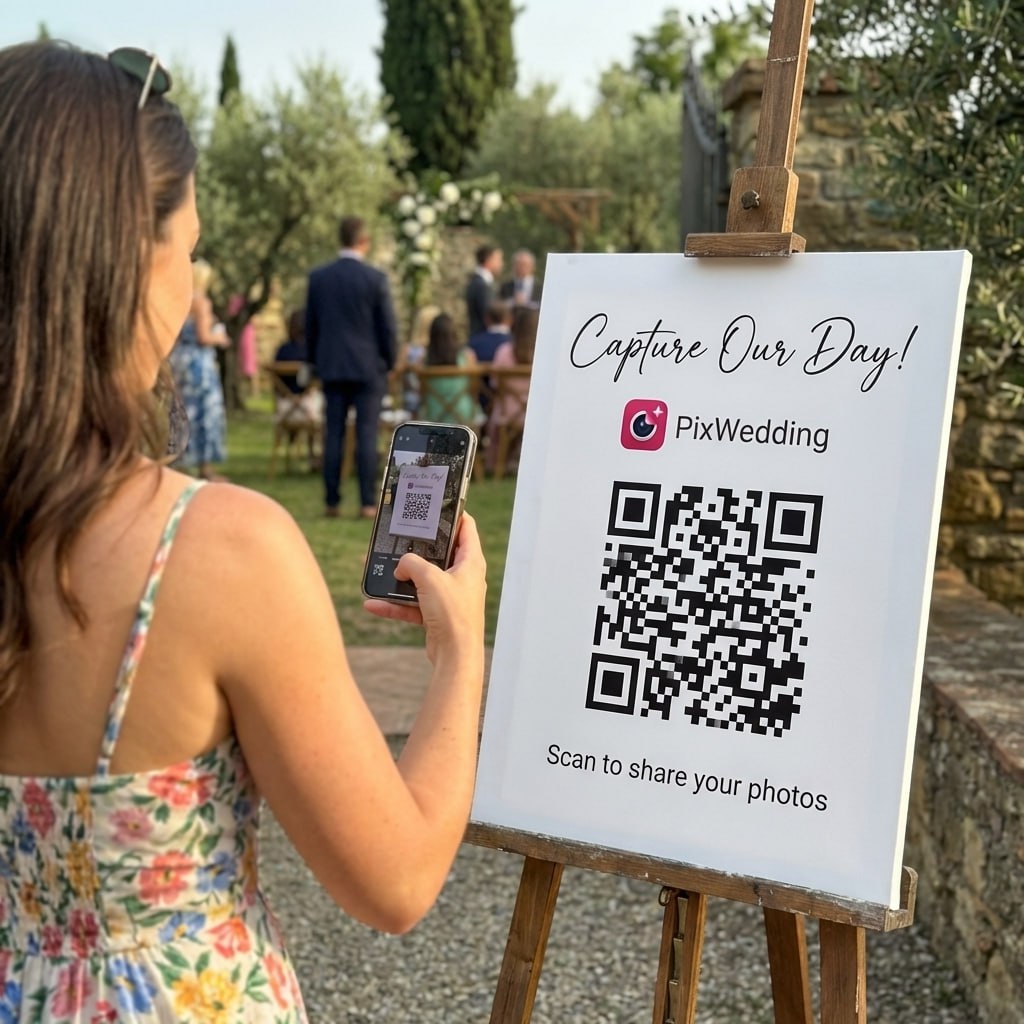
Every speech, toast, and reaction gets captured by guests through a single QR code, so the words from tonight's lineup do not just disappear once the mic goes down.
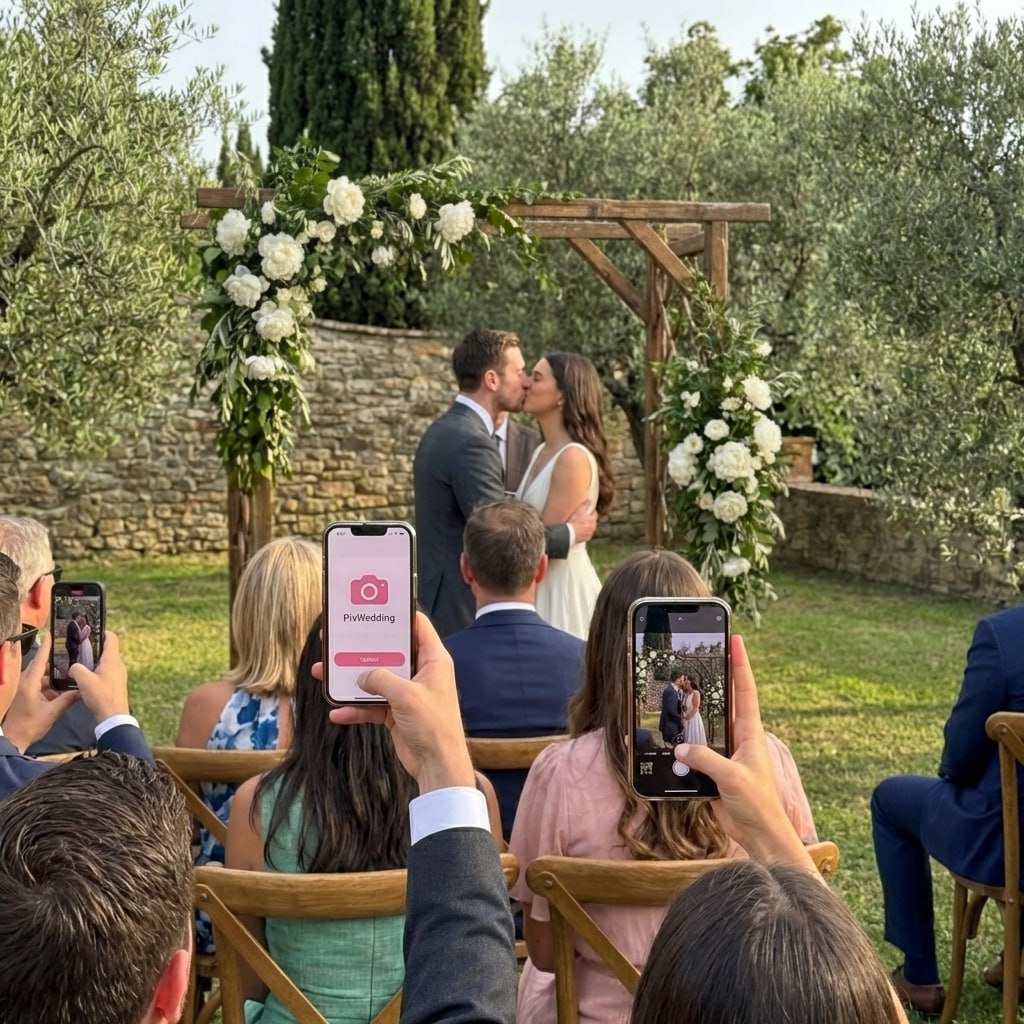
From Mom
Scan to join the album
No app, no account
UPLOADING
Saving your moment
THE ALBUM
Emma & Jack
June 21, 2026
647 photos · 95 guests
SCAN TO TRY
pix.wedding/
your-wedding
MC or Host Handoff Scripts
Whoever is emceeing, whether that is a hired MC, the DJ, or a friend, needs a quick line to introduce each speaker and keep the transitions from feeling awkward. These are illustrative starting points, not scripts to read verbatim, so swap in real names and details.
Opening the toasts
"If everyone could raise a glass, we're going to take a few minutes to celebrate [Couple Names]. First up, welcoming you all here tonight, please give a warm hand to [Host Name]."
Handing off to the best man
"Thank you, [Host Name]. Now, the moment a lot of us have been waiting for. He's known [Groom] since [detail], and he's definitely got some stories. Please welcome [Best Man Name]."
Handing off to the maid of honor
"You can breathe now, [Groom] survived that one. Next up is someone who has been by [Bride]'s side through all of it. Let's hear it for [MOH Name]."
Handing off to the couple
"Before we move to dessert, [Groom] and [Bride] wanted to say a quick word themselves. Take it away, you two."
Example scripts above are illustrative templates meant to be personalized, not verbatim wording for a real reception.
Two Sample Speech Timelines
Seeing the timing table applied to an actual clock helps more than the ranges alone. Both examples below are illustrative starting points to adapt to your own reception start time, not fixed schedules.
Two-speaker version
- 6:30pm: Guests seated, welcome drinks poured
- 6:35pm: Best man speech and toast (4 minutes)
- 6:40pm: Maid of honor speech and toast (4 minutes)
- 6:45pm: Dinner service begins
Five-speaker version
- 6:30pm: Guests seated, host welcome toast (2 minutes)
- 6:35pm: First course served
- 6:50pm: Best man speech and toast (4 minutes)
- 6:55pm: Maid of honor speech and toast (4 minutes)
- 7:00pm: Second course served
- 7:20pm: Groom speaks, then bride closes with a toast (6 minutes combined)
- 7:30pm: Dessert service begins
Both timelines above are illustrative examples for planning purposes, not a schedule pulled from a real wedding.
Common Speech Mistakes to Avoid
Running long
A 10-minute best man speech drags the whole reception. Cap every speaker at the length in the table above and say so when you ask them to speak.
Too many speakers
Five or six people all wanting to say something turns into 30+ minutes of standing around. Pick the core lineup and let anyone else write a card instead.
No rehearsal
A speaker who has never said the words out loud runs long, loses their place, or reads flatly off a phone. One practice run, even alone in a mirror, changes the delivery.
Mic handoff chaos
Passing a single handheld mic between five people wastes time and produces feedback squeals. Have the DJ or MC hand it off directly, or use two mics so one is always ready.
No warning about timing
Telling a speaker their time limit the morning of the wedding is too late. Set the expectation when you first ask them, weeks in advance.
Speaking to the room instead of the couple
The best speeches are addressed to the couple, not performed at the crowd. Coach speakers to look at the couple for the sincere parts.
Skipping the toast at the end
A story without a final "raise your glass" moment leaves guests unsure when to clap or drink. Every speech should land on an actual toast.
Modern vs Traditional Order
Traditional order
- Host or father of the bride opens with a welcome toast
- Best man speaks next
- Maid of honor follows
- Groom and bride are rarely expected to speak
Modern order
- Best man and maid of honor order is often swapped or decided by the couple
- Groom and bride both speak, closing out the lineup themselves
- Some couples drop the parent welcome toast entirely and let the MC do it instead
- Lineups of two speakers (best man and MOH only) are increasingly common
Neither version is wrong. Pick the order that fits your family and tell your MC in advance so there is no confusion at the mic.
Quick Definitions
A few terms come up whenever people plan the speech lineup. Here is what each one actually means.
Speech
The full remarks a person gives, usually a mix of a story, a welcome, and a closing toast. This is the term for the whole 2 to 5 minute slot.
Toast
The specific moment at the end of a speech where the speaker raises a glass and asks guests to drink to the couple. Every speech should end in one, even a short speech.
Roast
A speech built around teasing the groom or bride, usually from the best man. Works best when it stays affectionate and ends on a sincere note rather than staying jokey the whole way through.
MC
Master of ceremonies, the person announcing each part of the reception including who speaks next. Often the DJ, a hired professional, or a friend of the couple.
Grand entrance
The introduction of the wedding party and couple into the reception, which happens before the speeches begin. See the full entrance order for how that sequence works.
Open mic moment
A short window after the formal speeches where any guest can add a brief toast. Useful when more people want to speak than the formal lineup allows.
Optional Speakers Beyond the Core Lineup
The five-speaker traditional order covers the essentials, but some families add one more voice. These are optional, not expected, and should not push the total speech time past 20 to 24 minutes.
Officiant or celebrant
Some couples ask the officiant for a short blessing before the meal starts, separate from the formal speech lineup. This is common at religious or culturally rooted ceremonies.
Grandparents
A grandparent toast is a meaningful add for couples close to their grandparents, usually placed early, right after the host welcome, and kept brief out of respect for their comfort speaking publicly.
Siblings
If a sibling is not the best man or maid of honor but still wants to speak, a short joint toast alongside the main speeches, or a written note read by the MC, includes them without adding a full extra slot.
Parents of the groom
Not required, but a brief welcome from the groom's parents is a nice gesture, especially if the bride's parents already spoke. Keep it to one minute if it is added on top of the core lineup.
Speech Planning Checklist
Once you know your order and timing, work through this list in the weeks before the wedding so nothing gets left until the reception itself.
- 1
Decide who is speaking: pick the core lineup (2 to 5 people) at least 6 to 8 weeks before the wedding.
- 2
Tell each speaker their time limit when you ask them, not the week of the wedding.
- 3
Confirm the order with your MC or DJ so they know who to introduce and when.
- 4
Ask speakers to send a draft or outline 1 to 2 weeks ahead if they want feedback.
- 5
Decide where each speech falls in the meal and share that timing with your caterer or venue coordinator.
- 6
Test the microphone setup at the rehearsal or during setup, especially if speeches move between tables.
- 7
Give the MC a signal system for speakers running long, like background music at the 5-minute mark.
- 8
Have a backup plan for last-minute nerves: a written note the MC can read stands in for anyone who backs out.
A Few More Questions Couples Ask
What if the best man does not want to give a speech?
It is not mandatory. The maid of honor can carry the formal toast alone, or another close friend can step in. A written note read by the MC is a lower-pressure alternative for someone who wants to be included without speaking publicly.
Can speeches be memorized instead of read?
Either works, but a printed card or phone note as backup prevents a speaker from freezing mid-story. Memorized delivery with notes as a safety net tends to land better than a fully read speech, since eye contact with the couple matters.
Do speeches need to happen at the reception, not the rehearsal dinner?
Formal toasts are typically saved for the reception since that is when the full guest list is present. Some families do a smaller, more casual round of toasts at the rehearsal dinner in addition, not instead of, the reception speeches.
Once the order is set, write the actual speech
Locking in who speaks, when, and for how long is only half the job. If a speaker is staring at a blank page, the AI Wedding Speech Generator turns a few details about the couple into a full draft the best man, maid of honor, or parent can edit and rehearse, so the speech itself matches the time slot you have already planned for it.
How Many Speakers Is Too Many
Two speakers, best man and maid of honor, is the most common modern format and keeps the whole block under 12 minutes. Adding a host or parent welcome and a couple's toast stretches that to five speakers and 15 to 20 minutes, which is the upper end most guests stay engaged for.
Beyond five speakers, attention drops fast. If more people want to say something, an open-mic moment after the formal speeches, or written toasts the MC reads aloud, lets everyone be included without adding another full speech slot.
- •2 speakers: best man and maid of honor only, 8 to 12 minutes total
- •3 speakers: adds a host or parent welcome, 12 to 16 minutes total
- •5 speakers: full traditional lineup with the couple closing it out, 15 to 24 minutes total
- •Beyond 5 speakers: use an open-mic moment instead of adding formal slots
Should the Couple Give a Speech?
It is optional. A short thank-you from the groom, the bride, or both, closes out the formal toasts and covers anyone the earlier speeches did not thank directly, like the wedding planner, out-of-town guests, or a sibling who did not get a slot. It does not need to be long: even 90 seconds of genuine thanks lands well.
If neither partner wants to speak in front of the room, that is fine too. The MC can simply thank guests on the couple's behalf after the last formal toast and move straight into dinner or dancing.
What to Do If Someone Backs Out Last Minute
Nerves are common, and it is not unusual for a speaker to ask to drop out close to the wedding. Have a backup plan rather than scrambling: a written note from the nervous speaker that the MC reads aloud keeps them included without forcing them to the microphone.
If a whole slot needs to be cut entirely, simply move to the next speaker in line. Guests will not notice a missing speech nearly as much as they would notice an awkward, visibly unprepared one, so it is fine to trim the lineup rather than force it.
Explore more free wedding tools
Everything you need to make your wedding day stress-free and unforgettable.
AI Vow Generator
Write "banger" vows in seconds.
Hashtag Generator
Create unique wedding hashtags.
Thank You Notes
Generate personalized thank you notes.
Father of the Bride Toast
Full example toasts, structure, and delivery tips.
Invitation Wording
Perfect wording for your invitations.
Couple Name Combiner
Blend your names into the perfect couple name.
Photo Sharing QR
The best way to collect guest photos.
Wedding Checklist
Month-by-month planning checklist.
Wedding Speech Order FAQ
Everything you need to know about our free tools and how they help your wedding day.
Traditionally the host of the wedding, usually the father of the bride, opens the toasts with a welcome to guests, followed by the best man and then the maid of honor. Many modern receptions start straight with the best man if there is no separate host welcome.
The best man and maid of honor typically run 3 to 5 minutes each. A host or parent welcome runs 2 to 3 minutes, and the groom or bride's closing toast runs 2 to 4 minutes. Total speech time across the full lineup usually lands between 12 and 20 minutes.
During dinner, spread between courses, is the most common placement. A welcome toast lands before the first course, the best man and maid of honor speak between the first and second course, and the couple's toast, if there is one, comes before dessert.
The best man traditionally goes first, but plenty of couples flip the order or let it depend on who is more comfortable speaking early. There is no rule against swapping the order as long as the MC and both speakers know the plan ahead of time.
Set the time limit when you first ask them to speak, not the week of the wedding. Give the MC or DJ a signal, like starting soft background music at the five-minute mark, as a gentle cue to wrap up.
It helps. A short handoff line between speakers, even just a name and a quick introduction, keeps the transitions from feeling like dead air. The DJ, a hired MC, or a friend comfortable with a mic can all handle this role.