
Wedding Speech Examples for Every Role
Best man, maid of honor, father, mother, bride, groom, siblings, and friends. Two example formats per role, plus an etiquette guide and speech comparison table.
Generate Your Speech with AIWedding Speech Norms by Role
Speech Examples by Role
Use these as structural templates. Replace bracketed sections with your own real details.
Best Man
Classic: Funny opening into sincere tribute
"When [groom] asked me to be his best man, I thought he was confused. Turns out he just ran out of better options. I am [name], and I have had the terrifying pleasure of being his best friend since we were 14. [Story about the groom's defining character moment.] When I first met [bride], I knew something was different. He stopped complaining about Sundays. He started cooking actual food. He became, somehow, more himself. [Bride], whatever you did to him, it worked. Please raise your glasses..."
Alternative: Story-led journey format
"I want to tell you a story that starts in [year] and ends right here. [Opening story about how they met or a significant friendship moment.] Twelve years later, I am standing here watching him marry the person who made all of that growth make sense. [Tribute to the bride.] [Groom], you have been my favorite person to call when things went wrong. I hope she is your first call for everything from now on. Please join me in raising a glass..."
Maid of Honor
Classic: Friendship journey with sincere pivot
"[Bride] and I have been friends since [year]. In that time I have seen her through [relatable shared experiences]. So when she told me about [groom], I was cautious. And then I met him. And I saw, for the first time in my memory, that she was completely calm. Not performing, not curating. Just calm. [Short groom tribute.] To the two of you: may you always make each other that calm. Ladies and gentlemen, please raise your glasses..."
Alternative: Story-based with humor
"I prepared three speeches. This is the one [bride] approved. The other two are in a vault. [Short funny story about the bride.] But here is what I know about her beyond the funny stories: she is the most loyal, the most present, and the most fiercely loving person I have ever met. And [groom], you somehow got her to direct all of that at you. [Sincere tribute.] Please raise your glasses to the couple who absolutely deserve each other..."
Father of the Bride
Classic: Life-story arc from daughter's childhood
"When [bride] was [age], she [childhood memory]. I did not know then how that moment would define her. Today she walks into a new chapter with [groom], and I could not be more proud. [Groom], I want to say three things to you. First, [appreciation]. Second, [observation about his character]. Third, [advice or blessing]. [Bride], you have been the best thing that ever happened to this family. Today the best thing that ever happened to you is standing at your side. Please join me in raising a glass..."
Alternative: Letter-style address to the bride
"I wrote this as a letter to [bride], and I hope she will forgive me for reading it in public. [Bride], I have been composing this speech in my head since you were [young age]. [Warm memories from childhood to present.] I am giving you today to [groom], which is the only way I can put it that makes sense to me. I am not losing you. I am watching you become more fully yourself. [Toast line...]"
Groom
Classic: Gratitude arc from family to bride
"I want to start by saying thank you, in the right order. To [families], for everything you gave us before today. To [wedding party], for being here through all of it. And to [bride]: you are the reason any of this makes sense to me. [Personal story about the bride or their relationship.] I promise you [specific personal vows or commitments]. And I promise everyone in this room that I will spend the rest of my life being worth the trouble she has gone through. [Toast or final line.]"
Alternative: Address directly to the bride
"I do not want to talk to the room tonight. I want to talk to you. [Direct address to bride.] I remember [specific first meaningful moment]. I knew then, even if I did not say it. I am saying it now, in front of everyone we love, so there is no confusion. [Sincere declaration.] [Short thank you to families.] To everyone here: thank you for witnessing this. [Toast.]"
Bride
Classic: Gratitude and direct address to groom
"I was not going to give a speech. And then I realized I had things to say that I could not not say. To my parents: [warm tribute]. To [bridal party]: [specific thanks]. And to [groom]: I have been trying to find the right words for this for months. [Short story or specific moment.] You make me braver. You make me quieter when I need to be quiet. You are the best decision I have ever made. [Toast or closing line.]"
Alternative: Storytelling format
"There is a story I have been wanting to tell in public. [Story about when she knew he was the one.] What I want you all to know is that behind that story is a thousand smaller ones, each one more ordinary and more important. [Groom], every ordinary moment with you has felt like a gift. [Thank you to families.] I am the luckiest person in this room. Please raise your glasses..."
Mother of the Bride/Groom
Classic: Journey from childhood to this moment
"I have been preparing for this day and dreading it in equal measure. [Short story about the couple or the child growing up.] When [groom/bride] brought [partner] home for the first time, I watched. I watch carefully. What I saw was [specific observation]. I knew then that this was different. [Tribute to the new family member.] Welcome to our family. You were always part of it. [Toast.]"
Sibling
Classic: Sibling-only perspective story
"Growing up with [groom/bride] means I have context no one else in this room has. [Short unique sibling story that is affectionate.] What I can tell you, with the authority that only comes from sharing a childhood, is that they are exactly who they appear to be. [Tribute to partner.] [Name], welcome to the chaos officially. [Toast.]"
Close Friend
Classic: Friend-only memory with sincere tribute
"[Bride/Groom] and I met [context]. I will never forget [specific shared memory]. What I know about them that the wedding party does not is [unique friend perspective]. [Short tribute to partner.] To the two of you: the best is still ahead. [Toast.]"
Wedding Speech Etiquette: Universal Rules
Always acknowledge the couple first
Before any personal story or tribute, direct your first real gaze and words toward the couple. They are why everyone is there.
End with a toast, not a sentence
The final moment of any wedding speech should be a glass raised and a clear invitation for the room to join. "Please raise your glasses" is the transition that unifies the room.
Stay within your time allocation
Each speaker's role comes with an expected length. Going significantly over is disrespectful to other speakers, to the couple's schedule, and to the audience.
Do not reveal secrets or embarrass publicly
The test is simple: would you say this in a job interview? In front of the couple's parents? If not, cut it. Wedding speeches are not the place for revelations.
More Speech Resources
First dance
You guys!!
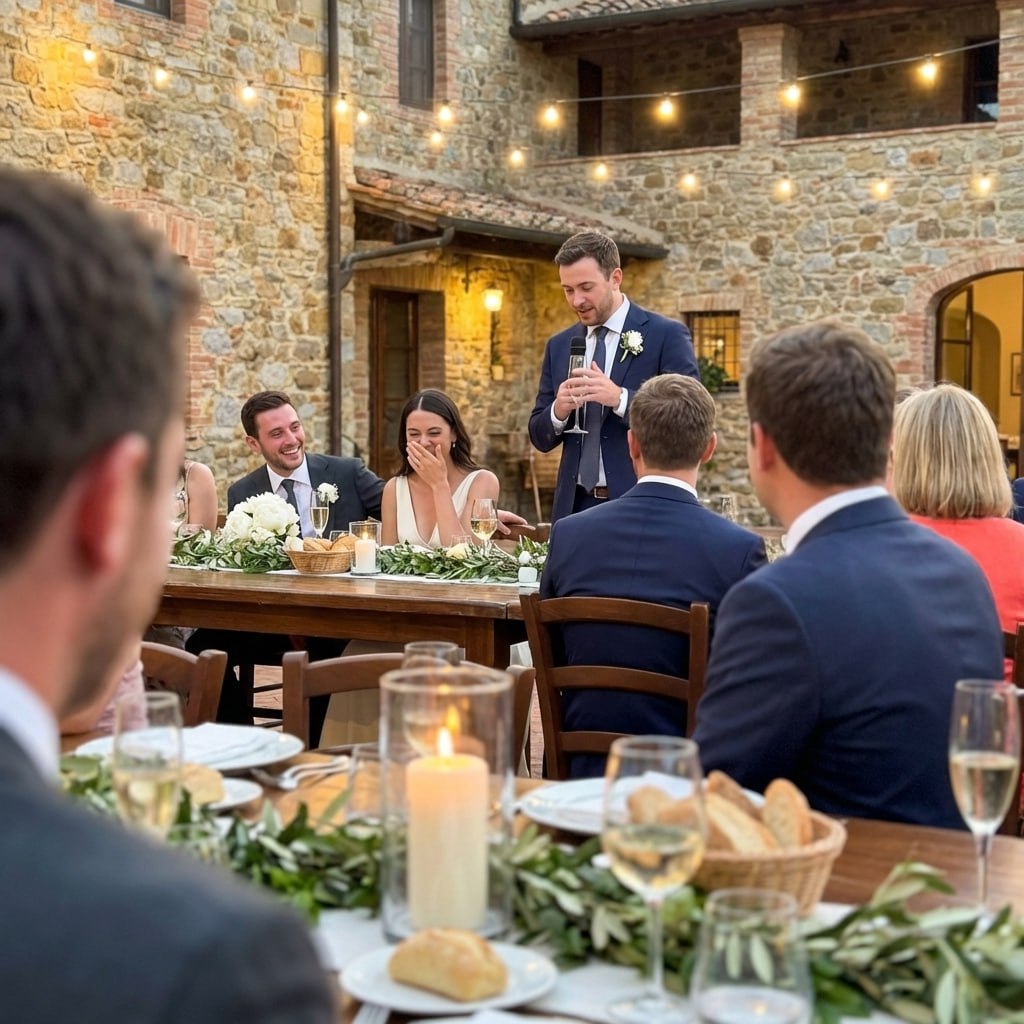
All those speeches. Saved in one place.
Pix Wedding collects guest photos and voice messages through a simple QR code, giving the couple a complete record of every speech and reaction from their wedding day.
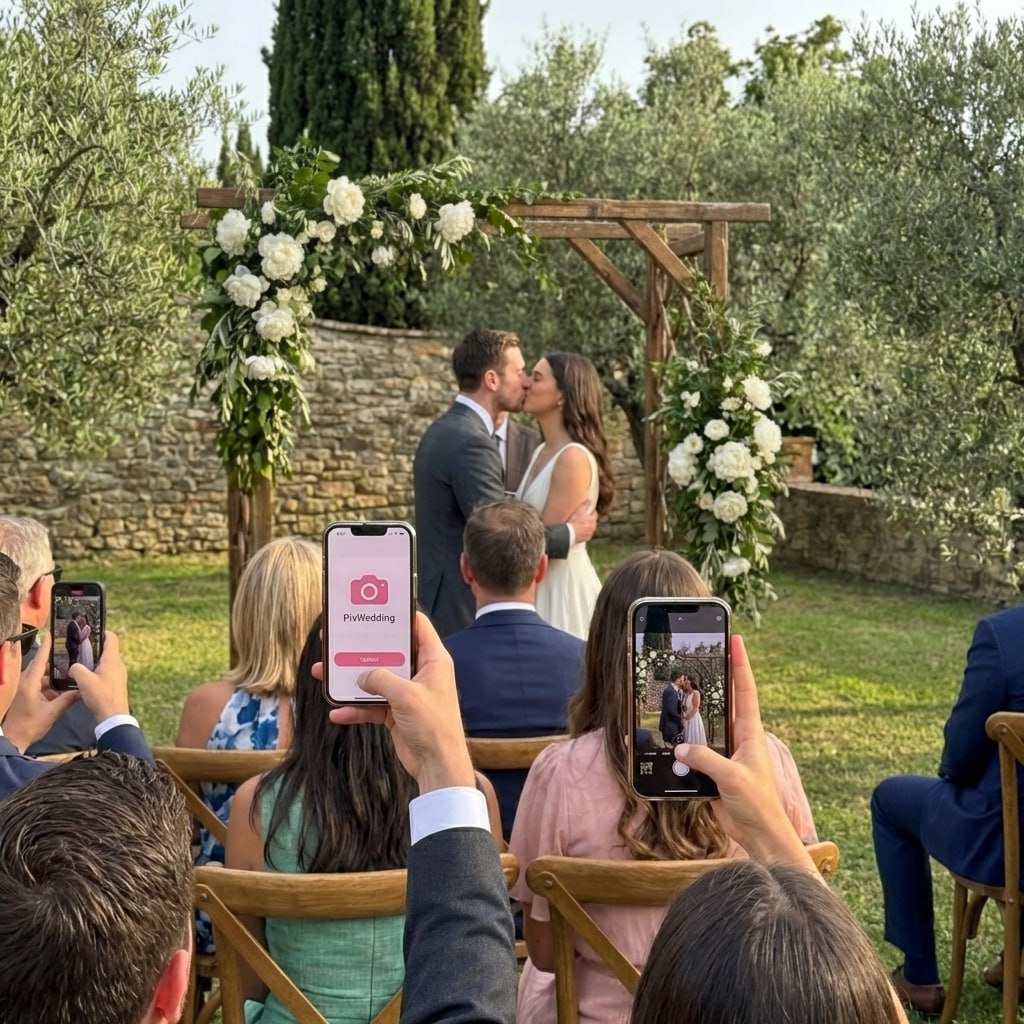
From Mom
Scan to join the album
No app, no account
UPLOADING
Saving your moment
THE ALBUM
Emma & Jack
June 21, 2026
647 photos · 95 guests
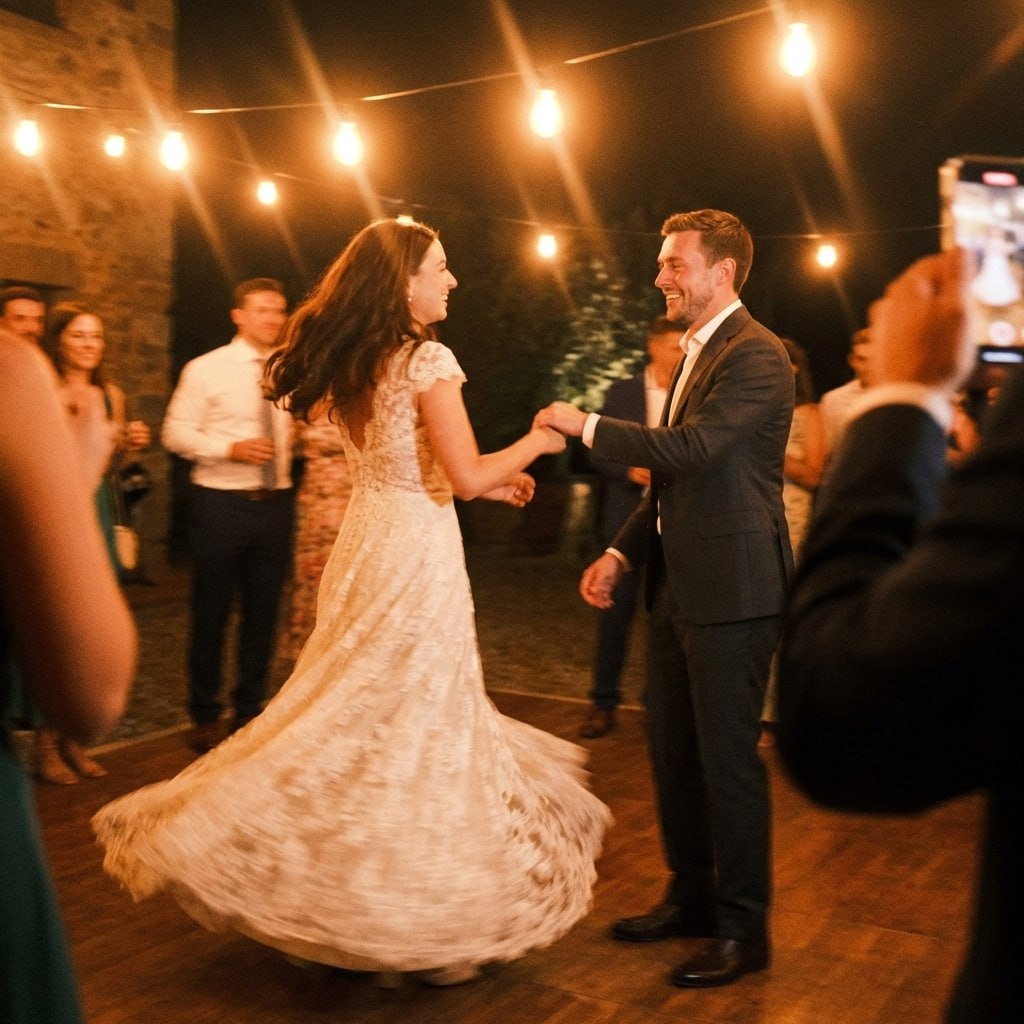
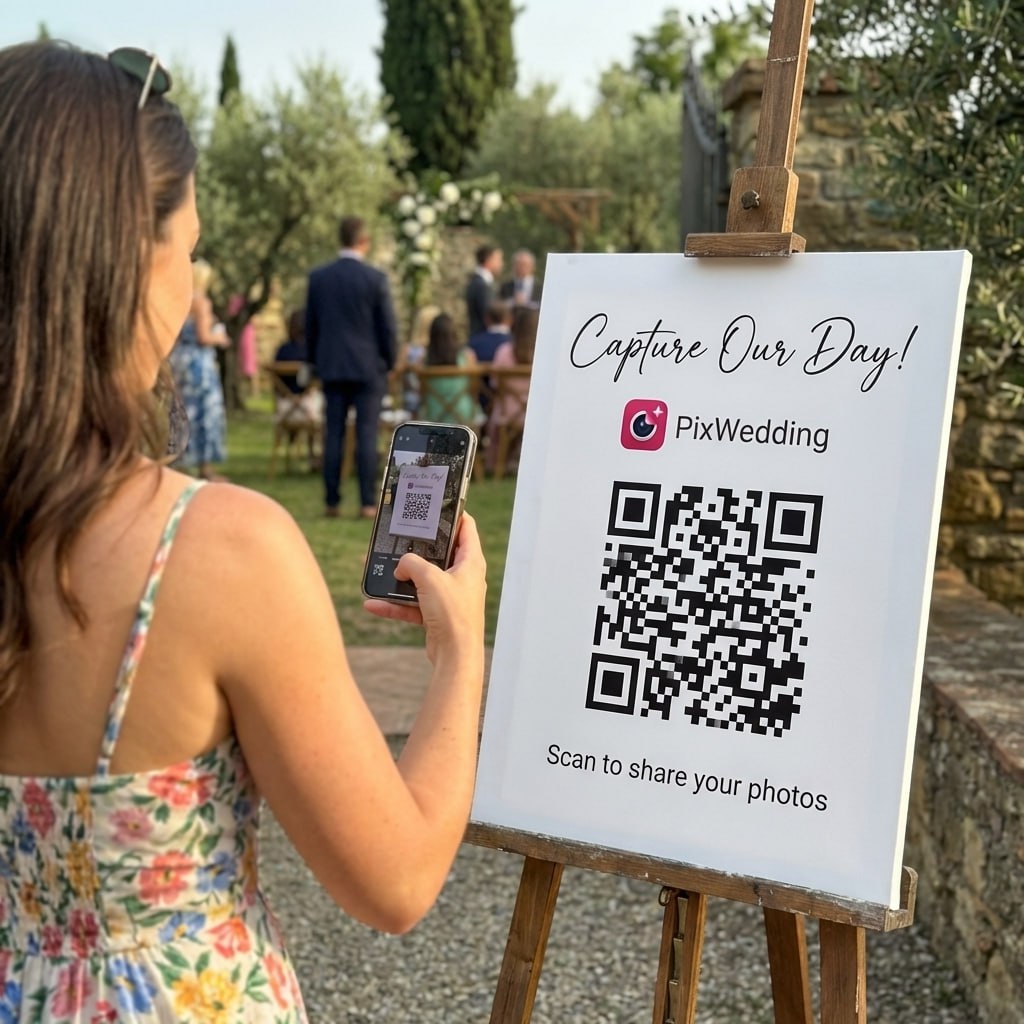
SCAN TO TRY
pix.wedding/
your-wedding
How to Adapt Any Speech Example to Your Situation
Every example below is a structural model: it shows you the proportion of humor to heart, the flow of the sections, and the kind of content each role typically delivers. The goal is not to copy the words but to understand the architecture and fill it with your own real material.
The most common mistake when using speech examples is copying the tone without the specificity. A generic tribute that could apply to any groom at any wedding feels like a template even when delivered sincerely. Replace every universal claim with a specific memory, observation, or story that only you could tell.
- •Use examples for structure, not wording
- •Replace every generic noun with a specific proper noun or detail
- •Match the example's humor-to-heart ratio to your natural personality
- •Your unique perspective is what makes the speech irreplaceable
How Different Roles Approach the Same Wedding
Notice how the examples below approach the couple from fundamentally different angles. The father sees a life story. The best man sees a character. The bride sees a partnership. The maid of honor sees a friendship transformed. These distinct perspectives are what make multiple speeches at the same wedding work: they are not redundant because each speaker has unique access.
When planning the speech order, consider which perspectives the audience has not yet heard. If the father of the bride gives an emotional, story-heavy speech, the best man can lean funnier. If the best man is all laughs, the maid of honor can lean more sincere. Variety of tone keeps the room engaged across multiple speeches.
- •Each role has natural access to different stories and perspectives
- •Coordinate tone between speakers when possible to avoid redundancy
- •Multiple speakers covering different emotional registers keeps the room engaged
- •The couple should hear the speeches in advance to avoid unpleasant surprises
Explore more free wedding tools
Everything you need to make your wedding day stress-free and unforgettable.
AI Vow Generator
Write "banger" vows in seconds.
Hashtag Generator
Create unique wedding hashtags.
Thank You Notes
Generate personalized thank you notes.
Father of the Bride Toast
Full example toasts, structure, and delivery tips.
Invitation Wording
Perfect wording for your invitations.
Couple Name Combiner
Blend your names into the perfect couple name.
Photo Sharing QR
The best way to collect guest photos.
Wedding Checklist
Month-by-month planning checklist.
Wedding Speech Examples FAQs
Straight answers to the questions people ask most about this topic.
Traditional order: the father of the bride (or parents), the best man, and the maid of honor. Modern weddings often add the groom, bride, friends, or siblings. The order is usually: parent of bride, groom, best man, maid of honor. Some couples add additional speakers between or after these.
Father of bride: 4-6 minutes. Best man: 3-5 minutes. Maid of honor: 3-5 minutes. Groom: 3-4 minutes. Bride: 2-4 minutes. Siblings and friends: 2-3 minutes. Always err on the shorter side; the room always remembers a speech that ended too soon more warmly than one that ran too long.
Traditional order: father of the bride or wedding host, groom, best man. The maid of honor traditionally follows. Modern practice is more flexible. The reception venue or caterer can advise on timing: speeches usually happen after the starter or before dessert, not during the main course.
Increasingly yes. The groom has traditionally spoken, but many modern brides also give short speeches. These personal statements from the couple are often the most emotional moment of the reception. They do not need to be long: 2-3 minutes of genuine gratitude and love is perfect.
Sibling or friend speeches work best when they offer a unique perspective: a story only a sibling would know, a memory only close friends share. They should be shorter than the best man or maid of honor speeches (2-3 minutes) and have the same arc: brief intro, story, tribute, toast.
Yes, but treat examples as structural templates, not word-for-word scripts. Replace the generic details with specific, true memories. A speech that sounds like it could have been given at any wedding is almost always weaker than one that could only have been given at this wedding.