
Wedding Toast Examples for Every Role and Occasion
Twenty-plus wedding toast examples organized by role: best man, maid of honor, parents, siblings, and friends. Includes the toast versus speech difference, raising the glass protocol, rehearsal dinner toasts, one-liner toasts, and sentimental closing lines.
Generate Your Toast FreeToast vs Speech: The Key Differences
Wedding Toast
Length: 30 seconds to 2 minutes
Ends with: Raised glass and collective drink
Structure: For whom, one truth, invitation
Prep time: 20-30 minutes if done well
Best for: Anyone who wants to acknowledge the couple briefly
Wedding Speech
Length: 3 to 7 minutes
Ends with: Often a toast, but not required
Structure: Intro, stories, thanks, close, optional toast
Prep time: Several hours to several days
Best for: Best man, MOH, parents, bride, groom
20+ Toast Examples by Role
Personalize every name, place, and specific detail before using these as your own.
Best Man
To my best friend: may you always be as happy as you look today, and may she never find out about what happened in [city]. Please raise your glass. To [couple].
I have watched him become a better version of himself since he met her. I did not know that was possible, and I have never been happier to be wrong. To the two of you. Cheers.
To the couple: may you grow old together, and may you always be the younger-looking one, [groom's name]. Cheers.
Maid of Honor
She has been my person through every version of myself. Today she is choosing her forever person. I could not have chosen better for her if I had tried. To [bride and groom]. May this day be only the beginning of what you deserve.
I have seen her on her best days and her worst days and every day that did not quite go as planned. He has seen most of those days too, and he is still here. That tells me everything. To the couple. Cheers.
To [bride]: you deserve all of this. And to [groom]: you are exactly what she deserves. Glasses up.
Father of the Bride
A father's job is to prepare his children for the world. I hope I have done mine well. What I know for certain is that she has chosen her own world wisely, and I could not be prouder. To [couple]. Welcome to our family, [groom].
Today two families become one. I raise my glass to that. To [couple], and to every person in this room who helped make them who they are. Cheers.
Mother of the Bride
I raised her to be kind, independent, and wise in her choices. She has exceeded every hope I had for her in every way. And she chose you. So I raise my glass to both of you, and to the family you are building. I love you both.
To my daughter on her wedding day: you are more than I ever hoped. And to her partner: take care of each other. That is all I ask. Cheers.
Sibling of the Bride or Groom
Growing up, I thought I knew everything about my [brother/sister]. Then they found someone who somehow knew them better. I have decided to be flattered rather than offended. To the couple. Cheers.
I have been watching you my whole life. Watching you today is the best version of that. I love you both. Please raise your glasses.
Friend of the Couple
I have known them separately and together, and I can tell you that "together" is the correct configuration. They are better when they are in the same room. To [couple]: may you always be in the same room. Cheers.
To the two people who are absolutely going to be "that couple" forever. And I mean that as the highest compliment. Glasses up.
Raising the Glass: Proper Protocol
The physical act of the toast has its own etiquette. Here is the correct sequence.
Signal the Moment
Before your closing line, make sure guests have their glasses. A brief pause while looking at the room is enough to signal that the toast is coming.
Say the Toast
Deliver your closing line clearly and at a slightly slower pace than your speech. This is the sentence people need to hear distinctly.
Invite Participation
Use "Please raise your glass to..." or "Please join me..." to create the collective moment. Gesture with your own raised glass.
The Couple Stands
The honored couple traditionally stands during toasts given for them. They do not drink to themselves; they thank the toast-giver after.
Toast-Giver Drinks First
The person giving the toast takes the first sip, then everyone follows. The couple can then take their own sip if they choose.
Acknowledgment
The couple typically says a brief thank-you to the toast-giver, either verbally or with eye contact and a nod. No formal response is required.
One-Liner Toasts
For informal moments, impromptu rounds, and rehearsal dinner toasts where brevity is a virtue.
"May your love be modern enough to survive the times and old-fashioned enough to last forever."
"To love, laughter, and happily ever after."
"May you never go to bed angry. And may you always have cold pillows on the other side."
"Here is to the couple: may your fights always be short and your make-ups always be long."
"To the most interesting chapter of both your lives. Cheers."
"May you always be each other's favorite story."
"To [couple]: the best decision either of you ever made. And I have seen some of the other options."
Sentimental Closing Lines
Use these at the end of a longer speech to bring it to a toast. Specific and image-based closings are always stronger than abstract wishes.
"May the life you build together always feel like coming home."
"May your love be enough in the easy years, and more than enough in the hard ones."
"May you always find your way back to tonight."
"May the best day you have ever known be only the beginning."
"May you grow old together and always see each other as you look right now: like the luckiest person in the room."
"May ordinary Tuesdays always feel like a gift."
More Wedding Speech Resources
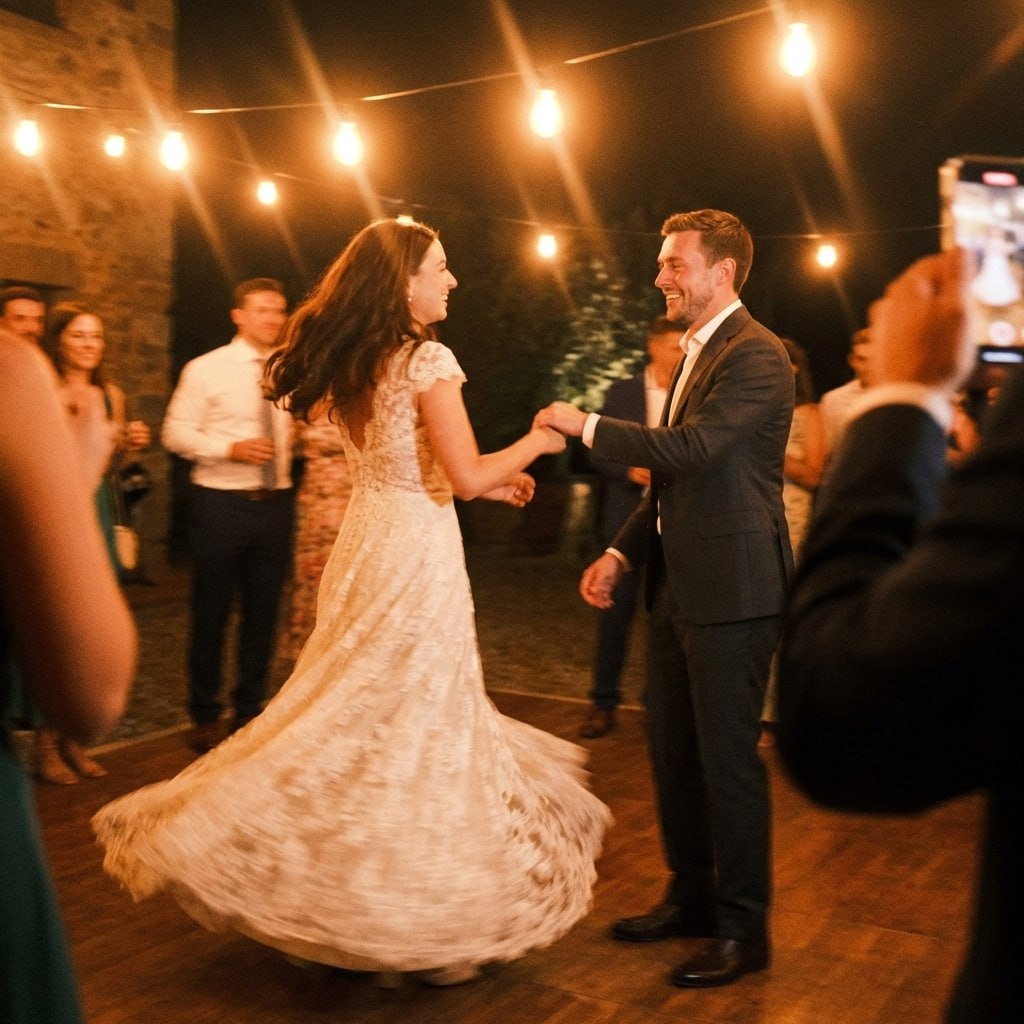
First dance
You guys!!
Every great toast deserves a replay.
Pix Wedding captures voice messages and guest photos in one shared album, so those toasts are there the morning after when the couple relives the whole day.
From Mom
Scan to join the album
No app, no account
UPLOADING
Saving your moment
THE ALBUM
Emma & Jack
June 21, 2026
647 photos · 95 guests
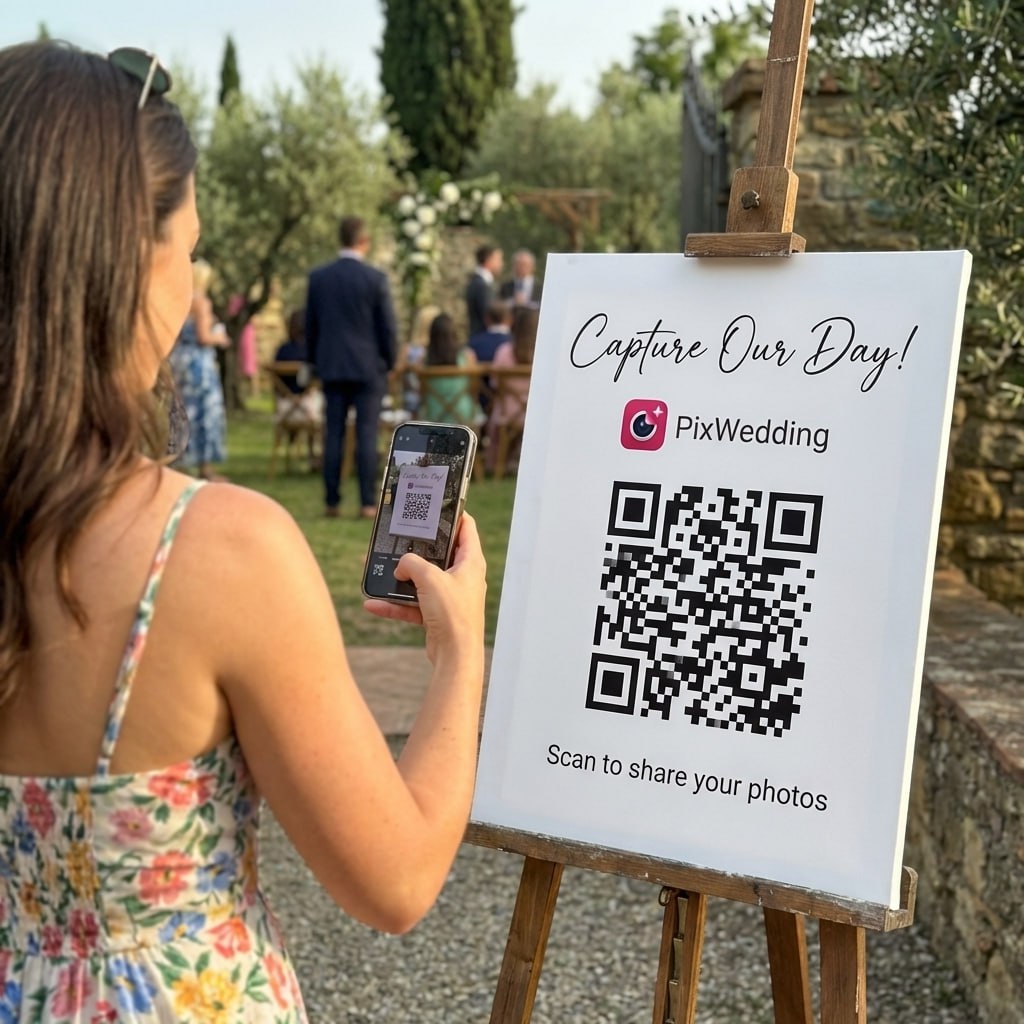
SCAN TO TRY
pix.wedding/
your-wedding
Toast vs Speech: Understanding the Format
The confusion between toasts and speeches is common, and it matters practically because the formats require different preparation, different timing, and different delivery skills. A speech is an extended address: three to seven minutes of stories, acknowledgments, and emotional content that builds to a peak. A toast is the peak itself, compressed into a single clear statement that invites collective action.
The word "toast" comes from the practice of placing a piece of spiced toast in wine to improve its flavor, then offering the improved drink to someone honored. The modern toast retains that essential structure: you improve the moment, then offer it to the room. The offering is the raised glass. Everything before it is the enhancement.
Great toasts have three functional parts, even within their brief format: an opening that establishes who the toast is for, a body that says one true and specific thing, and a close that invites participation. The ratio of these parts shifts depending on length: a thirty-second toast might have a one-sentence body; a two-minute toast might have three.
- •Toast: thirty seconds to two minutes, ends with raised glass
- •Speech: three to seven minutes, may include a toast at the close
- •Toasts have three parts: for whom, one specific truth, invitation to drink
- •Great toasts are specific; generic sentiments create polite applause, not lasting memory
Rehearsal Dinner Toasts vs Reception Toasts
Toasts at the rehearsal dinner operate under different rules than reception toasts. The crowd is smaller and more intimate, the atmosphere is more casual, the evening is less structured, and the emotional stakes are lower. All of this means rehearsal dinner toasts can be longer, more personal, more meandering, and more willing to reference specific people and specific moments that a mixed reception audience might not share.
Reception toasts, by contrast, should be tighter and more universally accessible. The reception includes guests who do not know the couple well, who may not know other speakers, and who are sitting through multiple toasts in sequence. Economy of language is a courtesy to that audience. Specific detail is still the goal, but choose details that create emotional access for everyone rather than inside-knowledge for the few.
If you are toasting at both events, use completely different material. The rehearsal dinner gives you the full story. The reception gets the distilled truth extracted from that story.
- •Rehearsal dinner: longer, more personal, inside-knowledge welcome
- •Reception: tighter, universally accessible, emotionally available to all
- •Use completely different material at each event if speaking at both
- •Economy is a courtesy at the reception; depth is welcome at the rehearsal dinner
Explore more free wedding tools
Everything you need to make your wedding day stress-free and unforgettable.
AI Vow Generator
Write "banger" vows in seconds.
Hashtag Generator
Create unique wedding hashtags.
Thank You Notes
Generate personalized thank you notes.
Father of the Bride Toast
Full example toasts, structure, and delivery tips.
Invitation Wording
Perfect wording for your invitations.
Couple Name Combiner
Blend your names into the perfect couple name.
Photo Sharing QR
The best way to collect guest photos.
Wedding Checklist
Month-by-month planning checklist.
Wedding Toast FAQ
Straight answers to the questions people ask most about this topic.
A wedding speech is a full address of several minutes covering stories, thanks, and observations. A wedding toast is a short, focused statement of thirty seconds to two minutes that ends with the invitation to raise glasses and drink. A speech can contain a toast at the end; a toast does not need a speech around it.
A standalone toast runs thirty seconds to two minutes. If you are ending a speech with a toast, the toast portion itself should be under thirty seconds. The shorter and more specific the toast, the more it lands. Long toasts dilute the moment of raising the glass.
Traditionally, the best man gives the first toast at the reception. At the rehearsal dinner, the host (often the father of the groom) gives the first toast. Modern weddings often have the emcee or wedding coordinator set the order based on the couple's preferences.
The toast-giver speaks, concludes with "Please raise your glass" or "Join me in raising a glass to...", then gestures with their own raised glass. Guests stand if prompted, or remain seated while raising glasses. The couple typically stands during toasts given for them. Everyone drinks together after the toast-giver takes the first sip.
At the reception, you should always check with the couple or the MC before offering an unscheduled toast, as timing is usually carefully managed. At the rehearsal dinner, impromptu toasts are generally more welcome, particularly in the later, more relaxed part of the evening.
The best sentimental closing lines are specific and image-based rather than generic and abstract. "May your life together hold more mornings than you can count and fewer hard nights than you fear" is stronger than "May you always be happy." Specificity creates resonance; generality creates politeness.