
Wedding Speech Template: 4 Universal Frameworks for Any Speaker
Four role-agnostic templates with fill-in-the-blank sections, a word bank of emotional transitions, timing markers, and a quick quiz to pick the right one.
Which Template Fits Your Style?
Answer these three questions to identify which of the four templates plays most naturally to your strengths.
1. How would your friends describe your natural speaking style?
2. How long have you known the person you are speaking about?
3. What is the wedding's emotional tone?
4 Universal Wedding Speech Templates
Each section includes a fill-in placeholder, a timing marker, and a sample line to show the intended tone.
Template 1: The Classic Arc
Best man, maid of honor, close friends. Works for any speaker with specific stories and a genuine personal connection.
Timing: 4-5 minutes[Hook Opening]
30 secStart with your strongest line: a funny observation, a surprising true statement, or a bold declaration. Do not start with "Hi, I am [name]."
Sample line
"When [Groom] asked me to be his best man, my first thought was that he had confused me with someone with better judgment."
[How I Know Them]
30 secOne sentence on the relationship: how long, in what context, under what circumstances you met or became close.
Sample line
"I have known [Groom] for [X] years, since we were both [context of how you met]."
[Story 1 - Light]
75 secYour funniest or most memorable shared story. Setup: [what the situation was]. Escalation: [what went wrong or right]. Resolution: [what it revealed about the groom].
Sample line
"The best way I can describe [Groom] to those who do not know him is this story: [specific story with setup, moment, punchline]."
[Story 2 - Heart]
75 secA story that reveals character under pressure, a moment of growth, or a scene where you saw who he really is. Should carry more emotional weight than Story 1.
Sample line
"But what that tells you about the funny side. There is also this: [emotionally grounded story that shows his character]."
[Bride Tribute]
45 secAddress the bride directly. Be specific: what did you observe when you first saw them together? What did she bring out in him that you had always hoped to see?
Sample line
"[Bride], I want to say something to you directly. The first time I saw you two together, I noticed [specific observation]. Thank you for [specific gift she gave him or the friendship]."
[Toast]
20 secRaise your glass. Deliver your closing line slowly. Write this line first and build the speech toward it.
Sample line
"Please join me in raising a glass to [couple], who have somehow made this cynical [occupation/description] genuinely believe in the whole thing. To [Bride] and [Groom]."
Template 2: The Story-Led
Natural storytellers. Speakers who have a single powerful story that encapsulates everything they want to say.
Timing: 3-4 minutes[Opening Statement]
20 secA single bold true statement about the groom or your friendship. Not a joke, not an introduction. A declaration.
Sample line
"I want to tell you one story. It explains everything you need to know about why I am proud to be standing here today."
[Story Setup]
30 secSet the scene: when, where, what the circumstances were. Be specific about the details that make the story vivid.
Sample line
"It was [time period], we were [specific situation], and [groom] had just [inciting incident]."
[Story Body]
90 secThe full story, with specific details, dialogue where possible, and genuine stakes. The groom should be revealed, not just described.
Sample line
"What happened next was: [specific narrative sequence]. I remember thinking [internal reaction]. And then [groom] [key action or statement that reveals his character]."
[Story Resolution + Meaning]
30 secWhat the story meant. Not moralizing, but connecting it to who he is and why today matters.
Sample line
"That is the version of him I have always known. The one who [quality revealed by story]. And that is the person [Bride] gets to have for the rest of her life."
[Bride Address]
30 secShort, direct, specific tribute to the bride.
Sample line
"[Bride], I could not have written a better match for him if I had tried. Thank you for [what she brought]."
[Toast]
20 secRaise glass, deliver closing toast line.
Sample line
"To [Bride and Groom]: may the next chapter be your best story yet."
Template 3: The Portrait
Speakers who prefer sincerity over humor. Parents, siblings, close family friends. Suitable for more traditional or emotional wedding contexts.
Timing: 3-4 minutes[Grounding Opening]
30 secA sincere, warm opener. Could be a brief childhood memory, a recurring image, or a simple statement of gratitude for being asked to speak.
Sample line
"I have been thinking about what to say today for [length of time]. And I kept coming back to one image: [specific early memory or image]."
[Who They Are]
60 secA sincere, specific portrait of the person being honored. Three qualities, each supported by one real example. Not adjective lists. Scenes.
Sample line
"[Name] is [quality 1]. I know this because [specific example]. They are also [quality 2], which I saw when [specific example]. But most of all, they are [quality 3], and I can prove it: [example]."
[How They Found Each Other]
45 secThe moment you saw them together and understood. Specific. Grounded in observation.
Sample line
"When I first saw them together, I noticed [specific observation that revealed the relationship]. I did not say anything. I did not need to."
[Direct Tribute to Partner]
45 secAddress the partner directly. Sincere, specific, personal. What you see in them. What you hope for them.
Sample line
"[Partner name], I want to say this directly: [specific tribute grounded in observation or a moment]."
[Wish and Toast]
30 secYour sincere wish for their future, then the toast line.
Sample line
"I wish you [specific, personal wish]. Please raise your glasses to [couple]."
Template 4: The Contrast
Speakers who have known the person through a major life change. Especially effective for long friendships with a clear before-and-after narrative.
Timing: 4-5 minutes[Before Intro]
40 secWho the person was before this relationship. Specific and honest. Affectionate but real.
Sample line
"When I met [Name], [X] years ago, they were [specific honest portrait of who they were then]."
[Before Story]
60 secA story from the "before" period that illustrates who they were. Ideally funny or revealing, not unflattering.
Sample line
"I will give you one example from that era: [specific story from the before period]."
[The Change]
30 secThe turning point. When you noticed they were different. What you observed and when.
Sample line
"And then something happened. I noticed it first when [specific moment of first observation]. Something had changed."
[After Story]
60 secA story from after, showing who they are now. Should reflect visible growth or a new quality that was not present before.
Sample line
"The same person who [before story behavior] was now [specific after behavior]. I will give you an example: [after story]."
[Attribution + Bride/Partner Tribute]
40 secCredit the partner with helping bring out this change. Sincere and direct.
Sample line
"I know who I have to thank for that. [Partner name], whatever you did, I am grateful. [Specific tribute]."
[Toast]
20 secThe toast line, which should reference the contrast journey.
Sample line
"To [Couple]: the best version of this story is still ahead of you. Please raise your glasses."
20+ Emotional Transition Phrases
Organized by the type of shift they create. Use these to bridge sections smoothly and naturally.
Humor to Sincerity
"But in all seriousness..."
"What I actually want to say, underneath all of that, is..."
"Jokes aside, and there are many..."
"Now, for the part of this speech that will not embarrass anyone..."
Story to Tribute
"That story tells you everything. But let me be more direct..."
"Which brings me to the real reason I am here..."
"And that is who he is. Which is why what she found in him matters so much..."
"Behind every story is the person I have had the privilege of calling my friend."
Me to You (Couple Address)
"I want to speak to you both directly for a moment..."
"And to you, [Bride], if I may..."
"What I want the two of you to know is..."
"This next part is for the couple, not the room."
Setup to Punchline
"What happened was..."
"And then..."
"The best part of this story is..."
"Which is why, to this day, [groom] still cannot..."
Body to Toast
"So if you will all raise your glasses..."
"There is one thing left to say, and I have been saving it..."
"To close, and I promise I am nearly done..."
"Ladies and gentlemen, please raise your glasses to..."
How to Personalize Any Template
Replace every placeholder
Every bracketed element should become a specific real detail. "[Groom]" becomes his actual name and ideally his nickname. "[Story]" becomes a scene with specific setting, dialogue, and action.
Read aloud before finalizing
The template will reveal rhythm problems when spoken that are invisible on the page. Any sentence you stumble over should be rewritten in simpler, more natural language.
Time each section separately
Fill in each section and time it independently. Most sections will run 20-30 percent longer than the marker suggests once you add specific details. Cut accordingly.
Test your best joke separately
Before the wedding, read your funniest line to one trusted person. Their reaction tells you everything about whether to keep, cut, or modify it.
Write the toast line first
Fill in your toast before any other section. It is the destination. Everything else becomes the journey when you know where you are headed.
Cut what does not serve the couple
After completing the template, read it once and ask: does every sentence serve to honor this couple? Cut anything that serves only you, your humor, or your story.
More Speech Resources
First dance
You guys!!
Template filled. Speech ready. Album waiting.
Pix Wedding gives guests a QR code to upload photos and voice messages, so the speech you built from scratch has a permanent home in the couple's shared wedding album.
From Mom
Scan to join the album
No app, no account
UPLOADING
Saving your moment
THE ALBUM
Emma & Jack
June 21, 2026
647 photos · 95 guests
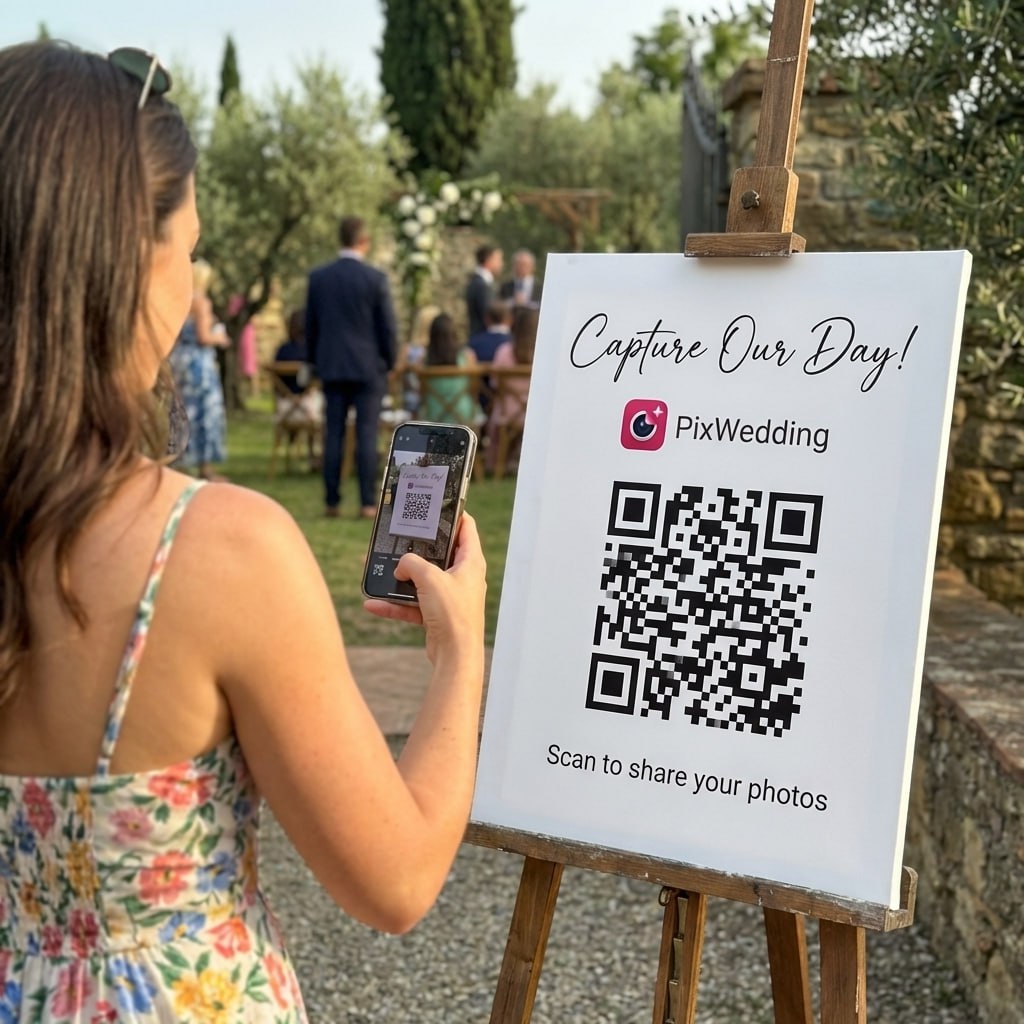
SCAN TO TRY
pix.wedding/
your-wedding
Why Templates Are Starting Points, Not Finished Products
A template is a scaffold, not a building. The four frameworks below give you the proportions, the sequence, and the transitions of a well-structured speech. What they cannot give you is the content that makes it memorable: the specific moment, the real nickname, the story only you know.
The most common misuse of a speech template is treating it as a finished product, swapping in names but leaving everything else generic. A template filled with generic content reads like a template. A template filled with specific personal details reads like a speech.
- •Replace every bracketed element with a specific real detail, not a paraphrase
- •The transition phrases are templates too: customize them to sound like your voice
- •Read the completed template aloud before considering it finished
- •If you could swap the names out and give the speech at another wedding, it needs more personalization
When to Use AI vs. a Template
Templates give you maximum control: you write every word from scratch within the framework. AI generators give you maximum speed: you provide the details and the AI builds the sentences. The ideal workflow for most speakers is to use the template to understand the structure, then use an AI tool to generate a first draft within that structure, then personalize the output.
If you have strong writing instincts and specific stories ready, work from the template directly. If you are staring at a blank page with no idea how to start, let an AI generate the first draft and then revise it against the template's structural guidelines.
- •Template only: best for writers who know what they want to say
- •AI only: best for speakers who need a starting draft quickly
- •Template plus AI: best approach for most people; structure from template, speed from AI
- •Always revise AI output for specificity and personal voice
Explore more free wedding tools
Everything you need to make your wedding day stress-free and unforgettable.
AI Vow Generator
Write "banger" vows in seconds.
Hashtag Generator
Create unique wedding hashtags.
Thank You Notes
Generate personalized thank you notes.
Father of the Bride Toast
Full example toasts, structure, and delivery tips.
Invitation Wording
Perfect wording for your invitations.
Couple Name Combiner
Blend your names into the perfect couple name.
Photo Sharing QR
The best way to collect guest photos.
Wedding Checklist
Month-by-month planning checklist.
Wedding Speech Template FAQs
Straight answers to the questions people ask most about this topic.
The four frameworks below work across roles because they are structural, not content-specific. The Classic Arc, for example, works equally well for a best man, a maid of honor, a sibling, or a close friend. What changes are the specific memories and tone you fill in, not the skeleton.
The secret is aggressive personalization. Every bracketed placeholder should be replaced with a specific, real detail: a real name, a real place, a real incident. If after filling it in you could not swap out the names and have it still make sense, you have done the job correctly.
Filling in a template takes 20-30 minutes if you have your stories ready. Budget an additional 30 minutes to read it aloud, adjust for rhythm, and replace any lines that feel stiff. AI generators can speed up the first draft significantly if you are starting from the template structure.
Transition phrases are the sentences that bridge sections of the speech. Without them, the speech feels like a list of disconnected paragraphs. With them, it feels like a single flowing narrative. The word bank below gives you 20+ ready-to-use transitions organized by the type of shift they create.
The quiz below asks you five questions about your natural communication style, your relationship with the couple, and the wedding context. Based on your answers, it points you to one of the four templates that will play most naturally to your strengths. You can always override the recommendation.
It is courteous to give the groom a general sense of what you plan to cover, especially if any section is potentially sensitive. You do not need to share every word. Saying "I am going to tell the camping trip story and end with a sincere tribute to you both" is enough to prevent genuine surprises without removing all spontaneity.