Fraud Blocker
pixPix Weddingwedding
Updated June 2026

Disposable Camera Alternative: 7 Better Options (2026)

The short answer: a QR shared album, a digital disposable app, or a Fujifilm Instax will each outperform a film disposable camera in cost, quality, and convenience. Here is how all seven options stack up with real 2026 prices.

TL;DR

Disposable cameras cost $0.85-2.00 per usable shot once developing is included, take 2-3 weeks to return, and fail badly indoors. The best alternatives are: QR shared album (free to $99, instant, unlimited); Fujifilm Instax ($0.65/print, instant physical); or a digital disposable app ($10-30, film aesthetic, no wait). Pick based on whether you want physical prints and how many people are sharing.

Why People Are Ditching Disposable Cameras

The nostalgia is real. The results often are not. Here are six specific reasons the numbers do not hold up anymore.

The true cost is $0.85-2.00 per usable shot

A disposable camera costs $12-18. Development and scanning add $10-15. That is $22-33 per camera for 27 exposures. Factor in 30-40% blurry indoor shots and the effective cost per usable photo is $1.50-2.00.

A 2-3 week wait after the biggest day of your life

Most local labs take 1-2 weeks. Mail-in services take 2-3 weeks or longer. By then, the emotion of the day has faded and guests have moved on. Digital alternatives are instant.

Indoor shots fail without a real flash system

The built-in flash on disposable cameras has a range of about 4-10 feet. Beyond that, photos come out dark. Most reception halls and churches far exceed that range, making dimly lit, unusable shots the norm.

Lost cameras mean lost photos permanently

There is no recovery option for a film camera left in a cab or forgotten on a table. Digital alternatives store photos to the cloud in real time, so even a dropped phone does not cost you anything.

No way to share digitally without scanning

To get film photos into a shareable digital format, you need a scanning service, which adds cost and wait time. The final files are often lower resolution than a modern smartphone photo.

No video at all

Disposable cameras capture still photos only. Guests who want to capture a toast, a first dance, or a spontaneous moment on the dance floor have no option. Every digital alternative covers video.

7 Disposable Camera Alternatives (With Real Prices)

Each option below covers what it is, what it costs in 2026, honest pros and cons, and who it is best for.

Option 1

QR Code Shared Album (Pix)

Cost: $0-99 for the full eventQuality: Smartphone quality (excellent)Effort: Very low

Pros

  • No app download for guests
  • Full-resolution photos and videos
  • Instant upload, no developing wait
  • Unlimited shots from all guests
  • Works on any smartphone

Cons

  • No physical prints at the event
  • Requires guest smartphones
  • Needs a data or Wi-Fi connection to upload
Best for: Couples who want every candid moment collected in one album without friction
Option 2

Digital Disposable Camera App (Scene, Lense, POV)

Cost: Free to $99 per event depending on guest countQuality: Smartphone quality with film filter overlayEffort: Low

Pros

  • Film-look filters and grain aesthetic
  • Timed reveal keeps photos a surprise
  • Browser-based, most do not require a download
  • Low per-event cost
  • Fun, intentional capture mechanic

Cons

  • Some apps require internet connection during shooting
  • Photo quality capped by film filters
  • Pricing scales with guest count on some platforms
Best for: Events where you want the disposable-camera feel but digital convenience
Option 3

Fujifilm Instax Instant Camera

Cost: $80-200 for the camera + $0.65-0.90 per printQuality: Instant film quality (nostalgic, not crisp)Effort: Medium (managing film, loading cameras)

Pros

  • Instant physical prints guests keep immediately
  • Iconic look and feel
  • No app, no phone required
  • Prints double as keepsakes or place cards

Cons

  • Film cost adds up quickly at scale (100 prints = $65-90 in film)
  • No digital copies unless you also scan
  • Indoor shots can be washed out or dark
  • Prints are small (credit card size for Mini)
Best for: Table settings, photo booths, or small events where physical keepsakes matter
Option 4

Polaroid Now Instant Camera

Cost: $110-140 for the camera + $2 per printQuality: Polaroid film quality (moody, dreamy)Effort: Medium

Pros

  • Larger, more classic-looking prints (3.5 x 4.2 inches)
  • Strong brand recognition and aesthetic cachet
  • Prints develop in minutes in front of guests

Cons

  • Film is expensive: $2 per shot, 8 shots per pack
  • 100 prints costs $200 in film alone
  • Inconsistent exposure in low light
  • Heavy and bulky compared to Instax
Best for: Smaller events or as a single guest book camera where cost per print is acceptable
Option 5

Cheap Point-and-Shoot Digital Camera

Cost: $50-150 (Camp Snap ~$70, Canon Ixus used ~$50)Quality: Good digital quality (8-24MP)Effort: Medium-high (SD card collection after event)

Pros

  • Reusable for future events
  • Better low-light than film disposables
  • No recurring film or development cost
  • USB transfer is fast

Cons

  • No sharing mechanism built in
  • Someone has to manage the card and transfer files
  • Multiple cameras mean multiple SD cards to collect
  • Easy to lose or leave at the venue
Best for: Couples who want a physical camera to pass around but will handle file collection themselves
Option 6

GoPro Action Camera

Cost: $199 (Hero basic) to $430 (Hero 13 Black)Quality: Excellent video, decent photosEffort: Medium

Pros

  • Rugged and waterproof (great for outdoor events)
  • Wide-angle video captures the atmosphere
  • Time-lapse and slow-motion options
  • Cloud backup with GoPro subscription

Cons

  • Wide-angle lens distorts faces at close range
  • No built-in guest sharing feature
  • Video-first, photo quality is secondary
  • Not suited for formal or indoor wedding shots
Best for: Adventure elopements, beach weddings, outdoor parties, or honeymoon use
Option 7

Smartphone Shared Album (Google Photos / iCloud)

Cost: Free (or $3-10/month for expanded storage)Quality: Excellent (native smartphone cameras)Effort: Low setup, low compliance

Pros

  • Completely free to set up
  • Guests already have the hardware
  • Best possible camera quality per device
  • Automatic upload and organization

Cons

  • Requires guests to proactively add photos (low compliance)
  • Mix of album apps may confuse guests
  • Apple/Google compatibility issues if guests are split
  • No film aesthetic or creative filter layer
Best for: Budget-conscious couples with tech-savvy guests and low expectations around compliance

All Guest Photos, One Album. No App Download.

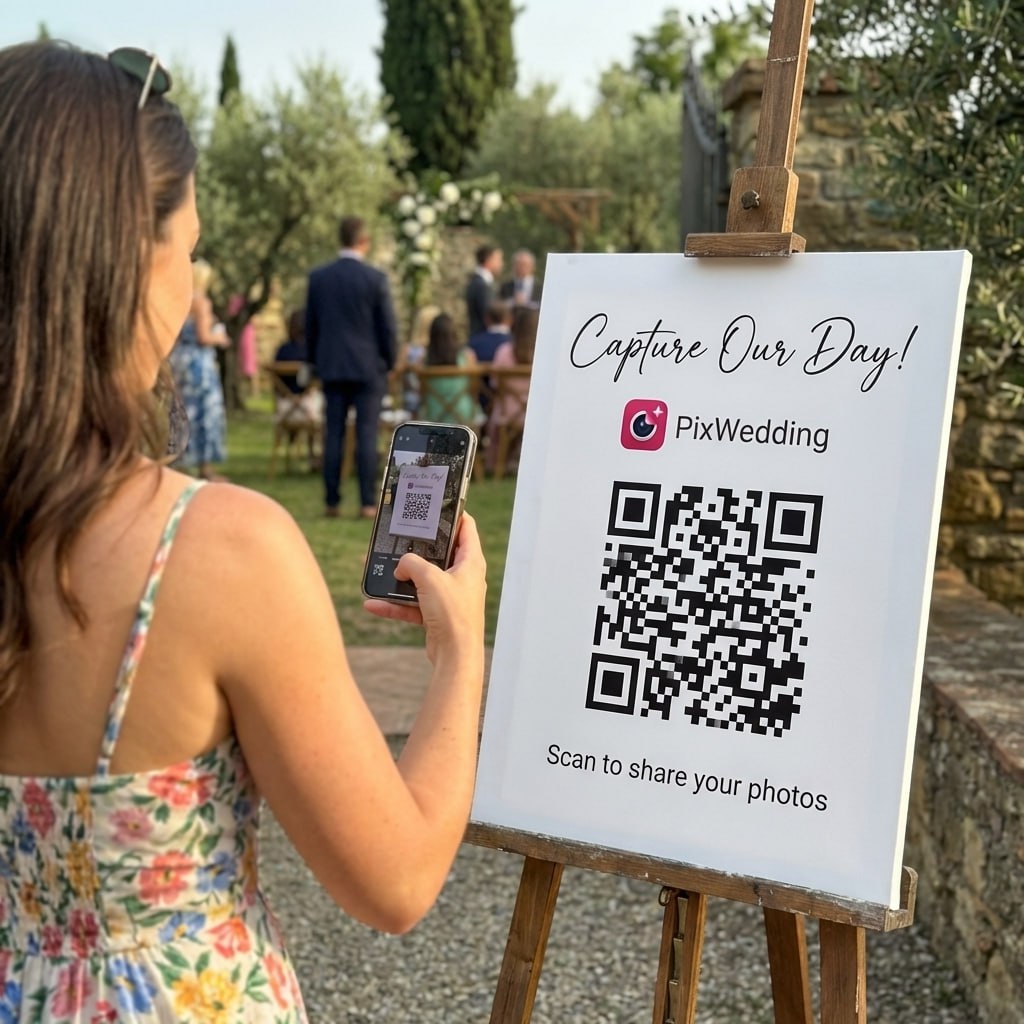
Guests scan a QR code, shoot from their browser, and every full-resolution photo and video goes straight to your private album. No developing. No wait. No lost cameras.

From Best Man

From Best Man

Point your camera

Scan to join the album

No app, no account

9:41

UPLOADING

Saving your moment

9:41

ALBUM

Emma & Jack

647 photos · 95 guests

Guest photo 1
Sarah B.
Guest photo 2
Guest photo 4
Guest photo 5
Guest photo 6
Guest photo 7
Guest photo 8
Guest photo 9
Guest photo 10
Guest photo 11
Guest photo 12
Guest photo 3
Add photosShare your moments
Table 7 just uploadedJames K. · +9 new photos

Side-by-Side Comparison Table

A quick reference including the original disposable camera so you can see exactly what you are trading off.

OptionCostEffortPhoto QualityInstant PrintsShareableBest For
QR Shared Album (Pix)Top Pick$0-99 totalVery lowExcellent (full-res)NoYes - instantAll weddings and events
Digital App (Scene/Lense)$0-99 per eventLowGood (film filter)NoYesFilm aesthetic lovers
Fujifilm Instax$80-200 + $0.65/printMediumFilm qualityYes - instantNo (physical only)Small events, keepsakes
Polaroid Now$110-140 + $2/printMediumFilm qualityYes - instantNo (physical only)Guest book, small events
Point-and-Shoot Digital$50-150 cameraMedium-highGood digitalNo (needs printer)Manual onlyDIY couples
GoPro$199-430MediumExcellent videoNoVia subscriptionOutdoor / adventure
Shared Album (free)FreeLowExcellentNoYesTiny budgets
Disposable Camera (film)$22-33 per cameraHigh (developing)InconsistentYes (2-3 week wait)After scanning onlyAesthetic only

Prices sourced from manufacturer sites and retail listings as of June 2026.

Pick by Budget and Vibe

The right choice depends on three things: whether you want physical prints, your budget ceiling, and your guest count. Use this decision block.

Under $50 budget

Set up a free QR shared album or a free-tier digital app. Google Photos shared album is also free and requires no new accounts.

Our pick:

Pix Wedding free tier or Google Photos

Want instant physical prints

Fujifilm Instax Mini is the most cost-effective option at $0.65 per print. Put cameras at each table with a pack of film (20 shots).

Our pick:

Fujifilm Instax Mini ($80-120 camera)

Want the film aesthetic digitally

Scene or Lense replicate grain, color shifts, and the delayed-reveal mechanic that makes disposable cameras feel special.

Our pick:

Scene ($10-30) or Lense (free up to 7 guests)

Large event, all photos in one place

A QR shared album is the only option that scales to 100-300 guests without friction, app downloads, or per-photo costs.

Our pick:

Pix Wedding ($49-99 for the full event)

Outdoor or adventure event

GoPro handles waterproofing, wide coverage, and rugged handling that no disposable camera can match. Great for elopements and beach parties.

Our pick:

GoPro Hero ($199)

Guests are non-technical or older

A simple point-and-shoot digital camera passed table to table requires no phone, no app, and no QR code scanning. Collect the SD card at the end.

Our pick:

Camp Snap or Canon Ixus (~$70-100)

Tips for Making Any Alternative Actually Work

The option matters less than the execution. These tips apply regardless of which alternative you choose.

Test your upload method before the event

Whether you use a QR album or a digital camera app, do a quick test at the venue a day before. Check WiFi coverage, upload speed, and whether guests can access the QR code in dim light.

Print the QR code large and laminate it

A 5x5 inch laminated card on each table is more durable than a paper printout and survives spills. Guests notice it more than a tiny sticker, which boosts scan rates significantly.

Prompt guests during natural pauses

The best moment to remind guests to upload is right after dinner is served or during the cake cutting. A simple MC announcement ("check the QR code on your table") doubles participation.

Combine a digital album with one or two Instax cameras

Running a QR album alongside one or two Instax cameras at the photo-booth table gives you the best of both worlds: full digital archive plus a handful of physical mementos guests take home.

Set a deadline for uploads

Tell guests the album closes 48 hours after the event. This creates urgency without cutting anyone off who is traveling home. Most platforms keep the album accessible to the couple indefinitely.

Common Mistakes to Avoid

These are the most frequent pitfalls when couples or event planners switch away from disposable cameras without thinking it through.

Choosing an app that requires a download

App download rates at events are typically 20-40%. Many guests, particularly older relatives, will not install a new app for a one-time use. Opt for browser-based platforms where guests scan a QR code and immediately start uploading.

Relying on venue WiFi without testing first

Venue WiFi is frequently overloaded during events. If your chosen platform requires a live internet connection to capture photos, test it on the venue network before the event. Better yet, choose an app that supports offline capture and syncs when connectivity returns.

Buying too many Instax cameras for a large wedding

At $0.65 per print, 30 guests each shooting 10 photos costs $195 in film alone. For large weddings, instant cameras work better as a photo-booth prop than as a table-by-table alternative. Reserve them for smaller events or as a supplement to a digital album.

Not telling guests about the sharing method

A QR code sitting on the table with no explanation gets ignored. Include a short note on the card ("Scan to share your photos with us!"), and have the MC mention it during dinner. Explained QR albums see 3-5x more uploads than unexplained ones.

Forgetting to check photo resolution limits

Some budget sharing platforms compress uploads to reduce storage costs. If you want photos suitable for printing or enlarging, confirm the platform accepts and stores full-resolution originals. Pix Wedding stores full-res files with no compression.

Related Guides

Explore more on wedding photo sharing and camera options.

Why Disposable Cameras Quietly Became a Bad Deal

Disposable cameras have a nostalgic appeal that keeps them in circulation at weddings, birthday parties, and bachelorette weekends. But the actual math has not kept up with the nostalgia. A single 27-exposure disposable camera costs $12-18 to buy. Developing and scanning it adds another $10-15. For a 100-guest wedding with 25 cameras, that is $550-825 in cameras alone and another $250-375 in processing, putting you at $800-1,200 for photos that take 2-3 weeks to arrive, with 30-40% of shots blurry from indoor low light.

Film sensitivity on most disposable cameras (ISO 400-800) handles bright outdoor daylight reasonably well but struggles badly in reception halls, churches, and evening venues. The built-in flash helps but creates harsh, flat lighting and red-eye. Compare that to any modern smartphone camera with computational photography and night mode, and the quality gap is significant. The nostalgia is real. The results often are not.

None of this means you should abandon the idea entirely. The aesthetic people want from a disposable camera (candid, low-fi, grain, surprise) can be replicated several different ways without the cost, the wait, or the inconsistency. This guide breaks down seven of the most practical alternatives with real 2026 prices.

  • Development and scanning adds $10-15 per camera on top of purchase price
  • 30-40% of indoor shots on standard disposable cameras are blurry or underexposed
  • Physical photos take 2-3 weeks to arrive after the event
  • Lost or broken cameras mean lost shots with no recovery option
  • No video capability on film disposable cameras
  • No way to delete embarrassing or duplicate shots before the album is shared

How to Choose the Right Alternative for Your Event

The right alternative depends on three factors: whether you want physical prints, how many people are sharing photos, and your budget. Below is a simple decision path.

If you want instant physical prints during the event and budget is not a constraint: go with a Fujifilm Instax Mini (camera $80-120, film $0.65 per shot). Put one or two cameras at each table with a stack of film and guests can pull prints at the end of the night.

If you want the film aesthetic digitally and guests have smartphones: a digital disposable camera app like Scene ($10-30 one-time) or Lense (free up to 7 guests) replicates grain, film colors, and timed reveals. Guests scan a QR code and shoot through the browser or app.

If you want all guest photos and videos in one place at full resolution, no app download, no per-photo cost: a QR shared album like Pix Wedding ($49-99 for the full event) is the most scalable option. Every guest scans one QR code and uploads directly. The couple gets a private album with everything organized by upload time.

If budget is the primary concern and guests already have good smartphones: just set up a shared album on Google Photos or iCloud and drop the QR code in the wedding program. Free, unlimited, no friction.

Straight answers to the questions people actually ask

Disposable Camera Alternative: Common Questions

Everything you need to know about our free tools and how they help your wedding day.

The best alternative depends on your priorities. If you want all guest photos in one place with no app download required, a QR code shared album like Pix Wedding is the top pick. If you want physical prints during the event, a Fujifilm Instax works well. If you want the same film-look aesthetic digitally, apps like Scene or Lense replicate it well for $10-30.

A lot more than you think. A standard disposable camera costs $12-18 to buy, then $10-15 to develop and scan. That is $22-33 per camera for 27 exposures, or roughly $0.85-1.20 per photo assuming every shot turns out. In practice, 30-40% of shots are blurry or poorly lit, pushing the effective cost to $1.50-2.00 per usable photo.

It depends on the app. Scene and Lense both support offline capture and sync when Wi-Fi is available later. POV Camera requires an active internet connection, which is a real problem at venues with weak WiFi. QR album services like Pix Wedding upload on any connection and guests can continue shooting while uploads queue in the background.

A QR shared album is the cheapest at scale. Services range from free trials up to $49-99 for an entire event, covering unlimited photos from all guests. Compare that to $840-1,500 for 30 physical disposable cameras once developing costs are included. For small gatherings under 10 people, the Scene or Lense apps have free tiers.

Yes. Pix Wedding works entirely from the phone browser. Guests scan a QR code, go straight to the upload page, and share full-resolution photos and videos in seconds. No download, no account creation, no friction. Digital disposable camera apps like Scene also offer browser-based joining, while POV Camera and some others still require an app install.

GoPros are better for adventure-style events than traditional weddings. The wide-angle lens distorts faces at close range and there is no built-in sharing mechanism, so guests end up with files on a single SD card rather than a shared album. For casual outdoor events or honeymoons, a GoPro Hero ($199) is a fun option. For wedding-day guest photography, a shared album or instant camera fits better.

Disposable Camera Alternative: 7 Better Options (2026)