
How to Plan a Wedding on a Budget (Without Sacrificing What Matters)
A full category cost breakdown, three real budget tiers, and an 8-step process. No vague advice like "be creative," just real numbers and where they should go.
The Short Answer
Set one total budget number before booking anything, then allocate roughly half of it to venue and catering (the two categories that eat the most of any wedding budget), 8-10% to photography, and split the rest across flowers, music, attire, and small essentials. A wedding for 50-80 guests is realistic under $10,000 using free or cheap venues and DIY elements. The national average total, per The Knot's 2026 Real Weddings Study, is $34,200, but the categories below show exactly where that money goes and where budget-conscious couples can safely spend less.
National Average Wedding Budget Breakdown
According to The Knot's 2026 Real Weddings Study, based on nearly 11,000 US couples who married in 2025, the national average total wedding cost is $34,200. Here is how that average couple allocated their budget by category, with the approximate dollar amount at that total.
| Category | % of Total | At $34,200 Average |
|---|---|---|
| Venue and Rentals | 29% | $9,900 |
| Catering, Cake and Drinks | 24% | $8,200 |
| Photography and Videography | 10% | $3,400 |
| Floral Design and Decor | 9% | $3,100 |
| Music | 6% | $2,050 |
| Attire and Beauty | 6% | $2,050 |
| Wedding Rings | 5% | $1,700 |
| Wedding Planner | 5% | $1,700 |
| Guest Entertainment | 3% | $1,000 |
| Transportation | 2% | $700 |
| Stationery | 1% | $350 |
| Officiant | 1% | $350 |
Percentages and dollar figures are rounded, and per the source, the published category percentages sum to approximately 101% due to independent rounding across categories in the original study.
A second data source, Zola's 2026 Wedding Cost Index, puts the national average total closer to $36,000 and reports that venue and catering together account for roughly 43% of total spending, broadly consistent with The Knot's category shares above. Zola's methodology averages spend among couples who paid for each specific item (not every couple hires a videographer or planner), so its per-category dollar figures will differ from a straight percentage-of-total breakdown.
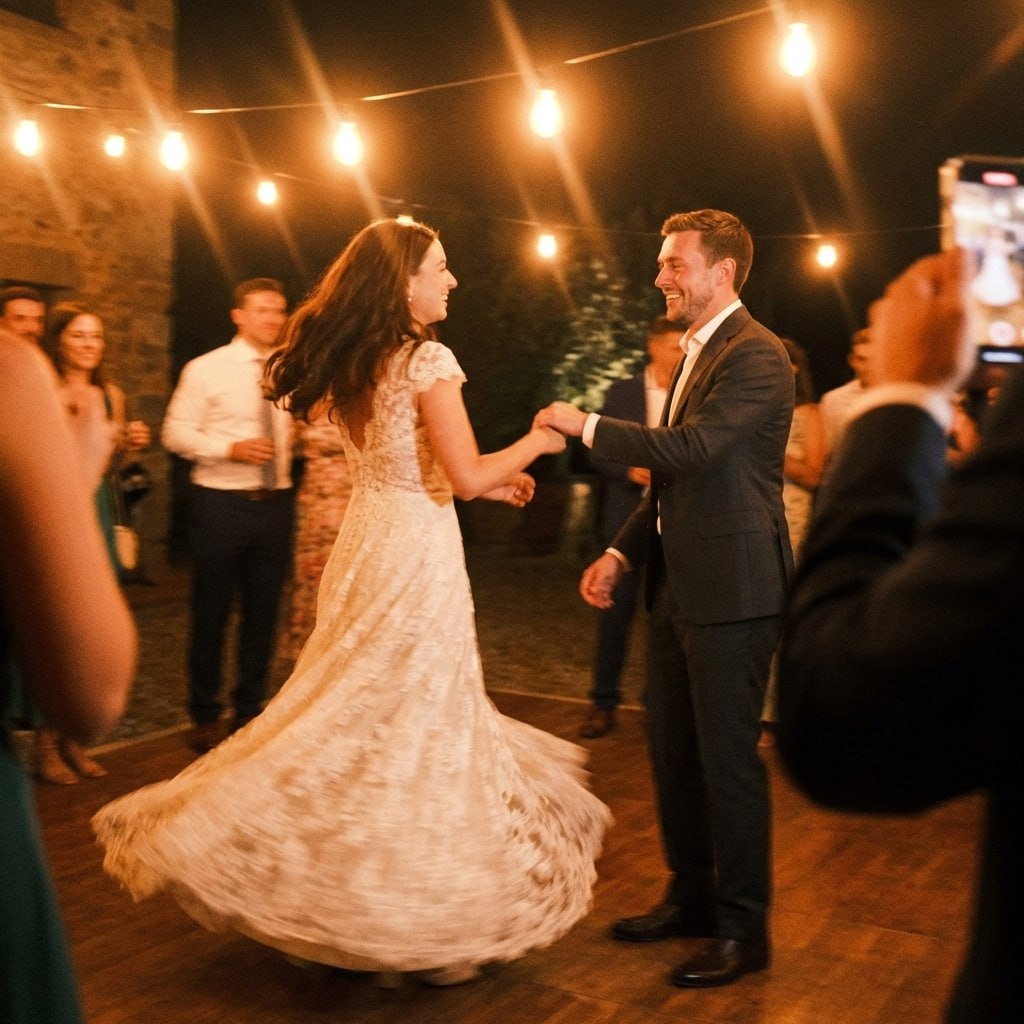
First dance
You guys!!
One more budget win - free photo sharing.
While you're planning every detail, add a shared album. It takes minutes, costs less than a centerpiece, and saves every photo.
From Mom
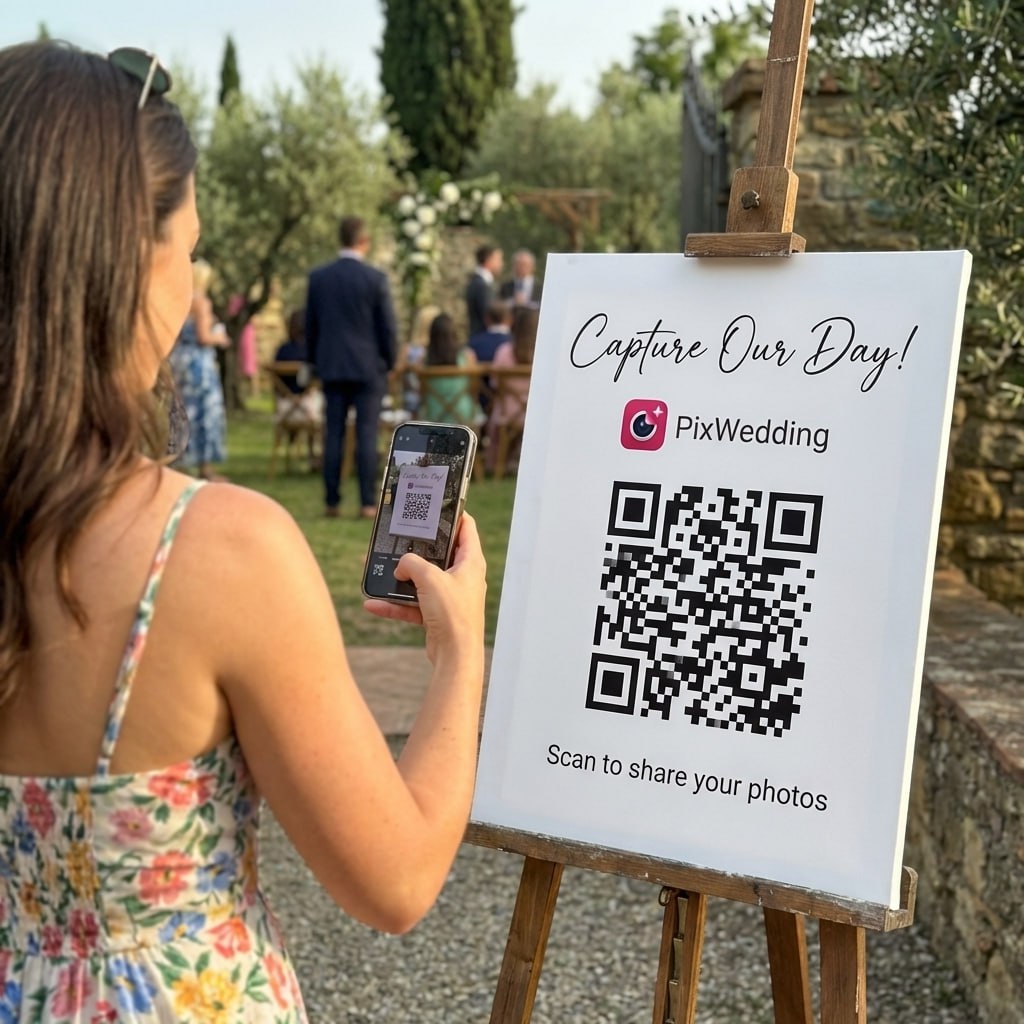
Scan to join the album
No app, no account
UPLOADING
Saving your moment
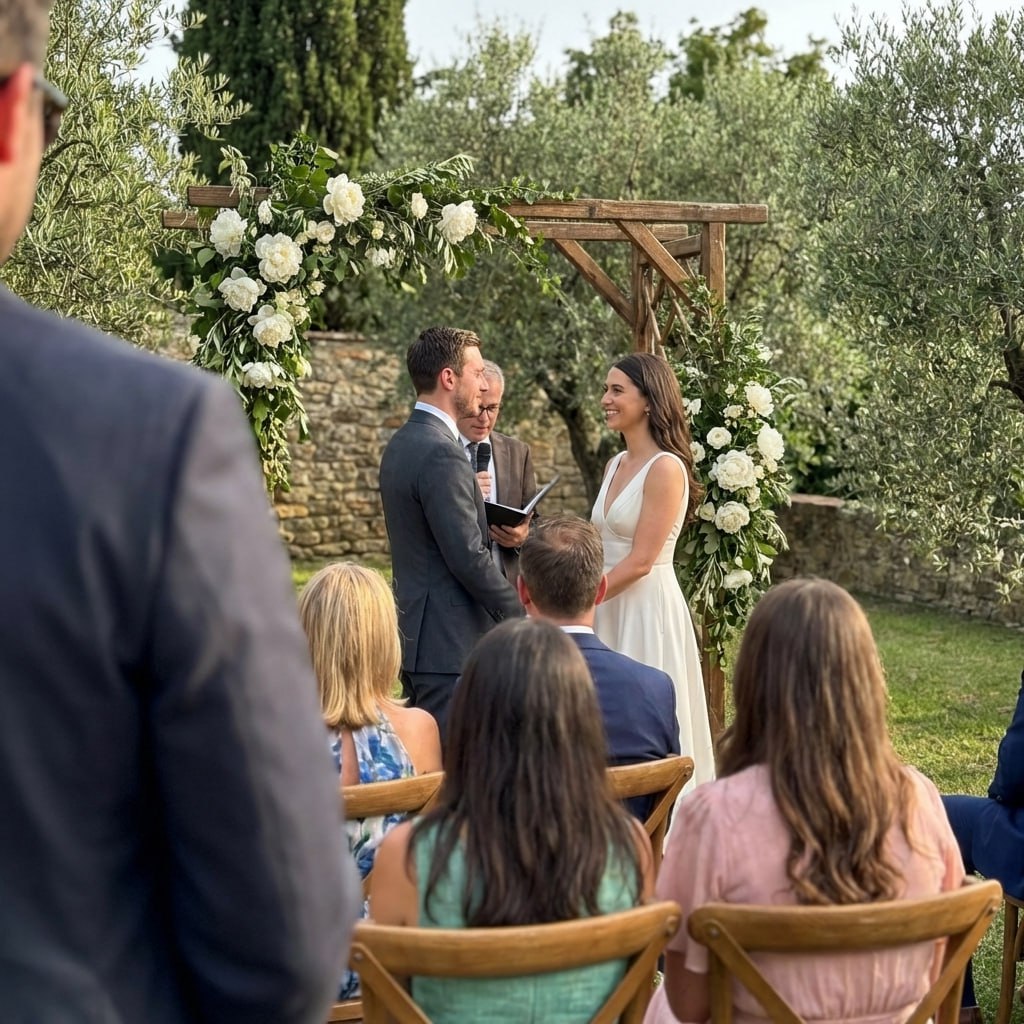
THE ALBUM
Emma & Jack
June 21, 2026
647 photos · 95 guests


SCAN TO TRY
pix.wedding/
your-wedding
Set Your Budget Before Anything Else
The number one mistake budget-conscious couples make is starting to book vendors before knowing their total budget. Start here.
Calculate Your True Budget
Add up all sources: your savings, family contributions, and any credit you are comfortable using. Be honest about the total. The national average US wedding cost is $34,200 in 2026, but plenty of beautiful weddings happen at $10,000-$15,000.
Rank Your Priorities
List everything (venue, food, photos, music, flowers, dress, etc.) and rank them by importance to you as a couple. The top 3 items get the biggest budget share. Everything else gets minimized or cut.
Pick the Right Date and Time
Friday evenings and Sunday brunches typically cost less than Saturday nights. Off-season months (January, February, March, November) tend to bring lower venue and vendor rates too.
The 8-Step Wedding Budgeting Process
This is the exact order to do things in, not a random checklist. Each step depends on the one before it.
- 1
Set one hard total number
Add up every funding source, your savings, family contributions, and anything you are comfortable financing. Write down one total figure before contacting a single vendor.
- 2
Rank your top 3 priorities
List everything (venue, food, photos, flowers, music, attire) and rank it by importance to you as a couple. The top 3 items get the biggest share of the budget.
- 3
Research real local costs
Pull actual numbers for your area with a free tool instead of guessing off national averages, since costs can vary by thousands of dollars between cities.
- 4
Draft a first-pass allocation
Use the national category breakdown above as a starting point, then adjust it. It is a baseline to react to, not a rule to follow exactly.
- 5
Reallocate toward your priorities
Shift percentage points from lower-priority categories toward your top 3, and apply savings tactics to everything else.
- 6
Lock in venue and catering first
These two categories typically account for roughly half of total spending, so booking them first lets every other category size itself around what is left.
- 7
Track every expense against the plan
Log spending in a shared spreadsheet or budgeting tool as deposits go out, so small overages get caught before they compound.
- 8
Keep a 5-10% contingency buffer
Reserve a buffer for the unexpected: alteration fees, a vendor surcharge, or a last-minute headcount change. Almost every wedding budget needs it.
Sample Budget Breakdowns: $10K / $20K / $35K
Here is exactly how to allocate your money at three common budget levels. Every line item is shown, and each tier's categories add up to its headline total.
$10,000 Budget
The Smart Minimalist Wedding / 50-70 guests
$20,000 Budget
The Balanced Celebration / 80-120 guests
$35,000 Budget
The Full Experience / 120-180 guests
8 Areas Where You Can Save Big
These are the budget categories with the most room to cut without guests noticing the difference.
Venue
Save $2,000 - $12,000Use a public park, backyard, restaurant private room, or community hall. Skip the dedicated wedding venue markup. Many restaurants offer private dining for just the cost of food and drinks.
Photography
Save $1,000 - $5,000Hire a talented student photographer or an emerging professional. Use Pix Wedding QR codes for candid guest photos (free). Skip the second photographer and engagement session.
Flowers
Save $1,200 - $4,200Use seasonal and locally grown flowers. Try Trader Joe's or Costco bulk flowers. Mix real flowers with greenery (much cheaper). Use potted plants as centerpieces that guests take home.
DJ / Music
Save $700 - $3,000Create a Spotify playlist with a good speaker setup. Use our free Wedding Playlist Builder. Or hire a DJ for the reception only (skip cocktail hour). Ask a musically talented friend to MC.
Invitations
Save $300 - $1,100Go digital with a free wedding website (Zola, The Knot, or Pix Wedding). Send invites via email or text. If you want paper, use Canva + a home printer or Vistaprint budget options.
Cake
Save $200 - $1,200Order a small display cake for cutting and supplement with sheet cakes from a local bakery. Or skip cake entirely and do a dessert bar, doughnut wall, or pie station.
Favors
Save $150 - $600Skip them entirely. Seriously. Most wedding favors get left on tables or thrown away. If you insist, do something edible (homemade cookies, candy bags) that costs under $1 per guest.
Decorations
Save $500 - $2,500Candles and string lights create ambiance for pennies. Buy in bulk from Amazon or Dollar Tree. Rent instead of buying. Recruit crafty friends for a DIY decoration party.
The Quick Savings Checklist
Sixteen small decisions that add up. Check off whichever apply to your wedding.
- Skip wedding favors entirely
- Send digital invitations instead of paper
- Pick a Friday evening or Sunday afternoon date
- Serve appetizers and a few entrees instead of a multi-course plated dinner
- Use in-season, locally grown flowers
- Ask a friend or family member to officiate
- Rent your attire instead of buying it outright
- Choose a venue that already includes tables, chairs, and linens
- Build your own playlist instead of a full DJ package
- Cut the guest list before you cut anything else
- Use a QR code for guest photos instead of a second photographer
- Skip the engagement photo session
- Order a small display cake and supplement with sheet cake
- Book an off-season month (January, February, March, or November)
- Use potted plants as centerpieces guests can take home
- Print your own menus and place cards at home or at a library
3 Areas Where You Should NOT Cut Corners
Saving money is great, but these three areas directly impact guest experience and your lasting memories.
Food and Drinks
Guests remember two things about a wedding: how much fun they had and how good the food was. Bad food will overshadow everything else. Allocate 35-45% of your budget here.
At Least One Photographer
You do not need a $5,000 package, but having zero professional photos is a regret you cannot undo. Even a 2-hour shoot covering ceremony and portraits is worth $500-$1,000. Supplement with guest QR photos for candids.
Sound System Quality
Whether you hire a DJ or use a playlist, invest in a quality sound system. Nothing kills a dance floor faster than a tinny Bluetooth speaker. Rent professional speakers for $100-$200 if using a playlist.
7 Common Budget Mistakes to Avoid
These are the mistakes that quietly blow up an otherwise realistic wedding budget.
- Booking the venue before setting a total budgetOnce a deposit is down, everything else has to fit around it, usually the wrong way around.
- Inviting more guests than the budget supportsCatering, rentals, and favors all scale per head. Trimming the guest list by 20 people often saves more than any single vendor swap.
- Forgetting service charges and sales taxA 20% catering estimate can turn into a 35-40% final bill once gratuity and tax are added on top.
- Skipping the contingency bufferWeather changes, alterations run over, a vendor adds a fee. Without a buffer, these come out of categories you already trimmed.
- Getting only one quote per vendorPrices for the same service can vary by thousands of dollars between vendors in the same city. Get at least three quotes for venue and catering.
- Splurging early on the exciting partsDress shopping and cake tastings happen first emotionally, but food, venue, and photography usually matter more to guests months later.
- Not tracking spending against the planA budget that only lives in your head drifts fast, usually toward the categories you meant to cut.
How to Build a Realistic Wedding Budget
A walkthrough from the YouTube channel Better Budget Weddings on building a wedding budget from scratch, a helpful companion to the framework above.
Free Wedding Planning Tools
These tools are 100% free and replace services that typically cost $50-$500 each.
Wedding Budget Allocator
Input your total budget and get a recommended breakdown by category
Use Free ToolWedding Cost Calculator
Compare average wedding costs across 20+ US cities
Use Free ToolWedding Checklist
Month-by-month planning checklist so nothing falls through the cracks
Use Free ToolWedding Timeline Builder
Build your wedding day schedule hour by hour
Use Free ToolWedding Seating Chart
Plan your reception seating arrangement visually
Use Free ToolGuest Photo Sharing (QR)
Collect hundreds of guest photos with a simple QR code, from $49 one-time
Use Free ToolWedding Playlist Builder
Build your reception playlist if you are skipping the DJ
Use Free ToolWedding Hashtag Generator
Generate a unique wedding hashtag for social media
Use Free ToolExplore the Wedding Budget Guide Cluster
This page is the hub. Each guide below goes deep on one category from the breakdown above.
The Biggest Misconception About Budget Weddings
The wedding industry wants you to believe that a beautiful wedding requires a $30,000+ budget. That is not true. The most memorable weddings are not the most expensive ones; they are the ones where the couple focused their budget on what mattered most to them and their guests.
A $10,000 wedding with great food, genuine emotion, and a packed dance floor will be remembered more fondly than a $50,000 wedding where half the budget went to floral arrangements nobody noticed. The key is ruthless prioritization: pick your top 3 priorities, fund those well, and cut everything else to the minimum.
In 2026, free tools have made budget weddings easier than ever. You can plan your entire wedding with free digital invitations, free seating charts, free photo sharing, and free playlist builders. The only things that truly cost money are the venue, food, and one or two key vendors.
- •The average couple overspends on flowers, favors, and invitations
- •Food and drinks should get 35-45% of your total budget
- •Free planning tools eliminate thousands in coordination costs
- •Off-season and non-Saturday dates tend to bring lower venue costs
- •Guest list size is the single biggest cost driver
How Free Wedding Tools Can Save You Thousands
One of the biggest shifts in wedding planning over the past few years is the availability of high-quality free tools. Couples no longer need to pay for photo sharing apps, printed invitations, or expensive planning software. Free alternatives exist for nearly every planning task.
Pix Wedding alone replaces the need for disposable cameras, photo booth rentals, and paid photo sharing apps. A single QR code lets every guest share their photos for free, giving you hundreds of candid shots from every angle of your wedding.
Explore more free wedding tools
Everything you need to make your wedding day stress-free and unforgettable.
Budget Allocator
Turn your total into a category-by-category plan.
Courthouse Wedding Cost
Real fees by county and what to expect.
Photo Sharing QR
The best way to collect guest photos.
Wedding Checklist
Month-by-month planning checklist.
AI Vow Generator
Write "banger" vows in seconds.
AI Speech Pro
Banger toasts for Best Man & more.
Budget Wedding FAQ
Everything you need to know about our free tools and how they help your wedding day.
The cheapest approach is a small ceremony (under 50 guests) at a free venue like a public park, backyard, or community space. Serve brunch or appetizers instead of a full dinner. Use digital invitations, a Spotify playlist, seasonal flowers from a grocery store, and Pix Wedding for guest photo sharing (from $49 one-time). Couples have pulled off beautiful weddings for $3,000-$5,000 this way.
Never skimp on food and drinks, at least one photographer (even a short 2-hour session), and sound quality for your ceremony and reception. These three things have the biggest impact on guest experience and your lasting memories. Everything else can be reduced or eliminated without guests noticing.
According to The Knot's 2026 Real Weddings Study, based on nearly 11,000 US couples who married in 2025, the national average is $34,200. That figure is pulled up by expensive markets like New York and San Francisco. Many couples plan wonderful weddings for $10,000-$20,000 by prioritizing what matters most to them.
Yes, but it requires serious prioritization. Focus on a micro wedding (under 30 guests), use a free venue, serve a meal you or family cook, use digital invitations, a Spotify playlist, and Pix Wedding for guest photo sharing (from $49 one-time). The key is a small guest list, because catering costs scale directly with headcount.
Per The Knot's 2026 Real Weddings Study, national averages run roughly 29% venue, 24% catering, 10% photography and video, 9% flowers and decor, and smaller shares for music, attire, rings, and planning. Use that as a starting point, then shift the percentages toward whatever matters most to you and away from what does not.
A full-service wedding planner ($2,000-$5,000+) is hard to justify on a tight budget. Instead, consider a day-of coordinator ($500-$1,000) who handles logistics on the wedding day so you can enjoy it. For planning, use free tools like our Wedding Checklist and Timeline Builder to stay organized without paying for a planner.