
Wedding Cost Breakdown: Where Your Budget Goes (2026)
The average American wedding in 2026 costs $34,200, according to The Knot's 2026 Real Weddings Study. Here is exactly where that money goes, category by category, with real price ranges and expert tips for every budget level.
Quick Answer: How Much Does a Wedding Cost?
The average US wedding costs $34,200 in 2026. Venue and catering together take roughly 50 to 65 percent of the budget. Photography takes 8 to 12 percent. DJ and entertainment 3 to 5 percent. By guest count, The Knot reports an average of $27,200 for weddings with 51 to 100 guests and $43,300 for weddings with more than 100.
Wedding Budget Planning Tools
Use our free tools to build your personalized budget based on real 2026 data.
The Three Numbers Behind Every Wedding Budget
Average cost of a US wedding ceremony and reception, from The Knot 2026 Real Weddings Study of 10,474 couples married in 2025. The engagement ring is not included.
View The Knot 2026 study ->The average guest count and average cost per guest in the same study. Guest count moves the total more than any single vendor choice.
See the guest count data ->Average venue cost, the largest single line in the budget at roughly 38 percent of the $34,200 average (our math on The Knot figures).
See vendor averages ->Watch: How to Allocate Every Wedding Dollar
Zola walks through how to split a budget across venue, food, photos, attire and the smaller lines. Zola uses its own Wedding Cost Index, which puts the average near $36,000, so its totals run a little higher than The Knot figures used on this page.
Source: Zola on YouTube, "Wedding Budget Breakdown: How to Allocate Every Dollar"
The National Average in 2026
According to The Knot's 2026 Real Weddings Study, the average American wedding in 2026 costs $34,200 (excluding the honeymoon and engagement ring). Comparing years takes care: The Knot's 2019 study reported $33,900, but that figure included the engagement ring, so the two numbers are not measuring the same thing.
However, "average" is misleading. Wedding costs vary enormously by location, guest count, and personal priorities. In The Knot's 2026 data, couples with 1 to 50 guests averaged $17,100, while New York City weddings averaged $88,000. The key is understanding where your money goes so you can allocate it according to your priorities. Tools like the Pix Wedding Budget Allocator can help you create a personalized breakdown based on your total budget.
Guest count is the single biggest cost driver. The Knot reports an average of $27,200 for weddings with 51 to 100 guests and $43,300 for weddings with more than 100. Its $292 per-guest average includes fixed costs like the venue and photographer, so for planning we use $150 to $300 as the added cost of each extra guest in food, drinks, rentals, and favors (a Pix Wedding estimate). By that estimate, cutting 20 guests saves roughly $3,000 to $6,000.
Complete Expense Category Breakdown
Every dollar accounted for, with tips to save on each
How to read these cards: the percentage and price range on each card are Pix Wedding planning estimates for a mid-market wedding, meant as illustrative guides. The line marked "The Knot 2026" is the reported national average from The Knot 2026 Real Weddings Study.
Venue
The Knot 2026: $12,900 average venue cost
The venue is by far your biggest expense. This typically includes the ceremony and reception site, tables, chairs, linens, and sometimes a day-of coordinator. All-inclusive venues bundle catering, bar service, and setup into the venue fee, which can simplify budgeting significantly.
Tips to save:
Catering and Bar
The Knot 2026: $80 per person for catering, $2,800 for alcohol
Food and drinks are the second largest expense and directly tied to your guest count. Expect to pay $100 to $200 per person for a plated dinner with open bar. Buffet service runs 10 to 20 percent less than plated service. The bar tab alone can reach $3,000 to $8,000 for 100 guests depending on the package.
Tips to save:
Photography
The Knot 2026: $3,000 photographer, $2,300 videographer
Professional wedding photography typically includes 8 to 10 hours of coverage, a second shooter, and 400 to 800 edited digital images. Videography is often separate and adds $2,000 to $5,000. Your photos are the only lasting record of the day, so most planners recommend not cutting this category too aggressively.
Tips to save:
Flowers and Decor
The Knot 2026: $2,800 flowers, $1,900 lighting and decor
Floral costs include the bridal bouquet ($150 to $400), bridesmaid bouquets ($75 to $150 each), boutonnieres ($15 to $30 each), ceremony arrangements, and reception centerpieces. Decor also covers lighting, candles, table runners, signage, and any ceremony arches or backdrops.
Tips to save:
Music and Entertainment
The Knot 2026: $1,800 DJ, $4,500 band
A wedding DJ costs $1,000 to $2,500 for 4 to 6 hours and typically handles ceremony music, cocktail hour, reception introductions, and dancing. A live band costs more, and The Knot 2026 study puts the average band at $4,500. Photo booths average about $650 based on what WeddingWire couples report. Entertainment sets the tone for the entire reception.
Tips to save:
Wedding Attire
The Knot 2026: $2,100 wedding dress
The Knot 2026 study puts the average wedding dress at $2,100, with alterations often adding $300 to $800. A veil costs $100 to $300, shoes $50 to $250, and accessories (jewelry, hair pieces) another $100 to $300. For the groom, a suit purchase runs $300 to $800, while a tux rental costs $150 to $250. Include undergarments and grooming in this budget.
Tips to save:
Stationery and Invitations
The Knot 2026: $510 invitations and stationery
This category covers save-the-dates, wedding invitations, response cards, detail cards, programs, menus, place cards, and thank-you notes. Printing and postage add up quickly, especially for large guest lists. A full stationery suite for 150 guests runs $400 to $1,000 depending on printing method.
Tips to save:
Transportation
The Knot 2026: $1,100 transportation
Transportation includes getting the wedding party to the venue, shuttles for guests between the hotel and reception, and a getaway car. A limousine for the couple costs $300 to $800. A shuttle bus for guests runs $500 to $1,200 for 4 to 5 hours. Some couples also provide transportation for out-of-town guests.
Tips to save:
Officiant
The Knot 2026: $260 officiant
The Knot 2026 study puts the average officiant at $260. Zola lists professional officiants at $300 to $800 depending on location and whether they provide premarital counseling or custom ceremony writing, and religious officiants often ask for a donation instead of a set fee. Having a friend get ordained online is free, but check your state laws on recognition.
Tips to save:
Miscellaneous
The Knot 2026: $540 cake, $480 favors, $150 hair and $150 makeup
This catch-all category includes wedding favors ($200 to $600), the cake or dessert ($400 to $1,000), wedding insurance ($150 to $500), marriage license (roughly $20 to $170 depending on the state and county), hair and makeup ($200 to $600), rehearsal dinner ($1,000 to $3,000, with The Knot reporting a $2,800 average), tips for vendors ($500 to $1,500), and unexpected last-minute expenses. Always keep a 5 to 10 percent buffer in your budget for surprises.
Tips to save:
Wedding Budget Tiers: What You Get at Each Level
From intimate celebrations to luxury affairs
Budget Wedding
A beautiful celebration is absolutely possible at this price point. Focus spending on the venue and food, and DIY or eliminate the rest. Consider a restaurant reception, a weekday or brunch wedding, or a backyard celebration. Skip the DJ and use a curated playlist. Ask a talented friend to photograph or hire a photographer for 4 hours instead of 8. Digital invitations, minimal flowers, and a simple dessert keep costs down without sacrificing the experience.
Mid-Range Wedding
This is where most American couples land. You can afford a dedicated wedding venue, professional catering with open bar, a skilled photographer for full coverage, a DJ, and real floral arrangements. You will still need to prioritize and make trade-offs, but the core experience will feel polished and complete. This budget allows for some personal touches like custom invitations and a dessert table.
Premium Wedding
At this level, you have room for a premium venue, top-tier catering, full-day photography and videography, a live band or premium DJ, lush floral arrangements, and professional coordination. You can add luxuries like a photo booth, custom signage, a cocktail hour with passed appetizers, and a late-night snack station. Most major decisions become "which premium option" rather than "can we afford it."
Luxury Wedding
Luxury weddings feature destination-worthy venues, celebrity-tier vendors, custom everything, and full event design teams. At this budget, you are hiring a full-service wedding planner who handles every detail from initial concept to day-of execution. Expect couture attire, imported flowers, multi-course tasting menus, and entertainment that rivals a concert. The experience is fully curated for both the couple and their guests.
How Much Does a 100-Person Wedding Cost?
A 100-person wedding is one of the most common sizes in America and provides a useful benchmark for budgeting. The Knot 2026 study puts weddings with 51 to 100 guests at an average of $27,200 and weddings with more than 100 guests at $43,300. Here is an illustrative line-item estimate (Pix Wedding planning ranges, not survey data) for a 100-guest celebration in a mid-cost market:
These ranges reflect mid-market pricing, and the high end sits above The Knot averages because it assumes every category is bought. Region matters too: The Knot reports averages of $48,400 in the Mid-Atlantic and $46,600 in New England, against $29,000 in the Midwest and $31,300 in the South. Use our Wedding Cost Calculator to see specific estimates for your city.
Regional Cost Differences Across the US
Where you live changes everything
New York City
$88,000The highest city average in The Knot 2026 study, driven mostly by venue and catering prices.
San Francisco
$51,000High vendor costs and limited venue availability push prices up.
Los Angeles
$45,000Wide range of options from beach venues to estate properties.
Chicago
$54,000One of the pricier big-city markets in the 2026 data, ahead of Los Angeles.
Dallas / Houston
$32,000 / $33,000Close to the national average, with large venues and a competitive vendor market.
Southeast (Charlotte, Nashville)
$32,000 / $29,000Growing wedding markets with outdoor venues at reasonable prices.
Midwest (Columbus, Indianapolis)
$30,000 / $25,000Some of the best value among large US cities.
Lowest-cost states (Wyoming, Idaho, Utah)
$17,000 to $18,000The lowest state averages in the study: Wyoming at $17,000, Idaho and Utah at $18,000.
City and state figures are averages from The Knot 2026 Real Weddings Study and cover the ceremony and reception only. By region, the same study reports $48,400 for the Mid-Atlantic, $46,600 for New England and the Northeast, $31,300 for the South and Southeast, $31,300 for the West, $30,800 for the Southwest, and $29,000 for the Midwest. Your costs depend on the specific venue, vendors, and customization level you choose. For city-specific breakdowns, explore our Wedding Cost Calculator with data for 20 major US cities.
Average Wedding Cost by Category (2026)
| Category | % of Budget (Pix estimate) | Price Range (Pix estimate) | The Knot 2026 Average |
|---|---|---|---|
| Venue (ceremony + reception) | 30-40% | $8,000-$25,000 | $12,900 |
| Catering and bar | 20-25% | $7,000-$15,000 | $80 per person, plus $2,800 alcohol |
| Photography | 8-12% | $3,000-$6,000 | $3,000 |
| Videography | 4-7% | $2,000-$5,000 | $2,300 |
| Flowers and decor | 5-8% | $2,000-$5,000 | $2,800 flowers |
| DJ and entertainment | 3-5% | $1,000-$3,000 | $1,800 DJ |
| Wedding attire | 3-5% | $1,500-$3,500 | $2,100 dress |
| Wedding planner | 4-8% | $1,500-$10,000 | $2,100 |
| Stationery and invitations | 1-3% | $300-$1,200 | $510 |
| Transportation | 1-2% | $500-$1,500 | $1,100 |
| Cake and desserts | 1-2% | $400-$1,000 | $540 |
| Officiant | <1% | $200-$800 | $260 |
| Rings (wedding bands) | 2-4% | $500-$3,000 | $3,000 |
| Miscellaneous and tips | 3-5% | $1,500-$4,000 | Not reported |
| Total (national average, ceremony and reception) | $34,200 | ||
Sources: national averages from The Knot 2026 Real Weddings Study (10,474 couples married in 2025). Percentages and price ranges are Pix Wedding illustrative estimates for a 100 to 150-guest mid-market wedding. The category averages do not add up to $34,200 because not every couple pays for every category. See city-specific estimates for your location.
Four Seasons Hawaii Wedding Cost
A Four Seasons Hawaii wedding is one of the most sought-after luxury experiences in the US. Four Seasons runs resorts on Maui (Wailea), the Big Island (Hualalai), Lanai, and Oahu (Ko Olina), and each property sets its own wedding pricing. Four Seasons does not publish a price list, so the figures below are Pix Wedding illustrative planning estimates, not quotes. Under those estimates a full wedding lands somewhere around $50,000 to $200,000+ depending on guest count, package tier, and customization, well above the $34,200 national average.
Key budget note: Four Seasons properties require couples to meet a food and beverage minimum, which often drives total spending higher than the sticker price for venue rental alone. Contact the resort directly for current minimums since they vary by property and season, and ask whether off-season or weekday dates come with a lower minimum. All line items above are illustrative estimates.
Hidden Wedding Costs Most Couples Forget
Beyond the major categories, several smaller costs catch couples off guard. Building these into your budget from the start prevents stressful surprises in the final weeks before the wedding. The amounts below are Pix Wedding planning estimates, so confirm each one with your vendors.
10 Proven Ways to Cut Wedding Costs Without Sacrificing Quality
Savings figures are Pix Wedding planning estimates unless a source is named. The photo booth figure comes from WeddingWire's photo booth cost data.
Choose a Friday or Sunday wedding
Save 20 to 40% on venueSaturday is the most expensive day by far. Friday evening and Sunday afternoon weddings are equally beautiful at a fraction of the cost. Most guests are happy to adjust their schedules for a loved one.
Get married in the off-season
Save 15 to 30% overallNovember through March (excluding holidays) is considered off-peak in most markets. Vendors are less busy and more willing to negotiate. The weather trade-off is worth the thousands you save.
Reduce your guest list by 20 people
Save $3,000 to $6,000Every guest costs $150 to $300 when you factor in food, drinks, table settings, favors, and invitations. Cutting from 150 to 130 guests saves thousands with minimal emotional impact.
Skip the photo booth, use QR sharing instead
Save around $650WeddingWire couples report an average of $650 for a photo booth, and most spend $425 to $1,000. Pix Wedding QR guest photo sharing has a free tier with paid plans from $49, and it collects candid photos from guests all night long instead of from one corner of the room.
Choose a brunch or lunch wedding
Save 30 to 50% on cateringDaytime weddings cost significantly less for food and drinks. Brunch menus are simpler, alcohol consumption is lower, and the overall vibe is relaxed and joyful.
Use digital save-the-dates and invitations
Save $300 to $800High-quality digital invitations are now socially acceptable and environmentally friendly. Put the savings toward something guests will remember.
DIY centerpieces with candles and greenery
Save $1,000 to $2,500Bulk candles from Amazon and greenery from a wholesale flower market create stunning centerpieces at a tenth of the cost of full floral arrangements.
Book an up-and-coming photographer
Save $1,000 to $2,000Photographers in their first 2 to 3 years of wedding work often deliver stunning quality at lower prices because they are building their portfolio. Review full galleries, not just highlights.
Replace the tiered cake with a dessert table
Save $300 to $700A multi-tier wedding cake costs $500 to $1,000. A dessert table with cookies, brownies, mini pies, and a small cutting cake costs half as much and gives guests more variety.
Negotiate with every single vendor
Save 5 to 15% across the boardMost wedding vendors expect some negotiation. Ask for package customization, off-peak discounts, or payment plan options. The worst they can say is no.
Explore Individual Cost Categories
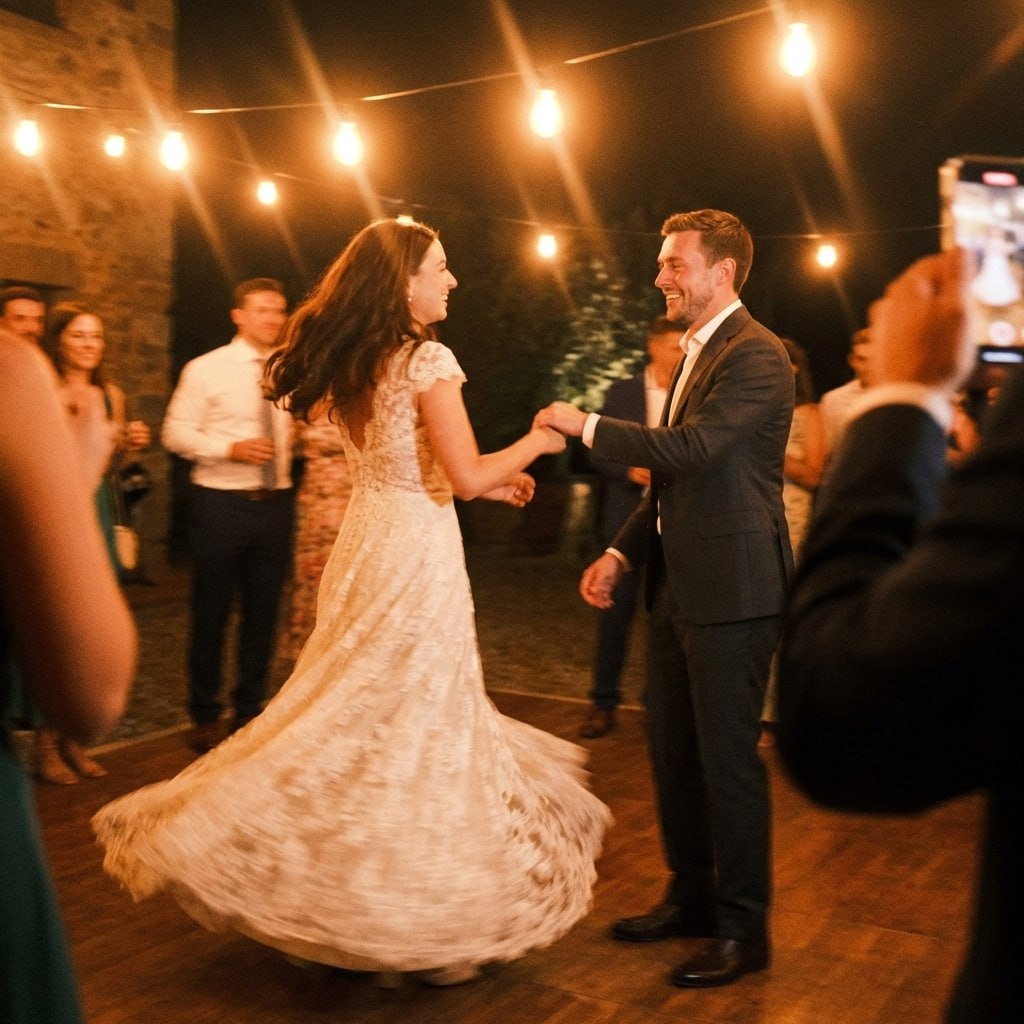
First dance
You guys!!
Every line item planned - photos included.
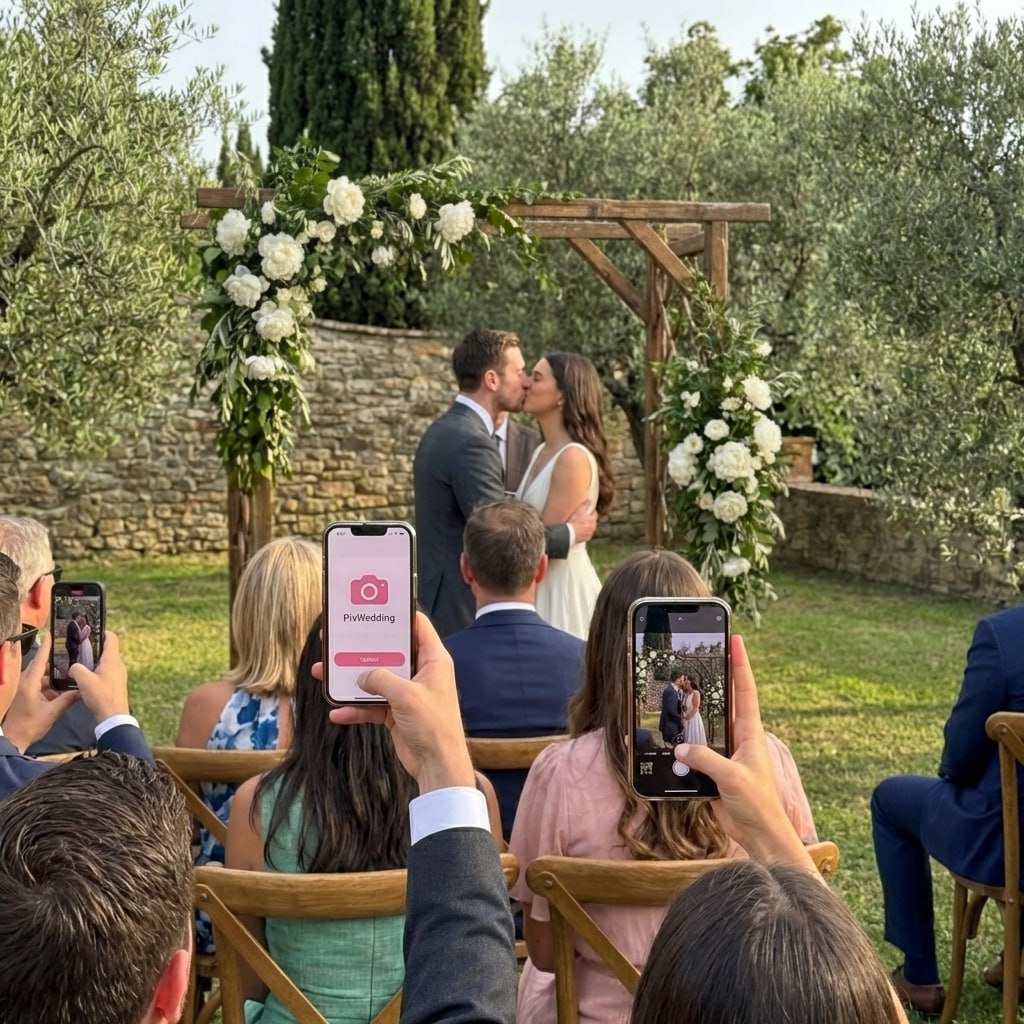
Photography is your biggest lasting value. Add a shared album so guests' shots land in one place, not lost across a hundred camera rolls.
From Mom
Scan to join the album
No app, no account
UPLOADING
Saving your moment
THE ALBUM
Emma & Jack
June 21, 2026
647 photos · 95 guests

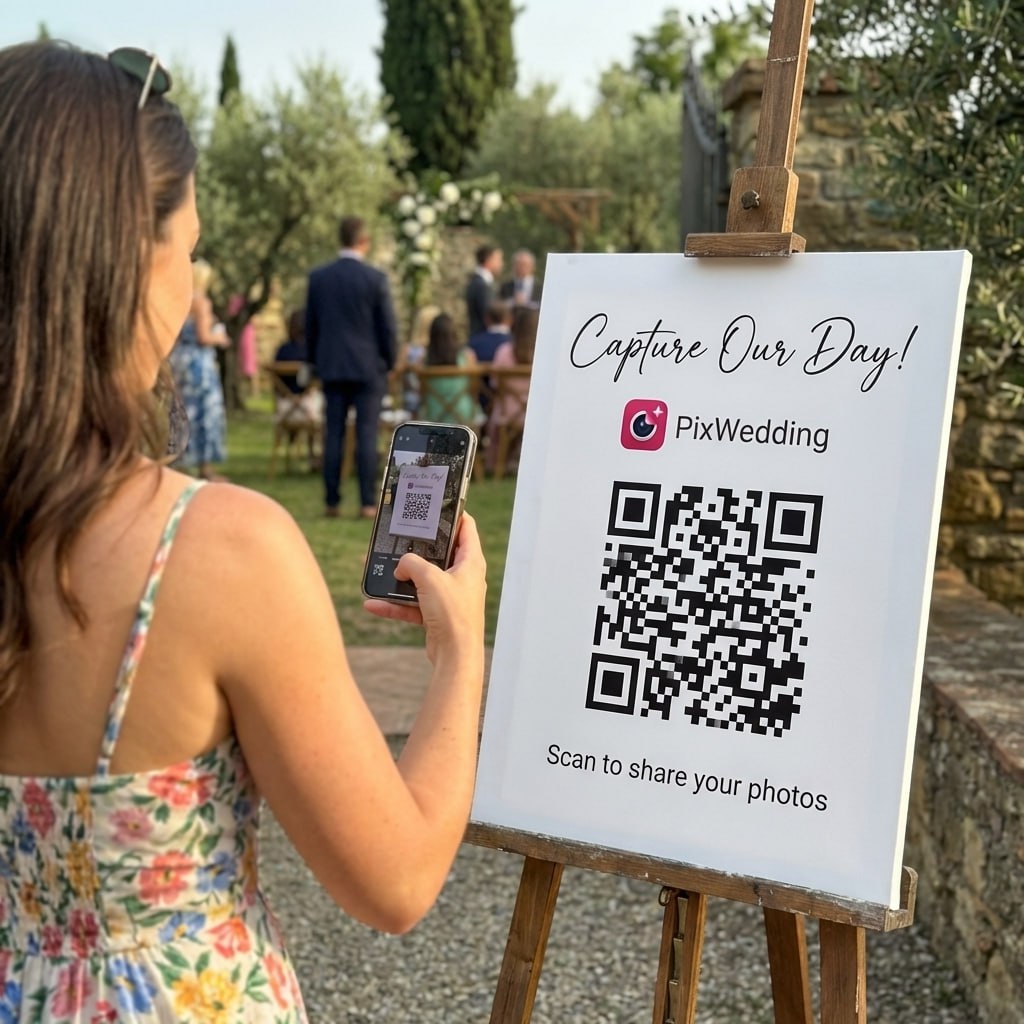

SCAN TO TRY
pix.wedding/
your-wedding
How to Create Your Wedding Budget
Start by determining your total available budget, including contributions from both families. Then use the percentage breakdown above as a starting framework. Allocate roughly 50 to 65 percent to venue and catering combined since these two categories define the guest experience more than anything else. Photography should get 8 to 12 percent because your photos are the only thing that lasts forever.
After allocating the major categories, identify your personal priorities. If dancing is the highlight you dream about, shift money toward entertainment. If you want magazine-worthy flowers, increase the floral budget and reduce stationery. No two couples have the same priorities, and your budget should reflect yours.
Track every expense from the very first deposit. Wedding budgets spiral when couples lose track of small charges. Use a dedicated spreadsheet or our free Wedding Budget Allocator tool to monitor spending in real time and catch overages before they become problems.
- •Determine total available budget including family contributions
- •Use the 30-40% venue, 20-25% catering framework as a starting point
- •Prioritize the 2 to 3 categories that matter most to you as a couple
- •Build in a 5 to 10 percent contingency fund for unexpected costs
- •Track every payment and compare actual spending to your budget weekly
Wedding Cost Trends in 2026
Several trends are shaping wedding costs in 2026. Micro-weddings with 30 to 50 guests continue to grow in popularity, allowing couples to spend more per guest on premium experiences while keeping total costs manageable. Weekday and brunch weddings are also gaining traction as couples prioritize value.
Technology is reducing costs in some categories. Digital invitations, AI-powered planning tools, and QR-based guest photo sharing through platforms like Pix Wedding are replacing expensive traditional options. At the same time, demand for premium photography, videography, and live entertainment continues to push those prices upward.
Sustainability-focused weddings are also trending, with couples choosing seasonal flowers, locally sourced catering, and eco-friendly decor. These choices often cost less than traditional alternatives while aligning with couples' values.
Explore more free wedding tools
Everything you need to make your wedding day stress-free and unforgettable.
Budget Allocator
Turn your total into a category-by-category plan.
Courthouse Wedding Cost
Real fees by county and what to expect.
Photo Sharing QR
The best way to collect guest photos.
Wedding Checklist
Month-by-month planning checklist.
AI Vow Generator
Write "banger" vows in seconds.
AI Speech Pro
Banger toasts for Best Man & more.
Frequently Asked Questions
Everything you need to know about our free tools and how they help your wedding day.
The average wedding cost breakdown in 2026: venue 30 to 40 percent ($8,000 to $25,000), catering and bar 20 to 25 percent ($7,000 to $15,000), photography 8 to 12 percent ($3,000 to $6,000), flowers and decor 5 to 8 percent ($2,000 to $5,000), DJ and entertainment 3 to 5 percent ($1,000 to $3,000), attire 3 to 5 percent ($1,500 to $3,500), and miscellaneous 5 to 8 percent ($1,500 to $4,000). Those ranges are Pix Wedding planning estimates. The total national average is $34,200 (The Knot 2026 Real Weddings Study), with the venue averaging $12,900 and the photographer $3,000.
The average US wedding costs $34,200 in 2026, excluding the honeymoon and engagement ring. According to The Knot 2026 Real Weddings Study, New York City weddings average $88,000 and Midwest weddings average $29,000. Guest count is the biggest driver: the study found an average of 117 guests and $292 per guest, and we estimate each extra guest adds $150 to $300 in food, drinks, rentals, and favors.
Typical wedding expenses include (Pix Wedding planning ranges): venue rental ($8,000 to $25,000), catering ($7,000 to $15,000), photography ($3,000 to $6,000), DJ ($1,000 to $2,500), flowers ($2,000 to $5,000), wedding attire ($1,500 to $3,500), wedding planner ($1,500 to $10,000), stationery ($300 to $1,200), transportation ($500 to $1,500), cake ($400 to $1,000), and officiant ($200 to $800). Hidden costs like vendor tips, service charges, and alterations add another $2,000 to $5,000.
To plan a wedding on a budget: choose a Friday or Sunday date (save 20 to 40 percent), reduce your guest list (each cut guest saves $150 to $300), select an off-season month, use a restaurant buyout instead of a dedicated venue, DIY flowers and decor, hire a newer photographer building their portfolio, skip the photo booth in favor of QR guest photo sharing, and use digital invitations. A beautiful wedding for $15,000 to $20,000 is achievable with these trade-offs.
Commonly forgotten wedding costs: vendor meals ($30 to $50 each), dress alterations ($300 to $800), vendor tips ($500 to $1,500 total), catering service charges and taxes (adding 25 to 30 percent to quoted prices), overtime fees, marriage license (roughly $20 to $170 depending on the state), wedding party gifts ($200 to $600), and guest transportation ($500 to $1,200). Always build a 5 to 10 percent contingency fund into your total budget.
Four Seasons does not publish wedding prices, so any number is an estimate. Our illustrative planning range for a full Four Seasons Hawaii wedding is $50,000 to $200,000+ depending on guest count and customization. The properties on Maui, the Big Island, Lanai, and Oahu set their own food and beverage minimums, and our estimates put that minimum somewhere around $15,000 to $80,000+. On top of that, plan for venue fees, flowers, photography, and guest accommodations. Contact the specific property for current 2026 pricing.