









pixPix Weddingwedding
Category Explainer

Wedding Photo Sharing App 2026: QR Code, No Install, Free Tier

A complete buyer's guide to wedding photo sharing apps. Understand what the category is, what features actually matter, and why dedicated apps consistently outperform Google Photos, Instagram hashtags, and generic cloud storage.

App Types

4 Types of Wedding Photo Sharing Apps

Not all photo sharing approaches are equal. The type determines how many guests actually participate.

Recommended

QR-Based Browser Apps

Examples: Pix Wedding
80-95% participation

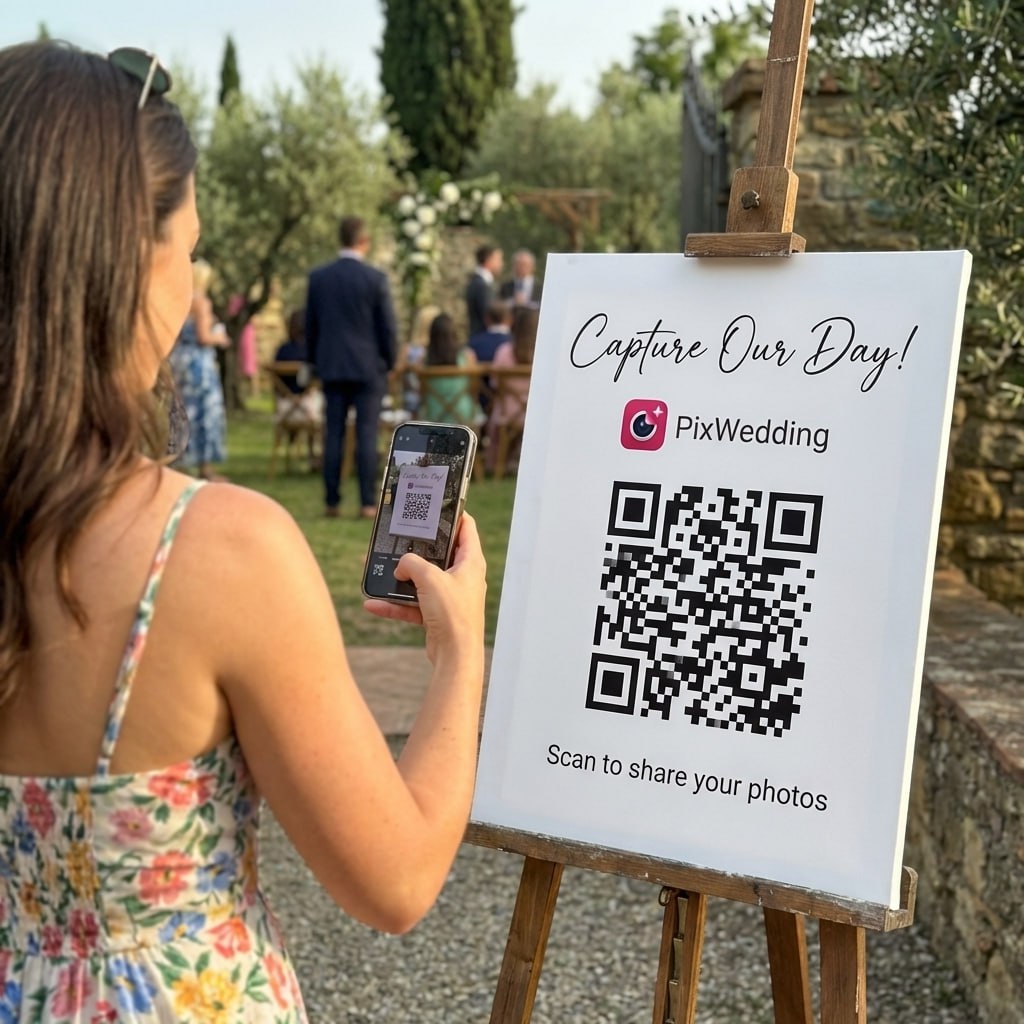
Guests scan a QR code with their phone camera. The upload page opens instantly in their browser. No app download, no account. This type achieves the highest participation rates because it creates zero friction for guests.

App-Download Required

Examples: WedPics, GuestCam (some features)
30-55% participation

Guests must find and install a dedicated app before they can upload. Each extra step reduces participation. These platforms often have polished interfaces and more features, but the participation rate cost is significant.

Shared Cloud Albums

Examples: Google Photos Shared Album, iCloud Shared Album
25-50% participation

Free and familiar, but requires guests to have and be logged into a Google or Apple account. The link sent before the wedding is often lost or forgotten. No QR code generation and no moderation tools.

Social Media Hashtags

Examples: Instagram, Facebook
20-40% participation

Ask guests to tag posts with a custom hashtag. Free and requires no setup. However, posts are public by default, guests without social accounts cannot participate, and there is no central private gallery.

Feature Checklist

6 Must-Have Features in a Wedding Photo Sharing App

QR Code Generation

Replaces friction-heavy link sharing. Every guest at every table sees the code without being individually notified.

No App Download for Guests

App download requirements cut participation by 50-70%. Browser-based upload is non-negotiable for high guest participation.

Private Album with Access Controls

Your wedding photos should not be publicly visible. Look for password protection and the ability to control who can view vs upload.

Full Resolution Storage

If the app compresses photos, you cannot print guest photos at size. Confirm the platform stores original-resolution files.

Bulk Download Option

After the wedding, you need to be able to download every photo in one action. Per-photo downloading is impractical at scale.

Simple Couple Setup (Under 5 Minutes)

If setup is complex, couples often procrastinate and end up scrambling. The best platforms are operational in 2 minutes.

Comparison

Dedicated Wedding App vs Generic Cloud Storage

FeatureDedicated AppGeneric Cloud
QR code generation
No guest account required
Wedding-specific design
Content moderation tools
Photo participation tracking
Printable table cards
Guest participation: 80-95%
Cost: often free
Unlimited storage
History

How Wedding Photo Sharing Apps Evolved

2010-2014

Early wedding apps require guests to download dedicated software. Low adoption.

2015-2017

Shared albums via Google Photos and Dropbox links become common. Better, but still require accounts.

2017

Apple adds native QR scanning to iPhone camera. Browser-based sharing becomes viable.

2018-2020

First dedicated QR-to-browser wedding photo platforms launch. Participation rates jump significantly.

2020-2021

COVID pandemic accelerates QR code adoption for contactless menus. Wedding QR photo sharing benefits from the cultural shift.

2022-2024

Category matures. Multiple platforms compete. QR codes replace disposable cameras as the default guest photo solution.

2025-2026

QR-based browser sharing is the clear category winner. Participation rates of 80-95% become standard.

Related Guides and Tools

50,000+ couples already use this app.

Launch your private wedding gallery in two minutes. Guests upload from any phone, no install needed, and you own every photo at full resolution.

From Mom

From Mom

9:41

ALBUM

Emma & Jack

June 14, 2026

634 photos · 94 guests

AllMomentsMine
Wedding guest photo 1 from album preview
Wedding guest photo 2 from album preview
Wedding guest photo 4 from album preview
Wedding guest photo 5 from album preview
Wedding guest photo 6 from album preview
Wedding guest photo 7 from album preview
Wedding guest photo 8 from album preview
Wedding guest photo 9 from album preview
Wedding guest photo 10 from album preview
Add photosShare your moments
Table 4 just uploadedSarah B. · +12 new photos

How the Wedding Photo Sharing App Category Evolved

Before dedicated wedding photo sharing apps existed, couples had limited options for collecting guest photos: Instagram hashtags, shared Google Photos links, or emailing guests and hoping they remembered to send their best shots. Each method had significant friction and low participation rates.

The category shifted fundamentally in 2017 when Apple added native QR code scanning to the iPhone camera. Suddenly, a QR code on a table card could open a web page instantly without the guest doing anything more complex than pointing their camera at the code. Wedding photo sharing platforms built for this use case began to emerge, and by 2022 the category had matured into a reliable, high-participation solution.

Today, the best wedding photo sharing apps combine the simplicity of a QR code with the organization of a dedicated album platform. The result is participation rates of 80-95%, compared to 20-40% for the older methods.

Why Dedicated Wedding Photo Apps Outperform Generic Tools

A generic cloud storage service like Google Photos or Dropbox is built for general-purpose file storage, not for the specific workflow of wedding photo collection. The gap becomes clear when you consider the requirements: QR code generation, no-account guest uploads, wedding-themed presentation, content moderation, and real-time notifications when guests upload.

Dedicated wedding photo sharing apps like Pix Wedding are built around the specific problem of getting 80-200 guests to contribute photos with zero friction on a single day. Every design decision in a dedicated app supports this goal. Generic tools are optimized for different use cases and inevitably create unnecessary friction for wedding guests.

  • QR code generation built in vs. none in generic tools
  • No guest account required vs. Google/Apple account required
  • Wedding-specific design and messaging vs. generic file interface
  • Real-time couple notifications vs. no alerts
  • Content moderation to remove unwanted photos vs. none
  • One-click album download vs. tedious per-file download

Explore more free wedding tools

Everything you need to make your wedding day stress-free and unforgettable.

Category Questions Answered

Wedding Photo Sharing App FAQ

Everything you need to know about our free tools and how they help your wedding day.

A wedding photo sharing app is a platform that lets your wedding guests upload their photos and videos to a central private album. The best ones use a QR code system: couples print the code on table cards, guests scan it with their phone camera, and the upload page opens directly in the browser without any app download. Pix Wedding is a leading example. Unlike generic cloud storage, these platforms are designed specifically for weddings with features like QR code generation, wedding-themed design, and content moderation.

It depends on the platform. The best wedding photo sharing apps like Pix Wedding are entirely browser-based: guests scan a QR code and upload photos directly in Safari or Chrome without installing anything. Other platforms like WedPics and some tiers of GuestCam require guests to download an app from the App Store. Browser-based platforms consistently achieve 80-95% guest participation vs 30-55% for app-download required platforms.

Google Photos Shared Albums are free and familiar, but they have significant limitations for weddings. Every guest needs a Google account to add photos. The sharing link is typically sent weeks before the wedding and often forgotten. There is no QR code generation, no wedding-specific design, and no moderation tools. For casual family events, Google Photos works fine. For a wedding where you want to maximize guest participation and keep photos private and organized, a dedicated platform is a better choice.

Pix Wedding offers a free tier that supports hundreds of photos from unlimited guests, which is sufficient for most weddings. Premium features like video uploads, custom branding, and extended album lifetime are available from $49. Most reputable platforms fall in the $0-99 range. Avoid platforms with per-photo pricing or annual subscription fees that scale with guest count: these can become expensive for larger weddings.

The six most important features are: QR code generation (so every table has a scannable code), no app download for guests (critical for participation), private album with password protection, full resolution photo storage, one-click bulk download after the wedding, and simple setup that takes under 5 minutes. Secondary features like slideshow mode, video support, and custom branding are nice to have but not essential for the core use case.

Yes. Most wedding photo sharing apps work for any event where you want to collect photos from a group: engagement parties, rehearsal dinners, birthday parties, baby showers, corporate events, and reunions. The QR code and browser-based upload system works the same way regardless of the occasion. Pix Wedding is optimized for weddings but works excellently for any celebration.