
Wedding Picture App for Guests: What You Actually Get Afterward
Uploading is the easy part. This is what happens next: the gallery, the reception slideshow, the full download, and the printed keepsake you end up holding.
See the Gallery You'll GetThis guide is not about how guests scan a QR code or which app is easiest to figure out at the reception. It is about what happens after: the shared gallery you inherit, whether you can download it, whether it can run as a live slideshow, and how to turn it into something you actually keep, like a printed album, a thank-you card, or a slideshow you replay on an anniversary.
In one sentence: the wedding picture app matters less for how guests use it and more for what it lets the couple walk away with once the reception is over.
Four Things a Guest Photo App Should Leave You With
One Shared Gallery
Every photo a guest uploads lands in the same album as everyone else's, in the order it was taken. No hunting through 40 separate camera rolls or group chats to find who caught the first dance.
A Live Reception Slideshow
New uploads can display on a screen at the reception as guests take them, so the ceremony photo your aunt just took is on the wall behind the cake table twenty minutes later.
A Full-Resolution Download
The couple can pull every photo in the gallery as a single download, at the resolution guests actually shot it in, without asking each guest individually to re-send their favorites.
Source Material for a Printed Album
Once the gallery is downloaded, the best guest shots become the raw material for a photo book, a set of thank-you cards, or a slideshow you play again on an anniversary.
A Gallery You Can Hand Back to Guests
The finished collection is not just for the couple. Sharing the link back with guests after curation lets them see and download the shots other guests took, including ones of themselves they never saw that night.

First dance
You guys!!
Every guest photo, organized into one gallery you keep.
Download the full-resolution collection, run a live slideshow at the reception, and turn your favorites into a printed album afterward.
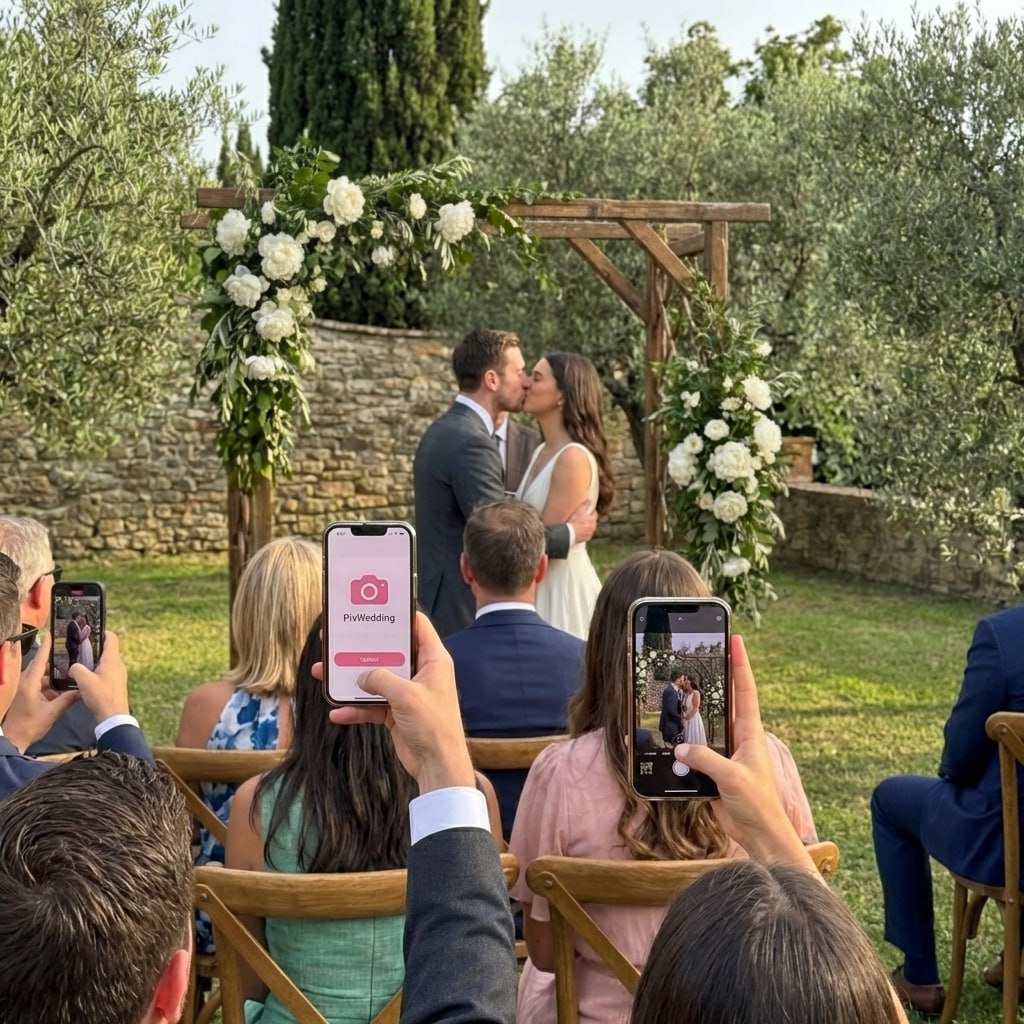
From Mom
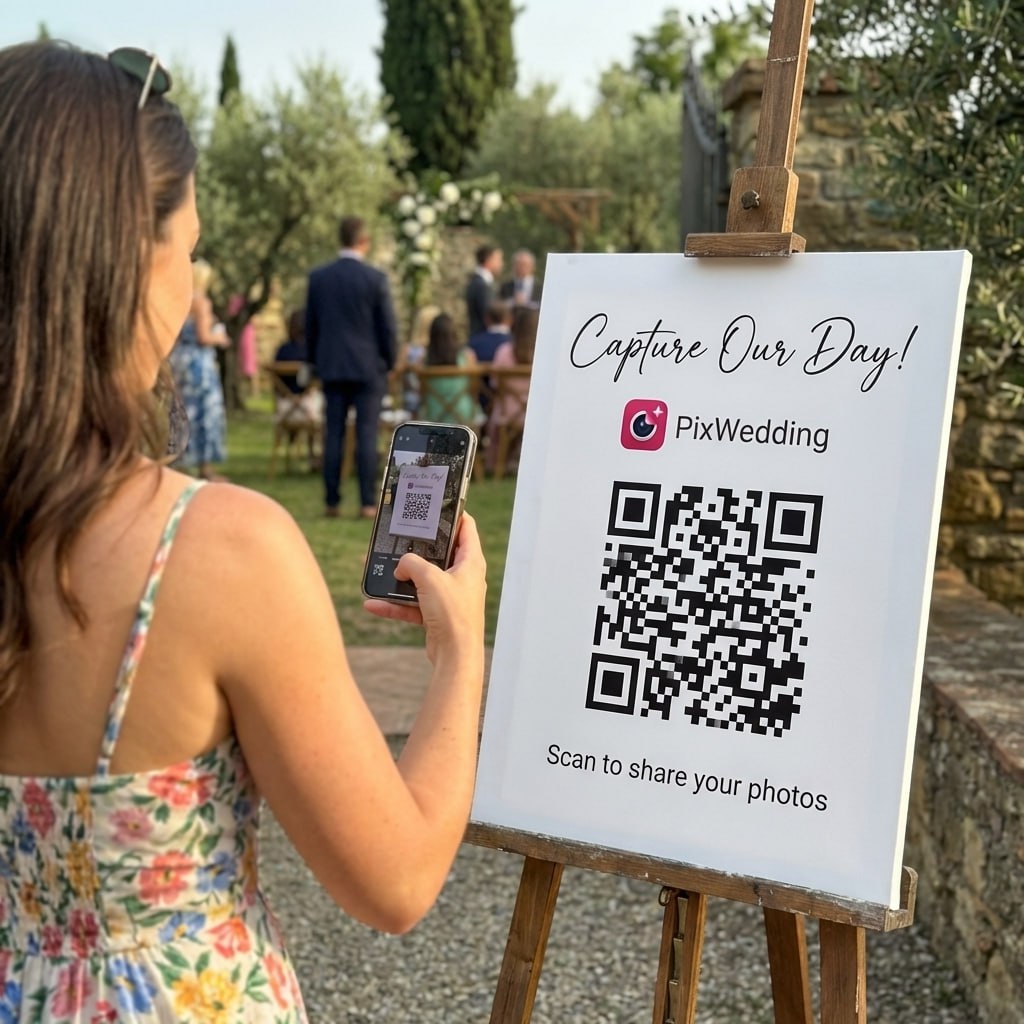
Scan to join the album
No app, no account
UPLOADING
Saving your moment
THE ALBUM
Emma & Jack
June 21, 2026
647 photos · 95 guests




SCAN TO TRY
pix.wedding/
your-wedding
From Guest Upload to Finished Keepsake
- 1
During the reception
Guests upload as they go. If you run a live slideshow, the gallery fills the screen in near real time instead of sitting unseen on individual phones.
- 2
The morning after
The gallery keeps accepting uploads for a few more days as guests who forgot to send photos the night before catch up. Most activity is done within 48 hours of the event ending.
- 3
Within the first week
This is the point to do a first pass: delete blurry duplicates, tag photos by moment (getting ready, ceremony, first dance, send-off) if your tool supports it, and flag your favorites.
- 4
Within two to three weeks
Download the full gallery as a backup, separate from whatever platform hosted it. Photo sharing apps are not permanent archives; a local or cloud backup is the only copy you fully control long-term.
- 5
Within the first month
Pick 40 to 80 of the strongest guest shots and start a photo book layout, or export a folder specifically for thank-you card photos if you are sending those out.
- 6
On future anniversaries
Re-open the downloaded gallery (or a slideshow export of it) once a year. This is the step most couples plan for the least and appreciate the most a few years out.
Turning Guest Photos Into a Printed Album
A downloaded gallery is source material, not a finished object. Most couples who print a wedding album from guest photos curate the download to their strongest 60 to 100 shots first, then send that folder to a photo book service. A few that have wedding-specific options worth knowing about:
Runs a recurring Monthbook subscription that prints a hardcover photo book on a set schedule, which works well if you want your guest gallery split into a "wedding" book plus later books for the honeymoon or first year.
Offers a dedicated wedding layflat album line and a design service where someone lays out the book for you from your downloaded gallery, aimed specifically at wedding photo collections rather than general family photo books.
All three are established general-purpose photo book printers that a wedding gallery download works with equally well; Tom's Guide compares their layout tools, paper stock, and pricing tiers side by side.
Pricing, page counts, and layout options at any of these services change over time, so check current details directly before ordering.
How many photos do I actually need for a photo book?
Most standard hardcover layouts fit comfortably in the 60 to 100 photo range across 20 to 40 pages. A gallery of several hundred guest uploads almost always needs a curation pass first; sending every uploaded photo straight to a print service usually produces a book with too many near-duplicate pages to be worth flipping through.
Gallery, Download, Export: What Each Term Actually Means
These terms get used loosely when people talk about wedding photo apps. Here is what each one means specifically, since the difference matters once you are trying to figure out what you own versus what is just visible on a screen.
The live, shared collection of photos guests have uploaded so far. Still growing until you close it.
Pulling every photo out of the gallery as files onto your own device or cloud storage, at the resolution guests uploaded it in.
A curated subset of the download, usually organized by moment or recipient, prepared specifically to send to a print service or use in a slideshow.
A screen or TV that refreshes automatically as new photos arrive in the gallery, without anyone manually updating a slideshow file.
Manually reviewing the download to remove duplicates and blur, then flagging or tagging the strongest shots for printing or sharing.
Which Final Keepsake Format Fits You
| Format | Best For | Effort Required |
|---|---|---|
| Printed photo book | Couples who want a physical object on a shelf, or a gift for parents. | Highest: requires curation plus a print order and a wait for shipping. |
| Digital slideshow file | Anniversary replays, sharing with family who live far away, or a rehearsal-dinner style video. | Medium: curation plus arranging the file, no shipping wait. |
| Thank-you card photos | A personal touch on cards you are already sending. | Medium: requires finding the right photo per recipient. |
| Full gallery download only | Couples who want the option to decide later, or who plan to build something themselves. | Lowest: one download, no further work required right away. |
Running a Live Slideshow While It's Still Happening
A gallery that supports live display can cast or refresh on a TV or projector without a laptop babysitting a slideshow app.
Google Photos can also cast an existing album to a smart TV or Chromecast device as a slideshow, which works as a lower-effort fallback if your photo app does not have a built-in live display.
Keep the reception slideshow on a short refresh loop (30 to 90 seconds) so newly uploaded photos actually get seen before the next batch arrives.
Mute or dim expectations for guests over 65: most will still hand a phone to a photo ambassador rather than watch the slideshow for photo cues, so do not rely on the screen as your only prompt to upload.
Reference: Google Photos support, casting a slideshow to a TV.
Photo Thank-You Cards Guests Actually Recognize
Why guest candids work better than portraits
A photo a guest took of themselves with you, or a candid from the moment they gave you a gift or made a toast, puts them inside the memory instead of just receiving a generic couple portrait. It reads as personal because it is.
How to find the right photo per guest
If your gallery supports tagging or search by uploader, filter the download by who took or appeared in each shot. Otherwise, a manual first pass while curating is the same work you are already doing to build the album, just sorted by recipient instead of by moment.
Curating Hundreds of Guest Photos Into Something You'll Actually Look At
Do
Do set aside a specific evening (not "whenever") to do the first curation pass. An open-ended "someday" task does not get done.
Do delete obvious duplicates and blurry near-misses before you download anything for print. Print services charge per page, and blur does not improve with a better printer.
Do separate the gallery into rough moments (getting ready, ceremony, reception, send-off) before picking favorites. Curating 400 unsorted photos in one pass is what makes people give up.
Do keep the unedited full download somewhere separate from your curated "best of" folder, in case you want to revisit a photo you cut.
Don't
Do not wait more than a month to start. The gallery feels urgent for about two weeks after the wedding, then competes with regular life for attention indefinitely.
Do not try to pick the "best" 400 photos in one sitting. Split it into three or four shorter sessions across different moments.
Do not delete from the platform gallery itself before you have a separate download. If the platform account lapses or the gallery closes, an in-app-only edit is gone with it.
Do not assume every guest photo is worth printing. A photo book of 60 to 100 curated shots gets looked at again; a photo book of 400 unsorted shots gets opened once.
Sharing the Finished Gallery Back, and Revisiting It Later
Give guests the same gallery back
Guests contributed the photos; a short thank-you note with the gallery link lets them download the same collection they helped build, including shots from other guests they never saw the night of.
Replay it on an anniversary
A downloaded gallery works as a ready-made anniversary slideshow with no extra editing needed. Set a yearly reminder to reopen the folder; it is a small habit that most couples say they wish they had planned for instead of stumbling into.
Keep a second copy off the platform
Cloud storage you control (not the gallery platform itself) is the safest long-term home for the full download. Platforms can change pricing or shut down; a folder in your own storage cannot.
What Each Sharing Method Leaves You With Afterward
| Method | Full Download | Live Display | Curation Tools | Print Ready |
|---|---|---|---|---|
| QR code gallery app | Yes, full resolution | Yes, if supported | Built-in tagging/favoriting | Yes |
| Disposable cameras | After paid film development | No | Manual, by hand | Yes, once developed |
| Group text or messaging app | Manual, photo by photo | No | None | Only after manual export |
| Social media hashtag | Limited, platform-dependent | No | None built for this | Compressed, low resolution |
Common Mistakes When Planning the Output
Assuming the app itself is the keepsake.
The app is the collection step. The gallery download, the album, and the slideshow are the keepsake. Plan for the second step, not just the first.
Never downloading a backup copy.
Photo sharing platforms are built for collection and sharing, not indefinite hosting. Download the full gallery within the first month so you are not dependent on any single platform staying online.
Printing before curating.
Sending an unsorted 400-photo folder straight to a print service produces an album nobody wants to flip through twice. Curate first, print second.
Losing the original files to screenshots or compressed re-shares.
Downloading directly from the source gallery preserves resolution. Screenshotting a slideshow or re-saving from a group chat drops quality before you even reach a print service.
Forgetting guests want the output too.
The couple is not the only one who wants the finished gallery. A short thank-you message with a link back to the shared album gives guests the same keepsake they helped create.
Grouping the Download Into Chapters Before You Curate
Sorting a large download by rough chapter, before picking favorites within each one, is what makes curation feel manageable instead of overwhelming. A typical wedding gallery breaks down into five natural sections:
Getting ready
Detail shots guests took of the dress, rings, or shoes while everyone was still arriving. Usually thin on guest photos since few guests are around yet.
Ceremony
The single moment section every guest tends to photograph the most, so it needs the heaviest curation pass to avoid dozens of near-identical angles.
Cocktail hour
Candid, unposed shots. Often the richest source for thank-you card material since guests are relaxed and photographing each other, not just the couple.
Reception entrance and toasts
A handful of guests usually catch the entrance and speeches from different angles across the room; worth cross-checking a few uploads for the clearest shot.
Dancing and send-off
The largest volume of guest photos by count and usually the blurriest, so this chapter needs the most aggressive trim during curation.
Related Guest Photo Guides
Why the Output Matters More Than the Upload Step
Most conversations about wedding picture apps focus on getting guests to upload: how easy the QR code is, whether people need to download an app, how to remind stragglers. That is table stakes. The part that determines whether the whole exercise was worth it happens after the wedding, when the couple has to actually do something with several hundred photos taken by dozens of different people on dozens of different phones.
A gallery that never gets downloaded is a liability, not an asset. It sits on a platform the couple does not control, at the mercy of that platform staying online, staying free, or staying accessible. The output, the actual file you own, the album you can hold, the slideshow you can replay, is the part of this process worth planning for on purpose instead of leaving to chance.
How Long to Keep the Gallery Live
Most guest uploads happen within 48 hours of the event ending, with a smaller trickle over the following one to two weeks from people who forgot or were traveling. There is rarely a reason to close a gallery immediately after the wedding; leaving it open for a month gives late uploaders room to add photos without the couple having to chase anyone down.
Once uploads have tapered off, download the full gallery as a backup regardless of whether you plan to keep the app subscription or gallery link active long-term. A downloaded folder on your own device or cloud storage is the only copy that survives a platform shutting down, changing its pricing, or simply becoming inconvenient to log back into years later.
Deciding How Much to Invest in the Final Output
Not every couple wants a full photo book, and that is a reasonable call. The right amount of effort to put into the output depends on what you actually plan to do with it: a couple who wants a shelf object should budget time for curation and a print order, while a couple who just wants a safety-net backup can stop at downloading the gallery and revisit it later.
What matters is making the decision on purpose rather than by default. The couples who end up disappointed are usually the ones who never downloaded anything at all, not the ones who chose a lighter-effort format that matched what they actually wanted.
Explore more free wedding tools
Everything you need to make your wedding day stress-free and unforgettable.
QR Sticker Designer
Design custom print-ready stickers.
Hashtag Generator
Create unique wedding hashtags.
How to Collect Guest Photos
5 methods ranked by participation rate and ease.
Share Wedding Photos with Guests
Compare every sharing platform by ease and participation.
Best Way to Get Guest Photos
The single method with the highest participation rate.
How to Make a Shared Wedding Album
Step-by-step setup for every platform.
Alternative to Disposable Cameras
Better, cheaper options than disposable cameras.
Alternative to Wedding Photo Booth
5 cheaper alternatives to a $1,000+ photo booth rental.
What You Get Afterward: FAQ
Straight answers to the questions people ask most about this topic.
You get a shared gallery of every photo guests uploaded, in the order they were taken. From there you can download the full collection at full resolution, run a live slideshow during the reception, and later use the downloaded photos to build a printed album, thank-you cards, or an anniversary slideshow. The upload step is just the start; the gallery, download, and printed keepsake are the actual output.
With Pix Wedding, yes: the couple can download the entire shared gallery as a single export at the resolution guests originally uploaded it in, rather than messaging each guest individually to resend their photos. Not every app offers a full-gallery download, so check for that feature specifically before choosing a platform.
Download the full gallery, curate it down to your strongest 60 to 100 shots, then upload that curated folder to a photo book service. Services like Chatbooks and Artifact Uprising both print wedding-specific hardcover and layflat albums, and general printers like Mixbook, Shutterfly, and Printique work with any downloaded photo folder equally well.
Yes, if your photo sharing app supports live display. New uploads appear on a connected screen or TV in near real time, so photos guests take during the ceremony or cocktail hour can be visible on a screen later the same night. If your app does not support this, Google Photos can cast an existing album to a TV as a fallback slideshow.
Split the task into short sessions by moment (getting ready, ceremony, reception, send-off) instead of trying to sort the whole gallery at once. Delete obvious duplicates and blur first, then pick favorites within each moment. Doing this within the first month, while the memory of the day is still fresh, makes the curation far faster than coming back to it a year later.
Yes. Once you have downloaded the gallery, pick photos that show the specific guest or gift-giver you are thanking, whenever possible, rather than a generic couple portrait. A candid a guest took of themselves with you at the reception tends to land better in a thank-you card than a professional photo, because it is a moment they were actually part of.