
How to Make a Shared Wedding Album
Step-by-step setup for every platform. Create an album your guests can actually contribute to, not just view.
The short answer
To make a shared wedding album guests can upload to, create an album on a platform that opens in a browser (no app, no forced sign-up), download the QR code it generates, and print that code on table cards and signage. Guests scan it with their phone camera, the upload page opens instantly, and they add their photos with no account needed. Pix Wedding is built exactly this way; Google Photos and iCloud also offer shared albums but require guests to have and sign into a matching account.
Below is the exact setup for four platforms, the real storage limits each one enforces, and a decision guide to pick the right one for your guest list.
Shared Album Limits, Compared
Before you pick a platform, know its ceiling. These are the current published limits for each option, so you are not caught off guard mid-reception.
| Platform | Album cap | Guest account needed | Video support |
|---|---|---|---|
| Pix Wedding | No fixed photo cap on paid plans | None, browser upload only | Yes |
| Google Photos shared album | 20,000 photos or videos per album (Google Photos Help) | Google account required to contribute | Yes |
| iCloud Shared Album | 5,000 photos or videos per album (Apple Support) | Apple ID required to contribute | Yes |
| Amazon Photos Family Vault | Unlimited photos, 5GB for video/other files per member (Amazon Customer Service) | Amazon account, invited by the Prime member | Limited |
iCloud Shared Albums also cap contributors at 1,000 uploads per person per hour and 10,000 per day, per Apple's official Shared Album limits page. That rarely matters for a wedding, but it is worth knowing if multiple guests are uploading a full camera roll at once.

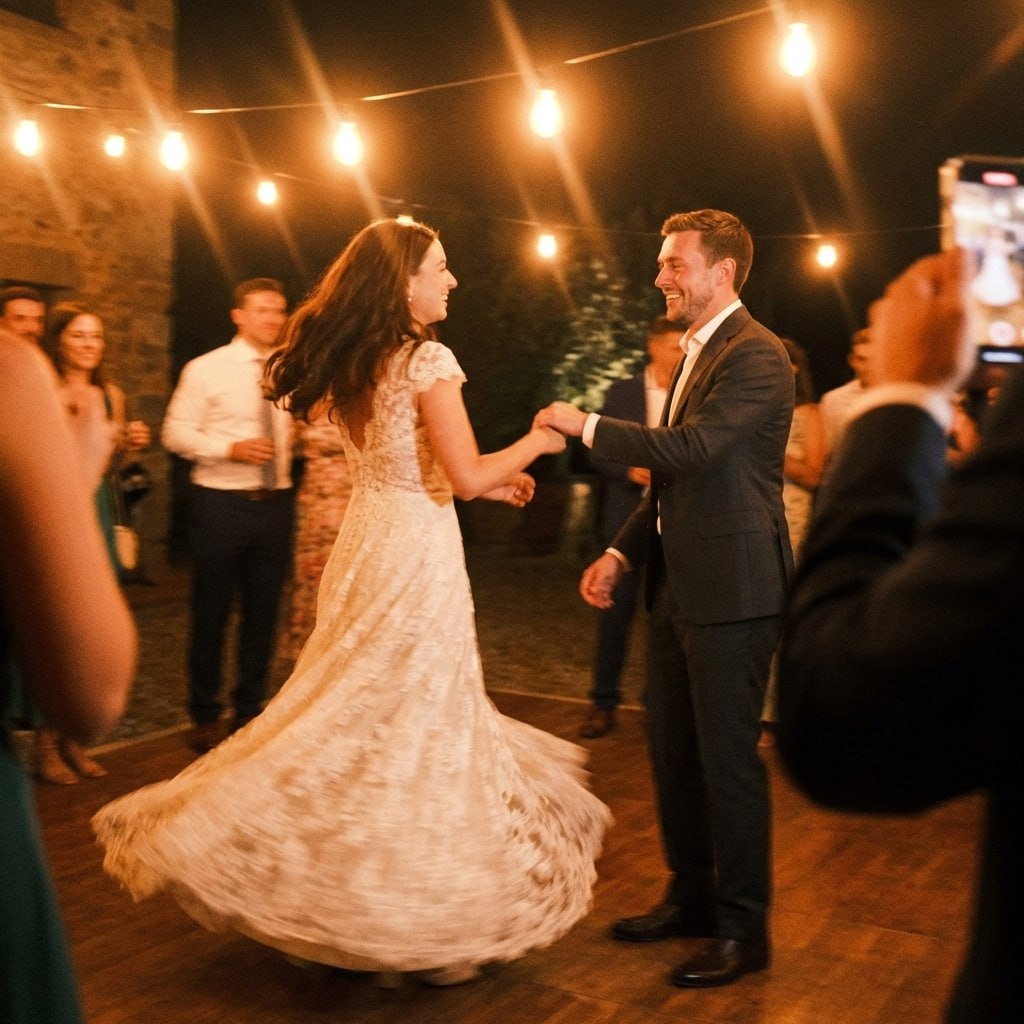
First dance
You guys!!
The shared album that sets itself up.
Create your Pix Wedding album in 2 minutes, print the QR, and let guests fill it all day. No platform friction, no login walls for them.
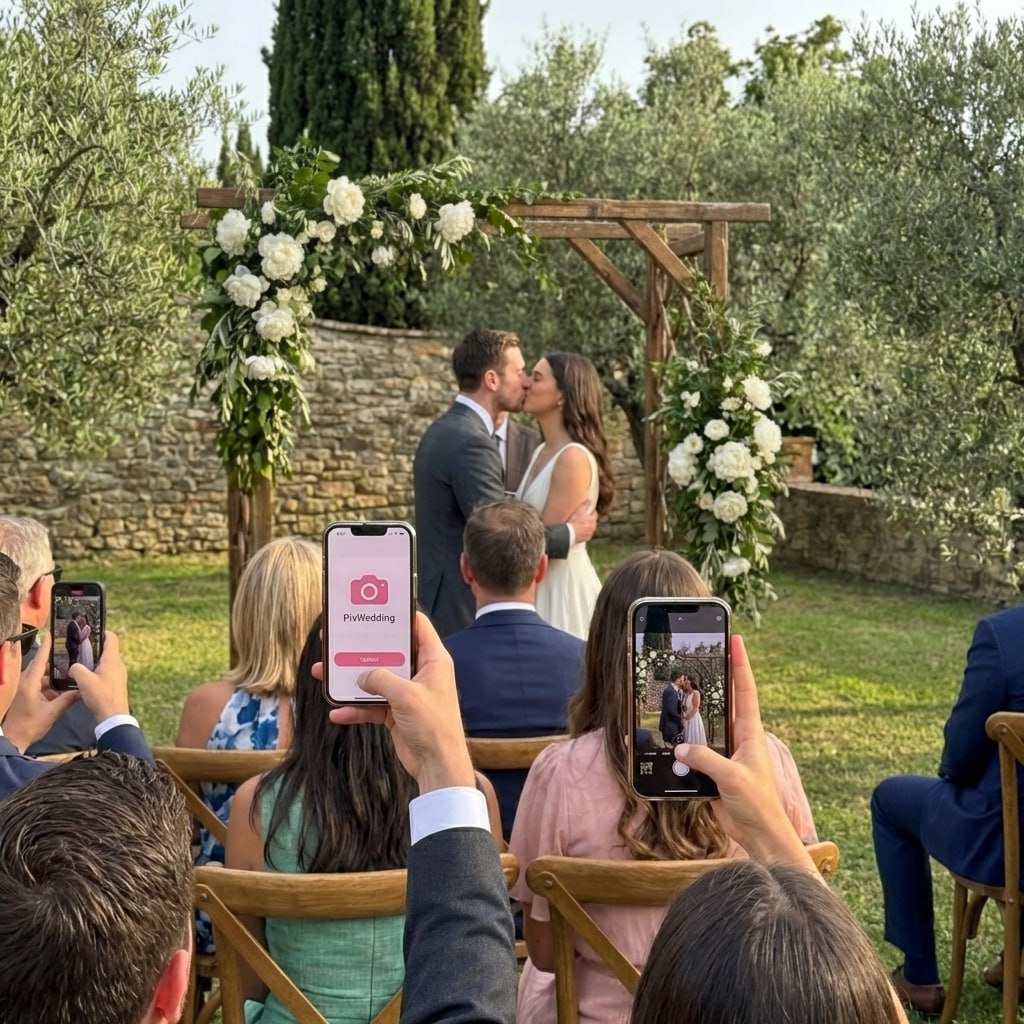
From Mom
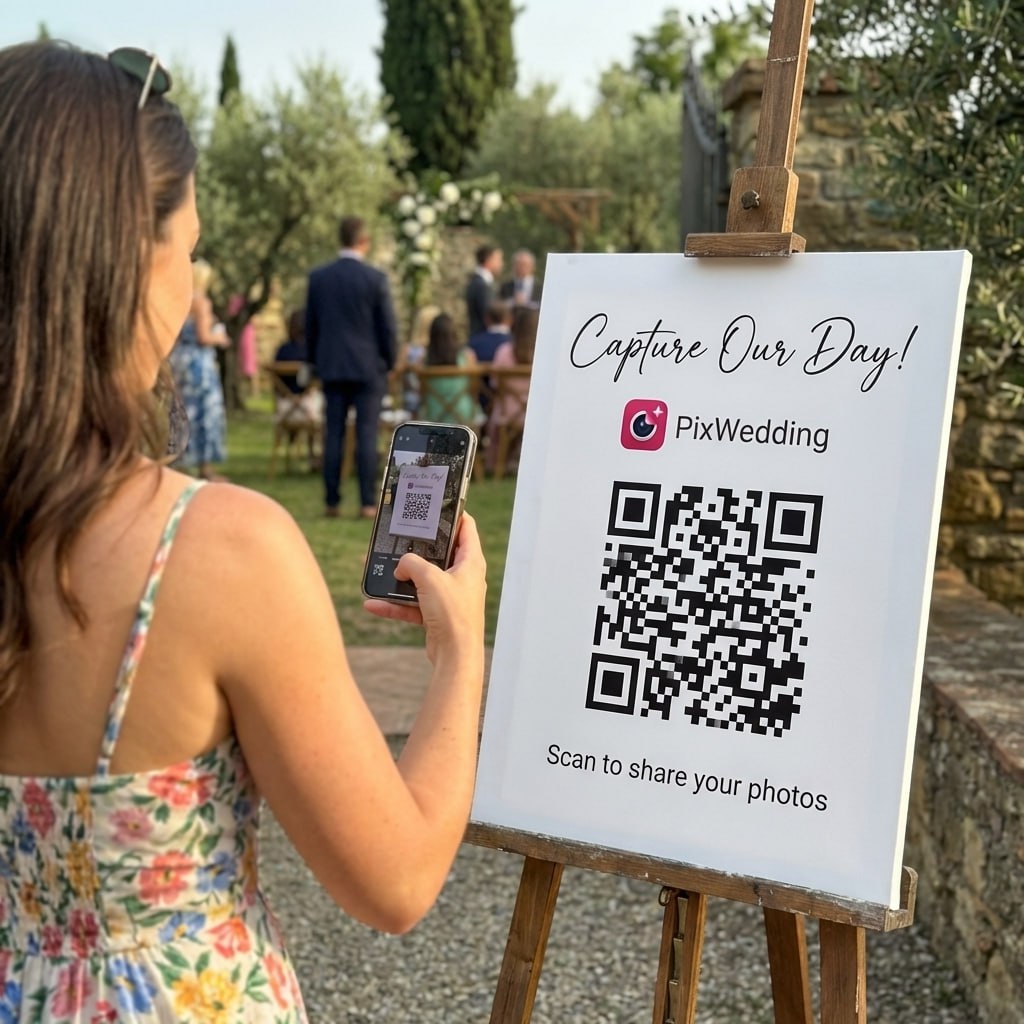
Scan to join the album
No app, no account
UPLOADING
Saving your moment
THE ALBUM
Emma & Jack
June 21, 2026
647 photos · 95 guests





SCAN TO TRY
pix.wedding/
your-wedding
How to Set Up a Shared Album on Every Platform
Pix Wedding
RecommendedBest for: Maximum guest participation and easiest setup
Setup Steps
Google Photos Shared Album
Best for: Couples who want a free option and most guests have Google accounts
Setup Steps
iCloud Shared Album
Best for: Couples and guests who are all on iPhone
Setup Steps
Amazon Photos Family Vault
Best for: Prime subscribers with a mostly family guest list
Setup Steps
A shared wedding album, built live
Watch the demo album this guide uses as its example: QR upload, instant gallery, lifetime access.
The real Pix Wedding demo album, exactly what your guests see after scanning the QR code.
Watch: Setting Up a Shared Google Photos Album
If you are leaning toward the Google Photos route above, this walkthrough shows the exact taps, from creating the album to turning on Collaborate so guests can add their own photos.
Which Platform Fits Your Guest List
The right platform depends less on features and more on who your guests are. Work through these questions in order.
Q: Do you want zero friction for guests who are not on iPhone or a Google account?
Choose Pix Wedding. It opens in any phone browser with no login, so an Android and iPhone crowd both scan the same QR code.
Q: Is your guest list almost entirely iPhone users?
iCloud Shared Album works well here, but remember the 5,000-item cap and that only Apple ID holders can contribute.
Q: Do most of your guests already use Gmail or Google accounts?
A Google Photos shared album is a workable free option, capped at 20,000 items, as long as guests are willing to sign in to add photos.
Q: Do you want the album to keep collecting photos for weeks after the wedding?
Pick a platform with no hard expiry and confirm the upload window in writing, since some free options quietly stop accepting new uploads once you stop actively managing them.
Q: Do you want one QR code that works for every guest regardless of phone or account?
That rules out account-gated options and points back to a browser-based, no-login album.
Where to Display Your QR Code for Maximum Uploads
Table cards
Print a 4x6 inch card with the QR code and short instruction. Place one on every table. This is the most effective placement for maximum visibility throughout the meal.
Ceremony programs
Include the QR code on the back of your program. Guests who know about it before the reception are more likely to upload throughout the evening.
Menu cards
If you have printed menus, add the QR code to the bottom with a line: "Scan to share your photos from today".
Bathroom mirror
A small card near the bathroom mirror catches guests during a quiet moment when they are checking their phones anyway.
Welcome sign
Include the QR code on your welcome sign or seating chart board at the venue entrance.
The Shared Album Timeline
Setting up the album is only step one. Here is what to do before, during, and after the wedding so the album actually fills up.
Before the wedding (1-2 weeks out)
Create the album and test the upload flow on your own phone
Download and print the QR code onto table cards, programs, and signage
Tell your photographer and DJ the album exists so they can mention it
On the day
Place QR codes on every table, the welcome sign, and near the bar
Have the DJ or officiant give one verbal nudge during the reception
Check in once during the evening to confirm photos are coming in
After the wedding (first month)
Send a thank-you text or email with the album link so late photos still arrive
Leave uploads open for at least a few weeks for guests who forget on the day
Download and back up the full album once uploads slow down
Common Setup Problems and Fixes
Most shared album complaints trace back to one of these four issues. Here is what causes each and how to fix it before it happens on the day.
| Problem | Likely cause | Fix |
|---|---|---|
| Guest scans the QR code but nothing opens | Weak venue wifi or cell signal, or a QR code printed too small to scan reliably | Fix: Print the code at least 2x2 inches and test it in the actual venue beforehand, not just at home |
| Guest is prompted to sign in before uploading | The platform requires a Google or Apple account to contribute | Fix: Switch to a browser-based option like Pix Wedding, or accept that some guests will skip the step |
| Album stops accepting new photos a few weeks later | A free tier or trial that quietly closes the upload window | Fix: Confirm the upload window in writing before the wedding and choose a plan that keeps it open long enough for late uploads |
| Photos look compressed or blurry when downloaded | Default backup or storage-saver settings that shrink file size automatically | Fix: Check the platform quality setting before the wedding and switch it to original or full resolution |
Two Illustrative Setups
These are illustrative examples of how the setup plays out at different wedding sizes, not case studies of real couples.
Illustrative: a 40-guest backyard wedding
A small, mostly-family crowd could reasonably use a free Google Photos shared album since everyone already has a Gmail address. The couple would still print one QR code near the guestbook table so the few non-Google guests are not left out.
Illustrative: a 180-guest ballroom wedding
At this size, an account-gated album would lose a meaningful share of uploads simply from guests skipping the sign-in step. A browser-based, no-login album spread across table cards and the welcome sign avoids that drop-off entirely, since every guest uses the same one-tap flow regardless of phone or account.
Keep Reading
Why the Extra Setup Step Is Worth It
The gap between a browser-based album and an account-gated one is not small. QR-code photo platforms like Snapeen consistently report that guests who scan a QR code are far more likely to complete at least one upload than guests asked to download an app first. Separately, wedding photo platform LiveShareNow's 2026 wedding photo sharing report found QR-based collection remains the dominant method couples choose over app downloads or manual file sharing.
Those are platform-reported figures, not a universal guarantee, but the direction is consistent across every source we reviewed: removing the account requirement is the single change most likely to determine whether your shared album ends up full or mostly empty.
What Makes a Shared Wedding Album Different from a Regular Album
A regular wedding album is something you create after the wedding and share with guests to view. A shared wedding album is one that guests actively contribute to, turning it into a collaborative record of the day from every perspective.
The difference in result is significant. A regular album contains your professional photos plus whatever you personally took. A shared album contains all of those plus hundreds of candid shots from guests sitting at tables you were not at, capturing moments you did not see. It is a complete documentary of your wedding day, not just the parts the couple experienced directly.
- •Shared albums contain 5-10x more photos than personal albums
- •Guest-captured candids include emotional reactions and behind-the-scenes moments
- •Multiple perspectives of key moments like the first dance and toasts
- •Photos arrive in real time so you can see them the same night
- •The album grows as guests upload over days and weeks after the wedding
How to Organize Your Shared Wedding Album After the Wedding
Once your wedding is over and you have collected guest photos, the raw album will contain everything from genuine gems to blurry out-of-focus shots. Set aside an hour to curate the album. Most platforms let you star or favorite photos, making it easy to create a highlights collection of the 100-200 best shots.
A good curation process: first pass removes obvious duplicates and technically poor shots. Second pass stars your favorites. Third pass organizes by timeline: getting ready, ceremony, cocktail hour, reception, dancing, farewell. The result is a curated album that tells the complete story of your day.
Privacy Settings Worth Checking Before You Share the Link
A shared wedding album usually sits somewhere between fully public and fully private, and the default is not always the setting you want. Before you print a single QR code, open the album's sharing settings and confirm who can view it, who can upload to it, and whether the link works for anyone who has it or only for people you invite.
Pix Wedding albums are private by default, visible only to people with your link or QR code, and are never used for advertising or model training. Google Photos and iCloud shared albums are also private by default, but both let any collaborator invite additional people unless you turn that setting off, which is easy to forget once the invite list starts growing.
- •Confirm the album is not publicly searchable or indexable
- •Turn off 'let others invite people' unless you want that
- •Avoid posting the upload link on public social media if you want it guest-only
- •Check whether guests can download originals or only view them
What Happens If You Outgrow the Free Tier
Free tiers exist to let you test the setup before your wedding, not to carry the full guest list. If you are working with more than roughly 50 to 80 guests, plan on a paid plan or a platform with a higher cap so the album does not stall out mid-reception. Google Photos' 20,000-item ceiling and iCloud's 5,000-item ceiling are both generous for a single wedding, but Amazon Photos Family Vault only extends unlimited storage to invited family members, not the wider guest list, which is worth knowing before you count on it for a large reception.
If cost is the deciding factor, compare the true cost of each option: a free DIY album costs nothing up front but costs your time to manage, chase down late photos, and rebuild organization after the fact. A modest one-time fee for a dedicated album removes that management overhead and usually pays for itself in the hours it saves during your first married week.
Key Takeaways
No-login, browser-based albums consistently see higher completion rates than platforms that require an account before uploading.
Every free platform has a real ceiling: 20,000 items on Google Photos, 5,000 on iCloud, and per-vault limits on Amazon Photos.
Set the album up one to two weeks ahead, print the QR code in more than one place, and keep uploads open for at least a month after the wedding.
Sources
The storage limits and platform data in this guide are pulled directly from each provider's own documentation.
Explore more free wedding tools
Everything you need to make your wedding day stress-free and unforgettable.
QR Sticker Designer
Design custom print-ready stickers.
Photo Sharing QR
The best way to collect guest photos.
Hashtag Generator
Create unique wedding hashtags.
How to Collect Guest Photos
5 methods ranked by participation rate and ease.
Get Photos After the Wedding
Message templates to gather guest photos post-wedding.
Share Wedding Photos with Guests
Compare every sharing platform by ease and participation.
Best Way to Get Guest Photos
The single method with the highest participation rate.
How to Make a Shared Wedding Album
Step-by-step setup for every platform.
First dance
You guys!!
Your shared album, ready before the first dance.
Set it up in minutes, print the QR code, and guest photos start arriving during the reception. Everything collects in one place with a full-quality export.
From Mom
Scan to join the album
No app, no account
UPLOADING
Saving your moment
THE ALBUM
Emma & Jack
June 21, 2026
647 photos · 95 guests
SCAN TO TRY
pix.wedding/
your-wedding
Frequently Asked Questions
Everything you need to know about our free tools and how they help your wedding day.
The easiest method is Pix Wedding: create an account, set up your album, and download the QR code. Print it on table cards. Guests scan the QR code with their phone camera and the upload page opens in their browser instantly. No app download or account needed. Alternatively, Google Photos shared albums work for free but require guests to have a Google account.
Google Photos and iCloud both offer free shared album features. Pix Wedding's Starter plan ($49 one-time) is well-suited for smaller weddings. The key difference is that Pix Wedding requires no app download or account from guests, which results in significantly higher participation rates compared to platforms that require a Google or Apple account.
Yes. Pix Wedding works entirely in the browser. Guests scan a QR code, the upload page opens in their phone's browser, they select their photos and upload. No App Store, no account creation, no password. This browser-based approach is the reason participation rates are 80-95% compared to 20-40% for app-based solutions.
With Pix Wedding's paid plan, unlimited guests can upload to your album. There is no cap on the number of contributors or the number of photos. Entry-tier plans have more modest limits than higher tiers.
With Pix Wedding's paid plan, your album stays open for the full storage period of your plan. This means guests can upload photos they found on their camera roll weeks after the wedding. Google Photos and iCloud shared albums stay active as long as you maintain them.
Yes. In Pix Wedding, guests who scan the QR code can see all previously uploaded photos and add their own. This creates a live, growing gallery that guests can browse throughout the reception. Some platforms let you control whether guests can view others' uploads or only contribute their own.