Photo Booth vs QR Code Photo Sharing: Price, Space and Photos in 2026
Learn what a wedding photo booth costs in 2026, how much room it needs, how booth QR delivery works, and when a QR guest album covers more of the day.
11 min readUpdated Sep 22, 2026Pix Wedding Team
Photo booth or QR code photo sharing?
A photo booth gives you a hosted activity: posed shots with props, instant prints and an attendant, in one corner, for the three or four hours you rent it. A QR guest album gives you the candid photos from every phone in the room, from the ceremony to the send-off, for a flat fee or free. If entertainment and printed strips matter most, book the booth. If you want the whole day covered, start with the QR album. If budget allows, run both and put the album QR code next to the booth.
Typical booth rental$425 to $1,000 (WeddingWire)
Open-air booth footprintAbout 6 x 8 ft plus a line
QR guest albumFree for 20 uploads, one-time from $49
I run Pix Wedding, a QR photo sharing app, so you know where my bias sits. That is exactly why this guide gives the booth a fair hearing. Booths do things a phone album never will, and plenty of couples should book one. The goal here is to help you spend the money on the option that fits your wedding, with real 2026 prices and the practical details vendors tend to leave out.
1Photo Booth vs QR Code Photo Sharing: What Is the Short Answer?
They solve two different problems. A photo booth is entertainment that produces photos: guests line up, grab a feather boa, get a strip in their hand. A QR album is collection: it gathers the photos guests already take on their phones and puts them in one private gallery you control.
That difference decides most weddings. If your reception has long gaps and you want something for guests to do, the booth earns its fee. If your worry is that the best candid moments will vanish into forty separate camera rolls, the booth does not fix that at all, and a QR album does. Plenty of couples want both the activity and the candids, which is why this guide ends with a hybrid setup.
2Three Things People Mean by "QR Code Photo Booth"
Search "QR code photo booth" and you get three different products mixed together. Sorting them out first saves a lot of confused vendor calls.
A rented booth with QR delivery
A normal booth whose software uploads each strip to a web gallery and shows a QR code on screen or on the print. Guests scan it and get their own strip on their phone. It only covers photos taken in the booth.
A QR guest album
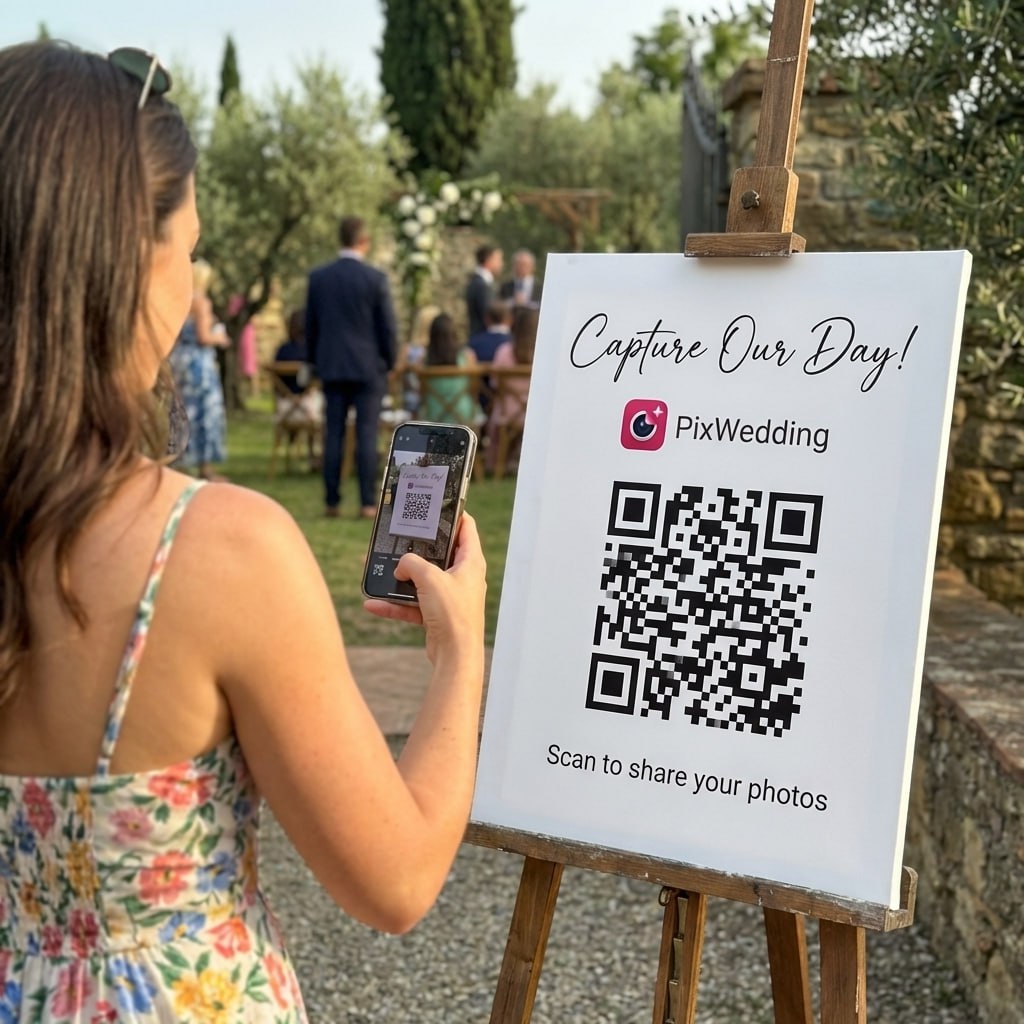
One QR code on table signs. Guests scan it, the upload page opens in the phone browser, and the photos and videos they choose to share land in your gallery, all day long. This is what Pix Wedding does.
A phone booth corner
A backdrop, a ring light and props with a QR sign, where guests use their own phones instead of a rented camera. We cover that setup in detail in our photo booth wedding app guide.
When a vendor quotes you "QR sharing included", they usually mean the first card. That is a nice extra, but it is not a guest album. Your cousin's video of the first dance from the balcony will never pass through the booth.
3Booth Rental Price Next to a QR Album
The most useful national figure comes from WeddingWire's photo booth cost guide: an average of about $650, with most couples paying $425 to $1,000. Their low end sits around $140 and the high end passes $2,000, and three-hour packages start at roughly $551.
Standard three to four hour wedding rental: $400 to $1,200
Basic open-air booth: $600 to $950
Premium glam or 360 video booth: $1,200 to $2,500
Hourly rates: from about $100, most commonly $150 to $200, and $300 or more for premium setups
Common add-ons: printed photo album $50 to $80, signed guest book $20 to $60, prop box $40 to $50
What a standard package usually includes
According to ThePerfectWedding's booth pricing breakdown, typical packages bundle an attendant for setup and operation, unlimited prints, a backdrop, props, digital copies with social sharing, and a guest book of duplicate strips. Before you compare quotes, check which of these each vendor counts as standard and which are extras. For a deeper line-by-line breakdown, see our photo booth rental cost guide.
Compare that with a QR album. On Pix Wedding, the first 20 guest uploads cost nothing and you never enter a card to try it. Paid plans are one-time payments: Starter $49, Standard $59 (adds a live slideshow, photo missions and an audio guestbook) and Pro $89 (adds AI selfie search and multiple admins). Printing a few table signs costs whatever your printer charges for card stock.
Price out your own booth quote
Enter hours, booth type and add-ons to see what a realistic rental should cost before you call vendors.
This is the part couples forget until the venue coordinator asks. Clear Choice Photo Booth's space guide lists these minimums: about 5 x 5 feet for an enclosed booth, 6 x 8 feet for open air, 4 x 6 feet for a mirror booth and 10 x 10 feet or more for a 360 platform. They add 5 to 10 feet beyond the booth for the line, and recommend two dedicated 110V outlets that are not shared with the DJ or caterer.
In a small restaurant or a packed barn, that footprint can cost you a guest table or push the booth into a hallway where nobody sees it. A QR album needs no floor space. It needs a sign on each table, one at the bar and one near the dance floor, which you can make with our free QR sign designer.
Ask these before you sign a booth contract
Send the list to every vendor on your shortlist so the quotes are comparable.
5Who Covers Which Hour? An Evening Walkthrough
Here is an illustrative timeline for a wedding with a 4 pm ceremony and a booth rented for three hours during the reception. The times are an example, not a rule, but the pattern shows up at almost every wedding with a rented booth.
4:00 pmCeremony
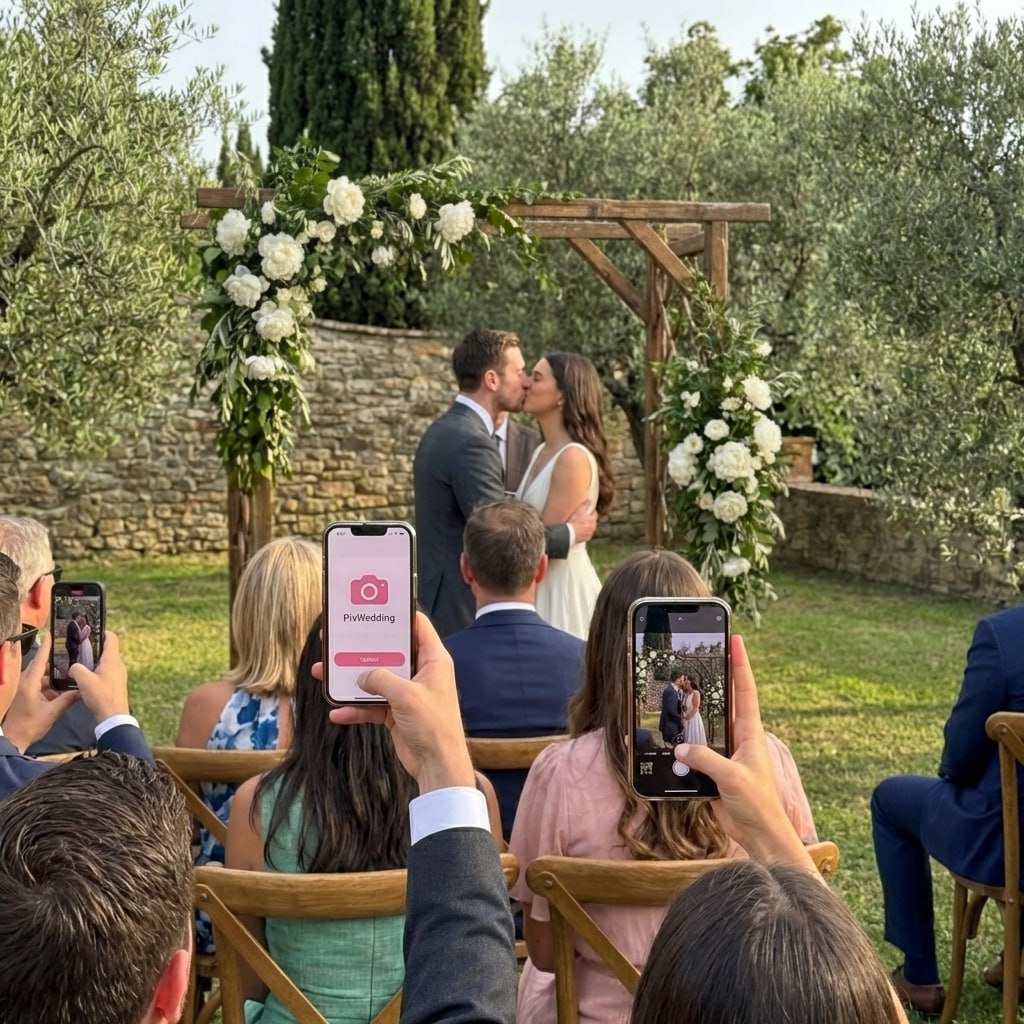
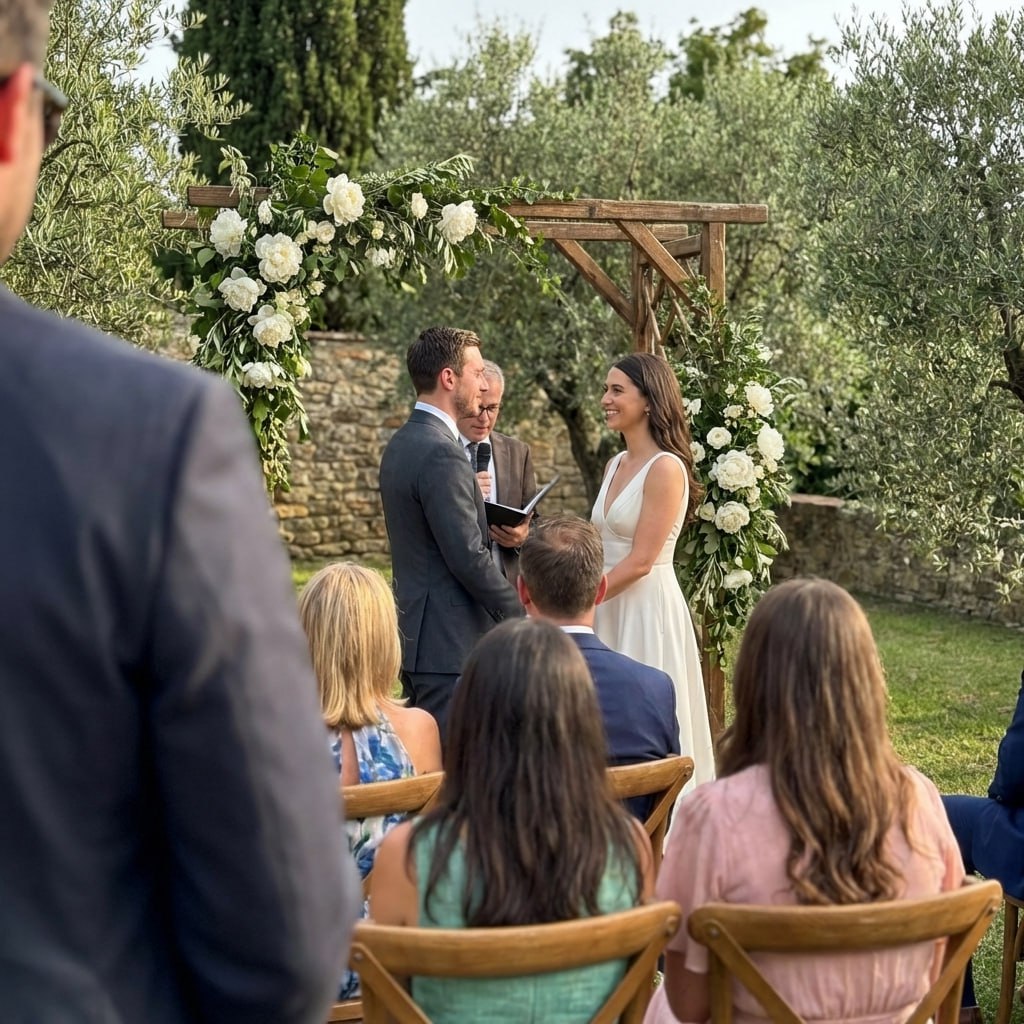
Booth not set up yet. Guests film the processional and the kiss on their phones. With a QR album, those clips land in your gallery. Without one, they stay in camera rolls.
4:45 pmCocktail hour
Your photographer is busy with family portraits. Guests take the candid shots of grandparents meeting college friends. Only a QR album catches these.
6:00 pmDinner and toasts
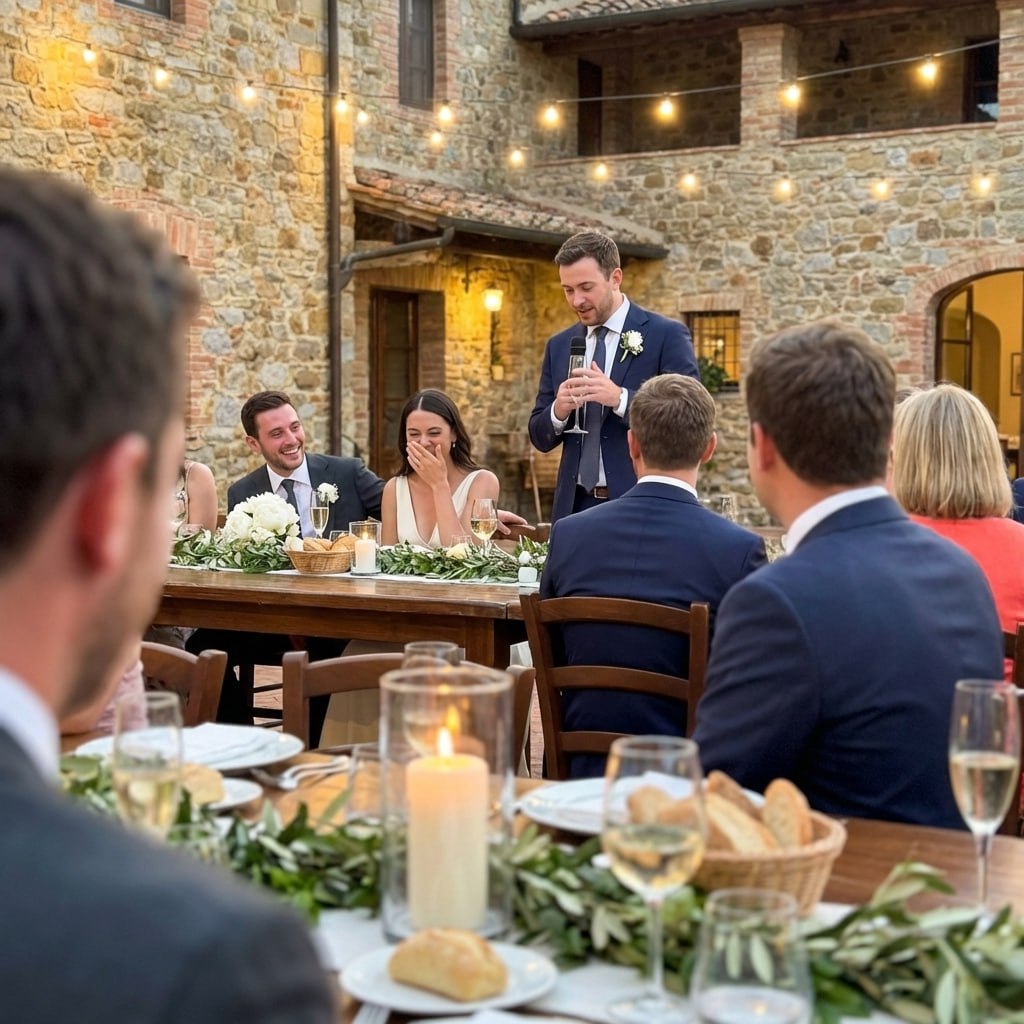
Many booths open here. Guests drift over between courses, and the line builds after the toasts. Phones in the room keep catching the speeches from every table.
7:30 pmFirst dance and open floor
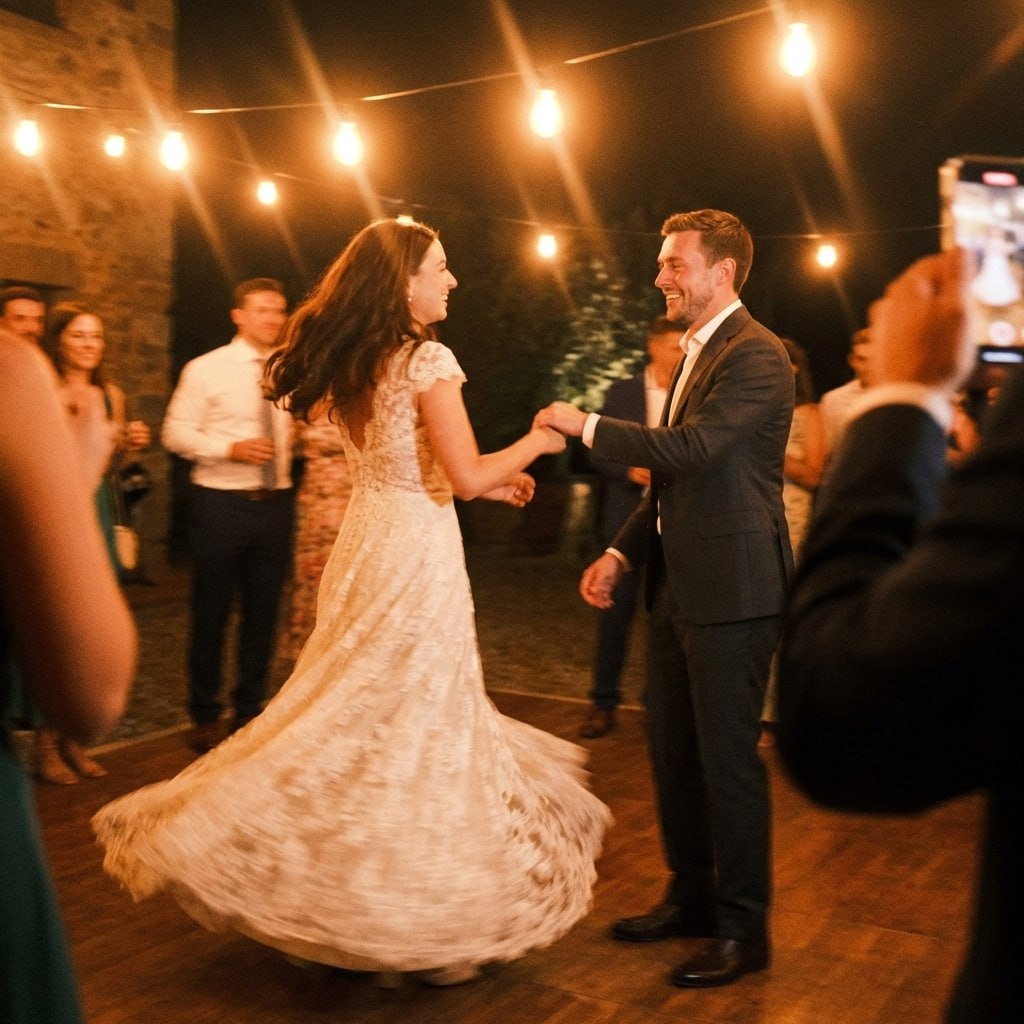
Peak booth hour and peak phone hour at the same time. The booth gets the prop shots, the phones get the dance floor.
9:00 pmBooth rental ends
The attendant packs up. The last hours of the night, often the wildest, are covered by phones alone.
10:30 pmSend-off and after party
Sparklers, late-night food, the group photo in the parking lot. If guests have the album QR, these arrive by the next morning.
The booth covers the middle of the evening very well. The hours around it belong to your guests' phones. The question is whether those photos end up in one place or scattered across group chats that nobody can find a month later.
First dance
You guys!!
Catch the hours the booth is closed
Start a free album for up to 20 guest uploads, no card. One payment from $49 opens it to unlimited photos and videos from the ceremony to the send-off, with a full ZIP download.
A lot, and it is worth being honest about it. A booth has controlled lighting, so faces look good even in a dim ballroom. It has an attendant who pulls shy guests in and keeps the props moving. It creates a physical keepsake guests take home the same night, and a duplicate strip for your guest book.
Group shots with everyone in frame. Nobody has to stretch an arm or leave out the friend holding the phone.
A built-in activity. Great for guests who do not dance, and for kids.
Printed strips as favors. A strip on the fridge is a nice reminder of the night.
Consistent look. Branded templates and one lighting setup make the set feel cohesive.
Zero effort from the couple on the night. The attendant runs everything.
In this conversation from the Wedding Planning Experts podcast, two planners talk with the owners of a vintage camper booth about what makes a booth worth booking in 2026 and what to ask before you sign. It is a useful counterweight to anything a photo app company, including mine, tells you.
Planners on whether photo booths still earn their spot
Wedding planners Dan and Andrea DeWard of Full Circle Weddings sit down with the owners of a vintage camper photo booth. Watch it for the planner view on booths as guest entertainment and the questions couples should ask before booking.
7How Does Booth QR Delivery Work Behind the Screen?
Most booth software handles digital copies the same way. After a session, the booth uploads the strip to the vendor's online gallery and displays a QR code that links to that one image. LumaBooth's help page on QR codes (the software many operators know as dslrBooth) describes it plainly: the code links to the guest's print on the website, where they can view and share it, and the code can also be printed on the strip itself.
The catch is the internet. LumaBooth notes that the QR code is generated once the file uploads to the cloud, and if it cannot upload within about 10 seconds, the print goes out without a code so the line keeps moving. Their software offers an offline sharing mode as a workaround, but whether your vendor uses it is something you have to ask.
What booth QR sharing looks like from the operator side
A Toronto booth company walks through setting up QR codes in Darkroom booth software so photos go straight to guests' devices. Watch it to see that booth QR delivery is a gallery link per session, which is why it only covers photos taken inside the booth.
Barns, vineyards and mountain lodges often have weak cell service. That hits booth cloud uploads and phone uploads alike. On your venue walkthrough, open a web page on your phone in the reception space. If it crawls, ask the booth vendor about a hotspot, and ask the venue for the guest wifi password to print on your QR signs. Guests can also add photos the next day from the hotel or from home, since the album link keeps working after the wedding.
8What Does a QR Album Add That a Booth Cannot?
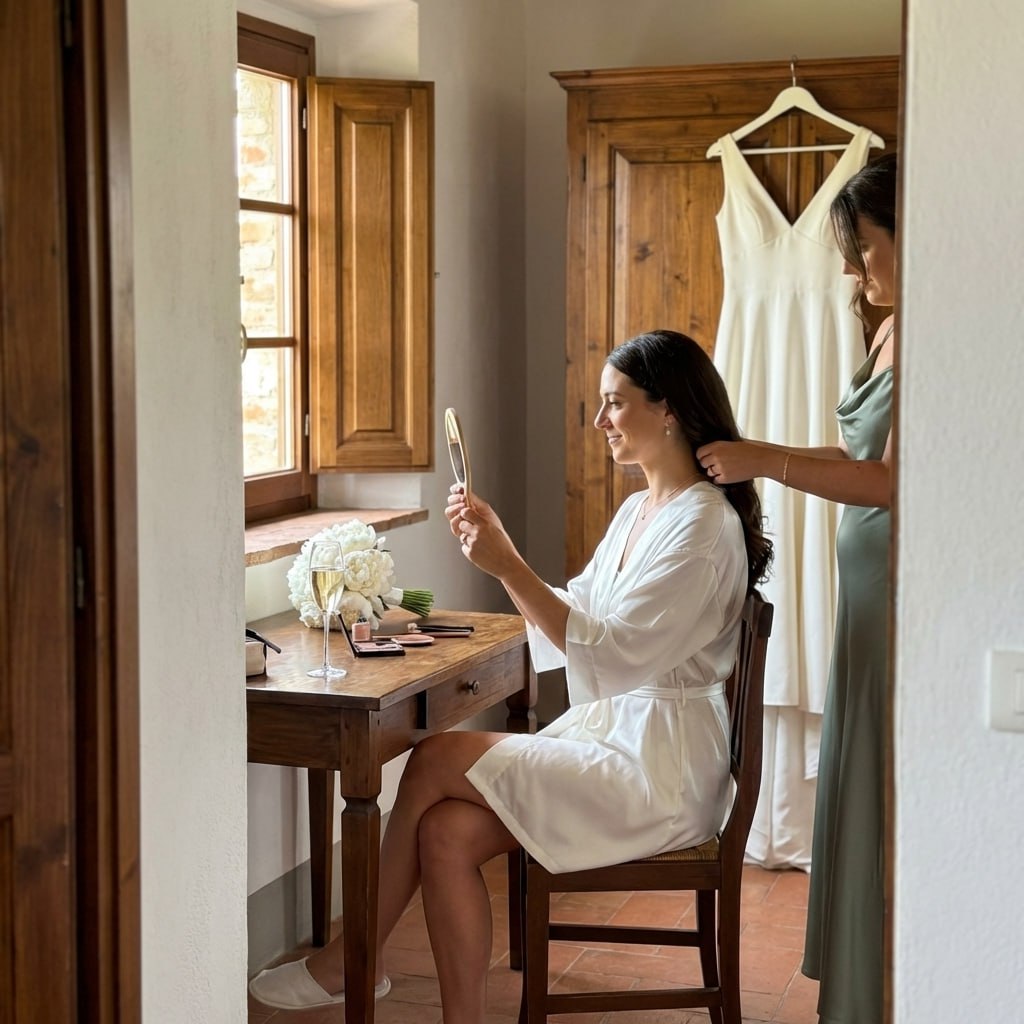
Range. A booth sees one backdrop. Your guests see the whole day: the dress hanging in the hotel window, the flower girl asleep under a table, the grandfather dancing for the first time in years. None of those happen in front of a backdrop.
We publish real numbers on this in our guest photo upload statistics. Across 203 Pix Wedding weddings, the median album got 149 guest photos from 8 uploaders, with the middle half of weddings landing between 70 and 253 photos. Treat that as a realistic expectation, not a ceiling. Signs on every table and a spoken reminder give guests more chances to remember.
Video, not just stills. Speeches, the first dance, the surprise flash mob. Booth strips cannot hold those.
Full resolution. Photos arrive at the quality the phone took them, and paid plans include a ZIP download of everything.
The whole timeline. Getting ready, ceremony, cocktail hour and the after party all count.
No app and no account for guests. They scan, the page opens in the browser, they pick photos and upload.
Extras if you want them. The Standard plan adds a live slideshow and photo missions that nudge guests toward specific shots.
Go through these in order and stop at the first one that gives a clear answer.
Is there floor space for at least 6 x 8 feet plus a line, and two free outlets? If not, skip the booth or ask about a compact mirror booth, and use a QR album.
Do you have $500 to $1,000 left after the photographer, venue and food? If not, a QR album and a DIY backdrop corner get you most of the fun for a fraction of the cost. Our photo booth alternatives list has ideas.
Do you want guests to leave with a printed keepsake? That is the booth's strongest card. If prints matter, book it.
Is your reception long with little planned entertainment? A booth gives guests something to do. Add it.
Do you care most about candid photos and video from the whole day? Then the QR album is the priority, with or without a booth.
If questions 3 or 4 were a yes and question 5 was too, you want both. If the budget stretches, that combination covers the most ground.
10Running Both: Sign Wording That Sends Booth Guests to the Album
The easy win with a hybrid setup is a small sign on the booth table. Guests are already holding their phones in that line, so point them at the album. Edit the wording below and print it with the same QR code you use on the tables.
Took a strip? Share the rest
Keep your strip, it's yours.
Scan the code to add your phone photos and videos to our album.
No app, no login, just tap and upload.
With love, Maya and Theo
Be our second photographer
The booth closes at 9. Our album stays open all night.
Scan to upload anything you capture, from the ceremony to the sparklers.
We can't wait to see the day through your eyes.
Scan with your phone camera
One line for the mic
Quick one from the couple: the QR code on your table opens their photo album.
Anything you've shot today, the ceremony, the toasts, the dance floor, drop it in there.
The booth is open until 9, the album is open all night.
Read once after dinner, once before the last song
The names on the sample signs are placeholders, swap in your own. For more layouts, see our QR code for wedding pictures guide, and if you want a hashtag on the booth template as well, the hashtag generator will give you a shortlist in a minute.
11Mistakes Couples Make With Booths and QR Albums
Booking the booth for the wrong hours
Three hours starting at cocktail hour means it closes before the dance floor fills. Time the rental to the busiest part of your reception.
Assuming booth QR means a guest album
Booth QR delivery only covers booth sessions. Candid phone photos from the rest of the day still need their own collection plan.
Hiding the booth or the signs
A booth in a side room gets a fraction of the traffic. A QR sign only on the welcome table gets forgotten by dinner. Put both where guests already gather.
Not asking about the full image set
Some vendors deliver only the gallery link. Ask in writing for every original image, and download it before the gallery expires.
Never mentioning the album out loud
Signs are easy to walk past. One DJ or emcee announcement after dinner reminds everyone the album exists.
Forgetting the day after
Some guests only get to their photos the next morning. Send a short message with the album link to your wedding group chat the day after.
If you are still shaping the day, the wedding timeline builder makes it easy to see where a booth slot fits, and the photo shot list helps you decide which moments to leave to guests and which to hand to your photographer.
Whatever you choose, get quotes from at least three booth vendors using the checklist above, and set up your album early so the QR code can go on your signs and programs. If you want the wider view of collection methods, from shared drives to disposable cameras, our guide to collecting photos from wedding guests compares them side by side.
FAQ
Frequently Asked Questions
What does a wedding photo booth package usually include?
ThePerfectWedding lists an attendant for setup and operation, unlimited prints, a backdrop, props, digital copies with social sharing, and a guest book of duplicate strips as the typical bundle. Vendors differ on which of these are standard and which cost extra, so compare line by line. For prices by hours, style and add-ons, see our [photo booth rental cost guide](/photo-booth-rental-cost).
What is a QR code photo booth?
Usually it means a rented booth whose software uploads each photo strip to an online gallery and shows a QR code, so guests scan it and get their strip on their phone. Some people also use the phrase for a QR guest album, where guests scan a sign and upload photos from their own phones all day. The first covers one corner of the room; the second covers the whole event.
Does a photo booth QR code need wifi at the venue?
Most cloud sharing does. LumaBooth (dslrBooth) says its QR code is generated after the image uploads to the cloud, and if the upload does not finish within about 10 seconds the print goes out without the code. Ask your vendor whether they bring a hotspot or use an offline sharing mode.
How much space does a wedding photo booth need?
Clear Choice Photo Booth lists about 5 by 5 feet for an enclosed booth, 6 by 8 feet for open air and 10 by 10 feet or more for a 360 booth, plus 5 to 10 extra feet for the line. They also recommend two dedicated 110V outlets. A QR guest album needs no floor space, only signs on tables.
Can I have both a photo booth and a QR code album?
Yes, and it is a common setup. The booth handles posed props shots and printed strips during its rental hours, and a QR album collects candid photos from the ceremony through the last dance. Put the album QR code on a sign next to the booth so guests can add their phone shots too.
How many photos do guests upload to a QR album?
Across 203 real Pix Wedding weddings, the median was 149 guest photos from 8 uploaders, with the middle half of weddings between 70 and 253 photos. Results depend on signs, reminders and guest count, so treat these as a realistic range rather than a promise.
Is a QR album cheaper than a photo booth?
In most cases, yes. Pix Wedding is free for up to 20 guest uploads and paid plans are one-time payments from $49, while booth rentals typically run several hundred dollars for three hours. A booth also gives you an attendant, props and prints, which a QR album does not.
 wedding