Wedding Day Timeline by Guest Count: Schedules for 40, 117 and 200 Guests
How guest count changes a wedding day timeline: full schedules for 40, 117 and 200 guests, with and without a first look, and the minutes each extra table adds.
9 min readUpdated Sep 22, 2026Pix Wedding Team
The short version
Pick the template closest to your guest count and first look decision, then move the anchor times (ceremony, dinner, venue end) to match your contracts. A 4pm ceremony for about 117 guests with a first look usually starts hair and makeup around 9am, does portraits from 2pm, runs the ceremony 20 to 30 minutes, then a 60 minute cocktail hour and a reception of four to five hours. Every template below shows the times and the reason behind each duration.
Most schedules online assume one wedding: 150 guests, 4pm ceremony, a big bridal party, and never say what changes when the list is 40 or 200. Real days differ mainly in two things, the number of people you have to move, seat and photograph, and whether you see each other before the ceremony. The five templates below are split along exactly those lines. The middle two use 117 guests, the average from The Knot 2026 Real Weddings Study.
Template 1: 40-guest micro wedding
2pm ceremony
Best for: Small guest lists, one venue, family-style dinner.
Done by 8pm
Family photos in 30 minutes
Couple spends real time with every guest
Little room for a long dance set
Afternoon light can be harsh in summer
Template 2: 117 guests, first look
4pm ceremony
Best for: Couples who want to join their cocktail hour.
Portraits done before guests arrive
Relaxed post-ceremony
Easy to keep on time
Hair and makeup starts earlier
No aisle reveal
Template 3: 117 guests, no first look
4pm ceremony
Best for: Couples who want the first sight at the aisle.
Classic aisle moment
Later start in the morning
Couple misses most of cocktail hour
Portraits squeezed into 60 to 75 minutes
Template 4: 200 guests, plated dinner
5pm ceremony
Best for: Large families, formal venues, two photographers.
Built-in time for big transitions
Toasts land between courses
Runs past 11pm
Needs a coordinator with a headset or a very firm MC
Template 5: December evening
5pm ceremony after sunset
Best for: Late fall and winter dates when the sun sets before 5pm.
All portraits in daylight
Candlelit ceremony
Long gap between photos and ceremony
Everything outdoors happens before 4pm
2How long does each part of a wedding day take?
Every template on this page is assembled from the same building blocks. The numbers below come from working planners and photographers, mainly the duration guide by Bliss & Bone and the photo timeline from Zola. When your venue or vendors give you different numbers, theirs win: they know the building.
Before and during the ceremony
Hair and makeup: 60 to 75 minutes per person, about 90 for the bride
Five people with two stylists: five to six hours in total
Getting dressed: plan 20 to 25 minutes for a complex gown
First look plus couple portraits: about 45 minutes
Wedding party portraits: about 30 minutes
Non-religious ceremony: 20 to 30 minutes
Religious ceremony (Catholic, Jewish, Hindu): 45 to 75 minutes
After the ceremony
Family formals: about 5 minutes per grouping, 10 to 15 groupings maximum
Cocktail hour: 60 to 90 minutes
Buffet dinner: about 45 minutes, plated: about 90
Toasts: 20 to 30 minutes on top of dinner
First dances: 10 to 15 minutes
Cake cutting with photos: 15 to 20 minutes
Every location change or group move: 10 to 15 minutes
Why the transitions matter more than the events
The first dance takes four minutes whether 40 or 200 people watch it. Getting 200 people out of cocktail hour and into their seats does not. When a day runs late, it is almost always a transition that slipped, which is why each template below budgets them as separate lines. For the full cascade effect, see our minute-by-minute real example.
3Template 1: 40-guest micro wedding with a 2pm ceremony
Small weddings get their time back in the portraits and the seating. Forty people fit in one group photo, family formals need five or six groupings, and a family-style dinner is on the table fast. This template assumes one venue, a first look, two attendants and one hair and makeup artist.
8:30amHair and makeup starts
Three people with one artist: two attendants at about 60 minutes each, then the bride at about 90. Finishes around noon.
11:30amPhotographer arrives
Details first (rings, invitation, shoes), then getting-ready candids while the last touches happen.
12:00pmGetting dressed
Twenty to 25 minutes. Block it separately, buttons and bustles never go as fast as expected.
12:30pmFirst look and couple portraits
Forty minutes, a little shorter than usual because nothing else competes for the photographer.
1:10pmWedding party and family photos
Five or six groupings at about 5 minutes each. Thirty minutes total with one relative calling names.
1:40pmCouple hides, guests arrive
Invitation time is 1:30pm so everyone is seated by 1:55pm.
2:00pmCeremony
Twenty to 25 minutes for a non-religious ceremony.
2:25pmWhole-group photo
Ten minutes. With 40 people this is one frame from a staircase or balcony, a shot big weddings rarely get.
2:35pmCocktail hour
Sixty minutes and the couple is there for all of it.
3:35pmSeated and family-style dinner
Ten minutes to sit, then about an hour of shared platters.
4:45pmToasts
Two or three speakers, about 20 minutes.
5:05pmCake cutting
Fifteen minutes including photos.
5:20pmFirst dance and open floor
Two hours of music, games or a long table that simply keeps talking.
7:30pmSend-off
Venue clear by 8pm.
The one thing to watch here is light. A 2pm summer ceremony puts portraits in the harshest sun of the day, so ask your photographer for a shaded spot for the first look, or add a 20 minute golden hour walk later if your venue booking runs that long.
4Template 2: 117 guests, 4pm ceremony, with a first look
This is the shape most planners and photographers draw first for a Saturday wedding, and the easiest one to keep on time. The first look moves couple portraits, the wedding party and immediate family before the ceremony, so after the vows only a short extended family session is left and the couple walks into their own cocktail hour. Assumptions: four attendants plus a mother of the bride in the chair, two stylists, buffet or stations dinner.
9:00amHair and makeup, two stylists
Six people at 60 to 75 minutes each, the bride last at about 90. Done by roughly 1:30pm.
12:30pmPhotographer arrives
Details, venue shots and getting-ready candids.
1:30pmDress and final touches
Thirty minutes, including a 10 minute cushion for anything that runs over in the chair.
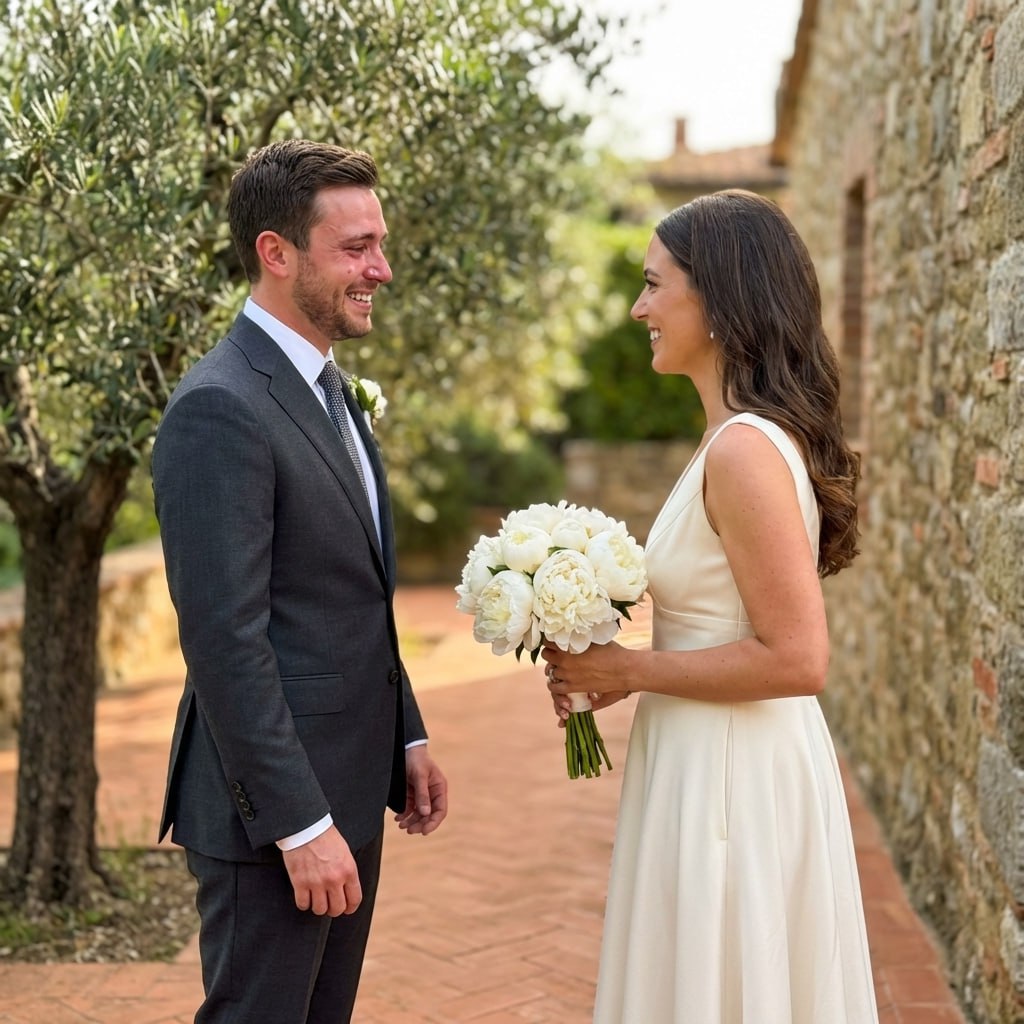
2:00pmFirst look and couple portraits
About 45 minutes, the longest photo block of the day.
2:45pmWedding party portraits
About 30 minutes.
3:15pmImmediate family, part one
Fifteen minutes for parents and siblings who are already dressed and on site.
3:30pmInvitation time, couple out of sight
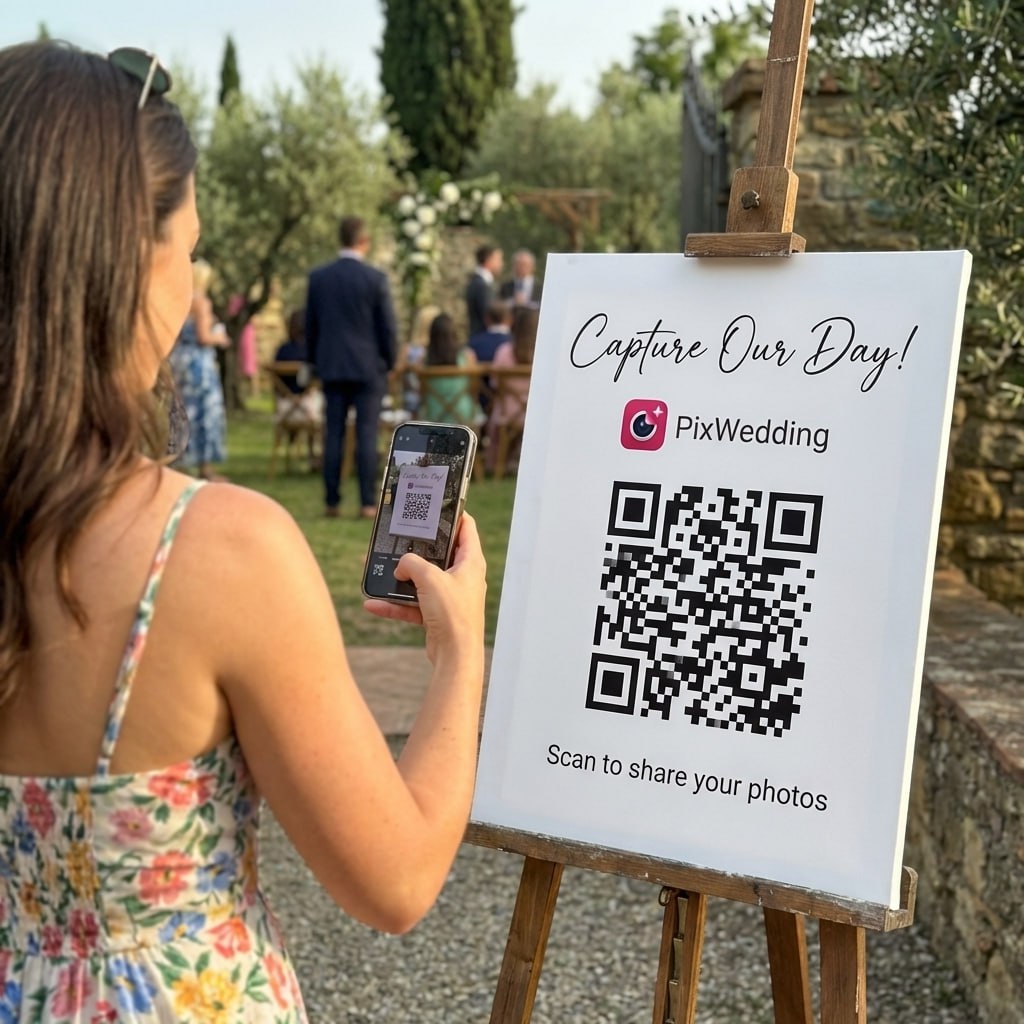
Guests arrive over 30 minutes. Welcome sign and QR code are already up.
4:00pmCeremony
Twenty-five minutes.
4:30pmExtended family, part two
Fifteen minutes, three groupings. Then the couple joins cocktail hour.
4:30pmCocktail hour
Sixty minutes, room flip happens behind the scenes.
5:30pmGuests find seats
Fifteen minutes for 117 people with escort cards.
5:45pmGrand entrance and welcome
Ten to 15 minutes.
6:00pmDinner
Buffet or stations, about 45 to 50 minutes.
6:50pmToasts
Twenty to 30 minutes while dessert or coffee is served.
7:15pmFirst dance and parent dances
Ten to 15 minutes, then the floor opens.
7:40pmSunset portraits
Fifteen to 20 minutes outside, time it to your date's sunset.
8:15pmCake cutting
Fifteen to 20 minutes, a natural break in the dance sets.
9:30pmLast dance and send-off
Five hours after cocktail hour started, right in the typical four to five hour range.
5Template 3: 117 guests, 4pm ceremony, no first look
Same wedding, same guest list, but the couple sees each other for the first time at the aisle. The morning starts an hour later. Everything the first look template does before 3:30pm now has to fit after the recessional, which is why cocktail hour stretches to 90 minutes and the couple spends most of it with the photographer instead of the guests.
10:00amHair and makeup
Same six people and two stylists, one hour later.
1:30pmPhotographer arrives
Details and getting ready.
2:30pmGetting dressed
Twenty to 25 minutes.
2:45pmSeparate portraits with each side
Each partner with their own attendants and parents, about 45 minutes split between two locations.
3:30pmInvitation time
Both partners stay out of sight in separate rooms.
4:00pmCeremony
Twenty-five minutes.
4:25pmFive minutes alone
A short private moment after the recessional, before the family photo crowd reaches you.
4:30pmFamily formals
Thirty minutes. Keep the list to six or seven groupings at 5 minutes each.
5:00pmFull wedding party
Twenty minutes.
5:20pmCouple portraits
Thirty minutes, then 10 minutes to freshen up.
4:30 to 6:00pmCocktail hour, stretched to 90 minutes
Guests eat and drink while the couple is on portraits. Extra appetizers or a lawn game keep this from feeling like a wait.
6:00pmGrand entrance
Guests were seated from 5:45pm.
6:10pmDinner
About 50 minutes.
7:00pmToasts
Twenty to 25 minutes.
7:25pmFirst dance, then open floor
Fifteen minutes of dances before the DJ opens it up.
7:50pmSunset portraits
Fifteen minutes. These often become the favorite photos of a no-first-look day.
8:30pmCake cutting
Fifteen minutes.
10:00pmSend-off
The late start is paid back at the end of the night.
What you gain without a first look
The aisle moment, seen by every guest at the same time
An extra hour of sleep and a calmer morning
Fewer photo blocks before noon for the wedding party
What it costs on the timeline
About 60 to 75 minutes of portraits right after the ceremony
Cocktail hour you mostly hear from another room
No slack if the ceremony starts 15 minutes late, because dinner service is fixed
The same day, planned two ways
Photographer John Branch IV lays out a traditional wedding day and a first look day side by side, including when he shows up and how much time each portrait block needs. Watch it before you decide on Template 2 or 3, it makes the cocktail hour trade-off easy to see.
At 200 guests every move takes longer: the seating before the ceremony, the bar line, the walk to dinner, the service of three courses. This template assumes a first look, a wedding party of 12, three hair and makeup artists, a lead photographer plus a second shooter and a plated dinner. Toasts sit between courses so the kitchen and the speakers never fight for the same slot.
8:00amHair and makeup, three artists
Eight people, finishing around 2pm.
1:00pmTwo photographers arrive
One covers each side getting ready, then details and the empty reception room.
2:30pmGetting dressed
Thirty minutes, more hands in the room means more waiting, not less.
3:00pmFirst look and couple portraits
Forty-five minutes.
3:45pmWedding party portraits
Thirty minutes for 12 people, with the second shooter lining up the next group.
4:15pmImmediate family
Fifteen minutes before guests start arriving.
4:30pmInvitation time
Two hundred people need the full 30 minutes to arrive, park and sit.
5:00pmCeremony
Thirty minutes.
5:30pmCocktail hour, 75 minutes
The extra 15 minutes absorbs bar lines and extended family photos (20 minutes, four groupings).
6:45pmGuests move to dinner
Fifteen minutes with escort cards and a table map at the door.
7:00pmGrand entrance and welcome
Ten minutes.
7:10pmPlated dinner, three courses
About 90 minutes in total.
7:45pmToasts between first and main course
Twenty-five minutes while plates are cleared.
8:40pmFirst dance and parent dances
Fifteen minutes, then the band or DJ takes the room.
9:30pmCake cutting
Twenty minutes, dessert service starts right after.
11:00pmLast dance
Send-off at 11:15pm, venue cleared by midnight.
At 200 guests, hire the second shooter for the timeline, not just the photos
A second photographer lets family formals happen while the lead covers cocktail hour candids. Without one, either the family list shrinks or guests wait. Plan In Love's photographer timeline allows 45 minutes to an hour for family portraits depending on the number of people, so a large family can double that block. A shared photo shot list with names next to each grouping cuts it back down.
7Template 5: a December wedding where the sun sets before the ceremony
Winter dates break the classic 4pm template. On December 12 the sun sets around 4:20pm in Chicago and about 4:30pm in New York, compared with roughly 8:30pm in late June (you can check your exact date and city with the NOAA solar calculator). A 5pm ceremony is fully in the dark, so every outdoor photo has to happen first. This template assumes 90 guests and a candlelit ceremony.
8:00amHair and makeup
Five people with two stylists, done around 12:30pm.
11:30amPhotographer arrives
Details and getting ready by window light.
12:30pmGetting dressed
Thirty minutes including coats and wraps for outdoor photos.
1:00pmFirst look and couple portraits outside
Forty-five minutes in the best light of a short day.
1:45pmWedding party
Thirty minutes, outdoors if the weather allows, inside the venue if not.
2:15pmAll family formals
Thirty minutes. Nothing is left for after the ceremony.
2:45pmBreak, food and touch-ups
An hour with the wedding party. This gap is the price of a winter evening ceremony, plan real food for it.
3:45pmLast light portraits
Twenty minutes in the low sun before sunset.
4:30pmInvitation time
Guests arrive after dark to a candlelit room.
5:00pmCeremony
Thirty minutes.
5:30pmCocktail hour
Sixty minutes and the couple can stay for all of it.
6:30pmEntrance and dinner
Stations or buffet for about an hour, toasts at 7:40pm.
8:05pmFirst dance, then the party
Three hours of dancing, cake cutting around 9pm.
11:00pmSend-off
Sparklers or candles read beautifully against a dark winter sky.
8Where do guest photos happen on a wedding timeline?
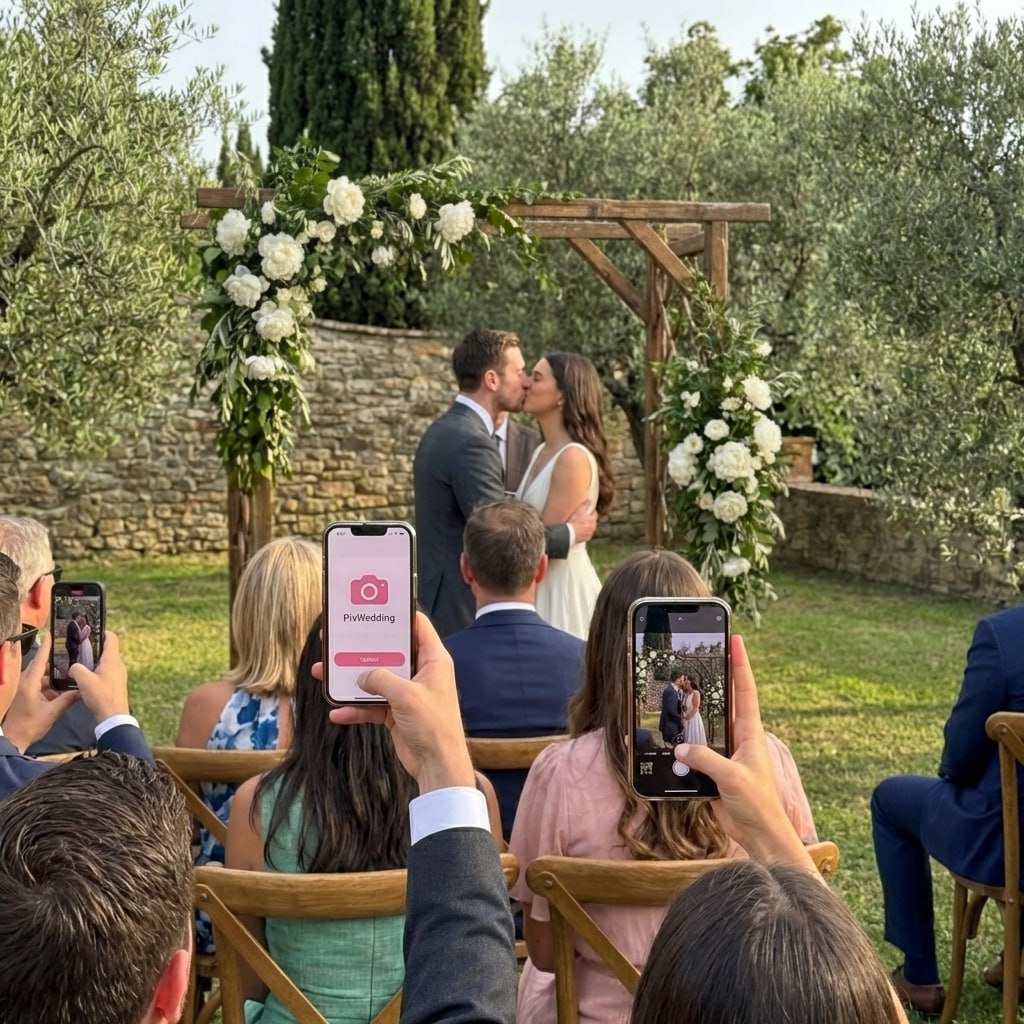
Look at any template above and you will find the same blind spots for your photographer: the moments when they are busy with family formals, when the couple is away on portraits, or when three things happen in three rooms. Those are exactly the hours your guests are holding phones. In our own data from 203 real weddings, the median album collected 149 guest photos from 8 people, see the guest photo upload statistics. Where you put the QR code on the timeline decides whether those photos reach you.
Step 1Invitation time: QR on the welcome sign
Guests have 30 idle minutes before the ceremony. A sign by the guest book gives them something to do and tests the upload before the busy part.
Step 2Cocktail hour: QR at the bar
The block the couple misses in Template 3. The bar is where everyone stands still for a minute.
Step 3Dinner: one card per table
Seated guests upload what they shot earlier. Put the QR on the table number or menu.
Step 4After the toasts: one announcement
The MC says one sentence about the album. Everyone is listening, it is the highest attention moment of the reception.
Step 5Dance floor and send-off
Short videos from the floor and the exit are the clips professional coverage often misses at the end of the night.
You can test the guest side before your wedding: open the demo upload page on your phone, add a photo, then see it appear in the demo album.
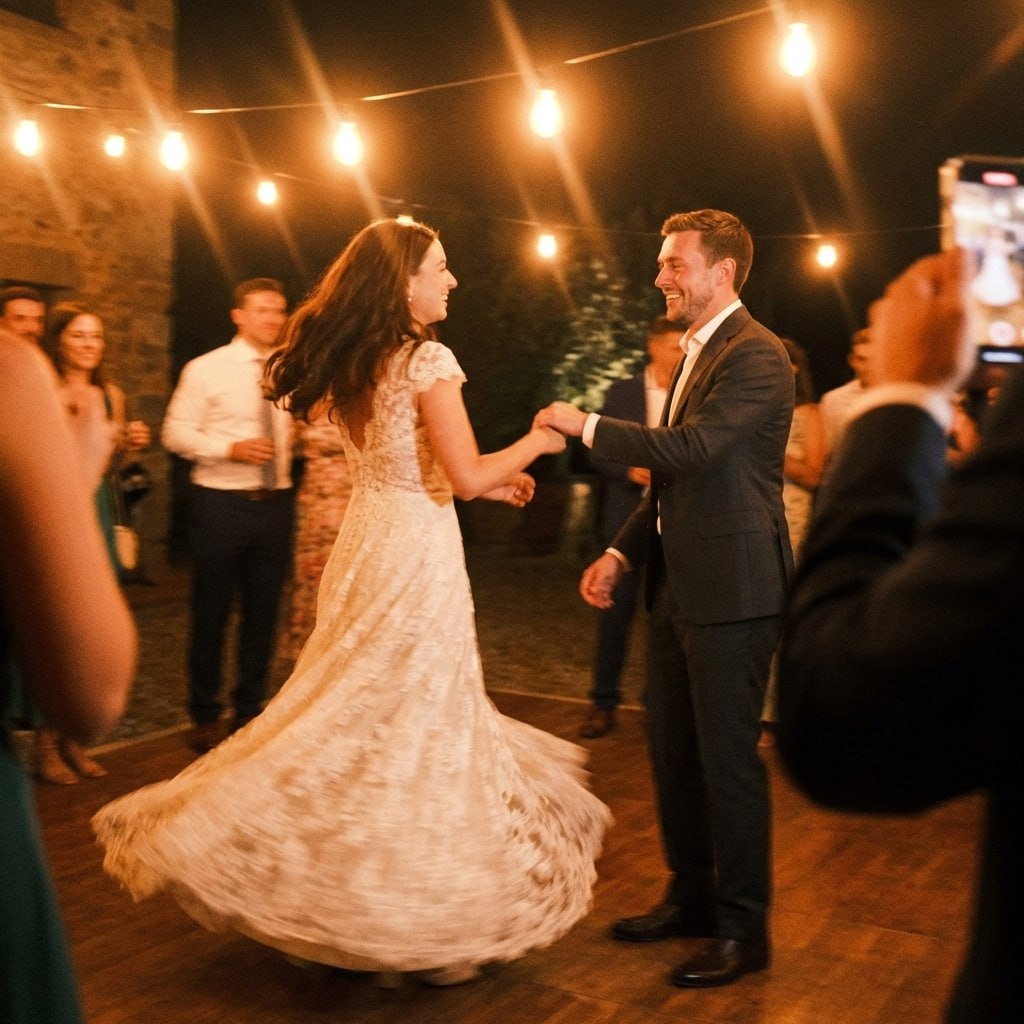
First dance
You guys!!
Cover the hours your photographer is busy
While family formals run, your guests are still shooting. A QR code on the welcome sign, the bar and each table routes those photos into one private album. Try it free with 20 uploads, no card needed.
When you adapt a template to your own number, do not scale everything. Scale only the blocks that move people. The ceremony, the first dance and a cake cutting take the same time at 40 as at 200.
Seating
Forty guests sit in five minutes. At 200, give guests 15 minutes between cocktail hour and the entrance, and a table map at the door.
Family formals
More guests usually means more relatives. Count groupings, not people, and multiply by about 5 minutes.
Cocktail hour
Sixty minutes for most weddings. Go to 75 or 90 when the couple has portraits to finish or bar lines are long.
Dinner service
The service style matters more than the head count: a buffet runs about 45 minutes, a plated dinner about 90.
Toasts
Big weddings attract more speakers. Cap it at three or four and 20 to 30 minutes in total.
Arrival and exit
Shuttles, parking and coat checks all add up. Keep the full 30 minutes of invitation time at 150 guests and up.
What about a long religious ceremony?
Swap the 20 to 30 minute ceremony line for 45 to 75 minutes and move everything after it by the difference. If the ceremony and reception are in different places, add the drive plus 10 to 15 minutes for loading guests. Our sibling page with six templates by ceremony time includes a church plus separate venue day if that is your setup.
10How do you turn a template into your own schedule?
Write down your three fixed anchors from the contracts: ceremony start, dinner service start and the time the venue must be empty.
Pick the template closest to your guest count and first look decision.
Count your hair and makeup chairs and stylists, then calculate the morning backwards from the time the photographer needs the bride dressed.
List your family photo groupings with names. Multiply by 5 minutes and replace the template's number.
Look up sunset for your date and place the golden hour portraits 30 to 60 minutes before it.
Add 10 to 15 minutes to every location change, then 30 minutes of unscheduled buffer in the morning.
Send the draft to your photographer, planner and DJ and let them correct it. Then lock it one week out.
If you want the reasoning behind each step in more depth, our guide on how to plan a wedding timeline explains working backwards from sunset and vendor arrival math, and the day before wedding timeline covers the rehearsal side.
Drag these blocks into your own day
Our free timeline builder lets you set your ceremony time, adjust every duration from this page and flags overlaps before your vendors do.
Wedding planner Abby Lee talks through a sample day with a 4:30pm ceremony and a first look and explains the small details behind each time slot. It pairs well with Template 2 if you want to hear why the portrait blocks sit where they do.
11Six slips that eat into the schedule at any guest count
One chair too few
Hair and makeup is where most days start slipping. If the math says six hours with two stylists, do not book five.
Family list without names
"Mom's side" is not a grouping. Write every group with names and hand it to a relative who knows everyone.
Ceremony start on the invitation
Print the invitation time 30 minutes before the ceremony, or guests will still be parking when the music starts.
Ignoring sunset
A 5pm outdoor portrait slot is golden in June and pitch dark in December.
Open-ended toasts
Give every speaker a time limit. Five speakers with no limit can eat 45 minutes of dance floor.
Nobody owns the clock
The couple should not be checking the time. Give the printed timeline to a planner, coordinator or a very organized friend.
Where should the buffer time go?
Not evenly across the day. Put 30 unscheduled minutes into the morning, where hair and makeup overruns start, and 10 to 15 minutes into every move between rooms or locations. Leave the reception itself tight: once dinner service starts, the kitchen sets the pace and extra slack only turns into waiting.
A useful test: if the ceremony starts 15 minutes late, which later block absorbs it? In Template 2 it is the second family session and the sunset walk. In Template 3 nothing absorbs it, which is the strongest practical argument for a first look.
12What should go on the printed wedding day schedule?
The version your vendors get has every line from the templates. The version your wedding party and parents carry should fit on one card. Here is an example based on Template 2, change the times to yours.
Our Wedding DayWhere to be, and whenWedding party and family schedule
1. 9:00am Hair and makeup starts (suite 2)
2. 1:30pm Dress and final touches
3. 2:00pm First look, couple only
4. 2:45pm Wedding party photos by the garden
5. 3:15pm Parents and siblings for photos
6. 3:30pm Guests arrive, stay out of sight
7. 4:00pm Ceremony
8. 4:30pm Extended family photos, then cocktails
9. 5:45pm Grand entrance
10. 6:50pm Toasts (speakers: 3 minutes each)
11. 9:30pm Send-off
Your QR
Questions on the day? Ask the coordinator, not the couple.
Send this to your vendors one week out
Pair the timeline with the rest of the paperwork: the wedding checklist for the last month and the seating chart that decides how fast 117 or 200 guests find their tables.
FAQ
Frequently Asked Questions
How long does a wedding day take from hair and makeup to send-off?
For a 4pm ceremony with about 117 guests, the day usually runs from roughly 9am (hair and makeup) to around 9:30 or 10pm, so 12 to 13 hours. The reception alone tends to run four to five hours from the start of cocktail hour. A 40-guest micro wedding can wrap in eight to ten hours, a 200-guest plated dinner often runs past 11pm.
Does guest count change the wedding timeline?
Yes, mostly in the transitions. More guests means longer seating after cocktail hour, more family photo groupings, longer bar lines and slower plated service. The ceremony, first dance and cake cutting take about the same time at 40 guests as at 200.
How much time do family photos need?
Plan about 5 minutes per grouping and keep the list to 10 to 15 groupings. Close family only fits in about 30 minutes. Name one relative who knows everyone to call the next group, that is what keeps the block on time.
Is a first look worth it for the timeline?
A first look moves couple portraits, most wedding party photos and part of the family photos before the ceremony. That lets you join your own cocktail hour. Without one, plan roughly 60 to 75 minutes of portraits after the ceremony and stretch cocktail hour to 75 or 90 minutes so guests are not waiting.
What time should a winter wedding ceremony start?
Check the sunset for your date first. In mid-December the sun sets around 4:20pm in Chicago and New York, so a 5pm ceremony happens in the dark. Either take all portraits before the ceremony with a first look, or move the ceremony early enough that outdoor photos still have daylight.
How do I collect guest photos from every part of the timeline?
Put one QR code on the welcome sign, the bar and the tables, and have the DJ or MC mention it once after the toasts. With Pix Wedding guests scan and upload from the phone browser without an app or account, so photos from cocktail hour to the send-off land in one private album. The free plan covers 20 guest uploads, paid plans are a one-time payment from $49.
 wedding