How to Plan a Wedding Without a Wedding Planner: A 6-Step System
Learn how to plan a wedding without a wedding planner: split roles, build one hub, use vendor scripts, and know when a day-of coordinator pays off.
9 min readUpdated Sep 21, 2026Pix Wedding Team
The short version
To plan a wedding without a wedding planner, run it like a small project: split the work into roles you each own, keep everything in one shared planning hub, meet once a week, use written scripts with vendors, write a run-of-show, and hand the day itself to someone else. A day-of coordinator (roughly $800 to $3,000, per Zola) is the one hire most DIY couples find worth it.
1Can You Plan a Wedding Without a Wedding Planner?
Yes, and many couples do. A planner brings vendor contacts, negotiation experience and someone to absorb the stress. Without one, you replace that with structure. The couples who struggle are rarely the ones without a planner; they are the ones without a system, where every decision lives in someone's head and every vendor email lands in a different inbox.
The scale of the project is worth knowing up front. The Knot 2026 Real Weddings Study found couples hired an average of 13 vendors, and 37% contacted more vendors than they planned before booking. That is a lot of emails, quotes and contracts to keep straight. Here is how the main options compare.
Full DIY
No planner
Best for: Small weddings, simple venues, couples who enjoy logistics.
Lowest cost
Every decision is yours
You learn every vendor personally
The day needs a lead who is not you
More hours in the final six weeks
Works best with a friend named as the day-of lead.
DIY plus day-of coordinator
$800 to $3,000
Best for: Most couples who plan themselves but want to be guests on the day.
You keep control of planning
A professional runs the timeline and vendors on the day
If you are still deciding, read is a wedding planner worth it first. If you have decided to do it yourselves, the six steps below are the system.
2Step 1: Split Roles, Not Tasks
Most DIY couples split work task by task: you call the florist, I'll look at invitations. It feels fair, but nobody owns anything, so things fall between the gaps. Instead, split by role. Each role owns a whole area from first quote to final payment, and makes small decisions without a meeting.
Finance lead
Owns the budget sheet, payment dates and family contributions. Approves anything over an agreed amount with the other partner. A LendingTree survey found about a third of 2025 newlyweds went over budget, so this role matters.
Owns inquiries, quotes and contracts for the big bookings. Keeps one vendor tab with contact, deposit, balance and arrival time.
Design lead
Owns the look: colors, flowers, stationery and signage. Start from the color palette generator so every vendor gets the same reference.
Legal and admin lead
Owns the marriage license, officiant paperwork and any name-change steps. Check waiting periods and expiry for your state on Nolo's license chart.
Memory lead
Owns photos and video: photographer brief, shot list, and how guest photos get collected. Often a friend takes this role on the day.
Two people cannot hold six roles evenly, and that is fine. Split them by interest, then bring in one or two helpers (a sibling for guests, a friend for design) with a clear area of their own. Write the names next to each role in your planning hub so nobody has to ask.
3Step 2: Build One Planning Hub
A planner's biggest quiet value is that everything lives in one place. You can copy that for free. The hub has four parts, and everyone involved can open it from their phone.
Step 1A shared wedding email address
Create a new address just for vendors and RSVPs, and give both partners access. Quotes stop getting lost in personal inboxes, and you can search one place.
Every signed contract, invoice and certificate as a PDF, named the same way (vendor, date, status). No more searching old emails for a clause.
Step 4A shared calendar
Payment due dates, tastings, fittings and RSVP deadlines, each with a reminder one week before. The finance lead owns payments; everyone sees them.
Keep the hub boring and consistent. A fancy app nobody opens is worse than a plain sheet you both check every week. If you prefer an app, our roundup of the best wedding planning apps compares the main options.
A couple who planned their wedding without a planner, start to finish
Marie Little shares how she planned her own wedding without a planner and still enjoyed the process. It runs almost an hour, so skim for the parts that match where you are.
Without a planner, nobody chases you. A fixed weekly meeting does that job. Same time, same length, same agenda. The rest of the week is wedding-free unless something urgent comes up. It protects your relationship as much as your timeline.
Weekly wedding meetingSunday, 45 minutes, planning hub open
1. 1. Money check (5 min): anything paid, anything due in the next 14 days
2. 2. Role updates (15 min): each lead shares what moved and what is stuck
3. 3. Decisions (15 min): at most three decisions, each with a deadline
4. 4. Next week (5 min): one owner per task, written in the To-do tab
5. 5. One good thing (5 min): something you are looking forward to
Your QR
Rule: if a decision needs research, it moves to next week with an owner.
Limit decisions to three per meeting. Decision fatigue is real, and a long list of small choices is exactly what makes planning feel endless. Anything that is not urgent moves to a later week. If planning already feels like too much, our guide to feeling overwhelmed with wedding planning has more ways to lighten the load.
5Step 4: Use Scripts for Vendor Emails
Planners get faster answers partly because they ask better questions. You can borrow that by writing your key emails once and reusing them. In The Knot 2026 Real Weddings Study, 52% of couples said responsiveness was what built their trust in a vendor, so a clear first email also shows you who replies quickly and completely.
Availability and all-in pricing
Hi [name], we're planning our wedding on [date] at [venue], [city], with about [number] guests.
Are you available that day? If so, could you share your packages and an all-in price including tax, service charges, travel and any overtime rates?
We're booking in the next [two] weeks. Thank you!
Asking for the all-in price up front makes quotes comparable.
When a quote is unclear
Thanks for the quote. Before we decide, could you confirm three things in writing:
who will be there on the day, what happens if that person cannot make it, and when the final balance is due?
Happy to jump on a short call if that's easier.
Send it before paying any deposit.
Two weeks before the wedding
Hi [name], just confirming the details for [date]:
arrival at [time], setup at [location], day-of contact [name, number].
Our run-of-show is attached. Please reply to confirm or flag anything that doesn't work.
From this point, your day-of lead is copied on every reply.
The run-of-show is the single document a planner would bring on the day. It replaces you as the person everyone asks. Draft the schedule in the timeline builder or start from our wedding day timeline template, then add everything a stranger would need to run the day.
What goes in the run-of-show
Aim for something one person can carry on a clipboard and in their phone.
Send the draft to your venue, photographer and DJ three to four weeks out and ask each one to mark anything unrealistic. They have seen far more wedding days than you have. The final version goes to every vendor with the confirmation email.
7Step 6: Hand Off the Wedding Day
This is the step DIY couples skip most, and the one that decides whether you enjoy your wedding. Your role during the planning months is project lead. On the day, your role is guest of honor. Someone else needs the clipboard.
Your day-of team
Day-of lead: runs the timeline, talks to vendors, solves problems
Setup crew: two or three friends for decor, signage and place cards
Family wrangler: gathers people for photos and toasts
Memory lead: reminds guests where to upload photos and keeps the album going
Pack-down crew: gifts, cards, leftover decor and rentals at the end
Permission to decide small things without asking you
Your phones, if you can manage it, for the ceremony and dinner
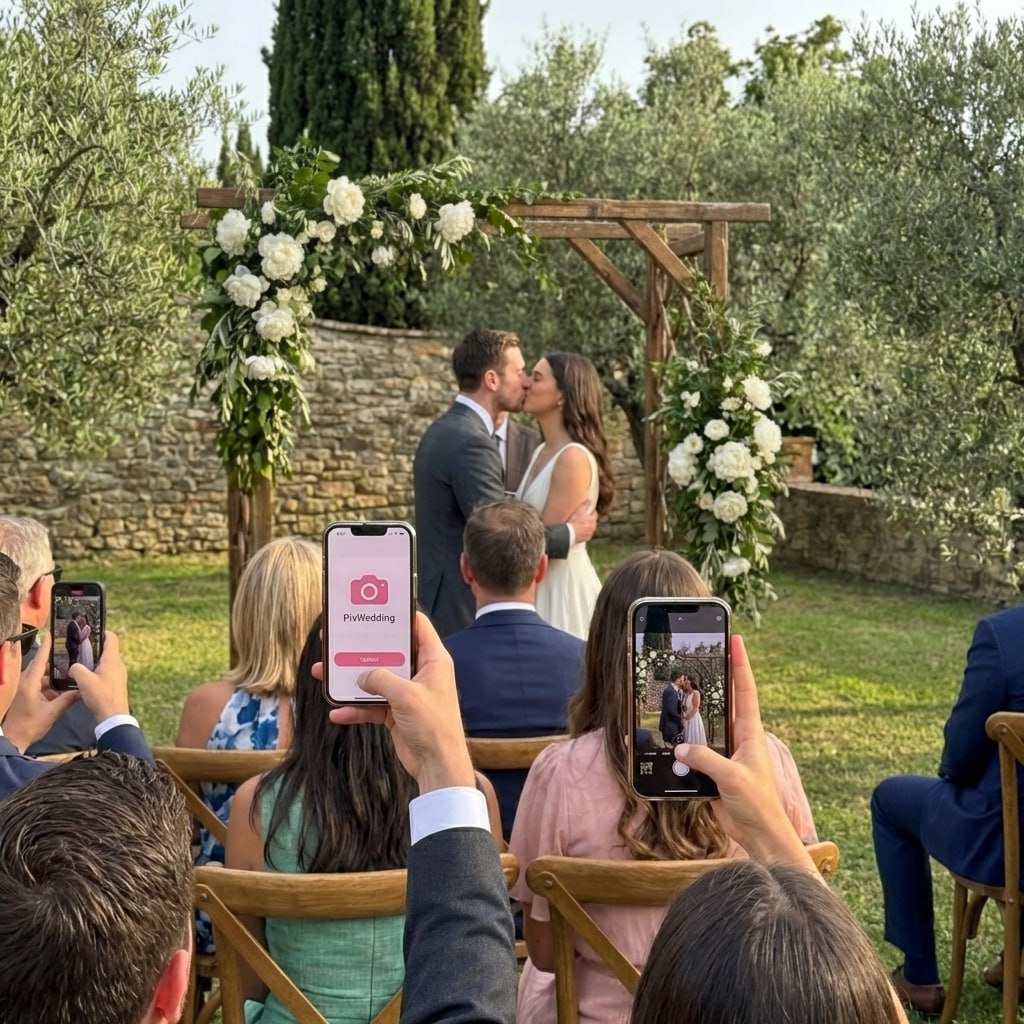
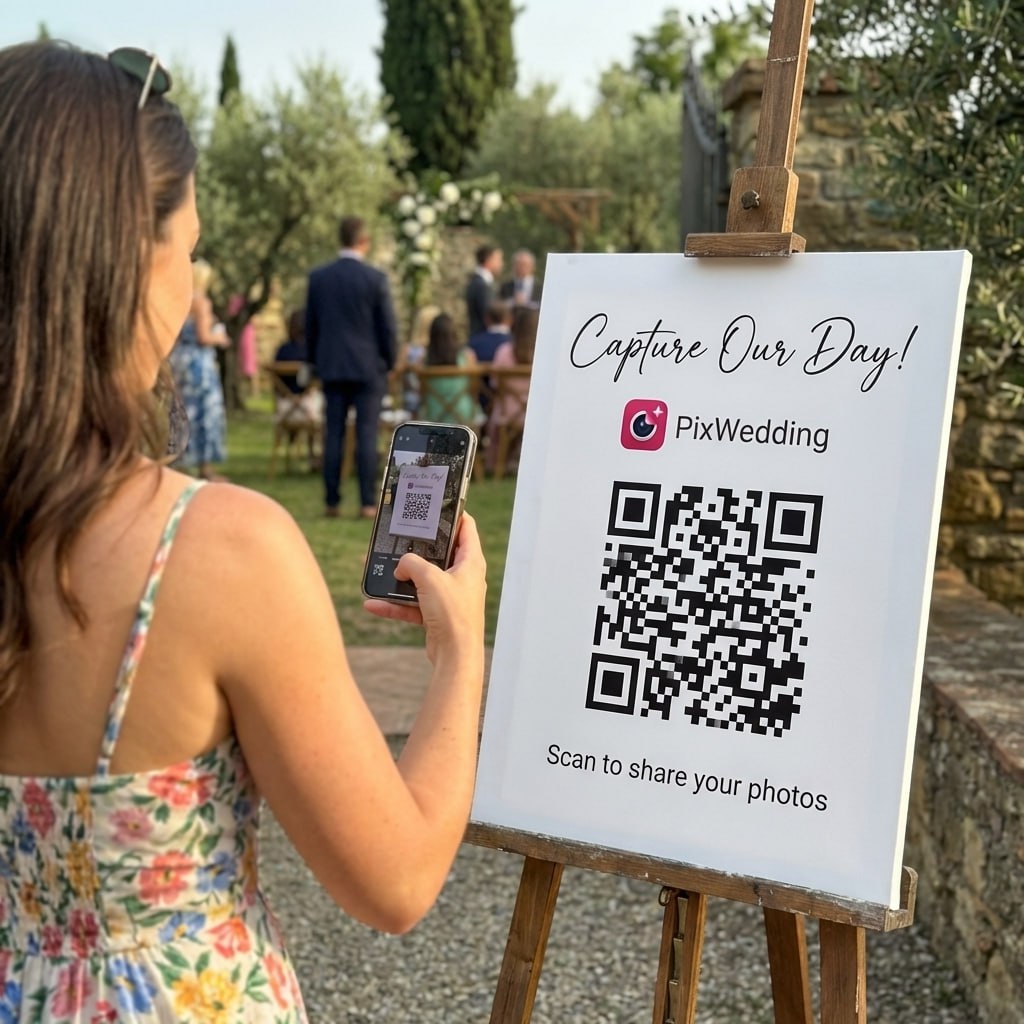
The memory lead is a small role with a big result. Across 203 real weddings on Pix Wedding, guests uploaded a median of 149 photos from a median of 8 guests. That happens when someone puts the QR code on the tables and mentions it once after the toasts. Without a plan, guest photos stay in camera rolls you never see.
First dance
You guys!!
Give your memory lead one album
One QR code for the tables, guests upload photos and videos from their browser with no app. Free for 20 guest uploads, no card; one payment from $49 unlocks unlimited.
Try it before you set it up: open the demo upload page on your phone, then view the demo album your memory lead would share after the wedding.
8When Is a Day-of Coordinator Worth It?
Even committed DIY couples often hire one professional: a day-of coordinator. Despite the name, most start working with you a few weeks before the wedding, review your plan, confirm vendors and run the rehearsal and the day. Zola's 2026 guide puts the typical range at $800 to $3,000, usually engaged four to six weeks out.
A coordinator is likely worth it if
You have more than about ten vendors arriving at different times
The venue is a blank space with no in-house event manager
Your ceremony and reception are in different locations
No friend or relative can take the day-of lead role without missing the wedding
Family dynamics mean you want a neutral person in charge
A friend can likely handle it if
The venue has an event manager who runs the timeline
It is a small wedding with a few vendors
Ceremony and reception are in one place
You have an organized friend who is not in the wedding party
Your run-of-show is complete and vendors have confirmed it
If you use a friend, thank them properly: a real gift, a seat at dinner and a clear end time so they can dance too. Wedding planner Jamie Wolfer covers coordinating a wedding without a hired coordinator in the video below.
How to coordinate your wedding without a coordinator
Wedding planner Jamie Wolfer walks through how to handle wedding day coordination when you have not hired a coordinator.
A volunteer day-of lead needs more than a printed schedule. Walk the venue with them once, ideally at the rehearsal, and introduce them to the venue contact and the photographer by name. Then agree on three things out loud: which problems they solve alone, which ones they bring to the best man or maid of honor, and the short list that is worth interrupting you for.
Two weeks out: send the run-of-show and vendor sheet, then book a 30-minute call to walk through it
Rehearsal day: venue walk-through, meet the venue contact, hand over the tip and payment envelopes
Wedding morning: they check in with each vendor on arrival and tick them off the contact sheet
During the day: they keep the timeline and give the DJ or band a five-minute warning before each cue
End of night: they confirm final payments, pack-down owners and who drives gifts home
If the budget stretches to one hire
Couples who plan everything themselves often find the coordinator is the hire that buys back the most of their own wedding. Get two or three quotes, ask how many weeks before the date they start, and check whether the rehearsal is included. Our guide to whether a wedding planner is worth it covers the questions to ask.
9Which Free Tools Replace Planner Software?
Much of what planning software does can be covered by free tools and a spreadsheet, as long as every tool belongs to a role. Here is a toolkit mapped to the roles from Step 1, so each lead knows where their numbers live.
The system above prevents most problems, but a few traps are specific to planning without a professional. Watch for these.
Free help that costs you
Friends who offer to do flowers or music are generous, but they are also guests. Agree on scope and a backup plan in writing, and keep their tasks finished before the ceremony.
The DIY project spiral
Handmade signs and favors eat evenings. Cap DIY projects at two or three, and finish them a month before the wedding.
No one allowed to say no
Without a planner, nobody pushes back on a bad idea. Give your weekly meeting a rule: any new idea needs a budget line and an owner.
The final six weeks
Workload bunches up at the end: RSVPs, seating, confirmations, payments. Clear your calendar for those weeks and use the one week before checklist for the finish.
Once the planning is under control, spend a little time on how the day will feel for your guests. Our guide to planning the moments guests remember picks up where this one ends.
11Your DIY Wedding Planning System at a Glance
Six steps, one principle: nothing important lives in only one person's head. Roles give every area an owner. The hub gives every document a home. The weekly meeting keeps momentum without taking over your evenings. Scripts make vendors comparable. The run-of-show replaces you on the day. And the handoff lets you be a guest at your own wedding.
Start this week with two things: write the role names next to your own, and create the shared email address. Everything else builds on those.
FAQ
Frequently Asked Questions
Can you plan a wedding without a wedding planner?
Yes. Plenty of couples plan their own weddings, especially small and mid-size ones. What makes it work is structure: clear roles, one shared planning hub, a weekly check-in, and a written run-of-show. The one job you should not keep for yourselves is running the day itself.
How much does a day-of coordinator cost?
Zola's 2026 pricing guide lists day-of coordinators at roughly $800 to $3,000, usually engaged four to six weeks before the wedding. Partial planning runs about $1,500 to $6,000 and full-service planning about $4,000 to $10,000 or more, depending on region and scope.
What is the first step in planning a wedding yourself?
Agree on a guest count range, a total budget and your three top priorities as a couple, then set up one shared planning hub. Venue tours come after those decisions, not before, because the venue locks in your date, size and a large share of the budget.
Who should run the wedding day if you have no planner?
One person who is not in the wedding party and not a parent: a very organized friend, a relative who likes logistics, or a paid day-of coordinator. Give them the run-of-show, the vendor contact sheet and the authority to make small decisions without asking you.
What tools do you need to plan a wedding without a planner?
A shared email address for vendors, a spreadsheet or planning app with tabs for budget, guests, vendors and timeline, a shared folder for contracts, and a calendar with payment due dates. Free tools like a checklist, budget allocator, guest list manager and timeline builder cover most of what planner software does.
How many hours a week does DIY wedding planning take?
It varies with your timeline and wedding size, and there is no reliable average. Many couples find a fixed weekly session of an hour or two, plus short tasks during the week, keeps things moving. The load usually spikes in the final six weeks.
 wedding