





Fraud Blocker
pixPix Weddingwedding
Free planning tool

Wedding seating chart tool: drag guests to tables

Add your tables, add your guests, then drag each name into a seat. On a phone, tap a guest and then a table. Full tables refuse extra guests, then publish a guest QR code so everyone can look up their own table. Free, no signup.

Not sure how many seats per table? See table sizes
2Tables
4Total Guests
0Assigned
4Unassigned
14Total Capacity

Add a Table

Add a Guest

Free, no account Publish below for a guest QR code

Unassigned Guests(4)

Tap a guest, then a table (or drag)
Alice Johnson
Bob Smith
Sarah Williams
James Brown

Head Table

rectangle table

Tap or drag guests here to assign them

Table 1

round table

Tap or drag guests here to assign them

Find your seat

Give guests a QR code for their table

Publish the chart and you get a private link, a QR code for the entrance sign, and a printable A to Z list of every guest with their table. A guest types their name and sees where they are sitting. No account, free.

The page is private and not indexed by search engines. Only people with the link or the QR code can open it.

Tables are set. Give each one a QR so guests drop photos into your albumAdd a photo album
01How it works

Three steps from guest list to a seating plan

Most seating charts start as sticky notes on a poster board or a spreadsheet with a table number column. Both work until you move one person and have to recount three tables. This tool keeps the counts for you and stops a table from going over.

01

Add your tables

Give each table a name, a seat count from 1 to 30 and a shape: round, rectangle or long. Use the names on your venue floor plan so the list you hand over matches the room.

02

Drag or tap guests into seats

On a computer, drag a name onto a table. On a phone, tap the guest, then tap the table. Tap a seated guest and then the unassigned box to take them off a table.

03

Copy or email the plan

One button copies every table and its guests as plain text, with anyone still unseated listed at the end. Once you seat someone, you can also email the plan to yourself.

02Before you set seat counts

How many guests fit at each table size

The seat count you type into each table should match the tables your venue owns, not a round number. Here are the standard banquet sizes and how many people each seats comfortably with place settings and centerpieces.

Wedding table sizes and how many guests each seats
TableSizeSeats comfortablyGood for
48 inch round4 ft across5 to 6Small receptions, family tables, a kids table
60 inch round5 ft across8The usual guest table at a mid-size reception
72 inch round6 ft across10Bigger groups and fewer tables on the floor
6 ft banquet30 x 72 inches6 to 8Head tables, family style rows
8 ft banquet30 x 96 inches8 to 10Long head tables, farm style rows

Seat counts from the WebstaurantStore banquet table guide, checked September 2026. Large centerpieces, chargers and wide chairs take space, so drop a seat if your table is busy. The tool accepts 1 to 30 seats per table.

03Paper, spreadsheet or tool

Three ways to plan seating, side by side

There is no wrong way to make a seating chart. The right one depends on how often your list changes and who you need to share it with. Here is what each method is like once the RSVPs start moving guests around.

Built for thisThis seating chart tool

The seating chart tool on this page: drag or tap to seat, live seat counts, full tables blocked, plan copied as text or emailed to you. Free, no account.

MethodMoving a guestSeat countsOn a phoneSharing itKeeping your work
This seating chart toolBuilt for this
Drag a name, or tap the guest and then the tableLive on every table, and full tables refuse more guestsTap to seat, built for touch screensPublish a guest link with a QR code, or copy it as textPublished charts stay live, and the QR keeps working after edits
Paper chart or sticky notesErase and rewrite, or move a sticky noteCounted by hand after every changeTake a photo of itPhoto or scanStays on the table where you left it
SpreadsheetEdit the table column or cut and paste rowsOnly if you set up formulasWorks, but fiddly on a small screenShare the file or a linkSaved in the file

The tool keeps nothing between visits, so it fits best as the place you work out the plan. Keep the final version in your email or planning doc.

04Where to start

The order to seat people so nothing needs redoing

Seat the guests with the most constraints first. Every seat you fill after that has fewer ways to go wrong. In the tool, add all your tables before you seat anyone so you can see your total capacity in the stats bar.

  1. 01

    Couple, wedding party and parents

    Decide head table or sweetheart table first, then where both sets of parents sit. These seats shape everything around them.

  2. 02

    Grandparents and guests who need easy access

    Close enough to see the toasts, away from speakers and with a clear path to the door and the restrooms.

  3. 03

    Immediate family

    Siblings, aunts, uncles and their partners near the front. If two sides of a family do not mix, split them now.

  4. 04

    Friend groups that already know each other

    College friends, work friends, the book club. Keep groups whole where you can and use table size to fit them.

  5. 05

    Guests who know only the couple

    Seat them with the most welcoming table you have, or with other guests in the same spot, rather than as the odd one out.

  6. 06

    Late RSVPs and final changes

    Leave one or two seats open across the room so a late yes does not force you to rebuild a whole table.

05The hard tables

Seating the guests everyone worries about

Almost every seating chart has a few names that make you pause. These are the common ones and the approaches planners and etiquette guides tend to suggest.

Divorced or feuding parents

Give each parent their own table with the people they are closest to, far enough apart that neither feels watched. Keep mutual friends out of the middle.

Guests who traveled and know no one

Seat them with the relative they came to see, or group out of town guests at one table. Having something in common is an easy opener.

Single guests at a couples wedding

Put singles at a mixed table rather than one seat between three couples. A table of friends from the same era works better than a table of strangers.

Kids

Young kids sit with their parents. Older kids can have their own table if there are enough of them, placed where parents can see it.

Guests with mobility needs

Choose seats at the end of a table with a clear aisle, away from steps, tight corners and the busy path to the dance floor.

Plus-ones

Always next to the person who brought them. If that guest is in the wedding party, seat the plus-one with other wedding party partners.

More on who sits where in our seating chart etiquette guide.

06Reception layouts

Six room layouts and how to set them up here

The tool plans who sits at which table, not where the tables stand in the room. Pick your layout with your venue first, then add the matching tables and shapes.

Round tables

Several rounds spread across the room. Easy conversation at each table and easy to rearrange. Add them as round tables in the tool.

Long banquet rows

Rectangular tables joined into long rows. Fits more people into a narrow room and feels like one big dinner. Use the long shape.

Sweetheart table

A small table for the two of you, with the wedding party at the rounds nearby. Add it as a two-seat table named Sweetheart.

U-shape

Tables in a U with everyone facing in. Suits smaller weddings where you want every guest to see the head of the room.

Family style

Long wooden tables with shared platters down the middle. Common for rustic and barn venues. Plan it as long tables with the real seat count.

Cocktail mix

High tops for standing plus a few seated tables for guests who need a chair. Only the seated tables go on the chart.

07Export and handoff

From finished chart to the venue's hands

A seating chart only helps if the people setting up the room have it. The tool gives you plain text, which pastes cleanly into any email, doc or spreadsheet.

Check every name is seated

The stats bar shows how many guests are still unassigned. Get it to zero, or decide on purpose who is not on the chart.

Copy the plan

The copy button puts a clean text list on your clipboard: each table with its shape, seat count and guests, then a summary line.

Email it to yourself

After you seat a guest, an email box appears under the tool. Send the plan to your inbox so it is not lost when you close the tab.

Paste it where you need it

Paste into a doc, a spreadsheet or an email to your venue coordinator, caterer or calligrapher for place cards and escort cards.

Ask when they need the final version

Venues and caterers set their own deadlines for the final chart and meal counts. Ask early so your RSVP date leaves room for it.

Seats sorted. Now give every table a way to share photos

One QR code per table drops every guest photo into your free album. 20 uploads free.

From Mom

From Mom

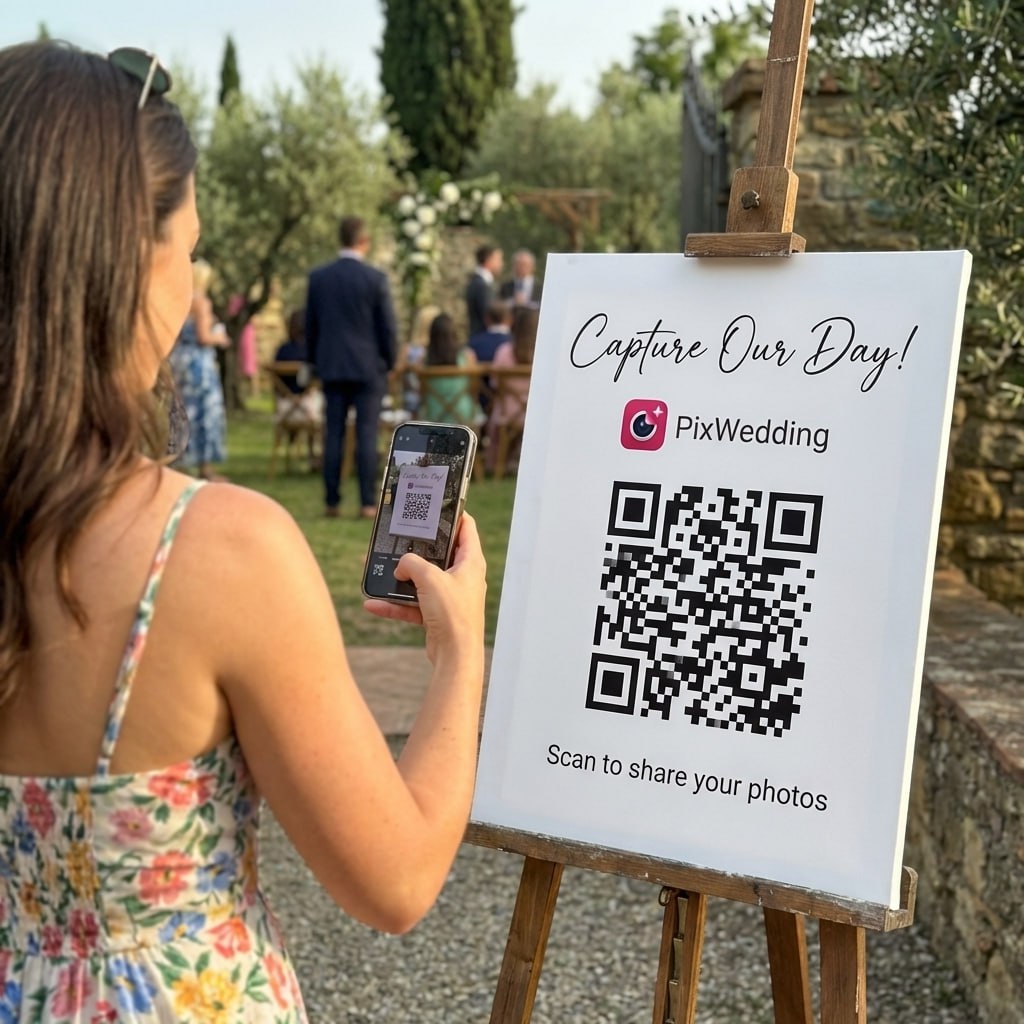
Point your camera

Scan to join the album

No app, no account

9:41

UPLOADING

Saving your moment

9:41

THE ALBUM

Emma & Jack

June 21, 2026

647 photos · 95 guests

AllMomentsMine
Guest photo 1
★
Guest photo 2
Guest photo 4
Guest photo 5
Guest photo 6
Guest photo 7
Guest photo 8
Guest photo 9
Guest photo 10
Add photosShare your moments

SCAN TO TRY

pix.wedding/
your-wedding

08Straight answers

What this tool does, and what it does not

A simple tool is quick to learn, but you should know its limits before you spend an evening on your chart.

It does

  • Add tables with a name, 1 to 30 seats and a round, rectangle or long shape
  • Add guests one at a time, with no cap on tables or guests
  • Seat guests by drag and drop on a computer or tap to seat on a phone
  • Stop you from overfilling a table and show live seat counts
  • Copy the whole plan as text, or email it to yourself
  • Run in your browser with no account and no download

It does not

  • Save your chart: refreshing or closing the page clears it
  • Draw a floor plan or place tables on a map of the room
  • Import a guest list file or track RSVPs and meal choices
  • Print place cards or export a PDF

Need a printable version? Try our free seating chart template, or see free seating chart makers compared for tools with floor plans and PDF export.

Couple reviews

Rated 4.9 by couples who used Pix Wedding

4.9
out of 5 · Based on 289 reviews

132 guests and we ended up with 1,240 photos, no joke. Our photographer got the posed stuff but Pix got everything else, my dad crying thru the toast, my niece sneaking cake, the dance floor at 1am. People were scanning the table cards like five minutes after they sat down

Madison K. · Austin, TXVerified couple · April 2026

Our photographer charged extra for raw files and even then we got maybe 400 edited shots. Pix got us way more from our friends, unedited but so real. Different vibe, same value, tbh maybe more

Carter Y. · Boulder, COVerified couple · September 2025

Really good experience honestly. One older guest needed help scanning but once my cousin showed him he uploaded 60 photos by himself. Album loads fast and the live slideshow at the reception was a hit. Only wish the setup emails were a bit shorter

Aaron L. · Phoenix, AZVerified couple · February 2026
Read all reviews

How to Make a Wedding Seating Chart With Drag and Drop

A drag and drop seating chart replaces the poster board and sticky notes with names you can move on screen. Add every table first so you know your total seats, then add your guest list and move each name onto a table. The seat count on each table updates as you go, and a full table will not take another guest.

On phones, browsers do not support dragging, so the same tool switches to tap to seat: tap a guest, then tap a table. That makes it practical to adjust the plan on the couch, in the car or at the venue walkthrough.

  • Match table names and seat counts to your venue's real tables
  • Seat the head table, parents and grandparents before anyone else
  • Keep friend groups together and plus-ones next to their partner
  • Leave a seat or two open for late RSVPs
  • Copy or email the plan before you close the tab

Digital Wedding Seating Chart vs Paper

A paper chart is easy to start and hard to change. A digital wedding seating chart is quicker to rearrange and easier to send to your coordinator, caterer and calligrapher. Many couples use both: plan digitally, then print or hand letter the final display for the reception entrance.

This tool is the planning half. It gives you a clean text list of every table and guest, which is what your venue and place card maker need.

Seating Chart Mistakes to Avoid

Most seating trouble comes from small oversights: a guest with a walker seated by the stairs, a table next to the speakers, a plus-one across the room from their partner, or a last minute change that never made it onto the place cards. Walk through the final plan table by table with someone who knows both families before you send it.

Common Questions

Wedding Seating Chart FAQ

How the seating chart tool works, what it saves and how many guests fit at each table.

Yes. The seating chart tool is free, with no account, no download and no card. Pix Wedding makes money from its guest photo album, which is a separate product you never need in order to use this tool.

The draft you are building lives in your browser tab, so a refresh clears it. Press Publish and the finished chart is saved on a private link instead, and you can email that link to yourself. Re-publishing after an edit updates the same link, so a printed QR code keeps working.

Yes. Publishing the chart gives you a QR code and a private link. A guest scans it, types their name and sees which table they are at. You also get a print sheet with the QR sign and an A to Z list of every guest and their table for the entrance.

It sits on a random 14 character link that is not listed anywhere, is marked noindex and is blocked in our robots file, so search engines do not index it. Anyone with the link or the QR code can open it, which is the point at a reception, so treat it like the link to your wedding website.

Yes. Phones do not support dragging in the browser, so on a touch screen you tap a guest and then tap the table you want. Tap a seated guest and then the unassigned box to take them off a table.

WebstaurantStore's banquet table guide puts a 60 inch round at 8 guests, a 72 inch round at 10 and a 48 inch round at 5 to 6. Ask your venue which sizes they have before you set seat counts in the tool.

The tool refuses and tells you the table is full. Move someone else off that table first, or add a bigger table and seat them there. Each table holds between 1 and 30 seats.

Press Copy Seating Plan to Clipboard, then paste the text into an email or document for your coordinator, caterer or calligrapher. The list shows every table, its guests and anyone still unseated.

After your RSVP deadline, once you know who is coming. Ask your venue and caterer when they need the final chart and meal counts, since each sets its own deadline.

A head table seats the two of you with the wedding party in a row facing the room. A sweetheart table is just the two of you, which frees the wedding party to sit with their partners. Both work in the tool: add a long table or a two-seat table.

Free Wedding Seating Chart Tool: Drag and Drop Table Plan