
Wedding day timeline template: 6 ready-to-use schedules
Six complete, real timelines you can copy and adjust: a brunch ceremony, an afternoon wedding with a first look, an evening wedding without one, a church-plus-separate-venue day, a dusk ceremony, and a full wedding weekend. Pick the one closest to your actual day, then build it out in the free timeline tool below.
Build Yours in 5 MinutesThe short answer
There is no single "wedding day timeline template" that fits every wedding, because ceremony time is the variable that reshapes the whole day. A 12pm ceremony and a 6pm ceremony are not the same schedule shifted by six hours, they have different photography windows, different catering formats, and different buffer needs. Below are six complete templates built around the ceremony times and formats couples actually use, each with a copy button so you can paste it straight into an email or document.
"Wedding day timeline template" was flagged as an outright breakout search term over the past 90 days by 24fingers' 2026 wedding search trends analysis, alongside a broader shift toward budget-first and timeline-before-venue searching. That tracks: couples want a real, working schedule, not another mood board.
How to pick the right template for your day
Start with your ceremony time, because everything else in the day is built backward or forward from it. If you have not locked a ceremony time yet, work backward from sunset instead. Wedding photographers commonly recommend starting an outdoor ceremony roughly two hours before sunset if you are skipping a first look, or 60 to 90 minutes before sunset if you are doing one, since the first look absorbs most of the portrait time earlier in the day.
- •If your priority is budget and a shorter guest commitment: use the brunch template. Catering per head runs meaningfully cheaper for a seated brunch than a plated dinner.
- •If you want relaxed portraits and to actually attend your own cocktail hour: use the afternoon-with-first-look template.
- •If the traditional aisle reveal matters more to you than a relaxed cocktail hour: use the no-first-look template, and expect a tighter photo window right after the ceremony.
- •If your ceremony and reception are at two different addresses: use the church-plus-venue template, which has travel buffers built into two separate transfer points.
- •If you want a candlelit, romantic reception atmosphere: use the dusk template, but confirm your actual local sunset time for your wedding date first.
- •If you are hosting multiple events across a weekend: use the weekend template as a skeleton, then build out each day in detail separately.
The Knot's sample wedding weekend timelines guide calls out a useful rule of thumb worth applying to every template below: tasks that would normally take five minutes tend to take closer to thirty on the wedding day itself, once you factor in emotions, group coordination, and the occasional wardrobe malfunction. Build the padding in now rather than discovering it live.
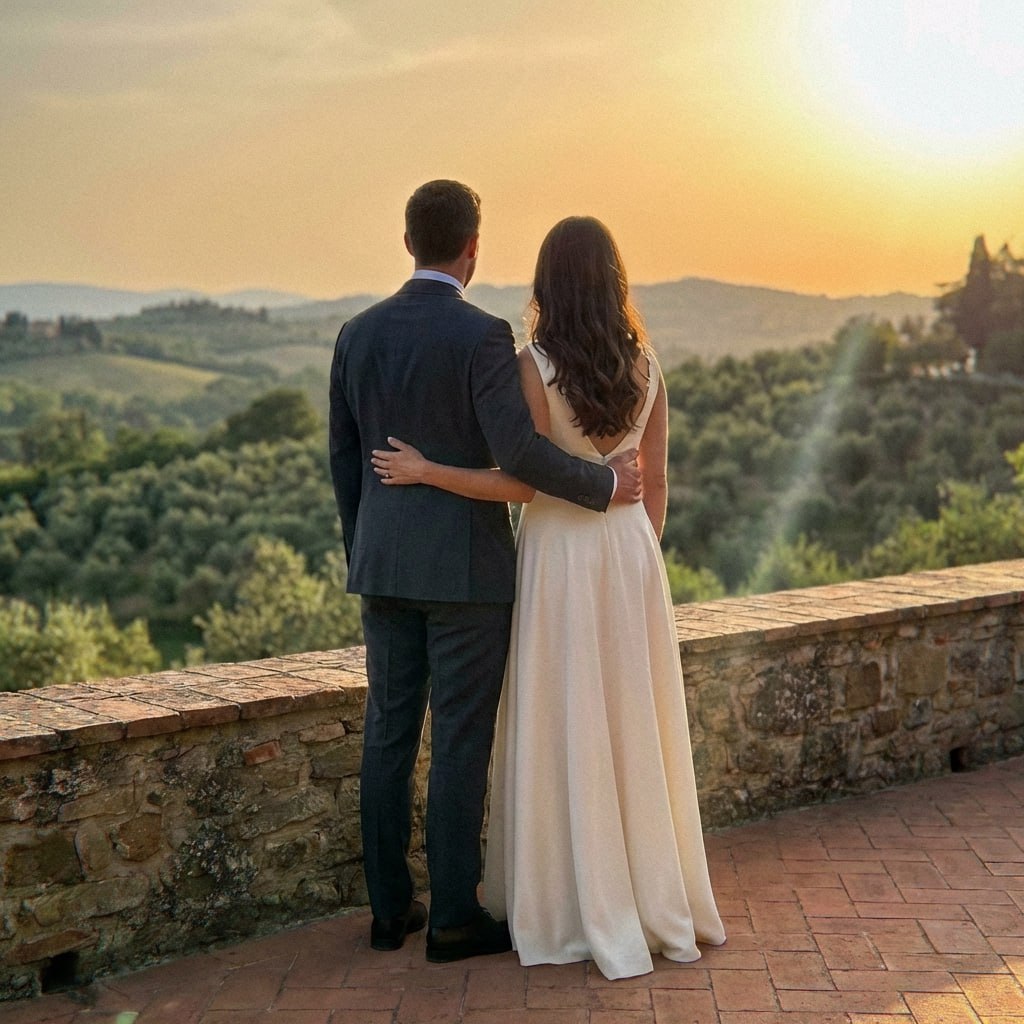
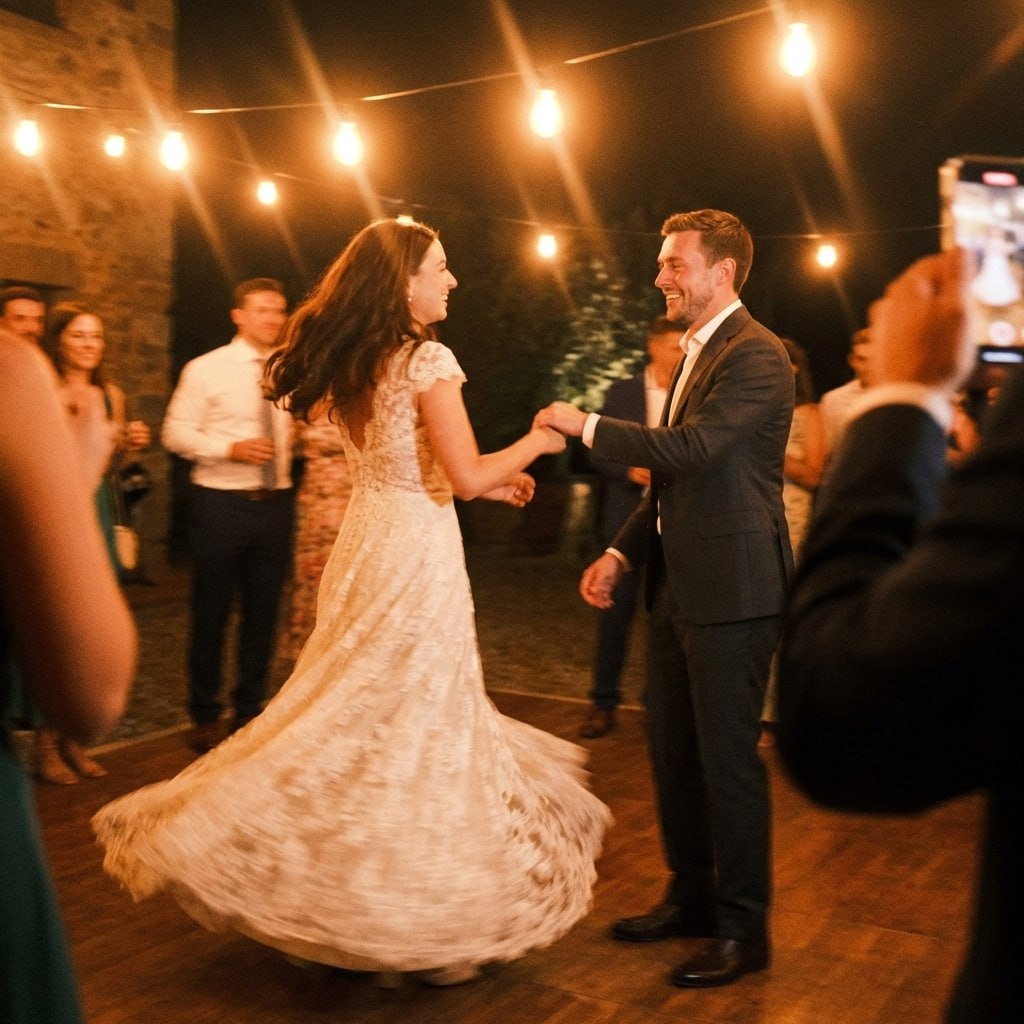
12:45 - Cousin's candid
Caught mid-laugh
The timeline gets the day organized. This gets every photo of it.
Your photographer can only be in one room per moment. A free Pix Wedding gallery collects every guest's phone photos from every other room into one album, no app download required.
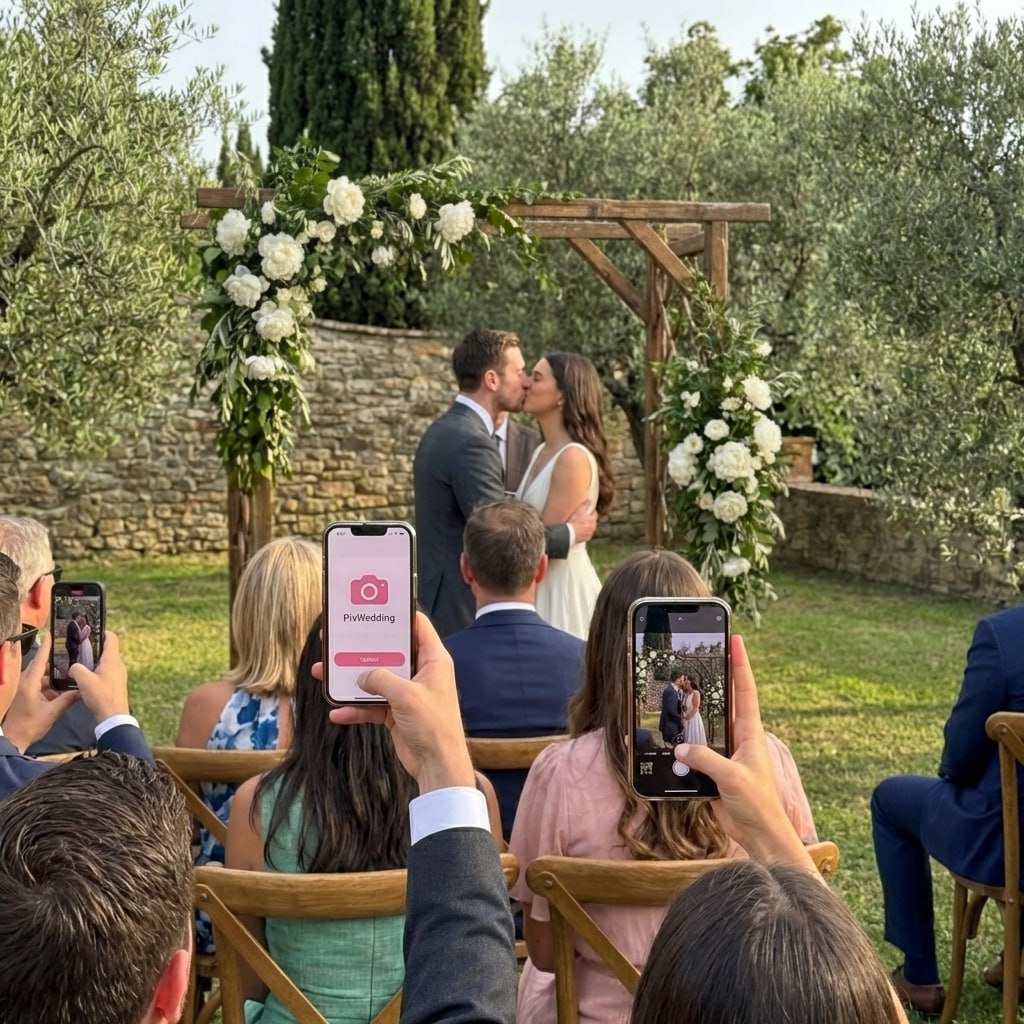
From the best man
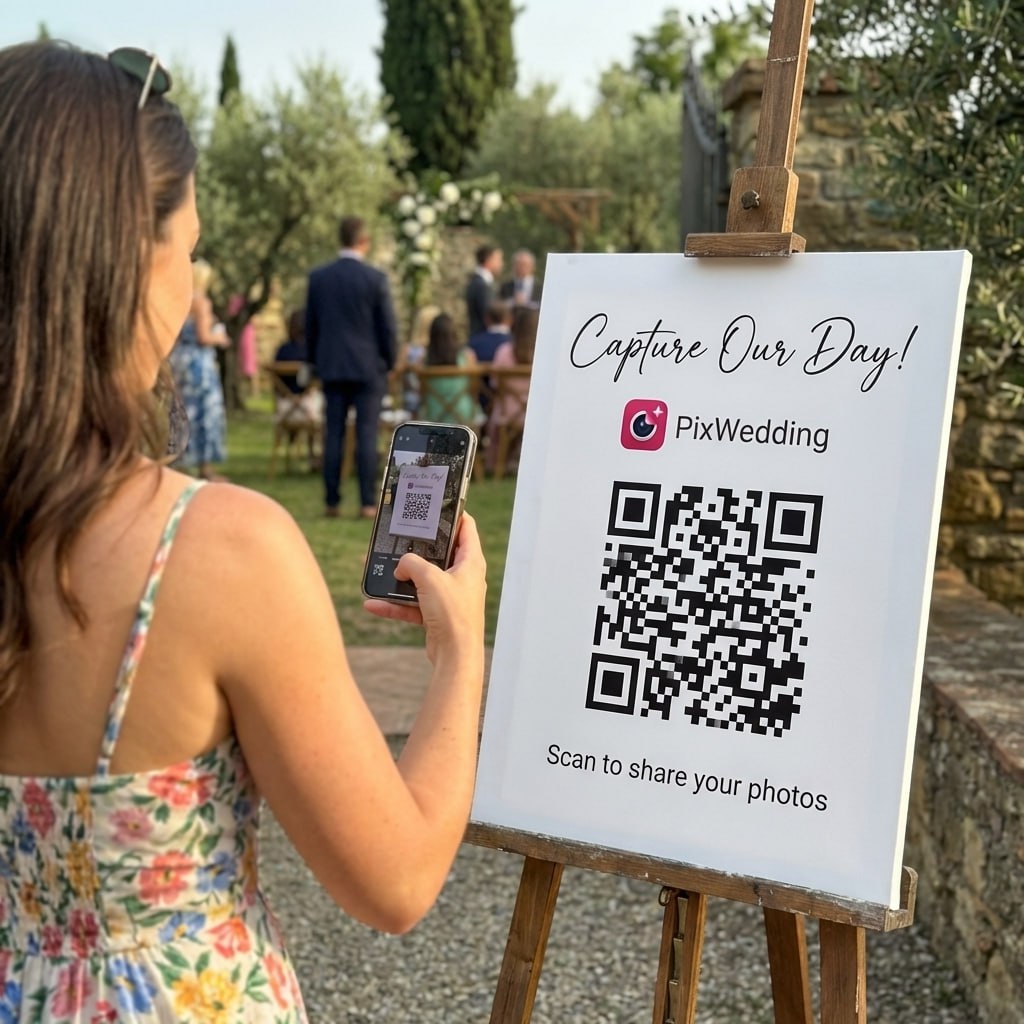
Scan to join the album
No app, no account
UPLOADING
Saving your moment
THE ALBUM
Emma & Jack
June 21, 2026
647 photos · 95 guests
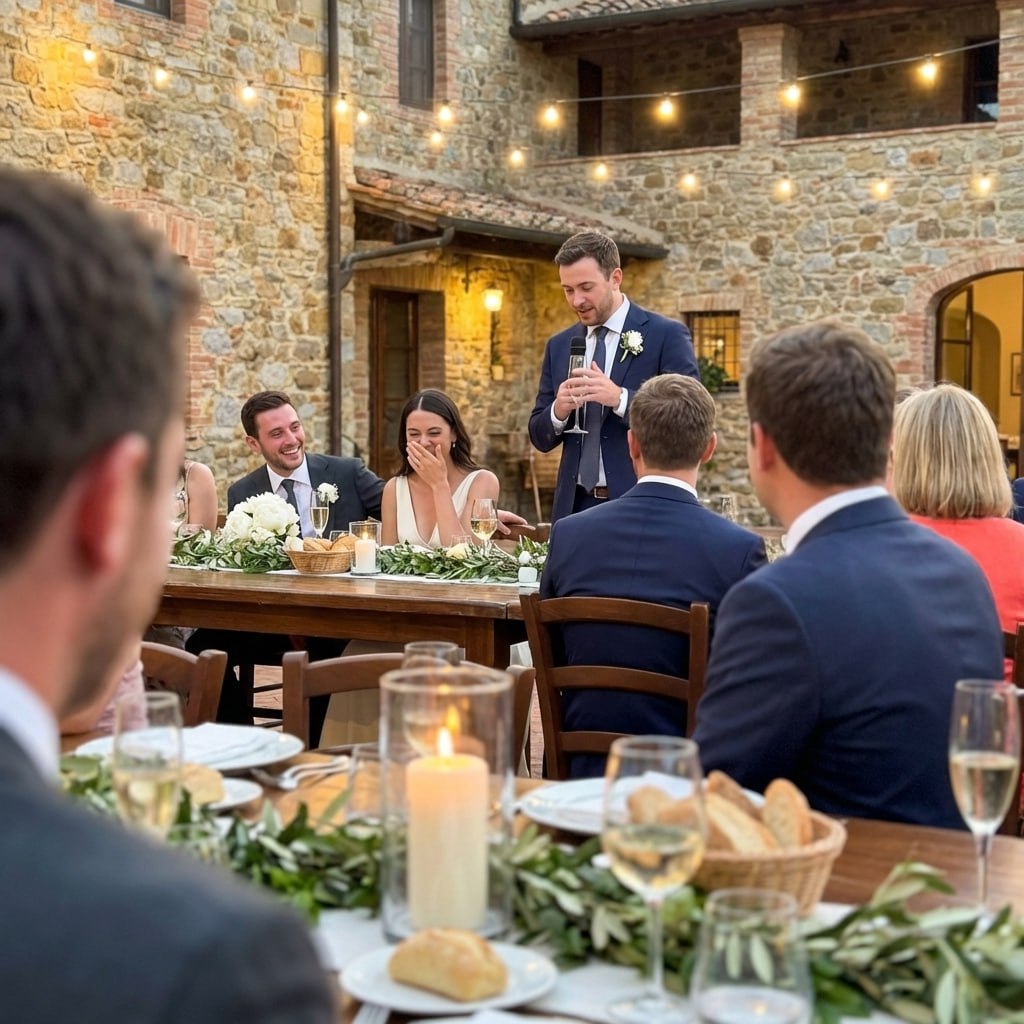

SCAN TO TRY
pix.wedding/
your-wedding
Template 1: 12pm brunch ceremony
Best for couples who want a shorter guest commitment, softer morning light, and a meaningfully cheaper catering bill. The whole event, including send-off, wraps by mid-afternoon.
Template 2: 3pm ceremony, with first look
The most common full-evening format. Doing a first look moves nearly all portrait time before the ceremony, which means the couple can actually join cocktail hour, and there is still a short golden-hour window later for a handful of sunset shots.
Template 3: 5pm ceremony, no first look
For couples who want the traditional aisle reveal as their first look at each other. The trade-off: all portraits happen after the ceremony, compressed into a tighter cocktail-hour window, so this template locks family formals in immediately after recessional before anyone scatters.
Template 4: church ceremony + separate reception venue
For a religious ceremony at one address and a reception at another. The two travel blocks are the highest-risk points in this template, each one padded 20-30 minutes beyond what a map estimates once you account for the wedding party loading up and parking at the other end.
Template 5: dusk / candlelight ceremony
The most romantic-looking format and the least forgiving to plan. The entire afternoon works backward from your local sunset time on your exact wedding date, since golden hour lasts only 10-15 usable minutes right after the ceremony.
Template 6: full wedding weekend
A skeleton for couples hosting more than one event. Use this as the top-level outline, then build the wedding day itself out in detail using one of the templates above (this example uses the afternoon-with-first-look shape for Saturday).
Building photo time into the timeline
Every template above has photography embedded in the structure, not bolted on. Golden hour is not a suggestion, it is a hard deadline: it starts roughly 30-90 minutes before sunset depending on season and location, and once it passes it does not come back. If a first look matters to you, it needs a named 20-30 minute block, not "whenever there's a gap."
What none of these templates can cover is everything happening outside the frame the professional photographer is pointed at. The groomsmen's suite while they're getting ready, the kids' table mid-reception, the moment your college friends found each other on the dance floor at 10:40pm. One photographer physically cannot be everywhere the story is happening at once.
That is the gap a guest photo-sharing gallery fills. Put the QR code on the welcome table and every guest's candid shots land in one shared album automatically, no app download, no chasing down phone numbers after the honeymoon. It runs quietly in the background of whichever timeline you build above.
5 mistakes couples make with a timeline template
- 1
Copying a template without adjusting for your actual sunset time
A dusk-ceremony template built for a June wedding (sunset around 8:30pm) falls apart in November (sunset around 5pm). Look up your actual wedding-date sunset time and shift every post-ceremony block accordingly.
- 2
Leaving zero buffer between hair/makeup and the first photo
Hair and makeup running long is one of the most common sources of same-day delay. Every template on this page has at least 15-30 minutes of slack built between the last styling appointment and the first photograph for exactly this reason.
- 3
Scheduling family formals for after dinner
Once dinner starts, family members scatter, some have had wine, and the photographer is chasing people across the room. Lock formals in before the first course, ideally before cocktail hour.
- 4
Underestimating travel time between two venues
A 20-minute drive on a map becomes 35-40 minutes once you add wedding-party loading, parking, and a bathroom stop. The church-plus-venue template above adds 20-30 minutes of buffer on top of the map estimate for exactly this reason.
- 5
Not sharing the timeline with every vendor at once
When each vendor gets a different version, or none at all, they default to their own internal assumptions. A caterer expecting dinner at 7pm and a DJ planning the first dance at 8:30pm will collide in real time if nobody synced the timeline in advance.
From template to a timeline that fits your exact day
A template gets you 80% of the way there. The last 20% is specific to your venue, your vendor count, and your actual guest list, and that is where a static template starts to fight you. Once you have picked the closest match above, the fastest way to adjust every downstream time without re-doing the math by hand is the free Wedding Day Timeline Builder: drag events to reorder them, edit durations, and it automatically flags any overlaps you create.
Start from whichever copy-paste template above matches your ceremony time, paste it into the builder, adjust the times that are specific to your venue, and export a clean version to send to every vendor at once.
Related Planning Guides
Why a Template Beats Starting From a Blank Page
A wedding day has somewhere between 15 and 25 distinct segments, and every segment depends on the one before it finishing on time. Building that structure from nothing is where most couples lose hours of planning time re-deriving math that has already been solved by thousands of weddings before theirs: how long hair actually takes, how much buffer a venue transfer needs, when dinner service realistically starts once toasts run long.
A genuinely useful template is not a lead-magnet gimmick with three vague bullet points. It has real times, a hard stop that resolves backward from sunset or a venue curfew, and buffer already built into the highest-risk transitions. That is also the reason "wedding day timeline template" spiked as a breakout search term this year: couples want practical planning infrastructure, not more mood-board inspiration.
Printing and Sharing Your Finalized Timeline
Once you have adapted a template to your actual day, get it in front of every vendor in writing, not just verbally at a walkthrough. Copy the plain-text version from any template on this page, paste it into an email or shared document, and send it to your photographer, DJ or band, caterer, florist, officiant, and coordinator at the same time so nobody is working from a private version.
Print two physical copies for the wedding day itself: one for your coordinator or the most organized person in your bridal party, and one taped inside the getting-ready room where the hair and makeup team can see it. Digital copies get missed in a busy inbox on the actual day; a printed copy on the wall does not.
Explore more free wedding tools
Everything you need to make your wedding day stress-free and unforgettable.
Seating Chart Planner
Plan your reception seating visually.
Guest List Manager
Track RSVPs and dietary needs.
Budget Allocator
Turn your total into a category-by-category plan.
Venues by State
Explore venues across all 50 states.
Countdown Timer
Count down the days to your big day.
Wedding Checklist
Month-by-month planning checklist.
Bachelorette Party Games
15+ games with rules, supplies, and timing.
Alternative to Wedding Guest Book
15 creative alternatives guests enjoy.
Wedding Day Timeline Template: FAQ
Straight answers to the questions people ask most about this topic.
A usable template needs three layers: getting-ready and vendor arrival times, the ceremony and portrait block, and the full reception sequence through send-off. It should name who is where at every transition (photographer, DJ, caterer, coordinator), not just the couple's schedule. A template that only lists the ceremony and reception times without the morning-of logistics is the version most couples end up rebuilding from scratch two weeks before the wedding.
Yes. A 12pm brunch ceremony and a 6pm dusk ceremony do not just shift the same schedule by a few hours, they change the shape of the day. Morning weddings compress hair and makeup into a tighter pre-dawn window and skip the golden-hour scramble entirely. Evening ceremonies have a hard photography deadline (sunset) that the whole afternoon has to be built backward from. Pick the template below closest to your actual ceremony time rather than adapting a generic one.
Send the final version to every vendor (photographer, DJ or band, caterer, florist, officiant, coordinator) at least 7 to 10 days before the wedding. Draft it 6 to 8 weeks out so there is time to catch conflicts, like a florist delivery window that overlaps with the ceremony, while there is still room to fix them.
Yes, and ideally before you finalize anything. Photographers know how long portraits actually take at a specific venue, where the best light falls, and how much travel buffer a particular property needs. The Knot's wedding-weekend timeline guide specifically recommends looping in your photographer during the draft stage, not after the schedule is locked.
A template is a static starting point you copy and adjust by hand. An interactive builder, like the free Pix Wedding timeline tool, lets you drag events, auto-detect overlaps, and export a clean copy in a few minutes without doing the time math yourself. Most couples start from a template to understand the shape of the day, then move to the builder to fine-tune and share the final version with vendors.
Yes, with compression. For under 30 guests, hair and makeup typically takes half the time (fewer bridesmaids), family formals shrink to 10-15 minutes, and cocktail hour can run as short as 30-45 minutes. Start from whichever template matches your ceremony time, then shorten each getting-ready and portrait block by roughly 30-40%.