
How to plan a wedding timeline
Start the ceremony about 2 hours before sunset, or about 1 hour 15 minutes before with a first look. Then count back to the first hair and makeup chair and forward to the send-off. The 8 steps, a planner and sample days are below.
Every number links to its source. Checked 4 October 2026.
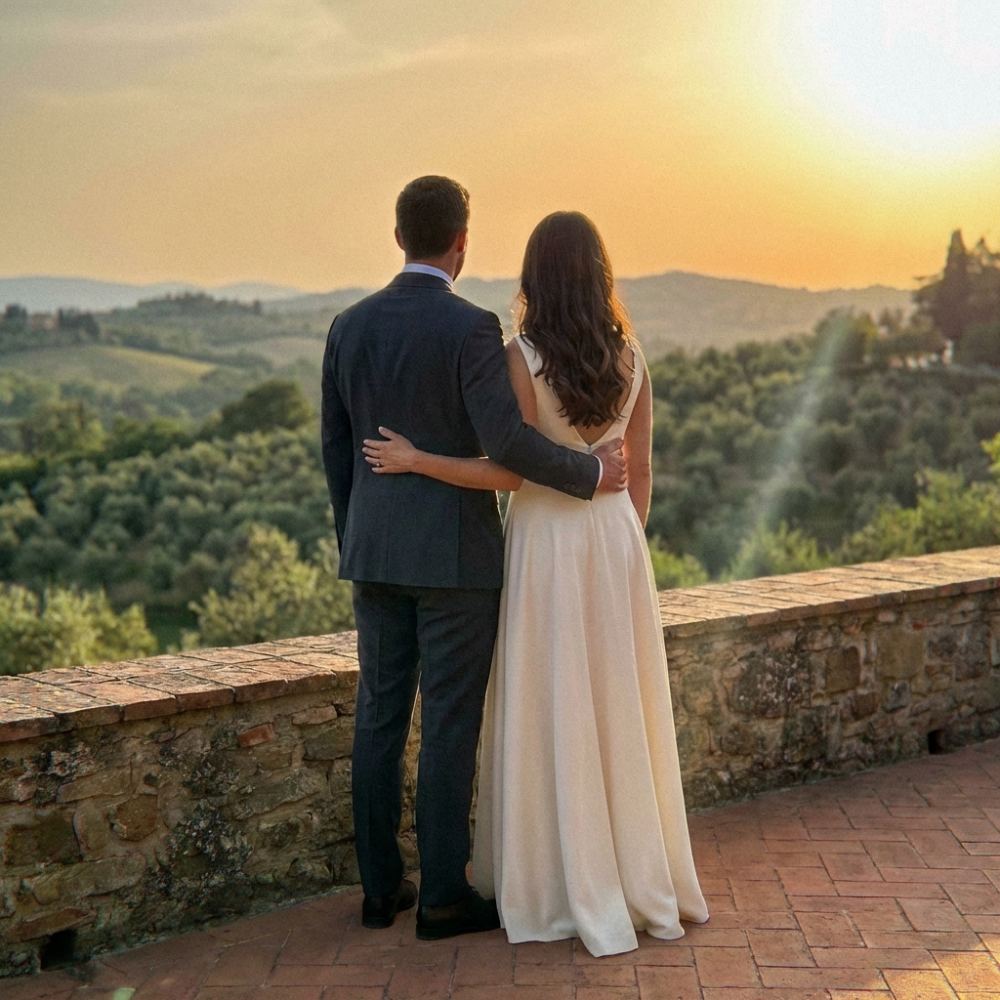
How do you plan a wedding day timeline?
Work backward from sunset. Couple photos start about 45 minutes before it, so the ceremony goes about 1 hour 15 minutes before sunset with a first look and about 2 hours before without one. From there, count back through photos and hair and makeup, and forward through a cocktail hour of about an hour and a reception of about four hours.
Add buffers where delays pile up and send one final wedding schedule to every vendor. The ranges come from planners and photographers, not a rulebook.
How to plan a wedding timeline in 8 steps
Sunset is the one fixed point you do not control; the ceremony is the one you do. Set those first and every other block falls into place. This is the order to decide in, not the order of the day.
- 01
Look up sunset for your date
Use the exact date and the venue’s town. In New York, sunset moves from 8:31 pm in late June to 6:16 pm in mid October.
- 02
Decide on a first look
It decides whether family and wedding party photos happen before the ceremony or eat into the cocktail hour.
- 03
Set the ceremony time from golden hour
Couple photos start about 45 minutes before sunset. Count back the photos still left after the vows, then the ceremony.
- 04
Block the photos
About 30 minutes for the wedding party, 30 for close family and 30 to 60 for the two of you.
- 05
Do the hair and makeup math
About 45 minutes per person, divided by the number of artists, plus about two hours for you.
- 06
Lay out the reception forward
Cocktail hour, entrances and first dance, dinner with toasts, then dancing and cake: about four to five hours.
- 07
Add buffers at the risky handoffs
After the hair chair, between ceremony and reception, and around golden hour.
- 08
Send one final version to every vendor
One file, one owner, the same clock times for every vendor.
Schedule your ceremony 2 hours before sunset and start taking your couples photos 45 minutes before sunset.
Want a ready layout? Use the wedding day timeline template, or build and print your own in the free wedding timeline builder.
What time should a wedding ceremony start? Count back from sunset
Golden hour is the stretch before sunset when light is redder and softer. Wikipedia notes the "hour" is figurative: its length changes with season and latitude. Photographers plan it in minutes:
The four anchors photographers use
Willowynn Barn and L.A. Birdie Photography (6 pm ceremony, 7:15 pm sunset, portraits at 7:10). Checked 4 October 2026.
15 to 25 min
is enough. Megan Bennett Photography blocks 15 to 20 minutes; Willowynn Barn a quick 25. Checked 4 October 2026.
Find your sunset time
Use Sunrise-Sunset.org or NOAA’s solar calculator for the venue’s town and date. Valleys and tall trees lose light earlier, so ask the venue.
One city, four dates: New York in 2027
| Date | Sunset | Civil twilight ends | Ceremony, first look | Ceremony, no first look |
|---|---|---|---|---|
| Sat 15 May 2027 | 8:07 pm | 8:37 pm | 6:30 pm | 5:45 pm |
| Sat 19 June 2027 | 8:31 pm | 9:03 pm | 7:00 pm | 6:00 pm |
| Sat 18 Sept 2027 | 7:02 pm | 7:28 pm | 5:30 pm | 4:30 pm |
| Sat 16 Oct 2027 | 6:16 pm | 6:42 pm | 4:45 pm | 3:45 pm |
Sunset and twilight: Sunrise-Sunset.org, New York, Eastern Daylight Time. Ceremony times from the planner below (30 minute ceremony, rounded down to the quarter hour). A 2 h 15 min swing in sunset across four months. Checked 4 October 2026.
Build your wedding day schedule backward from sunset
Enter your sunset time, first look or not, the ceremony length and the hair and makeup team. The planner counts back to the first chair and forward to the send-off, and every row adds up to the next.
Each wedding party slot is about 45 minutes, and your own hair and makeup about an hour each, per Zola. Find your sunset in NOAA's solar calculator or any sunset table for the venue's town.
5:30 pm
1 h 32 min before sunset- Hair and makeup starts11:00 am
- Photographer arrives3:00 pm
- Ceremony starts5:30 pm
- Golden hour portraits6:17 pm
- Reception entrance7:00 pm
- Send-off11:00 pm
11:00 am to 11:00 pm, 12 hours
- 11:00 am to 2:30 pmHair and makeup4 people at about 45 min each across 2 artists, then about 2 hours for you (Zola)210 min
- 2:30 pm to 3:00 pmBuffer for a late hair slotOur rule of thumb: never schedule photos straight off the chair30 min
- 3:00 pm to 3:30 pmGet dressed, detail photosThe photographer arrives as you dress30 min
- 3:30 pm to 4:00 pmFirst look and couple portraitsL.A. Birdie Photography: 30 minutes30 min
- 4:00 pm to 4:30 pmWedding party photosWeddingWire: about 30 minutes30 min
- 4:30 pm to 5:00 pmFamily formalsWeddingWire: about 30 minutes, close family30 min
- 5:00 pm to 5:30 pmOut of sight, touch-ups, guests arriveHidden before the first guests walk in30 min
- 5:30 pm to 6:00 pmCeremonyWeddingWire: about 30 minutes is typical30 min
- 6:00 pm to 6:17 pmRecessional, hugs, first drinksPhotos already done, so you join the cocktail hour17 min
- 6:17 pm to 6:42 pmGolden hour portraitsWillowynn Barn: start about 45 minutes before sunset, a quick 25 minute window25 min
- 6:42 pm to 7:00 pmBack to the cocktail hourEat something before the entrance18 min
- 7:00 pm to 7:30 pmGrand entrance and first danceZola: about 20 to 30 minutes30 min
- 7:30 pm to 9:00 pmDinner and toastsZola: 1.5 to 2 hours with the toasts90 min
- 9:00 pm to 11:00 pmDancing, cake and send-offZola: 1.5 to 2.5 hours120 min
A starting point, not a contract. Your photographer, venue and caterer have the final say on their own minutes. Times are rounded to the quarter hour at the ceremony and add up block by block.
Block lengths: Willowynn Barn (golden hour), WeddingWire (party and family photos), L.A. Birdie (first look), Zola (hair and makeup), Zola and WeddingWire (reception). Checked 4 October 2026. The 30 minute buffer and dressing blocks are our rules of thumb. To rename, move or print blocks, use the free wedding timeline builder.
Should you do a first look? What it does to the day
A first look is a private moment before the ceremony where you see each other first, usually with the photographer there. It moves most photos before the vows, and the whole day earlier.
Photos before the ceremony
- Ceremony about 1 h 15 to 1 h 40 before sunset. L.A. Birdie’s sample: 6 pm ceremony, 7:15 pm sunset.
- You get your cocktail hour. Only golden hour is left after the vows.
- Most couples now do it. 56% of 2025 couples planned one in Zola’s First Look Report.
- An earlier start. Hair and makeup starts about 30 to 45 minutes earlier.
The first sight is the aisle
- The aisle moment stays first. The reason many couples skip it.
- A later, calmer morning. Less to fit in before the ceremony.
- Ceremony about 2 h to 2 h 35 before sunset. Willowynn Barn says 2 hours; with WeddingWire’s photo blocks our planner lands nearer 2 h 20 to 2 h 35.
- A long cocktail hour. All the photos land after the vows, so drinks run about 95 to 110 minutes.
56%
of couples marrying in 2025 planned a first look, in Zola’s First Look Report (about 6,000 couples, checked 4 october 2026). Without one, the photos after the vows decide how long guests wait: see how long a cocktail hour should last.
How long does wedding hair and makeup take? And when do vendors arrive?
Most days start running late in the hair and makeup chair. Zola plans about 45 minutes per person in the party and about an hour each for the main hair and makeup.
Hair and makeup, worked out
- 2 in the party, 1 artist2 rounds of 45 min, then about 2 h for you3 h 30 min
- 4 in the party, 2 artists2 rounds of 45 min, then about 2 h for you3 h 30 min
- 6 in the party, 2 artists3 rounds of 45 min, then about 2 h for you4 h 15 min
- 8 in the party, 3 artists3 rounds of 45 min, then about 2 h for you4 h 15 min
Per-person minutes: Zola’s wedding day timeline guide, whose sample has the photographer arriving at noon. Time your artist at the trial. Checked 4 October 2026.
Work backward from the ceremony, not forward from breakfast.
What to ask each vendor before you set their arrival time
Setup times depend on the venue, season and order size, so we do not print generic hours. Ask these and copy the answers into your schedule.
- Venue and rentals
When can the first vendor load in, and when must the room be clear?
Sets the earliest start and the hard end
- Florist
How long to set the ceremony and the tables, and does anything move between them?
Before guests arrive, plus any flip
- Caterer
When does the first course go out, and how long can the kitchen hold it?
Anchors the reception
- DJ or band
When is sound check, and who calls the entrances and toasts?
Before guests arrive, and the cue list
- Photographer
When do you want to arrive, and how many minutes per photo block?
Getting ready, first look, formals, golden hour
- Hair and makeup
Minutes per person, how many artists, and who goes last?
The first block of the day
- Officiant
How long from the processional to the kiss?
The block everything hangs on
How long is a wedding, from ceremony to send-off?
After the vows the timeline runs forward and gets easier. WeddingWire puts it at about six hours: a 30 minute ceremony, usually an hour of cocktails and about four hours of reception.
WeddingWire’s sample evening, 5:30 pm ceremony
| Time | What happens |
|---|---|
| 5:30 pm | Ceremony |
| 6:00 pm | Cocktail hour |
| 7:00 pm | Guests enter the reception |
| 7:15 pm | Grand entrance and first dance |
| 7:30 pm | First course |
| 7:50 pm | Welcome toasts |
| 8:30 pm | Entrées |
| 9:15 pm | Wedding party toasts |
| 10:00 pm | Cake cutting |
| 10:15 pm | Bouquet toss |
| 10:45 pm | Last dance and exit |
4 to 5 h
Zola: 20 to 30 min of entrances and first dance, 1.5 to 2 h of dinner with toasts, 1.5 to 2.5 h of dancing. Checked 4 October 2026.
How long is the ceremony itself?
Most run 20 to 45 minutes; a Catholic Mass or a Hindu ceremony runs longer. Times by type: how long a wedding ceremony lasts.
Sample evening: WeddingWire’s reception guide. Checked 4 October 2026. Running order of the party: order of a wedding reception.
A planner builds a wedding day timeline
Emily Summer, a wedding planner with more than a decade of experience, walks through the order of the day, how long each part takes and the mistakes she sees most.
Watch on YouTubeWedding timeline for a 3, 4, 5 or 6 pm ceremony
If the venue fixed the start time, work the same math from the ceremony instead of from sunset. Same assumptions as the planner: four in the party, two artists, a 30 minute ceremony, a 60 minute cocktail hour.
Illustrative timelines by ceremony start
| Ceremony | First chair, first look | First chair, no first look | Cocktail hour | Dinner | Send-off | Sunset that fits a first look |
|---|---|---|---|---|---|---|
| 3:00 pm | 8:30 am | 10:00 am | 3:30 pm to 4:30 pm | 5:00 pm | 8:30 pm | 4:25 pm to 4:45 pm |
| 4:00 pm | 9:30 am | 11:00 am | 4:30 pm to 5:30 pm | 6:00 pm | 9:30 pm | 5:25 pm to 5:45 pm |
| 5:00 pm | 10:30 am | 12:00 pm | 5:30 pm to 6:30 pm | 7:00 pm | 10:30 pm | 6:25 pm to 6:45 pm |
| 6:00 pm | 11:30 am | 1:00 pm | 6:30 pm to 7:30 pm | 8:00 pm | 11:30 pm | 7:25 pm to 7:45 pm |
No first look? The same start needs a sunset about 2 h 20 to 2 h 35 after the ceremony begins, and cocktail hour stretches while you do photos.
Sunset too early? Do the couple portraits before the ceremony, or step out for 10 minutes of twilight during dinner.
Computed with the same block lengths as the planner, sourced there. Checked 4 October 2026. Send-off is 5.5 hours after the ceremony starts.
The cocktail hour, caught by your guests
The 25 minutes you spend on sunset portraits are 25 minutes of party you miss. Guests scan one QR code and add photos from the phone browser, no app and no account.
Scan to join the album
No app, no account
UPLOADING
Saving your moment
THE ALBUM
Maya & Daniel
Example album
142 photos · 33 guests
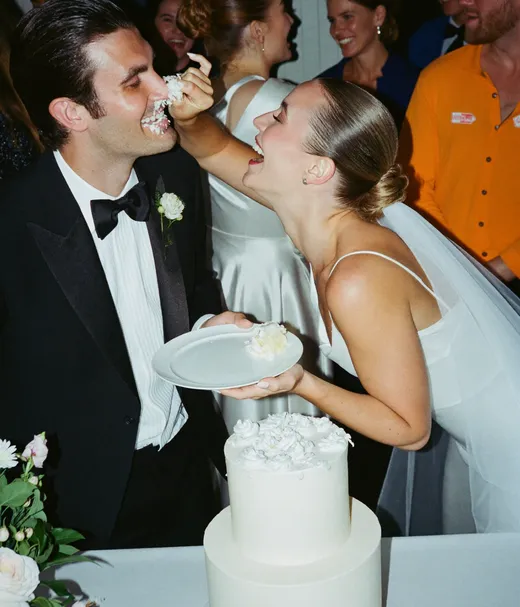
What does a typical wedding day timeline look like, hour by hour?
Maya & Daniel are an example couple marrying on Saturday 18 September 2027 in New York (sunset 7:02 pm), with a first look, four in the party, two artists and a 30 minute ceremony.
Maya & Daniel: first look, sunset 7:02 pm
- 11:00 amHair and makeup4 people at about 45 min each across 2 artists, then about 2 hours for you (Zola)210 min
- 2:30 pmBuffer for a late hair slotOur rule of thumb: never schedule photos straight off the chair30 min
- 3:00 pmGet dressed, detail photosThe photographer arrives as you dress30 min
- 3:30 pmFirst look and couple portraitsL.A. Birdie Photography: 30 minutes30 min
- 4:00 pmWedding party photosWeddingWire: about 30 minutes30 min
- 4:30 pmFamily formalsWeddingWire: about 30 minutes, close family30 min
- 5:00 pmOut of sight, touch-ups, guests arriveHidden before the first guests walk in30 min
- 5:30 pmCeremonyWeddingWire: about 30 minutes is typical30 min
- 6:00 pmRecessional, hugs, first drinksPhotos already done, so you join the cocktail hour17 min
- 6:17 pmGolden hour portraitsWillowynn Barn: start about 45 minutes before sunset, a quick 25 minute window25 min
- 6:42 pmBack to the cocktail hourEat something before the entrance18 min
- 7:00 pmGrand entrance and first danceZola: about 20 to 30 minutes30 min
- 7:30 pmDinner and toastsZola: 1.5 to 2 hours with the toasts90 min
- 9:00 pmDancing, cake and send-offZola: 1.5 to 2.5 hours120 min
5.5 hours
from the 5:30 pm ceremony to the 11:00 pm send-off, in line with the about six hours WeddingWire describes. The other 6.5 hours are yours alone.
How to read it
- No overlaps. Each block starts as the last one ends.
- Golden hour at 6:17 pm. 45 minutes before sunset, done by 6:42 pm.
- Cocktail hour stays an hour. 6:00 to 7:00 pm, and you are there for most of it.
- The dashed row is slack. If hair runs on time, it becomes a coffee.
Maya & Daniel, the date and every clock time are illustrative. Block lengths are sourced in each row; sunset from Sunrise-Sunset.org. Checked 4 October 2026. Blank version: wedding day timeline template.
When should you start planning a wedding? The months-out timeline
The day-of timeline is the last piece of a longer one. Start the draft early, revise it a month out.
- 18 to 12 months
Book the venue, ceremony and reception
Start a first draft of the day-of timeline
The Wedding Planner LA, checked 4 Oct 2026
- 12 to 8 months
Book the photographer and the caterer
Save-the-dates now if most guests travel
The Wedding Planner LA, checked 4 Oct 2026
- 10 to 7 months
Save-the-dates go out 7 to 10 months ahead
10 to 12 months for a holiday weekend or a destination
Zola, checked 4 Oct 2026
- 8 to 6 months
Book the DJ or band, the florist and the videographer
The Wedding Planner LA, checked 4 Oct 2026
- 6 to 4 months
Book hair and makeup, do a trial and time it
The Wedding Planner LA, checked 4 Oct 2026
- 4 to 3 months
Invitations go out 3 to 4 months ahead, a few weeks earlier for a destination
Schedule the rehearsal with the venue
Zola and The Wedding Planner LA, checked 4 Oct 2026
- 1 month
RSVP deadline
Revise the timeline and confirm every vendor
Zola and The Wedding Planner LA, checked 4 Oct 2026
- 2 weeks
Final meetings with the DJ and the photo and video teams
The Wedding Planner LA, checked 4 Oct 2026
Track every task by month
The free wedding planning checklist turns these months into a list to tick off, plus attire, rings and the license.
Fewer than 12 months?
Same order, shorter windows. See whether six months is too late to plan a wedding.
Booking windows: The Wedding Planner LA. Save-the-date, invitation and RSVP timing: Zola. They differ a little on save-the-dates, so both are shown. Checked 4 October 2026.
How do you keep a wedding timeline on schedule?
Days run late at the handoffs, one vendor or room to the next. Put slack where the risk is.
30 min
The longest block runs over most often. A late slot should eat the buffer, not the first look.
Cocktail hour
A ceremony that runs 10 minutes long shortens the drinks, not dinner. Tell the caterer which end moves.
10 to 20 min
Sunset will not wait. Leave a few minutes each side so you walk out on time and come back before the entrance.
The buffer lengths are our planning rules of thumb, not published figures.
Six mistakes that break a wedding timeline
Picking the ceremony time before checking sunset
A 5 pm ceremony is golden in June and near dark by the end of drinks in October.
Treating the hair estimate as fixed
Time your artist at the trial. The schedule uses that number, not a hope.
Building the reception around the dancing
Dinner is the least flexible block, so anchor the reception on the first course.
No time for the two of you to eat
Put it in the timeline, ideally right after the entrance.
Assuming vendors talk to each other
They usually do not. One person sends one final version.
Leaving family photos open-ended
Write the group list in advance. Close family takes about 30 minutes; every extra group adds more.
Revise the final version a month out; hold last meetings with the DJ and photo and video teams two weeks before (The Wedding Planner LA, checked 4 october 2026). Evening before: day before the wedding timeline.
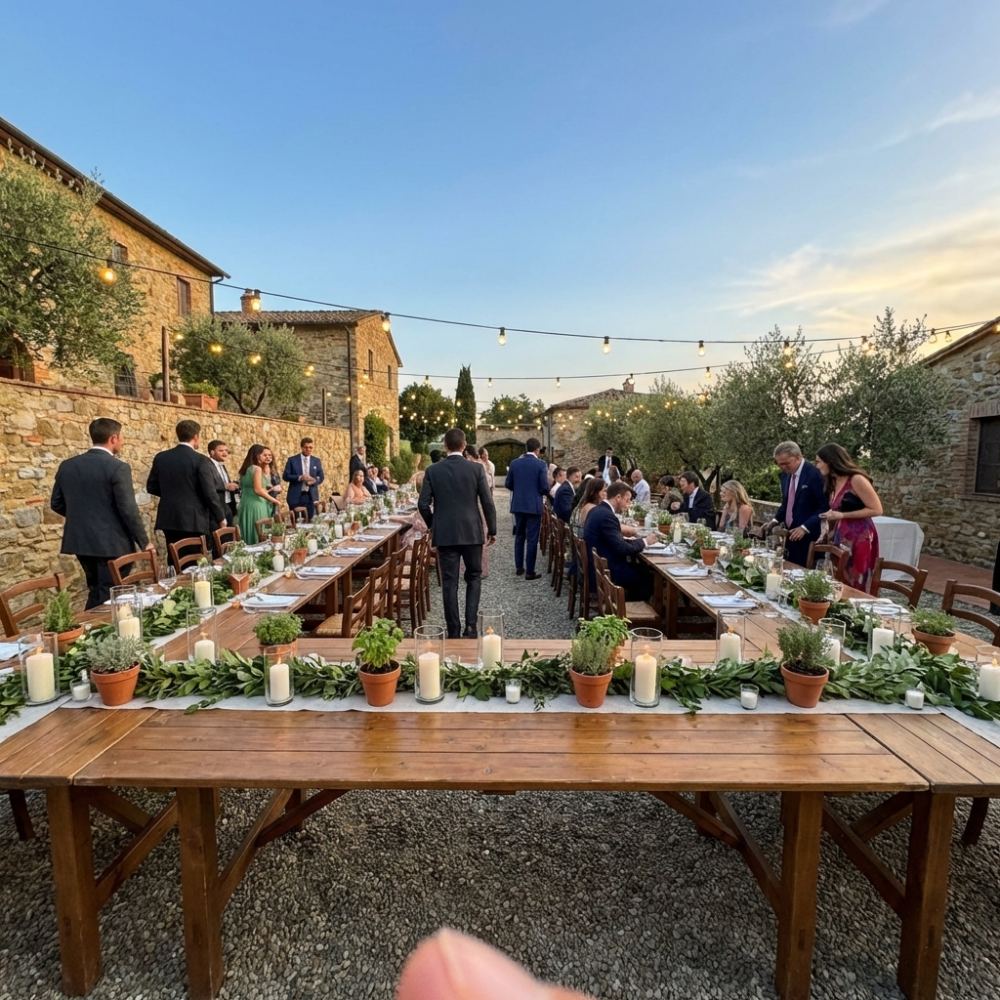
Scan. Upload.
Every guest photo, one album.
Your timeline has a slot for every photo your photographer takes. The guests take the rest: watch one scan the QR code at the cocktail hour and add photos from the phone browser, no app and no account.
WEDDING ALBUM
Maya & Daniel
Example album
Maya & Daniel
Golden hour, right on time
A timeline for the day, an album for every guest photo
Plan every block, then let guests fill in the moments you miss. They scan a QR code and upload in the phone browser, no app and no account. 20 uploads free, no card.
From the cocktail hour
Scan to join the album
No app, no account
UPLOADING
Saving your moment
THE ALBUM
Maya & Daniel
Example album
142 photos · 33 guests
SCAN TO TRY
pix.wedding/
your-wedding
Wedding Timeline: Common Questions
Quick answers on ceremony times, sunset, hair and makeup, first looks, sending the schedule to vendors and the months before.
Start with sunset for your date, decide whether you will do a first look, and set the ceremony time so couple photos start about 45 minutes before sunset. Then work backward through the photos and getting ready to the first hair and makeup slot, and forward through the cocktail hour, dinner and dancing to the send-off. Add buffers after the hair chair, around the ceremony and around golden hour, and send one final version to every vendor.
Count back from sunset. Without a first look, Willowynn Barn suggests about 2 hours before sunset, because all the photos happen after the vows. With a first look you can start later: L.A. Birdie Photography’s sample day has a 6 pm ceremony for a 7:15 pm sunset. In New York in mid September 2027 (sunset 7:02 pm) that puts the ceremony around 4:30 pm without a first look and 5:30 pm with one.
About 1 hour 15 minutes to 1 hour 40 minutes with a first look, and about 2 hours to 2 hours 35 minutes without one. The difference is the family and wedding party photos: with a first look they are done before the ceremony, without one they need about an hour after it, before golden hour starts about 45 minutes before sunset.
With a first look, four people in the wedding party and two hair and makeup artists, the first chair is at 9:30 am. Cocktail hour runs 4:30 to 5:30 pm, dinner starts at 6:00 pm and the send-off lands at 9:30 pm. Golden hour fits if sunset falls between about 5:25 and 5:45 pm. Without a first look, start hair at 11:00 am and plan a longer cocktail hour. These are illustrative times from the planner on this page.
Zola plans about 45 minutes per person in the wedding party and about an hour each for the main hair and makeup. With four people and two artists that is 90 minutes for the party plus about 2 hours for you, so 3.5 hours in total. Time it at your trial and use that number.
For guests, about 6 hours: WeddingWire breaks it down as a 30 minute ceremony, a cocktail hour of about an hour and a reception of about four hours. For the couple it is much longer. Our illustrative day with a first look runs 12 hours from the first hair slot at 11 am to an 11 pm send-off.
If you want to be at your own cocktail hour and catch golden hour without a rush, yes. In Zola’s 2025 First Look Report, 56% of about 6,000 couples marrying that year planned one. If seeing each other for the first time at the aisle matters more, skip it and plan a longer cocktail hour or a shorter photo list.
Revise it about a month out and confirm every vendor, then hold final meetings with the DJ and the photo and video teams about two weeks before, as The Wedding Planner LA suggests. Send the same file to everyone, so the photographer, caterer, DJ, florist and venue all work from one set of clock times.
Twelve to eighteen months out is comfortable: venue first, then the photographer and caterer, then music and flowers. Save-the-dates go out 7 to 10 months ahead and invitations 3 to 4 months ahead, per Zola. Planning in less time is possible; see our guide on whether six months is too late.
People use both words for the same thing. Some planners use timeline for the months of planning and schedule for the day itself, the hour-by-hour running order. Timelines for weddings usually mean the day-of version, which is what this guide builds.
Related guides
Build the day, time the ceremony and the drinks, and plan the months before.
Sources, checked 4 October 2026
- Zola: how to master your wedding day timeline
- Zola: how long is a wedding reception
- Zola: 2025 First Look Report data deep dive
- Zola: when to send wedding invitations
- WeddingWire: how long is a wedding reception
- WeddingWire: the ultimate wedding photographer timeline
- Willowynn Barn: timing for wedding sunset photos
- L.A. Birdie Photography: planning your timeline for good light
- Megan Bennett Photography: plan your wedding around the sunset
- Wikipedia: golden hour (photography)
- Sunrise-Sunset.org: New York sunset times
- NOAA Global Monitoring Laboratory: solar calculator
- The Wedding Planner LA: wedding planning timeline outline
- Emily Summer: How to Make a Wedding Day Timeline (YouTube)
Maya & Daniel, their date, the clock times, the counts in the phone mockups, the full-day timeline, the ceremony-time table, the planner output and the buffer lengths are illustrative. Photos are from our own library.
More free wedding planning tools
Free tools for the timeline, the checklist, the guest list and the photos that follow.
Seating Chart Planner
Plan your reception seating visually.
Guest List Manager
Track RSVPs and dietary needs.
Budget Allocator
Turn your total into a category-by-category plan.
Venues by State
Explore venues across all 50 states.
Countdown Timer
Count down the days to your big day.
Wedding Checklist
Month-by-month planning checklist.
Bachelorette Party Games
15+ games with rules, supplies, and timing.
Alternative to Wedding Guest Book
15 creative alternatives guests enjoy.