
Free Printable Wedding Seating Chart Template
Copy the table below, print it, or fill it in by hand: table numbers, seat counts, and a column for every guest name, plus head table and sweetheart table examples.
Free. No account required. Works for 10-300+ guests.
The Short Answer
Scroll down to the copyable table with Table Number, Seats, and Guest Names columns, print the page or copy the table into a document, then fill in each guest as you finalize your plan. Head table and sweetheart table examples are right below it.
Prefer to drag and drop instead of print? Use the free Wedding Seating Chart Maker instead, a browser-based tool that updates instantly as guests move between tables, with no printing or crossing out required.
Copy This Seating Chart Template
Print this page, select and copy the table below, or retype the columns into your own document. Adjust the number of rows and seats to match your actual guest count and venue.
| Table # | Seats | Guest Names |
|---|---|---|
| Table 1 | 8 | Write or type guest names here |
| Table 2 | 8 | Write or type guest names here |
| Table 3 | 8 | Write or type guest names here |
| Table 4 | 10 | Write or type guest names here |
| Table 5 | 10 | Write or type guest names here |
| Table 6 | 8 | Write or type guest names here |
| Table 7 | 8 | Write or type guest names here |
| Table 8 | 6 | Write or type guest names here |
| Table 9 | 8 | Write or type guest names here |
| Table 10 | 8 | Write or type guest names here |
Add or remove rows to match your actual table count. Adjust the Seats column to your venue's real table sizes.
Head Table Example
One long table facing the reception, seating the couple with the wedding party.
- Seat 1: Partner A
- Seat 2: Partner B
- Seat 3: Maid of Honor (+ guest, if seated at the table)
- Seat 4: Best Man (+ guest, if seated at the table)
- Seat 5: Bridesmaid
- Seat 6: Groomsman
Sweetheart Table Example
A small table for just the couple, facing the room, with parents and the wedding party seated at their own tables nearby.
- Seat 1: Partner A, facing the room
- Seat 2: Partner B, facing the room

First dance
You guys!!
Seating figured out? Give every table a way to share the moment.
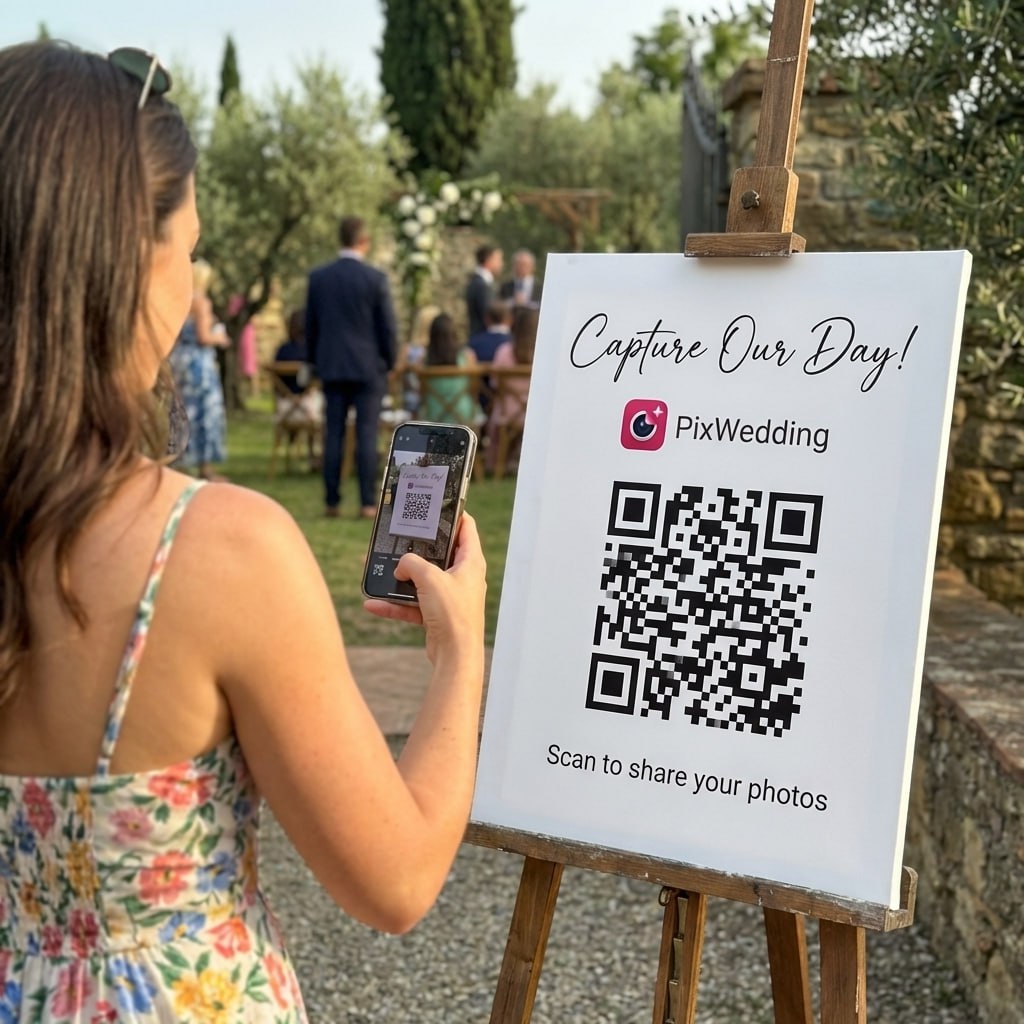
A seated guest is a guest ready to snap photos. Add a QR code to each table and every table's shots land in one shared album automatically.
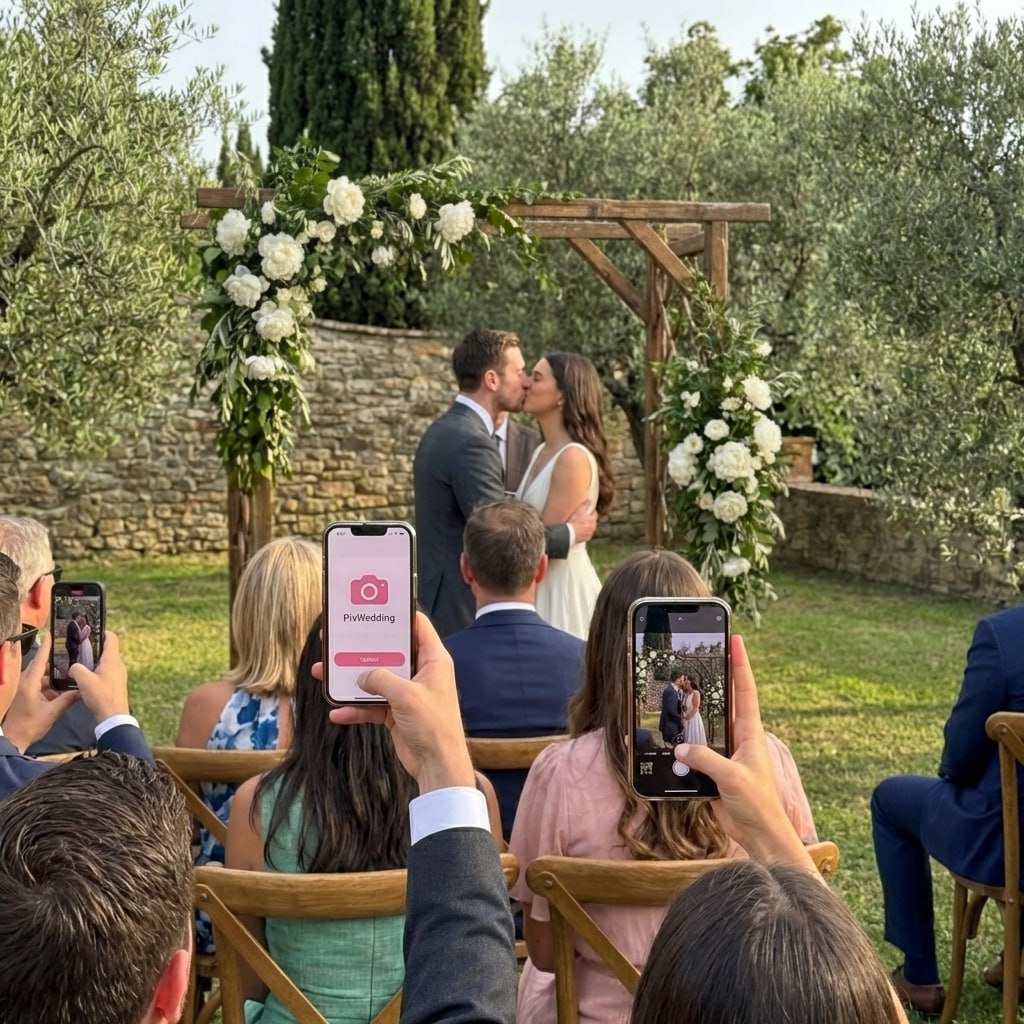
From Mom
Scan to join the album
No app, no account
UPLOADING
Saving your moment
THE ALBUM
Emma & Jack
June 21, 2026
647 photos · 95 guests



SCAN TO TRY
pix.wedding/
your-wedding
Printable Template vs Digital Tool: Pros and Cons
Both formats build the same seating chart. Here is an honest look at where each one helps and where it slows you down.
Pros of a Printable Template
- Works with no device or app. A printed or handwritten chart never runs out of battery and does not need Wi-Fi at the venue.
- Venue-friendly. Many coordinators and caterers still prefer a printed sheet they can mark up with a pen during setup.
- Easy to hand off. A physical copy can sit with a day-of coordinator, parent, or planner without any account or login.
- No formatting surprises. What you write or print is exactly what appears, unlike some digital exports that shift on different screens.
Cons of a Printable Template
- Manual updates. Every RSVP change, cancellation, or plus-one means crossing out and rewriting a cell by hand.
- Single copy risk. A handwritten master copy can be misplaced, spilled on, or left behind unless you photograph or photocopy it.
- Harder to visualize. A table of names in rows does not show you the room layout the way a drag-and-drop floor plan does.
- Slower for large weddings. Above roughly 150 guests, manually rewriting tables after every change becomes genuinely time-consuming.
Most of these cons disappear with the free online seating chart maker, which updates instantly and can still be printed once your layout is final.
How to Fill In This Template, Step by Step
Follow this order and the template above fills in almost automatically, instead of feeling like a blank page.
- 1
Finalize your guest count
Confirm your RSVP total before assigning a single seat. Track responses with the Wedding RSVP Tracker so you are working from a real number, not an estimate.
- 2
Confirm your venue's table setup
Ask your venue or caterer how many tables they have, what shape, and how many seats fit per table. This determines how many rows of the template you actually need.
- 3
Sort your guest list into groups
Before touching the template, tag every guest with a group label such as family, college friends, or coworkers, so you are placing groups rather than individuals.
- 4
Decide on head table or sweetheart table
Choose the format that fits your reception style, using the examples in the section below as a starting point.
- 5
Draft assignments in pencil first
Write table numbers next to names on your guest list draft before committing to the final template, so mistakes are easy to erase.
- 6
Fill in the Guest Names column
Copy or write the finalized names into the template above, table by table, leaving one blank line per seat if you are assigning specific chairs.
- 7
Cross-check dietary and accessibility notes
Compare your filled-in chart against any dietary restrictions or accessibility requests so catering and venue staff have what they need.
- 8
Share the finished chart
Give a copy to your venue coordinator, caterer, and day-of point of contact at least one to two weeks before the wedding.
Turn This Template Into Your Preferred Format
There is no separate file to download. The table above is the template. Here is how to move it into the format that works for you.
Print It Directly
Use your browser's print function (Ctrl or Cmd plus P) on this page to print the template above as-is, then fill it in by hand. The simplest option if your venue just needs a physical sheet.
Copy Into Excel
Select the Table Number, Seats, and Guest Names columns from the template above and paste them into a new Excel workbook, then add formulas for guest counts or dietary flags.
Copy Into Google Sheets
Paste the same columns into a Google Sheet to collaborate in real time with your partner, planner, or parents, and export to PDF once the plan is final.
Use the Online Maker Instead
Prefer to drag and drop instead of typing into rows? The free Pix Wedding Seating Chart Maker builds the same layout visually, with instant updates as guests move between tables.
Guest Grouping Strategies for Your Seating Chart Template
The fastest way to fill a seating chart is to group guests before assigning individual seats. Here is a proven strategy that works for weddings of any size.
Tag by Social Group
Before opening the template, tag every guest in your list with their group: partner A family, partner B family, college friends, work colleagues, neighborhood friends.
Assign Groups to Tables
Calculate how many tables each group needs. Assign whole groups to tables rather than individuals. Most groups fit neatly at one or two tables.
Bridge Mixed Tables
For groups smaller than a full table, combine compatible groups, such as work colleagues in the same field or friends from different eras of one partner's life.
Place Solos Thoughtfully
Solo guests and couples attending without a built-in social group should go at the warmest, most talkative tables you have, not isolated at the back.
Wedding Seating Etiquette: Who Sits Where
The template tells you where names go. Etiquette tells you which names go together. These are the situations that come up most often.
Head Table Etiquette
A traditional head table faces the room and seats the couple with the wedding party, sometimes with partners included if space allows. It works well when you want your closest friends nearby for toasts and photos. Keep it to one long table or a slight U-shape so everyone can see the room.
Sweetheart Table Etiquette
A sweetheart table seats only the couple, usually a small round or rectangular table facing the reception. It gives you a few minutes of privacy during the meal, while parents and the wedding party are seated at their own tables nearby.
Parents and Family Tables
Divorced or separated parents are generally seated at different tables unless they have specifically asked to sit together, with each parent surrounded by their own close family or a supportive friend. Avoid seating parents directly across from a former spouse's new partner if tension is a known concern.
Handling Family Tension
If two relatives do not get along, place their tables on opposite sides of the room rather than adjacent, and avoid seating either of them facing the other's direct sightline. When in doubt, ask a trusted family member which combinations to avoid before finalizing anything.
Where to Seat Kids
Young children generally sit with their own parents rather than at a separate kids-only table unless you have arranged supervision, such as a hired sitter or activity table. If you do set up a kids table, keep it within sight of the parents' table.
Plus-Ones and Solo Guests
A solo guest or a plus-one who knows no one else should go at your most talkative, welcoming table, not off in a corner by themselves. Never split a couple who arrived together across two different tables unless they specifically request it.
Common Seating Chart Mistakes to Avoid
These are the mistakes that turn a simple template into a source of stress. Watch for them as you fill in your own copy.
6 Tips for Customizing Your Seating Chart Template
Small customizations make your seating chart significantly more useful for both you and your venue team.
Add a "Notes" column to your copy of the template for dietary restrictions, mobility needs, or VIP status, information your caterer and venue staff need.
Color-code your copy by group: one color per family or friend group. Visual grouping makes the layout easier to review quickly.
Flag accessibility requirements with a symbol or column so wheelchair spaces and hearing loop proximity are clearly marked for venue setup.
Add a "Group" column alongside table number so you can sort the list by group if you need to review all family placements together.
Make a second copy with tables numbered to match your actual venue layout, so you can spot navigation issues before the day.
Keep a rough working draft in pencil or a spreadsheet, then transfer to a clean final copy of this template around the two-week mark.
Table Layout Templates by Guest Count
Use these capacity guides as the starting point for how many rows to add to the template above.
3-4 round tables of 8, or 2 long banquet tables
A single copy of the template covers this size. Consider a U-shape for this intimate count.
5-10 round tables of 8-10
Standard ballroom layout. One template page works for the whole event.
10-20 tables in mixed sizes
Consider a separate cocktail-room layout if your venue has multiple spaces.
20-30 tables, possibly across multiple rooms
Use room-specific copies of the template. Your venue coordinator needs a master sheet.
30+ tables, ballroom or outdoor tent
The online maker is strongly recommended at this size. Print the final version only.
Accessibility Planning in Your Seating Chart Template
Add an accessibility column to your copy of the template and flag these requirements before finalizing the layout. Your venue team needs this information for room setup.
Related Wedding Planning Tools
Printable Template or the Free Online Maker: How to Decide
This page gives you a static, fill-in-by-hand template because some couples want to work with pen and paper, or need a document format their venue coordinator can print and mark up. The trade-off is that every guest-count change means crossing out and rewriting a cell.
The free Pix Wedding seating chart maker is dynamic. Drag a guest from Table 3 to Table 7 and both tables update instantly on screen, with no erasing or reprinting. Many couples use both: the online maker during active planning while RSVPs are still changing, then this printable template as the final copy once the guest list is locked.
- •Use the printable template when your venue wants a physical document or you prefer working offline
- •Use the online maker at /wedding-seating-chart-maker-free while RSVPs and plus-ones are still changing daily
- •Print your final layout from either format once the guest list is locked, about one to two weeks out
- •Keep a spare printed copy with your day-of coordinator or venue manager in case a table needs a last-minute swap
Guest Grouping Strategies: How to Assign Tables Efficiently
The biggest efficiency gain in seating chart creation comes from grouping guests before you start assigning tables. Most couples waste hours trying to assign seats one by one. The faster method is to sort your guest list into social groups first, assign whole groups to tables, then make individual adjustments.
Social groups to identify before you start: immediate family on each side, extended family on each side, childhood friends, college friends, work colleagues for each partner, neighbors, destination guests who will need social support, and plus-ones who do not know anyone else at the wedding.
- •Tag every guest with a group label before opening your template
- •Estimate how many tables each group needs, by dividing group size by seats per table
- •Assign whole groups to tables first, then split larger groups across adjacent tables
- •Handle solo guests and couples without a built-in group last, and place them at the warmest tables
- •Review the final layout for cross-table sightlines that could cause discomfort
Explore more free wedding tools
Everything you need to make your wedding day stress-free and unforgettable.
Guest List Manager
Track RSVPs and dietary needs.
Budget Allocator
Turn your total into a category-by-category plan.
Timeline Builder
Plan your entire wedding day.
Venues by State
Explore venues across all 50 states.
Countdown Timer
Count down the days to your big day.
Wedding Checklist
Month-by-month planning checklist.
Bachelorette Party Games
15+ games with rules, supplies, and timing.
Alternative to Wedding Guest Book
15 creative alternatives guests enjoy.
Wedding Seating Chart Template FAQ
Straight answers to the questions people ask most about this topic.
It is a copyable table on this page with columns for Table Number, Seats, and Guest Names, plus example head table and sweetheart table layouts below it. Print the page with your browser, select and copy the table into a document, or simply retype the columns into a notebook, spreadsheet, or Word document. Fill in the guest-names column by hand or by typing as you finalize your seating plan.
A traditional head table seats the couple with the wedding party, sometimes with partners included. A sweetheart table seats only the couple, facing the reception, while parents and wedding party sit at their own tables. Neither is more correct than the other. Choose based on whether you want the wedding party close by for toasts and photos, or want private time together during the meal.
Round tables of 60 inches diameter comfortably seat 8 guests; 72-inch rounds seat 10. Long rectangular banquet tables (8 feet) seat 8-10 guests depending on seat width. Square tables typically seat 4-8. Always confirm your venue's actual table dimensions before finalizing your template, since the number of guests per table changes how many tables you need and the entire layout.
The most common approach is to seat guests with people they already know, or at least people who share something in common, such as college friends together or work colleagues together. Mixing total strangers at a table can lead to an awkward, quiet table. If you want to foster new connections intentionally, mix guests on purpose and give the table a conversation-starter card to break the ice.
A table plan assigns each guest to a specific table but not a specific seat, so guests choose their own chair within the table. A seating chart assigns each guest to a specific chair. Table plans are more common at North American and Australian weddings, while assigned seats are more traditional at UK and European receptions. Table plans are faster to build; seating charts take more upfront planning but remove any table-level confusion on the day.
Yes. The free Pix Wedding Seating Chart Planner at /wedding-seating-chart is a browser-based tool where you add guests, set up tables, and drag people into seats, with the layout updating instantly as RSVPs change. It is free with no account required, and you can still print or export the finished chart once it is done, so you get the convenience of dragging and dropping without losing the option to hand your venue a printed copy.