
How to Get Legally Married: The Complete Paperwork Playbook
From license application to certified certificate, every legal step explained so nothing voids your marriage.
Share Your Wedding MemoriesThe Four Legal Pillars of Marriage
Every legally valid marriage rests on these four elements. Miss one and the marriage may not be recognized.
Valid License
Government-issued before the ceremony, used within its validity window.
Authorized Officiant
Recognized by the state where the ceremony takes place.
Required Witnesses
Correct number for your state, signed on the day of the ceremony.
Timely Filing
Signed license returned to the county clerk within the legal deadline.
10-Step Legal Marriage Process
Follow these steps in order. Each step builds on the previous one.
Check Your State and County Requirements
Marriage law is state-level, but the license is issued at the county level. Start at your county clerk's website. Look for: required documents, waiting period after issuance, validity window, witness requirements, and fees ($30 to $115 typical).
Gather and Verify Your Documents
Both applicants must appear in person at the county clerk in most states. Bring: government-issued photo ID or passport, proof of age (birth certificate), Social Security number, and divorce decree or death certificate if previously married. See our full document guide at /documents-for-marriage.
Apply for the License and Note the Validity Dates
The clerk issues the license with an issuance date. Note both the waiting period (when you can first use it) and the expiration date (when it is no longer valid). Most licenses are valid 30 to 90 days. See our validity guide at /how-long-does-a-marriage-license-last.
Confirm Your Officiant Is Legally Authorized
Do not assume online ordination is valid everywhere. Check that your officiant's ordaining body is recognized by your state. Judges, justices of the peace, and clergy are almost universally accepted. Online-ordained officiants are accepted in most but not all states. Get written confirmation from the county clerk if uncertain.
Arrange the Required Witnesses
Know your state's witness count (typically 1 or 2 adults). Witnesses must be able to attest that they personally observed the ceremony. They sign the license at the ceremony, not beforehand. Witnesses' printed names and addresses are usually required on the license.
Hold the Ceremony Within the Validity Window
The ceremony can be anywhere the officiant can legally perform it. Required verbal components vary by state (most only require mutual consent expressed aloud), but your officiant should know the minimum legal language. Religious requirements are separate from legal requirements.
Sign the License Immediately After the Ceremony
All parties sign on the day of the ceremony: both spouses, the officiant, and witnesses. Use legal names exactly as they appear on your IDs. Corrections after the fact require an amendment process through the clerk. Do not leave the venue without all required signatures.
File the Signed License Within the Deadline
The officiant typically returns the original signed license to the county clerk. If your state places this responsibility on the couple, set a calendar reminder. Keep a photocopy for your records. Once filed, the county assigns a recording number and creates the official record.
Order Certified Marriage Certificates
Request 6 to 8 certified copies from the county clerk. These are not the same as the original license. Each is an official government-stamped document needed for name changes and legal processes. Order extras upfront to avoid repeat fees later.
Complete Your Name Change (If Applicable)
Start with Social Security Administration, then your state DMV, then passport (if traveling soon). Update employer HR, bank accounts, voter registration, and insurance last. Allow 2 to 6 weeks total depending on how many agencies are involved.
Courthouse vs. Religious vs. Self-Uniting: Legal Mechanics Compared
The legal end result is identical, but the process differs. Choose the path that fits your situation.
| Type | Officiant | Witnesses | Filing | Cost Range |
|---|---|---|---|---|
Courthouse | Judge / Justice of the Peace | Usually provided | Often handled internally | $30-$115 license fee only |
Religious Ceremony | Clergy / ordained minister | Must arrange yourself | Officiant responsibility | License fee + venue/officiant fees |
Civil Ceremony (Private) | Judge, JP, or online-ordained friend | Must arrange yourself | Depends on state | License fee + officiant fee if any |
Self-Uniting (Quaker) | None required | 2 required (varies) | Couple responsible | License fee only |
Self-uniting marriages available in PA, CO, WI, and a handful of other states. Verify availability before relying on this path.
6 Mistakes That Can Void or Jeopardize Your Marriage
These are the real-world scenarios that couples encounter. Awareness prevents most of them.
Expired License at Ceremony
If your license expires before the ceremony date, you must apply for a new one. The expired license cannot be used, and a ceremony performed on it has no legal standing. Always double-check expiration before the wedding day.
Unrecognized Officiant
An online ordination from a body not recognized by your state invalidates the ceremony. Always verify recognition with the county clerk in writing. This is the most common reason couples discover their marriage is not legally registered months later.
Missing Signatures at the Ceremony
Witness or officiant signatures left blank mean the license is incomplete. An incomplete license cannot be filed. Getting parties to sign after the fact requires notarization and sometimes a court order. Sign everything before leaving the ceremony.
Wrong County
Most states require the ceremony to occur in the same state that issued the license, but some require the same county. If you obtain a license in County A and marry in County B (within the same state), verify this is permissible. Getting married in a different state from where the license was issued is almost never valid.
Prior Marriage Not Dissolved
Bigamy is a felony in all U.S. states. If either party has a prior marriage, it must be legally terminated by divorce decree or by death certificate of the former spouse before a new license can be issued. A license issued without disclosure of a prior marriage is voidable and the prior marriage is still legally in effect.
Waiting Period Violations
Some states impose a waiting period between license issuance and when the ceremony can legally occur. The most common is a 3-day waiting period (e.g., Wisconsin). Holding a ceremony before the waiting period ends may invalidate the marriage in that state. Check if your state has a waiting period.
Post-Marriage Legal Timeline: Name Change and Record Updates
Once you have your certified certificate in hand, follow this sequence to update your identity records efficiently.
Social Security Administration
Free. Visit an SSA office or mail Form SS-5 with certified certificate. Card arrives in 2-3 weeks.
State DMV / Driver's License
Bring new Social Security card or receipt, certified certificate, and current license. Fee varies by state.
U.S. Passport (if applicable)
Use Form DS-5504 if issued less than 1 year ago. Otherwise DS-82. Include certified certificate. Routine service: 6-8 weeks.
Financial Accounts (Banks, Investments)
Contact each institution individually. Most require a certified copy or notarized copy of your certificate.
Employer HR and Insurance
Update payroll records, beneficiary designations, and health insurance plan. Open enrollment may apply.
Voter Registration, Credit Cards, Subscriptions
Lower urgency but important for consistency. Most can be done online.
A Note on International Couples
If one partner is not a U.S. citizen, the marriage process itself is the same: obtain a license, hold a ceremony, file the license. However, the marriage triggers significant immigration paperwork. A U.S. citizen spouse can petition for a green card for their foreign-national spouse. If the foreign-national entered on a K-1 (fiance) visa, they are required to marry within 90 days of entry and then file for adjustment of status. USCIS requires a certified copy of the marriage certificate as evidence of the bona fide marriage.
Which Marriage Path Is Right for You?
Use these questions to identify which legal path fits your situation.
Do you want the simplest, fastest legal process?
Courthouse wedding. Obtain the license and perform the ceremony the same day or next day (if no waiting period). The judge or JP handles most paperwork.
Do you want a personalized ceremony but still need a legally recognized officiant?
Civil ceremony with an online-ordained officiant. Have a friend or family member ordained through American Marriage Ministries or Universal Life Church, verify recognition in your state, and write your own ceremony.
Are you and your partner deeply committed to a religious ceremony?
Religious ceremony through your faith community. Your clergy is almost universally recognized as an officiant. Confirm they will handle license filing.
Do you want the most intimate possible ceremony with no third-party authority?
Self-uniting marriage if you are in Pennsylvania, Colorado, Wisconsin, or another permitting state. You and your witnesses sign the license yourselves. No officiant needed.
Is one partner outside the U.S. on a K-1 fiance visa?
Standard civil or religious ceremony within 90 days of entry. Immediately after marriage, file I-485 for adjustment of status with USCIS. The marriage certificate is the key document.
Are you marrying abroad and want U.S. recognition?
Marriages performed legally in a foreign country are generally recognized by U.S. states. You will need an apostilled and translated marriage certificate from the foreign authority for use in the U.S.
Legal Marriage Glossary
Key terms you will encounter when navigating the legal marriage process.
Marriage License
Government-issued permission to marry. Obtained before the ceremony from the county clerk. Has an expiration date.
Marriage Certificate
Official government record of the marriage. Produced after the signed license is filed and recorded. Used as legal proof of marriage.
Solemnization
The legal term for performing a marriage ceremony. The ceremony must be "solemnized" by an authorized officiant to be legally valid.
Waiting Period
A mandatory delay between license issuance and when the ceremony can legally occur. Required in some states (e.g., 3 days in Wisconsin).
Self-Uniting Marriage
A marriage where no officiant is required. The couple and witnesses sign the license themselves. Only recognized in a small number of states.
Interlocutory Decree
A preliminary court order in a divorce proceeding. A final divorce decree is required before remarriage; an interlocutory decree is not sufficient.
Certified Copy
An official government-produced copy of a recorded document, bearing the government seal. Required by agencies like SSA, DMV, and USCIS. Distinct from a photocopy.
Apostille
An authentication certificate that verifies a document is genuine, for use in another Hague Convention country. Separate from translation.
Related Legal Marriage Guides

First dance
You guys!!
The legal part is sorted. Now collect the memories.
After the paperwork is filed, set up Pix Wedding so every guest photo from your reception arrives in one shared album automatically.
From Mom
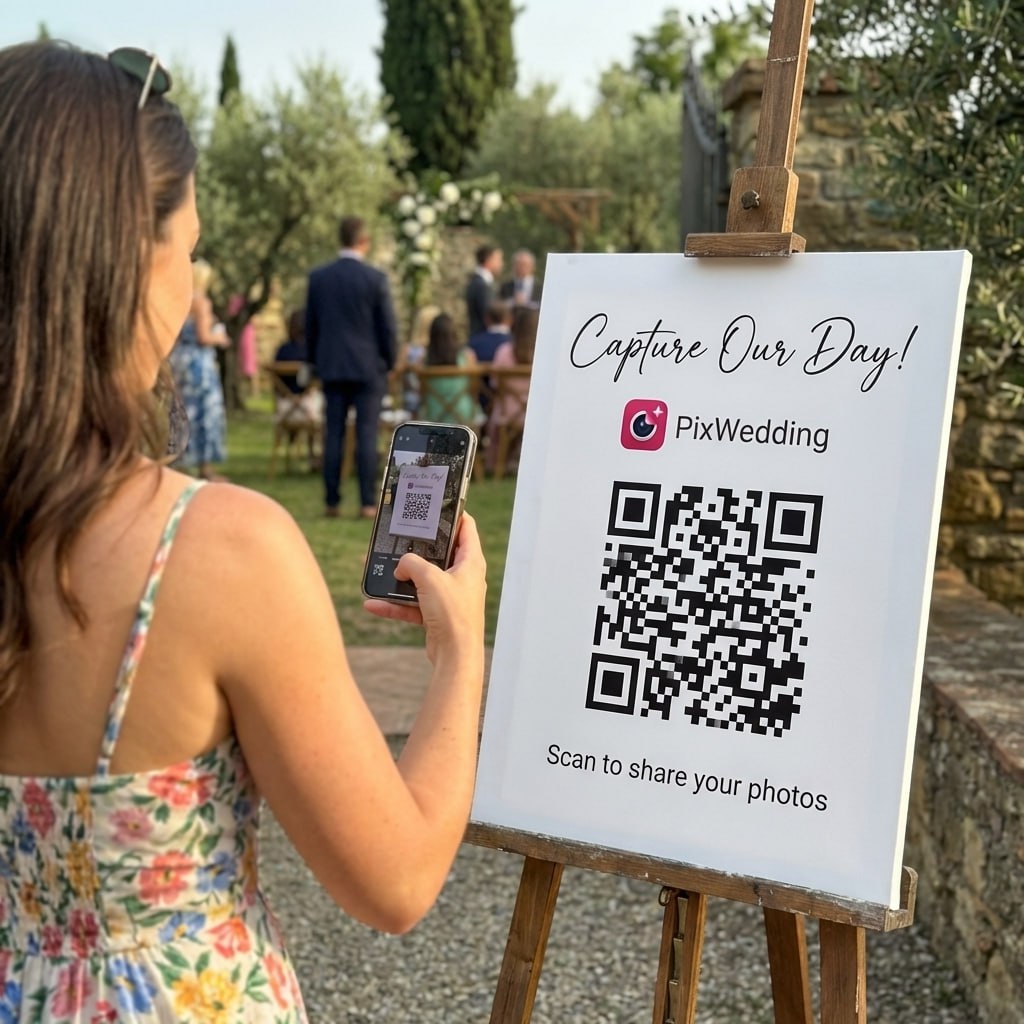
Scan to join the album
No app, no account
UPLOADING
Saving your moment
THE ALBUM
Emma & Jack
June 21, 2026
647 photos · 95 guests





SCAN TO TRY
pix.wedding/
your-wedding
What Makes a Marriage Legally Binding in the United States
A legally valid marriage in the U.S. requires three core elements: a valid marriage license obtained before the ceremony, a solemnization ceremony performed by an authorized officiant (or self-solemnized where permitted), and post-ceremony filing of the signed license with the appropriate government office.
Many couples focus on the ceremony itself and treat the paperwork as a formality, but the paperwork is actually the legally operative event. A ceremony without a valid license is a celebration, not a legal marriage. A license without a ceremony is just a permit. Both halves must be completed correctly.
State law governs marriage, not federal law. This means requirements for licenses, officiant authorization, waiting periods, witness counts, and filing deadlines all vary by state and sometimes by county within a state. Always verify your specific jurisdiction's rules.
- •Valid marriage license issued by the correct county clerk before the ceremony
- •Ceremony performed within the license validity window
- •Officiant legally authorized in the state where the ceremony occurs
- •Required witnesses present and signing (varies by state)
- •Signed license filed with the county clerk within the required timeframe
Filing the Marriage License and Obtaining Your Certificate
After your ceremony, the officiant signs the license along with any required witnesses. This signed document must then be returned to the county clerk who issued it. In most states the officiant is responsible for returning the license, though in some states the couple handles this themselves.
Filing deadlines range from as short as 10 days (some California counties) to as long as 90 days (some southern states). Missing the deadline does not automatically void your marriage in most states but it creates administrative complications and may require a court order to establish the marriage record.
Once the county records the license, you can order certified copies of your marriage certificate. The number of certified copies you need depends on how many agencies require original certified copies rather than photocopies. A safe starting number is 6 to 8 certified copies.
- •Officiant typically returns the signed license within the required window
- •County clerk records the license and creates the official marriage record
- •You order certified copies (not the original) for legal use
- •Each copy typically costs $10 to $25 depending on the county
- •Certified copies are used for name changes, insurance, immigration, and estate planning
Courthouse vs. Religious vs. Self-Uniting Marriages
All three paths lead to the same legal result if completed correctly, but they differ in process and paperwork nuance. Knowing which path you are on helps you anticipate the right steps.
Courthouse weddings are performed by a judge or justice of the peace. The clerk's office often handles license issuance and the ceremony appointment in the same visit, which simplifies logistics. Filing is typically handled internally.
Self-uniting (Quaker) marriages are recognized in Pennsylvania, Colorado, Wisconsin, and a few other states. The couple signs the license themselves; no officiant is required. Witnesses sign too. You then file the signed license yourselves. Verify your state allows this before relying on it.
Explore more free wedding tools
Everything you need to make your wedding day stress-free and unforgettable.
QR Sticker Designer
Design custom print-ready stickers.
Hashtag Generator
Create unique wedding hashtags.
How to Collect Guest Photos
5 methods ranked by participation rate and ease.
Get Photos After the Wedding
Message templates to gather guest photos post-wedding.
Share Wedding Photos with Guests
Compare every sharing platform by ease and participation.
Best Way to Get Guest Photos
The single method with the highest participation rate.
How to Make a Shared Wedding Album
Step-by-step setup for every platform.
Alternative to Disposable Cameras
Better, cheaper options than disposable cameras.
Legal Marriage Questions Answered
Everything you need to know about our free tools and how they help your wedding day.
A marriage license is the government-issued permission to get married. You obtain it before the ceremony. After the ceremony, the officiant and witnesses sign it. Once filed with the county clerk, the signed license becomes the official record from which a certified marriage certificate is produced. The certificate is the document you use as legal proof of marriage.
Eligibility varies by state. Generally accepted officiants include judges, justices of the peace, ordained ministers or clergy, and friends or family ordained online through organizations like American Marriage Ministries or Universal Life Church. Some states (such as Pennsylvania, Colorado, and Wisconsin) allow self-solemnizing marriages where no officiant is needed. Always verify your officiant is recognized by your specific county clerk.
Most U.S. states require one or two witnesses who are at least 18 years old to sign the marriage license after the ceremony. Some states require zero witnesses (the officiant signature is sufficient), while a handful require two. A few states have no witness requirement at all. Check the rules for the county where you obtain your license, as county rules sometimes differ from state defaults.
An unfiled marriage license means your marriage has no legal standing in the government record system. Without a filed and recorded license, you cannot obtain a certified marriage certificate, you have no legal proof of marriage for name change purposes, insurance, taxes, or immigration, and legally your marriage may be considered unsolemnized. File within the window your state requires, which is typically 10 to 90 days after the ceremony.
Most minor paperwork errors (misspelled middle name, wrong zip code) do not void a marriage but must be corrected through an amendment. However, certain defects can invalidate a marriage: an officiant who was not legally authorized to perform the ceremony in that state, a license that had already expired on the ceremony date, failure to meet age or consent requirements, or one party already being legally married. If you are concerned about a defect, contact your county clerk immediately.
The name change process typically takes 2 to 6 weeks after you receive your certified marriage certificate. The usual order is: Social Security Administration first (free, usually 2 to 3 weeks), then the DMV for a new driver's license, then your passport if needed (3 to 6 weeks for routine service), then banks, employer HR, voter registration, and other accounts. Starting with the Social Security card first ensures other agencies have the updated federal record to reference.