
Documents Needed for Marriage: Complete Checklist for Every Scenario
From your first marriage to remarriage, international couples to minors, every document requirement in one place.
Share Your Wedding DayQuick Reference: At-a-Glance Document Checklist
Print or bookmark this list before your county clerk appointment.
Document Checklist by Scenario
Find the situation that matches yours and bring every item on that list.
First Marriage, Both U.S. Citizens
Some counties also require proof of residency. Check your specific county.
Remarriage After Divorce
If divorced in another state, the decree must still be the certified original with court seal.
Remarriage After Spouse Died
Most counties only require the death certificate; some also want the prior marriage certificate.
International Couple (Foreign National + U.S. Citizen)
K-1 (fiance) visa holders must marry within 90 days of entry. After marriage, file I-485 for status adjustment.
Both Parties Foreign Nationals (Marrying in U.S.)
The marriage is legally performed in the U.S. and recorded by the U.S. county. Overseas recognition depends on your home countries.
Minor Applicant (Where Still Permitted by State Law)
As of 2026 many states have raised the minimum age to 18 with no exceptions. Verify your state law first.
Apostille + Translation: Step-by-Step for International Documents
If you or your partner have vital records issued by a foreign country, you will need to authenticate and translate them before a U.S. county clerk will accept them.
Obtain Certified Original from Issuing Country
Contact the civil registry or vital records office in the country where the document was issued. Request a certified original (not a photocopy). This may require a written request, identity verification, and a fee.
Request the Apostille from the Issuing Country
Submit the certified original to the designated apostille authority in that country (often the Ministry of Foreign Affairs or Secretary of State equivalent). The apostille verifies the document is genuine.
Get a Certified English Translation
Hire a certified translator to produce an accurate English translation of the document. The translation package should include: the translation itself, a cover sheet with the translator's name, certification statement, signature, and date.
Submit Both to the County Clerk
Bring the apostilled original and the certified translation together. Some counties keep the originals; others return them. Ask in advance so you can bring copies if needed.
K-1 Fiance Visa: Document Timeline
Couples where one partner entered the U.S. on a K-1 fiance visa have a strict 90-day window to marry after entry. The marriage itself uses the same county clerk process as any other couple, but additional USCIS documentation must follow immediately after.
Before Marriage
Valid K-1 visa, valid passport, birth certificate with apostille + translation, any prior divorce/death documents with apostille + translation, I-94 arrival record
At the County Clerk
Same as International Couple scenario. County clerk does not need to know about the visa category.
After Marriage (USCIS)
Form I-485 (Adjustment of Status), certified marriage certificate, Form I-864 (Affidavit of Support), medical exam (Form I-693), photos, filing fee
5 Document Mistakes That Delay or Derail Marriage Applications
Avoid these common errors to ensure your clerk appointment goes smoothly.
Bringing a photocopy instead of a certified original
Most clerks require the certified original with the raised seal. A photocopy, even a high-quality one, is usually rejected. Order a certified copy from the issuing vital records office before your appointment.
Forgetting the divorce decree for a prior marriage
Many applicants focus on their own documents and forget to bring proof that a prior marriage was legally dissolved. You need a certified final decree for every prior marriage, regardless of how long ago it occurred.
Using a name on documents that does not match your ID
Your name on the license must match your legal name on your ID. If you have legally changed your name and your birth certificate has the old name, bring both the birth certificate and the legal name change document.
Not getting apostilles before traveling internationally
If your documents were issued abroad and you need them recognized in the U.S. (or vice versa), the apostille process takes time. Start 6 to 12 weeks in advance for documents from countries with slower processing.
Ordering too few certified marriage certificates
After the wedding you will need certified copies for the SSA, DMV, passport, banks, employer, and more. Order 6 to 8 copies at the time of filing. Reordering later costs the same per copy but requires additional trips or mailing.
Assuming a court order from one state satisfies another state's minor-marriage rules
Court orders authorizing a minor to marry are typically state-specific and tied to the county that issued them. If you moved states after the order was granted, contact the new state's family court to confirm whether it will be honored or whether a new petition is required.
After the License: How Many Certified Certificates to Order
Most agencies that require proof of marriage need a certified copy, not a photocopy. Order extras at the time of filing.
Social Security Administration
1 copy
Returned after processing in most SSA offices
State DMV
1 copy
Usually returned; some states keep it
U.S. Passport Agency
1 copy
Returned with your new passport
Employer HR / Payroll
1 copy
Many accept a photocopy; verify first
Bank / Financial Accounts
1-2 copy
May need separate copies per institution
USCIS (if applicable)
1 copy
Keep a copy for your own records too
Insurance (Health, Life, Auto)
1 copy
Often accept photocopies
Reserve / Archive
2+ copy
Store at home and with an attorney or safe deposit box
Safe starting point: order 6 to 8 certified copies. Each typically costs $10 to $25.
What Counts as Acceptable ID: State Variations
The ID you bring to the county clerk must be government-issued and unexpired. These are the forms most widely accepted, ordered by how universally recognized they are.
When to Gather Documents: Pre-Wedding Timeline
Some documents take weeks to obtain. Start the process at the right time to avoid last-minute scrambles.
Related Marriage Guides

First dance
You guys!!
Documents in order. Photos worth keeping next.
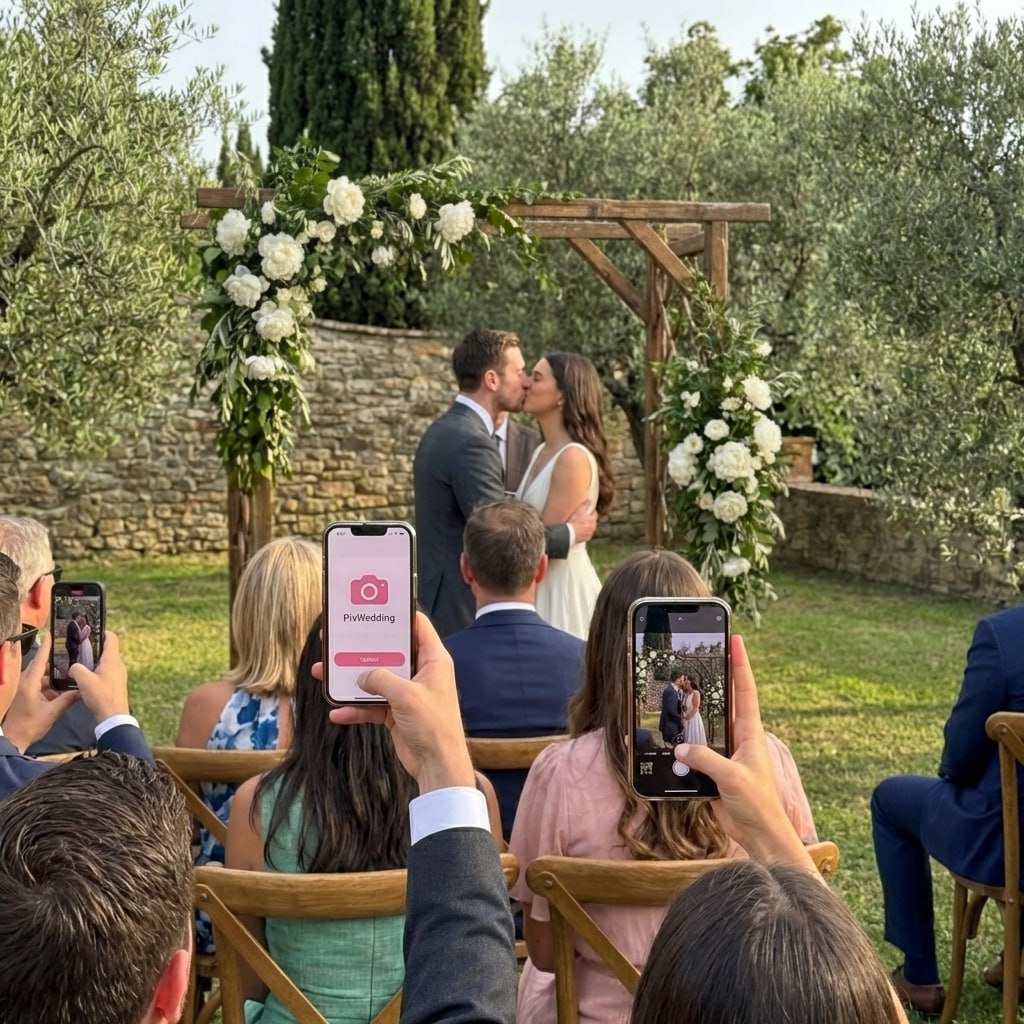
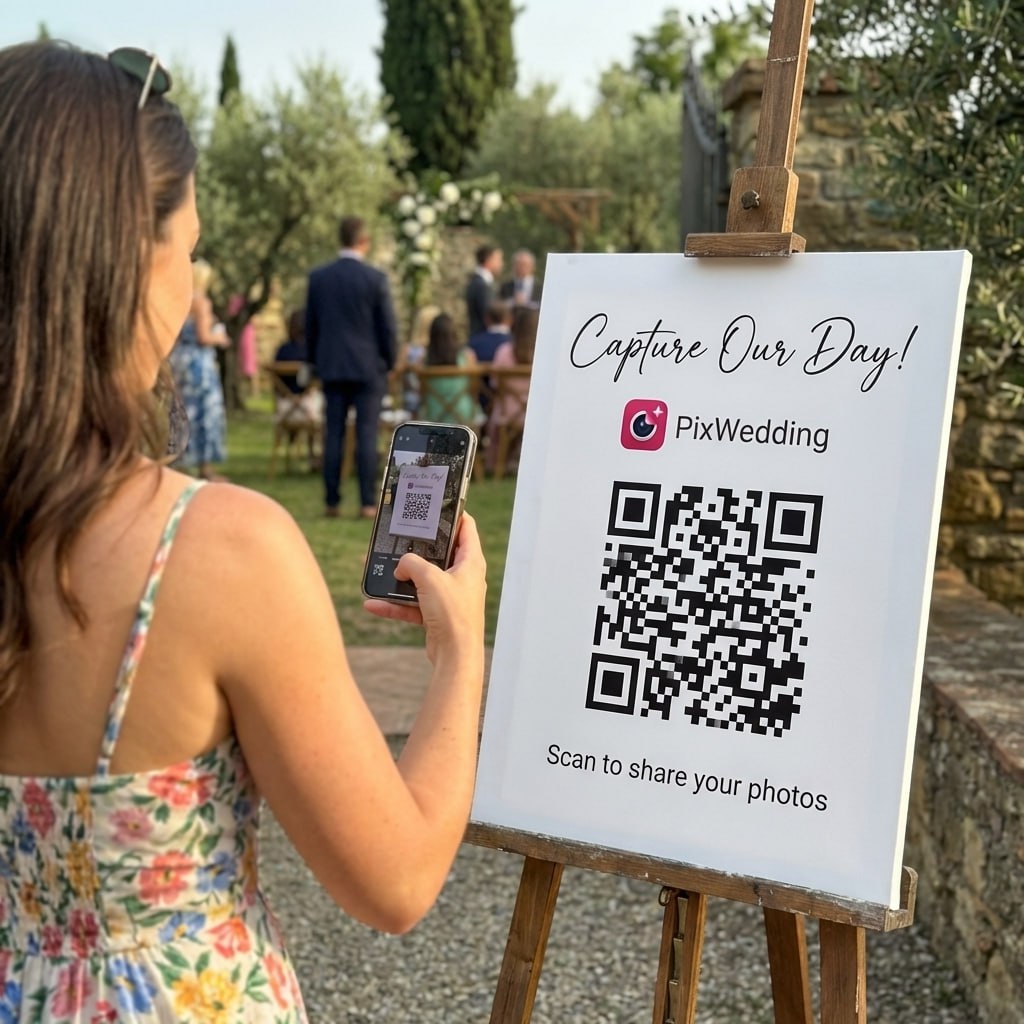
You have the IDs, the license, and the paperwork ready. Round out your prep by setting up a QR code so guests can capture every moment straight to your album.
From Mom
Scan to join the album
No app, no account
UPLOADING
Saving your moment
THE ALBUM
Emma & Jack
June 21, 2026
647 photos · 95 guests





SCAN TO TRY
pix.wedding/
your-wedding
Why the Document List Varies by County
Marriage law is state law, but the marriage license is administered at the county level. This means requirements can differ not just state to state, but county to county within the same state. One county may require a Social Security card while a neighboring county only asks for the number. One may require an original birth certificate while another accepts a photocopy.
Harris County, Texas, one of the largest and busiest county clerk offices in the country, processes tens of thousands of marriage license applications a year and publishes its exact document list online with same-day appointment slots. Drive 90 minutes to a smaller county in the same state and the clerk's office may only be open Tuesday through Thursday, require an appointment booked a week ahead, and ask for an extra proof-of-residency document Harris County does not require at all. That gap is the entire reason this guide says "confirm with your specific county" rather than treating any single list as universal.
Failing to bring the right documents means a wasted trip, and in some counties the lines are long. Call ahead or check online the week before your appointment to confirm nothing has changed.
- •State law sets eligibility rules; county clerks set document specifics
- •Requirements can differ between adjacent counties in the same state
- •Verify requirements directly with the issuing county clerk
- •Bring originals plus photocopies; the clerk keeps some and returns others
- •Expired documents are generally not accepted; renew before applying
Apostille and Certified Translation: How They Work Together
International couples often need both an apostille and a certified translation for foreign documents. These are two separate processes that address two separate problems: the apostille proves the document is genuine; the certified translation proves the content in English is accurate.
Process order matters: obtain the apostille from the issuing country first, then have the full document (including the apostille page) translated by a certified translator. Translating before apostillation is fine, but having the apostille done second means the final package includes both.
Turn-around times vary widely. Apostilles from common countries (UK, Germany, France, Mexico) typically take 1 to 4 weeks. Apostilles from countries with slower administrative systems may take 2 to 3 months. Plan well in advance if international documents are required.
Documents After the Marriage: What You Will Need Next
Getting the license is only the first document hurdle. After the ceremony you will need certified copies of your marriage certificate for a long list of agencies. Order more than you think you need; it is cheaper to order extra copies upfront than to pay the per-copy fee repeatedly.
A bride in Ohio who changed her last name in 2026 needed five separate certified copies within six weeks of her wedding: one for the Social Security Administration, one that never came back from her bank's slow internal process, one for the BMV license update, one for her employer's HR system, and a spare she kept in a folder after her sister's own name-change process stalled for two months waiting on a replacement copy. She had ordered only three at the courthouse and had to pay a $15 rush fee plus a second trip for the other two.
The most common uses for certified marriage certificates: Social Security name change, driver's license update, passport application or update, bank account name change, employer HR update, beneficiary designation updates, and immigration petitions (if applicable).
For immigration purposes (I-130 or I-485 petitions), USCIS requires a certified copy issued by the government authority, not a church or ceremony certificate. The government-recorded certificate is the only document USCIS accepts as legal proof.
Explore more free wedding tools
Everything you need to make your wedding day stress-free and unforgettable.
QR Sticker Designer
Design custom print-ready stickers.
Hashtag Generator
Create unique wedding hashtags.
How to Collect Guest Photos
5 methods ranked by participation rate and ease.
Share Wedding Photos with Guests
Compare every sharing platform by ease and participation.
Best Way to Get Guest Photos
The single method with the highest participation rate.
How to Make a Shared Wedding Album
Step-by-step setup for every platform.
Alternative to Disposable Cameras
Better, cheaper options than disposable cameras.
Alternative to Wedding Photo Booth
5 cheaper alternatives to a $1,000+ photo booth rental.
Marriage Documents: Your Questions Answered
Straight answers to the questions people ask most about this topic.
Not always, but most counties require it or an equivalent proof of age such as a valid passport. A birth certificate confirms your legal name and date of birth exactly as they should appear on the license. If your birth certificate is unavailable (lost or never issued), many clerks accept a U.S. passport, naturalization certificate, or a delayed birth certificate. Contact your specific county clerk for acceptable alternatives.
You need either a certified copy of your final divorce decree or a court-issued divorce certificate showing the divorce was finalized. The key document is the one bearing the court stamp or seal that confirms the marriage was dissolved. An interlocutory (temporary) order is not sufficient. If your divorce was in another country, you may also need a certified translation and possibly an apostille.
Yes. Any foreign-language document submitted to a U.S. county clerk must be accompanied by a certified English translation. The translation must be performed by a certified translator and include a statement attesting to the accuracy and the translator's qualifications. USCIS-style certified translations are generally accepted, though some counties have specific requirements. An apostille is a separate requirement that authenticates the document itself rather than translates it.
An apostille is an authentication certificate attached to a document to verify its origin for use in another country that is a party to the Hague Apostille Convention. You need an apostille when submitting a foreign birth certificate, divorce decree, or other vital record issued by a country that participates in the convention. It is issued by the designated authority in the country where the document was produced. The U.S. issues apostilles through the Secretary of State offices.
Requirements for minors vary significantly by state. Most states that still permit minors to marry (many now require age 18 with no exceptions) require: parental consent from one or both parents, a court order in some states, the minor's birth certificate, and in some jurisdictions a statement from a physician. As of 2025, several states have set the minimum marriage age at 18 with no exceptions. Always verify the current law in your state.
In most U.S. states, yes. Both applicants must appear together at the county clerk's office with their documents. Some states allow proxy marriages by exception (typically for active military personnel deployed overseas), but these are rare. A few states allow one party to apply in certain circumstances with a notarized statement from the absent party. Verify with your county clerk before planning.