
Wedding Stress Relief: 18 Practical Tips That Actually Work
Wedding planning should be exciting, not exhausting. Here are 18 proven techniques organized by type so you can pick what works for you.
The #1 Tip: Automate Everything You Can
The biggest source of wedding stress is the sheer number of decisions and tasks. Every task you automate or delegate is mental energy freed up for what actually matters: enjoying the process and connecting with your partner. Tools exist for budgets, checklists, seating charts, timelines, and guest photo collection. Use them.
Physical Stress Relief
Move your body to calm your mind
Morning walks or runs
Even 20 minutes of walking reduces cortisol levels significantly. Make it a non-negotiable part of your routine during the engagement period. No wedding talk allowed during the walk.
Yoga or stretching sessions
Wedding stress lives in your body: tight shoulders, clenched jaw, shallow breathing. A 15-minute yoga routine before bed helps release that tension. Apps like Down Dog offer free beginner sessions.
Regular massage appointments
Schedule a monthly massage during the planning period, not just before the wedding day. Consistent bodywork prevents stress from accumulating. Many massage studios offer engagement packages.
Dance it out
Put on your favorite playlist and dance for 10 minutes. It sounds simple but the combination of movement and music is one of the fastest mood boosters available. Bonus: practice your first dance moves.
Prioritize sleep
Sleep deprivation makes every problem feel 10 times worse. Set a firm bedtime. Stop looking at wedding Pinterest boards after 9 PM. Your brain needs rest to make good decisions.
Mental Stress Relief
Retrain your brain during planning
Journaling for 5 minutes daily
Write down what you are grateful for, what is stressing you, and one thing you are excited about. Getting thoughts out of your head and onto paper reduces mental clutter and helps you process emotions.
Meditation apps (start with 5 minutes)
Apps like Headspace and Calm have specific modules for anxiety. You do not need to meditate for 30 minutes. Even 5 minutes of focused breathing resets your nervous system.
Gratitude practice
Every night, write down three things about your partner or your wedding that you are genuinely grateful for. This retrains your brain to focus on what is going right instead of what is going wrong.
Set boundaries with wedding content
Unfollow wedding accounts that make you feel inadequate. Limit your wedding Pinterest time to 30 minutes per day. Comparison is the number one driver of wedding stress. Control your exposure.
Remind yourself why you are doing this
When the centerpiece crisis hits, pause and remember: you are marrying the person you love. The wedding is one day. The marriage is what matters. Write a note to yourself and read it when stress peaks.
Social Stress Relief
Lean on your people, protect your relationship
Wedding-talk-free date nights
Schedule weekly dates where wedding talk is banned. Go to dinner, see a movie, take a hike. Reconnect as a couple, not as co-event-planners. This protects your relationship during a high-stress period.
Lean on your wedding party
Your bridesmaids and groomsmen signed up to help. Let them. Delegate specific tasks: someone handles RSVPs, someone researches vendors, someone manages the seating chart. You do not have to do everything alone.
Join an online community
Reddit's r/weddingplanning, The Knot forums, and Facebook wedding groups are full of people going through the same thing. Venting to people who understand is incredibly therapeutic.
Say no to unsolicited opinions
Family members will have opinions about everything. Practice saying, 'Thank you for your input. We will consider it.' Then make your own decision. You do not owe anyone an explanation for your wedding choices.
Logistical Stress Relief
Automate what you can to free up mental space
Use a wedding checklist
A month-by-month checklist turns an overwhelming process into manageable steps. Check out our free Wedding Planning Checklist at pix.wedding/wedding-checklist.
Try this free tool →Automate your budget tracking
Money stress is the top wedding stressor. Our free Wedding Budget Allocator automatically distributes your budget across categories based on industry standards.
Try this free tool →Use a seating chart tool
Seating arrangements cause disproportionate stress. Our free Seating Chart Planner lets you drag and drop guests into tables visually.
Try this free tool →Automate guest photo collection
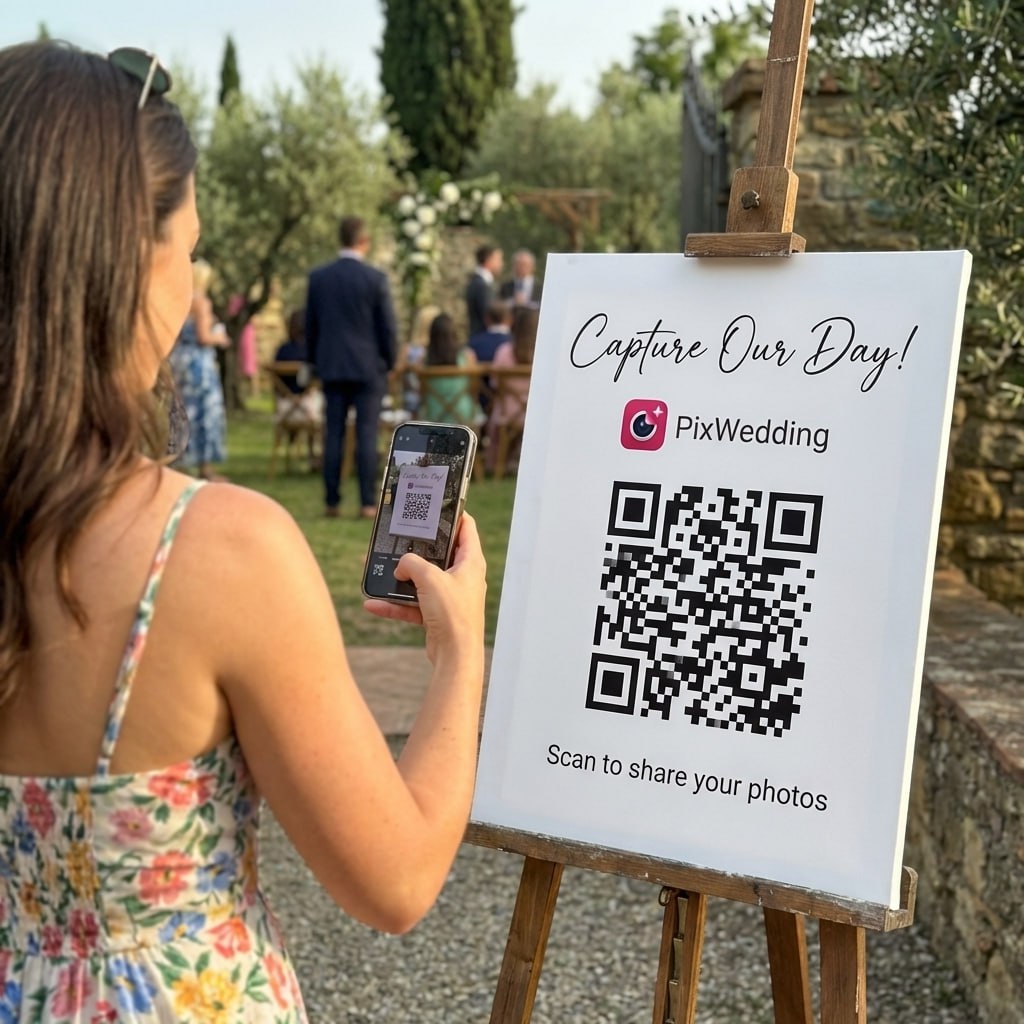
Do not spend your wedding day worrying about photos from every angle. Pix Wedding lets guests scan a QR code and upload directly to your album. Zero setup on your wedding day.
Try this free tool →The Reality of Wedding Stress: What Research Shows
wedding planning consistently ranks among the top five most stressful life events in psychological studies
average number of decisions a couple makes during the engagement period
of engaged couples report that family opinions are a significant source of planning stress
less stress reported by couples who use digital planning tools vs. manual tracking
couples say "something went wrong" on their wedding day, yet most rate the day as wonderful or perfect
Is Your Stress Normal? A Quick Self-Assessment
Read each statement. Give yourself 1 point for each that is true for you right now. Check your score below.
I wake up thinking about wedding tasks most mornings.
Wedding planning is affecting my relationship with my partner negatively.
I have cried from stress about the wedding in the past two weeks.
I feel physical symptoms of stress (headaches, stomach issues, tension) regularly.
I am not enjoying the engagement period at all.
I have snapped at my partner or family about wedding-related issues.
I feel like I cannot take a break from planning even when I try.
I compare my wedding to others and feel consistently inadequate.
I have trouble sleeping due to wedding thoughts at least twice a week.
I feel resentful toward the people who are "supposed to help" but are not.
Normal planning stress. The tips in this guide will keep it from escalating.
Your stress level needs attention. Pick 3 techniques from this page and commit to them this week.
This level of stress is affecting your wellbeing. Consider speaking with a therapist, delegating aggressively, and examining whether the planning load needs to be redistributed.
When Wedding Stress Becomes Something More
Wedding stress is normal. But some signs suggest it has crossed into anxiety or burnout that needs more targeted support.
Panic attacks or physical symptoms that feel out of proportion
Persistent inability to feel joy about any part of the wedding
Intrusive thoughts about canceling that persist for weeks
Significant relationship deterioration driven by planning conflict
Using alcohol or other substances to manage planning stress
Social withdrawal and isolation that has lasted more than two weeks
Feeling like the stress would end only if the wedding was called off
Occasional overwhelm that passes within hours
Excitement and anxiety mixed together in roughly equal measure
Venting to friends about specific stressors and then moving on
Tension with partner about logistics that resolves after conversation
Periodic crying from stress followed by feeling better
Sleep that is disrupted 1 to 2 nights per week
Temporary loss of perspective that returns with rest or support
Three Couples, Three Stress Patterns
Recognizing your own stress pattern is the first step to addressing it effectively.
Elena and James
The Over-Planner Pattern
Elena had a Pinterest board with 600 pins and a spreadsheet with 18 tabs. She spent every evening after work on vendor calls and budget revisions. James felt invisible. The stress was not about the wedding being hard. It was about Elena using planning as a way to feel in control of something that felt enormous. A therapist helped her see the pattern. She delegated three major tasks, deleted the wedding apps from her phone after 8 PM, and reinstated a weekly date night. Six weeks later, she described herself as "actually enjoying being engaged."
Control-based stress often responds to deliberate letting go, not more planning.
Tariq and Nina
The Family Pressure Pattern
Tariq's mother had strong opinions about everything: the venue, the guest list, the catering. Nina's family expected certain traditions that conflicted with their vision. By month three of planning, Tariq and Nina were arguing almost daily. The issue was not the wedding. It was the absence of a shared boundary. They had a single conversation where they aligned on which family preferences they would honor and which they would not. Then they communicated those decisions as a united front. The arguments stopped almost immediately.
Family stress resolves fastest when both partners are aligned before engaging with the family.
Rosa
The Comparison Spiral
Rosa followed 40 wedding Instagram accounts and spent an hour each evening scrolling. Her own $18,000 wedding felt shabby compared to the styled shoots and luxury venues filling her feed. She deleted every wedding account from her social media two months before the wedding. Within a week, her perspective shifted dramatically. She started appreciating what she had planned rather than fixating on what she could not afford. The wedding she had been dismissing became the wedding she was genuinely excited about.
What you consume on social media directly shapes your emotional experience of your own wedding.
Reflection Prompts to Regain Perspective
When stress peaks and the wedding feels like a burden rather than a celebration, these prompts help restore perspective. Spend 5 minutes with any one of them.
What was the very first moment I knew this person was the one I wanted to build a life with?
Return to the origin. Stress exists in the present. Love exists in every moment, including that one.
If the wedding were completely simple and low-key, what would I still want to be there?
Reveals what actually matters vs. what stress has made feel mandatory.
What is one thing about the engagement period that I will genuinely miss once it is over?
Counteracts the tendency to see the entire engagement as a burden.
Which parts of the planning have I actually enjoyed, even if only for a moment?
Stress creates a negativity bias. This prompt forces the brain to search for the counterexamples.
What would I tell a close friend who came to me with exactly the stress I am feeling right now?
We are almost always kinder and more practical with others than with ourselves.
On the one-year anniversary of the wedding, what do I want to remember about how I showed up during this planning period?
Future-self perspective motivates present-day choices.
Is the source of most of my stress actually about the wedding, or is it about something else in my life that the wedding is amplifying?
Weddings have a way of surfacing pre-existing stress. Naming the real source leads to more targeted relief.
What specific task, if removed from my plate today, would reduce my stress by 30% or more?
Then explore whether that task can be delegated, simplified, or eliminated.
Deeper Questions About Wedding Stress
These go beyond quick tips. The questions people ask when they are genuinely struggling and need more than a breathing exercise.
My partner and I are fighting constantly because of wedding stress. What do we do?
Planning conflict is one of the most common relationship stressors during engagements. The first intervention is to separate wedding discussions from relationship discussions. Schedule a specific time each week, no more than 90 minutes, for wedding talk. Outside of that window, the topic is off limits. This reduces the feeling that the wedding has consumed every conversation. Second, agree in advance that when either person says "this is not worth arguing about," the topic is tabled immediately with no resentment. Third, remind each other that you are on the same team. The vendors, the family members, the budget constraints are the shared challenges. You are not each other's opponents.
Everyone keeps asking me if I am excited and I honestly am not. Is something wrong with me?
Nothing is wrong with you. The expectation that engaged people feel pure, continuous excitement is a cultural fiction. Weddings involve massive financial decisions, complex family dynamics, and months of logistical labor. Many people, particularly those who are introverted, detail-oriented, or carrying family pressure, experience the engagement period as mostly stressful with moments of joy rather than the reverse. This does not mean you are marrying the wrong person or that you do not care. It means you are human and the process is genuinely hard. After the wedding, when the planning is finished, the excitement and joy typically flood back.
My family keeps adding to the guest list and I feel like I have lost control of my own wedding. What can I do?
Guest list creep is one of the most stressful and common wedding planning problems. The remedy requires a single, clear, united conversation with the relevant family members: "Our venue holds X people. Our budget is for X guests. We have reached that number and we cannot add more. We love you and we understand this might disappoint you, but this decision is final." The critical element is that both partners deliver this message together, in the same conversation, with the same firmness. Family members who see a crack between partners will work it. Unified, the boundary holds.
I have started to resent my partner for not doing enough planning. How do I handle it?
Planning resentment is almost always a symptom of an uneven workload that was never explicitly negotiated. The fix is a direct conversation that names the imbalance without blame: "I have been feeling overwhelmed and I want to redistribute some of the planning tasks. Can we sit down and divide the remaining items in a way that feels fair to both of us?" Then create a specific list with specific owner names next to each task. Vague agreements like "you handle the flowers" fall apart. Specific agreements like "you own all communication with the florist from now on and report back by Friday" hold.
When the Stress Is About More Than Planning
Sometimes wedding stress is masking a deeper concern. These guides can help.
The Wedding Stress Coping Toolkit
Eight practical techniques, each taking under 10 minutes. Mix and match based on what your stress feels like on a given day.
Box Breathing
Breathe in for 4 counts, hold for 4, exhale for 4, hold for 4. Repeat 8 cycles. This is used by surgeons, pilots, and Navy SEALs to perform under pressure.
5-4-3-2-1 Grounding
Name 5 things you can see, 4 you can hear, 3 you can touch, 2 you can smell, 1 you can taste. This interrupts the anxiety loop and lands you in the present moment.
Progressive Muscle Relaxation
Starting from your toes, tense each muscle group for 5 seconds then release. Work up through your legs, core, arms, and face. Takes 8 minutes, leaves you noticeably calmer.
Cold Water Reset
Splash cold water on your face or hold ice cubes for 30 seconds. The mammalian dive reflex slows your heart rate rapidly. It sounds odd but the science is solid.
The 10-Minute Walk
Not exercise, just movement. Leave the venue, your phone, and all people. Walk for 5 minutes in one direction and walk back. The change of scenery physically resets cortisol.
The Permission Note
Write yourself a short note giving yourself full permission to feel nervous, overwhelmed, or unsure. Stress amplifies when you resist it. Accepting it reduces its grip faster.
The Gratitude Interrupt
Name 10 specific things you are grateful for in under 2 minutes. Speed and specificity matter. The brain cannot hold anxiety and gratitude at the same time with equal intensity.
Task Delegation Ritual
Write every open wedding task on a sticky note. Physically hand each note to a person responsible for it. The ritual of handing off tasks makes the mental release more effective than just texting.
Three Questions Worth Sitting With
Is my stress about the wedding day or about being married?
Event stress and relationship stress require different responses. Event stress is temporary and normal. Relationship stress needs a conversation with your partner or a therapist.
What is the one thing, if I could offload it today, that would reduce my stress by 50%?
There is almost always one task or responsibility that sits at the center of wedding anxiety. Identifying it precisely lets you either delegate it or make a decision and move on.
Am I trying to manage my stress or am I trying to prevent myself from feeling it?
Avoidance amplifies anxiety over time. Stress management means allowing the feeling to exist while still functioning. That distinction makes the tools above work much better.
Wedding stress is not a sign that something is wrong with you or your relationship. It is a sign that something deeply important is about to happen. The tools above help you meet that importance with clarity instead of anxiety.
Use it now
Do not wait until you are overwhelmed to try these techniques. Practice box breathing or the 5-4-3-2-1 method on a calm day first. Familiarity with a technique means you can access it even when your heart is racing.
Share with your partner
Wedding stress affects both people in a couple, often at different times. Share the toolkit above so you both have language and tools for the same experience. Couples who manage stress together report higher satisfaction after the wedding.
When to get help
If stress is affecting your sleep, appetite, relationships, or your ability to work for more than two consecutive weeks, speak with a therapist. Pre-marital counseling is one of the highest-return investments a couple can make before a wedding.
The Stress Relief Weekly Plan
Six weeks before the wedding, start one intentional stress-relief habit per week.
Delegate one significant task every single day. By the end of the week, your to-do list should be noticeably shorter and your mental load lighter.
Schedule a no-wedding-talk date night. No planning, no vendor calls, no checklist discussions. Just dinner and whatever you two enjoy together.
Add a 10-minute daily walk outside. No podcast, no phone calls. This is the single most evidence-backed free stress reducer that exists.
Practice box breathing every morning for 5 minutes. By the time your wedding week arrives, this will be a reflex you can access anywhere.
Do one full brain dump each evening: write every worry, task, and fear on paper. You will sleep more deeply every night you do this.
The final week is for being present, not planning. Everything is done. Anything that is not done at this point will not be done. Let it go and enjoy the week.

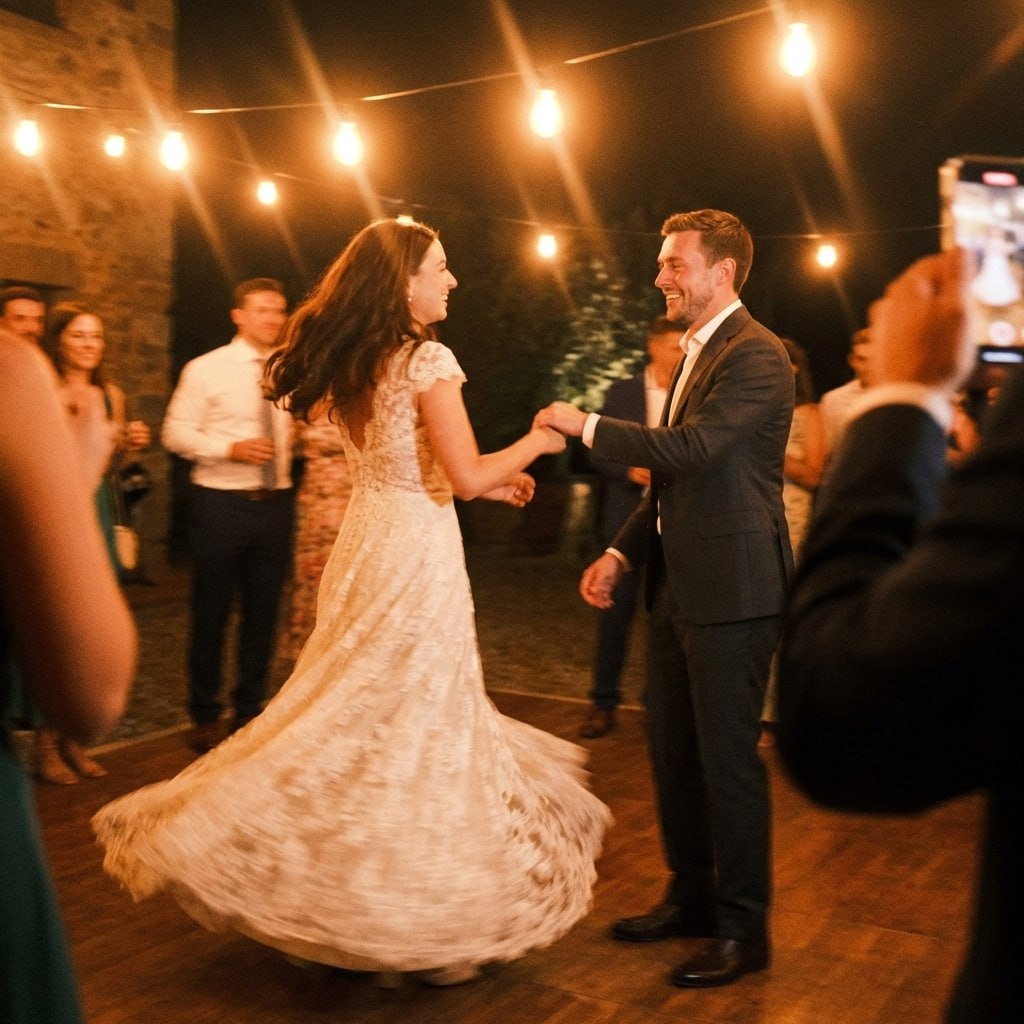
First dance
You guys!!
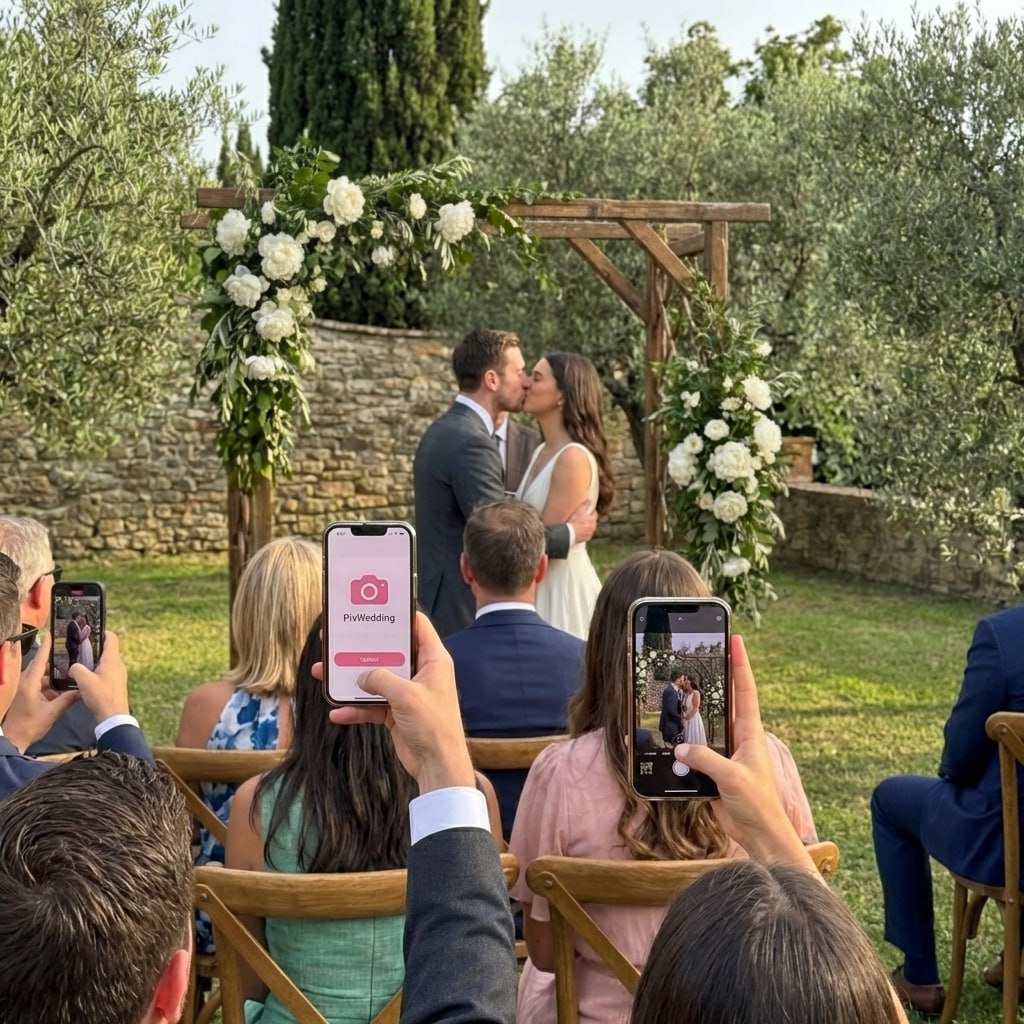
Let guests handle the photos, you enjoy the day.
Place a Pix Wedding QR at each table and every photo snapped by guests lands in one shared album. No chasing anyone for pictures after.
From Mom
Scan to join the album
No app, no account
UPLOADING
Saving your moment
THE ALBUM
Emma & Jack
June 21, 2026
647 photos · 95 guests


SCAN TO TRY
pix.wedding/
your-wedding
Why Wedding Planning Is So Stressful
Wedding planning ranks among the top five most stressful life events according to multiple psychological studies. The combination of financial pressure, family dynamics, decision fatigue, time constraints, and emotional weight creates a perfect storm of anxiety. It is completely normal to feel overwhelmed.
What makes wedding stress unique is that it happens during what is supposed to be one of the happiest times of your life. That disconnect between expectation and reality creates guilt. You feel bad for feeling bad, which makes the stress worse. Breaking this cycle starts with acknowledging that stress is a normal part of planning a major event.
- •The average couple makes over 100 decisions during wedding planning
- •Financial stress is the number one source of wedding anxiety
- •Family conflicts during planning affect approximately 60 percent of couples
- •Couples who use planning tools report 40 percent less stress than those who plan manually
- •Regular exercise during the engagement period significantly reduces planning anxiety
Building a Stress-Free Wedding Planning Routine
The most effective approach to wedding stress is prevention, not reaction. Build stress relief into your weekly routine rather than waiting for a breakdown. Schedule specific 'wedding work' blocks and protect the rest of your time. Assign tasks to a partner or wedding party members. Use automation tools for repetitive tasks like budget tracking and guest list management.
Most importantly, remember that a perfect wedding does not exist. Every couple who has been through it will tell you that something went sideways. The guests will not notice that the flowers were a slightly different shade than planned. What they will notice is whether the couple looked happy. So prioritize your joy over perfection.
Explore more free wedding tools
Everything you need to make your wedding day stress-free and unforgettable.
QR Sticker Designer
Design custom print-ready stickers.
Hashtag Generator
Create unique wedding hashtags.
How to Collect Guest Photos
5 methods ranked by participation rate and ease.
Share Wedding Photos with Guests
Compare every sharing platform by ease and participation.
Best Way to Get Guest Photos
The single method with the highest participation rate.
How to Make a Shared Wedding Album
Step-by-step setup for every platform.
Alternative to Disposable Cameras
Better, cheaper options than disposable cameras.
Alternative to Wedding Photo Booth
5 cheaper alternatives to a $1,000+ photo booth rental.
Frequently Asked Questions
Straight answers to the questions people ask most about this topic.
Start by automating what you can: use free tools for budgeting, checklists, seating charts, and guest photo collection. Then build stress relief into your routine with daily walks, weekly wedding-free date nights, and a 5-minute journaling practice. Delegate tasks to your wedding party and set boundaries with family members who are adding pressure rather than support.
Completely normal. Wedding planning ranks among the top five most stressful life events. The combination of financial decisions, family dynamics, time pressure, and emotional weight is genuinely challenging. You are not doing anything wrong by feeling stressed. The key is managing it proactively rather than pushing through until you burn out.
The week before your wedding, stop making decisions. Everything should already be finalized. Focus on sleep, gentle exercise, time with your partner, and relaxation. Delegate all last-minute logistics to your wedding party or coordinator. Do not look at wedding social media. Consider a massage or spa day. Your only job that week is to arrive rested and happy.
The top sources are: budget and financial concerns, family conflicts and opinions, vendor coordination, guest list decisions, and the fear of something going wrong on the day. Each of these can be mitigated with planning tools, clear communication, delegation, and the acceptance that no wedding is perfect but every wedding can be wonderful.
Schedule weekly wedding-free date nights where the topic is off limits. Divide planning tasks based on each person's strengths and preferences. Check in with each other regularly about how you are feeling, not just about logistics. Remember that you are planning a marriage, not just an event. If planning becomes a constant source of conflict, consider a few sessions with a couples therapist.
Several free tools can dramatically reduce planning stress: a month-by-month wedding checklist keeps you on track, a budget allocator manages finances, a seating chart planner handles arrangements visually, a timeline builder organizes your wedding day, and a guest photo sharing tool like Pix Wedding automates photo collection with QR codes. Using these tools together can save dozens of hours of manual work.