
Scared to Get Married Because of Divorce: The Real Numbers Tell a Different Story
The divorce statistics you have heard are probably wrong, outdated, or taken out of context. Here is what the data actually says, and why your marriage has better odds than you think.
The Real Divorce Statistics (Not the Clickbait Version)
The numbers that scare you are not as scary as they seem.
The 50% myth is outdated
The commonly cited '50% of marriages end in divorce' statistic dates back to the divorce peak of the early 1980s and blends in second and third marriages, which fail at a higher rate than first marriages. Pew Research Center's 2025 analysis found that among adults with a bachelor's degree, about 25 percent have ever divorced, compared with 37 to 41 percent among those with less education.
Divorce rates are declining
According to Pew Research Center and CDC/NCHS marriage and divorce data, the U.S. divorce rate has fallen fairly steadily since around 2000. People are marrying later, more intentionally, and with more access to relationship support than previous generations.
Education is protective
Pew Research Center's education-and-marriage analysis found that college-educated couples have meaningfully lower divorce rates than the national average, likely tied to financial stability, delayed marriage age, and better access to conflict-resolution resources.
Age at marriage matters
Research summarized by the Bowling Green State University National Center for Family & Marriage Research consistently links marrying in the teens or very early twenties to higher divorce risk than marrying after the mid-twenties, largely because of the emotional and financial maturity that additional years tend to bring.
What Actually Predicts Divorce vs. What Does Not
Predicts Divorce
- !Contempt during conflict (the number one predictor according to Dr. John Gottman)
- !Stonewalling and emotional withdrawal during disagreements
- !Frequent criticism of a partner's character rather than specific behaviors
- !Defensiveness instead of accountability when problems arise
- !Marrying before age 22 or under external pressure
- !Significant unresolved addiction or mental health issues
Does NOT Predict Divorce
- Having arguments (all couples argue; it is how you argue that matters)
- Coming from a divorced family (awareness of patterns is protective)
- Having different hobbies or interests
- Earning different incomes
- Having pre-wedding nerves or cold feet
- Being different personality types (introvert/extrovert, etc.)
If Your Parents Got Divorced: Breaking the Cycle
Growing up with divorced parents shapes how you see marriage. You may have witnessed fighting, emotional distance, betrayal, or the slow erosion of a relationship. Those memories create a mental blueprint that says, “This is what marriage looks like.”
But here is the thing: your awareness of those patterns is your greatest advantage. Children of divorce who consciously work on their relationships often build the strongest marriages precisely because they know what to avoid. You are not destined to repeat your parents' story. You are equipped to write a different one.
How children of divorce build strong marriages:
They take commitment seriously and do not rush into marriage
They are hyper-aware of unhealthy patterns and course-correct early
They value communication because they saw what happens without it
They invest in relationship skills like therapy and books
They choose partners carefully because they understand the stakes
They prioritize emotional safety in ways their parents may not have
Pre-Marital Counseling: Your Best Protective Factor
If there is one thing you can do to reduce your fear of divorce and actually lower your risk, it is pre-marital counseling. Research by relationship scientists Scott Stanley and Howard Markman, later supported by a 2014 meta-analysis in the Journal of Family Psychology covering more than 10,000 couples, found that couples who completed a structured pre-marital program had roughly a 30 percent lower divorce rate than those who did not.
Pre-marital counseling is not about fixing problems. It is about preventing them. A good counselor helps you and your partner discuss topics like finances, children, conflict styles, family boundaries, and expectations. You leave with tools and shared understanding that most couples spend years trying to build on their own.
Key insight: Couples who complete pre-marital counseling report that it gave them a shared language for discussing problems, which prevented small issues from escalating into relationship-threatening conflicts.
Building a Marriage That Is Different From What You Witnessed
You do not have to wing it. Research from the Gottman Institute and other relationship science leaders has identified specific behaviors that predict marriage success. These are learnable skills, not personality traits.
Turn toward each other, not away. When your partner makes a bid for attention, respond positively. This small habit has massive long-term impact.
Fight fair. No name-calling, no bringing up old issues, no contempt. Disagreements are normal. Cruelty is not.
Maintain a 5:1 ratio. For every negative interaction, healthy marriages have at least five positive ones. Prioritize kindness daily.
Stay curious about your partner. People change over time. Keep asking questions, having deep conversations, and learning who they are becoming.
Protect your friendship. The couples with the lowest divorce rates describe their partner as their best friend. Nurture that friendship actively.
Get help early. Do not wait until the relationship is in crisis to seek counseling. The earlier you address issues, the easier they are to resolve.
Is This Fear Talking, or a Real Red Flag?
Not every worry before a wedding is the same worry. It helps to know which kind you are dealing with.
Usually Just Fear (Rooted in the Past)
- The anxiety spikes around anniversaries of your parents' separation or big milestones like the engagement
- You feel calm about your actual partner but panicked about 'marriage' as an abstract idea
- The worry is about a hypothetical future, not a specific behavior happening now
- Friends and family who know you both describe the relationship as healthy
- You can name the pattern from your childhood that you are afraid of repeating
Worth Slowing Down For
- !The worry is tied to something your partner actually does, like contempt, control, or dishonesty
- !You have raised the same concern more than once and nothing has changed
- !You feel smaller, more anxious, or less like yourself around your partner
- !Trusted friends or family have raised concerns you have been dismissing
- !You are hoping marriage itself will fix a problem that exists right now
If your worry lines up with the left column, the fear likely belongs to your history, not your relationship. If it lines up with the right column, that is worth a real conversation, and possibly a counselor, before the wedding rather than after.
A Timeline for Working Through the Fear Before You Decide
Fear of divorce rarely resolves in one conversation. It tends to loosen its grip in stages, usually over a few weeks or months of deliberate attention rather than avoidance.
Name it out loud
Say the specific fear to your partner in plain language: 'I am scared because of what I watched growing up.' Vague anxiety is harder to work with than a named fear.
Separate the statistic from the story
Write down the numbers you have been carrying around versus the ones in this guide. Notice how much of your fear was based on an outdated figure rather than your actual odds.
Audit the relationship, not the institution
Use the fear-vs-red-flag comparison above on your specific relationship. Marriage is not the risk. Certain behaviors are.
Book a pre-marital counseling session
Even three or four sessions with a licensed therapist or a structured program gives you tools and a shared vocabulary before problems appear.
Talk to couples who have been married 15-plus years
Ask them what was actually hard, and how they got through it. Real answers are almost always less dramatic and more practical than the fear predicted.
Set a review point, not a deadline
Give yourself a specific date, for example after your first counseling session, to check in on how the fear feels. Progress, not certainty, is the goal.
Common Pitfalls That Keep the Fear in Charge
Some of the most common mistakes are not dramatic. They are quiet habits that let old fear steer decisions instead of the actual relationship in front of you.
Doom-scrolling divorce statistics instead of reading where they actually come from
Testing your partner with silence or distance instead of naming the fear directly
Treating every disagreement as proof the relationship is doomed, instead of a normal part of any partnership
Avoiding pre-marital counseling because 'we do not have problems,' when counseling works best before problems exist
Comparing your relationship to your parents' marriage instead of evaluating it on its own evidence
Making the wedding planning process a proxy battleground for unspoken fear about the marriage itself
Reflection Prompts Worth Sitting With
On Your Own
- •What is the exact moment from my parents' divorce that scares me the most, and what specifically about it am I afraid of repeating?
- •Do I trust my partner, separate from what I watched growing up?
- •What would 'proof' that this relationship is different actually look like to me?
- •Am I avoiding a real conversation because it is easier to blame divorce statistics?
Together, With Your Partner
- •What did each of our families teach us about conflict, and which of those lessons do we want to keep or leave behind?
- •How do we want to handle it when one of us is angry or shut down?
- •What would make us reach out for counseling early instead of waiting for a crisis?
- •What does a 'good enough' hard week look like for us, versus a week that means something is actually wrong?
A Short Glossary of Terms You Will See in This Guide
Understanding the vocabulary makes the research easier to apply to your own relationship.
The Four Horsemen
Dr. John Gottman's term for criticism, contempt, defensiveness, and stonewalling, the four communication patterns his research most strongly links to divorce.
Contempt
Treating a partner with mockery, sarcasm, or a sense of superiority. Gottman's research identifies it as the single strongest predictor of divorce among the four.
The 5:1 ratio
The finding, associated with Gottman's research, that stable couples tend to have roughly five positive interactions for every negative one during conflict.
Pre-marital counseling
Structured sessions with a licensed therapist or trained program, taken before the wedding, that build communication and conflict skills in advance.
Family-of-origin patterns
The habits, roles, and coping styles a person absorbs from watching their own parents, which can show up unconsciously in adult relationships.
Cognitive Behavioral Therapy (CBT)
A well-studied talk-therapy approach that helps people identify and reframe anxious thought patterns, including catastrophic thinking about marriage.
If You Are Still Not Sure, That Is Information Too
Everything above is meant to put real numbers and real tools behind a fear that often runs on neither. For most people, working through it lowers the anxiety enough to move forward with the wedding they already wanted. But it is worth saying plainly: doing this work is not about talking yourself into a marriage that is not right for you.
If, after naming the fear, checking it against the red-flag list, and sitting in real counseling sessions, the unease has not moved at all, that is data, not failure. A licensed couples therapist can help you figure out whether you are looking at ordinary pre-wedding nerves or a mismatch worth addressing before you set a date. Either way, the goal is a decision made with clear eyes, not one made by a fear you never looked at directly.
Bottom line: The goal of this guide is not to talk you into a wedding. It is to make sure the decision, whichever way it goes, is based on your actual relationship and real evidence, not on an outdated statistic or an old wound that was never yours to fix alone.
Where These Numbers Come From
Fear feeds on vague statistics. Here is exactly who is behind the figures cited in this guide, so you can look into any of them further.
Pew Research Center
Nonpartisan research organization whose ongoing analyses of U.S. marriage and divorce trends, including differences by education level, are cited throughout this guide.
CDC / National Center for Health Statistics
The federal agency that tracks official U.S. marriage and divorce rate data over time, the basis for statements about the divorce rate declining since 2000.
The Gottman Institute
Dr. John Gottman's decades of couples research identified the Four Horsemen and the 5:1 ratio referenced in the predictors and glossary sections above.
BGSU National Center for Family & Marriage Research
An academic research center that studies patterns in marriage timing, education, and divorce risk, referenced for the age-at-marriage findings.
Journal of Family Psychology
Peer-reviewed journal that published the 2014 meta-analysis of pre-marital counseling programs referenced in the counseling section.
This guide is written for general education and reflection. It is not a substitute for advice from a licensed therapist, and nothing here should be read as a guarantee about any specific relationship.
Related Guides

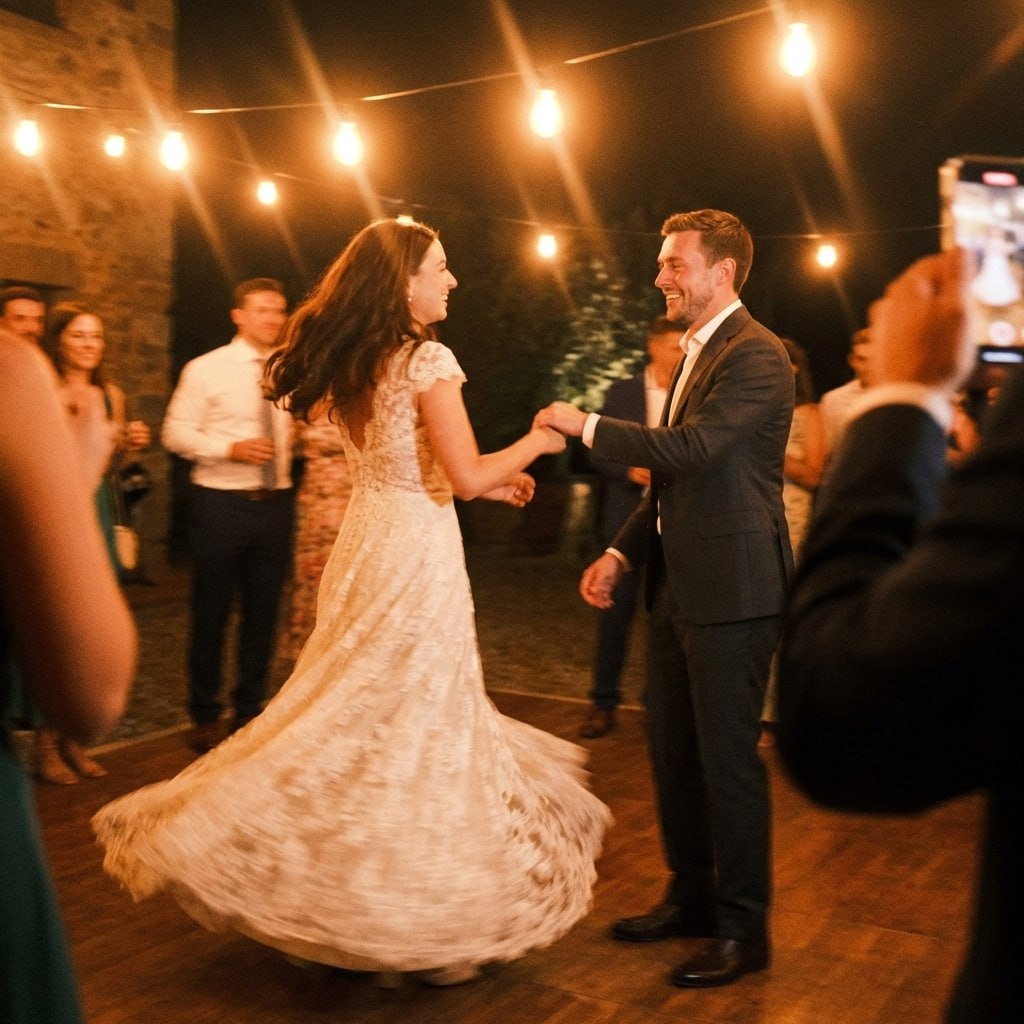
First dance
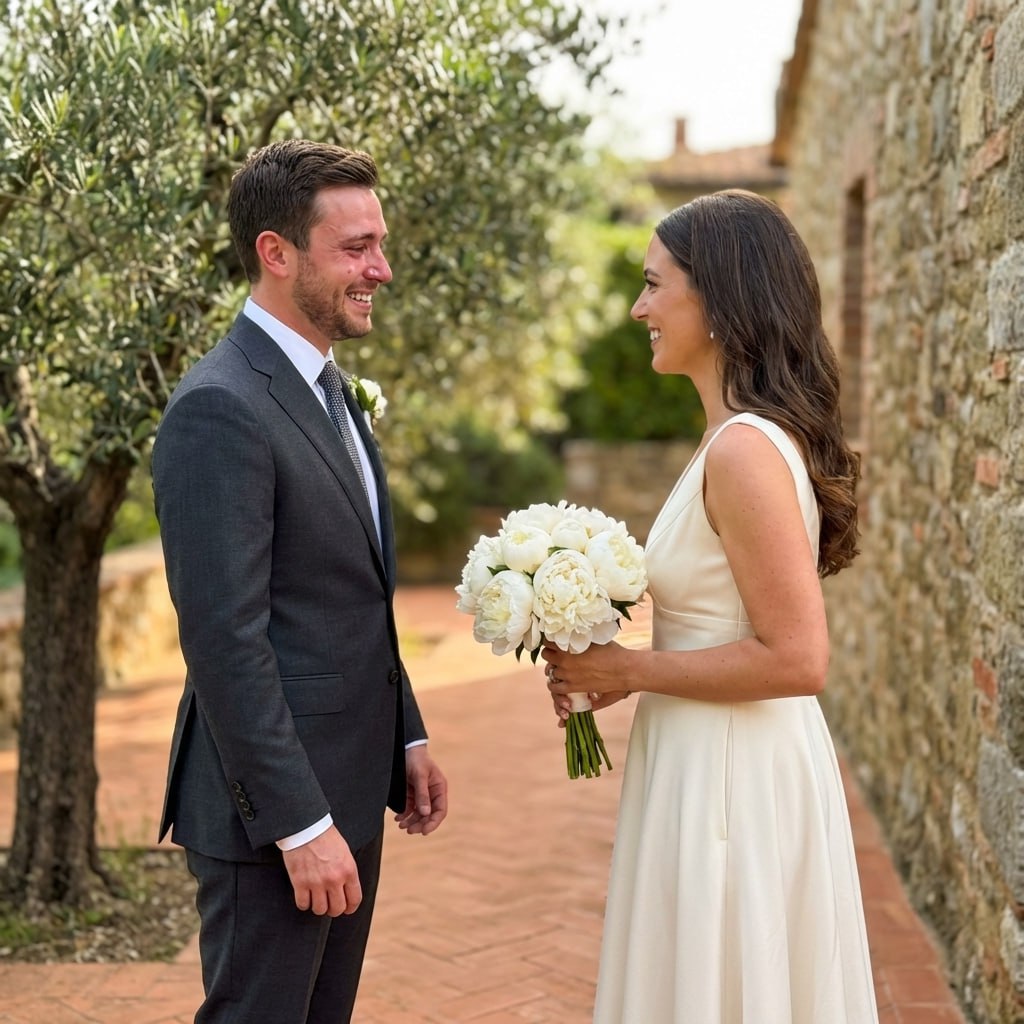
You guys!!
Build something different, starting with the day.
Guests scan a QR code and their photos fill your shared album in real time. One of those small things that actually makes the day feel lighter.

From Mom
Scan to join the album
No app, no account
UPLOADING
Saving your moment
THE ALBUM
Emma & Jack
June 21, 2026
647 photos · 95 guests






SCAN TO TRY
pix.wedding/
your-wedding
The Psychology Behind Divorce Fear
Fear of divorce is a specific type of relationship anxiety that affects both children of divorce and people who have never experienced it directly. Media portrayals, cultural narratives, and misleading statistics all contribute to a general sense that marriage is a gamble with poor odds. The reality is far more nuanced.
For children of divorce, the fear is deeply personal. You watched love fail up close. Your brain created associations between marriage and pain that feel like facts. Cognitive Behavioral Therapy (CBT) is particularly effective at helping you challenge these associations and build a more balanced perspective.
- •The 50 percent divorce statistic is misleading and does not apply to most couples marrying today
- •First-marriage divorce rates for college-educated couples over 25 are approximately 20 to 25 percent
- •Children of divorce are not destined to divorce, especially when they consciously work on relationships
- •Pre-marital counseling reduces divorce risk by up to 30 percent
- •The Gottman Institute has identified specific, learnable behaviors that predict marriage success
Moving From Fear to Informed Confidence
The goal is not to eliminate all fear. Some healthy caution is good because it motivates you to invest in your relationship. The goal is to replace uninformed panic with informed confidence. When you understand what actually causes divorce and what protects against it, you can make intentional choices that dramatically improve your odds.
Knowledge is the antidote to fear. Read relationship research. Take a pre-marital course. Talk to happily married couples about what works. The more you learn about what makes marriages succeed, the less power the divorce statistics will have over your decisions.
What This Costs You If You Never Address It
There is a real cost to letting divorce fear run unexamined, and it is rarely the wedding itself. Unresolved fear tends to show up as low-grade suspicion, over-checking your partner's behavior, avoiding real commitment conversations, or picking fights to test loyalty before anyone has actually done anything wrong. Over years, that pattern can create the very distance it was trying to prevent.
The alternative is not blind optimism. It is doing the work once, deliberately, rather than carrying low-level anxiety indefinitely. A handful of counseling sessions, an honest conversation about family history, and a shared understanding of what actually predicts divorce cost far less, in time and stress, than years of quiet vigilance.
Explore more free wedding tools
Everything you need to make your wedding day stress-free and unforgettable.
QR Sticker Designer
Design custom print-ready stickers.
Hashtag Generator
Create unique wedding hashtags.
How to Collect Guest Photos
5 methods ranked by participation rate and ease.
Get Photos After the Wedding
Message templates to gather guest photos post-wedding.
Share Wedding Photos with Guests
Compare every sharing platform by ease and participation.
Best Way to Get Guest Photos
The single method with the highest participation rate.
How to Make a Shared Wedding Album
Step-by-step setup for every platform.
Alternative to Disposable Cameras
Better, cheaper options than disposable cameras.
Frequently Asked Questions
Everything you need to know about our free tools and how they help your wedding day.
The 50 percent statistic is outdated and misleading. It comes from the 1980s when divorce rates peaked, and it includes all marriages (second, third, etc.) which have higher failure rates. For first marriages of people who are college-educated and marry after age 25, the divorce rate is closer to 20 to 25 percent. Rates have been declining steadily since 2000.
Children of divorce do have a statistically higher divorce rate, but the increase is modest and largely preventable. The risk comes from learned behaviors, not genetics. Children of divorce who are aware of their patterns, invest in relationship skills, and seek pre-marital counseling can have marriages just as strong as anyone else.
According to Dr. John Gottman's research, contempt is the strongest predictor of divorce. Contempt involves speaking to or about your partner with disgust, sarcasm, or superiority. It signals a fundamental lack of respect. The good news is that contempt is a behavior that can be identified and changed with awareness and effort.
Research consistently shows that pre-marital counseling reduces divorce rates by 25 to 30 percent. It works by helping couples develop communication skills, align expectations, discuss difficult topics like money and children, and establish healthy conflict patterns before problems emerge. It is one of the highest-return investments you can make in your marriage.
Start by updating your understanding of divorce statistics because the real numbers are more encouraging than you think. Then invest in your relationship actively: pre-marital counseling, reading relationship books, maintaining friendship with your partner, and learning healthy conflict skills. Fear decreases when competence increases. The more tools you have, the less scary marriage becomes.
Research points to several key factors: mutual respect, emotional friendship, turning toward your partner during bids for connection, fighting fairly without contempt, maintaining a 5 to 1 ratio of positive to negative interactions, shared values, and willingness to seek help early when problems arise. None of these are innate talents. They are all learnable skills.
Yes. Mild, situational nerves are common and do not by themselves predict problems. The distinction worth paying attention to is whether the doubt is about the wedding day and the abstract idea of marriage, which is ordinary, or about a specific, unresolved behavior in the relationship, which is worth discussing with your partner or a counselor before the date.
If the fear is mostly about your own history, family-of-origin patterns, or anxious thought loops, individual therapy or CBT can help you process it separately from your relationship. If the fear is tied to something specific your partner does, a joint session with a licensed couples therapist or a structured pre-marital program is usually more useful than working through it alone.