
How to Find a Wedding Officiant you will be glad you hired
The officiant is the one vendor who can make your marriage legal and set the tone of the whole ceremony. This guide covers the four types, where to look for each, 20 questions to ask, the red flags, when to book, what goes in the contract, and what to do if they cancel.
How do you find a wedding officiant?
To find a wedding officiant, first decide which type you want: clergy from your faith, a judge or court official, a professional celebrant, or a friend ordained online. Then check your state's rules, ask your venue and recent couples for names, interview two or three, and book in writing about 8 to 10 months out.
Most of the work is in the interview. The questions in section 05 tell you more about an officiant in twenty minutes than any review page will.
- 01
Pick the type of officiant
Clergy from your faith, a judge or court officiant, a professional celebrant, or a friend ordained online. The type decides where you look.
- 02
Check the rules where you marry
Who can legally sign your license is set by your state, and some cities and counties add registration. Check before you ask anyone.
- 03
Build a shortlist of three
Ask your venue, your planner and recently married friends first, then fill gaps from directories like Zola and Thumbtack.
- 04
Interview two or three
A 20-minute call covers availability, legal ability, ceremony style, meetings, fees and backup. Take notes you can compare.
- 05
Book in writing
Sign a contract that names the date, fee, license duty and a backup plan, then pay the deposit. Zola suggests booking about 8 to 10 months out.
The 8 to 10 month window comes from Zola's vendor booking guide, checked 27 September 2026.
What kind of wedding officiant do you need?
Pick the type before you pick the person. Each one lives in a different place, suits a different kind of ceremony, and comes with its own things to check.
| Type | Where to find one | A good fit if you want | Check first |
|---|---|---|---|
| Religious clergyA priest, minister, rabbi, imam or other faith leader. | Your own congregation first, then the faith community tied to your venue. | A faith ceremony, or a wedding in a house of worship. | Membership rules, premarital counseling, and whether they will marry you outside their building. |
| Civil officiantA judge, magistrate or other official allowed to perform civil ceremonies. | Your county clerk or courthouse. Ask about civil ceremony days when you get your license. | A short legal ceremony, a courthouse wedding, or a quiet elopement. | Which days and times they perform, and whether they travel to a venue at all. |
| Professional celebrantAn independent officiant who runs ceremonies as a business, religious or not. | Your venue's vendor list, your planner, and directories like Zola, WeddingWire and Thumbtack. | A personal, non-religious or interfaith ceremony written around you. | Reviews, a sample script, a written contract and a named backup. |
| Friend or family memberSomeone you love, usually ordained online through a ministry. | Your own people. Ask the friend who tells the best stories and stays calm. | A small or very personal wedding where the person matters more than the polish. | Your state's rules for online ordination, any local registration, and their comfort speaking. |
Who can legally sign?
That depends on the state, and this page does not try to repeat 50 sets of rules. Our wedding officiant requirements guide covers who can officiate where. Section 09 below shows three real local rules so you can see how much they differ.
How to Choose Your Wedding Officiant
Wedding planner Emily Summer goes through the options you have for an officiant, the person who leads the ceremony and makes the marriage legal. Worth a watch before you start calling people.
Emily Summer on YouTube, June 2023, 8:41Where to find a wedding officiant near you
Search engines are the last place to start, not the first. The best names usually come from people who have already watched that officiant work.
Your place of worship
If you want a faith ceremony, start with your own clergy. If you are not members anywhere, ask the congregation nearest your venue what they require of couples.
County clerk or courthouse
The office that issues your marriage license can tell you who performs civil ceremonies locally and how to book one. Ask on the same visit.
Your venue's vendor list
Venues often keep a list of officiants who have worked there. Those people already know where to stand, where the outlets are and how the sound carries.
Your other vendors
Planners, photographers and DJs see a lot of ceremonies. Ask who they enjoy working with, and who they would rather not see again.
Online directories
Zola, WeddingWire and Thumbtack list local officiants with reviews. Get Ordained also runs a public find-a-minister search for ministers it has ordained.
Recently married friends
The best referral is a ceremony you watched. Ask the couple what the officiant was like to work with before and after the day, not only during it.
The fastest-growing option61%"61% of couples are asking loved ones to officiate their weddings, marking the third year in a row that this is 'in' (and gaining in popularity)."
From Zola's 2025 First Look Report, a survey of more than 6,000 couples. Before you look outside your circle, it is worth asking whether the right person is already in it.
Zola, The First Look Report 2025
Directories worth a look
Filter by your date first. A profile you love is no use if the calendar is full.
How far in advance should you book an officiant?
Zola suggests about 8 to 10 months before the wedding. The booking is only one date on the officiant timeline, though. The license, the script and the return of the signed paperwork all have their own.
- Date and venue set
Decide the type of officiant and check the rules where you are marrying. Ask your venue for its list the same week.
- 8 to 10 months out
Zola's suggested window to book an officiant. Interview two or three, sign a contract and pay the deposit. Popular Saturdays go first.
- Friend says yes
They get ordained and check local registration straight away. Some counties take weeks to approve officiants, so this is not a last-month job.
- 2 to 4 months out
First real planning meeting: your story, the tone you want, readings, and whether you are writing your own vows.
- About 1 month out
First draft of the ceremony script, which is the timing Swoon Union suggests. Leave room for one round of edits.
- License window
Get the marriage license inside your state's validity window and bring it to the ceremony. See how to get a marriage license for timing.
- Rehearsal
The officiant walks everyone through the order, cues and where to stand. Confirm whether the rehearsal is included in the fee.
- Wedding day
They arrive early to check sound and meet the coordinator. Swoon Union suggests 30 to 45 minutes before the ceremony.
- After the wedding
The signed license goes back to the issuing office before its deadline. Agree in writing who mails or drops it off.
License timing trips people up more than officiant timing. Read how to get a marriage license and check the marriage license requirements for your state.
Put the officiant dates on the same plan as every other vendor. The free wedding checklist keeps them in order.
Booking window: Zola. Draft script and arrival timing: Swoon Union. Both checked 27 September 2026.
Questions to ask a wedding officiant before you book
Twenty questions in five groups. You will not need all of them for every candidate, but ask the same core set of each one so you can compare answers side by side afterwards.
Availability and legal
- Are you free on [date] at [time], at [venue]?
- Can you legally marry us in [state or county], and do you need to register anywhere first?
- Who returns the signed license, and by when?
A clear yes on the date, a straight answer on local rules, and they know the license deadline without looking it up.
Ceremony style
- Do you use a set script, or write a ceremony around us?
- Can you include [faith or culture] traditions, or lead an interfaith ceremony?
- Can we write our own vows, and will you read them first?
- How long do your ceremonies usually run?
They ask about you before they talk about themselves, and they can send a sample script.
Process
- How many times will we meet before the wedding, and how?
- When do we see a first draft, and how many edits are included?
- Do you require premarital counseling or classes?
- Will you run the rehearsal?
A simple, written process with dates. You should know what happens next after every meeting.
Wedding day
- What time will you arrive, and who do you check in with?
- What will you wear?
- Do you bring a microphone, or use the venue's system?
- Any rules for our photographer or guests' phones during the ceremony?
They have done this at venues like yours and have opinions about sound and sightlines.
Money and backup
- What does your fee include, and what costs extra, like travel or the rehearsal?
- How much is the deposit, and is any of it refundable?
- Who marries us if you are sick or stuck on the day?
- Can we see the contract before we pay?
- Can we talk to two couples you married last year?
Numbers in writing, a named backup, and references offered without you having to push.
Hi [Name], we're getting married on [date] at [venue]
in [city], around [number] guests, ceremony at [time].
We're looking for a [religious / non-religious / interfaith]
ceremony of about [length]. Are you free that day?
If so, could we book a 20-minute call this week?
How to run the call
- 1.Lead with the date and the legal question, because a no on either ends the call early and saves everyone time.
- 2.Then let them talk about how they build a ceremony.
- 3.Notice whether they ask about the two of you.
- 4.Write the answers down straight after, while you still remember who said what.
Question list informed by WeddingWire's officiant questions and Swoon Union, plus the contract and backup points couples often forget.
Wedding officiant red flags to watch for
None of these alone is a dealbreaker every time. Two or three together usually are.
01Nothing in writing
No contract, no receipt, a handshake and a cash deposit. If something goes wrong, you have nothing to point to.
02No answer on backup
"I've never missed one" is not a plan. People get sick and flights get cancelled. Ask for a name.
03Vague on local rules
If you ask whether they can marry you in your county and they are not sure, you will be the one checking. Some places require registration before the day.
04No sample script or references
A working officiant has a sample ceremony and past couples happy to talk. Reluctance to share either is worth noticing.
05Slow replies before you book
Communication rarely improves after the deposit clears. Three unanswered emails now means a hard month before the wedding.
06Your ceremony, their script
You asked for personal and they keep steering back to the standard version, or add beliefs you did not ask for.
07A packed wedding day
Several ceremonies booked back to back on your date with no buffer. Ask how many weddings they have that day and how far apart.
08Pressure to pay in full now
A deposit to hold the date is normal. Full payment months out, with no refund terms, puts all the risk on you.
What should an officiant contract include?
A good contract is short and specific. If any of these are missing, ask for them to be added before you pay the deposit.
Contract checklist
- Both your names, the date, the ceremony start time and the full venue address
- Arrival time, and how long they stay after the ceremony
- Whether the rehearsal is included, and its date and time
- Number of planning meetings, script drafts and edit rounds
- Total fee, deposit, when the balance is due, and any travel fee
- Who signs the license, who returns it, and the return deadline
- A named backup officiant, and what happens if they step in
- Cancellation and refund terms, for both sides
- Attire, microphone plan, and any rules for photos during the ceremony
About the fee
Prices vary a lot by type and region, so we keep the numbers in one place: the wedding officiant cost guide has sourced ranges and what usually costs extra.
Even with a friend
No contract needed, but put the same points in a friendly email:
It saves an awkward conversation the week of the wedding.
Can a friend be your wedding officiant?
In many states, yes, once they are ordained, and sometimes only after registering locally. The rules sit with your state and occasionally your city or county, so check before your friend says a word in public.
- Step 01
Ask early, with an easy out
Asking someone to officiate is a big favor. Give them a day to think, and mean it when you say no is fine.
- Step 02
Check the rules where you marry
Whether an online ordination counts, and whether they must register, depends on your state and sometimes your city or county. Our officiant requirements guide covers this by state.
- Step 03
Get ordained and registered
Ordination takes minutes online. Local registration can take weeks, so do it as soon as they say yes. Our certification guide walks through it.
- Step 04
Write the script together
Give them your story, the tone you want and the must-say legal words. A draft from a ceremony script generator is a good starting point.
- Step 05
Rehearse with a microphone
First-time officiants tend to rush and speak too softly. One run-through with a mic at the rehearsal fixes both.
- Step 06
Plan the paperwork
Walk them through the license: where they sign, what they write, and who returns it by the deadline.
The three guides your friend needs
Who can officiate in your state, how to get ordained or certified, and the free ceremony script generator for a first draft they can make their own.
Three real local rules that change the search
These are examples, not a full list. They show why "can you legally marry us here?" belongs at the top of every call.
New York City
Officiants must register with the Office of the City Clerk before performing a marriage in the city. NYC311 lists a $15 registration fee.
Since 28 March 2023, anyone 18 or older can instead get a One-Day Marriage Officiant License for $25. It is applied for after the couple has their license, covers only that couple, and the officiant must return the completed license within five days.
Washoe County, Nevada (Reno)
Ministers, religious officials and notaries need a Certificate of Permission from the county clerk to perform marriages. The clerk says processing can take 2 to 3 weeks.
The clerk lists a $30 application fee, plus a $54.96 background check for some applicant types. A friend flying in the week of the wedding is too late here.
Denver, Colorado
The Denver Clerk and Recorder's certificate guide says that if your officiant is not a judge or magistrate and has no religious ordination, you may sign the certificate as a self-solemnization.
The same guide says witnesses are not required and the certificate must be returned within 63 days.
All three official sources checked 27 September 2026. Fees and processing times change, so confirm with the office before you rely on them. For every other state, see officiant requirements by state.
Your officiant sees the vows. Your guests see the rest.
Put one QR code on the ceremony programs and guests add their photos and videos of the vows to one album from the phone browser. No app and no account needed.




Scan to join the album
No app, no account
UPLOADING
Saving your moment
THE ALBUM
Emma & Jack
June 21, 2026
647 photos · 95 guests






What to do if your wedding officiant cancels
Most couples never need this section. The ones who do need it fast, so here it is in the order to work through it.
- 01
Read the backup clause
If your contract names a replacement, call the officiant and ask them to confirm that person today, in writing.
- 02
Ask the people who know officiants
Your venue coordinator, planner and photographer all have numbers. Officiants also refer each other; ask the one who cancelled for three names.
- 03
Call the county clerk
Ask whether a civil officiant can marry you on your date, or whether a short courthouse ceremony before or after the wedding works.
- 04
Consider a friend, if the rules allow
Only if your state accepts their ordination and any registration can be done in time. In NYC the one-day license needs your marriage license first; in Washoe County, approval can take weeks.
- 05
Split the ceremony and the paperwork
If nobody legal is free, a loved one can lead the ceremony your guests see, and you sign legally with a civil officiant on another day.
Hi [Name], [referrer] gave us your number. Our officiant
had to cancel and our wedding is on [date] at [time],
[venue] in [city]. We have our license and a script ready.
Are you free, and able to marry us there legally?
A Colorado footnote
If you are marrying in Colorado, a missing officiant is less of a legal problem. The Denver Clerk and Recorder says couples can sign the certificate as a self-solemnization when their officiant is not a judge, magistrate or ordained. Anyone you like can still lead the ceremony itself.
What your officiant needs from you
Hand these over at the rehearsal or earlier. None of them should be a surprise ten minutes before the processional.
The marriage license
In hand, not in a bag at the hotel. Decide who carries it to the venue.
How to say every name
Yours, the wedding party's, any family you mention. Write them out phonetically.
The final script and vows
One printed copy for them, one spare with your coordinator.
The run of show
Start time, processional order and who cues the music. See the entrance order guide if you are still deciding.
A sound plan
Mic for the officiant, and a second one if you are reading vows. Test it before guests sit.
Photo rules
Where the photographer can stand, and whether you want an unplugged ceremony. Tell the officiant so they can announce it.
Timing the ceremony
Ask your officiant how long the script runs out loud, then compare it with how long a wedding ceremony lasts. For the walk in, see the ceremony entrance order, and for your part, how to write wedding vows.
Scan. Upload.
Every angle of the vows.
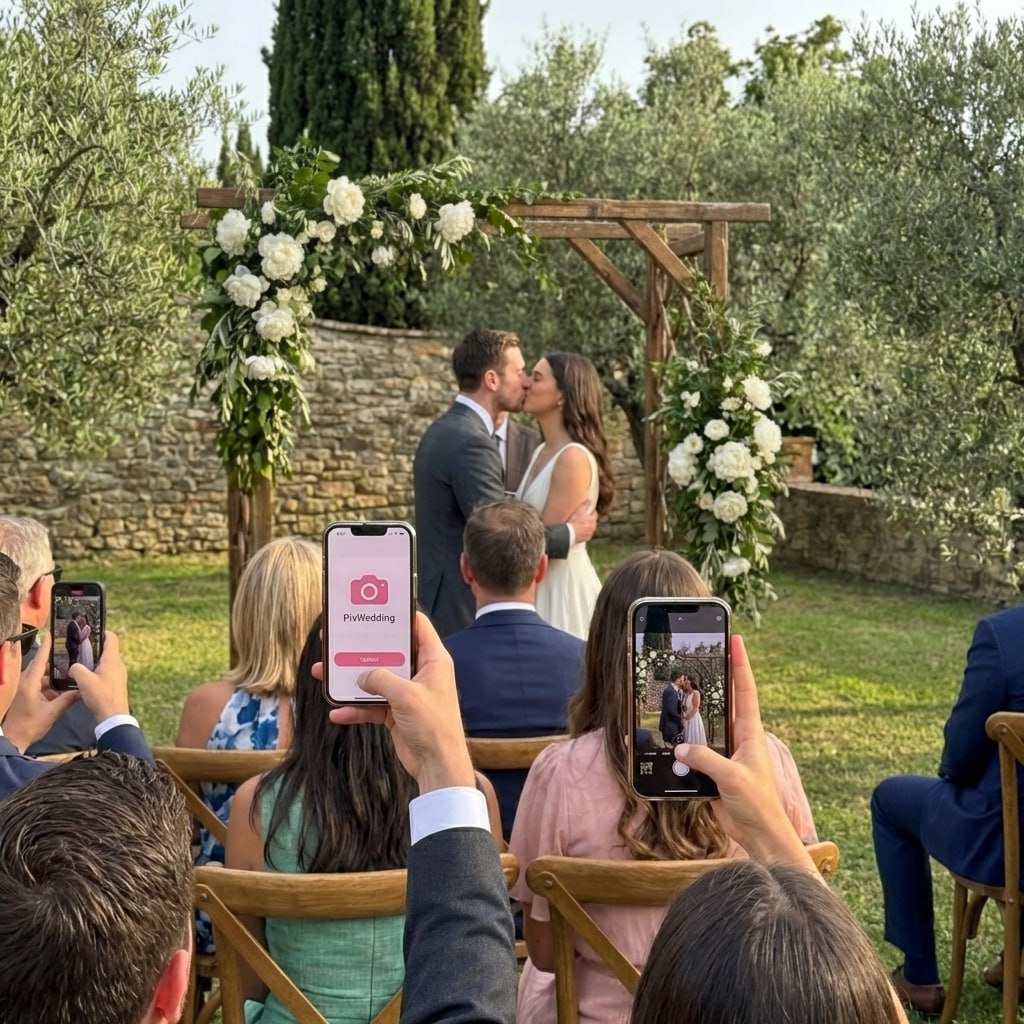
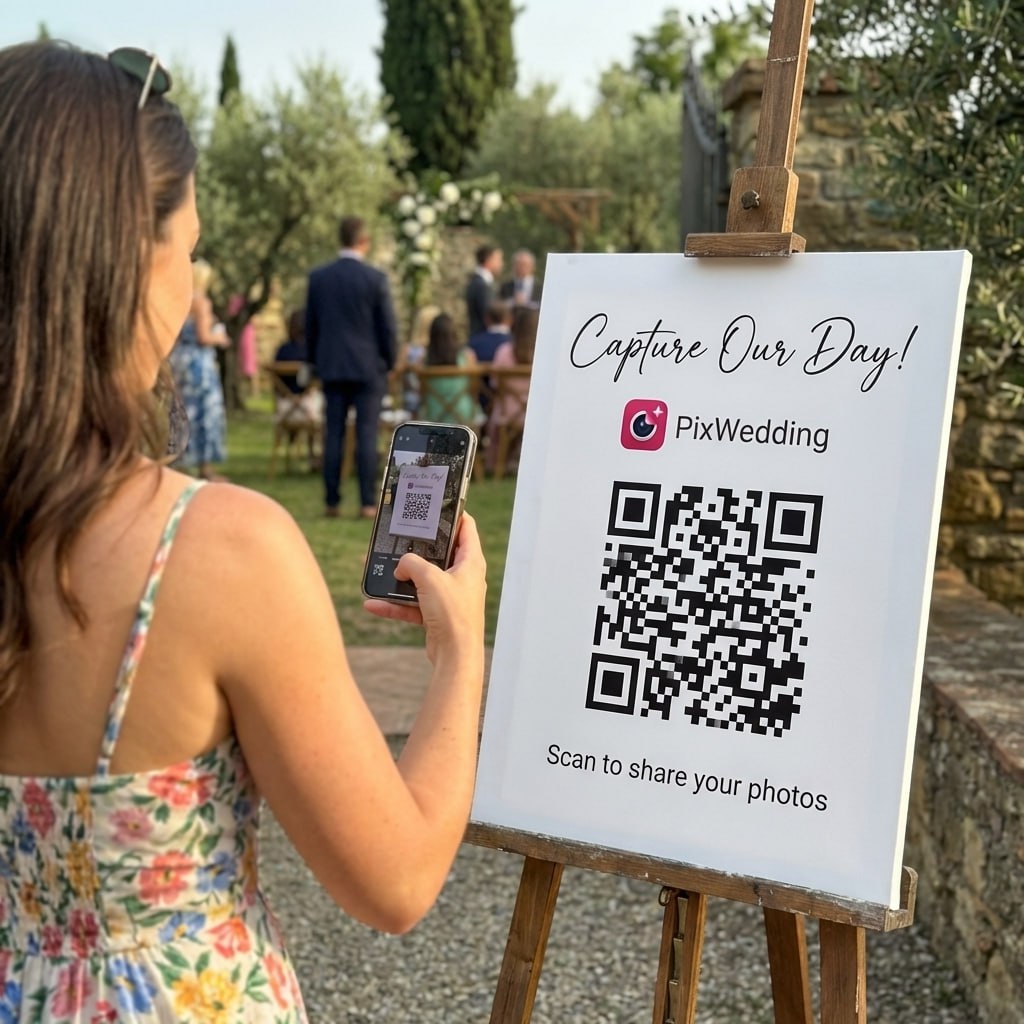
Your officiant faces you, your photographer covers the aisle, and your guests catch everything in between. Watch a guest scan the QR code and add ceremony photos from the phone browser in seconds, with no app and no account.
WEDDING ALBUM
Elena & Marcus
Example album






The I dos, row three
From the cousins
Your officiant is booked. Now get every guest's photos.
Put one QR code on the programs and the tables, and guests add photos and videos from the phone browser, no app and no account. You keep everything in original quality. The first 20 uploads are free, no card.
From Grandma Rose
Scan to join the album
No app, no account
UPLOADING
Saving your moment
THE ALBUM
Elena & Marcus
Example album
647 photos · 95 guests
SCAN TO TRY
pix.wedding/
your-wedding
More ceremony guides and free tools
This page is how to find and hire the officiant. These cover the rules, the costs and the ceremony itself.
How to find a wedding officiant in five lines
If you remember five things about finding and hiring a wedding officiant:
- 01
Choose the type first: clergy, civil officiant, professional celebrant, or a friend ordained online
- 02
Check who can legally sign in your state, plus any city or county registration
- 03
Get names from your venue, vendors and recently married friends before directories
- 04
Interview two or three with the same questions, and ask every one about backup
- 05
Book in writing about 8 to 10 months out, with the license duty named in the contract
Officiant vs celebrant
In the US the words overlap.
Officiant
is the general term for whoever leads the ceremony and signs the license.
Celebrant
usually means a professional who writes a personal ceremony, often non-religious or interfaith.
The bottom line
What matters legally is not the title but whether that person is authorized to solemnize marriages where you are marrying.
Explore more free wedding tools
Everything you need to make your wedding day stress-free and unforgettable.
Seating Chart Planner
Plan your reception seating visually.
Guest List Manager
Track RSVPs and dietary needs.
Budget Allocator
Turn your total into a category-by-category plan.
Timeline Builder
Plan your entire wedding day.
Venues by State
Explore venues across all 50 states.
Countdown Timer
Count down the days to your big day.
Bachelorette Party Games
15+ games with rules, supplies, and timing.
Alternative to Wedding Guest Book
15 creative alternatives guests enjoy.
Questions about finding an officiant
Where to look, when to book, friends as officiants and what to do if plans change.
Start with the people who already know local officiants: your venue's vendor list, your planner or photographer, and couples you know who married recently. For a faith ceremony, ask your own clergy first. For a civil ceremony, ask the county clerk that issues your license. Then fill gaps from directories like Zola, WeddingWire and Thumbtack, and interview two or three before you book.
Zola suggests booking an officiant about 8 to 10 months before the wedding. Book earlier for a popular Saturday or a busy season. If a friend is officiating, have them get ordained and check local registration as soon as they say yes, because some counties take weeks to approve officiants.
Ask whether they are free on your date and can legally marry you where you are marrying, who returns the signed license, whether they write a personal ceremony or use a set script, how many meetings are included, whether they run the rehearsal, what the fee covers, what the deposit and refund terms are, and who marries you if they cannot make it.
Often yes, and it is popular: Zola's 2025 First Look Report found 61 percent of couples asking loved ones to officiate. Whether an online ordination is valid, and whether your friend must register first, depends on your state and sometimes your city or county. New York City, for example, requires officiants to register with the City Clerk or get a one-day license. Check our officiant requirements guide for your state.
It depends on the type. A friend may charge nothing, a courthouse ceremony comes with its own fees, and professional officiants set their own rates, sometimes with extras for travel or the rehearsal. Our wedding officiant cost guide breaks down the ranges with sources.
Check your contract for a named backup and call them first. Then ask your venue, planner and photographer for names, and call the county clerk about civil ceremony availability. If nobody legal is free, a loved one can lead the ceremony your guests see and you can sign legally with a civil officiant on another day.
In most places an authorized person must solemnize the marriage, but the rules are set by each state. Colorado is a known exception: the Denver Clerk and Recorder says couples whose officiant is not a judge, magistrate or ordained may sign the certificate as a self-solemnization. Check the rules where you are marrying before you plan around it.