
Feeling Overwhelmed with Wedding Planning? You Are Not Failing
Wedding planning was supposed to be fun. Instead, you are drowning in spreadsheets, vendor emails, and family opinions. Here are the 5 real causes of overwhelm and a specific fix for each one.
First: This Is Not Your Fault
Wedding planning is essentially a second job. You are project-managing a $30,000+ event with hundreds of moving parts while working your actual job, maintaining your relationship, and fielding opinions from everyone who has ever attended a wedding.
The bridal industry packages this as "the most exciting time of your life." And it can be. But it is also an enormous amount of work, and feeling overwhelmed by it does not mean you are not cut out for marriage or that you are bad at planning. It means the scope of the task is genuinely enormous.
Now let us break down what is actually causing your overwhelm and fix each piece individually.
Budget Stress
The Problem
You started with a number, and it has already ballooned. Every vendor costs more than expected. Your parents want to add 30 guests. You are terrified of starting your marriage in debt.
The Fix
Use our free Wedding Budget Allocator to set realistic category limits
Decide on 3 non-negotiable splurges and cut everything else to "good enough"
Stop browsing vendor Instagram accounts. Each scroll adds $500 to your mental budget.
Have one honest conversation with all contributing parties about the real total
Guest List Agony
The Problem
Your mother-in-law wants to invite her book club. Your partner keeps adding "one more" person. You are over capacity and over budget, and every conversation about the guest list ends in tension.
The Fix
Set a hard cap and communicate it clearly: "Our venue holds X people. That is our limit."
Use a Guest List Manager to track RSVPs, dietary needs, and table assignments in one place
Create tiers: "must invite," "would like to invite," and "only if space allows"
Remember: most guests who get a B-list invite will never know they were not on the first round
Too Many Opinions
The Problem
Your mother has "suggestions" about everything. Your sister does not like the color scheme. Your partner's family has traditions you have never heard of. You feel like you are planning everyone else's wedding instead of your own.
The Fix
Set a boundary: "We appreciate your input, and we have decided to go with X"
Give each family one thing they get real input on. Everything else is your decision.
Stop sharing every detail. Share the final decision, not the process.
Remind yourself: five years from now, nobody will remember the centerpiece color. But they will remember if you were happy.
Decision Fatigue
The Problem
Linen color, menu font, ceremony music, cocktail hour timing, seating arrangements, vow structure, cake flavor, transportation, first dance song, rehearsal dinner venue... the decisions never end and each one feels equally important.
The Fix
Use a Wedding Checklist that breaks planning into month-by-month tasks
Set a "decision deadline" of 10 minutes for minor choices. Timer goes off, pick one, move on.
Delegate: give your partner, your maid of honor, or your planner full authority over specific categories
Accept that 80% good is better than 100% perfect. Perfectionism is the enemy of sanity.
Timeline Panic
The Problem
You feel like you are behind. Other couples who got engaged after you already have their venue, photographer, and florist locked in. Social media makes it look like everyone else has it together.
The Fix
Use a Timeline Builder to create a realistic schedule based on your wedding date
Most vendors are bookable 6 to 8 months out. If you are further out, you have time.
Stop comparing your timeline to anyone else's. Every wedding is different.
Focus on one task per week. Steady progress beats frantic all-nighters.
The Permission to Simplify
Here is something the wedding industry does not want you to hear: you can skip most of the things that are stressing you out. No one will remember the napkin rings. The escort card display does not need to be Pinterest-worthy. You do not need a photo booth, a cigar bar, AND a late-night food truck.
The weddings people remember are the ones where the couple looked happy. That is it. Everything else is decoration. Give yourself permission to simplify. Cut the elements that are causing the most stress for the least payoff.
Things you can safely skip or simplify
Elaborate centerpieces (simple greenery or candles look just as elegant)
Custom wedding website with complex RSVP features (a simple page works fine)
Perfectly matching bridesmaid dresses (mix-and-match in the same color family is trendy and easier)
A printed program (most guests do not read them)
Party favors (the majority end up left on tables or in the trash)
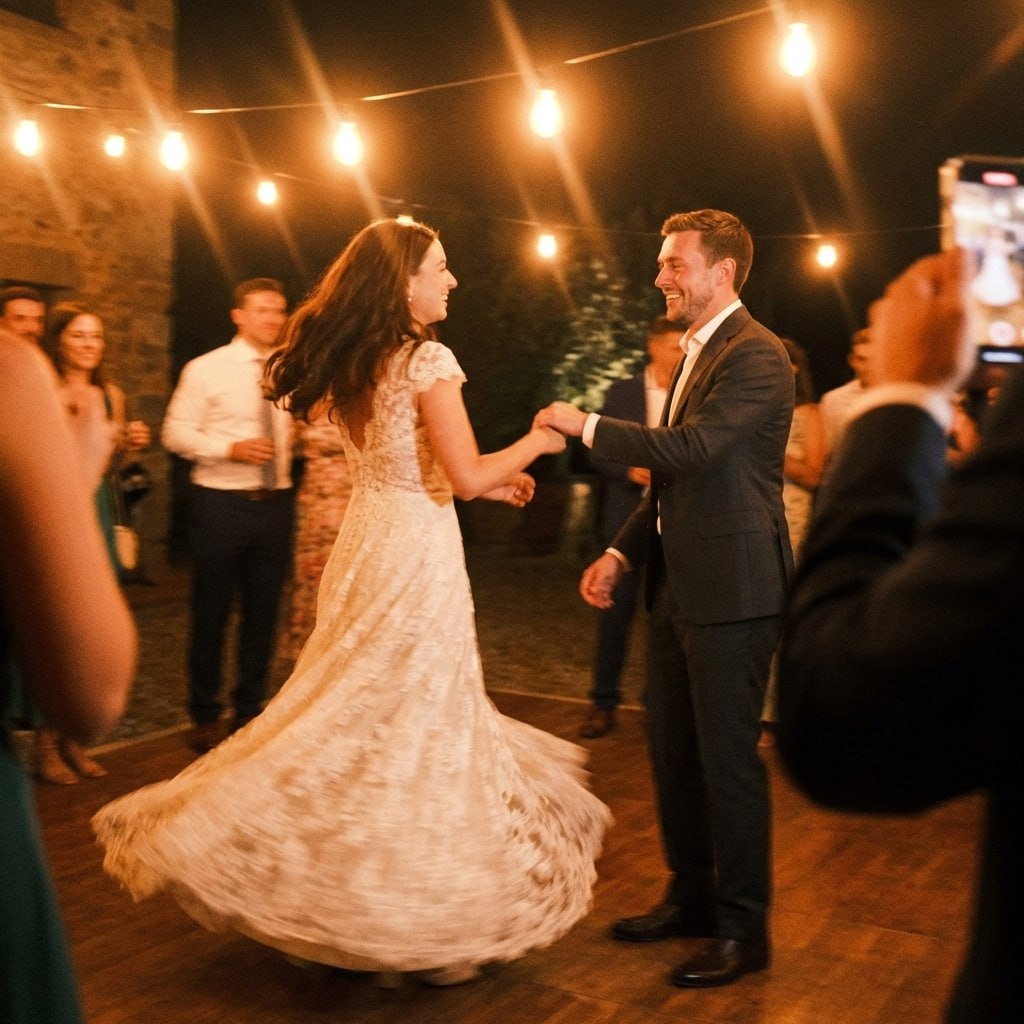
A choreographed first dance (just swaying together is beautiful and stress-free)
Things That Can Run on Autopilot
Some wedding tasks do not need your active attention on the day. Set them up once and let them run.
Guest Photos
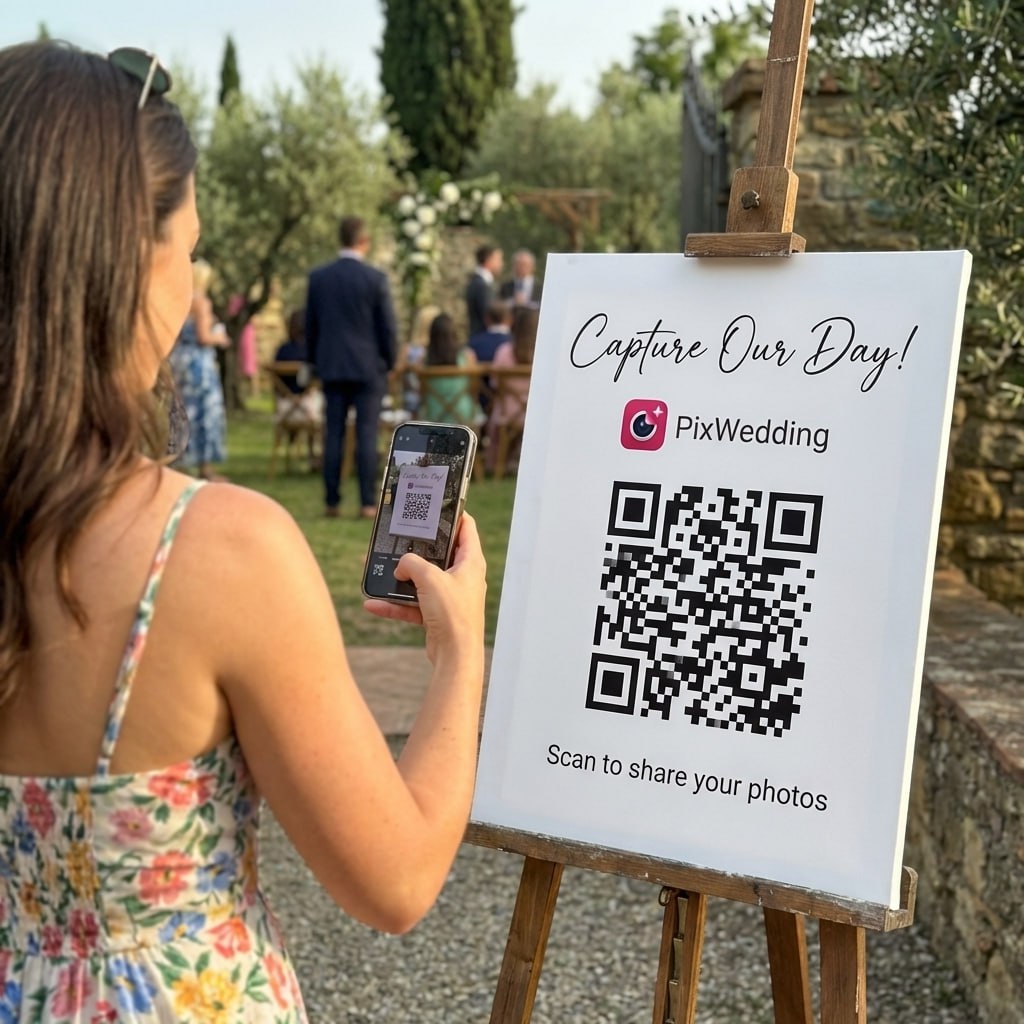
Set up a Pix Wedding QR code on every table. Guests scan and upload photos all night. You never have to manage it.
Set up Pix WeddingWedding Timeline
Build your timeline once using our free tool, share it with your wedding party and vendors, and let it run.
Build your timelineSeating Chart
Assign seats using our drag-and-drop planner, print the chart, and forget about it.
Plan seating chartRelated Guides

First dance
You guys!!
Cross photo collection off your list right now.
Set up Pix Wedding in minutes. Guests scan a QR at each table and every photo goes straight into your shared album. One less thing to manage.

From Mom
Scan to join the album
No app, no account
UPLOADING
Saving your moment
THE ALBUM
Emma & Jack
June 21, 2026
647 photos · 95 guests




SCAN TO TRY
pix.wedding/
your-wedding
Why Wedding Planning Feels So Overwhelming
Wedding planning combines several stress factors that rarely appear together in normal life: high financial stakes, emotionally charged family dynamics, dozens of decisions with no clear right answer, a hard deadline that cannot move, and the expectation that you should enjoy every minute of it.
Add social media to the mix, where every couple's wedding looks flawless and effortless, and you have a recipe for feeling like you are the only one struggling. You are not. The average couple spends 250 to 400 hours planning their wedding. That is 10 to 16 full days of work, squeezed into evenings and weekends alongside everything else in your life.
- •The average wedding involves coordinating 8 to 12 vendors
- •67% of couples report significant stress during wedding planning
- •Budget overruns are the number one source of wedding planning conflict
- •Delegation and simplification are the two most effective stress reducers
When to Ask for Help
If wedding planning is affecting your sleep, your relationship, your job performance, or your mental health, it is time to bring in reinforcements. That might mean hiring a day-of coordinator (often $1,000 to $2,000 and worth every penny), delegating entire categories to trusted friends or family, or taking a complete break from planning for a week.
It might also mean talking to a therapist. Wedding planning stress can surface deeper issues about control, perfectionism, family relationships, and self-worth. Addressing those issues now will not only make the planning process easier. It will make the marriage stronger.
Free Tools That Reduce Wedding Planning Workload
The right tools can eliminate hours of manual work. A wedding checklist tells you exactly what to do each month so you never have to figure out what comes next. A budget allocator prevents overspending by setting clear category limits. A seating chart planner turns a two-hour headache into a 20-minute drag-and-drop exercise.
And for guest photos, Pix Wedding eliminates an entire category of wedding-day stress. Instead of coordinating disposable cameras, shared albums, or hashtag campaigns, you place one QR code on each table. Guests scan, upload, and your album fills itself. It is one of the easiest wins in wedding planning.
Explore more free wedding tools
Everything you need to make your wedding day stress-free and unforgettable.
QR Sticker Designer
Design custom print-ready stickers.
Photo Sharing QR
The best way to collect guest photos.
Hashtag Generator
Create unique wedding hashtags.
How to Collect Guest Photos
5 methods ranked by participation rate and ease.
Get Photos After the Wedding
Message templates to gather guest photos post-wedding.
Share Wedding Photos with Guests
Compare every sharing platform by ease and participation.
Best Way to Get Guest Photos
The single method with the highest participation rate.
How to Make a Shared Wedding Album
Step-by-step setup for every platform.
Frequently Asked Questions
Everything you need to know about our free tools and how they help your wedding day.
Completely normal. Studies show that 67% of couples experience significant stress during wedding planning. You are essentially project-managing a major event while working your day job, navigating family dynamics, and making hundreds of decisions. Feeling overwhelmed is a rational response to an overwhelming task.
Break the overwhelm into specific categories: budget, guest list, decisions, opinions, timeline. Address each one individually with a specific strategy. Use free tools to automate what you can. Delegate categories to trusted people. Set decision deadlines for minor choices. And give yourself permission to simplify things that are causing more stress than joy.
For most couples, the budget is the top stressor, followed closely by the guest list and managing family opinions. These three areas involve money, relationships, and competing expectations, which is a high-conflict combination. Having clear boundaries and using organizational tools for each area makes a significant difference.
If your budget allows it, a day-of coordinator or partial planner can be life-changing. Even a day-of coordinator (typically $1,000 to $2,000) takes the logistics off your plate for the actual wedding day. If a full planner is out of budget, consider using free tools for budget, timeline, seating, and guest list management to reduce your workload.
If you and your partner are arguing more, feeling disconnected, or blaming each other for planning stress, that is common but worth addressing. Schedule regular planning-free time together. Divide responsibilities clearly so no one person carries the full burden. And remember that the wedding is one day. The marriage is what matters.
Focus on the things guests actually remember: good food, good music, and a happy couple. Cut or simplify things that cause more stress than they add value: elaborate centerpieces, custom favors, printed programs, and choreographed dances. Simple, well-executed elements often look more elegant than overproduced ones.