
How to Calm Your Nerves Before the Wedding: A Step-by-Step Plan
You do not need platitudes. You need a plan you can actually follow. Here is exactly what to do, in order, from the moment you wake up to the moment you walk down the aisle.
The Short Answer
The fastest way to calm nerves before your wedding is box breathing (inhale 4 seconds, hold 4, exhale 4, hold 4, repeat for a few minutes), combined with something physical: a short walk, cold water on your wrists, or the 5-4-3-2-1 grounding technique if anxiety spikes suddenly. Pair that with a real breakfast, a designated calm friend, and a plan for your phone, and most wedding-day nervousness becomes manageable within minutes rather than something you fight all day.
Below is the long answer: a full day-of plan you can follow step by step, a quick-reference table so you can find the right technique in seconds, and the common mistakes that make wedding nerves worse instead of better.
The 12-Technique Toolkit
Box Breathing (4-4-4-4)
BreathingInhale for 4 seconds. Hold for 4 seconds. Exhale for 4 seconds. Hold for 4 seconds. Repeat 4-6 rounds. This pattern is taught by performance coaches and used in high-pressure jobs precisely because it is fast to learn under stress.
When to use it: Use it any time you feel your heart racing. Works especially well right before the ceremony.
Progressive Muscle Relaxation
BodyStarting from your feet, tense each muscle group as hard as you can for 5 seconds, then release completely. Move up: calves, thighs, glutes, stomach, chest, arms, shoulders, face. The contrast between tension and release teaches your body what relaxation actually feels like.
When to use it: Best done the night before or first thing in the morning. Takes about 10 minutes.
Morning Walk Outside
MovementA 10 to 15 minute walk in natural light first thing in the morning is a widely recommended way to work off nervous energy before the getting-ready rush begins. You do not need to power walk. Just move your body and let your mind wander.
When to use it: Before hair and makeup. Even a walk around the hotel parking lot works.
Write a Letter to Your Partner
EmotionalSit down with pen and paper and write to your partner. Tell them what you love about them. Tell them what you are looking forward to. Tell them what scared you and how you worked through it. This exercise reconnects you to the "why" behind today.
When to use it: The morning of the wedding, before the getting-ready rush begins.
Avoid Social Media on Wedding Day
DigitalScrolling Instagram or TikTok on your wedding morning invites comparison at the worst possible moment. Put your phone on Do Not Disturb and give it to your maid of honor or best man until after the ceremony.
When to use it: From the moment you wake up until after the ceremony, at minimum.
Eat a Protein-Rich Breakfast
NutritionBlood sugar crashes make anxiety noticeably worse. Eggs, Greek yogurt, nuts, or avocado toast will keep your blood sugar stable through the morning. Avoid relying on just coffee and carbs, which spike energy and crash it right when you need steadiness most.
When to use it: First thing. Even if you do not feel hungry, eat something substantial.
Lavender Scent
SensoryMany people find the scent of lavender calming as part of a getting-ready routine. Put a few drops of lavender oil on a tissue or handkerchief you can carry. It is subtle enough that it will not interfere with your perfume.
When to use it: Apply before getting ready. Refresh before the ceremony if needed.
Designate a "Calm Friend"
SupportChoose one person in your wedding party whose job is specifically to keep you calm. This is the person who will guide you through breathing if you panic, shield you from stressful news (vendor issues, family drama), and remind you why today is wonderful. Brief them in advance.
When to use it: Assign this role at least a week before the wedding.
Visualization Exercise
MentalClose your eyes and walk through the entire day in your mind. See yourself getting ready. See yourself walking toward your partner. See their face. See yourselves laughing during the reception. Visualize yourself calm, happy, and present.
When to use it: The night before or during a quiet morning moment.
Journaling Prompt
EmotionalOpen a notebook and answer this question: "What are three things I am genuinely excited about today?" Not what you think you should be excited about, but what actually gives you butterflies in a good way. Reconnecting with genuine excitement crowds out anxiety.
When to use it: Morning of, before the chaos starts. Takes 5 minutes.
Cold Water Reset
PhysicalHold your wrists under cold running water for 20 to 30 seconds, or press a cold water bottle against the back of your neck. This kind of cold exposure is a commonly recommended fast physical reset for a racing heart and shaky hands.
When to use it: Any time you feel panic rising. Keep a cold bottle in your getting-ready room.
Automate What You Can
PracticalThe fewer things you have to manage on the day, the calmer you will feel. Delegate timeline management to your planner or coordinator. Give vendor contact info to your best man or maid of honor. Use Pix Wedding for guest photos so you never have to think about that. Every task you remove from your plate reduces your stress load.
When to use it: Set up automations at least a week before the wedding.

First dance
You guys!!
One less task on your calm-down list.
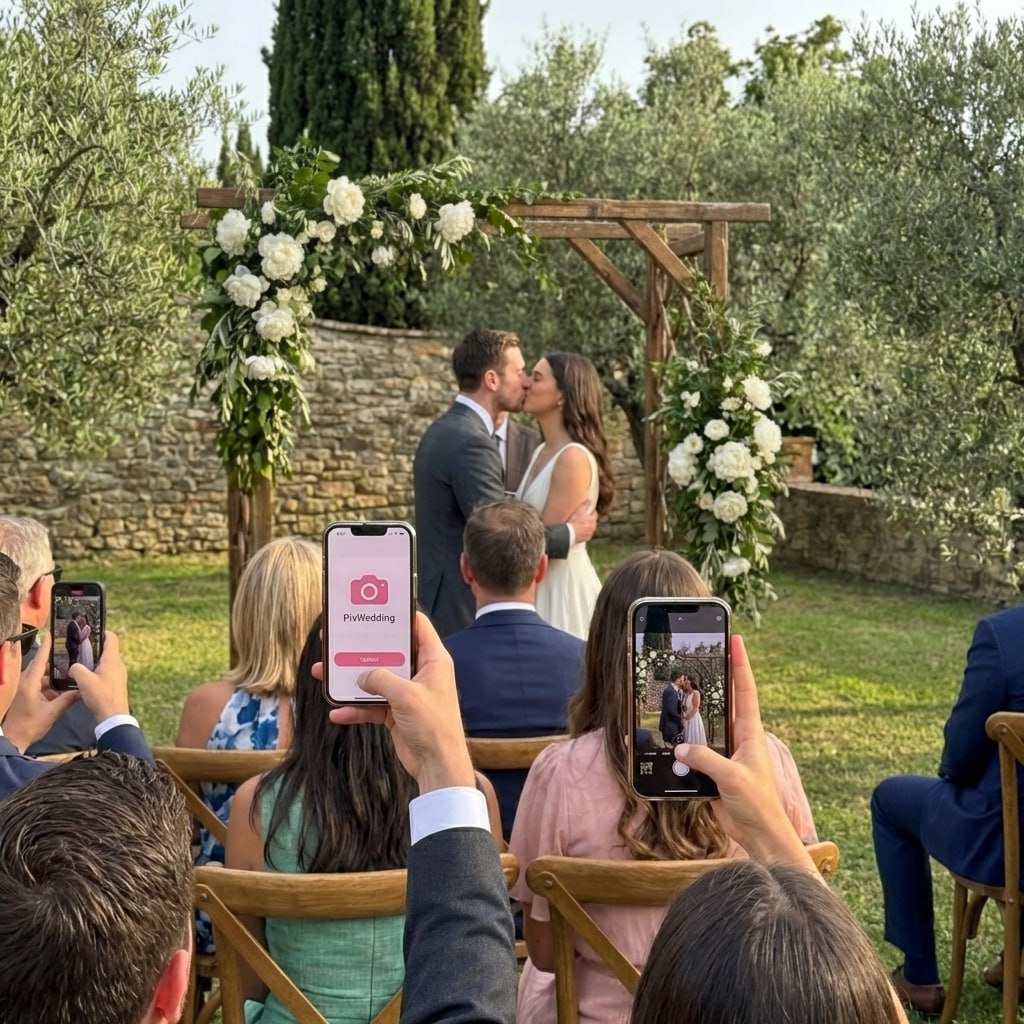
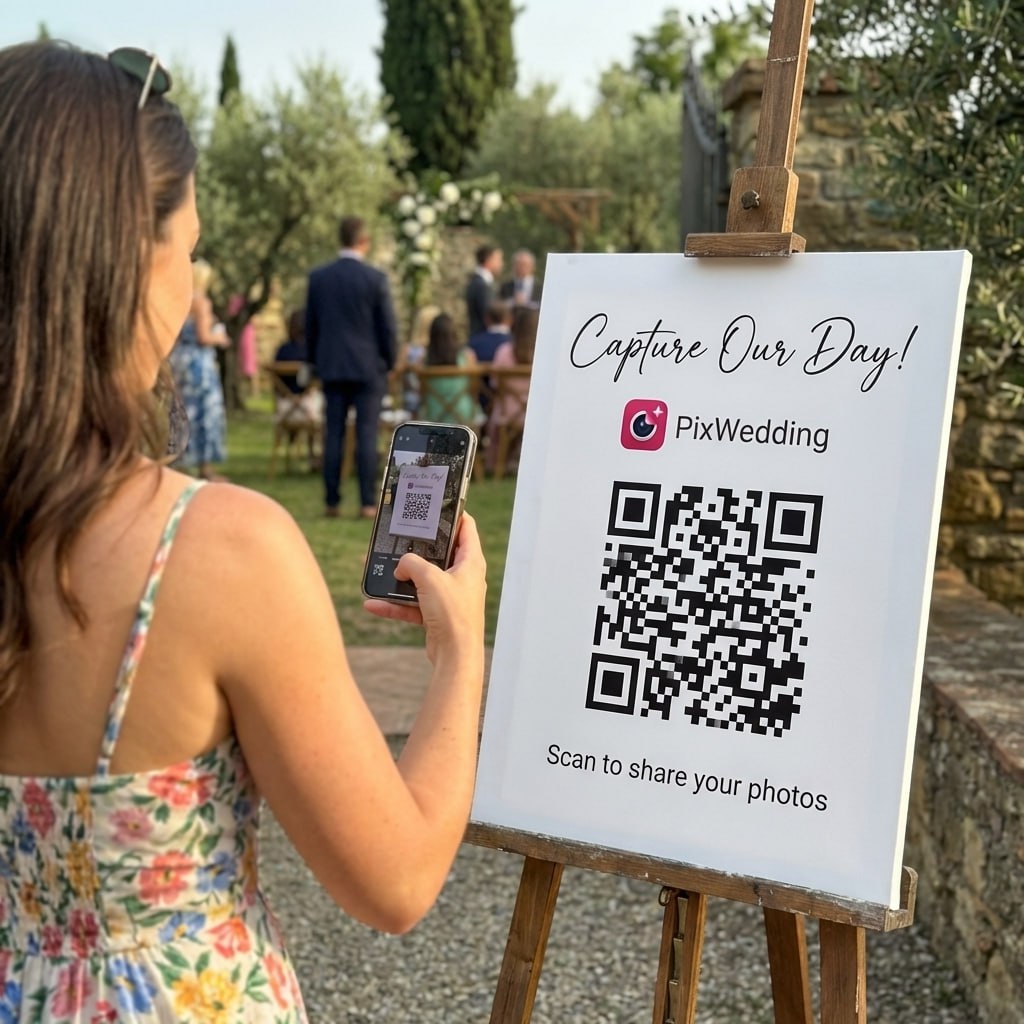
Guests scan a QR code, their photos land in your shared album on their own. Nobody has to chase down cameras or manage uploads on the day.
From Mom
Scan to join the album
No app, no account
UPLOADING
Saving your moment
THE ALBUM
Emma & Jack
June 21, 2026
647 photos · 95 guests

SCAN TO TRY
pix.wedding/
your-wedding
The Step-by-Step Day-Of Calm Plan
This is the actual order to follow, from waking up to walking down the aisle. Each step builds on the one before it, so try not to skip around.
- 1
Hydrate before you check your phone
Drink a full glass of water before you open Instagram, texts, or wedding group chats. Dehydration makes anxiety and brain fog worse, and checking messages first thing invites comparison and last-minute stress before your feet even hit the floor.
- 2
Eat a protein-rich breakfast within the first hour
Eggs, Greek yogurt, nuts, or avocado toast keep your blood sugar stable through the morning. Skipping breakfast because you feel too nervous to eat is one of the most common mistakes, and low blood sugar makes shakiness and irritability worse, not better.
- 3
Take a 10 to 15 minute walk in daylight
Before hair and makeup, get outside and move. It does not need to be a workout. A short walk around the block or the hotel parking lot gives your body somewhere to send the adrenaline that is already building.
- 4
Do 5 minutes of box breathing while getting ready
Inhale for 4 seconds, hold for 4, exhale for 4, hold for 4. Repeat for 5 minutes. Cleveland Clinic notes that box breathing works by engaging the parasympathetic nervous system, the body's rest-and-recover response, which is why it can lower a racing heart rate within a few rounds.
- 5
Hand your phone to your designated calm friend
By mid-morning, give your phone to your maid of honor, best man, or a specific calm-headed friend. Vendor questions and last-minute logistics become their job, not yours, for the rest of the day.
- 6
30 minutes before the ceremony, do 4-7-8 breathing or progressive muscle relaxation
Inhale through your nose for 4 seconds, hold for 7, exhale slowly through your mouth for 8. Cleveland Clinic describes the 4-7-8 pattern as a way to slow breathing and heart rate through an extended exhale. If you prefer movement, tense and release each muscle group from your feet up to your shoulders instead.
- 7
If anxiety spikes right before you walk down, use the 5-4-3-2-1 grounding technique
Name 5 things you can see, 4 you can touch, 3 you can hear, 2 you can smell, and 1 you can taste. NHS inform lists sensory grounding exercises like this among its recommended tools for calming acute anxiety and panic by anchoring attention in the present moment.
- 8
Take one full minute completely alone
Step into a quiet room, close the door, and read the letter you wrote your partner or your vows one more time. If your hands are cold or clammy, hold a cold water bottle against your wrists for 20 to 30 seconds first.
- 9
Walk toward your partner, not the crowd
Keep your eyes on their face, not the guests. Breathe out slowly with each step. The ceremony itself is usually 15 to 20 minutes, and most couples say the nerves ease noticeably once they can see each other clearly.
Sources on breathing mechanics: Cleveland Clinic on box breathing, Cleveland Clinic on 4-7-8 breathing, and NHS inform on grounding exercises.
Quick-Reference Technique Table
Bookmark this table or screenshot it. When you feel a specific symptom, scan the middle column and find the fix.
| Technique | When to Use It | How Long It Takes |
|---|---|---|
| Box breathing (4-4-4-4) | Heart racing, right before the ceremony | 2 to 5 minutes |
| 4-7-8 breathing | Winding down the night before, or 30 minutes pre-ceremony | 2 to 4 minutes |
| Progressive muscle relaxation | Whole-body tension, trouble settling down | 8 to 10 minutes |
| 5-4-3-2-1 grounding | Sudden anxiety spike, feeling frozen or dissociated | 2 to 3 minutes |
| Cold water on wrists | Shaking hands, racing heart | 20 to 30 seconds |
| Morning walk outside | Restless energy after waking up | 10 to 15 minutes |
| Visualization exercise | Racing thoughts, difficulty focusing | 3 to 5 minutes |
| Letter to your partner | Feeling disconnected from the "why" | 5 to 10 minutes |
| Journaling prompt | Anxiety crowding out excitement | 5 minutes |
| Designated calm friend check-in | Any moment you need outside reassurance | 1 to 2 minutes |
| Cold bottle against back of neck | Overheating, flushed face, rising panic | 20 to 30 seconds |
Common Mistakes That Make Nerves Worse
Trying a brand-new technique for the first time on the wedding morning
If you have never done box breathing or progressive muscle relaxation before, your wedding morning is not the time to learn. Practice at least once in the two weeks before, even for two minutes, so it feels familiar under pressure.
Skipping breakfast because you feel "too nervous to eat"
This is exactly backwards. Low blood sugar amplifies anxiety, shakiness, and irritability. Eat something with protein even if you only manage a few bites.
Staying glued to vendor threads and social media all morning
Checking messages "just in case" keeps your nervous system on alert. Hand the phone off early and let someone else field the questions.
Assuming the goal is to feel zero nerves
That is not realistic and chasing it can backfire. The goal is to bring intensity down to a manageable level, not to eliminate the feeling entirely.
Pretending you are fine when you are not
Telling your calm friend or partner "I am actually pretty nervous right now" is not a burden, it is the fastest way to get real support instead of carrying it alone.
Waiting until you are in full panic before trying anything
Techniques work best when used early, at the first sign of tension, rather than after nerves have already spiked to their peak.
Forgetting to build in any alone time
A getting-ready timeline packed wall to wall with hair, makeup, photos, and family leaves no room to reset. Block even 5 quiet minutes on the schedule on purpose.
Your Calm-Down Kit: What to Pack
A small bag in your getting-ready room, or handed to your calm friend, so the techniques above actually have the tools they need.
A cold water bottle
For wrists or the back of your neck when your heart rate spikes.
Your written letter or vows
To read during your one minute alone before the ceremony.
A protein snack
Nuts, a granola bar, or fruit in case the morning runs long between meals.
A small bottle of lavender oil
A drop on a tissue for a calming scent while getting ready.
Tissues
For happy tears, not just emergencies.
A card with your 3 to 4 practiced techniques written down
So you do not have to remember anything under pressure.
Headphones and a calm playlist
Useful if the room gets loud and you need to step inward for a moment.
Your calm friend's phone number written on paper
A low-tech backup in case your phone has already been handed off.
One Less Thing to Manage on the Day
A meaningful share of wedding-day stress is not emotional, it is logistical: worrying about who is taking photos during the reception, chasing down a disposable camera, or wondering if you will ever actually see the pictures your guests took. Every task you remove from your plate genuinely reduces your stress load, which is why technique 12 in the toolkit above is delegation, not breathing.
Pix Wedding lets guests scan a QR code and upload photos straight to a shared album automatically, so nobody, including you, has to manage memory cards or chase anyone down after the honeymoon. It will not calm a racing heart by itself, but removing one more thing from your mental list is a real, practical piece of a calmer wedding day.
Calming Pre-Wedding Journaling Prompts
These are planning prompts, not just reflection questions. Actually write the answers down, ideally a few days before the wedding, and keep the page in your getting-ready bag.
Which of the techniques in the toolkit above have you actually tried before today? Circle them.
A technique you have practiced once works better under pressure than one you are trying cold.
Who is your designated calm friend for the day, and have you actually told them the plan?
Write their name down. If you have not asked them yet, that is today's task.
What time will you eat breakfast, and what will it be?
Naming the plan in advance makes it much more likely you will follow it when the morning gets busy.
What is your plan for your phone during getting-ready hours?
Decide now who holds it and when you get it back, so it is not a decision you make anxious and on the spot.
Write one full sentence you will say to yourself the moment you feel the first wave of nerves.
Keep it short and specific, like "This is just adrenaline, and it will pass." Read it back to yourself now.
What is one thing today that you are genuinely, simply excited about?
Not what you think you should feel. What actually gives you butterflies in a good way.
Which single technique from the toolkit felt most physically effective the last time you were anxious about anything, wedding or not?
Your body already has a track record. Use what has actually worked before, not just what sounds good.
What is the one sentence you want your calm friend to say to you if they see you starting to spiral?
Write it out and hand it to them directly. Do not make them guess what helps.
If the Nerves Feel Like More Than Nerves
Everything in this guide is meant for the ordinary, situational nervousness that comes with a high-stakes day, racing heart, shaky hands, a stomach full of butterflies. That is different from persistent dread, constant worry that will not lift, or distress that feels bigger than the wedding itself. This page is not a substitute for professional care, and it is not a diagnosis of anything. If your anxiety feels constant rather than situational, or if it is affecting your sleep, appetite, or daily functioning well beyond the wedding itself, it is worth talking to a licensed therapist or counselor. That is a reasonable, proactive step, not an overreaction.
If what you are feeling is closer to genuine doubt about the relationship rather than day-of nerves, our guide on having doubts before marriage walks through how to tell the difference.
Related Guides
Why Wedding Nerves Are Completely Normal
Your wedding day is one of the highest-stakes emotional events of your entire life. You are making a permanent commitment in front of everyone you know, spending more money than you likely have on a single day, and trying to enjoy it all while managing a dozen moving parts. Of course you are nervous.
The key is not to eliminate nerves entirely, because that is unrealistic. The key is to have a toolkit of techniques ready so that when anxiety rises, you can bring it back down to a manageable level quickly. That is what this guide provides.
- •Wedding day nervousness in some form is extremely common among couples
- •Physical symptoms like racing heart and shaky hands are your body's stress response, not a sign anything is wrong
- •Having a plan for anxiety reduces the likelihood of it escalating
- •Most people say wedding-day nerves peak before the ceremony and ease once it actually begins
Building Your Personal Calm-Down Plan
Not every technique works for every person. The best approach is to try several of the methods above in the weeks before your wedding and identify the 3 or 4 that work best for you specifically. Then write them down on a card and keep it in your getting-ready room.
Your calm-down plan should include one breathing technique you have practiced, one physical grounding method (cold water, muscle relaxation), one emotional anchor (your partner's letter, your vows), and one designated person who knows the plan and can guide you through it if needed.
The Night Before: Setting Up for a Calmer Morning
What you do the night before your wedding shapes how you feel in the morning. Avoid alcohol or limit yourself to one drink, since alcohol disrupts sleep quality. Set out everything you need for the morning so there is no scrambling. Practice your progressive muscle relaxation exercise in bed.
Most importantly, go to bed at a reasonable hour and accept that you might not sleep perfectly. That is okay. One night of imperfect sleep will not ruin your day. Trust that your body will carry you through the day, even on less-than-ideal rest.
Explore more free wedding tools
Everything you need to make your wedding day stress-free and unforgettable.
Seating Chart Planner
Plan your reception seating visually.
Guest List Manager
Track RSVPs and dietary needs.
Budget Allocator
Turn your total into a category-by-category plan.
Venues by State
Explore venues across all 50 states.
Countdown Timer
Count down the days to your big day.
Wedding Checklist
Month-by-month planning checklist.
Bachelorette Party Games
15+ games with rules, supplies, and timing.
Alternative to Wedding Guest Book
15 creative alternatives guests enjoy.
Frequently Asked Questions
Straight answers to the questions people ask most about this topic.
Box breathing (4-4-4-4) is the fastest single technique. Inhale for 4 seconds, hold for 4, exhale for 4, hold for 4. Repeat 4 to 6 times. Combine it with something cold, like a water bottle held against your wrists, for a quicker physical reset.
Shaking is often linked to adrenaline. Progressive muscle relaxation helps by deliberately tensing and releasing each muscle group. Start with your feet and work up to your shoulders. Cold water on the wrists is another commonly used physical reset for shaky hands.
If you already have a meditation practice, absolutely. Even 5 to 10 minutes of guided meditation can set a calm tone for the day. If you have never meditated before, your wedding morning is not the time to start. Stick with breathing exercises and grounding techniques you have already practiced instead.
Eat protein and healthy fats: eggs, Greek yogurt, avocado toast, nuts, or a smoothie with protein powder. These help stabilize blood sugar and reduce the energy crashes that make anxiety feel worse. Avoid relying on just coffee and pastries.
Talk to your doctor well before the wedding if you are considering medication, whether prescribed anti-anxiety medication or something like magnesium. Never take anything new for the first time on your wedding day itself. Test it beforehand so you know how it affects you.
Focus on your partner's eyes, not the crowd. Squeeze their hands if you need grounding. Take slow, deep breaths. Have a glass of water at the altar if that is available. Remember that the ceremony itself is usually only 15 to 20 minutes, and nerves tend to ease once it actually starts.