
Bride Cold Feet Before the Wedding: The Pressures No One Names
Grooms get "cold feet" jokes. Brides get "the happiest day of your life" and very little room to admit anything else. Here is what is actually driving the feeling, and how to tell whether it is pressure or something worth a closer look.
The Short Answer
Bride cold feet almost always traces back to pressure that lands on brides specifically, not on the relationship itself: being the center of attention for an entire day, an identity shift tied to a new name or role, family expectations pulling in two directions, appearance scrutiny, and a normal flash of "is this really forever" that anyone facing a lifelong decision would feel. Most of it settles with rest, a real conversation with your partner, and a plan for the parts of the day that feel unbearable.
The Long Answer
The bridal industry sells a single approved emotion: pure, glowing joy. When a bride feels anything else, exhaustion, dread about the spotlight, grief over her old name, or a wave of doubt, it can feel like proof that something is wrong with her or the relationship. It usually is not. Cold feet is overwhelmingly common, and for brides it is shaped by a set of pressures that grooms typically do not carry in the same way. The goal of this guide is to name those pressures specifically, give you a way to tell ordinary jitters from something worth deeper reflection, and hand you a calming plan for the morning itself.
Five Pressures Brides Carry That Grooms Rarely Do
"Cold feet" is treated as one generic feeling. For brides, it is usually one (or several) of these five very specific pressures.
The spotlight
You are the one everyone stands for when the music starts. Every eye in the room follows you down the aisle, tracks your first dance, and watches you cry, laugh, or fumble your vows. For a bride who does not naturally love being watched, that is not cold feet about the marriage. It is a very reasonable reaction to being the center of a room for eight straight hours.
Name and identity shift
Somewhere between choosing a dress and finalizing a seating chart, a lot of brides quietly run into a bigger question: who am I after this. Changing a last name, being introduced as someone's wife, or simply noticing that your single self is ending can trigger something closer to a farewell than a celebration, even inside a relationship you are certain about.
Family expectations
Brides tend to absorb both families' opinions at once. Your mother wants a specific ceremony. Your future mother-in-law has thoughts about the guest list. Somewhere in the middle, your own preferences get quietly outvoted. Carrying that mediator role for months before the wedding is exhausting, and exhaustion often gets mislabeled as doubt.
Body and appearance pressure
Dress fittings, diet comments from relatives, "you have to look perfect in the photos" energy from every direction. Brides are handed a level of appearance scrutiny grooms rarely face for the same event. That pressure can curdle into dread about the day itself without ever touching how you feel about your partner.
"Is this the one" second-guessing
A lifelong decision deserves a moment of "wait, really, forever?" That flash of second-guessing is a normal cognitive response to permanence, not proof of a wrong choice. The question is not whether the thought shows up. It is whether it is about the size of the commitment, or specifically about the person you are committing to.
Why This Feels Different for Brides Than for Grooms
Brides and grooms tend to experience cold feet differently because of how each is positioned in the wedding story. Brides are cast as the emotional center of the event: the one expected to cry happy tears, glow in every photo, and call it the best day of her life without exception. That leaves very little room for a bride to say "I am also exhausted" or "I am scared of the aisle" without it sounding like a crisis.
Grooms are often given more social permission to be ambivalent. The old "ball and chain" jokes are not kind, but they at least acknowledge that some reluctance is normal for the person getting married. Brides rarely get that same out, which is part of why so many brides feel isolated in their cold feet, convinced they are the only one who has ever felt this way while getting ready.
Here is something most wedding media will not print outright: plenty of brides have cold feet. They just do not talk about it publicly. They smile through the getting-ready photos, they post the polished carousel, and behind it many of them wrestled with the same pressure you are feeling right now. Feeling excited and nervous, in love and doubtful, at the same time does not cancel either feeling out.
Normal Bride Jitters vs. Signals Worth a Closer Look
Relationship counselors generally describe the split the same way: ordinary pre-wedding jitters tend to be vague, tied to the event, and short-lived, while something worth examining more closely tends to be specific, tied to your partner, and persistent. This table is a starting framework, not a verdict. Use it to name what you are actually feeling.
| What it looks like | Ordinary bride jitters | Worth a closer look |
|---|---|---|
| Main focus | The event itself: guest count, the aisle, family drama, your appearance | Your partner specifically: their character, habits, or how they treat you |
| Duration | Comes in waves, often worse late at night or during dress fittings | Persistent for weeks, does not lift on good days |
| Response to a real conversation | Talking it through with your partner brings relief | Talking it through does not change how you feel, or you avoid the conversation entirely |
| How you picture married life | Married life with this person, specifically, still feels good to imagine | You struggle to picture a calm future with this person specifically |
| Where you seek reassurance | One or two trusted people you talk things through with | You feel compelled to ask nearly everyone whether you are doing the right thing |
| What triggers it | Logistics: seating charts, budget stress, in-law opinions, the spotlight | Specific incidents involving your partner's behavior or values |
This table is a reflection tool, not a diagnosis. If what you are feeling sits mostly in the right-hand column and is not easing with time or conversation, a licensed couples counselor or therapist can help you sort through it before the wedding, not after.
A UCLA study following 232 newlywed couples for four years found that 38 percent of wives and 47 percent of husbands reported having felt uncertain or hesitant about getting married before the wedding. Most of those brides went on to stay married. The study also found the doubt worth watching was doubt that stayed persistent and partner-focused, which is the same split this page uses in the comparison table above.
View the coverage of the study on NBC News →A 60-Second Self-Check for Brides
Read each statement and notice whether it feels mostly true or mostly false right now. This is a reflection exercise to help you name what you are feeling, not a clinical test and not a verdict on your relationship.
My worry is mostly about being watched, judged, or "performing," not about my partner.
When I picture ordinary married life with my partner specifically, it still feels good, even comforting.
Talking to my partner about my nerves makes me feel better, not more unsettled.
My doubts show up around logistics (family opinions, guest list, appearance, the ceremony itself) more than around who my partner is.
I have not felt a need to ask nearly everyone in my life whether I am doing the right thing.
I can name something concrete and specific I am genuinely looking forward to about being married to this exact person.
Mostly true: what you are feeling reads as classic bride jitters, driven by pressure around the event, not doubt about the person. The pressure-source cards and calming rituals below are built for exactly this.
Several felt false, especially the ones about your partner specifically: that is worth a real conversation with your partner, and if it persists, worth bringing to a licensed therapist or couples counselor before the wedding rather than pushing it aside. This self-check cannot tell you what to do. It can only help you name what you are actually feeling so you talk to the right person about the right thing.
How Bride Cold Feet Shows Up (Illustrative Examples)
These composite scenarios are illustrative, not real case studies or testimonials. They are here to show how the same underlying pressure can look very different from one bride to the next.
Illustrative example: the spotlight bride
Two weeks out, a bride realizes the thought making her stomach drop is not about her partner. It is the image of 150 people turning to watch her walk in. She loves her partner without question, but she has never liked being watched, not at graduations, not at work presentations, and definitely not at the altar. Naming that specifically, "I am afraid of being watched, not of getting married," lets her ask for a smaller, quieter entrance instead of assuming something is wrong with the relationship.
If the dread is about eyes on you, not about your partner, it is spotlight pressure, not doubt.
Illustrative example: the name-change bride
A bride who is genuinely excited to marry her partner finds herself quietly grieving her own last name in the weeks before the wedding. She has had it her whole life, built a career under it, and signed every important document with it. She is not reconsidering the marriage. She is mourning a small, real loss that nobody warned her would show up alongside the joy. Talking to her partner about keeping her name professionally, or hyphenating, resolves most of the ache.
Grief about a name or identity shift can sit right next to excitement about the marriage. They are not contradictions.
Illustrative example: the family-pressure bride
A bride spends the final month before her wedding fielding conflicting requests from her mother and her future mother-in-law about the ceremony, the seating, and the reception timeline. By the time she gets to the actual week of the wedding, she feels flat and resentful rather than excited, and mistakes that exhaustion for doubt about the marriage itself. A single afternoon of designating her maid of honor as the point person for both families restores enough of her energy to feel excited again.
Family-mediator burnout often gets mislabeled as relationship doubt. It usually is not the same thing.

First dance
You guys!!
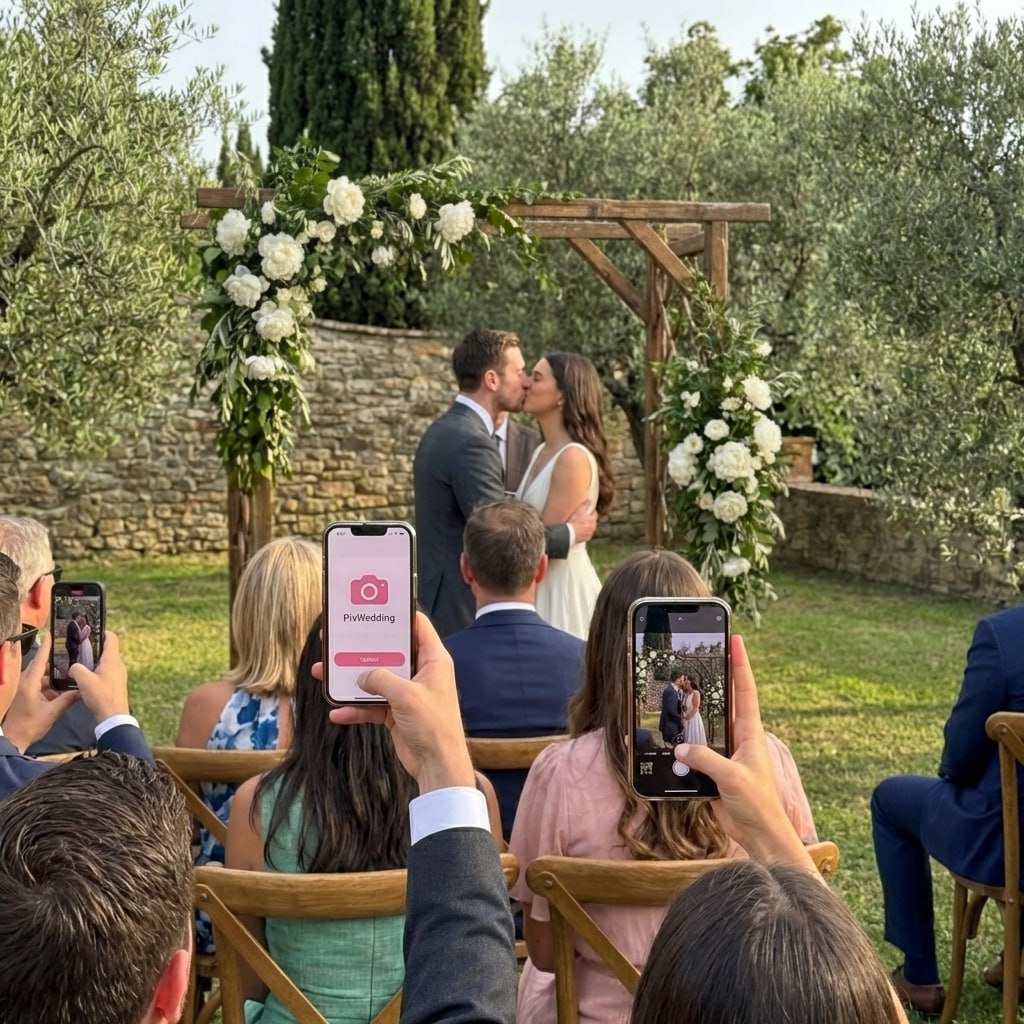
Let the guests hold the cameras, not you.
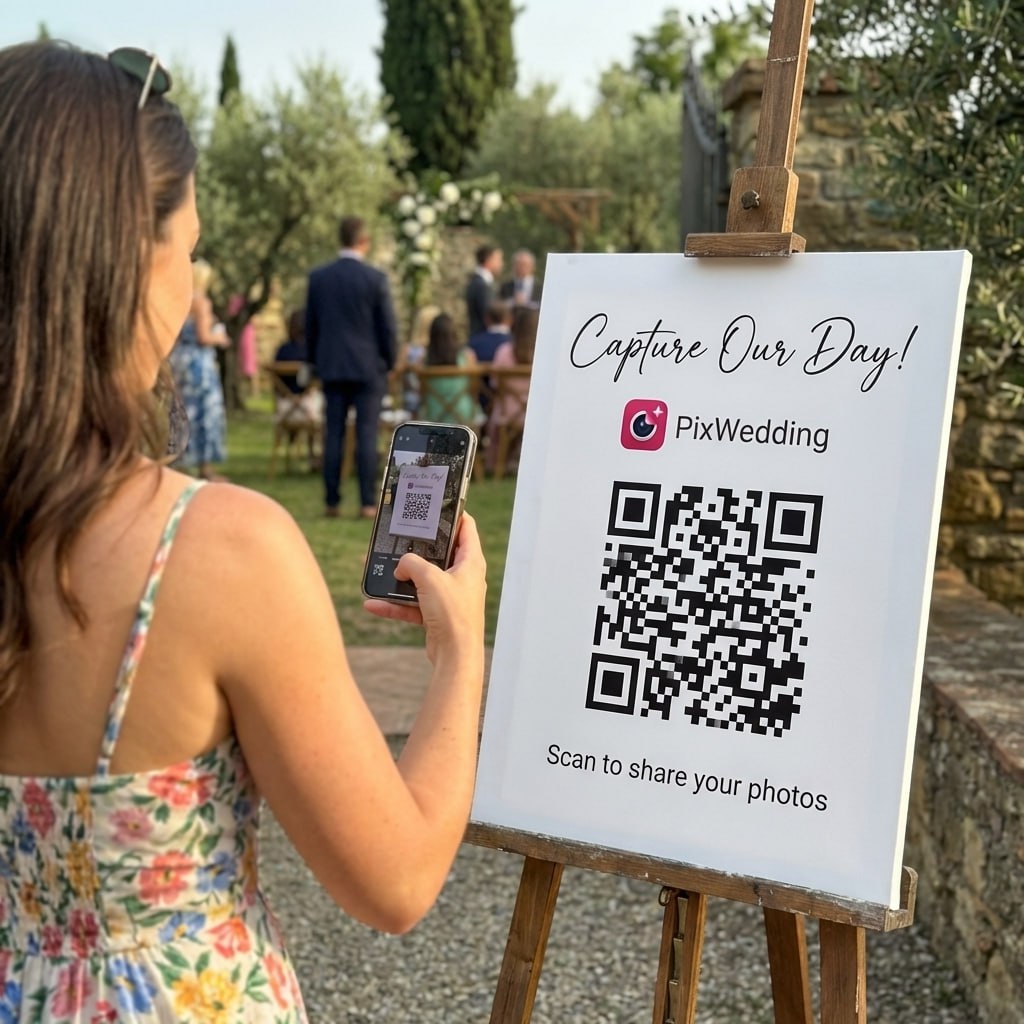
One less spotlight job on your plate: a QR code at each table means every guest photo lands in one shared album on its own, so you are not the one tracking down anyone's phone after the fact.
From Mom
Scan to join the album
No app, no account
UPLOADING
Saving your moment
THE ALBUM
Emma & Jack
June 21, 2026
647 photos · 95 guests



SCAN TO TRY
pix.wedding/
your-wedding
One Fewer Thing to Manage While You Are Already Carrying Enough
Part of the spotlight pressure brides describe is not just being watched, it is also being responsible for capturing the day while being in it. Chasing down guests for their photos afterward, or worrying whether anyone got a shot of a specific moment, adds a small but real layer of logistics on top of everything else you are already holding.
A shared QR photo album removes that specific task without adding anything to your morning. Guests scan a code, upload directly from their phones, and every photo lands in one place automatically. It will not touch the identity questions or the family dynamics, but it does take one concrete, manageable item off the list, which is often exactly what helps event-pressure jitters ease.
Scripts for the Moments Bride Pressure Peaks
Having the words ready in advance makes them much easier to say when you actually need them. These are starting points, adjust them to sound like you.
Before walking down the aisle, when the spotlight feels like too much
(Internal only.) "This is not a performance. It is a room full of people who love us. I only need to look at one face."
Talking to your partner about the name or identity shift
"I am fully in on marrying you. I am also having a harder time than I expected letting go of my name. Can we figure out together what feels right, whether that is keeping it, hyphenating, or something else?"
Redirecting a family member who is adding pressure
"I know you want this day to be perfect, and I love that you care. I need us to go with the plan we already made so I am not managing extra decisions this week."
Asking a bridesmaid for support without triggering a panic spiral
"I am having a wave of pre-wedding jitters, and I need you to just listen for a few minutes, not fix it or worry with me."
How to Talk to Your Bridesmaids About Cold Feet
Your bridesmaids exist for exactly this conversation. How you bring it up matters more than whether you bring it up at all. This framework keeps the exchange grounding instead of panic-inducing.
Choose the right bridesmaid
Pick someone who listens more than she advises. You do not need someone who immediately tries to "fix" your feelings or panics alongside you. You need someone who can sit with discomfort and hold space without needing you to resolve it on the spot.
Be specific about what you need
Say: "I need to talk through some feelings, and I just need you to listen. I do not need you to convince me everything is fine." This sets expectations up front and keeps her out of problem-solving mode.
Name the feeling, not the conclusion
Say "I have been feeling really anxious about the spotlight" instead of "I am thinking about calling off the wedding." The first invites conversation. The second invites crisis management neither of you needs.
Ask for help thinking, not reassurance
Instead of "tell me I am doing the right thing," try "can you help me think through what I am actually feeling." Reassurance feels good for five minutes. Working through the feeling lasts through the wedding morning.
Bride-Specific Calming Rituals for Wedding Morning
The morning of the wedding sets the tone for the whole day, and it is also when spotlight pressure peaks. Instead of moving straight into hair, makeup, and photos, carve out a small window of intentional calm first.
30 minutes of "no wedding talk"
The first 30 minutes after waking should be wedding-free. No vendor calls, no timeline checks, no seating chart texts. Just coffee, breakfast, and breathing. Your planner or maid of honor can field anything urgent.
Write a letter to your future self
Before the getting-ready chaos starts, spend ten minutes writing to yourself. Why you chose this person, what you are looking forward to, what a year from now might look like. Seal it and open it on your first anniversary.
A private moment with someone who grounds you
Before hair and makeup, spend five quiet minutes with your mother, your best friend, or whoever makes you feel most like yourself. No photos, no audience, just a moment of connection before the spotlight begins.
Read your partner's letter or your own vows
If your partner wrote you a wedding-morning note, read it slowly. If you wrote personal vows, read them to yourself first. Let the words remind you this day is about the two of you, not the audience in the seats.
Name the pressure out loud, once
Say the specific thing out loud to one trusted person: "I am nervous about everyone watching me," or "I am grieving my old name a little." Naming it once, clearly, tends to shrink it. Vague dread is heavier than a named, specific feeling.
Reflection Prompts Built for Bride-Specific Pressure
These prompts are aimed at the five pressures above, not generic wedding stress. Spend two minutes with each one instead of trying to answer everything at once.
If no one were watching the ceremony except my partner, would today feel different?
Isolates spotlight pressure from the commitment itself.
What specifically do I feel about changing (or keeping) my name, separate from whether I want this marriage?
Identity questions and relationship questions are different questions, even when they show up at the same time.
Whose expectations am I trying hardest to meet this week: mine, my partner's, or a parent's?
Family-mediator burnout often masquerades as personal doubt.
When did I last feel completely myself with my partner, away from wedding planning entirely?
Reconnecting with the relationship outside the event resets perspective fast.
Is the fear in my chest about "forever," or about "Tuesday," this specific person on an ordinary day?
Fear of permanence and fear of a person are two very different signals.
What would I tell a close friend who described exactly what I am feeling right now?
We are almost always more clear-eyed and generous with others than with ourselves.
A Quick Glossary of Bride-Specific Pressure
Naming a feeling precisely, in one sentence, usually shrinks it. Use this as a quick reference when you are trying to describe what you are feeling to your partner or a bridesmaid.
Spotlight pressure: Anxiety about being watched, photographed, and observed for an extended period, separate from any feelings about the marriage itself.
Identity shift anxiety: A sense of loss or disorientation tied to a name change or a new social role, which can coexist with genuine excitement about the relationship.
Family-mediator burnout: Exhaustion from absorbing and balancing two families' expectations for months, often mistaken for doubt about the marriage.
Appearance scrutiny: Pressure to look a certain way in photos and in person, often amplified by dress fittings, diet comments, or beauty-industry marketing aimed at brides.
"Is this the one" second-guessing: A brief, normal cognitive flash of doubt that accompanies any permanent decision, distinct from sustained, partner-specific concern.
Related Guides
What a Long-Term Study Actually Found About Pre-Wedding Doubt
A widely cited UCLA study tracked 232 newlywed couples for four years after their weddings, asking each partner whether they had ever felt uncertain or hesitant about getting married. Doubts were common on both sides: 38 percent of wives and 47 percent of husbands reported some premarital doubt, which lines up with how normal this feeling actually is.
The more interesting finding was about outcomes. Among wives, 19 percent of those who had reported doubt were divorced four years later, compared with 8 percent of those who had not. That gap does not mean every bride with cold feet is headed for divorce; most brides in the study who had doubts stayed married. It does mean that persistent, partner-focused doubt is worth taking seriously rather than dismissing outright, which is exactly why the jitters-versus-signals table above focuses on whether the worry is about the event or about the person.
- •Doubt about the wedding event itself (spotlight, family, appearance) is the most common and least predictive form of cold feet
- •Doubt centered specifically on a partner's character or behavior is the pattern worth examining more closely
- •Talking honestly with a partner, and with a therapist if the feeling persists, is associated with better outcomes either way
- •The identity shift tied to a new name or role is a normal, separate experience from doubt about the relationship
When a Bride's Cold Feet Is Worth Professional Support
Most bride cold feet eases with rest, an honest conversation, and a plan for the parts of the day that feel unmanageable. There are situations where a licensed therapist or couples counselor is simply the wiser next step: if the feeling is not easing with time or reassurance, if it is specifically about your partner's behavior, respect, or compatibility on major life decisions, or if it is affecting your sleep, eating, or ability to function day to day.
There is no shame in pausing a wedding to make sure you are making the right decision with clear eyes. That is a harder, braver conversation than going through with something that quietly does not feel right, and a therapist trained in premarital work can help you tell the difference between pressure that will pass and a concern that will not.
Explore more free wedding tools
Everything you need to make your wedding day stress-free and unforgettable.
Seating Chart Planner
Plan your reception seating visually.
Guest List Manager
Track RSVPs and dietary needs.
Budget Allocator
Turn your total into a category-by-category plan.
Venues by State
Explore venues across all 50 states.
Countdown Timer
Count down the days to your big day.
Wedding Checklist
Month-by-month planning checklist.
Bachelorette Party Games
15+ games with rules, supplies, and timing.
Alternative to Wedding Guest Book
15 creative alternatives guests enjoy.
Frequently Asked Questions
Straight answers to the questions people ask most about this topic.
Completely normal. Research following newlywed couples for years afterward found that roughly 38 percent of brides report some form of premarital doubt, whether that is nervousness about the ceremony, dread about being the center of attention, or simply feeling overwhelmed by months of planning. The expectation that brides should feel nothing but joy makes the feeling seem abnormal, but it is not.
The pressures that show up most for brides are the spotlight of being watched all day, an identity shift tied to a new name or role, family expectations pulling from two directions, appearance and body-image scrutiny, and a normal flash of second-guessing that comes with any lifelong decision. Often it is a combination, not just one thing.
Ask where the worry is pointed. Ordinary jitters are usually about the event itself, the aisle, the guest list, family drama, your appearance, and they ease after a real conversation with your partner. A signal worth a closer look is specific to your partner's character or behavior, persists for weeks, and does not lift no matter how many people reassure you. The comparison table above walks through the full split.
Start with 30 minutes of no wedding talk, eat a real breakfast, and have a private moment with someone who grounds you before hair and makeup starts. Name the specific pressure out loud once, whether that is the spotlight or your old name, rather than sitting with vague dread. If the feeling is intense, talk to your maid of honor using the framework above: name the feeling, ask for listening, not fixing.
Yes. Excitement about the marriage and a sense of loss about a name you have had your whole life are not contradictions, they can sit side by side. Many brides find that talking with their partner about options such as keeping the name professionally or hyphenating resolves most of the ache without requiring any decision about the marriage itself.
If your cold feet are persistent, specific to your partner rather than the event, and getting worse rather than better, that is worth taking seriously. Talk to a licensed therapist before making a final decision. If, after honest reflection and professional guidance, you still feel that pausing or calling off the wedding is right, know that doing so is difficult but far less painful than ending a marriage. Your well-being comes first.