
Panic Attack Before Your Wedding? Here Is What Helps Right Now
Your chest is tight, your heart is pounding, and you feel like you cannot breathe. This page is written to be read in the middle of that. Start with the next two paragraphs.
If your heart is racing, your breathing feels short, and a wave of fear has hit you out of nowhere, what you are describing sounds like a panic attack. A panic attack is a sudden episode of intense fear with physical symptoms that peaks within minutes and then fades, even though it can feel endless while it is happening. It is not dangerous on its own, and it is not a sign that something is wrong with your relationship or your decision to get married.
Right now, the fastest thing you can do is move your attention out of your head and into your senses, then slow your breathing on purpose. Skip down to the grounding and breathing steps if you need them immediately. The rest of this page covers what the symptoms are, what to do for yourself or a partner mid-episode, and when it is worth talking to a doctor or therapist, not just today.
What a Panic Attack Actually Feels Like
According to the Mayo Clinic, a panic attack causes a sudden intense fear or discomfort that peaks within minutes. The physical symptoms it lists include:
The NHS notes that most panic attacks last between 5 and 20 minutes, and that trying to fight the sensations often makes them feel worse. Instead, the NHS suggests reassuring yourself that the attack is not life-threatening and letting it move through you rather than bracing against it.
This list describes common symptoms so you can recognize what is happening. It is not a diagnostic tool, and having some of these symptoms does not mean you have a panic disorder. Only a doctor or licensed mental health professional can make that determination.

First dance
You guys!!
One less thing to manage today.
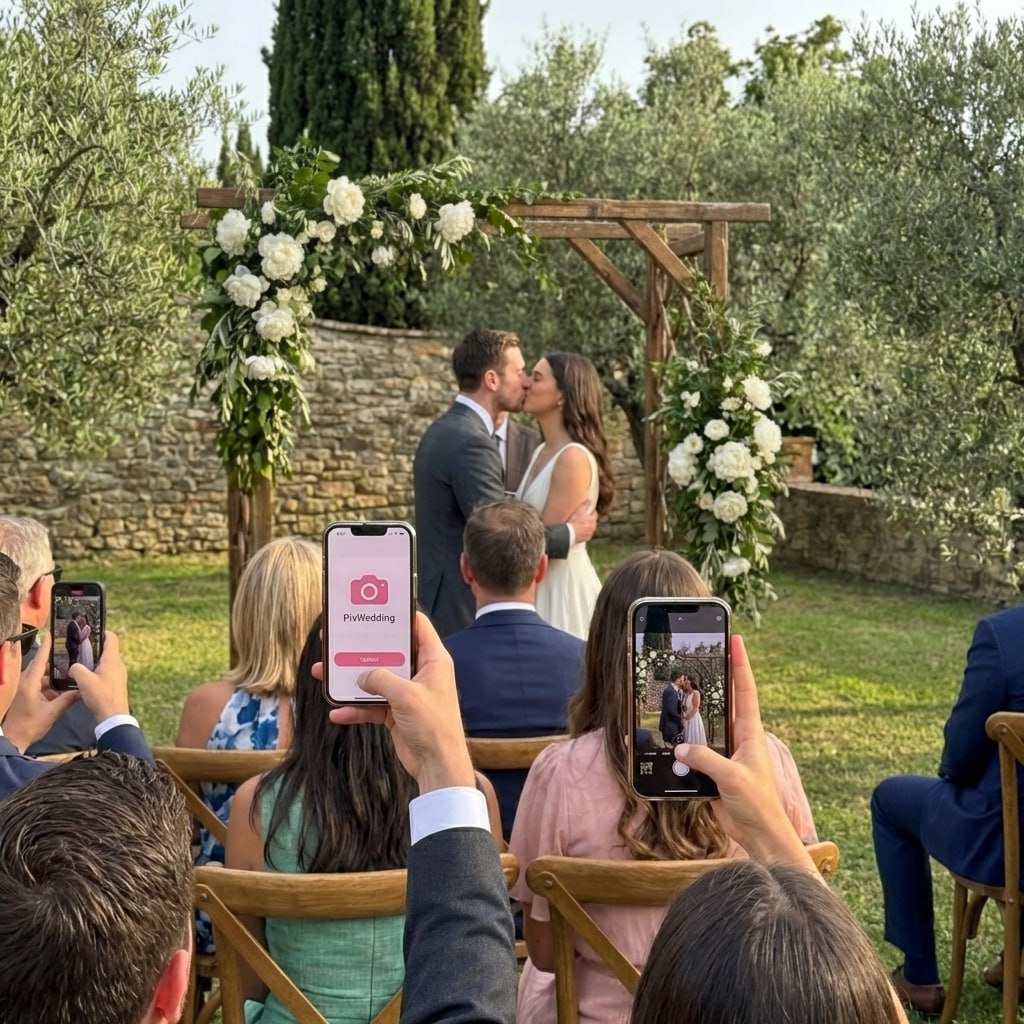
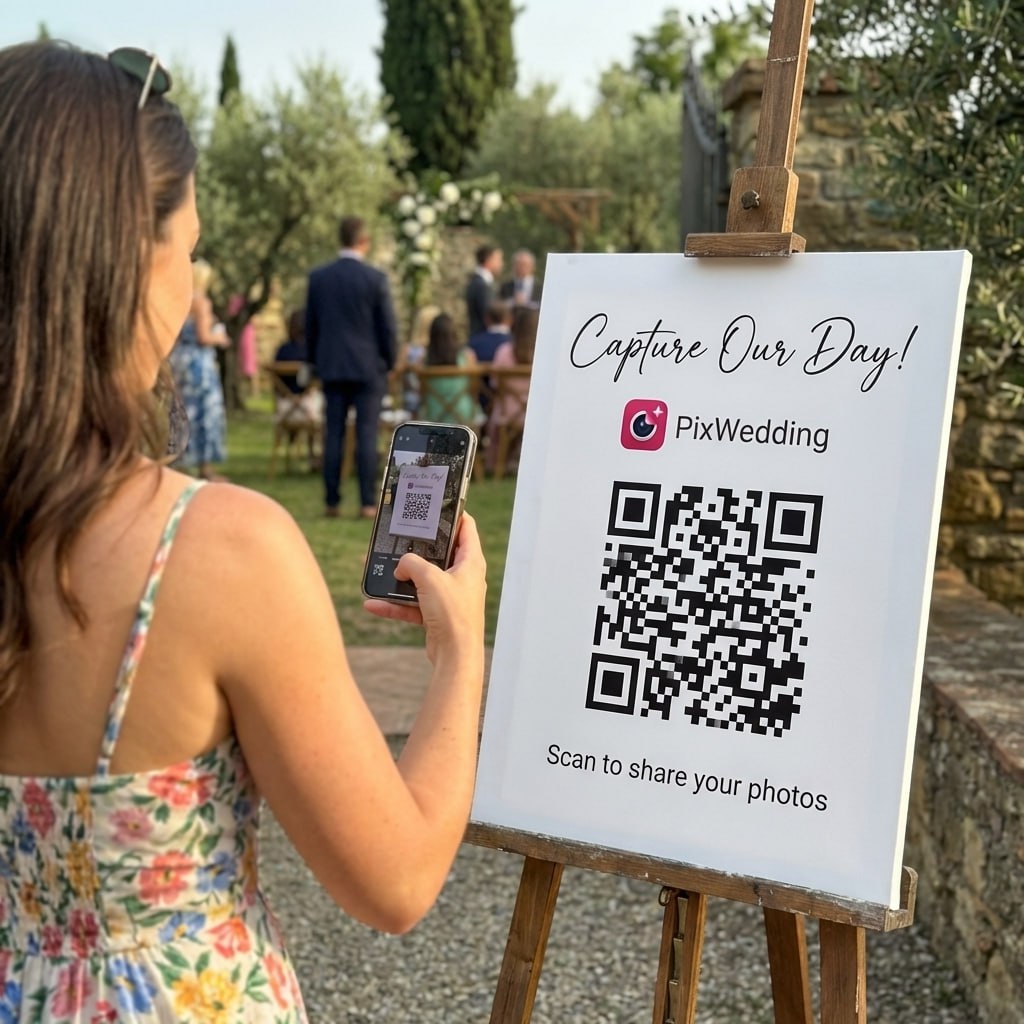
Pix Wedding quietly collects every guest photo from a QR code, so if you need five minutes alone before the ceremony, nothing about the day goes undocumented while you take care of yourself.
From Mom
Scan to join the album
No app, no account
UPLOADING
Saving your moment
THE ALBUM
Emma & Jack
June 21, 2026
647 photos · 95 guests

SCAN TO TRY
pix.wedding/
your-wedding
Right Now: 5-4-3-2-1 Grounding, Then Paced Breathing
This two-part sequence is adapted from NHS inform's grounding exercise guidance and its controlled breathing exercise. Do it slowly. Out loud if you can, silently if you cannot.
Part one: name your senses
Name things you can SEE
Your dress hanging on the door. The flowers on the table. Sunlight on the wall. Your shoes. Your ring.
Name things you can TOUCH
The fabric of your robe. The cool surface of a table. Your hair. The ground under your feet.
Name things you can HEAR
Music playing. People talking in the next room. Birds outside.
Name things you can SMELL
Your perfume or cologne. The flowers. Fresh air from a window.
Name thing you can TASTE
A sip of water. Mint from toothpaste. A piece of candy.
Part two: paced breathing
In 3, hold 3, out 3, hold 3
Repeat this cycle for a few minutes. The goal, per NHS inform, is simply to slow your breathing down so your body's alarm system has time to switch off.
Do This, Not That, Mid-Episode
Whether it is happening to you or to someone you love on the wedding day, small choices in the moment make a real difference.
If it is happening to you
Tell yourself: "this is a panic attack, it is not dangerous, and it will pass."
Start the grounding and breathing sequence above.
Move somewhere quieter if that is possible.
Let one trusted person know what is happening.
Fight the sensations or judge yourself for having them.
Make a big decision, like leaving your own wedding, until the wave has passed.
Search your symptoms on your phone in the moment. It rarely helps and often adds fuel.
If you are helping a partner or friend
Stay close and speak in a calm, low, unhurried voice.
Say simple, reassuring things: "I am here. This will pass. Let's breathe together."
Offer to do the grounding steps out loud with them.
Move with them somewhere quieter if they want that.
Say "just calm down" or "there is nothing to worry about."
Rush them, or let your own visible worry add to theirs.
Leave them alone if they have asked you to stay.
When It Is Worth Talking to a Professional
One panic attack, especially around an event as high-stakes as a wedding, does not need a diagnosis or a treatment plan. But it is fair to ask whether this is a one-time reaction to an unusually intense day, or something worth understanding better.
According to the American Psychological Association, having repeated panic attacks, four or more, or living in ongoing fear of the next one, are both signs it may be worth talking with a mental health professional.
The same source describes panic disorder as highly treatable, with most people showing noticeable improvement within about 10 to 20 weekly sessions of cognitive behavioral therapy.
None of this is a diagnosis, and this page is not qualified to give you one. Only a doctor or licensed therapist can tell you what is actually going on. What they can offer is an evaluation, options, and a plan, which is a very different thing from just getting through the wedding day.
If panic attacks started well before the engagement, or keep recurring outside of wedding planning, that is worth mentioning to your doctor regardless of the wedding date. There is no weakness in asking for that conversation. It is simply information your doctor needs.
Panic Attack or Just Wedding Nerves?
Not every wave of pre-wedding stress is a panic attack, and it helps to know the difference so you reach for the right tool. General wedding nerves usually feel like a background hum: a knot in your stomach, some sleeplessness, a racing mind about logistics. It builds gradually and responds to normal reassurance and preparation.
A panic attack is different in kind, not just degree. It arrives suddenly, often without an obvious trigger, and includes the physical symptoms described above: a pounding heart, shortness of breath, a sense of impending doom. It peaks fast and needs a different response than "try to relax," which is exactly what the grounding and breathing sequence above is for.
What to Tell Your Wedding Party in Advance
You do not need to go through this alone on the day. Telling at least one trusted person, your maid of honor, best man, or a close family member, gives you a safety net. Here is one way to frame it:
"I want you to know that I sometimes get panic attacks when I am really overwhelmed. If I seem to disappear or get shaky on the day, I might need five minutes somewhere quiet with you, doing some breathing together. It is not about the marriage or about doubts. It is just how my body handles big emotion. Having you there will help a lot."
Most people are relieved to know exactly how they can help. A specific instruction, take me to a quiet room and breathe with me, is far more useful in the moment than a vague "just be there for me."
How This Can Show Up: One Illustrative Example
The scenario below is illustrative only, a composite written to show how the steps on this page fit together in practice. It is not a real couple or a case study.
During the getting-ready hour
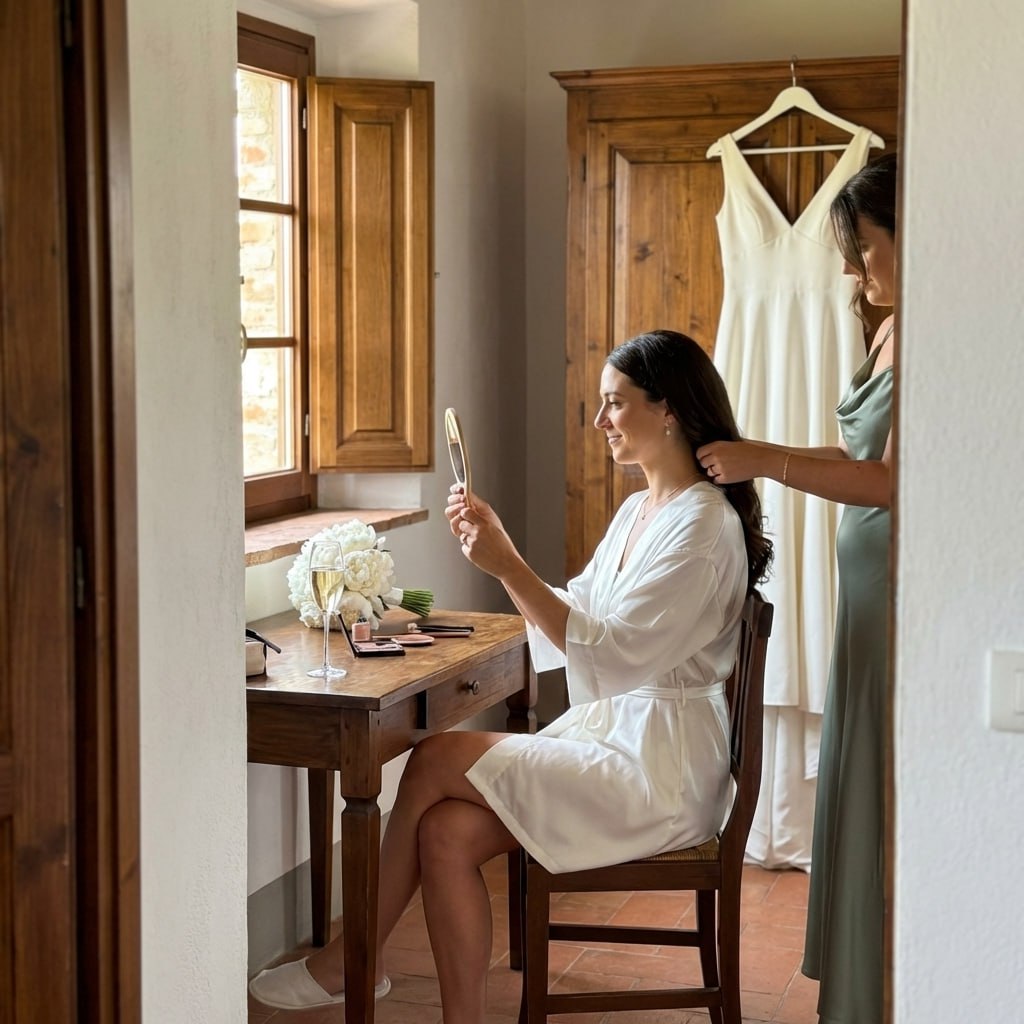
Picture a bride who has been calm all morning. Thirty minutes before the ceremony, without warning, her heart starts pounding and the room feels like it is tilting. She tells her sister, "I think I am having a panic attack," and they step into an empty hallway. Her sister does not tell her to relax. She says, "I am right here. Let's find five things you can see," and they name them out loud together: a window, a light fixture, a fire extinguisher, a painting, her own reflection in a glass door. They move through touch, sound, smell, and taste, then breathe in for three, hold for three, out for three, hold for three, four times through.
Within a few minutes her heart rate has dropped and her hands have stopped shaking. She does not feel perfect, but she feels like herself again, which is usually enough to walk back in.
During the reception toasts
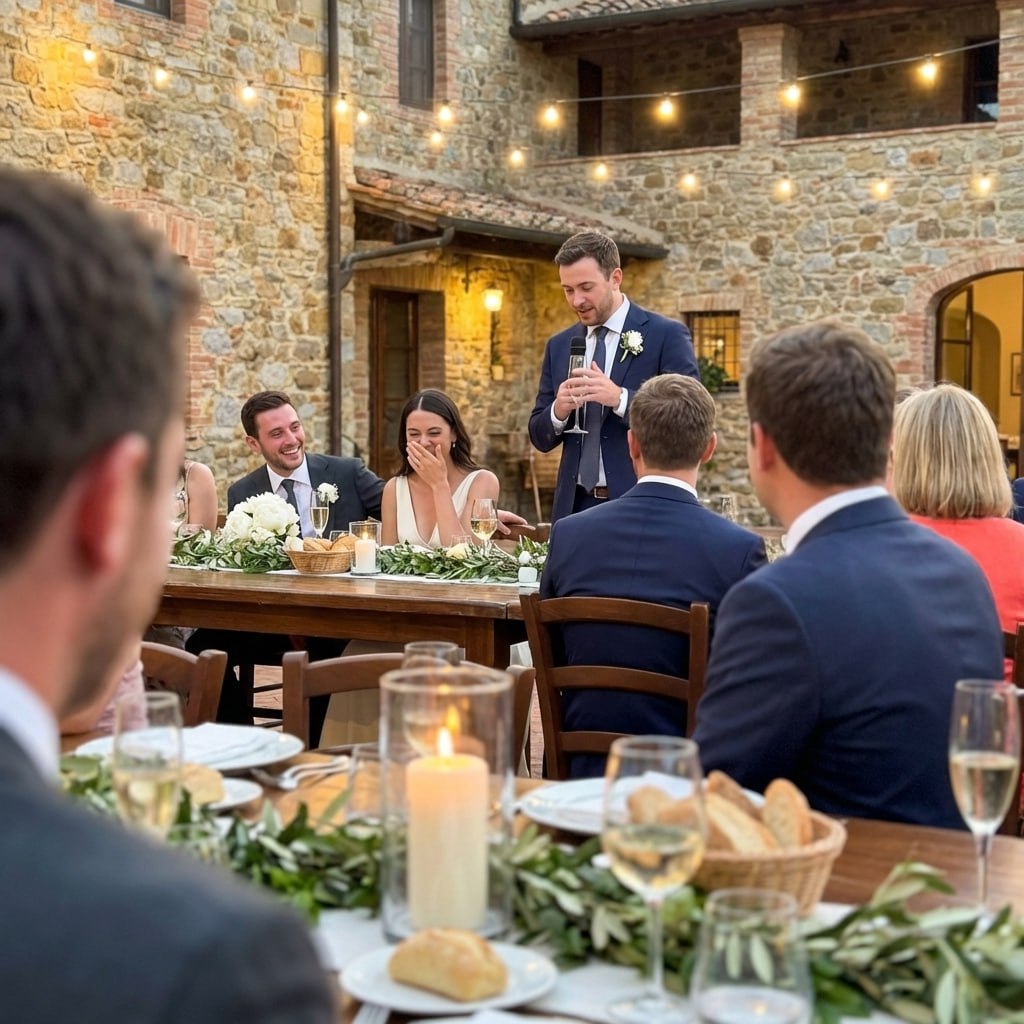
Picture a groom sitting at the head table as the speeches start. He has been fine all day, but the sudden attention of a hundred people turning toward him triggers a wave of chest tightness and a racing heart. Rather than bolt from the room, he squeezes his new spouse's hand under the table, focuses on the feel of the tablecloth and the sound of his best man's voice, and breathes out slowly through his mouth a few times. The wave passes within a few minutes without anyone else in the room noticing anything was wrong.
Neither scenario needed a dramatic exit. Both used the same underlying sequence: name the senses, slow the breath, let it pass.
Panic Attack, Anxiety, and Panic Disorder: What the Words Mean
These terms get used loosely, which can make it harder to know what you are dealing with. Here is how the sources cited on this page use them.
Panic attack
A single, sudden episode of intense fear with physical symptoms that peaks within minutes, per the Mayo Clinic. It can happen to anyone, once, without ever recurring.
Anxiety
A broader, usually slower-building state of worry or unease. It can precede a panic attack, but does not always escalate into one.
Panic disorder
A diagnosable condition involving repeated, unexpected panic attacks along with ongoing fear of future ones, per the American Psychological Association. Only a licensed professional can diagnose it.
A Small Kit for the Getting-Ready Room
Pack a small bag and keep it in your getting-ready room. Having these on hand means you are prepared if anxiety spikes, rather than scrambling for something in the moment.
Cold water bottle
Sipping cold water, or holding something cold against your wrists, gives your hands something to do and your senses something concrete to focus on.
A written note from your partner
Ask your partner to write you a short note in advance that you can read if you need grounding. Familiar, loving words can anchor you.
Mints or hard candy
A strong taste is part of the grounding sequence above, and having one ready saves you a step mid-episode.
A printed card with the breathing steps
In the middle of a panic attack it is easy to blank on what to do. A card with the four breathing steps saves precious time.
Headphones with one calm song queued
A single familiar, unhurried song can occupy your hearing sense while you work through the sequence.
Your doctor or therapist's number, if you have one
If you are already working with a professional, having their number in your phone (not just their name) removes friction if you want to call afterward.
Reducing the Odds, In the Weeks Before
You cannot guarantee a panic attack will not happen, but a few ordinary habits in the lead-up genuinely lower how overwhelmed your nervous system is on the day itself.
Practice the grounding and breathing sequence once a day, even when you feel fine. Familiarity makes it easier to use under pressure.
Keep caffeine and alcohol light. Both can amplify a racing heart and shakiness the next day. Do one round of the paced breathing pattern before bed.
Eat something with protein. Low blood sugar can mimic or worsen anxiety symptoms. Have water within reach all morning.
Signal your one trusted person. Find a quieter spot if you can. Run the grounding sequence, then the breathing pattern. Give it a few minutes before deciding anything.
If what you're feeling goes beyond a single panic attack
Take the photo logistics off your plate
You cannot control every wave of feeling on your wedding day, but you can control how much you have to manage. Pix Wedding collects every guest photo automatically from a QR code, no app, no chasing anyone down afterward.
Get Started FreeMore Questions People Ask
Can dehydration or lack of sleep make a panic attack more likely?
Both are common physical stressors, and it is reasonable to treat them as contributing factors rather than a guaranteed cause. Wedding mornings often involve less sleep than usual, skipped meals, and forgetting to drink water while getting ready, all of which can leave you more physically depleted going into an already emotional day. Prioritizing water, a real breakfast, and rest where you can is a sensible precaution, not a guarantee against panic.
What if a panic attack happens during the ceremony itself?
Squeeze your partner's hand and focus on their face rather than the crowd. Breathe slowly and, if you need to, it is completely acceptable to pause for a moment. Most officiants have seen this before and will simply wait. A brief pause is far less noticeable to guests than it feels to you in the moment, and your partner will understand exactly what is happening if you have told them in advance.
Is it possible to have just one panic attack and never have another?
Yes. Plenty of people experience a single panic attack tied to an unusually stressful event and never have another one. Recurrence is the key factor mental health professionals look at, which is why the guidance on this page focuses on repeated attacks, four or more, as the point where a conversation with a doctor or therapist becomes worth having, not a single episode.
Why Your Body Reacts This Way
A panic attack before your wedding is not a sign that something is wrong with your relationship. Weddings concentrate more emotional, social, and logistical pressure into a single day than almost any other event, and your body can respond to that overwhelm with the same fight-or-flight reaction it would use for physical danger.
Understanding that mechanism can help you depersonalize the experience while it is happening. You are not losing control and you are not the only one this has happened to. Your nervous system is reacting intensely to an intense day, and intensity is not the same thing as danger.
- •Panic attacks typically peak within minutes and then fade on their own
- •Grounding and paced breathing can shorten how long the peak feels
- •Telling one trusted person your plan in advance reduces how alone the moment feels
- •Recurring attacks, four or more, are worth mentioning to a doctor or therapist
- •None of this requires you to diagnose yourself. A professional can do that if it becomes relevant.
Practicing the Sequence Before the Wedding Day
Grounding and breathing techniques work better under pressure if your body already recognizes them. In the weeks before the wedding, run through the 5-4-3-2-1 sequence and the paced breathing pattern once a day, even when you are not anxious. A few minutes of practice turns an unfamiliar exercise into a familiar one, which matters because unfamiliar instructions are harder to follow when your thinking feels foggy.
It also helps to decide, ahead of time and while calm, who your one trusted person will be and what you want them to do. Deciding this in advance means you are not making that decision under pressure on the day itself.
Explore more free wedding tools
Everything you need to make your wedding day stress-free and unforgettable.
Seating Chart Planner
Plan your reception seating visually.
Guest List Manager
Track RSVPs and dietary needs.
Budget Allocator
Turn your total into a category-by-category plan.
Venues by State
Explore venues across all 50 states.
Countdown Timer
Count down the days to your big day.
Wedding Checklist
Month-by-month planning checklist.
Bachelorette Party Games
15+ games with rules, supplies, and timing.
Alternative to Wedding Guest Book
15 creative alternatives guests enjoy.
Frequently Asked Questions
Straight answers to the questions people ask most about this topic.
Start with the 5-4-3-2-1 grounding sequence: name 5 things you see, 4 you can touch, 3 you hear, 2 you smell, and 1 you taste. Then move into paced breathing: in through your nose for 3 seconds, hold for 3, out through your mouth for 3, hold for 3, and repeat for a few minutes. Both techniques are adapted from NHS self-help guidance and are meant to slow your body down rather than fight the sensations.
According to the Mayo Clinic, a panic attack causes sudden, intense fear or discomfort that peaks within minutes, along with physical symptoms such as a racing heart, shortness of breath, sweating, shakiness, chest tightness, dizziness, nausea, and a sense of impending doom. You do not need every symptom for it to count as a panic attack.
The NHS notes that most panic attacks last between 5 and 20 minutes, with symptoms peaking within the first few minutes. Trying to fight the sensations can make them feel worse or last longer; reminding yourself the attack is not life-threatening and letting it pass tends to help it resolve faster.
Yes, if you feel comfortable doing so. Telling one trusted person in advance, and giving them a specific instruction like taking you somewhere quiet and breathing with you, is far more useful in the moment than a vague request for support. It also means you are not managing the moment entirely alone.
The American Psychological Association notes that having four or more panic attacks, or living in ongoing fear of the next one, are both signs it may be worth talking with a mental health professional. This is not a diagnosis, only a doctor or licensed therapist can determine that, but recurring attacks are worth a conversation beyond just getting through the wedding.
No. A panic attack is a physiological response to overwhelming stress, not a verdict on your relationship. Weddings are genuinely one of the most emotionally intense days most people experience, and an intense physical reaction to that intensity does not mean you have doubts about your partner. If you are also experiencing ongoing uncertainty about the relationship itself, that is a different and separate thing worth exploring on its own terms.