How to Save Money on Wedding Flowers, With Real Prices
Pay a florist for the bouquet and the ceremony, make the rest from bulk stems, pick flowers in season and use the ceremony flowers twice. Below: where a florist quote goes, Costco vs Sam’s Club vs wholesale prices, a bloom calendar, 6 swaps and a DIY bouquet plan.
Prices checked 30 September 2026, with a source on every number.
Spend here: the bouquet
Example quote · 100 guestsBefore · After
Bridal bouquet$250$250
4 bridesmaid bouquets$400$140
6 boutonnieres$150$60
10 low centerpieces$1,500$400
2 ceremony arrangements$600$600
Head table arrangement$300$0
Delivery and setup$470$470
Total$3,670$1,920
$1,750 saved, same bouquet
01The short answer
How do you save money on wedding flowers?
Set an all-in number first: couples spend $2,800 on average and $1,900 at the median. Keep a florist for what the camera sees most, the bouquet and the ceremony, and make the table flowers yourself from bulk stems, which cost about $2 to $3 each at Sam’s Club and FiftyFlowers. Choose flowers in season, swap peonies for garden roses or ranunculus, lean on greenery, and move the ceremony flowers to the reception.
$2,800
is the average couples spend on flowers, $1,900 at the median, per The Knot
3.5x to 4.5x
the wholesale cost is the markup in the florist pricing formula Curate describes
30 to 50%
less is what in-season flowers cost versus the same flower out of season, per Poppy
$1.94
a stem for hydrangeas in a 20-stem Sam’s Club pack, $38.77 in total
Sources: The Knot Real Weddings Study, Curate (florist pricing), Poppy (seasonality) and Sam’s Club. The example quote in the hero is illustrative: $3,670 cut to $1,920, with bouquet, bridesmaid, boutonniere and centerpiece prices inside the ranges Zola and Poppy publish. Checked 30 September 2026.
02Where the money goes
What a florist quote is made of
The stems are the small part. Curate describes the usual florist formula: the wholesale cost of flowers and supplies (ribbon, wire, tape, vessels) times 3.5 to 4.5, plus a labor or design fee of 30 to 50%. That is why the savings are biggest where you take the labor off the invoice.
$100 of wholesale flowers, on the invoice
$100 of stems becomes $455 to $675
Low end: 3.5x, plus 30% labor$455
$100
$250
$105
High end: 4.5x, plus 50% labor$675
$100
$350
$225
Flowers and supplies, wholesale Florist markup Labor and design fee
Worked example of the formula in Curate’s florist pricing guide, labor taken on the marked-up price. Real quotes vary by florist and region.
Rank every piece by how long it is seen and how often it is photographed. The bouquet wins on both. The tables lose on the second one once the dancing starts.
Spend
The bridal bouquet
It is in the ceremony, the portraits and the toss, so it shows up in more photos than anything else. Zola puts a florist bouquet at $250 to $350. Keep it professional if one thing is.
Save
The reception tables
Centerpieces times tables is where quotes balloon: 10 low ones at Zola’s $100 to $250 each is $1,000 to $2,500. Greenery runners, candles and bud vases cover a long table for a fraction.
DIY
Petals, boutonnieres, bud vases
Small, repeatable pieces are the easiest to make yourself from bulk stems. A boutonniere at a florist runs about $25 each at Poppy; a bunch of spray roses at Trader Joe’s is $5.99.
Reuse
The ceremony flowers
They are on show for 30 minutes. Plan from the start for them to move to the head table, the bar or the cake table so you pay for them once and use them twice.
Prices from Zola, Poppy and The Stem Edit. The Knot adds that more greenery in a design lowers the cost. Checked 30 September 2026.
The flowers last a day
The photos of them last for good.
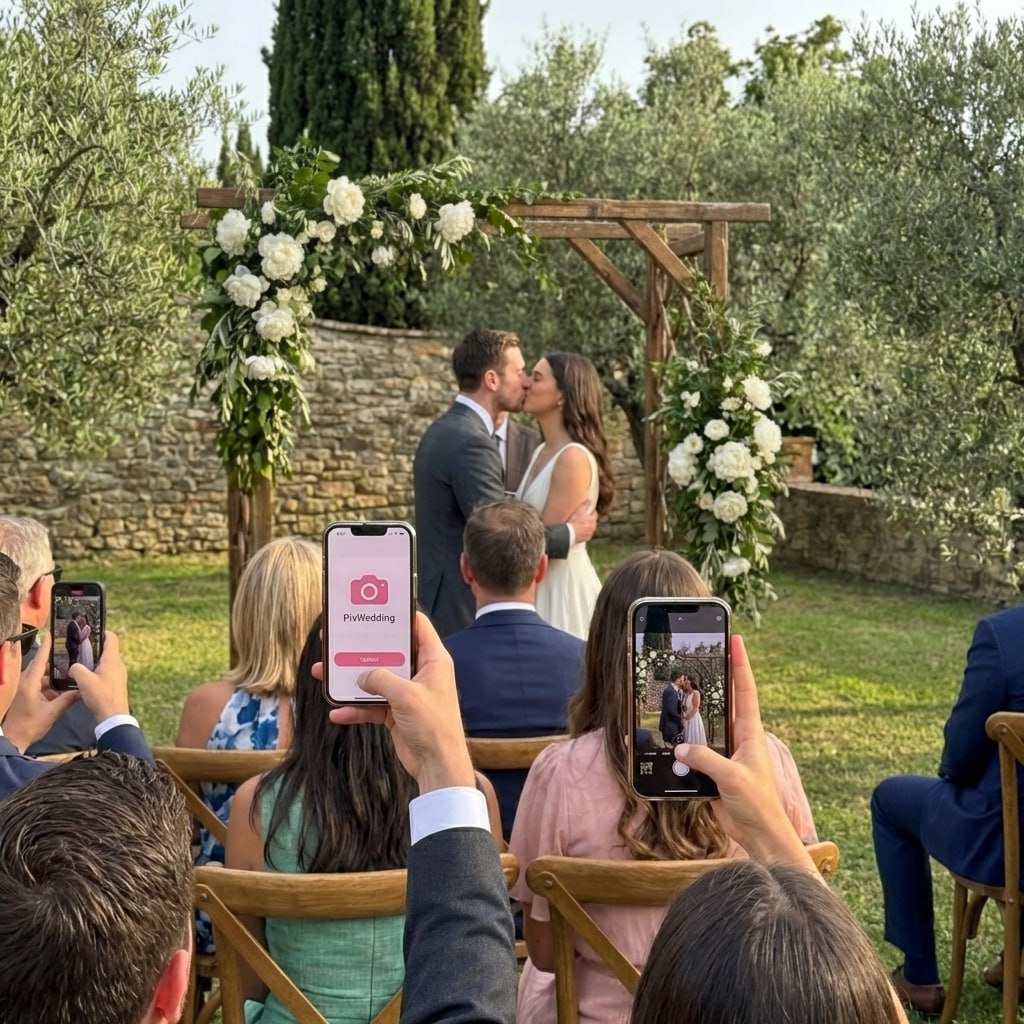
Your guests will photograph the bouquet, the tables and the petal toss from angles your photographer never sees. A Pix Wedding album collects every one of those photos and videos from the phone browser, with no app and no account, in one place you can download as a ZIP.
Point your camera
Scan to join the album
No app, no account
9:41
UPLOADING
Saving your moment
9:41
THE ALBUM
Nora & Sam
Example album
187 photos · 21 guests
AllMomentsMine
★
Add photosShare your moments
04Where to buy
Costco vs Sam’s Club vs florist vs wholesale
Seven ways to get wedding flowers, with prices read from each seller’s own listing on 30 September 2026. Rose chips mark the cell that most often rules an option out.
Best value for mostFlorist bouquet + DIY the rest
A florist bouquet and ceremony pieces, then Sam’s Club, FiftyFlowers or Trader Joe’s stems for the tables and the small pieces. Pro work where the camera looks, bulk prices everywhere else.
Option
What it costs
What you get
Ordering and delivery
The catch
Florist bouquet + DIY the restBest value for most
Florist for the bouquet and ceremony pieces, bulk stems for everything else
Pro work where the camera looks, simple arrangements on the tables
Florist delivers on the day; bulk flowers arrive 2 to 3 days before for prep
Some florists have a minimum order, so ask before you split the work
Full-service florist
$6,300 average for full service, per Zola
Design, every piece, delivery, setup and often teardown
Book months ahead; delivery and setup is often a flat fee ($470 at Poppy)
The priciest route: 3.5x to 4.5x markup plus 30 to 50% labor
Costco wedding collections
About $260 to $680 a collection, by size
Set designs, e.g. a 20-piece set: bridal bouquet, 3 bridesmaid bouquets, 2 centerpieces, 6 corsages, 6 boutonnieres, toss bouquet, petals
Order 15 to 20 days ahead; delivery Tuesday to Friday, none to PR, AK or HI
Fixed designs, no vases, changes only within 48 hours of ordering
Sam’s Club bulk stems
Hydrangeas, 20 stems for $38.77, about $1.94 a stem
Loose stems by variety and color, plus wedding bundles
Order up to 30 days ahead; delivery suggested 2 days before the event
You do the design, the prep and the arranging
FiftyFlowers wholesale
50 roses for $139.99, about $2.80 a stem
Bulk stems in many varieties, stems of about 15 to 24 inches
Priority overnight shipping, set to arrive 3 days before the event
You do the prep and the arranging, plus buckets and space
Trader Joe’s and grocery
Bunches from $3.99 to $12.99: eucalyptus $3.99, spray roses $5.99
Seasonal stems and greenery, good for bud vases and small bouquets
Buy 1 to 2 days before, from the stock on the shelf that day
No guarantee on color or quantity; call the store ahead
Faux flowers
Silk bouquets $20 to $100, real-touch $300 and up, per Zola
Any flower in any season, made weeks ahead, kept after
Order and arrange whenever you like, no last-week rush
The best-looking stems cost as much as real ones or more
Swipe to compare all 7
Best value for mostFlorist bouquet + DIY the rest
What it costs
Florist for the bouquet and ceremony pieces, bulk stems for everything else
What you get
Pro work where the camera looks, simple arrangements on the tables
Ordering and delivery
Florist delivers on the day; bulk flowers arrive 2 to 3 days before for prep
The catch
Some florists have a minimum order, so ask before you split the work
Full-service florist
What it costs
$6,300 average for full service, per Zola
What you get
Design, every piece, delivery, setup and often teardown
Ordering and delivery
Book months ahead; delivery and setup is often a flat fee ($470 at Poppy)
The catch
The priciest route: 3.5x to 4.5x markup plus 30 to 50% labor
Costco wedding collections
What it costs
About $260 to $680 a collection, by size
What you get
Set designs, e.g. a 20-piece set: bridal bouquet, 3 bridesmaid bouquets, 2 centerpieces, 6 corsages, 6 boutonnieres, toss bouquet, petals
Ordering and delivery
Order 15 to 20 days ahead; delivery Tuesday to Friday, none to PR, AK or HI
The catch
Fixed designs, no vases, changes only within 48 hours of ordering
Sam’s Club bulk stems
What it costs
Hydrangeas, 20 stems for $38.77, about $1.94 a stem
What you get
Loose stems by variety and color, plus wedding bundles
Ordering and delivery
Order up to 30 days ahead; delivery suggested 2 days before the event
The catch
You do the design, the prep and the arranging
FiftyFlowers wholesale
What it costs
50 roses for $139.99, about $2.80 a stem
What you get
Bulk stems in many varieties, stems of about 15 to 24 inches
Ordering and delivery
Priority overnight shipping, set to arrive 3 days before the event
The catch
You do the prep and the arranging, plus buckets and space
Trader Joe’s and grocery
What it costs
Bunches from $3.99 to $12.99: eucalyptus $3.99, spray roses $5.99
What you get
Seasonal stems and greenery, good for bud vases and small bouquets
Ordering and delivery
Buy 1 to 2 days before, from the stock on the shelf that day
The catch
No guarantee on color or quantity; call the store ahead
Faux flowers
What it costs
Silk bouquets $20 to $100, real-touch $300 and up, per Zola
What you get
Any flower in any season, made weeks ahead, kept after
Ordering and delivery
Order and arrange whenever you like, no last-week rush
The catch
The best-looking stems cost as much as real ones or more
A bride walks through the Costco bulk flowers she ordered, how she prepped them and the arrangements she made herself after florist quotes of more than $10,000.
Pick the colors first and the flowers second. In-season stems cost 30 to 50% less than the same variety sourced out of season, per Poppy. The calendar is for US weddings.
When each flower is in season in the US
Peonies in May, dahlias in September
JFMAMJJASOND
Ranunculus
Tulips, anemones
Peonies
Sweet peas, lilac
Sunflowers, zinnias
Dahlias
Mums, celosia
Roses, carnations, hydrangeas, eucalyptus
Peak In season Arriving or tail end
Seasons from Poppy, peaks from Paperlust. Checked 30 September 2026.
$5 vs $25
A peony stem wholesale: $5 to $8 in May, $15 to $25 in October when it is out of season, per Poppy.
12%
between the priciest month (August, $3,412) and the cheapest (April, $3,174) in Poppy’s data. The month matters less than the flowers you pick.
Year round and safe in any month: roses, carnations, hydrangeas, baby’s breath, eucalyptus, lisianthus and mums.
06Swap list
Cheaper flowers that look the same
Show the florist the photo, then ask for the look with these stems. Most guests will never know the difference.
Instead of Peonies
Garden roses or ranunculus
Peonies peak in May. In October they cost $15 to $25 a stem wholesale against $5 to $8 in May.
Instead of Premium garden roses
Spray roses
Several small blooms per stem fill a bouquet with fewer stems.
Instead of Dinner-plate dahlias
Zinnias or pompon mums
Dahlias peak in September. Outside late summer, zinnias and mums give the same round shape.
Instead of Cymbidium orchids
Alstroemeria
A similar speckled look on a long-lasting stem that is sold year round.
Instead of Lily of the valley
Bouvardia or waxflower
Small white clusters with the same delicate feel.
Instead of Tropicals
Carnations or spray mums
Carnations and mums are on Poppy’s year-round list and come in strong colors.
The swap that works everywhere: fewer flowers, more greenery. The Knot notes that more greenery in a design lowers the cost, and a bunch of eucalyptus is $3.99 at Trader Joe’s, per The Stem Edit. Peony prices from Poppy.
07DIY bouquet
How to make a wedding bouquet from bulk flowers
Seven steps from delivery day to the walk down the aisle. Do one practice bouquet the week before with grocery flowers.
01
Order 2 to 3 days out
Time the delivery so the flowers open in time: FiftyFlowers ships to arrive 3 days before, Sam’s Club suggests 2 days. Grocery stems go last, 1 to 2 days out.
02
Unbox and hydrate
Strip the leaves that would sit under water, cut every stem at an angle and stand them in clean buckets of cool water in the coolest room you have.
03
Start with greenery
Build a loose base of eucalyptus or other greenery in your hand. It sets the shape and fills space for little money.
04
Add focal flowers in odd numbers
Three, five or seven of the big blooms, turning the bunch as you go so it looks good from every side.
05
Fill with secondary flowers
Tuck the smaller flowers and filler into the gaps until the shape is round and nothing looks bare.
06
Bind and finish
Wrap the stems with floral tape just under the flowers, cover it with ribbon, then trim the stems to one even length.
07
Keep them in water until the ceremony
Back in water right away, out of the sun. Carry bouquets upright in buckets or jars in the car, and pat the stems dry just before the walk.
Swipe for all 7 steps
9:41
Nora & Sam
Edited todayFlower prep, Thursday
Roses + eucalyptus arrivedAll stems cut, in cool water4 bridesmaid bouquets10 bud vase triosRibbon on the bouquetsBuckets in the car Saturday
Ceremony Saturday, 4 pm
Two days out, one list
Video · 26:50 · Katherine Bergman Floral Designs
A bridal bouquet from $35 of Trader Joe’s flowers
A florist builds a full bridal bouquet from about $35 of grocery flowers and explains every step on camera: prepping the stems, placing the focal flowers and binding the finished bouquet.
Watch a guest scan the QR code and add photos from the phone browser in seconds, with no app and no account. Every photo of the bouquet, the tables and the toss lands in one album.
Nora & SamScan to add your photos
9:41
WEDDING ALBUM
Nora & Sam
Example album
AllCeremonyParty
Add a photoNo app needed
Nora & Sam
Added by Aunt Ruth
Made the bouquet yourself? Get every guest photo of it in one album
Share one link or a QR code and guests add photos and videos from the phone browser, with no app and no account. The flowers last a day, the photos of them stay. The first 20 uploads are free.
Free to try with 20 uploads, no card. Every paid plan is a one-time payment with unlimited photos, videos and guests. What changes between them is how long the album takes uploads, how long it is stored and the extras.
Starter
$49one-time
For collecting every original
Unlimited photos, videos & guests
Original quality (no compression)
No app for guests, QR + browser upload
Film roll mode with shot limit & revealNEW
QR code template designs
A & T
A & T
A & T
A & T
3 months upload from event date
6 months storage + ZIP download
Chosen by most couples
Standard
$59one-time
Most couples pick this
Everything in Starter
Live slideshow at the reception
Audio guestbook & guest names
Photo missions, photo bingo + leaderboardNEW
Up to 6 sub-albums (ceremony, reception)
Private upload link for your photographerNEW
Custom script and serif fonts
6 months upload, 1 year storage
One-time payment, no subscription
Pro
$89one-time
For big guest lists
Everything in Standard
AI selfie search for guestsNEW
Multiple admins
Custom domain for your album
Priority support
1 year upload, 2 years storage
One payment. Yours to keep.No subscription. No renewals. No surprise charges.
Secure checkout. Polar, Apple Pay, Google Pay.
Money-back guarantee:if your guests never upload a single photo, you get 100% back.See how it works
08Use them twice
Move the ceremony flowers to the reception
The cheapest arrangement is the one you already paid for. Plan the move with the florist or coordinator before you sign, so someone owns it on the day.
014:00 pm
Ceremony
Two arrangements frame the vows and the aisle.
025:30 pm
Head table
During cocktail hour the same two pieces move to the head table.
0310:30 pm
Last dance
Bud vases go home with guests; nothing is thrown out.
Ceremony pieces to the head table
The two largest arrangements of the day, used twice. Ask who moves them and when.
Bridesmaid bouquets as centerpieces
Set out jars of water on the head or cake table and drop the bouquets in after the photos.
Aisle flowers to cocktail hour
Small aisle arrangements fit high-top tables and the bar.
The arch as a backdrop
Move the arch behind the sweetheart table or use it as the photo spot at the reception.
Send the bud vases home
Tell guests they can take one on the way out, so nothing goes in the bin at midnight.
We used the arrangements from the altar at our ceremony for our sweetheart table. It was a huge money saver.
Lead with the number, not the mood board. A good florist will design to a budget; they just need to know it.
Ask before you sign
1What is your minimum order, and does it include delivery?
2Is delivery and setup a flat fee or priced by distance and time?
3Can the ceremony pieces move to the reception, and who moves them?
4Which flowers are in season on our date, in our colors?
5Can we rent vases and arches instead of buying them?
6What do you substitute if a flower is not available that week?
7Is teardown included, and what happens to the rentals after?
8When is the final count due, and can we cut items after signing?
Lines that bring the number down
“Our florist budget is $[amount] all in, with delivery and tax. What can you design for that?”
“What would you swap to bring this down 20% without changing the colors?”
“Can we keep the bouquet and the ceremony pieces and take the rest off the quote?”
“Could the ceremony flowers do double duty at the reception?”
“If we pick the flowers up instead of having them delivered, what comes off?”
9:41
FFloristiMessage
Tuesday 10:12 amOur florist budget is $1,400 all in, 100 guests. What can you do for that?
F
FloristYour bouquet, the ceremony pieces and delivery fit. Bridesmaid bouquets and centerpieces would take it over.
We will make those ourselves. Can the ceremony pieces move to the head table?
F
FloristYes, we can move them during cocktail hour.
Perfect, please send the updated quote
Message
A budget first, then the design
10Real vs faux
Are fake flowers cheaper for a wedding?
Sometimes. Zola lists silk bridal bouquets at $20 to $100 and real-touch ones at $300 and up, and the best-looking artificial stems cost as much as fresh ones. Faux wins on timing and heat; fresh wins on scent and feel.
Pros of faux flowers
Can be more affordable
Every flower in every season
They last forever
Won’t wilt in summer heat
Good for guests with allergies
Cons of faux flowers
Can look cheap up close
The best-looking ones cost as much as real flowers, or more
No scent
They lack the feel of fresh flowers
The middle path: a fresh bouquet, faux boutonnieres and arch pieces made weeks ahead.
Seven ways couples overspend on flowers, and the fix for each.
01
Asking for a quote without a number
A florist designs to your Pinterest board, not your budget, unless you say the all-in figure first.
02
Forgetting delivery, setup and tax
Delivery and setup is $470 flat at Poppy. Take it off the budget before you plan a single arrangement.
03
Designing around out-of-season flowers
A peony wedding in October pays $15 to $25 a stem instead of $5 to $8 in May. Pick the palette first, then the flowers in season.
04
DIYing everything
Bouquets, 10 centerpieces, boutonnieres and the arch in two days is a lot for a family. DIY the small repeatable pieces and keep the florist for the rest.
05
Ordering bulk flowers the day before
Many stems arrive closed and need a day or two to open. Follow the seller’s timing: 3 days for FiftyFlowers, 2 for Sam’s Club.
06
Paying for flowers used once
Ceremony pieces that sit in a corner after 4:30 are money on the floor. Plan the move before you sign.
07
Buying every vase new
Vases, arches and stands are often cheaper to rent or borrow. Costco collections, for one, come without vases.
The quick check
Read the quote line by line and ask of each piece: how long is it seen, and is it in the photos? Anything low on both is a cut.
Number first, design second
Florist for the bouquet, bulk for the tables
Delivery 2 to 3 days out
Common Questions
Saving on Wedding Flowers: Common Questions
Quick answers on the cheapest route, the budget, Costco, florist markup, cheap flowers, the wedding month, faux flowers and reusing the ceremony pieces.
Keep a florist for the bridal bouquet and the ceremony pieces, and make the rest yourself from bulk stems: Sam’s Club sells 20 hydrangeas for $38.77, FiftyFlowers sells 50 roses for $139.99 and Trader Joe’s bunches start at $3.99. Use greenery to fill space, choose flowers in season and move the ceremony flowers to the reception.
The Knot puts the average at $2,800 and the median at $1,900, with $1,600 for weddings of up to 50 guests and $3,300 for more than 100. Zola’s average for full-service floral design is $6,300, about 13% of the total budget. Set your all-in number, including delivery, setup and tax, before you ask for quotes.
For a set look at a fixed price, yes: Costco’s wedding collections run from about $260 to $680 by size, and a 20-piece set covers a bridal bouquet, 3 bridesmaid bouquets, 2 centerpieces, corsages, boutonnieres, a toss bouquet and petals. Order 15 to 20 days ahead, delivery runs Tuesday to Friday only and vases are not included.
Florists usually price from the wholesale cost of flowers and supplies, multiplied by 3.5 to 4.5, then add a labor or design fee of 30 to 50%, per Curate. You pay for design, prep, delivery, setup and teardown, not only the stems. That is also why DIY saves the most on simple, repeated pieces.
Flowers in season and flowers sold year round: carnations, spray roses, hydrangeas, baby’s breath, mums and eucalyptus are on Poppy’s year-round list. Poppy says in-season flowers cost 30 to 50% less than the same variety out of season, and greenery lowers the cost of any arrangement.
Less than most people think. In Poppy’s data from more than 7,500 weddings, the priciest month (August, $3,412) and the cheapest (April, $3,174) are about 12% apart. Guest count and design matter more. The month matters for single flowers: peonies are cheap in May and very expensive in October.
Sometimes. Zola lists silk bridal bouquets at $20 to $100 and real-touch bouquets at $300 and up, and notes that the best-looking artificial flowers cost as much as real ones or more. A common middle path is a fresh bouquet with faux boutonnieres or arch pieces made weeks ahead.
Yes, and it is one of the biggest savings. Ask the florist or your coordinator to move the ceremony arrangements to the head table, bar or cake table during cocktail hour. Bridesmaid bouquets can go into jars of water on the tables once the photos are done.
12Keep reading
Related guides
Centerpieces, decorations and the rest of the budget, plus how to keep the bouquet after the day.