
Groom Cold Feet Before the Wedding: An Honest Guide
Nobody talks about groom cold feet. There are no magazine articles about it, no TV segments, no support groups. But it happens all the time. Here is what you need to know.
The short answer
Cold feet before a wedding is extremely common in grooms and is usually about the event (attention, responsibility, loss of routine), not the relationship. The distinction that matters: nervousness about the ceremony is normal, while a persistent, months-long gut feeling that something is fundamentally wrong with the relationship is a signal worth examining honestly, ideally with a therapist, before the wedding.
Below: why grooms hide these feelings, a normal-versus-red-flag framework, how the best man can actually help, a calm-morning routine, and a timeline for when to raise concerns before it is too late to talk about them.
Why Grooms Do Not Talk About Cold Feet
From a young age, men are taught to be confident and decisive. "Man up." "Stop overthinking." "Just go through with it." These messages create a culture where admitting doubt about your upcoming marriage feels like admitting weakness.
Grooms are also keenly aware that the wedding is often positioned as the bride's day. Expressing doubt can feel selfish, like you are threatening something your partner has been dreaming about. So you stay quiet. You push the feelings down. You tell your buddies you are fine and try to joke your way through it.
But pushing feelings down does not make them go away. It just makes them show up in other ways: irritability, withdrawal, trouble sleeping, excessive drinking at the bachelor party, or sudden fascination with "hypothetical" questions about commitment.
The Fears Grooms Actually Have
Provider anxiety
Many grooms feel a sudden weight of responsibility after the engagement. The expectation to be financially stable, to have it all figured out, and to be "ready" to provide creates a kind of anxiety that is rarely discussed openly.
Loss of freedom and independence
This is not about wanting to be with other people. For most grooms, it is about the fear of losing spontaneity, guy time, personal hobbies, or the ability to make decisions without consulting someone else. It is an identity concern, not a fidelity one.
Fear of repeating family patterns
If your father was absent, your parents had a miserable marriage, or you saw destructive relationship patterns growing up, you may carry a deep fear of becoming that person. Even when you know you are different, the fear can be powerful.
Emotional vulnerability
Crying at the altar, saying vows in front of friends, being emotionally exposed. For men who were taught to keep emotions contained, the public vulnerability of a wedding ceremony can feel deeply uncomfortable.
When Cold Feet Is Normal, and When It Is a Red Flag
This is the single most important distinction in this entire guide. Nervousness about the wedding day is not the same thing as doubt about the marriage. Use this table honestly with yourself.
| Usually normal nerves | Worth examining closely |
|---|---|
| General nervousness about the ceremony and being watched | Specific dread about spending your life with this particular person |
| Missing single life or your old routine in the abstract | Actively fantasizing about being with someone else |
| Stress about the wedding event itself, costs, family drama, logistics | Persistent doubts about trust, compatibility, or whether you actually want this |
| Worrying you will mess up your vows or trip on the aisle | Feeling relief at the idea of the wedding being cancelled |
| A wave of "is this really happening" surrealness | A recurring gut feeling that something is fundamentally wrong, present for months, not days |
| Feeling emotionally raw about the vows and the ceremony | Feeling nothing at all, or actively hoping for an excuse to postpone or cancel |
| Wanting one last quiet weekend with old friends before the wedding | Wanting an escape from the relationship itself, not just the noise around it |
One or two items in the right-hand column, present briefly and tied to a specific stressful event, does not necessarily mean anything is wrong. A consistent pattern across several items, present for months, is the signal to talk to a therapist before the wedding rather than after.
The Problem with "Man Up"
If you told your buddies you were having cold feet and they said some version of "everyone feels that way, just man up and go through with it," that advice is well-intentioned but incomplete. "Just push through" works for a gym session. It does not work for one of the most important decisions of your life.
Acknowledging your feelings is not weakness. It takes more courage to sit with discomfort, examine it honestly, and work through it than it does to ignore it and hope it goes away. The strongest thing you can do right now is take your feelings seriously.

First dance
You guys!!
Groom's job: show up and get married.
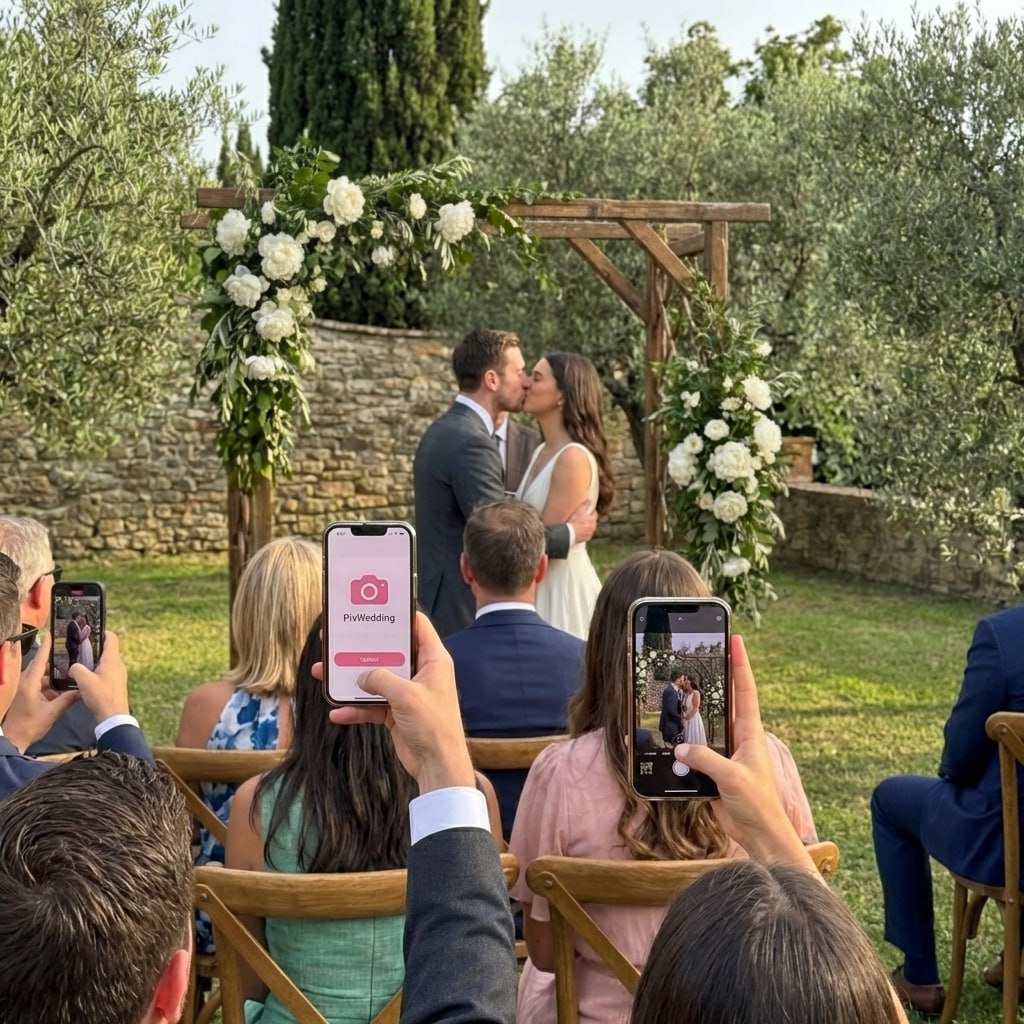
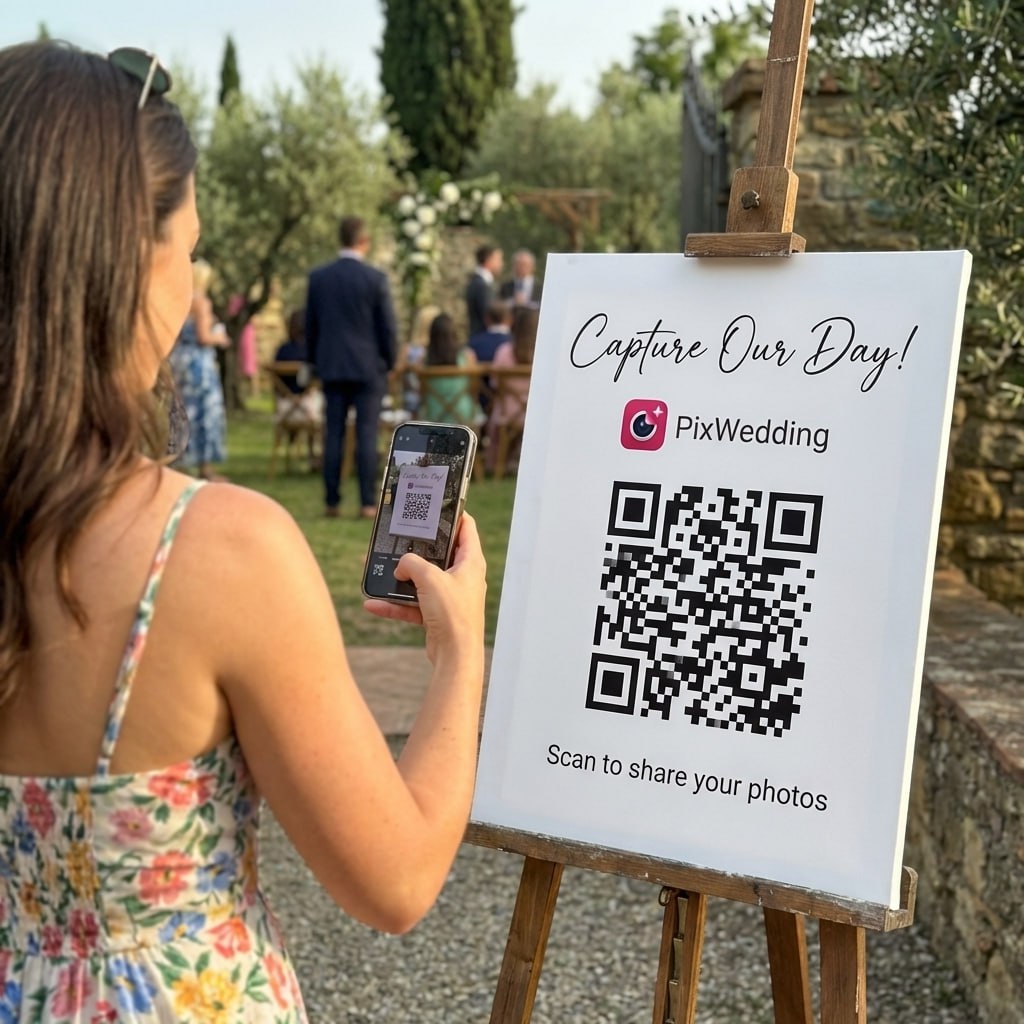
Pix Wedding handles the photo collection. Guests scan a QR at each table and every photo goes straight into one shared album. Nothing left to manage.
From Mom
Scan to join the album
No app, no account
UPLOADING
Saving your moment
THE ALBUM
Emma & Jack
June 21, 2026
647 photos · 95 guests


SCAN TO TRY
pix.wedding/
your-wedding
How the Best Man Can Help
If you are the groom, share this section with your best man. If you are the best man reading this because your buddy is nervous, here is your playbook.
Create space for honesty
Ask him directly: "How are you actually feeling about tomorrow?" Not "Are you excited?" which only accepts one answer. Give him permission to be honest by making it clear you will not judge, panic, or give unsolicited advice.
Listen first, solve later
If he opens up, your job is to listen. Not to reassure. Not to minimize. Not to say "everyone feels that way." Just listen. Let him talk through it. Most of the time, saying the words out loud is the thing that helps most.
Keep the morning low-key
Do not plan a chaotic morning with loud music and 10 groomsmen in a small room. Keep it calm. Go for a walk together. Have coffee. Watch a game. The vibe should be relaxed, not hype.
Be the shield
Handle any vendor issues, family drama, or logistical problems so the groom does not have to. Your job is to be the buffer between the groom and everything stressful. If someone has a question about the timeline, they ask you, not him.
Know the breathing technique
Learn box breathing (inhale 4 seconds, hold 4, exhale 4, hold 4). If the groom starts to panic before the ceremony, guide him through it. Knowing what to do in the moment is the most valuable thing you can bring.
Do's and Don'ts for the Nervous Groom
Do
- Say the feeling out loud to one trusted person
- Distinguish event stress from relationship doubt honestly
- Sleep, eat, and move your body in the final week
- See a therapist if the feeling persists for months
- Give yourself permission to feel two things at once
Don't
- Numb the anxiety with heavy drinking
- Spring a major doubt on your partner the night before
- Assume your best man knows what support looks like
- Google your way through a 2am anxiety spiral
- Wait until the ceremony to decide how you actually feel
What to Actually Say
Having the exact words ready removes a lot of the friction around opening up. Use these as a starting point, adjusted to your own voice.
Saying any version of these sentences out loud tends to matter more than getting the exact wording right.
To your best man
"Honestly, I am more nervous than I expected to be. Not about her, about the whole event. Can you just keep tomorrow morning low-key and check in with me without making a big deal of it?"
To your partner, if it is event stress
"I want you to know I am feeling overwhelmed by everything, not by us. I love you and I am excited to marry you. I just need to say that out loud to someone."
To your partner, if it is a deeper doubt
"I need to talk to you about something that has been on my mind for a while. It is not about not loving you, but I have some feelings I have not been honest about, and I think we should talk them through together, maybe with some help."
To yourself, in the mirror the morning of
"This feeling is normal. It is about the size of the day, not about her. I am allowed to feel nervous and excited at the same time."
Three Grooms, Three Different Mornings
The groom who told his best man at 6am
He woke up with a knot in his stomach and nearly said nothing. Instead he texted his best man: "I need to talk before everyone gets here." Twenty minutes and one walk around the block later, he felt steady enough to get dressed. Nobody else at the wedding ever knew.
The groom who raised a real concern three weeks out
A recurring worry about how differently he and his fiancee handled money kept surfacing. He brought it up directly, they had two hard conversations and one meeting with a financial planner, and he walked into the wedding with the specific worry actually resolved rather than buried.
The groom who paused mid-ceremony
Standing at the altar, he froze for a few seconds, overwhelmed. His partner squeezed his hands and whispered "breathe." He did, and the ceremony continued. Guests barely noticed. He still describes it as the most human moment of his wedding day.
The groom who postponed the wedding by two months
A persistent doubt about a specific unresolved family pattern kept surfacing for nearly a year. Rather than ignore it, he and his partner pushed the date back, went to a handful of counseling sessions together, and got married with the specific worry genuinely addressed rather than buried under a deadline.
Mistakes That Make Cold Feet Worse
Pretending everything is fine to your best man and groomsmen
Fix: Say the actual sentence out loud to one trusted person: "I am feeling nervous about tomorrow." Suppression makes the feeling louder, not quieter.
Drinking heavily at the bachelor party to numb the anxiety
Fix: Alcohol amplifies anxious thought loops the next day. If you need an outlet, go for a hard workout or a long walk instead.
Waiting until the morning of the wedding to process big doubts
Fix: If the doubt is about the relationship itself rather than the event, that conversation needs to happen weeks before, not hours before.
Googling "normal wedding nerves" at 2am the night before
Fix: Set a rule with yourself: no wedding-related searching after 9pm the week of the wedding. It rarely produces clarity, only more anxiety.
Assuming the best man knows what to do without being told
Fix: Explicitly tell your best man what kind of support you need: quiet company, distraction, or someone to just listen without fixing anything.
Treating every nervous thought as proof something is wrong
Fix: A single anxious thought is data, not a verdict. Look for a consistent, months-long pattern before concluding the doubt is about the relationship rather than the day.
Isolating yourself instead of leaning on your groomsmen
Fix: Let the people in your wedding party actually support you. That is part of what the role exists for, not just matching suits and the bachelor party.
When to Raise Concerns: A Timeline
If nerves show up this early, they are almost always about the event (planning stress, cost, family dynamics), not the relationship. Name it as event stress and keep planning.
If any specific doubt about your partner or the relationship persists, raise it with your partner directly, calmly, and privately, well before the final month gets consumed by logistics.
Tell him plainly how you are feeling and what kind of support helps you. Ask him to keep the days leading up to the wedding low-key rather than chaotic.
Skip the late-night phone scrolling and the extra drinks. A short walk, a warm shower, and an early bedtime do more for your nerves than any pep talk.
No phone for the first 15 minutes, a real breakfast, a walk, and box breathing 15 minutes before the ceremony. See the full routine below.
If a specific worry surfaced but was set aside to get through the day, bring it back up in the first weeks of marriage rather than letting it quietly linger.
The Groom's Morning-Of Routine
A calm morning creates a calm ceremony. Here is a suggested timeline for grooms who want to feel grounded before the big moment.
No phone for the first 15 minutes. Splash cold water on your face. Take five deep breaths at the window.
Eat something substantial with protein: eggs, bacon, toast. Do not skip this. Drink water before you drink coffee.
Go for a walk with your best man or alone. No wedding talk. Just fresh air and movement.
Put on music you enjoy (not necessarily wedding music). Take your time with the suit. Have the best man help with cufflinks, tie, or boutonniere.
Find a quiet spot. Do 4 rounds of box breathing. Read a note from your partner if you have one. Remind yourself why you chose this person.
Focus on putting one foot in front of the other. When you see your partner, let yourself feel whatever you feel. Smile. Breathe. You made it.
Cold Feet, By the Numbers
Glossary
Cold feet
Situational anxiety or doubt in the days or weeks before a wedding, distinct from a genuine desire to end the relationship.
Provider anxiety
A specific, groom-common fear centered on financial responsibility and the pressure to be fully "ready" to support a family.
Box breathing
A calming technique: inhale for 4 seconds, hold for 4, exhale for 4, hold for 4. Repeated for several rounds to lower heart rate before a stressful moment.
Event doubt vs relationship doubt
The key diagnostic distinction in this guide: nervousness about the wedding day itself is common and manageable, while persistent doubt about the partner or relationship deserves deeper reflection or professional support.
Pre-wedding anxiety
The broader clinical term covering the mix of stress, nervousness, and identity shift many people experience in the weeks before a wedding, regardless of gender.
Wedding party support role
The practical function of a best man and groomsmen during a stressful engagement window: buffering logistics, offering company, and normalizing the groom's feelings.
Quick Answers
Does having cold feet mean I don't love my partner?
No. Cold feet is far more often about the enormity of the event and the identity shift of marriage than it is about how you feel toward your partner. Loving someone and feeling nervous about a huge life change are not contradictory.
Should I talk to my fiancee about being nervous?
If your nerves are about the event, it can help to simply share that you are feeling overwhelmed, without framing it as doubt about her. If your nerves are about the relationship itself, that deserves a direct, calm conversation, ideally weeks before the wedding, not hours before.
Is it too late to see a therapist a few weeks before the wedding?
It is not too late. A single session focused specifically on pre-wedding anxiety can bring significant clarity even with limited time. Many therapists offer short-notice sessions for exactly this situation.
Can cold feet happen even in a genuinely good relationship?
Yes, and it happens often. The size and permanence of the decision can produce anxiety completely independent of relationship quality. Plenty of grooms with strong, healthy relationships still feel a wave of nerves in the final stretch.
What should the best man avoid saying to a nervous groom?
Avoid jokes that minimize the feeling ("ball and chain" humor), avoid rushing to fix it with advice before he has finished talking, and avoid escalating the mood with more people or more noise than the groom asked for.
Related Guides
Why Groom Cold Feet Deserves More Attention
The wedding industry and popular culture have created an imbalance in how we discuss pre-wedding anxiety. Bridal cold feet is at least acknowledged, with magazine articles and support forums. Groom cold feet barely registers. The assumption is that grooms are along for the ride, that they are less emotionally invested, or that their anxiety is just 'normal nerves.'
This lack of attention means grooms often suffer in silence. They do not have the language or the permission to express what they are feeling. And when they do try to talk about it, they are met with jokes about 'the ball and chain' or dismissive advice to 'just get through it.' None of this is helpful.
- •Grooms are just as likely as brides to experience pre-wedding anxiety
- •Men are socialized to suppress emotional vulnerability, making it harder to seek help
- •Provider anxiety and loss-of-freedom fears are groom-specific and rarely addressed
- •The best man plays a crucial role in supporting a nervous groom
- •Pre-wedding therapy is equally beneficial and available for grooms
When Groom Cold Feet Needs Professional Help
If your cold feet are about the wedding event, the ceremony, the attention, the logistical stress, that is usually manageable with the techniques described above. But if your cold feet are about the relationship itself, about fundamental doubts regarding your compatibility, trust, or desire to be with this person long-term, that deserves professional attention.
There is no shame in seeing a therapist. It does not mean your relationship is failing. It means you are doing the mature, responsible thing by examining your feelings before making a lifelong commitment. Many therapists offer individual sessions specifically for pre-wedding anxiety, and a few sessions can provide enormous clarity.
Supporting Your Partner While You Work Through It
It is possible to be honest about your own nerves while still being a supportive, present partner during the final stretch of wedding planning. The two are not mutually exclusive. Share age-appropriate honesty (this is overwhelming me, not I am not sure about us) and continue showing up for the tasks and decisions that matter to her.
Couples who talk openly about pre-wedding anxiety, rather than hiding it from each other, consistently report feeling closer heading into the marriage, not further apart. The conversation itself can become one of the more bonding moments of your engagement.
Explore more free wedding tools
Everything you need to make your wedding day stress-free and unforgettable.
QR Sticker Designer
Design custom print-ready stickers.
Photo Sharing QR
The best way to collect guest photos.
Hashtag Generator
Create unique wedding hashtags.
How to Collect Guest Photos
5 methods ranked by participation rate and ease.
Get Photos After the Wedding
Message templates to gather guest photos post-wedding.
Share Wedding Photos with Guests
Compare every sharing platform by ease and participation.
Best Way to Get Guest Photos
The single method with the highest participation rate.
How to Make a Shared Wedding Album
Step-by-step setup for every platform.
Frequently Asked Questions
Everything you need to know about our free tools and how they help your wedding day.
Completely normal. Grooms experience pre-wedding anxiety at similar rates to brides, but they talk about it far less. The societal expectation for men to be confident and decisive makes it harder for grooms to admit they are feeling uncertain, but the feelings themselves are entirely common and healthy.
Common triggers include provider anxiety (feeling the weight of financial responsibility), fear of losing independence, fear of repeating unhealthy family patterns, discomfort with the emotional vulnerability of a public ceremony, and general anxiety about the permanence of the commitment. Often it is several of these combined.
Normal nerves tend to be about the event itself: attention, cost, logistics, family drama. A red flag is a persistent, months-long gut feeling that something is fundamentally wrong with the relationship or that you do not actually want to marry this specific person. Use the comparison table above to check your own pattern honestly.
The best man's job is to create space for honesty, listen without judgment, keep the morning low-key and calm, shield the groom from stressful logistics, and know basic calming techniques like box breathing. The most important thing is making the groom feel safe to express his real feelings.
In most cases, yes, but timing and framing matter. Do not spring it on your partner the night before the wedding. If you are weeks out and feeling persistent doubt, have an honest conversation. Frame it around your feelings and your desire to work through them together. Keeping major feelings hidden undermines trust.
If you are seriously considering calling off the wedding, talk to a therapist before making any decisions. Distinguish between cold feet about the event and doubt about the person. If after honest reflection and professional guidance you still feel it is the wrong decision, it is better to cancel a wedding than to enter a marriage you do not believe in. It will be difficult, but it is the more honest path.
Skip the phone for the first 15 minutes after waking. Eat a protein-rich breakfast. Go for a walk with your best man. Take your time getting ready. Fifteen minutes before the ceremony, find a quiet spot, do box breathing, and read a note from your partner. Focus on the person, not the event.