
Funny Best Man Speeches: Comedy That Actually Lands
Six comedy techniques, eight hilarious speech excerpts, and a complete guide to balancing laughs with genuine heart. Including how to recover when a joke does not go as planned.
Generate a Funny Speech with AI6 Comedy Techniques That Work at Weddings
These are the structures professional speakers use. Learn the pattern, then apply it to your own stories and memories.
The Rule of Three
Set up two expected items and surprise on the third.
""Jake is loyal, thoughtful, and completely incapable of parallel parking.""
The brain predicts a pattern and the subversion creates a release. One of the most reliable structures in comedy.
Callback Humor
Reference a joke from earlier in the speech at the end.
"Open with a joke about his sense of direction. Close the toast with: "...may they always find their way to each other, unlike the time he got lost driving to his own apartment.""
Rewards the audience for paying attention and makes the speech feel structurally complete.
Self-Deprecating Setup
Make yourself the target before targeting the groom.
""I was going to tell you about the worst decision Mike ever made. Then I remembered I was there too.""
Disarms the audience and signals you are playing, not attacking.
The Understatement
Describe something significant in deliberately minimal terms.
""Tom once drove 300 miles to help me move a couch. We do not really talk about it.""
The gap between the scale of the action and the dismissive description creates humor.
The Confident Pause
Deliver a line and then wait in silence longer than feels comfortable.
"After a punchline, count to three in your head before speaking again."
Silence tells the audience the joke is complete and gives laughter room to build.
The Fake Compliment
Start with what sounds like praise, then pivot.
""Chris is the most organized person I know. He has a spreadsheet for everything. His grocery list has subcategories.""
Builds anticipation and then deflates it gently, which is funnier than a straight punchline.
8 Funny Speech Excerpts You Can Adapt
Each excerpt below uses a named technique. Study the structure, not just the words. Your version should use the same shape with your own content.
""I wrote three different versions of this speech. The first was too honest. The second was too kind. This one is the one that survived the legal review.""
Self-aware meta-humor about the speech itself
""For those of you who do not know me, I am Dan's best man and closest friend. He said I was his first choice. I am choosing to believe that.""
Self-deprecating with an undercurrent of warmth
""Alex is the kind of person who reads the instruction manual. All the way through. Before he opens the box. I do not know how he has any friends.""
Rule of three with escalating absurdity
""Mark is an excellent driver. He has never once been at fault. I want to be very specific about that because he is going to want to show you the statistics later.""
Understatement plus implied specificity
""I could tell you the story of how Sam proposed to Emma. I have photos. I have receipts. I have a very detailed account from three separate witnesses. But Sam has asked me not to. So I will simply say: it took four attempts.""
Withholding information is funnier than sharing it
""I have been asked to keep this speech appropriate, brief, and legal. Two out of three is my best offer.""
Callback to instructions you were given - great mid-speech reset
""In closing, and I know you are relieved to hear those words...""
Self-aware acknowledgment of speech duration creates instant rapport
""I have been roasting Will for 20 minutes in my head this week. But when I actually sit down to write it, I keep remembering why he is my best friend. So instead I am going to tell you what I actually think of him. It is embarrassingly positive.""
The expected roast that pivots to sincere - surprising and effective
How to Read the Room
The audience at every wedding is different. Before you step up to speak, take 30 seconds to assess what kind of energy is in the room.
Open with your strongest joke immediately. The room is primed.
Start softer. Use a warm story first, then gently introduce humor.
Avoid very niche humor. Keep references broadly accessible.
Self-deprecation and gentle character teasing are your safest tools.
More irreverence is welcome. Slightly push the edge of appropriate.
Avoid wordplay and idioms that do not translate. Visual storytelling works across cultures.
Jokes That Always Backfire
Comedy at a wedding requires more care than stand-up because you cannot self-select your audience. These categories reliably cause problems.
Anything about ex-partners
Creates discomfort for the couple, their families, and anyone who knows the ex
Alcohol or drug references that are not already public knowledge
Can embarrass families and professional contacts in the room
Inside jokes that exclude 90% of the audience
Most of the room will feel left out and confused
Financial jokes if anyone in the room is struggling
Money humor lands very differently depending on circumstances
Anything the groom has explicitly asked you not to say
If he asked, there is a reason. Respect it.
Impressions of other people in the room
Impressions rarely land well when the subject is watching
Recovering When a Joke Falls Flat
It happens to professional comedians. It will probably happen to you. Having a recovery plan is what separates a confident speaker from one who crumbles.
Acknowledge and move on
""That one worked better in my living room. Moving on...""
Honesty about the miss is funnier than pretending it did not happen
Self-deprecate immediately
""I have been working on that joke for three weeks. Worth every minute.""
Makes you the joke instead of the silence
Accelerate to the next beat
"No commentary - just speed up slightly and move to your next point"
Confidence without acknowledgment sometimes works better than addressing it
The pre-planned backup
"Have one genuinely funny backup line ready: "The good news is, it gets better from here.""
Prepare this before the speech so you never have to improvise under pressure
More Speech Resources
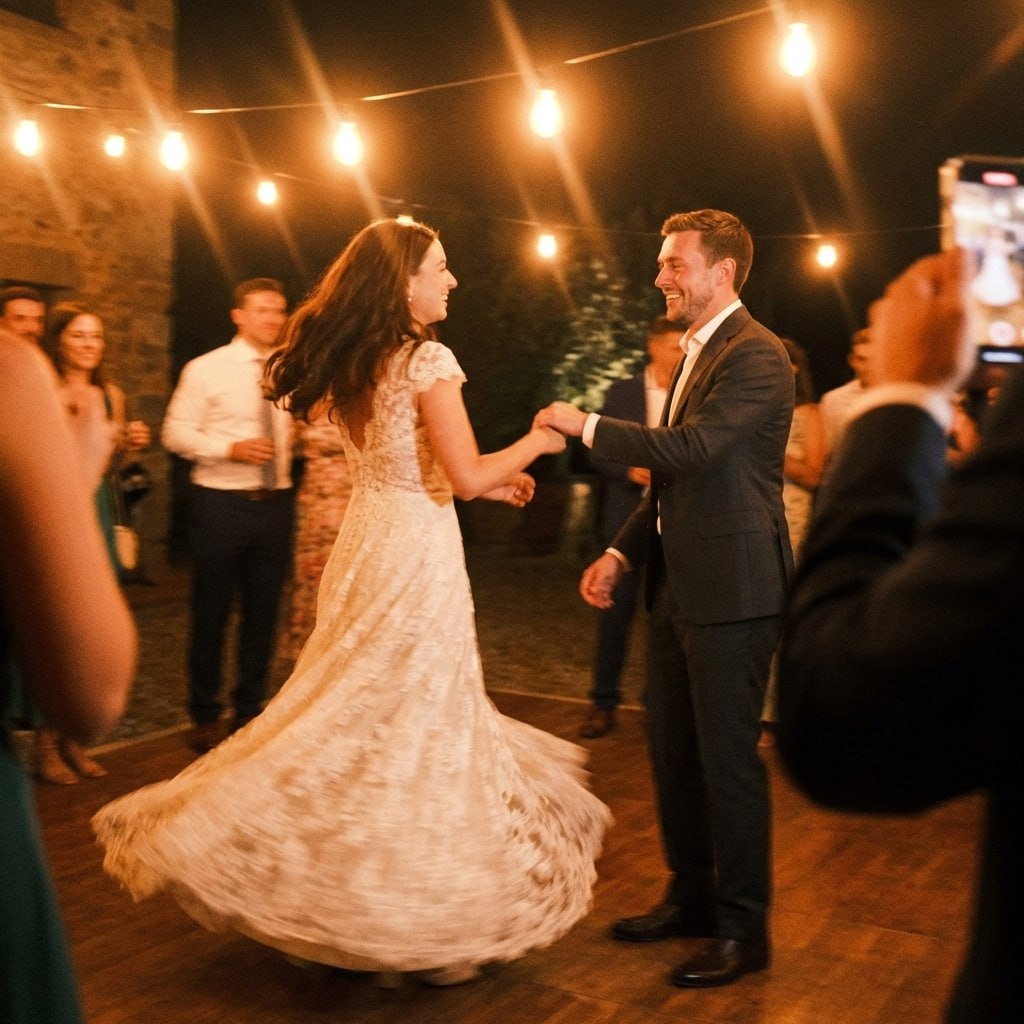
First dance
You guys!!
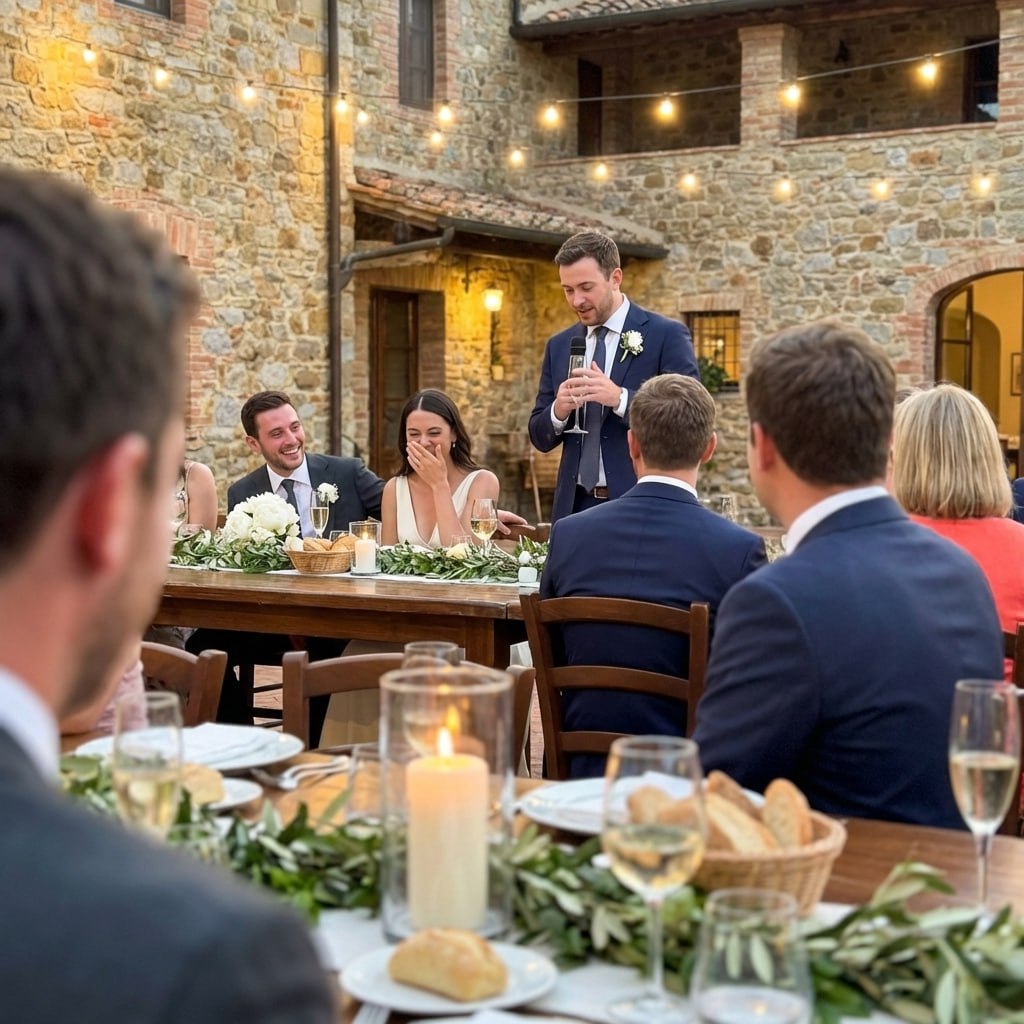
The laughs deserve a rewatch too.
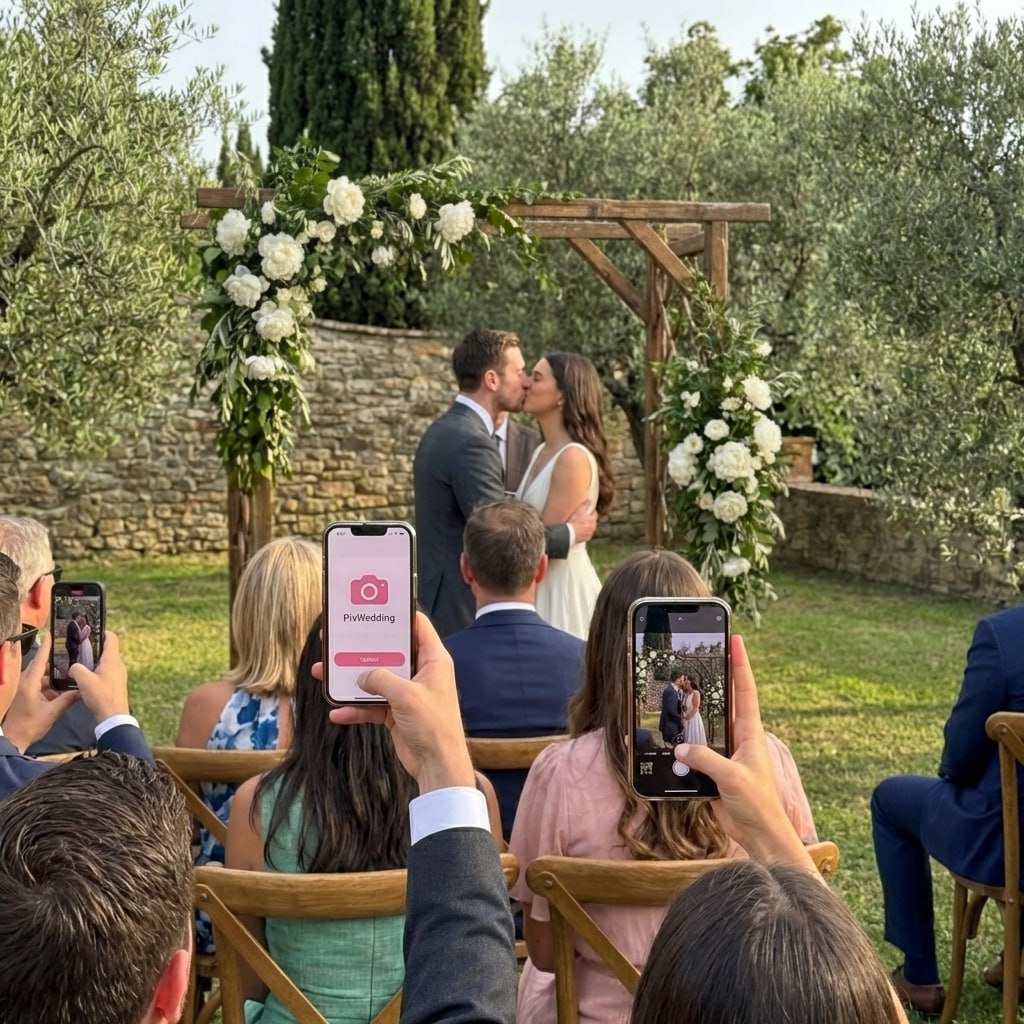
Pix Wedding records the crowd reactions and voice messages alongside every guest photo, so the funny moments live on past the wedding night.
From Mom
Scan to join the album
No app, no account
UPLOADING
Saving your moment
THE ALBUM
Emma & Jack
June 21, 2026
647 photos · 95 guests

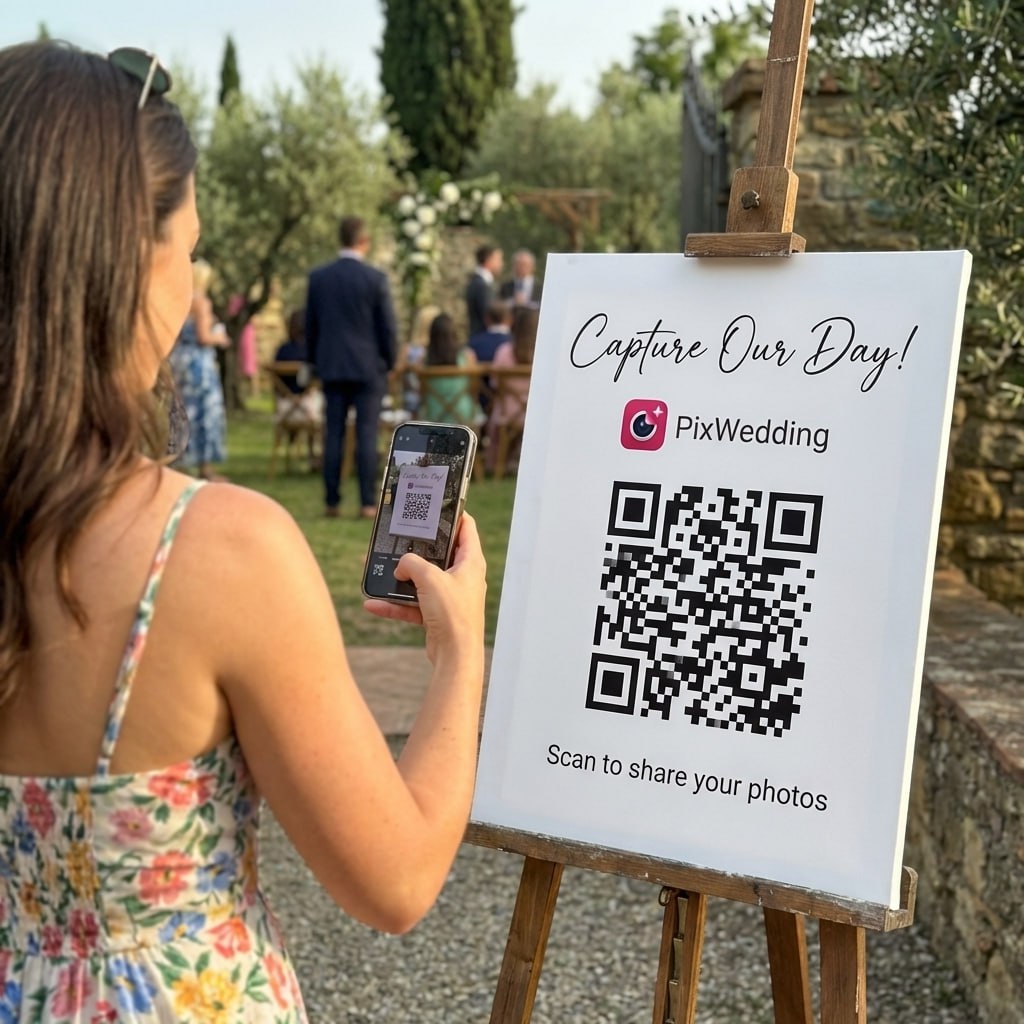
SCAN TO TRY
pix.wedding/
your-wedding
Why Humor Is a Trust-Building Tool, Not Just Entertainment
The first job of humor in a best man speech is not to get laughs. It is to build trust. When you make people laugh in the first 30 seconds, you signal to the audience that you are comfortable, that the speech will be enjoyable, and that they can relax. This matters because a relaxed audience is a generous one.
The mistake most people make is treating funny moments as isolated jokes dropped into an otherwise straight speech. The best speakers use humor as texture throughout - the comic detail in the anecdote, the wry observation about the couple, the self-aware aside. When humor is woven in rather than inserted, it feels natural rather than forced.
- •Comedy signals comfort: a laugh earns instant goodwill
- •Timing is the most trainable comedy skill - pause after punchlines
- •Specific beats generic in humor: "his terrible Tuesday cooking" beats "his cooking"
- •Self-aware beats earnest: knowing you are being funny is funnier than trying to be
The Heart Pivot: Moving From Funny to Genuine
Every funny speech needs a pivot moment where humor gives way to real emotion. This is not a contradiction - it is what makes the humor mean something. The audience has been laughing with you, and when you shift into sincerity they follow because you have earned their trust.
The pivot usually comes about two-thirds of the way through, just before you address the partner or deliver the toast. A simple transition like "But in all seriousness..." or "Here is what I actually know about him..." signals the shift without being jarring.
- •Build laughs for the first two-thirds, then earn the emotion
- •The pivot phrase should be simple and direct
- •The emotional content after the pivot lands harder because of the contrast
- •End with the toast: the final line should be heartfelt, not funny
Explore more free wedding tools
Everything you need to make your wedding day stress-free and unforgettable.
AI Vow Generator
Write "banger" vows in seconds.
Hashtag Generator
Create unique wedding hashtags.
Thank You Notes
Generate personalized thank you notes.
Father of the Bride Toast
Full example toasts, structure, and delivery tips.
Invitation Wording
Perfect wording for your invitations.
Couple Name Combiner
Blend your names into the perfect couple name.
Photo Sharing QR
The best way to collect guest photos.
Wedding Checklist
Month-by-month planning checklist.
Funny Best Man Speech FAQs
Straight answers to the questions people ask most about this topic.
Aim for humor in about 40 to 50 percent of the speech. The best formula is to open with laughs, maintain a light tone through your stories, then pivot to genuine emotion for the final third. A speech that is 100 percent jokes often feels shallow. One that is completely serious can feel heavy for a celebration.
Safe territory includes affectionate teasing about the groom's harmless quirks, self-deprecating humor about yourself, jokes about the circumstances of you meeting, and light observations about the wedding planning process. Avoid anything that touches on exes, family tensions, career failures, or anything the groom has not already laughed about in front of others.
Have a recovery line ready. Something like "I rehearsed that one for weeks" or "I may have been funnier in rehearsal" acknowledges the silence without panic. Move on calmly to your next point. Audiences root for speakers who handle bumps with grace.
Yes, for several reasons. It relaxes the audience because it shows you do not take yourself too seriously. It builds trust because people who can laugh at themselves seem authentic. And it gives you a safe target that cannot be offended. Just do not overdo it or you risk undermining your credibility as a speech-giver.
The rule of three sets up a pattern with two expected items and delivers a surprise on the third. Example: "Tom is kind, generous, and inexplicably confident about his cooking." The first two set expectations, the third subverts them. It is one of the most reliable comedy structures in any format.
A callback references something you said earlier in the speech. You make a joke in the first minute, and then in your final toast you bring it back in a new context. The audience feels rewarded for paying attention, and it makes the whole speech feel unified. It is one of the techniques that separates good speeches from great ones.