
Best Man Speech Opening Lines: 30+ Openers That Actually Work
Funny, heartfelt, classic, and unexpected. Plus weak-to-strong rewrites, recovery tactics if the opener flops, delivery timing guidance, and the first-impression psychology that explains why your first sentence matters more than everything that follows.
Why Your First Sentence Decides Everything
3 Opening Hook Techniques Explained
Pattern Interruption
Say something the audience does not expect from a wedding speech. Start mid-story. Ask a strange question. State a surprising fact about the groom. The brain pays attention to the unexpected.
"[Groom] once told me I would never need to read the instructions for anything. He was wrong about most things, so I wrote this speech down."
Instant Rapport
Reference something shared: a mutual experience, a nickname, a long friendship. This creates an "in-group" feeling with the people who know the groom and warms up those who do not.
"If you have ever received a 2am text from [groom] that just says 'mate', you already know exactly who I am."
Promise of Payoff
Signal early that a story or revelation is coming. This builds anticipation and keeps the audience leaning in. The opener becomes a setup for something that lands minutes later.
"I have been [groom]'s best friend for 12 years. There is one story I have been waiting to tell in public. Tonight is that night."
Weak Openers Rewritten as Strong Ones
The most common openers are generic. Here is exactly what makes them weak and how to fix each one.
"Hi everyone, I am James, and I have been friends with the groom since university. I am honored to be here as his best man and I want to take a moment to thank everyone for coming out tonight."
The weak version introduces the speaker, states the obvious role, and thanks the room before saying anything of value. By the time it ends, the audience has already mentally filed the speaker as unremarkable.
"Twelve years ago, [groom] borrowed twenty pounds from me for a taxi home. He has never paid me back. Today he is asking me to stand up and say nice things about him in front of everyone he loves. The audacity is remarkable. And I would not miss it for anything."
The strong version opens with a specific, funny grievance that instantly signals personality. It closes with genuine warmth. The audience laughs first, then feels something. The speaker's name and relationship to the groom emerge from context.
"I am a little nervous so please bear with me. I have known [groom] for about eight years and we have been through a lot together and I just want to say that today is a really special day."
Announcing nerves immediately transfers anxiety to the audience. Vague references to "a lot" and "special" communicate nothing. The opener makes a promise the speech will be generic.
"Eight years ago, [groom] called me at 11pm because he needed help moving a sofa. When I arrived, the sofa was fine. He just wanted company. I have been showing up ever since."
The strong version opens with a specific scene that tells the audience everything about the friendship without explaining it. The final sentence is both a punchline and a heartfelt declaration.
"As the best man, it is my honor and privilege to stand up here and speak about someone who has been one of my closest friends for many years. [Groom] is a wonderful person."
The weak version announces the speaker's role (already known), calls the groom "wonderful" (meaningless), and establishes no personality. The audience settles in for a forgettable nine minutes.
"I have been rehearsing this speech for six months. Last Tuesday I finally deleted the file and started over, because every draft I wrote sounded like something you would read on a sympathy card. [Groom] deserves better than that."
The strong version is self-aware, specific, and slightly self-deprecating. It immediately makes the audience curious about what the replacement draft contains. The compliment to the groom in the closer lands harder because it follows a joke.
30+ Opening Lines by Category
Customize each line with specific details about your groom for maximum impact.
Funny Openers
"When [groom] asked me to be his best man, I immediately Googled what a best man is legally required to say. I am happy to report: almost nothing."
"I have known [groom] for [X] years and I still cannot explain him to anyone. But somehow she figured him out in six months."
"The groom asked me to keep this speech short. So here is my first word... [long pause] ...and here is my last."
"[Groom] is honestly the kindest, funniest, most genuine person I know. That is why it is a complete mystery to me that he asked me to speak today."
"I want to start by saying that everything I am about to tell you has been approved by [groom]'s lawyers."
"They say the best man speech should last as long as the groom lasts on the dance floor. So we are looking at about 90 seconds."
"I was asked to keep this family-friendly. So some of the words I would normally use have been replaced. You will know which ones."
"[Groom] told me I could say anything I want up here, as long as I remember that he still has my guitar, my deposit, and three years of blackmail material."
"I spent three weeks writing this speech. I threw out the first draft because it was too honest. I threw out the second because [groom]'s mum was coming. What you are hearing now is the third, and it is all lies."
Heartfelt Openers
"There are a handful of people in your life who make you a better version of yourself just by existing. [Groom] is mine."
"I have given a lot of toasts in my life. This is the only one where I genuinely do not need notes, because I have been thinking about this moment for years."
"I always knew that when [groom] found the right person, I would feel it the first time I saw them together. I felt it the moment I met [bride]."
"[Groom] has been my best friend through every phase of my life. Today I get to watch him begin the best one."
"The older you get, the more you realize that real friendship is rare. Standing up here today, I understand exactly how lucky I am."
"I do not have a lot of poetic gifts. What I have are 15 years of memories with this man, and I am going to give them to him today."
"Some people you meet and forget. Some you meet and remember. And occasionally, if you are very lucky, you meet someone who changes how you understand what a good person looks like. [Groom] is the third kind."
Classic and Reliable Openers
"For those who do not know me, I am [name], and I have had the privilege of being [groom]'s best friend since we were too young to know any better."
"There are three speeches you will hear today. The father of the bride will speak from the heart. The groom will speak with gratitude. And I will speak knowing that [groom] cannot fire me until after tonight."
"[Groom] once told me that finding the right person changes everything. Looking at him right now, I finally understand what he meant."
"I am going to tell you three things about [groom]: one thing he knows I am going to say, one thing he suspects, and one he is about to find out."
"A best man has two jobs: to make the groom look good, and to make the wedding memorable. Only one of those is going to be easy today."
Unexpected and Creative Openers
"I had three different speeches prepared. I burned two of them this morning. You are welcome, [groom]."
"Before I begin, I just want everyone to know that [groom] has read this speech in advance. Any laughter he does is genuine. Any discomfort is also genuine."
"I wrote this speech on the plane ride here, on the back of a napkin, in my finest handwriting. [holds up clean napkin] Luckily I typed it up first."
"I am going to read from notes today. Not because I forgot anything, but because [groom] specifically requested I not improvise."
"In preparation for this speech, I interviewed [groom]'s mother, three mutual friends, and his dog. The dog was surprisingly forthcoming."
"I have a confession: I have rehearsed this speech seventeen times. My cat has now heard it enough times to give it herself."
"I met [groom] at the worst possible time in my life to make a new friend. I was busy, stressed, and deeply antisocial. He was persistent. Twelve years later, here I am."
5 Opening Lines That Always Fall Flat
"Hi everyone, for those who don't know me..."
Kills momentum before you start. Everyone will know you when you are done. No intro needed.
"First of all I'd like to thank..."
Thank-you lists are for the end of the speech, not the beginning. You lose the room instantly.
"I'm not very good at public speaking but..."
Self-deprecation about ability primes the audience to lower expectations. Own the mic.
"Webster's dictionary defines marriage as..."
This has been done so many times it has become a parody of itself. The audience groans internally.
"I was told to keep this short, so..."
Announcing a constraint signals you have nothing interesting to say. Show do not tell.
Delivery and Timing Guidance
The opener you wrote can only do what your delivery allows. These four steps are the difference between landing the first laugh and losing the room before your second sentence.
Stand fully, make brief eye contact with the couple, take one calm breath, then deliver your first word. That pause signals confidence and gives the room time to quiet. Every second you wait in silence before speaking builds anticipation.
The pace you establish in your first sentence is the pace the audience expects for the rest of the speech. Speak slightly slower than feels natural. Nerves accelerate delivery; the deliberate slowdown returns you to the pace you rehearsed.
If your opener gets a laugh, do not talk through it. Stop. Look at the groom for a brief moment with a knowing expression. Let the room fill with the sound. Then continue. That pause is where your credibility with the audience is established.
Before your first word, pick three or four friendly faces in different parts of the room. Rotate between them during the opener. Looking at specific people creates the feeling for the whole room that you are talking directly to them.
Timing reference for the opener
5-8 seconds. Maximum impact, minimum risk. Best if the line is strong enough to stand alone.
10-15 seconds. The most common effective length. Room for a setup and a punchline or a statement and its emotional follow-through.
15-25 seconds. Upper limit for an opener. Any longer and you have already started your body section.
If the Opener Flops: Recovery Tactics
Even well-rehearsed openers sometimes land differently than expected. Here is exactly what to do in each scenario.
Pause for one beat longer than feels comfortable. Then say something like "I'll take that silence as thoughtful reflection" and move directly into your next line. Do not explain the joke. Keep your posture open and your pace steady. The audience will settle once you show you are unfazed.
Stop, look at your notes, find the line, and continue. Do not apologize. A brief pause to find your place reads as deliberate rather than panicked if you keep your expression relaxed. Having your opener on the top card of your notes, in large text, prevents this entirely.
Pause with a calm expression, wait for the sound to be corrected, then restart your opener from the beginning. If you have to wait more than a few seconds, a light comment like "Worth the wait" as you restart disarms the awkwardness and gets the first laugh for free.
Slow down rather than speed up. A quieter, slower delivery in a noisy room creates contrast that draws attention. Avoid competing with the noise by raising your voice immediately. Let the contrast do the work, then increase volume once you have focus.
How to Pair Your Opener with the Rest of the Speech
Funny opener
The speech should stay warm and witty throughout, landing on a sincere final toast. The humor earns permission for the emotion at the end.
Heartfelt opener
Use light, specific humor in the middle section to balance the sincerity. Do not stay serious for the full speech or it becomes heavy.
Unexpected opener
Signal early that the speech will be creative and unpredictable. Then deliver on that promise with a non-standard structure or callback joke.
Classic opener
A safe classic opener works if the body has personality. Do not let a reliable opener lull you into a generic speech body. The opening buys you credit; spend it.
Audience Warm-Up Tactics
The 30 seconds before your first word set the stage for everything that follows.
Stand before you speak
Rise fully, make eye contact with the couple, and take one slow breath before your first word. The pause signals confidence and gives the room time to settle.
Smile before the opener
A genuine smile before your first word communicates warmth and relaxes the audience. They want you to succeed; your smile confirms this will be enjoyable.
Hold the microphone correctly
Keep the mic 2-3 inches from your chin at a slight upward angle. Test the volume before the speech starts so you are not fiddling mid-opener.
Pick your anchor eyes
Before you begin, identify 2-3 friendly faces to rotate between during the opener. Knowing where to look removes one anxiety.
Build the Rest of Your Speech
First dance
You guys!!
Strong opener. Now capture the whole speech.
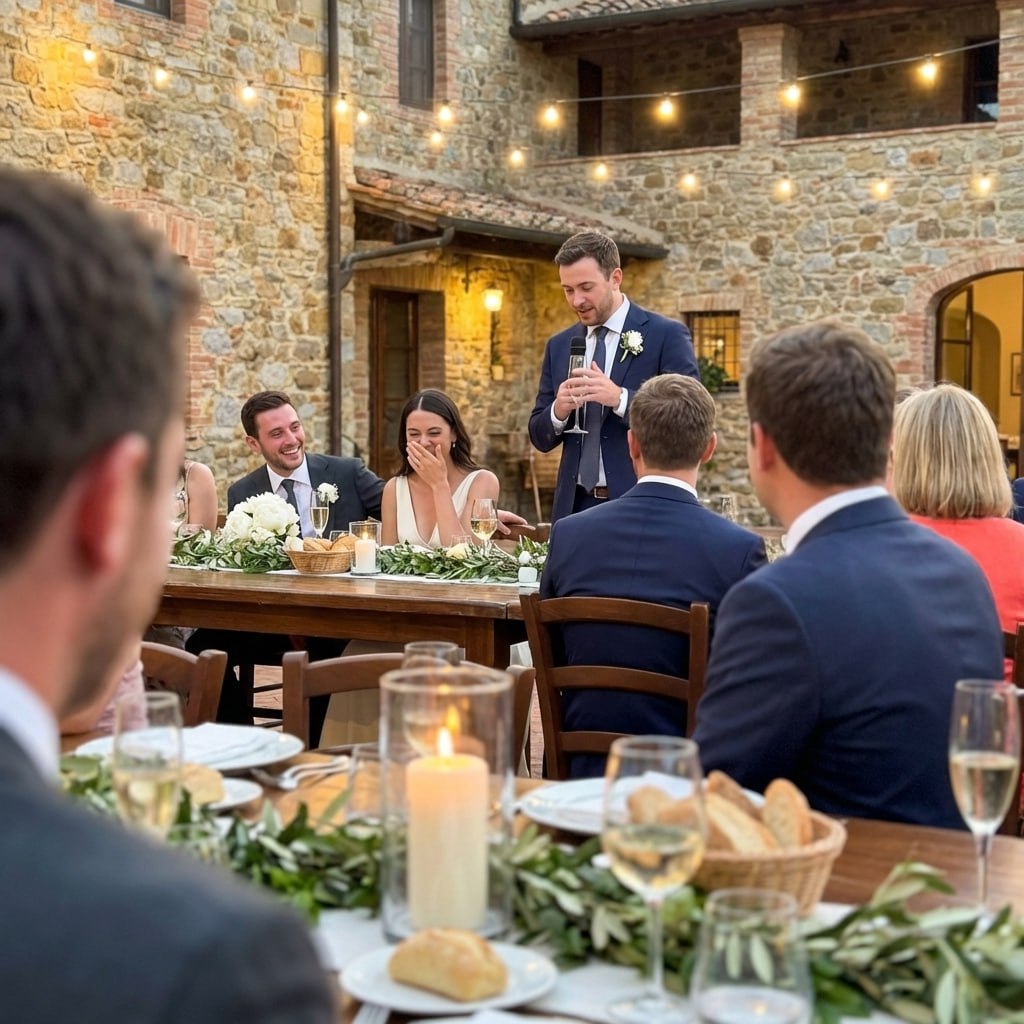
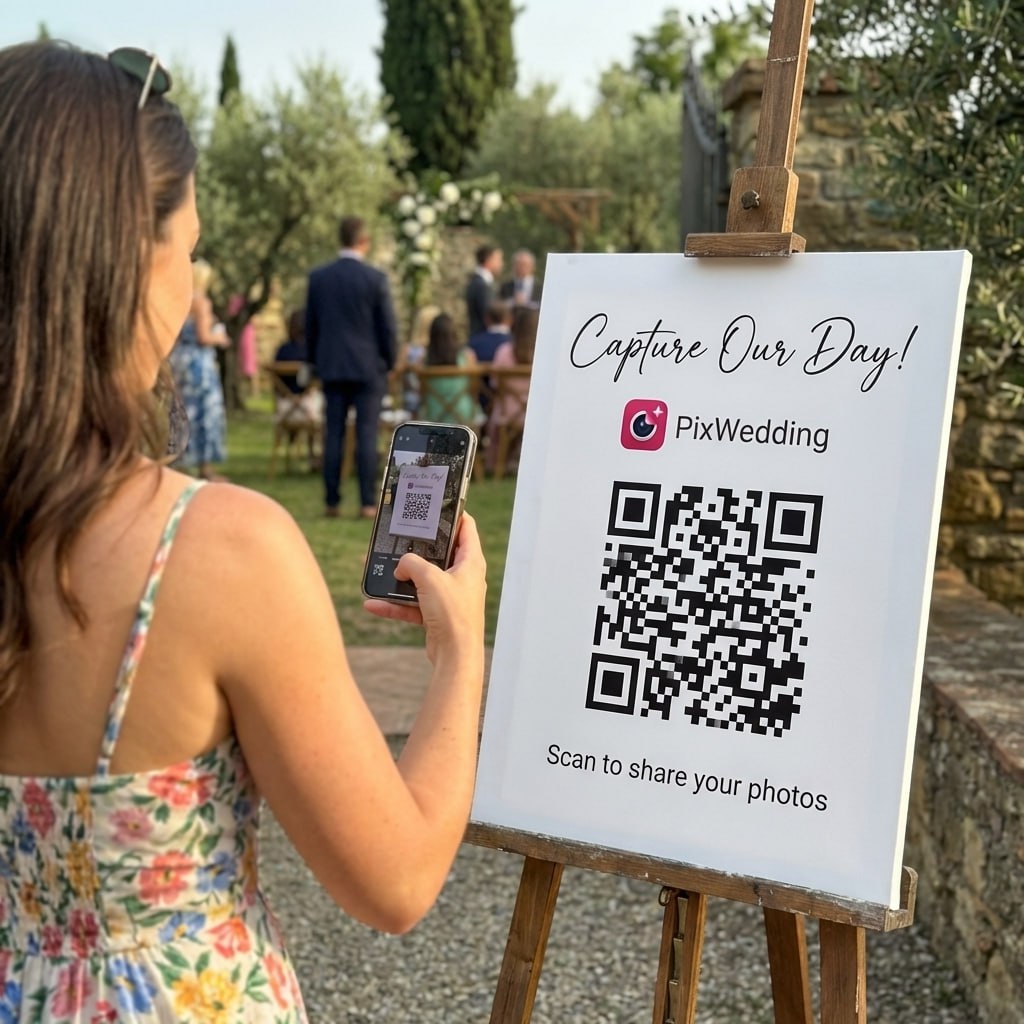
Pix Wedding records voice messages and collects guest photos through one QR code, so that carefully crafted opening line is saved with the rest of the day's best moments.
From Mom
Scan to join the album
No app, no account
UPLOADING
Saving your moment
THE ALBUM
Emma & Jack
June 21, 2026
647 photos · 95 guests
SCAN TO TRY
pix.wedding/
your-wedding
The Psychology of First Impressions in Public Speaking
Studies on first impressions in public speaking put the "opinion window" at roughly 7 seconds, and a wedding reception compresses that further because the audience is already primed in your favor before you say a word. At a typical reception, 80 to 150 guests have just watched a ceremony and eaten dinner; they are relaxed, a little tipsy, and rooting for you. That is a gift most speakers never get in any other public speaking context, and it disappears the moment you open with "for those who don't know me."
The best opening lines do one of three things: they create pattern interruption (something unexpected that snaps attention to attention), they build rapport instantly (a shared reference or a self-deprecating line that humanizes the speaker), or they promise a payoff (a setup that implies a punchline or story is coming).
- •Audiences decide if they like a speaker within the first 7 seconds of delivery
- •Laughter in the first 30 seconds releases tension and earns goodwill
- •A surprising true statement is just as powerful as a joke opener
- •Pattern interruption (breaking expected speech format) signals creativity
How to Customize Any Opening Line
The 30+ openers below are templates, not finished lines. Take "I have known [groom] for [X] years and I still cannot explain him to anyone" and it works fine as written, but swap in "Marcus" and "since we were paired as freshman-year roommates in 2011" and it becomes a line only you could deliver. The best opening you will ever give is roughly 80 percent structure from this list and 20 percent a real name, a real number of years, and a real incident that happened to your specific groom.
Once you have chosen an opener, rehearse it standing up, at full volume, at least 20 times. The opening line should feel like muscle memory on the day so that nerves do not flatten your delivery in the critical first moment.
- •Swap generic descriptions for real, specific details about your groom
- •Add his real nickname for instant warmth and authenticity
- •Reference a shared moment the audience may recognize
- •Keep it under two sentences so momentum builds immediately
Explore more free wedding tools
Everything you need to make your wedding day stress-free and unforgettable.
AI Vow Generator
Write "banger" vows in seconds.
Hashtag Generator
Create unique wedding hashtags.
Thank You Notes
Generate personalized thank you notes.
Father of the Bride Toast
Full example toasts, structure, and delivery tips.
Invitation Wording
Perfect wording for your invitations.
Couple Name Combiner
Blend your names into the perfect couple name.
Photo Sharing QR
The best way to collect guest photos.
Wedding Checklist
Month-by-month planning checklist.
Best Man Speech Opening FAQs
Everything you need to know about our free tools and how they help your wedding day.
The best openings either get an immediate laugh, create instant intrigue, or make the groom slightly nervous (in a loving way). Avoid "Hi, my name is..." and thank-you preambles. Jump straight into your hook within the first sentence.
Your opening should be one to three sentences maximum. The job of the opener is to earn the room's attention so you can deliver the substance. Once you have them, move on quickly.
Opening with a joke is high-reward but requires the joke to land. If you are naturally funny, a comedic opener is powerful. If you are less confident with comedy, a surprising true statement or a question can be equally effective without the risk.
Quotes can work if they are unexpected and short. Avoid overused quotes about love or marriage. A quote from something uniquely meaningful to the groom (a book he loves, something his grandfather said) lands far better than a famous-person quote.
Never open by introducing yourself formally, apologizing for being nervous, listing everyone you need to thank, reading a dictionary definition of "marriage" or "love," or starting with a cliche like "As the best man, it is my honor..." These signal a generic speech before you have said anything real.
Your opening should set the tone for the whole speech. A funny opener should lead into a speech that has warmth underneath the humor. A heartfelt opener should lead into sincerity with light moments. An unexpected opener should signal a creative, unpredictable structure. The first line is a promise the rest of the speech must keep.
Do not freeze, do not explain the joke, and do not apologize. Take a brief pause, smile, and continue. Audiences at weddings are warm and forgiving. The opener is one moment in a full speech, and the sincere material that follows will land regardless of how the first line went.
Rehearse your opening line specifically at least 20 to 30 times, standing up and at your speaking volume. It should feel like muscle memory so nerves do not flatten your delivery. The opening is the hardest moment; once it is out, the rest of the speech flows more naturally.
Only if you are experienced with public speaking and have tested the material extensively. For most people, improvising the opening is the fastest way to lose the room. Write it out, rehearse it, and deliver it from memory or read it cleanly. Save improvisation for the moments between sections, not the crucial first line.