
Writing a Best Man Speech: The Complete Step-by-Step Guide
An 8-step writing process, a 4-week timeline, proven brainstorming techniques, a revision checklist, and the memorization vs. notes debate settled once and for all.
The 8-Step Best Man Speech Writing Process
Every section below expands on one of these eight steps. Bookmark this list and work through it in order.
Brainstorm without limits
Write down every memory you have with the groom, ask mutual friends and family for their favorite stories, and pinpoint the moment you knew the couple were right for each other.
Choose your 2-3 best stories
Select the material that reveals character, not just an inside joke. A specific, vivid scene beats a general compliment every time.
Draft the speech without editing
Get a complete rough draft on the page. Write your closing toast line first, then build the rest of the speech to arrive at it.
Structure it with the 5-part anatomy
Open with a hook, establish your credibility with the groom, tell your core story, pivot warmly to the couple, then close with the toast.
Revise, cut, and polish
Read the draft aloud and time it, cut anything over 5 minutes, and sharpen every joke so the setup is shorter than the punchline.
Get honest feedback
Perform the speech out loud for one trusted reviewer instead of sending the text, and ask specific questions like "where did your attention drift?"
Rehearse out loud at least 10 times
Practice until the transitions are memorized, prepare index cards with bullet points instead of full sentences, and record yourself once to catch stiff phrasing.
Prepare for delivery day
Confirm the microphone and toast logistics with the venue, do one quiet morning read-through, and pace yourself at 120-140 words per minute during the toast.
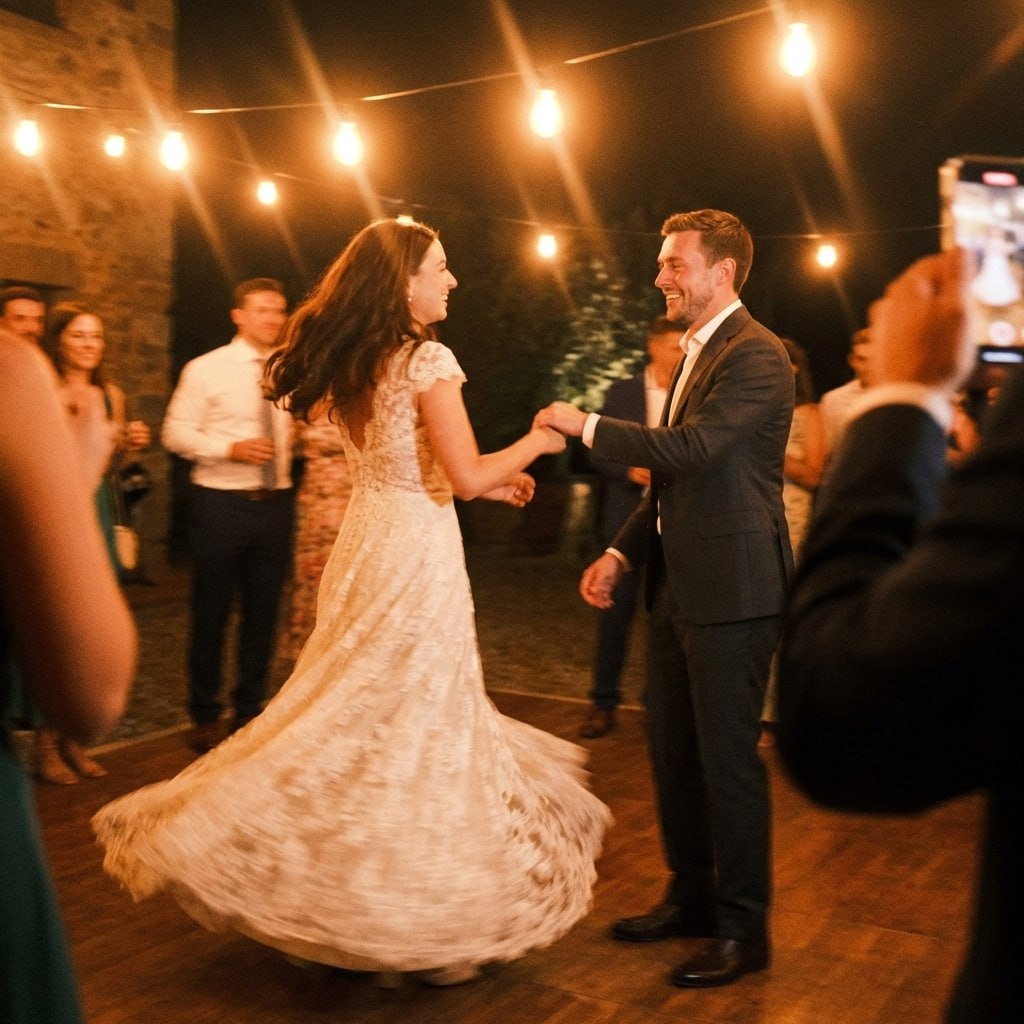
First dance
You guys!!
Weeks of writing. Five minutes of magic.
Once you deliver that carefully written speech, an AI speech generator can help you draft it faster and the couple can keep the recording forever alongside their wedding photos.
From Mom
Scan to join the album
No app, no account
UPLOADING
Saving your moment
THE ALBUM
Emma & Jack
June 21, 2026
647 photos · 95 guests
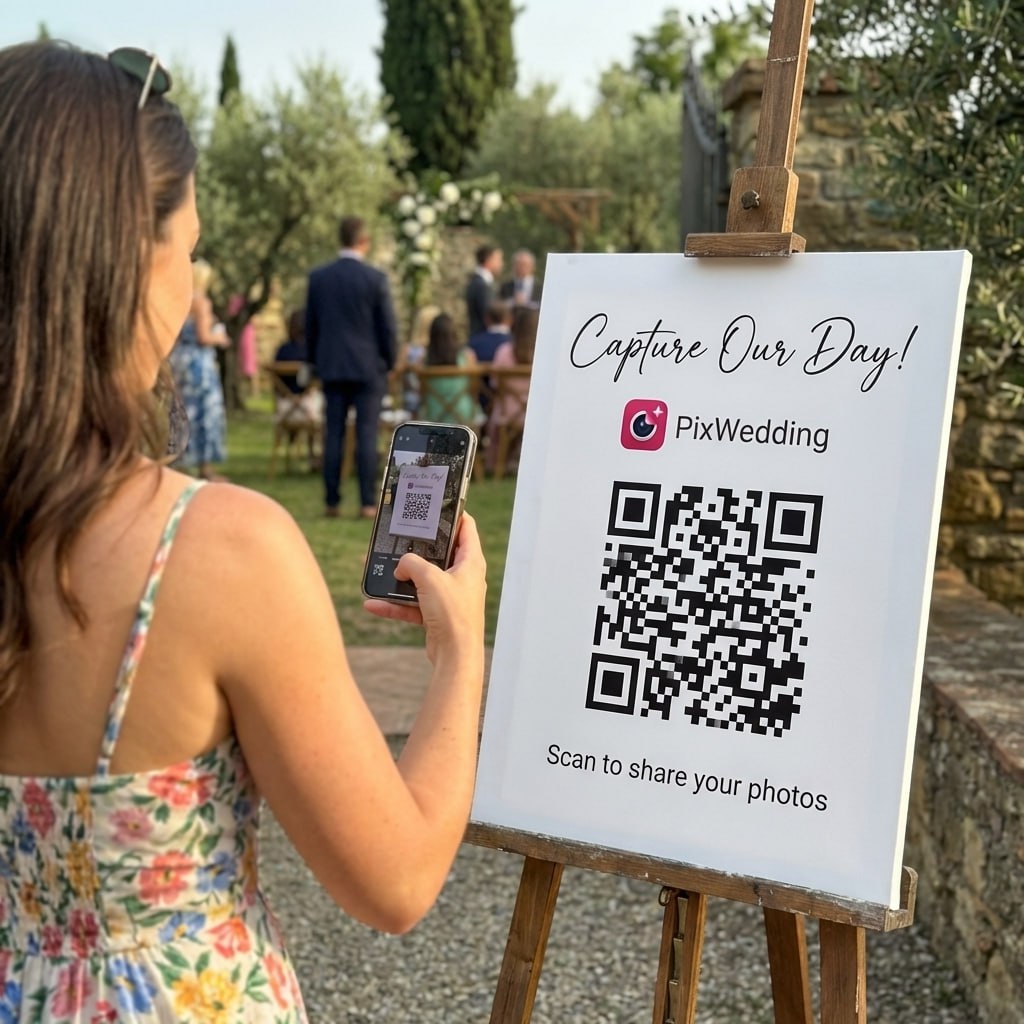
SCAN TO TRY
pix.wedding/
your-wedding
Your 4-Week Writing Schedule
Follow this week-by-week plan to go from blank page to polished speech without pulling an all-nighter.
Brainstorm Without Limits
- Write down every memory you have with the groom, no filter
- Ask mutual friends and family for their favorite stories
- Note the first time you met the bride and your honest first impression
- List 5 character traits that define the groom with one example each
- Write down the moment you knew they were right for each other
Structure and First Draft
- Choose 2-3 best stories from your brainstorm list
- Write a rough opening line (you will refine this later)
- Draft the full speech without worrying about perfection
- Include one sincere tribute to the bride
- Write your closing toast line before anything else is finalized
Revise, Cut, and Polish
- Read the draft aloud and time it
- Cut anything that runs over 5 minutes
- Remove or explain any inside jokes that need a 30-second setup
- Share with one trusted person for honest feedback
- Sharpen every joke: setup should be half as long as the punchline
Rehearse and Prepare
- Practice out loud at least 10 times total
- Record yourself once and watch it back (painful but invaluable)
- Prepare index cards with bullet points, not full sentences
- Do one full run-through in formal attire if possible
- Confirm the microphone setup and toast logistics with the venue
Brainstorming Techniques That Actually Work
The Memory Dump
Set a 15-minute timer and write every memory involving the groom with zero judgment. Quantity over quality. The gems are buried in the rough material.
Interview His Inner Circle
Text 3-4 mutual friends and his family. Ask: "What is your single favorite memory with [groom]?" You will often hear stories you never knew.
The Character Traits Ladder
List 5 traits that define him. For each one, write one specific moment that proves it. This becomes the skeleton for your tribute section.
The Contrast Frame
Compare who he was when you met him to who he is now that he has found her. This natural arc creates a story with a beginning, middle, and end.
The First-Meeting Question
When did you first realize she was the one for him? Pinpointing that moment gives you a powerful pivot point from funny to heartfelt.
The Failure Story
His funniest failures (with his permission) are often more endearing than his triumphs. A story about a disaster he survived shows character and gets laughs.
Choosing Your Speech's Angle
A standard toast is not the only format. These angles can shape your first draft if one feels like a natural fit for your personality and the venue.
The Prop Speech
Anchor one key story to a meaningful object (a photo, a letter, a keepsake) and reveal it at the emotional peak.
Best for: Sentimental speakers with one strong central story
The Slideshow
Narrate over 8-12 curated photos that trace the friendship, 20-30 seconds of commentary per slide.
Best for: Visual storytellers with a good photo archive
The Top 10 List
10 numbered observations counting down to your most heartfelt line at number one.
Best for: Confident speakers who want a predictable comic structure
The Collaborative Speech
Three or four groomsmen each take a section, with one MC controlling the handoffs.
Best for: Tight-knit friend groups who all want to contribute
The Musical Element
A short original verse or parody song folded into an otherwise traditional speech, under 90 seconds.
Best for: Naturally musical speakers with a playful relationship
The Poem Format
A rhyming or free-verse poem, 16 lines or fewer, ending on your toast line as the final couplet.
Best for: Speakers with a natural feel for language
The Interview Style
Pre-recorded short clips of friends and family, narrated between by you.
Best for: Social speakers at casual weddings who want to involve the crowd
The Video Message
A single under-90-second video from someone who could not attend, framed by your own words.
Best for: Any speech honoring someone who cannot be there in person
Want to see full speeches in each of these styles? Browse best man speech examples.
The 5-Part Anatomy of a Speech That Lands
Whichever angle you pick, this framework builds emotional momentum instead of a flat list of stories.
One strong opening line or brief scene that earns immediate attention. Do not introduce yourself first.
Establish your relationship quickly: how long, in what context, why you are the right person for this speech.
One or two specific anecdotes that reveal the groom's character. Specific beats memorability every time.
Transition from the groom alone to the couple together. This is where you acknowledge the partner warmly.
A clear, memorable closing sentence followed by raising your glass. The last line should be quotable.
The 10-Point Revision Checklist
Run every draft through these 10 questions before you call it done.
Memorization vs. Notes: The Verdict
Full Memorization
Sounds most natural when it works. But losing your place with no backup is catastrophic. Your mind goes blank exactly when nerves peak.
Reading Word-for-Word
Safe but robotic. You lose connection with the audience when your eyes are buried in paper. Laughs land weaker because you cannot time the pause properly.
Index Cards (Recommended)
Write 4-6 bullet points on small cards: opening hook, story 1, story 2, tribute, closing toast. Memorize the transitions. Glance at cards for story beats only.
Writer's Block and "I'm Not Funny" Fixes
Break the Blank Page
The 5-Question Prompt
Answer five specific questions about the groom in writing, with zero filter. Your answers contain the whole speech in raw form.
Voice Note Method
Record yourself talking about the groom for 10 minutes without stopping. Transcribe it. The best lines are usually in the first 3 minutes.
The Bad Draft First
Write the worst possible speech you can, intentionally. The act of writing badly releases the perfectionism block. Then you rewrite the bad draft.
Start with the Ending
Write the toast line first. Work backwards. Knowing the destination makes every earlier section feel purposeful.
Interview a Mutual Friend
Call someone who also knows the groom. Ask them to tell you their favorite story. Their memory will unlock three of yours.
"I Am Not a Funny Person"
Replace jokes with specificity
A very specific true observation is funnier than a constructed joke. A precise, true detail about a habit is funnier than most punchlines because it is real.
Use light self-deprecation
A single well-placed self-deprecating line is reliable for any speaker. It signals you do not take yourself too seriously, which is inherently likeable.
Lean into the sincere speech
If comedy is not your natural register, commit to sincerity. A genuinely heartfelt speech with zero jokes will always beat a forced comedy routine.
Test one joke, not five
If you want some humor, write five jokes and test each on a friend. Use only the one that gets the biggest response. Quality over quantity.
AI Tool or Professional Speechwriter?
Use an AI Tool When...
- You have real stories to share but struggle to structure them
- You have 4+ weeks and can personalize a generated draft
- You want the speech to sound like your voice, not a writer's voice
- The wedding is relatively intimate, under 100 guests
Consider a Speechwriter When...
- The wedding is very high-profile with 300+ guests and significant family expectations
- You have severe writing anxiety that blocks any kind of drafting
- The groom is a public figure and the speech will be widely shared
- You genuinely have no positive memories to draw on (extremely rare)
The One-Day Emergency Writing Plan
Wedding is tomorrow (or today). Here is what to do right now, in order.
Use an AI speech generator
30 minInput your stories and generate a structural draft with the Pix Wedding AI Speech Generator.
Personalize ruthlessly
30 minReplace every generic line with a specific memory, nickname, or real detail only you know.
Read it aloud three times
20 minNo stopping. Read through fully three consecutive times to internalize the flow.
Write index card bullets
10 minCondense to 6 bullet points on one card. This is your safety net for the day.
Time the full delivery
10 minEnsure it runs 3-5 minutes. Cut anything beyond that ruthlessly, no matter how good.
Your Wedding Day Delivery Routine
Pace Yourself
Most nervous speakers rush. Aim for 120-140 words per minute. After your opening line, pause for a full two seconds.
Anchor to Friendly Faces
Pick 3-4 people in different parts of the room and rotate eye contact between them throughout the speech.
Land the Punchline
Pause before the punchline, deliver it, then pause again. The second pause lets laughter build without you talking over it.
Own the Silence
Silence feels eternal to the speaker and natural to the audience. Never fill a pause with "um" or "so yeah." Just breathe.
Build a Callback
Reference your opening line again near the end. The full-circle moment makes the whole speech feel planned and polished.
Address the Whole Room
A line like "and to everyone here who has supported this couple" keeps the energy collective instead of exclusive to a few friends.
Morning Warm-Up
On the wedding day, read the speech once quietly in the morning. Do not over-rehearse on the day itself or you will sound robotic.
End with the Toast
Raise your glass, look at the couple, and deliver the toast line slowly. Give guests time to raise their glasses before you say the final words.
Calming Your Nerves Before You Stand Up
Box Breathing
Inhale for 4 counts, hold for 4, exhale for 4. Repeat 3 times in the 2 minutes before you stand. This slows your heart rate before you speak.
Embrace the Shake
Shaking hands are invisible to the audience. A slightly shaky voice reads as emotion, not fear. Acknowledge the nerves internally, then speak anyway.
Over-Prepare on Purpose
Every extra rehearsal reduces anxiety proportionally. Speakers who have run the speech 20 times are almost never overwhelmed on the day.
The honest truth: there is no shortcut around nerves. The only path through is preparation. Every extra rehearsal is a direct anxiety reduction.
How to Get Honest, Useful Notes
Choose the right reviewer
Pick someone who will be honest, not just nice. A spouse or close friend who knows the groom works well. Avoid asking the bride to review it.
Read it aloud to them
Do not send the text. Perform it so they experience it as the audience will. Their reactions in the moment are better data than written notes.
Ask specific questions
Ask: "Where did your attention drift?" and "Which joke landed flattest?" Specific questions get specific answers. "What did you think?" gets "It was great!"
Do not defend, just listen
Your job during feedback is to take notes, not debate. Every hesitation or confusion your reviewer has is information. Thank them and evaluate later.
More Speech Resources
Why the Writing Process Matters as Much as the Words
Most best man speech disasters happen not because the speaker is a bad writer but because he started too late, skipped revision, or never practiced out loud. A rushed draft read cold in front of 150 people is almost always worse than a modest draft rehearsed 20 times.
The writing process is where you discover what the speech is actually about. First drafts are almost always about you: your memories, your jokes. Revision is where the speech becomes about the couple. That shift is what separates memorable toasts from forgettable ones.
- •Starting early reduces anxiety and gives ideas time to mature
- •Revision typically trims 30 percent of a first draft, for the better
- •Reading aloud reveals rhythm problems invisible on the page
- •Feedback from a trusted friend catches blind spots before the big day
Common Writing Mistakes and How to Fix Them
The most frequent mistake is a speech that is all jokes with no emotional core, or all sentiment with no humor. Aim for a 60/40 blend depending on your natural personality and the couple's vibe.
Another common error is a vague tribute. Phrases like "he is the best guy I know" land flat. Replace them with specific moments: "he drove four hours in a snowstorm to help me move apartments, then made us both sandwiches at midnight." Specificity is the engine of emotional resonance.
- •Vague compliments: replace with specific, vivid scenes
- •Too many inside jokes: keep one or two, explain the rest briefly
- •Forgetting the bride: she should appear within the first 60 seconds
- •No clear ending: always write your final toast line first, then build toward it
Explore more free wedding tools
Everything you need to make your wedding day stress-free and unforgettable.
AI Vow Generator
Write "banger" vows in seconds.
Hashtag Generator
Create unique wedding hashtags.
Thank You Notes
Generate personalized thank you notes.
Father of the Bride Toast
Full example toasts, structure, and delivery tips.
Invitation Wording
Perfect wording for your invitations.
Couple Name Combiner
Blend your names into the perfect couple name.
Photo Sharing QR
The best way to collect guest photos.
Wedding Checklist
Month-by-month planning checklist.
Best Man Speech Writing FAQs
Straight answers to the questions people ask most about this topic.
The ideal best man speech runs 3 to 5 minutes when delivered at a comfortable pace. That translates to roughly 400 to 650 words. Shorter feels rushed; longer risks losing the room. Time yourself reading aloud during practice.
Start at least 4 weeks before the wedding. This gives you time to brainstorm, draft, revise, rehearse, and get feedback without last-minute panic. If you are prone to procrastination, give yourself 6 weeks.
Most delivery coaches recommend index cards as a middle ground. Full memorization risks a blank-mind panic if you lose your place. Reading word-for-word feels disconnected. Index cards with bullet points let you maintain eye contact while keeping a safety net.
Avoid exes and past relationships, inside jokes that exclude the room, overly crude stories, anything the groom has told you in strict confidence, and speeches that run longer than 7 minutes. When in doubt, ask yourself: would I say this in front of his parents?
Generate a structural draft with an AI speech tool, then spend 30 minutes replacing generic lines with two specific stories only you know. Read it aloud three times in a row, write six bullet points on an index card, and prioritize sincerity over jokes.
Yes, AI tools like the Pix Wedding AI Wedding Speech Generator can give you a solid first draft based on stories and tone you provide. Think of AI output as raw material: personalize it heavily, add specific details, and rehearse it until it sounds like your voice.