


Fraud Blocker
pixPix Weddingwedding
Founder retrospective · First-person

What building a wedding photo app taught me about guest photos.

The pricing mistake, the free tier we never actually shipped for months, the feature almost nobody uses, and what 203 real weddings finally taught me about how guests behave.

Written by the founder, Faxraddin. Past tense on the mistakes, present tense on the things still not fixed. Published on the same day the sister data pages went live so a reader can cross-check every number I quote.

Where this started

What I actually built

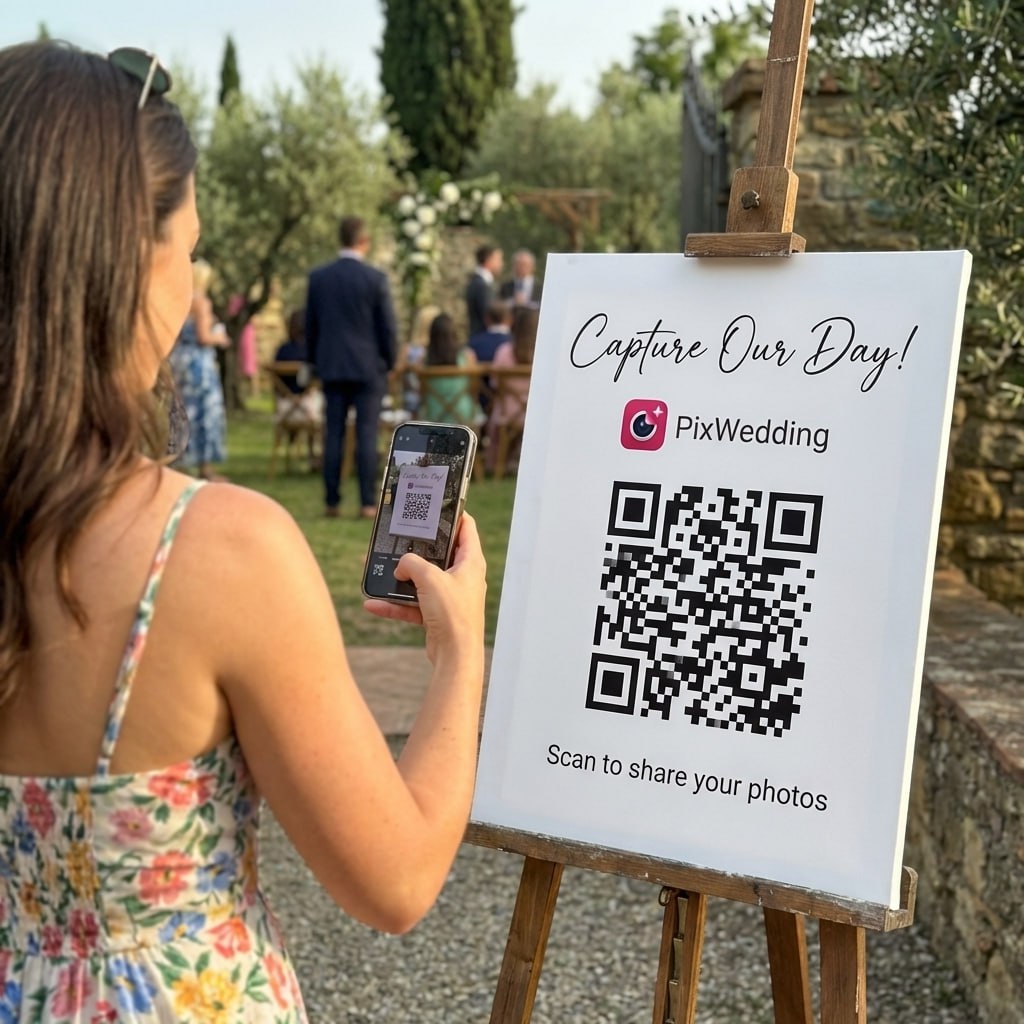
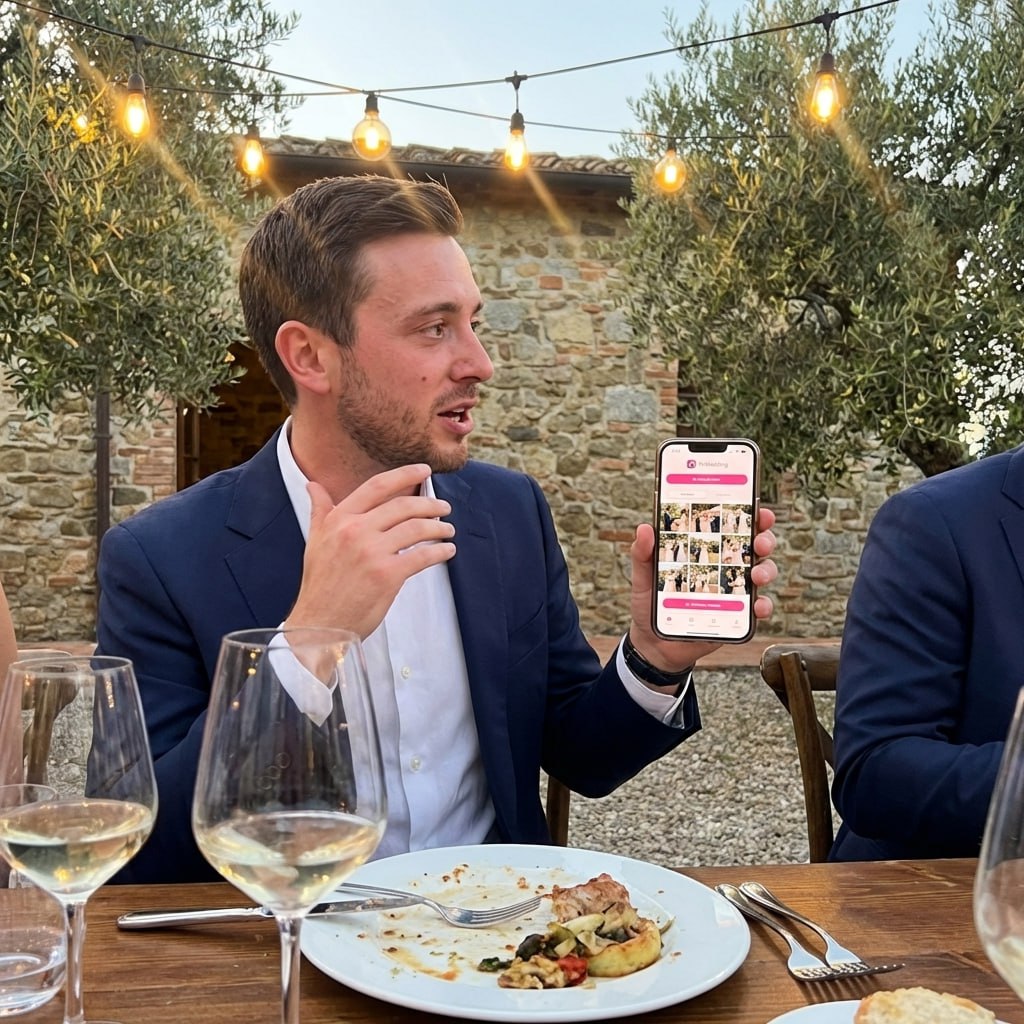
Pix Wedding is a QR photo album. A couple creates an event, gets a QR code, prints it on their table cards or a welcome sign, and every guest who scans the code lands on a mobile page where they upload photos and video straight from their camera roll. No app, no account, no sign-in wall. The couple gets a shared album that fills up as the wedding happens and, as the data now shows me clearly, mostly the morning after.

Every idea in this retrospective is downstream of that setup. The pricing arc, the free tier, the timing findings, the audio-guestbook admission, and the two founder-voice paragraphs still to fill in are all attempts to describe the same product from the angle experience taught me it needed to be described from.

That is the entire product. There is a small paid feature stack around it (live projector slideshow, custom branding, longer retention windows, audio guestbook) but the core is one QR pointing at one album that any guest can add to in seconds. It sounds obvious now. It was not obvious to me for the first several months of the business.

Mistake 1

Charging upfront and watching most visitors leave without trying it

For a long stretch, you could not use Pix Wedding without paying $49 first. The homepage converted at around 3.1% (which for a homepage with an actual pricing block is fine). The content pages, the informational search-driven pages where someone arrived typing "how to collect wedding photos from guests," converted at around 0.45%. That is our own analytics, June and July of 2026, before the free tier shipped.

For months I thought the difference was that the homepage traffic was warmer. It was, a little. But mostly the difference was that a homepage visitor had gone looking for a product and was mentally ready to buy one, while a content-page visitor had gone looking for an answer and hit a paywall where they expected a demo. The paywall taught them we were the wrong site and they left. Nothing on any of the content pages was ever going to fix that.

The pay-first model is a bet that visitors will pay to remove uncertainty. It works for a product that has already established that it works. It does not work for a product that a visitor has never seen a demo of. I got this wrong for longer than I should have.

Mistake 2

The FAQ promised a free plan we did not have

Founder to fill in

[FOUNDER TO WRITE: the story of how you discovered the FAQ was promising a free plan that did not exist. When you spotted it, what you found when you traced how it had been living there, what visitors were experiencing when they read it and then tried to sign up, and how that particular contradiction sat in your head until you fixed it. This paragraph is intentionally left in the founder's voice because it is a specific moment nobody but you can write.]

The free tier I should have shipped from day one

Start free with 20 guest uploads. No credit card. The tier the FAQ was already promising.

From Mom

From Mom

Point your camera

Scan to join the album

No app, no account

9:41

UPLOADING

Saving your moment

9:41

THE ALBUM

Emma & Jack

June 21, 2026

647 photos · 95 guests

AllMomentsMine
Guest photo 1
Guest photo 2
Guest photo 4
Guest photo 5
Guest photo 6
Guest photo 7
Guest photo 8
Guest photo 9
Guest photo 10
Add photosShare your moments

SCAN TO TRY

pix.wedding/
your-wedding

What changed

Shipping the real free tier on July 7, 2026

On 7 July 2026 we shipped the free tier we had been pretending existed. One free event per account. Twenty guest uploads. No credit card. When a free user hits the 20-upload cap, a one-time $49 removes the cap forever with no subscription.

The first free-to-paid upgrade happened within about 48 hours of launch. That is one data point, not a trend. It matters because it confirmed the thing I had been afraid of: the pay-first bet had been leaving actual buyers on the table, buyers who wanted to see the flow work first and pay after. Every content-page visitor since then walks through a page that says "start free" and lands in a signup flow that actually delivers.

The interesting part is the tone shift. The homepage did not need to change to convert homepage visitors. The change was for the visitor arriving from a search for how to collect photos from wedding guests. That visitor was our biggest untapped audience for months and the free tier finally lets them prove whether the product is right for them without paying to find out.

What 203 weddings taught me

The findings that changed how I think about the product

Every number below is from our internal dataset of 203 real weddings, dated 10 July 2026. Full methodology and limitations on the stats page and the timing page.

Guests upload after the wedding, not during it

Only 12.9% of guest uploads land on the wedding day itself. 39.3% land the day after. 82% of the total lands after the wedding day entirely. This changed our messaging (start free so the album is ready for the morning-after wave, not so the album is full during dinner) and it changed how we think about retention windows (a short window throws away most of the content).

A few enthusiastic guests drive the album, not the whole room

The average wedding has 9.8 unique guest uploaders and 197 photos. The highest-volume wedding in our dataset had just 3 uploaders and 1,365 photos. The highest-uploader wedding had 60 uploaders and 224 photos. Big albums come from small groups of enthusiastic uploaders, not from broad participation. This is where our product roadmap now spends more time (make the eager guest happier) and less time (chase the marginal guest who was never going to upload).

Photos beat video, and it is not close

Of 40,531 guest media items in the dataset, 5.1% were video. That number is small enough to be worth planning around. We do not build the product like the album is going to be one-quarter video. It is a photo album with occasional video, and if a wedding really wants video coverage that needs to come from a dedicated person, not from the QR code.

Honest failure

We shipped audio guestbook and roughly 7% of eligible events used it

Where we are

Audio guestbook is included on Standard and above. It lets a guest attach a voice message to a photo. When it lands, it is one of the most emotional moments an album can produce. 14 of the 203 qualifying weddings in our dataset had at least one audio message attached. That is around 6.9% of eligible events.

I am on record here: this is a discoverability failure, not a feature failure. Most couples on Standard do not know the feature is included. Most guests do not think to look for a voice-note button once they have selected a photo. Fixing this is on the list. Until it is fixed I am not going to pretend the feature is broadly used.

The other honest failure

The pages Google refused to index until I cleaned up the invented specifics

Founder to fill in

[FOUNDER TO WRITE: the story of the pages Google refused to index. What kinds of fabricated specifics were on them (invented venues, invented stats, invented testimonials, whatever the actual failure mode was). How you noticed the pattern in Search Console. Roughly how many pages ended up in the cleanup. What rules you have since put in place internally to keep it from happening again. This paragraph is intentionally left in the founder's voice because it is a specific moment nobody but you can write it in.]

What I would tell my past self

Three things I would ship differently on day one

Ship the free tier first

Every visitor from a search for how to collect wedding photos would have seen a demo. Every buyer would have paid after seeing the flow work. My analytics would have looked different from month two rather than from month twelve.

Measure adoption before shipping the next feature

Audio guestbook is a good idea and almost nobody uses it. Discoverability was solvable. I built other things instead. Building the next good idea before solving the current adoption problem is a familiar founder mistake and I would tell myself to stop and solve discoverability first.

Capture the couple's local timezone at event creation

The single most useful improvement to the dataset is capturing local timezone. We have to caveat every timing chart because our buckets are UTC. It would cost about ten minutes of engineering to add and it would sharpen every future timing analysis. It was not on the roadmap early enough.

Two days after launch

The first free-to-paid upgrade landed within 48 hours

On the 7th of July I flipped the free tier live. On the 9th, someone hit their 20-upload cap and paid the $49 one-time fee to unlock the rest of the album. Total elapsed time from signup to upgrade was under two days.

One user is not a trend. It could have been a self-selecting fluke. What made it meaningful was the shape of the flow. This user had come in through a content page, tried the product for free, watched it work with real guests, hit the limit that a real event will hit fast, and paid. Every one of those steps was one I had been asking users to trust me on for months. They had all just happened in order without me holding anyone's hand.

The old flow had been: read about the product, hit the paywall, leave. The new flow was: read about the product, use the product, hit the cap, upgrade. Same conversion event, entirely different psychology. I had been asking the wrong version of the same question for months.

The counterpoint

Things I got right early enough to matter

Every retrospective that only lists mistakes is either performative or written by someone who quit. Here are three calls that were right early on.

Browser-based, no app install

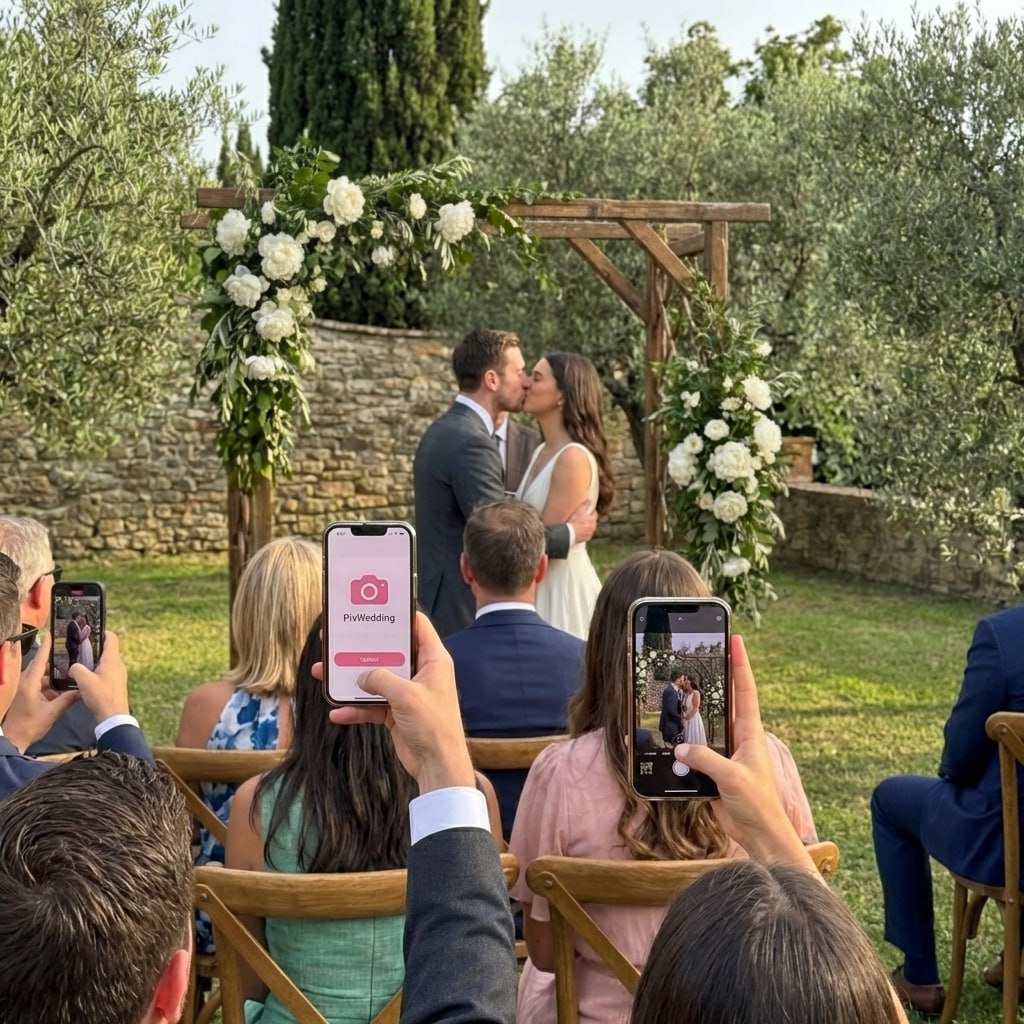
The single decision that most obviously worked out. Guests do not install a wedding app for a wedding they are attending once. Everything downstream of that call (the QR-to-camera-roll flow, the fact that grandparents can upload without help, the fact that the average album has 197 photos in it) is a consequence of getting that one right.

One-time payment, not subscription

A wedding happens once. A subscription business would have priced photo sharing at $8 a month and locked couples into recurring billing for a product they use once. The market for wedding photo sharing is one-off buyers and a one-off price gives them a clean deal. This was the right call even during the pay-first stretch, and it still is now.

Full-resolution storage from day one

Photos land in the album at whatever resolution the guest phone captured them at, not compressed. That is the reason a couple can actually print the guest photos. Compressing to save on storage would have looked good on our infrastructure bill and looked terrible on any print larger than 4x6 inches. Every couple who prints a photo book from the album is unknowingly reaping the benefit of a call I made on day one.

How this changed how I decide

Three rules I use now that I did not use a year ago

If a landing page implies a feature exists, the feature exists

The FAQ that promised the missing free plan was the first time I noticed a contradiction between what the site said and what the product did. Now I read the site the way a first-time visitor would every couple of weeks and treat any gap between the promise and the product as a bug worth fixing today.

Adoption data on the last feature blocks work on the next feature

If the last feature I shipped is under 10% adoption on eligible customers, the next feature is on pause until I understand why. Building on top of an unused feature stack is fun and it is a dead end. Audio guestbook is the current example. Discoverability first, features second.

Content pages and pricing pages are different products

Content-page visitors want to trial. Pricing-page visitors want to compare. Sending them into the same funnel loses both. The free tier fixed this by giving the content-page visitor a real trial route and leaving the pricing-page comparator intact. Two funnels, not one.

What surprised me

What actual couples care about that I underestimated

Print quality mattered more than I expected

A meaningful share of couples print their guest album into a physical book after the wedding. This was not obvious from the marketing pages. It only showed up when couples asked for help exporting a specific set of high-resolution images. The full-resolution decision I made early is the reason those exports worked. If I had compressed uploads to save on infrastructure cost, the print request would have been the moment I discovered I had shipped a broken product.

Older guests were more comfortable with QR than I predicted

I had assumed the QR-to-camera-roll flow would be a young-guest feature and older guests would need help. In practice, the phone-native scan flow is well past the "everyone uses this now" line. A grandparent uses the camera to scan a QR code in the same way they use it to check a menu at a restaurant. The point of failure is not the scan. It is the sign being too small to see across a table, which is a print problem, not a technology problem.

The dance floor is where the album is actually earned

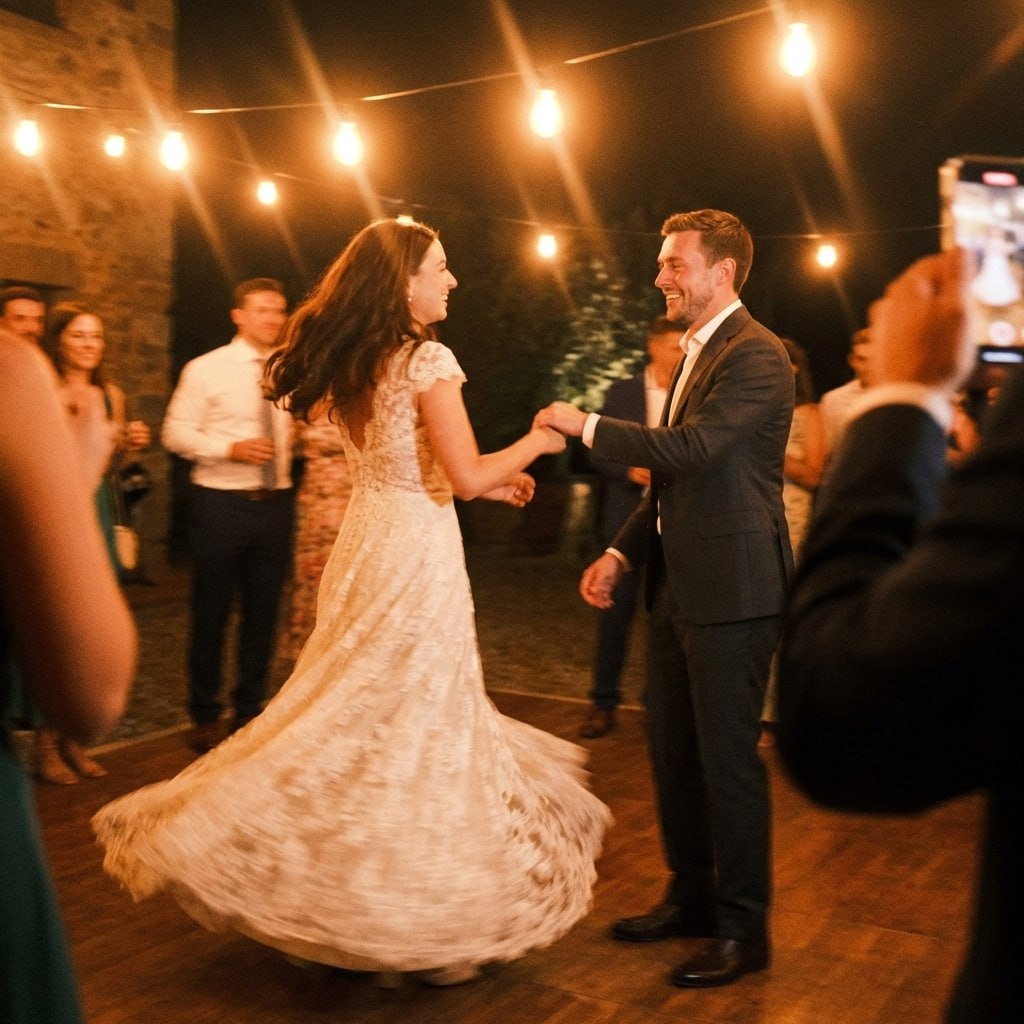
The wedding-day upload peak we see in the data is late evening, right around the dance floor. Guests are not thinking about the QR sign during the ceremony or during dinner. They are dancing, they lift a phone, they capture a moment their photographer has already moved past. That specific hour is why the whole flow works. Everything upstream of it is prep, everything downstream of it is the morning-after wave.

Couples care about the album more the morning after than during the wedding

On the day itself the couple has other things on their mind. The album is a background system that either works or does not. The morning after is when they open it, look through the photos, and either say "this is exactly what we hoped for" or "this is disappointing." The morning-after wave in the timing data is not a background stat, it is the moment the product either lands or does not. Building around that moment is worth more than building around the wedding-day peak.

If you are building something adjacent

Five things I would tell a friend starting a small SaaS in the wedding space

1. Instrument feature usage before you launch the feature

You can not diagnose an audio-guestbook adoption problem without telemetry on audio-guestbook usage from day one. Build the analytics with the feature, not after it.

2. Make the trial free at the first click, not the tenth

Wedding buyers have decision fatigue. Anything they can not try in 30 seconds gets closed. The 20-upload free tier we ship now would have earned me an extra year of buyers if I had shipped it first.

3. Do not compress user content to save infrastructure cost

The couple who tries to print the album months later is a real customer segment. The savings on storage do not survive a bad print. Take the storage cost hit and keep everything at full resolution.

4. Assume most usage is post-event

The event is not when the product gets used. The days after the event are. Anything you build that assumes the event is the entire product surface (short retention windows, closing the upload window quickly, tearing down the QR the next day) will be wrong.

5. Publish the data as soon as you have it

The pages you are on now are the first serious data pages we have shipped. Every day the data was sitting privately in my dashboard was a day nobody outside the company could reason about the space. Getting the numbers out is worth more than getting them perfect.

6. Read your own site every couple of weeks as a first-time visitor

The FAQ was promising a free plan we did not have. I did not notice because I was reading the site the way an author reads a document, not the way a stranger reads a page. Reading the site cold is different from reading the site in the context of everything you know.

Related reading

Where the numbers on this page live

Still to do

What remains unsolved as I write this

Audio guestbook discoverability

Named above and worth naming again. Under 7% adoption on eligible events is where we are. Fixing this is the current unfinished item.

Local-timezone capture at event creation

Still on the backlog. Every future timing analysis is worse than it needs to be until this ships.

The wedding size gap

200 of 203 events in the dataset are small by uploader count. Only 3 events reach mid, zero reach large. We do not have real data on 100-plus-guest weddings. That is a gap I would like to close over the next 12 months.

Cross-linking the data pages to each other properly

The stats page, the timing page, and this retrospective went live on the same day, and this page still catches new cross-links to the anatomy and morning-after pages after the fact. Getting the whole cluster linking cleanly to itself is a small thing I keep circling back to fix.

Why publish this

Why I put this retrospective on the site instead of a slide deck

Two reasons. One is that any couple choosing a photo tool deserves to know how the person behind the tool actually thinks about the product. If the answer is a marketing page and nothing else, that is a signal in itself. Naming what I got wrong is the version of that signal that reads honestly.

Two is that some of what I learned turns out to be useful outside the wedding niche. The content-page-vs-homepage funnel gap is a general lesson. The adoption-before-next-feature rule is a general lesson. The morning-after wave might only matter for weddings, but the shape of it (users engage with your product after the event you thought was the event) shows up in a lot of places. Publishing the specific version I learned makes it easier for the next person to see the general shape.

If you are a couple who ended up here from a search: hi. Try the free tier. If it works for your wedding, great. If it does not, one of the honest pages linked below can help you pick something else. Either way, the numbers on this page and the two sister data pages are real, and I would rather you make your decision with real numbers than with the ones the marketing pages of the whole category tend to make up.

And if you are a fellow founder who ended up here from a very different search: my inbox is open. If you want to compare numbers on your product against ours or ask about anything specific in this retrospective, write. I have benefited enormously from other founders who published theirs and this is my version of paying that forward.

Last thing. If a couple of the numbers on this page make you doubt something a wedding-adjacent product told you, that is the right response. The 197 photos number, the 39% morning-after wave, the 6.9% audio-guestbook adoption, the small-wedding skew of the dataset: these all pass an internal audit and none of them look like the numbers I would have made up if I were making them up. The whole reason to publish them is that a small honest number beats a big fake one for every audience I care about.

The takeaway I trust most

If I had to keep one lesson from all of this

It would be this: the product I thought I was building was a way to collect photos during the wedding, and the product people actually use is a way to find their photos the morning after. Almost every mistake in this retrospective traces back to that one wrong assumption. The paywall was in the wrong place because I was optimizing for a decision guests make on the night. The audio guestbook is under-discovered because I put it where a guest is during the reception, not where a couple is at breakfast.

Once the timing data landed, the fix for most of these was the same: meet people at the moment they actually engage, not the moment I assumed they would. That is the whole retrospective in a sentence, and it is the reason the free tier, the reminder flow, and the way we talk about the album on every page changed at once.

If you are running a small SaaS in a similar niche

The single most useful thing I can tell you from this experience is that your content pages and your homepage should probably be converting into different funnels. Ours were being asked to convert into the same one and were bleeding out. Once we split them we could actually see who wanted what.

The second most useful thing is to look at your feature adoption numbers before you ship the next feature. The audio guestbook is a good idea that almost nobody uses. Building the next good idea before we solved discoverability on the current one would have been a mistake we barely avoided.

If you are picking a wedding photo platform

Read our stats page. Every number on it is real, from our own weddings, and every limitation is stated. Whichever platform you end up picking, the shape of the guest upload behavior on our data is probably close to the shape on any well-run QR photo tool. Set your expectation around the morning-after wave. That is the most useful thing this retrospective can tell you if you never build a product yourself.

Explore more free wedding tools

Everything you need to make your wedding day stress-free and unforgettable.

Traced to the retrospective above

Founder Q&A

Everything you need to know about our free tools and how they help your wedding day.

The pay-first landing pages were converting at around 3.1% on the homepage but only around 0.45% on our SEO content pages. That gap was almost entirely people who arrived from an informational search, wanted to see if the product worked, hit the paywall, and left. Free-to-start with 20 guest uploads no card removes that specific rejection.

That 82% of guest uploads happen after the wedding day. I had assumed the album would fill during the reception. It fills during breakfast the next morning. Everything about how we set expectations changed once the timing data came in.

That we shipped a feature roughly 7% of eligible events use. It is a beautiful feature when a guest actually leaves a voice message, but almost no couple knows it is included and almost no guest thinks to look for it. Discoverability is our current fix.

Because 203 is a small enough number that stating it clearly matters. Anyone claiming five-figure sample sizes on a wedding-app dataset is probably counting things I would not count. Our number is small and I state it plainly because that is the honest sample we have.

The QR-code-to-browser flow. Guests do not want to install an app for one wedding. Getting that friction out of the way is the reason the average album has 197 photos in it and not zero.

Feature discoverability generally, and audio guestbook specifically. Making the QR sign impossible for a couple to lose track of in the venue. And a data problem: we do not capture the couple's local timezone at event creation, which limits how sharp any timing analysis can be. All on the list.

What Building a Wedding Photo App Taught Me About Guest Photos (Founder Retrospective)