
Funny Wedding Vows That Actually Land
12 funny vow examples, six comedy techniques, his and hers vow templates with word-count guidance, a read-it-aloud delivery checklist, and the secrets to balancing laughter with the moments that actually matter.
Generate Funny Vows FreeSix Comedy Techniques That Work in Vows
These are the structural tools professional comedy writers use. Apply them to your personal material and the jokes will feel organic, not borrowed.
List two expected items then break the pattern with something absurd. The third item does the work.
Reference a specific shared memory early, then loop back to it in a vow. Creates intimacy and laughter simultaneously.
Begin a sentence in a formal or serious direction, then redirect to something mundane or absurd mid-sentence.
Describe something obviously significant as though it is minor. The gap between reality and language creates the laugh.
Replace vague descriptors with hyper-specific ones. "Your Tuesday morning moods" is funnier than "your moods."
Admit something small and slightly unflattering about yourself that your partner will recognize as true. Guests love self-aware humor.
12 Funny Vow Examples (Ready to Use or Adapt)
Each example uses a different comedy technique. Read them for structure, then rewrite them with your own specific details to make them truly yours.
I promise to love you completely, to support your dreams wholeheartedly, and to only pretend to listen to your sports podcast about 40 percent of the time. But I will always pretend with great enthusiasm.
I vow to be your partner in all things: adventure, growth, grief, and the completely irrational disagreements we will have about which way to load the dishwasher. I choose you in all of it.
I promise to be your greatest cheerleader, your most honest critic, and the person who quietly eats the last piece of cake without telling you. Two out of three is not bad.
When I met you, I knew immediately that you were different. Kind, funny, impossibly patient. I also knew your WiFi password within a week and have been using it ever since. That is when I knew this was serious.
I promise to love you unconditionally, with one amendment: unconditionally does not include your opinions on where to eat when you say you do not care and then you clearly care.
Meeting you was, I suppose, reasonably significant. You have made me somewhat happier than I was before. I am cautiously optimistic about our future together. What I mean is: you are everything to me.
You are the person I want to send all my screenshots to. The one I want to text when something weird happens at the grocery store. The first tab I open every morning. Today I am committing to you, fully offline and in person.
I have loved exactly two things with this level of commitment in my entire adult life: you and my team. At least with you, I have never been disappointed in the fourth quarter.
I knew you were the one when you let my cat sleep on your pillow on the first night you stayed over. Most people would have moved him. You just took a smaller portion of the bed. That is love.
I vow to feed you, to nourish you, to make sure there is always something in the fridge. I also vow to be honest with you: most of what I will claim to have cooked, I ordered.
You make me want to be a better person. Not dramatically better, not all at once, but incrementally, sustainably better. Like a very slow home renovation. You are the contractor I am grateful for.
I have made a lot of good decisions in my life. Switching careers, moving to this city, calling my mom more often. But none of them, not one, compares to saying yes to you. So thank you for asking.
Full Funny Vow Examples for Him
Two complete vow drafts at different lengths, with estimated delivery times. Use these as a starting scaffold and replace generic details with real ones from your relationship.
I was not great at a lot of things when we met. I was bad at cooking, mediocre at communication, and deeply overconfident about parallel parking. You tolerated all of it without making me feel small, and that is the kindest thing anyone has ever done for me. I promise today to love you with full honesty, to show up for the hard days before you have to ask, and to finally let you win an argument at least twice a year. You are the best decision I have made. And you know that is saying something, because I once paid full price for a gym membership I never used.
There is a list in my head of the best moments of my life. The day I graduated. The first time I traveled alone. The night I called you on a Tuesday for no reason and we talked until 2am about everything and nothing. That Tuesday made the list. You have made the list so many times that you are basically the entire list now. I vow today to love you past the version of me you fell for, because that version had a lot of rough edges you somehow found charming. I promise to be honest with you even when it is inconvenient, to make you laugh on the days you do not want to, and to watch every documentary you recommend even the ones that are clearly three hours of people arguing about fish. I chose you on purpose. I would choose you every time. Today I am just making it official.
Full Funny Vow Examples for Her
Two complete vow drafts at different lengths. The voice here is warm and dry rather than joke-heavy, which tends to land with mixed audiences. Swap in specific details about your partner to personalize.
I have spent the last two years watching you try to assemble furniture, load a dishwasher incorrectly with tremendous confidence, and insist that five minutes on the map means five minutes in real life. And I love you. That is the miracle. You are genuinely my favorite person to be wrong next to. I promise today to be the person who tells you the truth even when it is not what you want to hear, to laugh with you more than at you, and to let you have the aux cord at least occasionally. I am marrying you because life with you feels like more. More laughter, more meaning, more mornings I actually want to be awake for.
I thought I was a person who had it figured out. I had routines, systems, a plan. And then I met someone who reorganized my entire concept of what a good day looks like, just by existing in the same room as me. That was you. Specifically you, even when you are eating cereal standing over the kitchen counter at 11pm and calling it dinner. I vow to love you in the version of yourself you are today and in every version you become from here. I promise to be curious about your life, to take your side in the moments that matter and the moments that do not, and to never, ever pretend I did not hear you when you said something important. You are the funniest person I know, which I resented at first because I wanted that to be me. I am delighted to let you have it. I am yours. For all of it.
Word Count and Timing Reference
Most people speak at roughly 120 to 140 words per minute when reading aloud with emotional material. Nerves on the day tend to speed delivery up slightly, so always aim for the lower end of your target range in rehearsal.
Very short. Works if you want a tight, punchy vow with one joke and a sincere close. Leaves the audience wanting more.
Short and satisfying. Room for two comedy moments and a heartfelt close. Recommended minimum for a funny vow.
The sweet spot for most couples. Enough room to tell a brief story, land two or three laughs, and close with weight.
Comfortable upper range. Allows for a fuller story arc. Risk of losing energy in the middle if the material is not tight.
Long. Requires genuinely excellent material throughout. Most funny vows above 300 words have at least one section that could be cut.
How to Read It Aloud: Delivery Checklist
The difference between a funny vow that gets a big laugh and one that falls flat is almost always delivery, not the writing. Follow these steps in the week before your wedding.
Every time you expect a laugh, write "(pause)" in the printed text. Print at a font size you can read without squinting. When you see the word, stop speaking and look up. This muscle memory prevents you from steamrolling your own punchlines.
Once to check word flow. Once to time it with a stopwatch. Once standing in a room the size of your venue, at the volume you will actually use. The third read reveals timing issues the first two never catch.
When moving from a funny line to a heartfelt one, consciously slow your pace. The shift in tempo signals to guests that something real is coming. You will not need to tell them to stop laughing; the change in your voice does it.
Deliver the final sentence of your vow looking directly at your partner, not at the paper. If you have to memorize one thing, memorize that last line. The physical connection at the end seals the moment.
Funny vs Traditional: Structure Comparison
Understanding how a funny vow differs structurally from a traditional one helps you make intentional choices rather than accidentally writing something that is neither funny nor sincere.
Opening promise. Serious commitment. Serious commitment. Serious commitment. Closing declaration.
Formal and reverent. Beautiful when delivered with genuine emotion. Can feel rehearsed without vocal variety.
Genuine opening line. Comedy moment with specific detail. Comedy moment or callback. Sincere commitment. Heartfelt close.
Creates emotional range within the vow itself. The humor makes the sincere moments land harder because guests are caught off guard.
Funny opener. Funny middle. Funny middle. Very brief sincere close.
High-reward if the jokes all land. Risky if one joke falls flat, because there is no sincere material to fall back on. Best for couples where humor is a deeply shared identity.
Scenario Guidance: Finding Your Approach
The right funny vow depends on your specific situation. Here is practical guidance for four common scenarios that affect how humor lands in a ceremony.
You have accumulated enough shared material for ten comedy sets. The richest source is the mundane: the trip that went wrong, the apartment disaster, the inside joke that started from something embarrassing. Pick one specific event, tell it in three sentences, and close with what it taught you about them. Guests who know you will recognize the reference; guests who do not will feel let in on something real.
If your partner writes a genuinely funny vow and you are the more serious one, do not compete. Write something sincere and warm with one light moment. The contrast between a funny vow and a heartfelt one is itself moving, and the audience will appreciate the honesty. Trying to match someone else's comedy register when it is not natural to you almost never works.
Humor in vows works even in formal ceremonies when it is gentle and warm rather than irreverent. A single self-deprecating line about your own flaws, or a light moment about how long you have waited for this day, can add personality without disrupting the tone. Avoid anything that draws attention away from the ceremony itself.
If children are in the audience, the comedy material that works best is universally relatable: food, pets, stubbornness, early morning moods. Anything that requires adult context to be funny should be cut. Children laughing at wedding vows is genuinely delightful and creates its own moment.
Balancing Humor with Sincerity
The vows that get the biggest applause are not the funniest. They are the ones that make people laugh and then feel something unexpected right afterward. The structure is: earn the laugh, then pivot to truth.
Aim for 70% heartfelt content and 30% humor. This ratio creates a vow that is fun but not frivolous, and feels complete rather than a comedy set.
Starting with a genuine statement before any humor signals that you mean it. The jokes that follow feel like affection rather than avoidance.
The last line of your vow is what everyone will remember. Make it sincere. The most powerful endings are simple, direct, and mean exactly what they say.
Pause after the laugh. Then let your voice drop slightly and slow down for the sincere moment that follows. The contrast does the emotional work.
Pop Culture References That Age Well
Your wedding video is a 30-year document. References that feel hilarious today can feel dated in five years and baffling in twenty. Here is the framework for choosing wisely.
- Classic films (Star Wars, The Princess Bride, Titanic)
- Timeless TV (Friends, The Office, Parks and Recreation)
- Literary references (Jane Austen, Tolkien)
- Universal human experiences (IKEA assembly, parallel parking)
- Specific personal memories only you two share
- Sports references tied to a team you both love
- Current memes (outdated within months)
- Viral TikTok sounds or formats
- References specific to one platform (Twitter jokes)
- Very recent news events
- Anything that needs explaining to guests over 50
- References to things your parents or in-laws would find offensive
Comedy Pitfalls to Avoid
Not all humor works in a wedding ceremony. These are the most common mistakes couples make when writing funny vows, and why they backfire.
Managing Guest Reactions
A live audience at a wedding is not a comedy club audience. They are emotionally primed for feeling, not just laughing. Here is how to guide their experience.
Write "(pause)" in your printed notes. Stop speaking after a punchline and let the room fill with laughter before continuing. This is non-negotiable.
When moving from humor to sincerity, slow your pace and lower your voice slightly. Guests will follow. This cue tells them to feel something.
During sincere lines, maintain strong eye contact with your partner only. This intimacy pulls the audience back to the heart of the moment.
Sometimes a line you did not think was funny gets a big laugh. Smile, pause, and continue. Rigid delivery kills comedy. Flexibility wins.
More Vow Writing Resources

First dance
You guys!!
The laughs were real. Save every one.
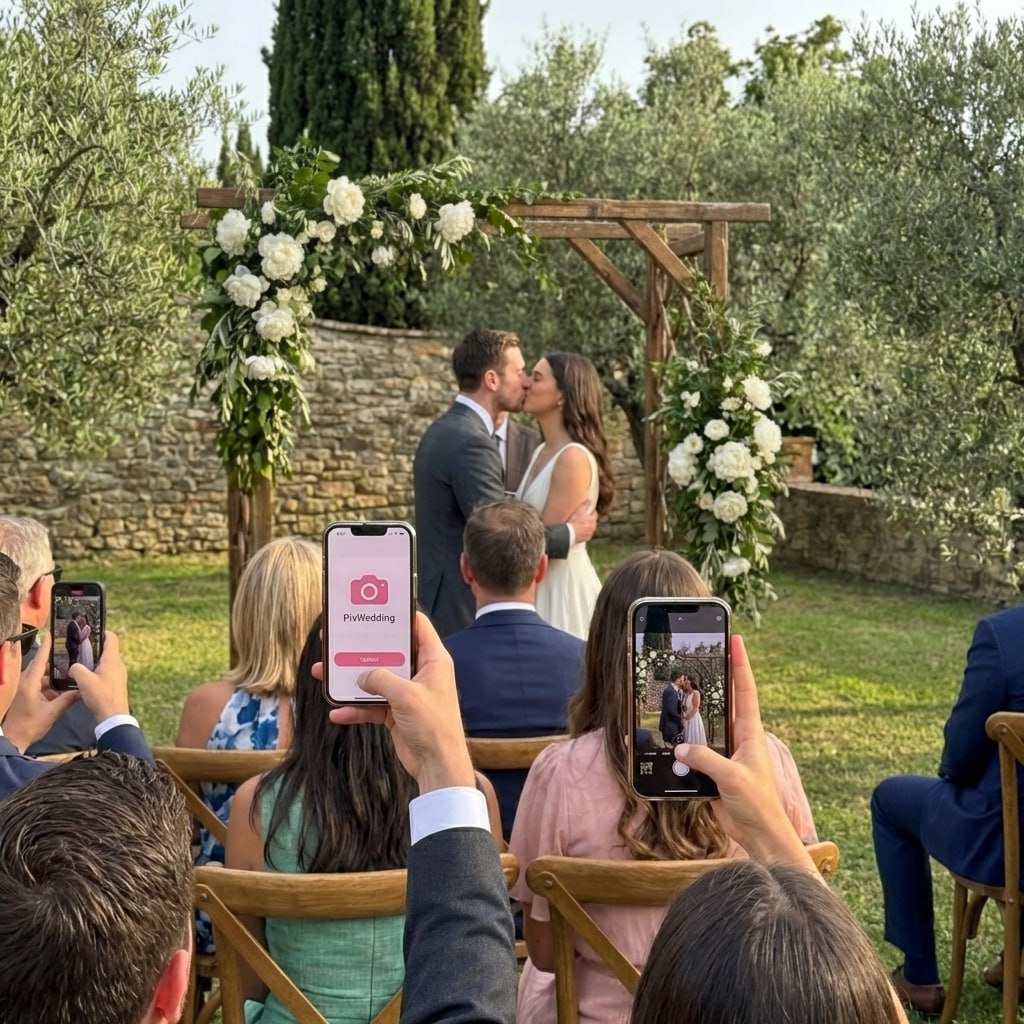
Funny vows create the loudest moments of any ceremony. Pix Wedding gives guests a simple QR code to capture every reaction - photos, video, and voice messages included.
From Mom
Scan to join the album
No app, no account
UPLOADING
Saving your moment
THE ALBUM
Emma & Jack
June 21, 2026
647 photos · 95 guests

SCAN TO TRY
pix.wedding/
your-wedding
The Art of Writing Genuinely Funny Vows
Comedy in vows is not about being a stand-up comedian for three minutes. It is about capturing something true about your relationship in a way that is more surprising and vivid than a straightforward statement. The best funny vows make people laugh because they recognize something real.
The rule of three is the most reliable comedy structure for vows. Set up two expected items in a list, then deliver a completely unexpected third. "I promise to love you in sickness and in health, in good times and in bad, and in the fifteen minutes it takes you to find your keys every single morning." The laugh comes from specificity and the pivot from the formal to the mundane.
Callbacks reward attention. If you met at a terrible first date that involved a broken umbrella and a missed subway, referencing that moment in your vow creates a laugh that is both funny and deeply personal. The audience may not know the story yet, but when you tell it in three sentences and then circle back to it in a vow, it earns something more than a generic joke ever could.
- •Rule of three: two expected items, one surprising third
- •Callbacks to shared memories reward your partner and amuse guests
- •Specificity beats generality: "your Tuesday morning moods" lands better than "your bad moods"
- •The pivot: start with formality, land in absurdity
- •Unexpected word choices: one wrong word in an otherwise serious sentence creates humor
- •Understatement: downplaying something obviously significant is reliably funny
Guest Reaction Management and Delivery Techniques
Writing a funny vow is half the job. Delivering it is the other half. A joke that is perfectly written and poorly delivered gets nothing. The single most important delivery skill is the pause. After a line you expect to land, stop. Look up. Let the room respond. Do not rush through the laugh to get to the next line.
Eye contact determines whether your vow feels like a performance or a conversation. During the funny parts, glance briefly at your audience to invite them in. During the sincere parts, look only at your partner. This physical cue signals to guests when to feel something and when to laugh.
Practice the vow at performance volume, not reading-to-yourself volume. Many people rehearse quietly and are then shocked by how different the timing feels in a room full of people. Record a video of yourself doing a full delivery and watch it back. It is uncomfortable but essential.
- •Write "(pause)" in your notes wherever you expect a laugh
- •Look at the audience during jokes to invite them in
- •Look only at your partner during sincere moments
- •Practice at full volume in a space similar in size to your venue
- •Record and watch yourself deliver the full vow
- •Have a backup line ready if the main joke does not land
Explore more free wedding tools
Everything you need to make your wedding day stress-free and unforgettable.
AI Speech Pro
Banger toasts for Best Man & more.
Hashtag Generator
Create unique wedding hashtags.
Thank You Notes
Generate personalized thank you notes.
Father of the Bride Toast
Full example toasts, structure, and delivery tips.
Invitation Wording
Perfect wording for your invitations.
Couple Name Combiner
Blend your names into the perfect couple name.
Photo Sharing QR
The best way to collect guest photos.
Wedding Checklist
Month-by-month planning checklist.
Funny Wedding Vows FAQs
Straight answers to the questions people ask most about this topic.
Absolutely. Humor in vows is increasingly popular and guests love it. The key is landing at least one genuinely heartfelt moment within the humor, so the vow does not feel like a comedy roast. Funny vows that end sincerely are consistently rated the most memorable by wedding guests.
Use the 70/30 rule: 70% heart, 30% humor. Open with something real, let the humor land in the middle where it earns the laugh, then close with something genuine. Never end on a joke. End on what you actually mean, which lands harder after the laughter anyway.
The rule of three (set up a pattern then break it), callbacks (reference something from early in your relationship), and the pivot (start a serious sentence then redirect to something absurd). Avoid sarcasm, which can read as mean in a live setting, and avoid anything that embarrasses your partner in front of family.
Yes. Run them by a friend with a good sense of humor who also knows your partner. Humor is subjective and what kills in your apartment may land differently with 120 people watching. The laugh-test is essential. If your test audience only smiles politely, revise.
Classic films, timeless books, and universal references (Star Wars, Friends, Lord of the Rings) age far better than trending memes or specific viral moments. If a reference requires explanation, cut it. If people born in different decades would both get it, keep it.
Pause after the joke. This is the most important technique comedians use and most first-time vow writers forget. If you keep talking over the laughter, no one hears what follows. Write "(pause)" in your notes, and let the room breathe before continuing.
Aim for 150 to 250 words, which delivers roughly 90 to 150 seconds of spoken material at a natural pace. This is enough room for two or three comedy moments and a sincere close. Anything longer risks losing the room; anything shorter may feel rushed.
Either works, but if only one partner is writing funny vows, talk about it in advance so the tonal contrast feels intentional rather than mismatched. Some couples do one funny and one sincere as a deliberate pairing, which often works beautifully. Coordinate the length so neither vow feels like an afterthought.
Keep going. Do not apologize, do not explain the joke, do not repeat it louder. Smile, pause briefly, and continue with the next line. In person, delivery nerves sometimes flatten timing that worked perfectly in rehearsal. The sincere parts that follow will land regardless, and the audience is rooting for you.