
Vintage Wedding Ideas: A Decade-by-Decade Guide
From 1920s Art Deco to 1990s minimalism: real palettes, sourcing options, and the film photography trend behind 2026's biggest wedding style shift.
The short answer
78 percent of couples marrying in 2026 say vintage or nostalgic style is shaping their wedding in some way, but very few are running a full costume theme. Most pick one decade and one or two categories, attire, tabletop, or stationery, and let a palette do the rest. The 1990s lead among specific eras, followed closely by 1970s bohemian and 1960s mod looks, and film-camera aesthetics (disposables and Y2K digicams) are riding the same wave.
The numbers behind the trend
Zola surveyed more than 11,500 couples marrying in 2026 for its First Look and Wedding Style reports. Here is what they actually said about vintage style.
Source: Zola's 2026 Wedding Style Report ("The One-of-One Wedding"), a survey of 11,500+ couples marrying in 2026. Read the full report.
Vintage wedding ideas by decade
The 1990s are the single most-cited era (19 percent of all couples, 22 percent of Gen Z couples specifically), but each decade brings a distinct palette, silhouette, and mood. Pick the one that matches your venue and guest experience, not just the one trending on your feed.
Art Deco & the Jazz Age
Palette
Black, gold, emerald, ivory
Attire cues
Drop-waist silhouettes, fringe hemlines, feather headpieces, T-strap heels
Decor cues
Geometric linework, gold candlesticks, marabou trim, peacock or ostrich feather accents
Music
A live jazz trio, or a curated Gatsby-era playlist for cocktail hour
Mod glamour
Palette
Mint, avocado, harvest gold, cream
Attire cues
Tea-length A-line dresses, structured elbow gloves, bouffant-set veils
Decor cues
Bold graphic prints, starburst mirrors, citrus-toned centerpieces
Music
Motown classics and British Invasion tracks for a dance-floor-first reception
Bohemian folk revival
Palette
Rust, mustard, olive, terracotta
Attire cues
Flowing bishop sleeves, crochet detailing, flower crowns, empire waists
Decor cues
Macrame backdrops, dried pampas grass, mismatched rattan seating
Music
A folk-rock and singer-songwriter set list, acoustic sets during the ceremony
Slip dresses & the Y2K digicam look
Palette
Champagne, silver, black, deep plum
Attire cues
Bias-cut slip dresses, minimalist jewelry, low sleek buns
Decor cues
Clean-lined tablescapes, single-stem arrangements, a point-and-shoot camera on every table
Music
A grunge-to-pop crossover set, cassette-shaped favors or a mixtape-style playlist card
Is a vintage theme actually right for your wedding?
Lean vintage if
- You want your wedding to look distinctly different from the last five you attended
- You or your partner have real heirloom pieces (jewelry, a veil, a suit) worth building around
- Your venue already has period bones (a historic hotel, a barn, an old theater) that a vintage palette will complement instead of fight
- You are willing to shop or source months ahead of the wedding instead of ordering everything off one rental catalog
Skip it (or keep it minimal) if
- You are working with a tight, non-negotiable timeline under three months, vintage sourcing rewards lead time
- Your guest list skews toward wanting a familiar, modern-feeling event over a styled one
- You do not have the bandwidth to manage sourcing across multiple secondhand and rental channels
- Your venue is already visually loud (bold modern architecture, saturated branding) in a way that competes with a period palette
Where to actually source real vintage pieces
There are three practical routes, and most vintage weddings end up mixing all three: buy a few small pieces outright, rent the large anchor pieces, and thrift the rest.
Buying original vintage
Works well: Authentic patina and construction you cannot replicate new; often the cheapest route for small decor items like frames, vases, and glassware.
Watch out for: Sizing on vintage attire is unpredictable across eras and brands, and condition (staining, structural wear) is a real risk with anything bought sight-unseen.
Renting from a vintage prop house
Works well: Curated, insured, and usually delivered and struck for you. National vintage rental houses like Found Rental Co. (one of the first dedicated vintage prop rental companies in the US) carry large one-of-a-kind pieces most couples could never source solo.
Watch out for: Costs compound quickly at scale, availability is regional, and the most photogenic pieces get reserved six to twelve months out.
Thrifting & estate sales
Works well: The cheapest option by far for small tabletop items, and the source of genuinely one-of-one finds no other couple will have.
Watch out for: Time-intensive with no guarantee of finding what you need before the wedding, and quantities (matching glassware, place settings) are rarely available in bulk.
When we mention a named vendor, it is because it is a real, verifiable company. If you cannot confirm a business exists in your area and offers the service, treat any list you find online with skepticism, generic descriptors ("your city's local vintage prop rental houses") are more reliable than a copy-pasted "top 5" list.
The film camera aesthetic that comes with a vintage theme
Disposables, digicams, and the 90s photo look
The vintage pull extends past attire and decor into how the day gets photographed. Poshmark reported a 31 percent increase in point-and-shoot digital camera orders tied directly to couples chasing a late-90s wedding album look, according to the Zola x Poshmark 2026 Wedding Style Report. Disposable film cameras on reception tables are having the same moment for the same reason: grain, light leaks, and a slightly imperfect frame read as authentically of-the-era in a way a phone photo edited with a filter does not.
Before you order a stack of disposables or hunt down a working Y2K digicam, it is worth understanding the real tradeoffs: return rates, development turnaround, and per-guest cost. We broke all of that down with real numbers in a dedicated comparison, including where a digital gallery genuinely outperforms film and where it does not.
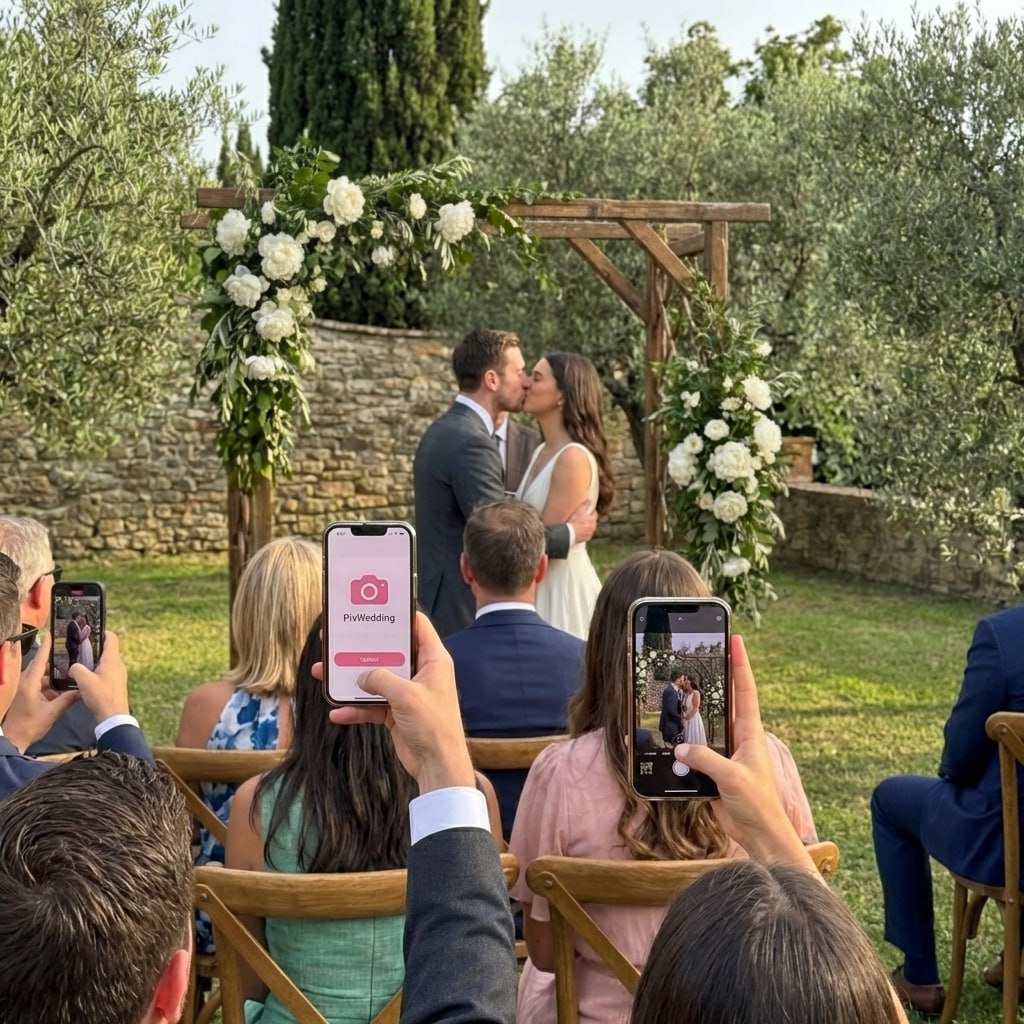
A pattern we see often: couples who love the film look put a handful of disposable or digicam cameras on tables for the aesthetic, then pair it with a free QR-code photo gallery so every phone photo from the night, the ones film cameras will always miss, still ends up in one place instead of scattered across 80 different camera rolls.
Vintage touches beyond attire and decor
Music
A live jazz trio for a 1920s cocktail hour, a Motown-heavy set for a 60s reception, or a cassette-tape-style playlist card guests can scan for a 90s mixtape moment. The era should show up in at least one dedicated set (cocktail hour or first dance), not necessarily the whole night.
Stationery
Stationery is the cheapest, lowest-risk place to commit fully to a decade: letterpress and wax-seal suites for the 1920s, bold geometric prints for the 1960s, hand-lettered folk typography for the 1970s, or a minimalist single-font slip-style card for the 1990s. It is also usually the first thing guests see, so it sets the tone for everything after.
Timing it in your planning calendar
Vintage sourcing runs on a longer timeline than off-the-shelf decor. Lock the venue and decade first, reserve any rented anchor pieces within weeks of booking the venue, start attire shopping or alterations at the four-month mark, and leave stationery and small thrifted pieces for the final two months when you know exactly what gaps remain.
Matching the decade to your season and venue
A 1920s Art Deco palette of black, gold, and emerald tends to suit an indoor ballroom or historic hotel more than an outdoor garden. 1970s bohemian earth tones and macrame read naturally outdoors, in a barn, or under string lights. Let the venue you already booked narrow the decade choice down instead of picking the era first and fighting the room.
Vintage wedding glossary
Terms that come up constantly once you start sourcing, in one sentence each.
Art Deco
The bold geometric, gold-and-black design language of the 1920s, associated with jazz-age glamour.
Patina
The surface texture and wear an object develops with age, prized in vintage decor for looking authentically old rather than distressed on purpose.
Y2K digicam look
The slightly soft, flash-heavy, low-resolution photo aesthetic produced by early 2000s point-and-shoot digital cameras, now trending again as a wedding photo style.
Bishop sleeves
Sleeves that are full through the forearm and gathered at the wrist, a signature silhouette of 1970s bohemian attire.
Estate sale
A sale of a household's belongings, often after a move or death in the family, a common source for genuinely old furniture, glassware, and linens.
Anchor piece
A single large rented or purchased item (a settee, a bar cart, an arch) that a tablescape or lounge area is designed around.
An illustrative example: a 90-guest 1970s-inspired wedding
For context, not a real couple: a 90-guest barn wedding built around a 1970s bohemian palette (rust, olive, terracotta) might rent a handful of macrame backdrops and rattan seating as anchor pieces, thrift mismatched glassware and vases for tablescapes over several weekends, and lean on a bride's mother's original 1970s dress as the one true heirloom piece worn during the reception. Stationery carries hand-lettered folk typography, and a single acoustic set opens the ceremony before the DJ takes over for the reception. The rest of the day, catering, the ceremony structure, the after-party, stays contemporary.
A few more things couples ask
Can I mix two different decades in one wedding?
Yes, and many couples do, usually pairing a decade for attire with a different one for decor. The key is picking a unifying palette so the mix reads as curated rather than accidental.
Do vintage wedding dresses need more alteration work than new ones?
Often, yes. Vintage fabrics can be delicate, sizing standards were different by era, and a dress bought secondhand may need structural repair, not just a hem. Budget more alteration time than you would for a new gown.
Is a vintage theme more expensive than a modern one?
Not necessarily. Thrifted and heirloom pieces are often cheaper than new decor, but rented vintage anchor pieces and altered vintage attire can push costs up. The total depends heavily on how much you buy versus thrift versus rent.
Reception
Grainy on purpose
The film camera catches the moment. This catches every moment.
Put a disposable on the table for the vintage look, and a free QR code next to it so every guest's phone photo lands in one album too, no waiting three weeks for the lab.
From Grandma
Scan to join the album
No app, no account
UPLOADING
Saving your moment
THE ALBUM
Emma & Jack
June 21, 2026
647 photos · 95 guests
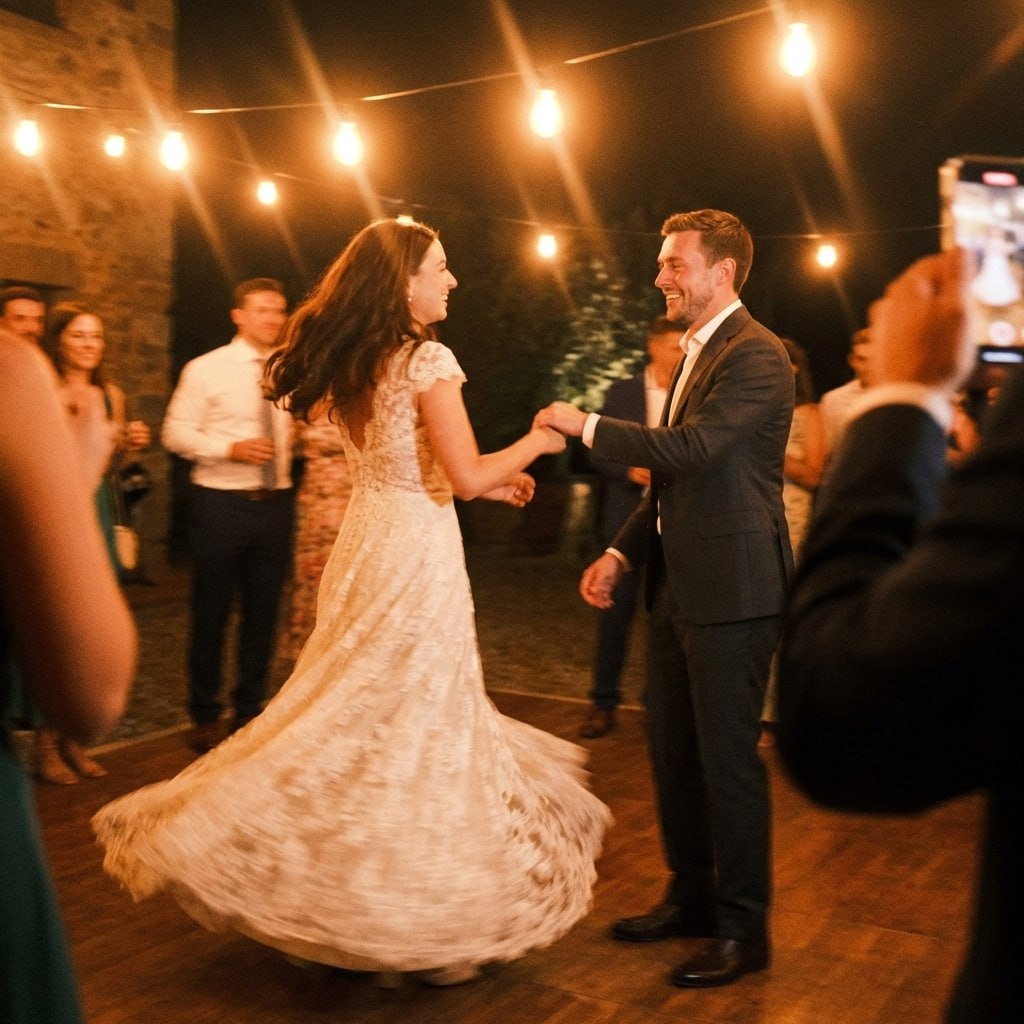
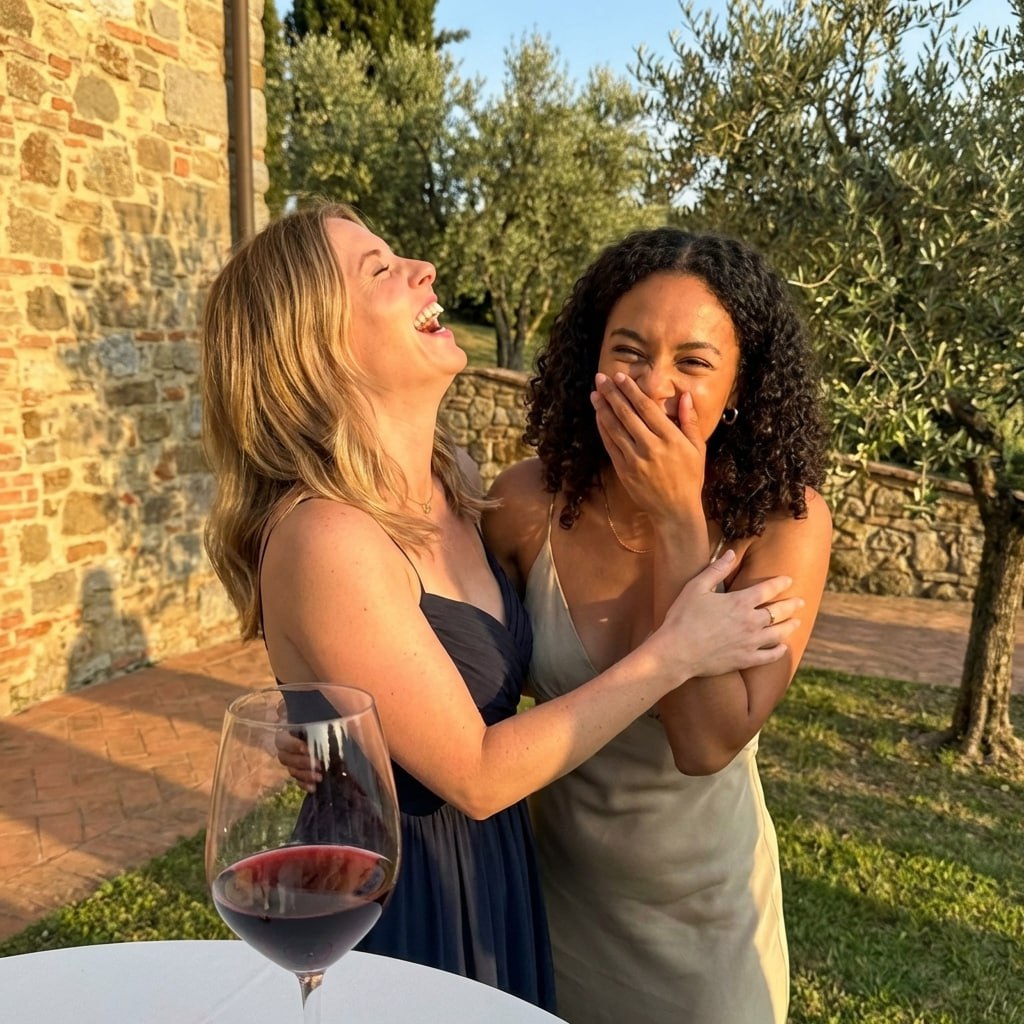
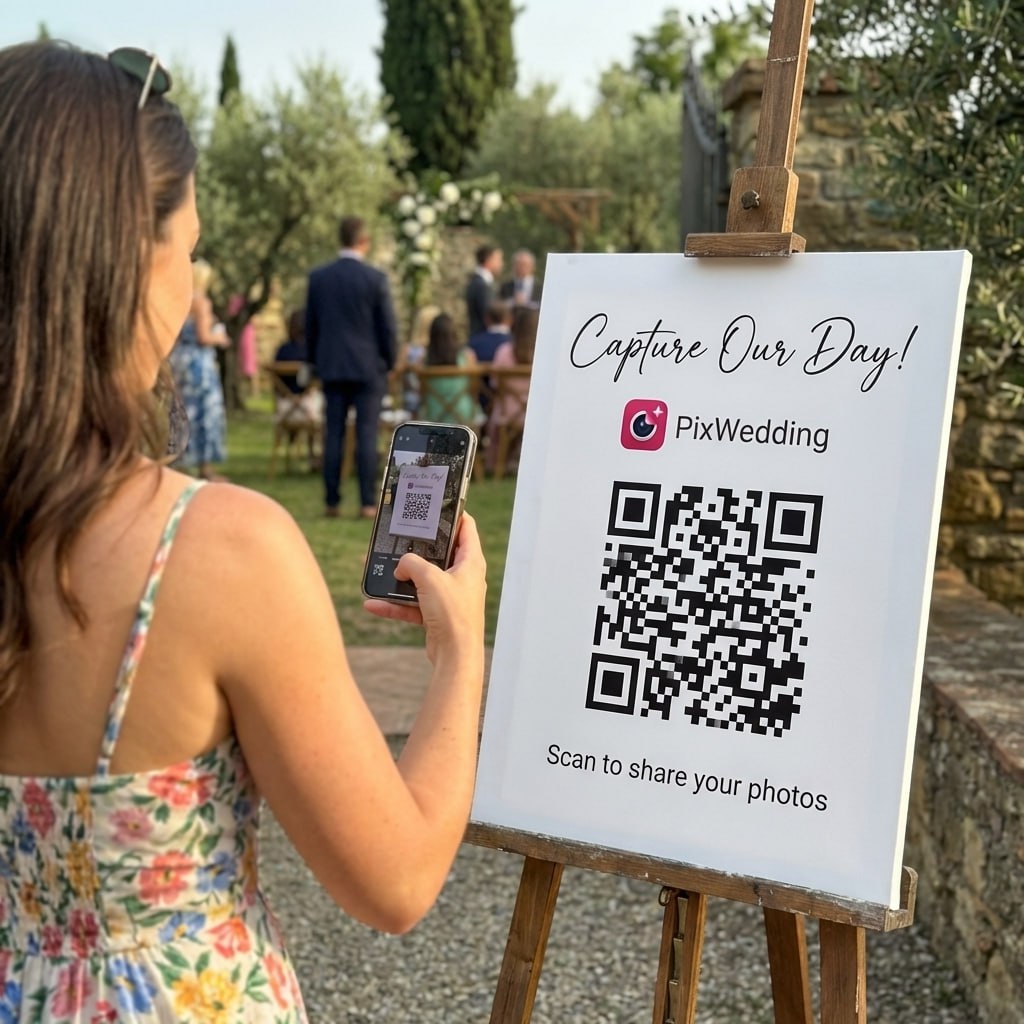
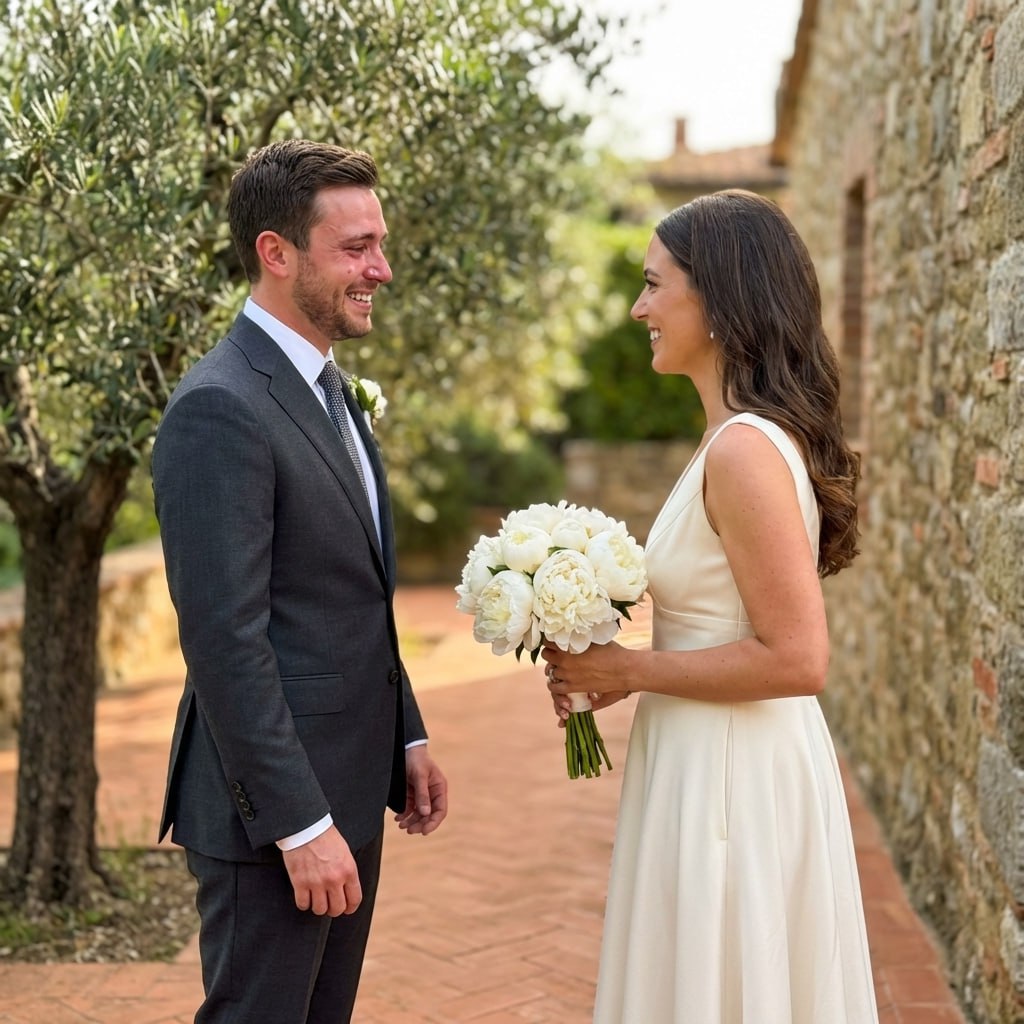
SCAN TO TRY
pix.wedding/
your-wedding
Common mistakes when planning a vintage wedding
1. Committing to every vendor category at once
Trying to make attire, florals, stationery, music, and the venue all match one decade usually blows the budget and the timeline. Pick two or three categories to actually carry the theme.
2. Ordering vintage attire without a buffer for alterations
Vintage sizing runs smaller than modern sizing across most eras, and older fabrics can be delicate to alter. Order or shop at least four months out to leave room for a tailor.
3. Skipping a test roll on disposable or film cameras
If disposable or digicam-style cameras are part of your tabletop plan, buy one, shoot a roll, and get it developed before the wedding so you know the flash range and how your venue lighting actually looks on film.
4. Assuming rental pieces will be available close to the date
Popular vintage rental pieces (a specific settee, a bar cart, a set of mismatched chairs) are frequently booked six months or more ahead for peak wedding season. Reserve anchor pieces as soon as the venue is locked.
5. Forgetting the theme needs to photograph well in your actual light
Deep jewel tones and dim Edison-bulb lighting look moody in person but can read muddy in photos. Walk your venue at the time of day your reception happens before committing to a dark palette.
Quick checklist before you start sourcing
- Pick one anchor decade and one dominant palette before sourcing anything
- Ask parents and grandparents about heirloom jewelry, veils, or cufflinks before buying new
- Set a hard budget split: rental anchor pieces vs. thrifted small items vs. new stationery
- Reserve any rented furniture or props the same week you book your venue
- Order vintage or resale attire at least 4 months out to leave time for alterations
- Test one roll of film or a sample disposable camera before ordering a full stack
- Keep at least half of your decor contemporary so the theme reads intentional, not costumed
Keep planning
More guides on wedding style, photo collection, and planning around 2026's biggest trends.
Why vintage is having a real moment, not just a Pinterest board
The vintage pull in 2026 weddings is not primarily about nostalgia for its own sake. When Zola asked couples why they were drawn to vintage style, 71 percent said it was about creating something one-of-a-kind, 61 percent said the pieces felt more meaningful, and 48 percent said vintage simply reads as timeless in a way trend-driven decor does not. Sustainability (27 percent) and cost (28 percent) matter too, but they trail uniqueness and meaning as the actual driver.
That reframes the theme: vintage is less a costume choice and more a reaction to sameness. Couples who feel like every wedding photo in their feed looks identical are reaching for eras, textures, and objects that cannot be ordered from the same three vendors everyone else uses.
Building a vintage theme that survives contact with your actual budget
The biggest planning trap is treating vintage as an aesthetic you buy in one purchase. In practice, the couples who pull it off best treat it as a sourcing project spread across months, mixing a few purchased or rented anchor pieces with free finds (heirlooms, thrifted glassware, a grandparent's record collection) and letting the palette do most of the visual work.
Start with the decade and palette first, decide which two or three vendor categories will actually carry the theme (usually attire, tabletop, and stationery), and leave the rest of the day contemporary. That keeps the budget contained and keeps the wedding from reading as a themed event rather than your wedding.
Explore more free wedding tools
Everything you need to make your wedding day stress-free and unforgettable.
Wedding Aesthetic Quiz
Find your 2026 wedding aesthetic in 12 questions.
AI Wedding Dress Generator
Design your dream gown and get an AI image prompt.
Wedding Monogram Maker
Design a custom monogram with your initials.
Photo Sharing QR
The best way to collect guest photos.
Wedding Checklist
Month-by-month planning checklist.
Cost Calculator
Compare wedding costs by city.
AI Vow Generator
Write "banger" vows in seconds.
AI Speech Pro
Banger toasts for Best Man & more.
Vintage wedding ideas, answered
Straight answers to the questions people ask most about this topic.
78 percent of couples say vintage or nostalgic style is influencing their wedding aesthetic in some way, according to Zola's 2026 First Look Report, a survey of more than 11,500 couples marrying in 2026. It rarely means a full costume-party theme; most couples fold vintage into attire, decor accents, or stationery rather than committing every element to one decade.
The 1990s lead among specific eras, cited by 19 percent of couples overall and 22 percent of Gen Z couples specifically, per Zola's 2026 Wedding Style Report. Slip dresses, minimalism, and the Y2K point-and-shoot camera look are the clearest expression of that decade's pull.
It depends on scale. Thrifting and estate sales are usually cheapest for small decor pieces (vases, frames, glassware) but take real time and offer no guarantees. Renting from a vintage prop house is more predictable and insured but costs more per item and popular pieces book out months ahead. Buying vintage attire secondhand can be the best value of all three, since resale platforms often price 1990s and 1960s pieces well under a comparable new gown.
Yes, and the data backs it up. Poshmark reported a 31 percent jump in point-and-shoot digital camera orders tied to a late-90s wedding album look, per the Zola x Poshmark 2026 Wedding Style Report. Disposable film cameras and early-2000s digicams both read as authentically vintage, but they come with real tradeoffs in return rate and turnaround time worth understanding before you order a stack of them.
Pick one or two decades and one dominant expression, usually palette and either attire or tabletop, then let the rest of the wedding stay contemporary. A 1970s color palette with modern florals reads as intentional; a full head-to-toe recreation of one era across every vendor category usually reads as a theme party rather than a wedding.
Stationery and small tabletop details are the cheapest entry points: a letterpress-style invitation suite, mismatched vintage glassware sourced from thrift stores, or a single heirloom piece worn or displayed. 34 percent of couples already plan to incorporate a family heirloom into their look, which costs nothing beyond asking a relative.