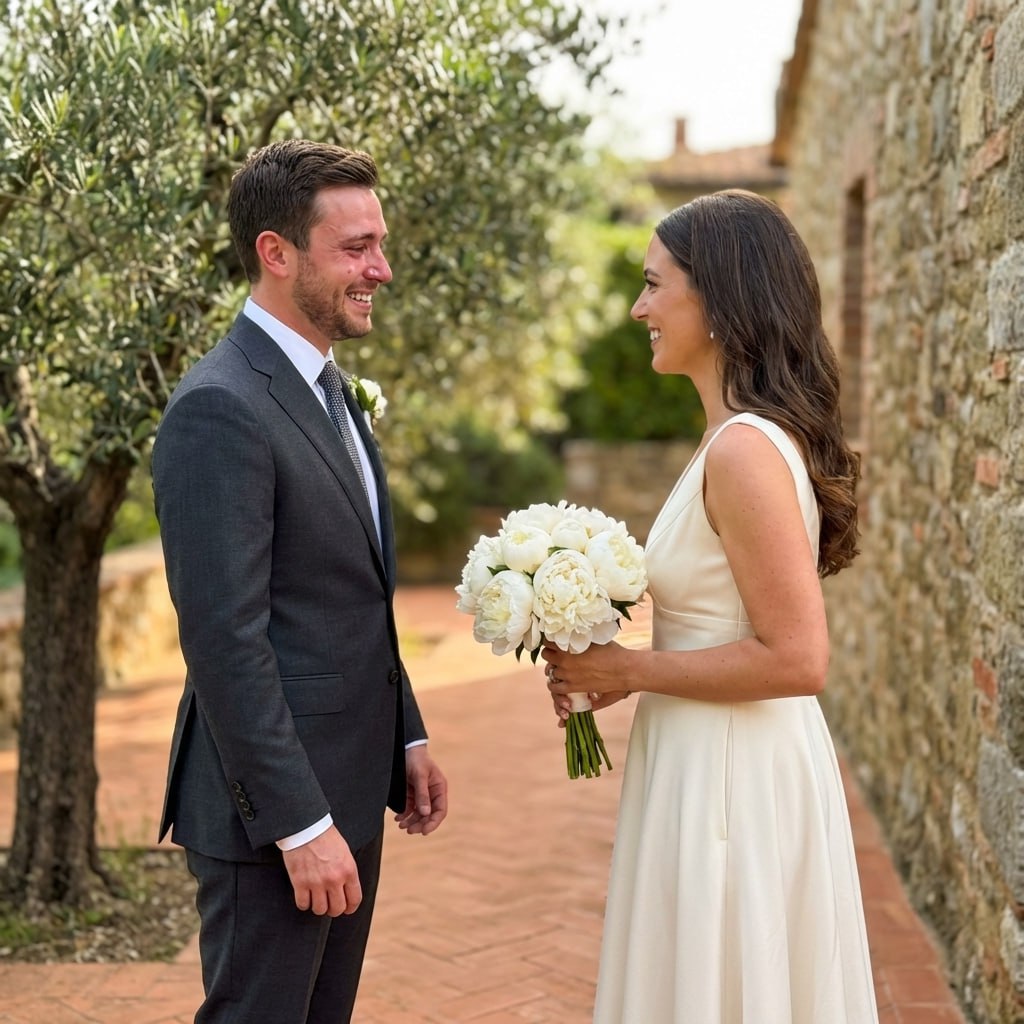
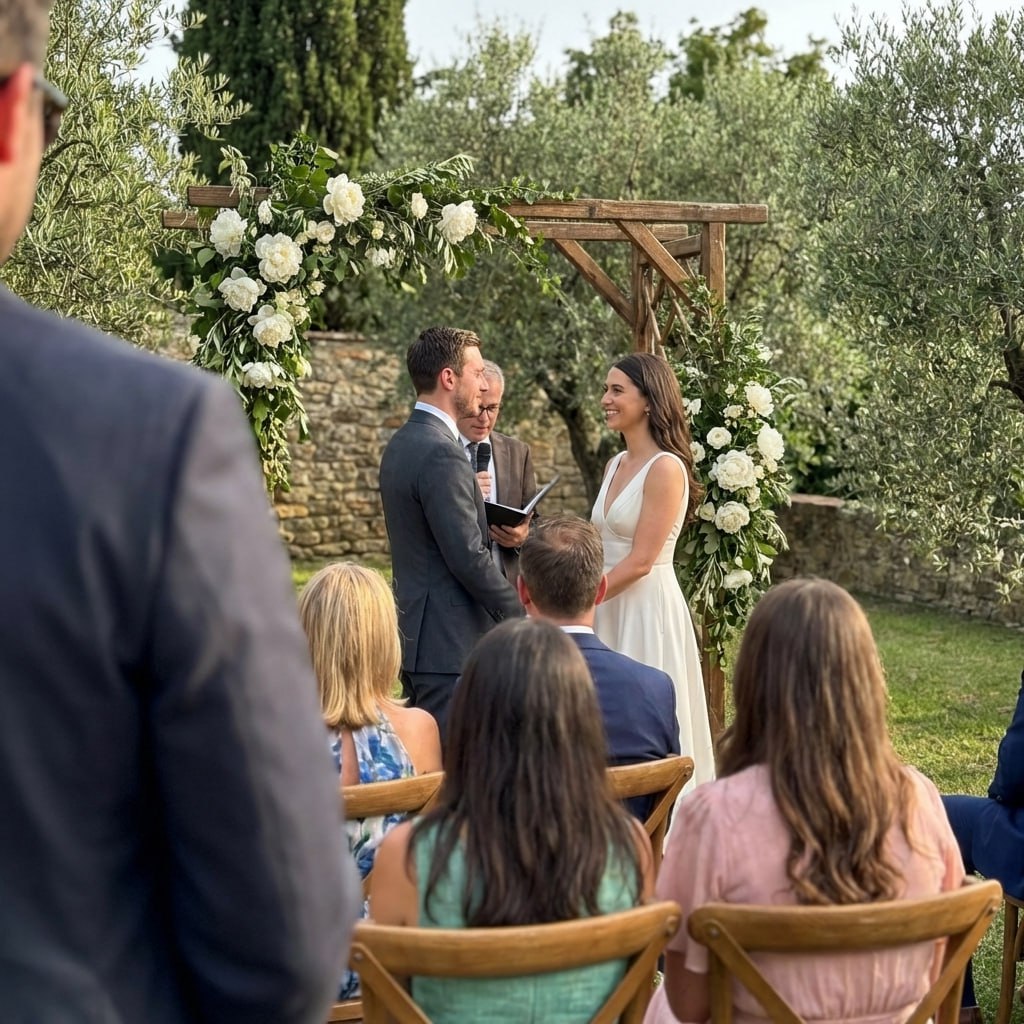
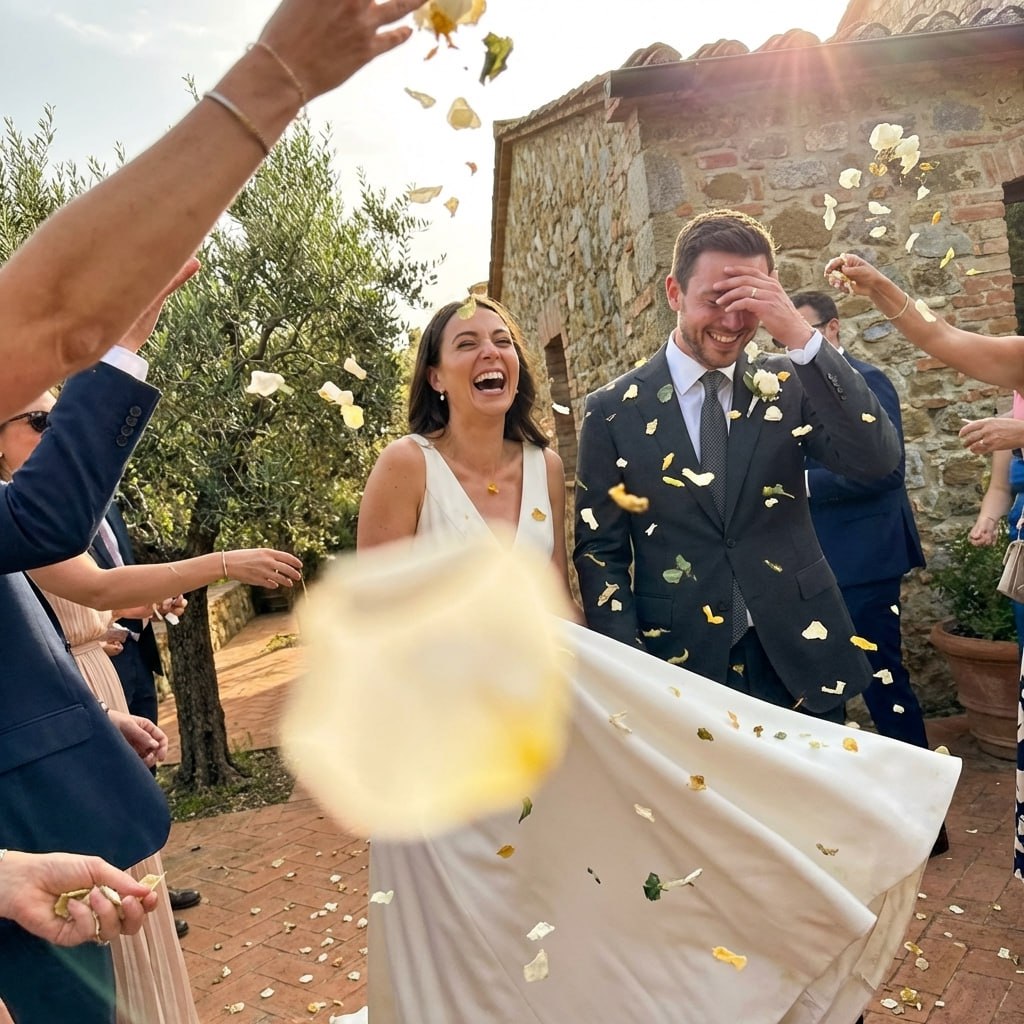
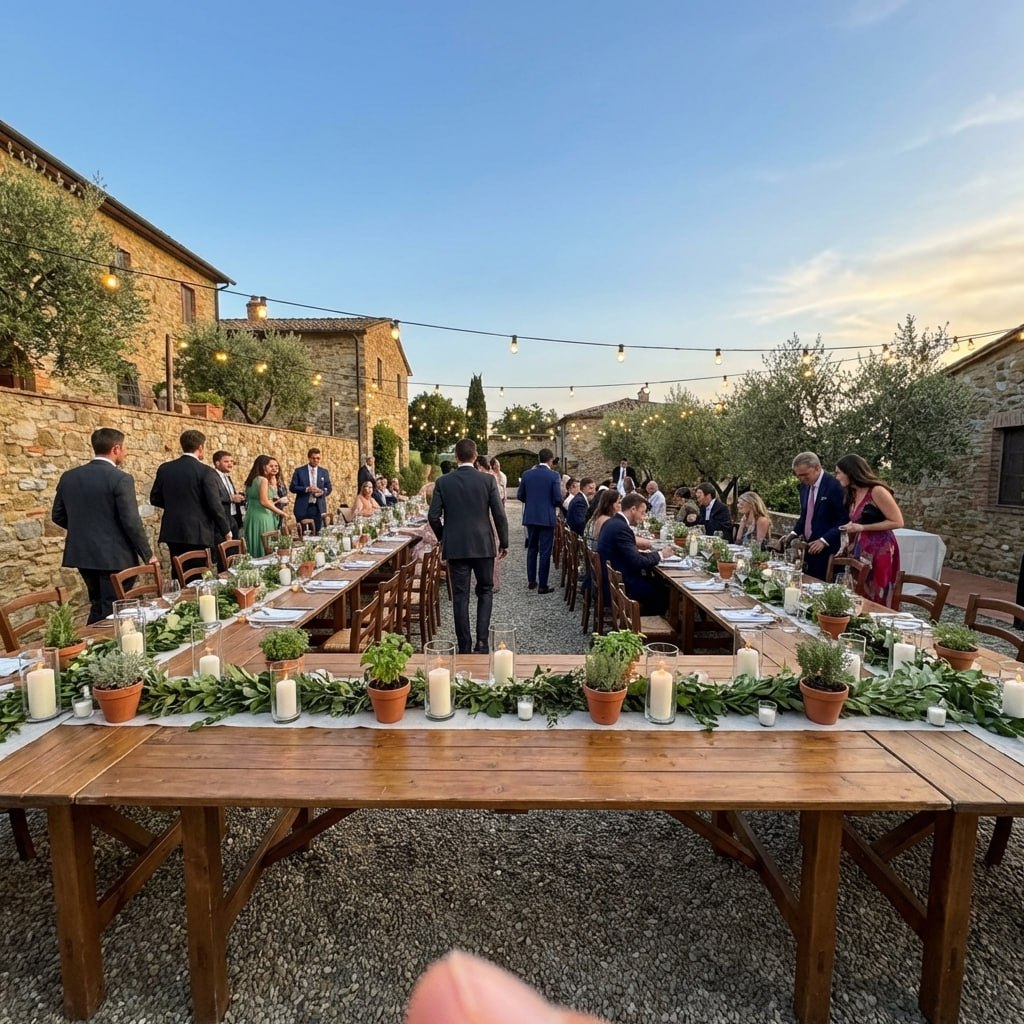
Pick a season and a vibe, and get a five-color wedding palette. Tap any swatch to copy its hex code for your florist, stationer or planner. Twenty curated palettes, free, no sign-up.
20Curated palettes
4 x 5Seasons by vibes
5Colors in each
$0No sign-up
Spring BohoTap any swatch to copy its hex code
#E6B8B8
1
#D4A373
2
#CCD5AE
3
#E9EDC9
4
#FEFAE0
5
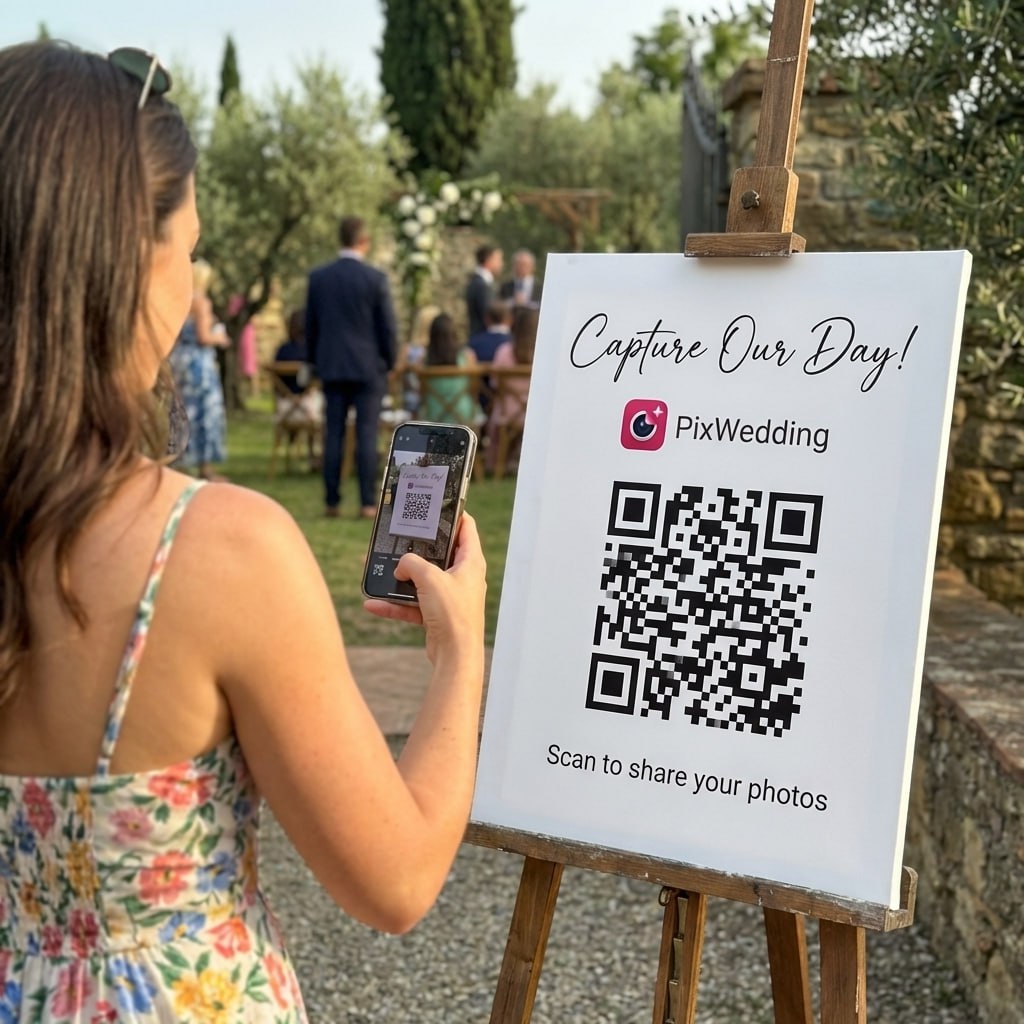
Palette picked. Put it on a QR album sign so every guest photo lands in one place.Start my free album
Email me my color palette
Get your color palette sent straight to your inbox so it doesn't get lost.
No spam. Unsubscribe anytime.
01The short answer
How do you generate a wedding color palette?
Answer
Choose your season and the feel you want, then narrow it to two or three colors plus a neutral. With the free generator above, you pick one of four seasons and one of five vibes, get a curated five-color palette, and tap a swatch to copy its hex code.
Color is a real decision for most couples: in The Knot 2025 Real Weddings Study, 80% of couples said they targeted specific wedding colors on purpose (84% of Gen Z, 79% of millennials).
1.Pick your season
Choose Spring, Summer, Fall or Winter. The tool starts on Spring Boho.
2.Pick a vibe
Choose Boho, Classic, Modern, Rustic or Romantic. The five swatches change as soon as you tap.
3.Tap a swatch to copy it
Each swatch copies its hex code, like #D4A373, to your clipboard. Paste it into a message to your florist or stationer.
4.Email yourself the palette
Use the form under the swatches to get all five codes by email, labeled with the season and vibe.
Your paletteFall RusticTap a swatch to copy
1#7F5539
2#9C6644
3#B08968
4#DDB892
5#E6CCB2
Copied #9C6644
SEE IT IN ACTION
Scan. Upload. Your colors, in every guest photo.
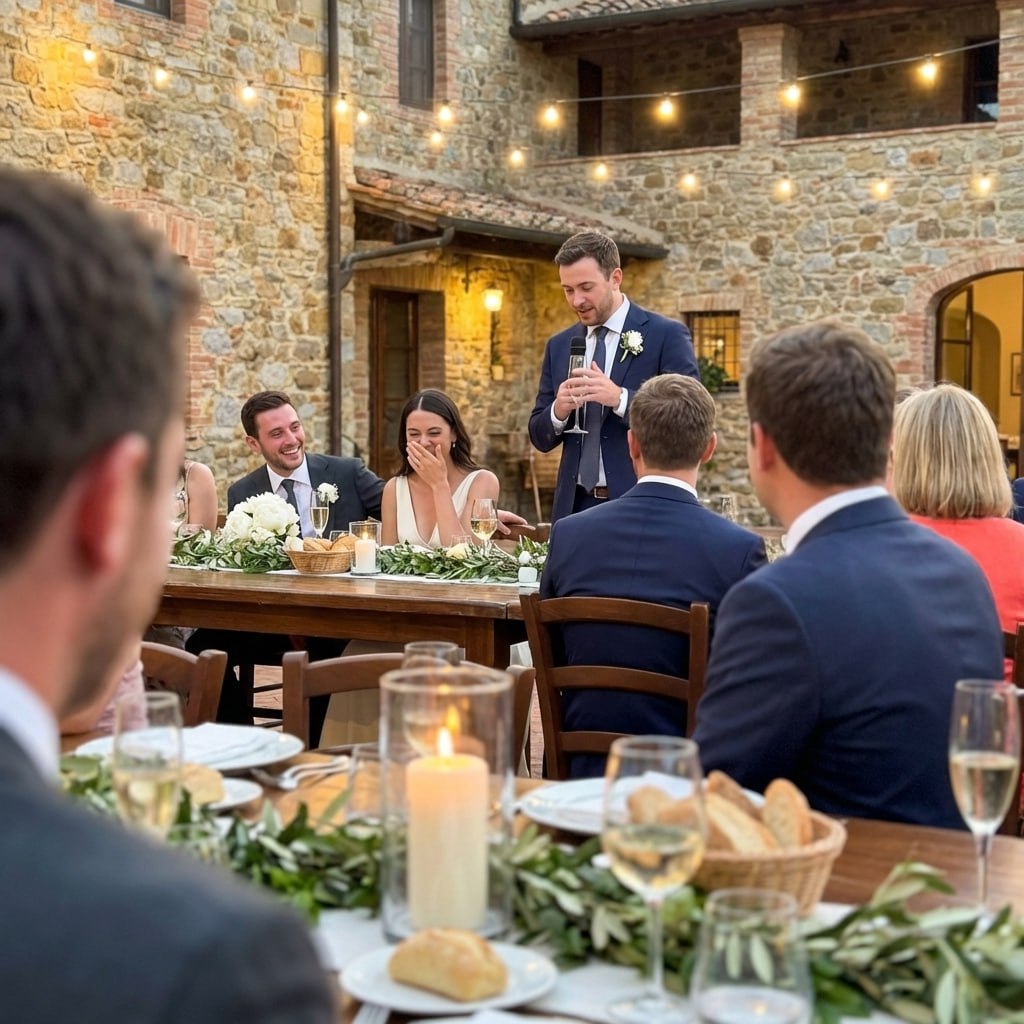
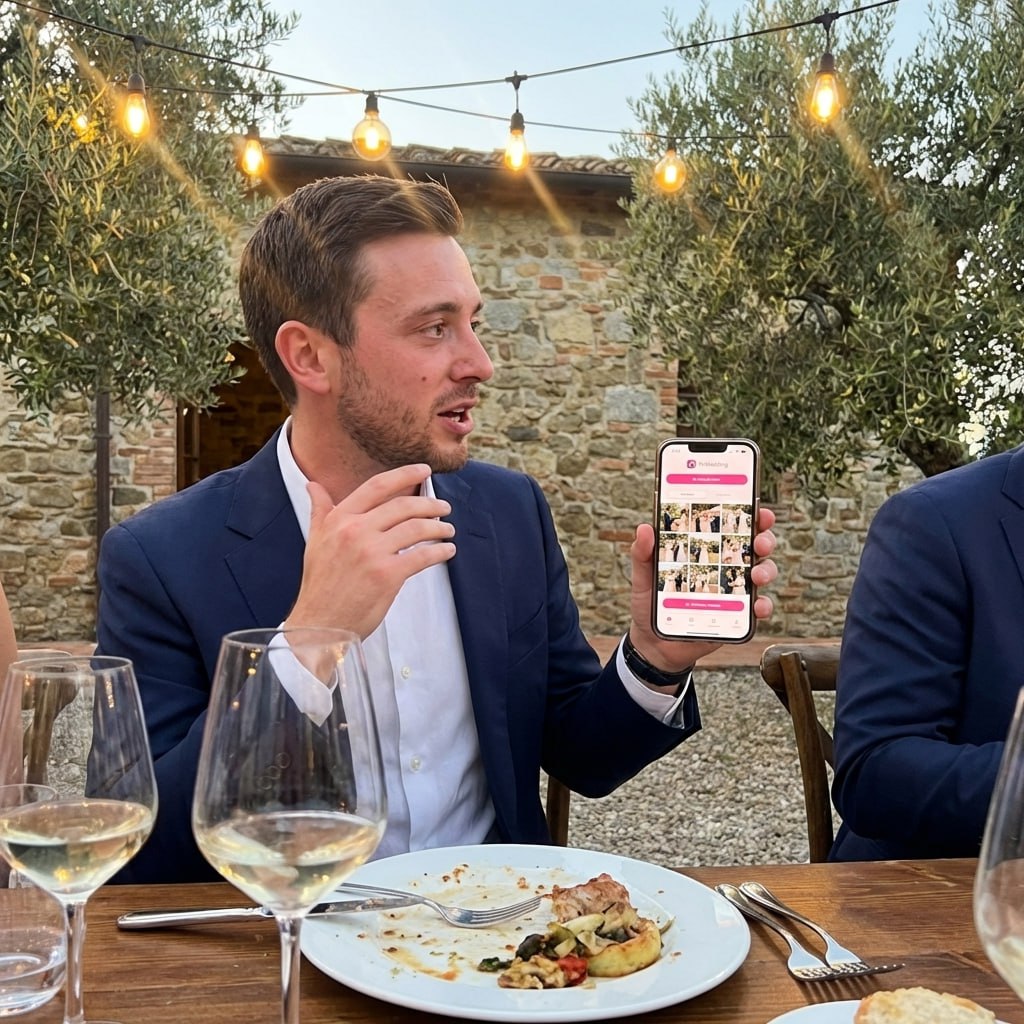
Watch a guest scan the QR code and add photos from the browser, no app and no account. The florals, the linens and the dresses you planned show up from every angle in one album.
Sofia & JamesScan to add your photos
9:41
WEDDING ALBUM
Sofia & James
Example album
AllDetailsMine
Add your photosNo app needed
02Every palette at a glance
All 20 wedding color palettes, with hex codes
These are the exact palettes inside the generator, grouped by season. Each one has five colors, listed left to right in the same order the tool shows them. Use the generator above to copy a single code with one tap.
Spring
Soft pastels next to two darker sets: a navy and red Modern, and a brick and caramel Rustic.
Spring Boho
#E6B8B8#D4A373#CCD5AE#E9EDC9#FEFAE0
Spring Classic
#FFB7B2#FF9E9E#C7CEEA#B5EAD7#E2F0CB
Spring Modern
#2B2D42#8D99AE#EDF2F4#EF233C#D90429
Spring Rustic
#6F1D1B#99582A#BB9457#FFE6A7#432818
Spring Romantic
#F4C2C2#FF69B4#FFB6C1#FFC0CB#FFE4E1
Summer
The boldest season in the tool: terracotta and teal, navy with orange, and a black and gold Modern.
Summer Boho
#F4A261#E76F51#2A9D8F#264653#E9C46A
Summer Classic
#003049#D62828#F77F00#FCBF49#EAE2B7
Summer Modern
#000000#14213D#FCA311#E5E5E5#FFFFFF
Summer Rustic
#588157#3A5A40#A3B18A#DAD7CD#344E41
Summer Romantic
#B5838D#E5989B#FFB4A2#FFCDB2#6D6875
Fall
Burgundy, forest and olive greens, slate blues and a full run of browns.
Fall Boho
#BC4749#A7C957#6A994E#386641#F2E8CF
Fall Classic
#8D021F#D9BFBF#2C3E50#E74C3C#ECF0F1
Fall Modern
#1B263B#415A77#778DA9#E0E1DD#0D1B2A
Fall Rustic
#7F5539#9C6644#B08968#DDB892#E6CCB2
Fall Romantic
#4A4E69#9A8C98#C9ADA7#F2E9E4#22223B
Winter
Navy and ice blue, sage to charcoal greens, and an almost black Modern with deep reds.
Winter Boho
#606C38#283618#FEFAE0#DDA15E#BC6C25
Winter Classic
#1D3557#457B9D#A8DADC#F1FAEE#E63946
Winter Modern
#0B090A#161A1D#660708#A4161A#BA181B
Winter Rustic
#CAD2C5#84A98C#52796F#354F52#2F3E46
Winter Romantic
#540B0E#9E2A2B#E09F3E#FFF3B0#335C67
Screen colors vary by device and brightness. Treat the codes as a starting point and confirm with printed or fabric samples. For 30 more fall-only palettes, see fall wedding color palettes.
03What couples used
The most popular wedding colors, by the numbers
The Knot asked nearly 17,000 newlyweds which colors they used for their wedding. White came first, but greens took two of the top six spots. Here is the share of couples who used each color in some way, from the 2025 Real Weddings Study.
White41%
45% of April to June weddings, 38% of October to December
Gold36%
43% of October to December weddings
Light green33%
38% of Gen Z couples and 38% of spring weddings
Ivory or champagne32%
Steady across ages, locations and seasons, slightly up for October to December
Light pink29%
38% of spring weddings, 34% of international destination weddings
Dark green27%
35% of October to December weddings, 31% of January to March
Light blue26%
32% of spring weddings, 27% of July to September
Dark blue24%
30% of couples in the Northeast
80%picked their colors on purpose
84% of Gen Z couples and 79% of millennials said they targeted specific wedding colors.
The Knot split its color data by the quarter of the year couples married in. The table pairs those numbers with the palettes in the generator that start closest to them.
Season
Colors that peak (The Knot)
Start in the generator with
Go deeper
SpringApril to June
White 45%, light green 38%, light pink 38%, light blue 32%
Spring Classic or Spring Romantic for the pastel side, Spring Boho for sage and sand
Use the generator
SummerJuly to September
Light blue 27% (the only summer split The Knot published for these colors)
Summer Romantic for dusty rose, Summer Boho or Summer Classic if you want heat and contrast
Start in the generator withWinter Rustic for sage to charcoal, Winter Classic for navy and ice blue, Winter Romantic for wine and gold
Go deeperUse the generator
The Knot's seasons are calendar quarters, so its "October to December" group includes early winter weddings. If you marry in late November or December, check both the Fall and Winter tabs in the tool. For month-by-month ideas, see October and November wedding colors.
Source: The Knot 2025 Real Weddings Study, checked October 2026. The swatch under each season is the tool's Classic palette for that season.
052026 and 2027 color trends
Wedding color trends for 2027, and Pantone's 2026 pick
The Knot's 2027 Wedding Trends Report is built from editor trend spotting, a vendor council and The Knot's own search data. Its color list leans darker and more grown-up than recent years. Each card shows where to start in the generator.
Deep reds
Merlot, burgundy and garnet, a darker turn on the bright red The Knot first flagged in 2025.
Closest in the tool: Fall Classic, Winter Modern
Powder or French blue
Named by The Knot as red's partner: the two often anchor the same palette.
Closest in the tool: Winter Classic
Plum
Pulled in by fine art inspired weddings and often paired with green.
Closest in the tool: Fall Romantic
Wasabi green
A sharp yellow green that sits next to burgundy or plum.
Closest in the tool: Fall Boho
Muted pink accents
Blush and pale petal pinks move to a supporting role instead of the lead.
Closest in the tool: Summer Romantic
Punctuated primary hues
More than one bold showpiece color in one palette, such as red with orange or fuchsia.
Closest in the tool: Summer Classic
Creams and deep blues
Mature, refined palettes that lean on texture, linens and natural materials.
Closest in the tool: Fall Modern
+195%rise in fine art inspiration
The Knot's internal data for 2027 weddings, the reason plum and old-world tones are back.
+127%rise in primary color interest
From The Knot's search data, mostly strong primaries paired with one soft color.
11-4201
Pantone Color of the Year 2026Cloud Dancer, PANTONE 11-4201
Pantone calls it "a lofty white" and "a billowy white imbued with serenity". For a wedding it is a soft base, not a feature color.
Five swatches is a menu, not an order. Most good wedding palettes use one main color, one support color and one accent, sitting on a neutral like white, ivory or a metal.
1
Start with the venue
Walls, floors, carpet and the view are colors you cannot change. Note them before you fall for a palette.
2
Then the season and light
A June garden at noon and a December ballroom by candlelight make the same pink look like two colors.
3
Pick the vibe in the tool
Tap through the five vibes for your season and save the two or three that feel right.
4
Choose one main color
Decide which swatch carries 60% of the look. Usually it is the color you would wear yourself.
5
Cut to three plus a neutral
Five swatches are a menu. Most weddings use two or three of them plus white, ivory or a metal.
6
Test it on paper and fabric
Ask your florist and stationer for physical samples before you order anything in bulk.
The 60-30-10 split, using Fall Rustic
60%30%10%
60% Main color
The color guests see first: linens, the bridesmaid dresses, the invitation paper or the flowers.
30% Second color
The supporting color in florals, napkins, groomsmen ties and signage.
10% Accent
The small hits: ribbon, wax seals, candles, a cake detail, the boutonniere.
The rule comes from interior design: about two thirds one color, one third a second color and 10% an offset, as designers explain in Apartment Therapy. Treat the numbers as a guide, not math.
Emily Summer on YouTube
Theme first, then colors
Emily Summer, a wedding planner and bridal boutique owner, walks through how to choose a wedding theme and color palette that fit you instead of a Pinterest board. Watch it before you tap through the vibes in the tool.
Five kinds of wedding color schemes, and one palette for each
Color schemes are ways of combining colors on the color wheel. Knowing which one you like helps you brief vendors in one sentence. Every example below is a palette from the generator.
Monochrome
One color in light to dark steps. Calm and hard to get wrong, but add texture so it does not look flat.
In the tool: Fall Rustic: five browns from espresso to sand
Analogous
Neighbors on the color wheel, like pink, coral and peach. Soft and romantic, and easy for florists to match.
In the tool: Summer Romantic: mauve, rose, coral and peach
Complementary
Opposites on the wheel, like navy and orange. High contrast that reads well in photos from across the room.
In the tool: Summer Classic: navy with orange and gold
Neutral plus one accent
Black, white or grey with a single bright color doing all the work. Modern and very easy to brief.
In the tool: Summer Modern: black, navy and greys with one gold
Bold multicolor
Several strong colors at once, the punctuated primaries trend. Needs one planner or florist to hold it together.
In the tool: Summer Boho: orange, terracotta, teal and mustard
08Colors by venue
Match your palette to the room you booked
The venue is already part of your palette. Wood, carpet, stone and greenery stay in every photo, so work with them. This table is our planning guide, not survey data.
Venue
Already there
Colors that work
Try in the tool
Garden or park
Green everywhere, changing daylight
Pastels, blush, white and sage. Greens in your palette blend into the setting
Spring Boho, Spring Classic
Barn or farm
Warm wood, beams, string lights
Earth tones, rust, olive, cream. Cold blues can look grey against wood
Fall Rustic, Spring Rustic
Ballroom or hotel
Patterned carpet, gold or neutral walls
Deep jewel tones, navy, burgundy, gold. Check the carpet before you pick a red
Fall Classic, Winter Romantic
Beach or waterfront
Sand, blue water, strong sun
Coral, teal, sand and white. Very pale colors wash out in bright sun
Summer Boho, Summer Romantic
City loft or industrial
Brick, concrete, black steel
Black and white with one strong accent, or deep greens
Summer Modern, Winter Rustic
Church or historic building
Dark wood, stained glass, stone
Ivory, gold and one deep color. Bright pastels compete with stained glass
Winter Classic, Fall Romantic
Vineyard or winery
Vines, barrels, golden hour light
Wine, plum, olive and blush, the plum and green pairing The Knot flags for 2027
Winter Romantic, Fall Boho
Garden or park
Already thereGreen everywhere, changing daylight
Colors that workPastels, blush, white and sage. Greens in your palette blend into the setting
Try in the toolSpring Boho, Spring Classic
Barn or farm
Already thereWarm wood, beams, string lights
Colors that workEarth tones, rust, olive, cream. Cold blues can look grey against wood
Try in the toolFall Rustic, Spring Rustic
Ballroom or hotel
Already therePatterned carpet, gold or neutral walls
Colors that workDeep jewel tones, navy, burgundy, gold. Check the carpet before you pick a red
Try in the toolFall Classic, Winter Romantic
Beach or waterfront
Already thereSand, blue water, strong sun
Colors that workCoral, teal, sand and white. Very pale colors wash out in bright sun
Try in the toolSummer Boho, Summer Romantic
City loft or industrial
Already thereBrick, concrete, black steel
Colors that workBlack and white with one strong accent, or deep greens
Try in the toolSummer Modern, Winter Rustic
Church or historic building
Already thereDark wood, stained glass, stone
Colors that workIvory, gold and one deep color. Bright pastels compete with stained glass
Try in the toolWinter Classic, Fall Romantic
Vineyard or winery
Already thereVines, barrels, golden hour light
Colors that workWine, plum, olive and blush, the plum and green pairing The Knot flags for 2027
Try in the toolWinter Romantic, Fall Boho
Still choosing the place? Our wedding venue comparison tool lets you score venues side by side, and the wedding theme quiz helps when you cannot decide between rustic, modern and romantic.
09Sharing your palette
How to hand your colors to every vendor
A hex code describes a color on a screen. Paper, fabric, flowers and frosting all show color in their own way, so each vendor needs something slightly different from you.
Vendor
What to send
Watch out for
Florist
Hex codes plus two or three photos of flowers you like in those colors
Flowers are never an exact hex match. Ask which blooms are in season in your colors
Stationer
Hex codes and which color is the paper, which is the ink
Print uses CMYK inks, so screen colors shift. Ask for a printed proof before the full run
Linens and rentals
Your main and second color, plus the venue's table count
Rental companies sell named fabric colors. Request physical swatches, not photos
Bridesmaid dresses
The designer's color names closest to your swatches
Order the brand's fabric swatch card. The same name differs between brands
Baker
Your accent color and a photo of the flowers
Deep colors in buttercream or fondant need a lot of dye. Ask what is realistic
Lighting or DJ uplighting
One or two colors from the palette, not all five
Colored uplights tint everything in the room, including skin in photos
Photographer
The palette and your venue, so they can plan backdrops
Ask how they edit. A warm or pastel editing style changes how your colors look
Florist
What to sendHex codes plus two or three photos of flowers you like in those colors
Watch out forFlowers are never an exact hex match. Ask which blooms are in season in your colors
Stationer
What to sendHex codes and which color is the paper, which is the ink
Watch out forPrint uses CMYK inks, so screen colors shift. Ask for a printed proof before the full run
Linens and rentals
What to sendYour main and second color, plus the venue's table count
Watch out forRental companies sell named fabric colors. Request physical swatches, not photos
Bridesmaid dresses
What to sendThe designer's color names closest to your swatches
Watch out forOrder the brand's fabric swatch card. The same name differs between brands
Baker
What to sendYour accent color and a photo of the flowers
Watch out forDeep colors in buttercream or fondant need a lot of dye. Ask what is realistic
Lighting or DJ uplighting
What to sendOne or two colors from the palette, not all five
Watch out forColored uplights tint everything in the room, including skin in photos
Photographer
What to sendThe palette and your venue, so they can plan backdrops
Watch out forAsk how they edit. A warm or pastel editing style changes how your colors look
HexFor screens and digital files
Six characters like #2A9D8F. This is what the generator copies. Use it for your wedding website, digital invitations and as the reference in every message.
PrintFor invitations and signs
Printers convert to ink. Some colors, especially bright greens and blues, cannot be printed exactly. A printed proof shows you the real result.
Pantone and fabricFor textiles and exact matches
Pantone codes like 11-4201 and named fabric colors are what dress and linen suppliers match against. Ask for their swatch, then compare it to your hex on screen.
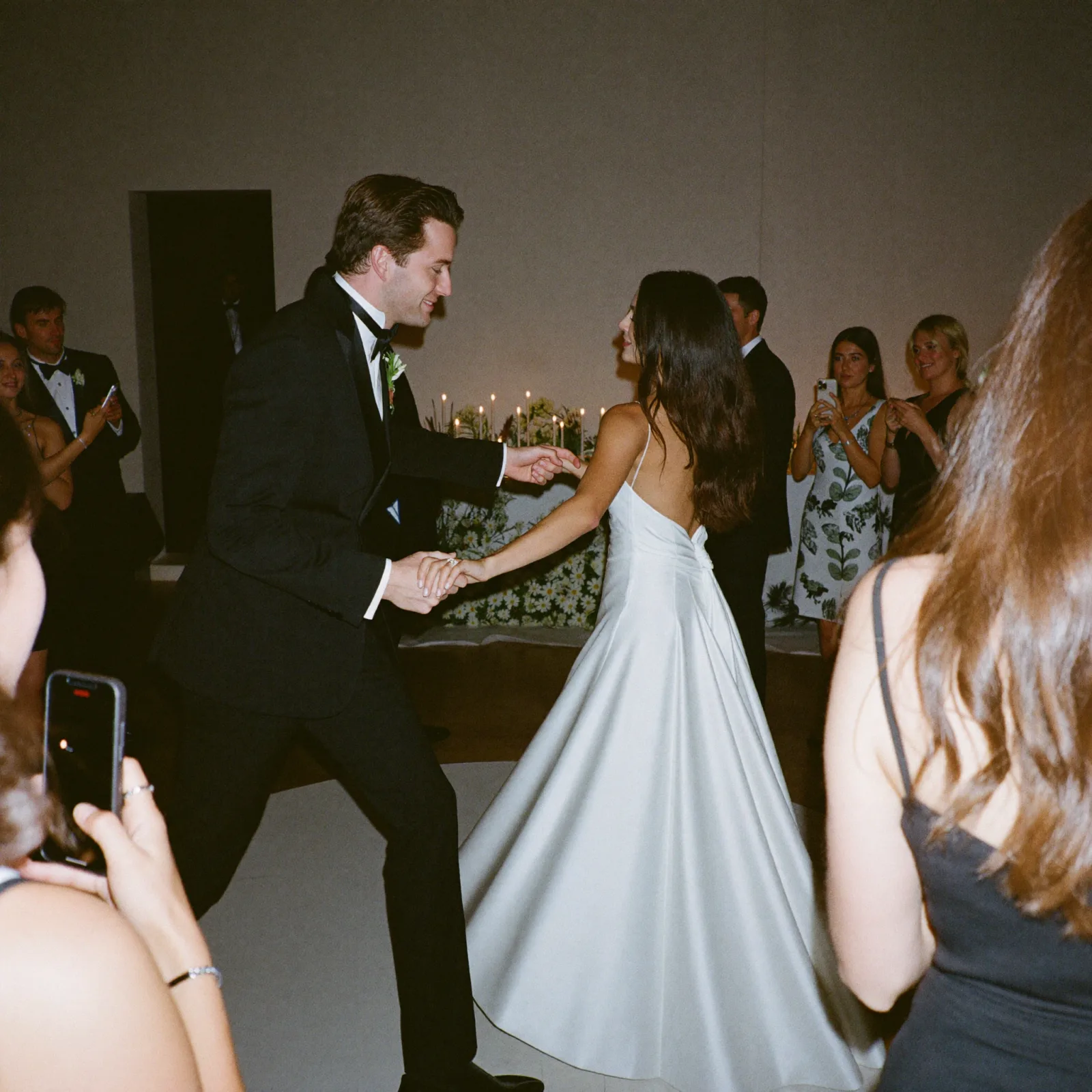
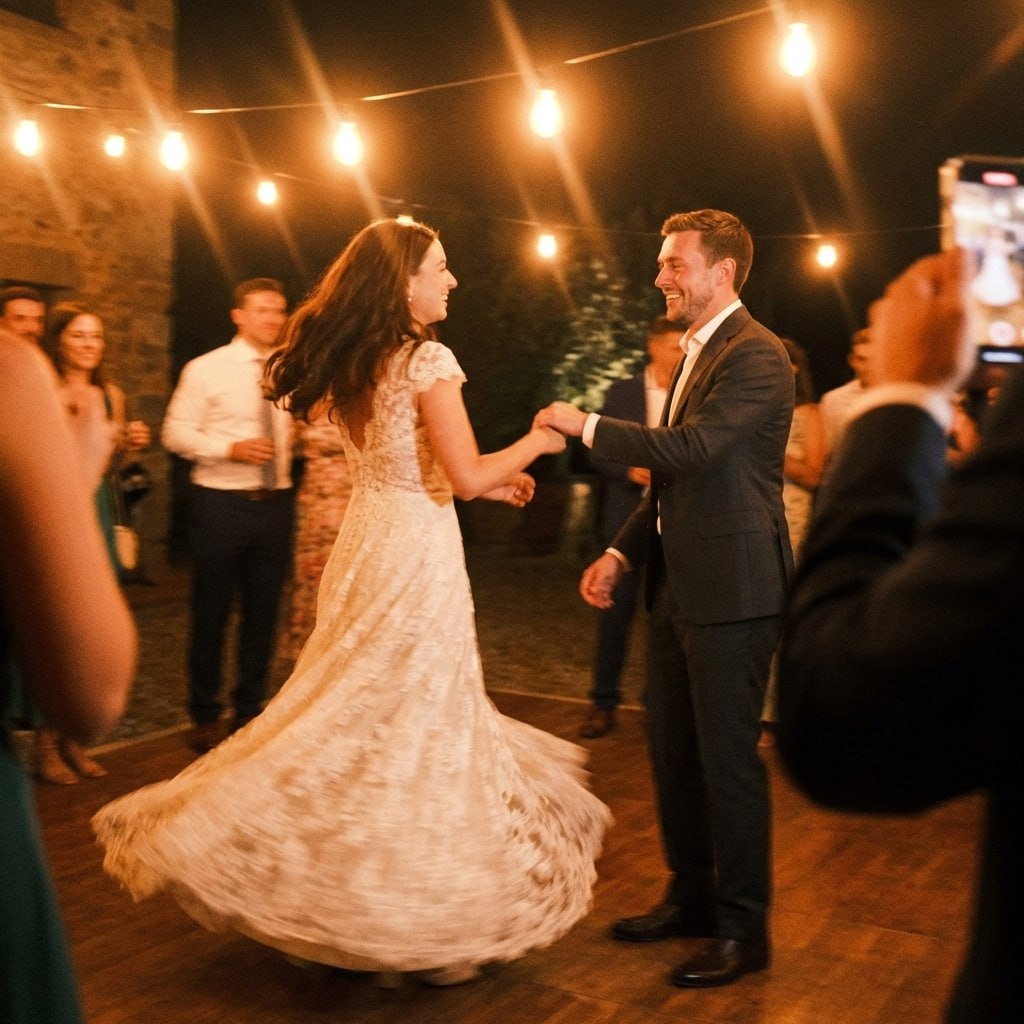
First dance
You guys!!
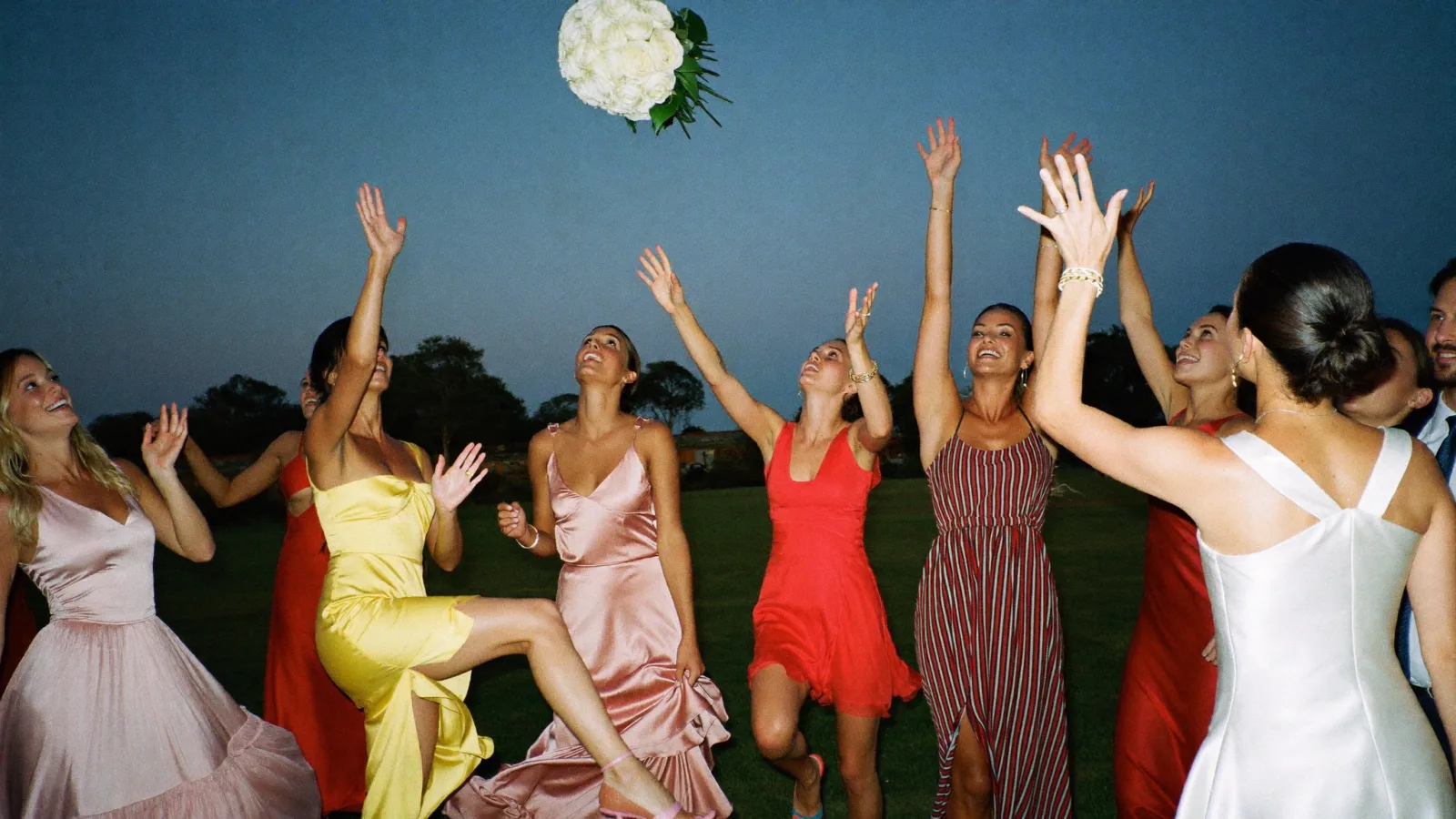
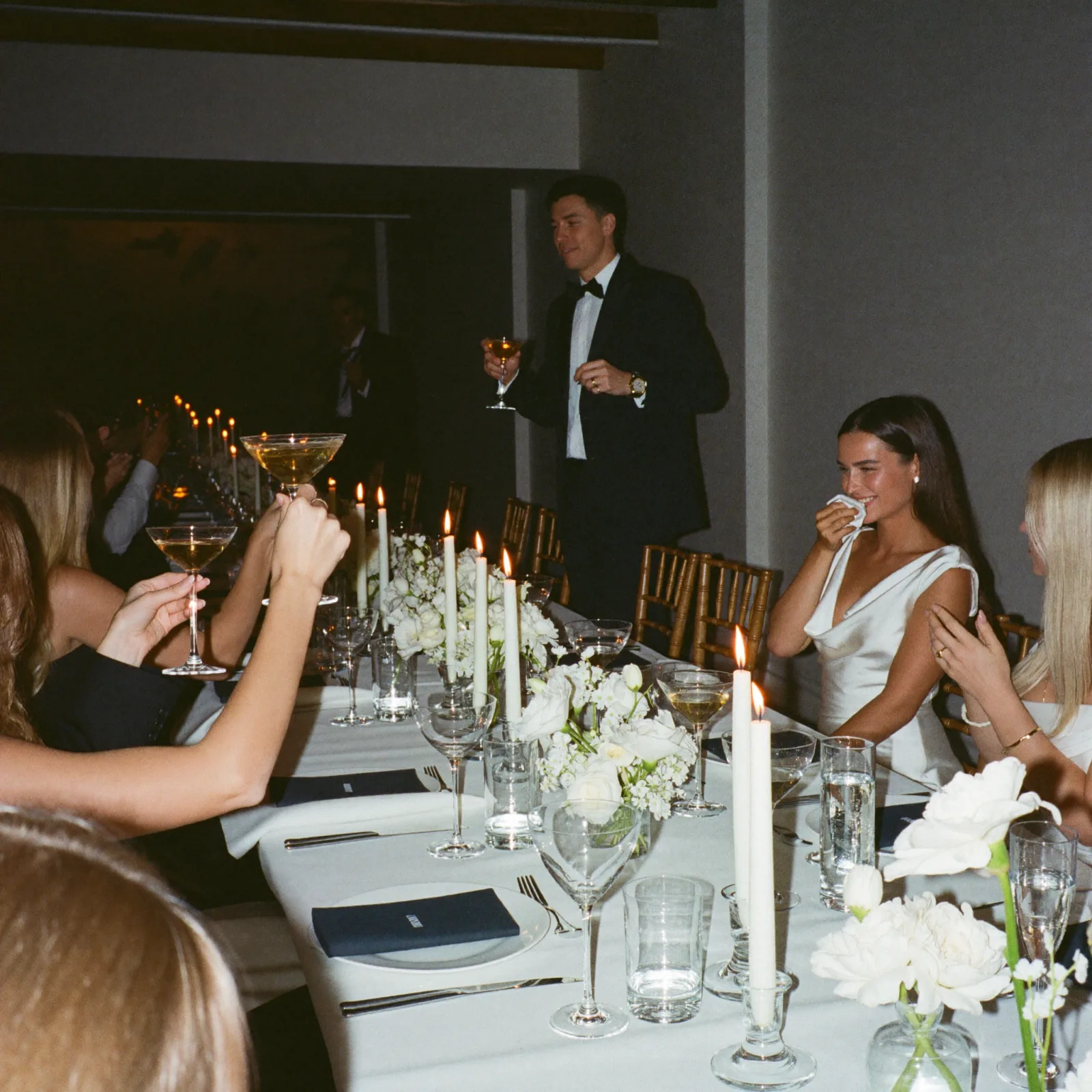
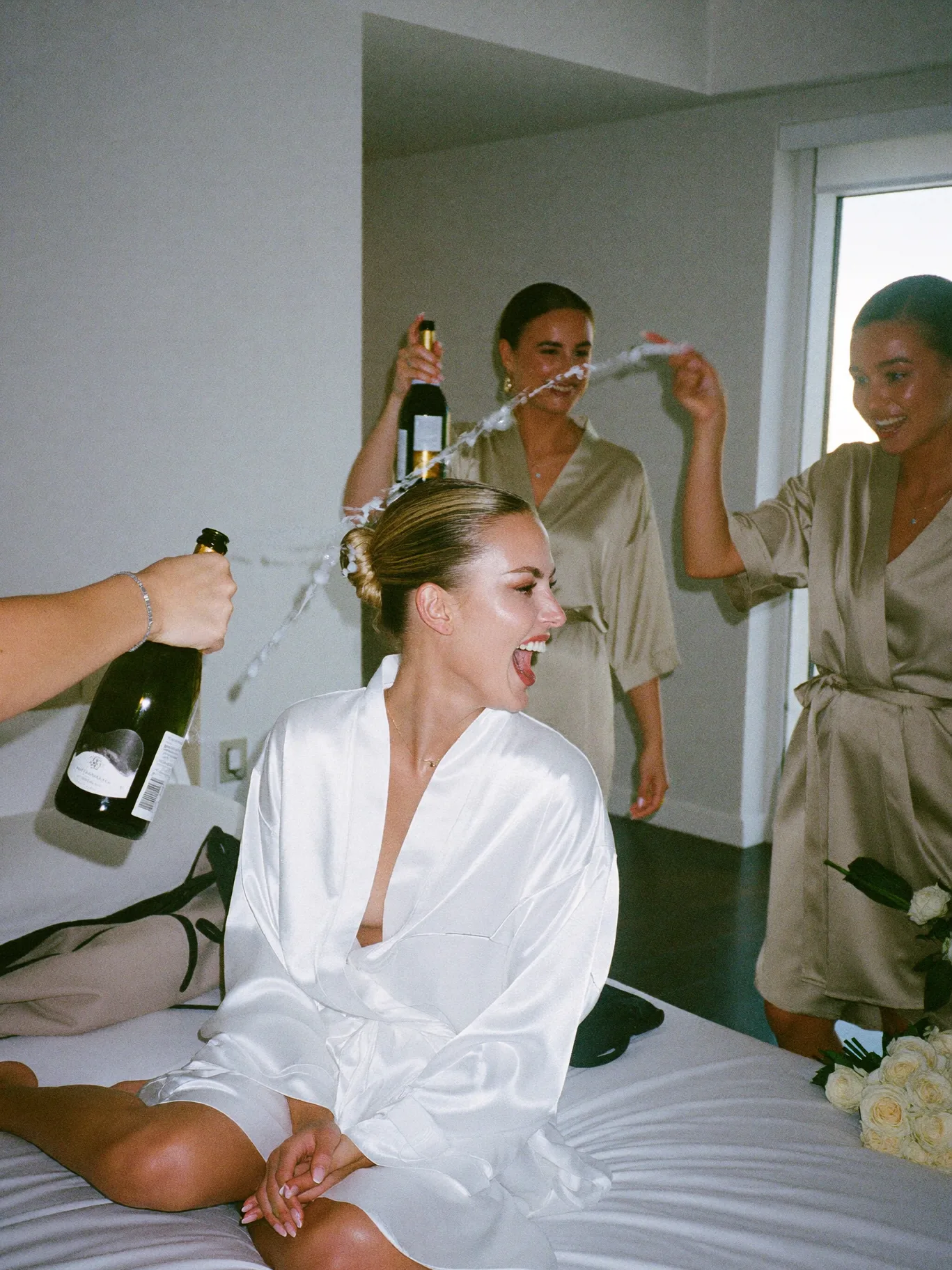
Your palette looks best in real photos.
You spent weeks on the colors. Guests see them from angles your photographer never will. Collect every guest photo and video in one album with a single QR code.
Okay so i'll try to keep this short but i probably wont. We planned this thing for almost two years and i was the person with a spreadsheet for every single vendor, and photos were the one part i had no plan for. Our photographer was booked for 8 hours which sounds like plenty until you realize getting ready and the after party arent in there. My maid of honor found Pix on tiktok i think. We put codes on the tables and also on the bathroom mirrors which sounds weird but that is where half the best photos came from. Anyway the point is i thought this would be a nice extra and it turned out to be the thing my mom and i look at the most. My husband says im obsessed. i am
Chloe R. · Seattle, WAVerified couple · May 2026
Solid product. A few of our older relatives needed the QR code explained but once they got it they were the most active uploaders. Support answered my question the same afternoon
Garrett Z. · Cape Cod, MAVerified couple · August 2025
Second line parade through the French Quarter, guests with their phones out the entire time. Pix caught every angle of that walk, videos from the front, middle and back. No way to recreate that any other way
Jordan M. · New Orleans, LAVerified couple · October 2025
What couples ask while picking colors: how the generator works, how many colors to use, what is popular and trending, and how to brief vendors.
Pick a season (Spring, Summer, Fall or Winter) and a vibe (Boho, Classic, Modern, Rustic or Romantic). The tool shows a curated five-color palette for that pair, 20 palettes in total. Tap any swatch to copy its hex code, or use the form under the palette to email yourself all five codes. It is free and needs no sign-up.
Most weddings work with two or three main colors plus one neutral such as white, ivory or a metal. A common way to split them is the 60-30-10 rule from interior design: about 60% main color, 30% second color and 10% accent. The generator gives five swatches so you can choose your three from them.
In The Knot 2025 Real Weddings Study of nearly 17,000 newlyweds, white was used by 41% of couples, gold by 36%, light green by 33%, ivory or champagne by 32%, light pink by 29%, dark green by 27%, light blue by 26% and dark blue by 24%. The same study found 80% of couples chose their wedding colors on purpose.
The Knot's 2027 wedding color trends list deep reds, powder or French blue, plum, wasabi green, muted pink accents, palettes with more than one bold primary color, and mature creams with deep blues. Pantone's Color of the Year 2026 is PANTONE 11-4201 Cloud Dancer, a soft white.
Send hex codes to anyone working on screens or print, such as your stationer and website, and ask for a printed proof because print colors shift. For florists, add photos of flowers you like. For linens and bridesmaid dresses, ask for physical fabric swatches, since those vendors work from named fabric colors rather than hex codes.
Not inside the tool. The 20 palettes are fixed. Copy the hex codes you like, mix swatches from two palettes, or adjust a code in any design app. Many couples take three swatches from one palette and a neutral from another.
Start with what the venue already has: wood, carpet, stone, greenery or water. Warm wood suits earth tones, a green garden suits pastels and sage, and a patterned ballroom carpet narrows your reds and pinks. The venue table on this page maps seven venue types to palettes in the tool.
Yes. All 20 palettes, hex code copying and the email option are free, with no account. Pix Wedding makes a QR code photo sharing app for weddings, which has a free plan and paid one-time plans, but you do not need it to use the palette tool.
Wedding Color Palette Generator: 20 Free Palettes + Hex Codes