
Disposable Cameras vs Digital Photo Galleries: What's Best for Your Wedding?
Real numbers on cost per guest, photo return rates, image quality specs, and five decision branches to help you pick the right approach for your day.
Set Up a Digital Gallery FreeThe direct answer
Disposable cameras deliver a film aesthetic that no digital filter fully replicates, but they return only 14 to 17 usable photos per 27-exposure camera, cost $12 to $16 each including development, and take 1 to 3 weeks to come back from the lab. A digital gallery delivers more photos, at higher resolution, in real time, at a fraction of the cost per guest. If your priority is the look and feel of film, lean toward disposables. If your priority is coverage, cost, and speed, a digital gallery wins decisively. Most couples land somewhere in the hybrid middle.
Cost, photos returned, and quality by wedding size
Camera cost assumes $12 to $16 per camera (including development and standard lab scan), one camera per 3 guests. Digital gallery cost is the platform fee range for the guest count shown. Photo return estimates for disposables assume a 30 to 40 percent effective camera return rate and a 52 to 63 percent usable-photo yield per returned camera.
| Guest count | Disposable total cost | Digital gallery cost | Disposable photos returned | Digital uploads expected | Disposable quality | Digital quality |
|---|---|---|---|---|---|---|
| 40 guests | $175-$240 | $0-$25 | 90-130 usable scans | 180-420 uploads | 4-5 MP scans, visible grain | 12-48 MP originals |
| 80 guests | $340-$470 | $0-$30 | 180-260 usable scans | 400-900 uploads | 4-5 MP scans, visible grain | 12-48 MP originals |
| 120 guests | $510-$700 | $0-$35 | 270-390 usable scans | 650-1,400 uploads | 4-5 MP scans, visible grain | 12-48 MP originals |
| 200 guests | $800-$1,100 | $0-$40 | 440-640 usable scans | 1,100-2,400 uploads | 4-5 MP scans, visible grain | 12-48 MP originals |
| 300 guests | $1,200-$1,650 | $0-$40 | 650-960 usable scans | 1,700-3,500 uploads | 4-5 MP scans, visible grain | 12-48 MP originals |
Camera return rates vary widely by venue layout and how clearly the collection process is explained to guests. 30 to 40 percent is the most commonly reported range; attentive coordinators have achieved 70 to 80 percent.
Pros and cons, side by side
Disposable cameras: pros
- Authentic film grainISO 400 film gives photos a texture no filter completely replicates. The best candids have a nostalgic quality guests immediately recognize.
- No screen distractionHanding someone a physical camera removes the pull of notifications, social feeds, and the endless optimize-for-Instagram instinct.
- Tangible guest activityCameras become a conversation starter and a prop. Tables with cameras tend to have more interaction than tables without.
- Surprise revealWaiting to see the developed photos has a genuine excitement that instant digital cannot replicate. It extends the wedding experience by weeks.
Disposable cameras: cons
- Low return rateRoughly 30 to 40 percent of cameras placed are actually returned and developed. At $12 to $16 per camera, losing 60 cameras is $720 to $960 in waste.
- Slow turnaroundMail-in labs take 1 to 3 weeks. Most couples are already back from their honeymoon before they see the results.
- Unpredictable yieldOf 27 exposures, expect 14 to 17 usable images after accounting for accidental shots, overexposure, and motion blur in dim reception lighting.
- Cost scales badlyEvery guest beyond the first adds marginal camera cost. A 300-guest wedding needs around 100 cameras, which is $1,200 to $1,650 before printing.
Digital gallery: pros
- Real-time uploadsGuests see each other's photos during the reception. The album fills in live, creating a shared experience on the day itself.
- Near-zero variable costOne flat platform fee covers 40 guests or 400. The per-guest marginal cost after setup is effectively zero.
- High-resolution originalsGuests shoot at 12 to 48 megapixels. Every photo is print-ready at large format without grain or scan artifacts.
- No logistics burdenNo camera collection bin. No chasing down tables at the end of the night. No mailing envelopes. No waiting for a lab.
Digital gallery: cons
- No film aestheticDigital is clean and sharp. That is also its limitation. No grain, no accidental light leak, no analog warmth. Filters exist but the real thing is different.
- Phone distraction riskInviting guests to use their phones for photos also invites them back to their feeds. Some couples find this ruins the no-phones atmosphere they wanted.
- Requires a QR setupThe system only works if guests can find and scan the code. Small, poorly placed QR codes sink participation rates quickly.
- Guest willingness variesSome older guests do not upload photos to digital platforms out of habit or privacy preference. Their perspective is lost unless you specifically prompt them.
Three couples, three different picks
The right answer depends entirely on your priorities, your guest list, and your venue. Here are three real scenarios that illustrate how couples land on different sides of this decision.
The vintage-aesthetic couple in Brooklyn
Pick: Disposable cameras, supplemented by Pix WeddingThey booked a film photographer for the ceremony and wanted the guest shots to match the visual language. They ordered 60 Fujifilm QuickSnap cameras, distributed one per two tables, and placed a Pix Wedding QR code on the back of each camera card. The film produced 480 usable scans with the grain they loved. The digital gallery caught 1,100 smartphone photos in real time, including angles the film cameras could never get. Neither replaced the other. Both served different jobs.
The outdoor-venue couple who could not decide
Pick: Digital gallery only, disposables skippedThey genuinely loved the idea of disposable cameras until they did the math. 180 guests meant 60 cameras at $14 each, $840 before development. Collection logistics in a barn with no clear end-of-night flow seemed chaotic. They put a Pix Wedding QR sticker on every centerpiece jar and got 1,900 photos by midnight. The film budget paid for a second night in the honeymoon hotel instead.
The tech-light couple with older guests
Pick: Disposable cameras with a small digital backstopTheir guest list skewed 55 and older, with a median age closer to 60. The bride's side included aunts and uncles who still used flip phones. They placed 30 cameras on tables, printed a QR code on a single welcome banner for younger guests, and told no one they had to use either. The cameras came back 80 percent collected (unusual but helped by an attentive coordinator). The digital gallery caught about 200 uploads from the younger contingent. Total photo archive: 610 images, genuinely mixed in age and aesthetic.
Photo quality reality check: what the specs actually mean
Most comparisons skip the technical details. Here is what the numbers mean in practice, in terms couples without a photography background can use.
Disposable camera specs
- Film format: 35mm, most commonly ISO 400 (Fujifilm QuickSnap) or ISO 800 for low-light models
- Lab scan resolution: 4 to 5.5 megapixels at standard lab settings; high-res scans reach 10 to 12 megapixels but cost more and are rarely offered by default
- Maximum clean print size: 8x6 inches at standard scan quality; 11x14 shows visible grain and softness
- Flash range: 4 to 10 feet; anything beyond 10 feet is underexposed in dim reception lighting
- Grain character: 35mm ISO 400 grain is warm and organic; it adds to the aesthetic rather than detracting when you want that look
- Shutter speed: Fixed at roughly 1/100s, which means any subject moving faster than a gentle walk may blur in dark venues
Smartphone digital specs
- Resolution: 12 megapixels (older budget Android) to 200 megapixels (Samsung Galaxy S24 Ultra); most guests land between 12 and 48 megapixels
- Maximum clean print size: 20x30 inches and larger at 12 megapixels; effectively unlimited at 48 megapixels
- Low-light performance: Night mode on modern phones produces clean images at 10 to 50 lux (typical dim reception). No flash required.
- Grain character: Digital noise at high ISO is different from film grain; it reads as artificial rather than nostalgic to most eyes
- File format: JPEG (compressed, smaller) or HEIC; some phones offer ProRAW. Original files are always print-ready.
- Speed: Instant upload on gallery tap. No development, no scanning, no wait.
If your top priority is X, pick Y
Identify your single most important priority below. Pick the option that matches. If two priorities conflict, the hybrid playbook lower on this page is probably your answer.
Priority
Aesthetic
Pick: Disposable cameras
If the grain, warmth, and imperfection of film matter more than volume or resolution, disposables win. No digital filter recreates the ISO 400 highlight rolloff.
Priority
Cost control
Pick: Digital gallery
A digital gallery scales to any guest count for a flat or near-flat fee. Disposable camera cost compounds sharply above 80 guests.
Priority
Guest engagement during the event
Pick: Digital gallery (or hybrid)
A live gallery that fills in real time as guests upload creates a shared experience on the day. A disposable produces its payoff two weeks later.
Priority
Ease of curation afterward
Pick: Digital gallery
A digital gallery gives you every photo, organized, downloadable, with no scanning. Disposable scans arrive as flat files you then sort manually.
Priority
Archival quality for large prints
Pick: Digital gallery
Smartphone photos at 12 to 48 megapixels print sharp at 20x30 and larger. Disposable scans at 4 to 5.5 megapixels show grain and softness at anything above 8x10.

Candid
Shot on iPhone
The film roll your guests already carry.
Their phones already shoot in 4K. Pix Wedding gives them one private QR album to drop everything into. No film cost, no developing, no lost rolls.
From Mom
Scan to join the album
No app, no account
UPLOADING
Saving your moment
THE ALBUM
Emma & Jack
June 21, 2026
647 photos · 95 guests


SCAN TO TRY
pix.wedding/
your-wedding
The hybrid playbook: how to use both, step by step
This is the workflow for couples who want the film aesthetic AND the real-time digital archive without running two separate systems that never talk to each other.
- 1
Order one camera per 3 guests, not one per 2
The standard advice to place one per 2 guests overshoots. One per 3 is enough to ensure every table has a camera and reduces the total camera spend by 30 percent without reducing coverage.
- 2
Set up the digital gallery first
Create your Pix Wedding album, generate the QR code, and test the guest-upload flow in incognito mode before the cameras arrive. The digital side takes 10 minutes. Set it up, then forget it.
- 3
Print the QR code on the disposable camera instruction card
Every camera can come with a small printed card explaining how to use it. Add the QR code to that same card. Guests who finish the roll early have an immediate next step.
- 4
Assign a camera coordinator for the end of the night
Designate one person (a trusted bridesmaid, a coordinator, a family member) whose job is to collect all cameras before guests leave. A checklist by table helps. Without this, 40 to 60 percent of cameras walk out the door.
- 5
Seed the digital gallery with 10 to 15 photos during cocktail hour
An empty album reads as broken. Pre-load some engagement session favorites or rehearsal dinner shots so the first guest to scan the QR sees a live, real album, not a blank page.
- 6
Mail the cameras to a dedicated film lab, not a drugstore
Dedicated labs like The Darkroom or Indie Film Lab scan at higher resolution (true 4 to 5 megapixels versus a drugstore's 2 megapixels) and handle wedding volumes without rushing. Expect 10 to 21 days.
- 7
When scans arrive, add the best film shots to the digital gallery
Once you get the digital scans back from the lab, upload the 20 to 30 best images to your Pix Wedding album. Now the gallery holds both the film aesthetic and the smartphone candids, all in one place.
- 8
Send the combined gallery link to guests within 48 hours of receiving the scans
This is the moment. A link to a gallery with 1,400 photos, including the grainy film shots guests did not know existed, lands differently than just the professional photographer's 500-image delivery. Guests share it immediately.
Common mistakes with disposable cameras
1. Placing cameras without a collection plan
If you do not tell guests where to leave the cameras, most walk out with them. A clearly labeled collection box or basket at the exit, mentioned on the MC's end-of-night announcements, is not optional.
2. Using cheaper drugstore processing
Drugstore scans typically run at 1.5 to 2 megapixels. A lab like The Darkroom or Indie Film Lab scans at 3 to 5 megapixels, which is the difference between a blurry thumbnail and an actual photo. The price difference is $3 to $5 per roll.
3. Ordering cameras without testing one first
Buy one camera six weeks before the wedding, shoot a roll, and send it to your chosen lab. You will learn how the flash range works (about 10 feet maximum), how grain looks in your venue's lighting, and whether the lab's turnaround fits your timeline.
4. Forgetting extra batteries
Some cameras use AA batteries for the flash. They drain faster than expected, especially in dim reception lighting where every shot uses the flash. Tape a spare battery to the bottom of each camera.
5. Expecting professional results
Disposable cameras are a guest-experience supplement, not a photography strategy. The shots are candid, imperfect, and often out of focus. That is the point. If you expect sharp ceremony coverage, you need a professional photographer, not a disposable.
Common mistakes with digital galleries
1. Printing the QR code too small
Any QR code smaller than 3 inches across will fail to scan reliably from across a table in dim reception lighting. 4 inches is the minimum for reliable scanning from 3 feet away.
2. Hiding the QR code in one location
A single welcome banner reaches the guests who see that banner. Put the QR code on every table card, on the back of the menu, on the bathroom mirror sign, and on a slide in the photo booth. Saturation directly correlates with upload counts.
3. Choosing a platform that compresses uploads
Some free gallery tools downscale photos to 1080p on upload, destroying the print quality guests' phones captured. Verify before the wedding that your chosen platform keeps full-resolution originals.
4. Leaving the gallery blank before guests arrive
The first guest to scan the QR code sets the social proof for everyone else. If they see an empty page, they assume they did something wrong and give up. Pre-load at least 10 photos so the first scan shows a working, populated album.
5. Not sending the gallery link after the event
Guests who uploaded photos forget they did. Guests who could not attend do not know the gallery exists. A single message with the gallery link, sent within a week of the wedding, typically doubles the total view count and often surfaces additional uploads from people who finally took the time to post.
Quick-reference checklist before you decide
Run through these questions before ordering cameras or committing to a platform. Each one narrows the field fast.
If you are leaning toward disposables, ask yourself
- Have I assigned one person to collect every camera at the end of the night?
- Have I tested one roll at my lab of choice and seen the actual scan resolution?
- Is my venue's reception lighting bright enough for ISO 400 without flash?
- Am I prepared to wait 2 to 3 weeks after the wedding for the photos?
- Do I have a digital backup plan for the guests who will not pick up a camera?
If you are leaning toward a digital gallery, ask yourself
- Have I tested the guest-upload flow in incognito mode on both iPhone and Android?
- Is the QR code at least 4 inches across on the printed card or sign?
- Does my platform keep full-resolution originals, not compressed copies?
- Have I pre-loaded 10 to 15 photos so the first guest to scan sees a live album?
- Have I placed the QR code in at least 5 locations, not just on one sign?
Keep reading
More guides on wedding photo collection, disposable cameras, and digital sharing options.
What the film revival gets right, and where the numbers push back
The aesthetic argument for disposable cameras at weddings is real. Grain, light leaks, slight blur, off-white highlights: these are qualities that digital editing tries to imitate and rarely nails. When a bridesmaid catches the groom laughing on a Fujifilm QuickSnap, the result has a texture that a smartphone JPEG does not, even with a VSCO filter applied.
But the argument that disposables are a cost-effective way to get guest candids does not survive the math. Development plus scanning eats through the per-camera price quickly, the yield per camera is lower than most couples expect, and the turnaround time adds a wait that digital removes entirely. Understanding both sides clearly is the only way to make the choice you will not second-guess later.
- •Disposables offer genuine film aesthetic that digital filters approximate but rarely match
- •Digital galleries are faster, cheaper to scale, and return a higher proportion of usable photos
- •Neither option replaces a professional photographer for ceremony coverage
- •Hybrid use cases exist and are genuinely worth the extra cost for the right couple
Why digital galleries outperform on guest engagement metrics
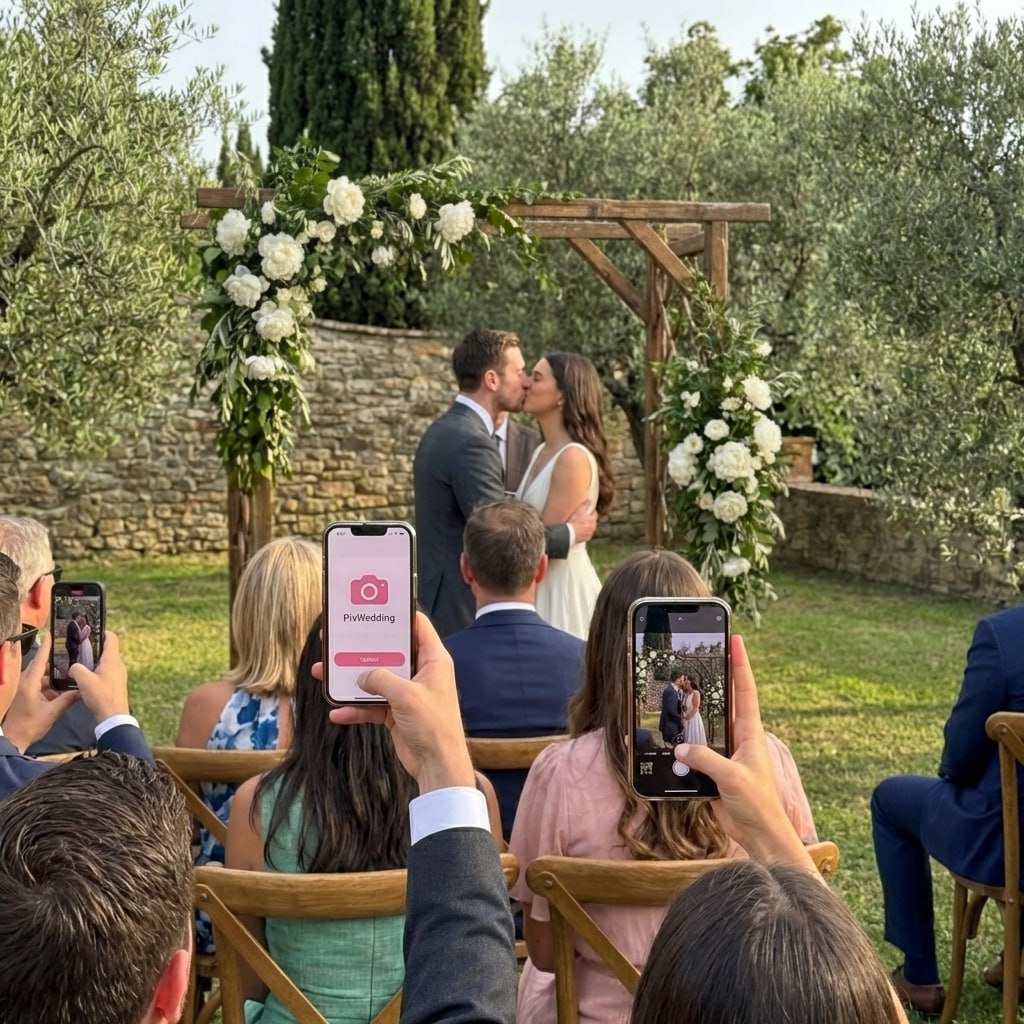
A digital gallery with a scan-and-share QR code at every table turns the phone each guest is already holding into a camera that uploads directly to your archive. The friction is close to zero: scan, tap, done. No carrying a physical camera around. No worrying about wasting a shot. No returning the camera at the end of the night.
The result is more photos from more guests, at higher quality, available within minutes of being taken. Couples using Pix Wedding regularly see 800 to 2,000 guest-uploaded photos from a 150-guest wedding. A comparable spread of disposable cameras at the same event would produce 300 to 500 usable scans at best, delivered two to three weeks later.
Explore more free wedding tools
Everything you need to make your wedding day stress-free and unforgettable.
QR Sticker Designer
Design custom print-ready stickers.
Hashtag Generator
Create unique wedding hashtags.
How to Collect Guest Photos
5 methods ranked by participation rate and ease.
Get Photos After the Wedding
Message templates to gather guest photos post-wedding.
Share Wedding Photos with Guests
Compare every sharing platform by ease and participation.
Best Way to Get Guest Photos
The single method with the highest participation rate.
How to Make a Shared Wedding Album
Step-by-step setup for every platform.
Alternative to Disposable Cameras
Better, cheaper options than disposable cameras.
Disposable cameras vs digital galleries, answered
Everything you need to know about our free tools and how they help your wedding day.
A standard 27-exposure disposable returns between 14 and 17 usable images after accounting for overexposed frames, camera shake, accidental shots, and photos taken of the floor. That is a 52 to 63 percent yield on the 27 exposures, before the lab scan quality is factored in. Digital galleries, by contrast, return close to 100 percent of what guests shoot because there is no film waste.
Budget roughly $12 to $16 per camera (camera plus development plus scanning), one camera per 2 to 3 guests. For 100 guests that is 35 to 50 cameras, or $420 to $800. A digital gallery for the same 100 guests costs $0 to $40 depending on the platform, with no per-guest variable cost after setup.
A typical 27-exposure disposable uses 35mm ISO 400 film. Lab-scanned at high resolution, you get roughly 4 to 5.5 megapixels of clean data before grain. That is fine for a 6x4 or 8x6 print but blurry and visibly grained at 11x14 or larger. A guest shooting on a modern smartphone at 12 to 48 megapixels can print wall-size without issue.
Usage rates vary. Placed in a decorative basket with a sign, around 60 to 70 percent of cameras are picked up and used. Of those, about half are returned to the collection bin. The effective return rate across all cameras placed is typically 30 to 40 percent. Digital galleries with a QR code on the table typically see 55 to 80 percent of guests uploading at least one photo.
Yes, and many couples find this is the best of both worlds. Disposables capture the candid, tactile, film-look shots. The digital gallery captures high-quality smartphone photos from every guest immediately, without waiting for film development. The hybrid approach adds roughly $300 to $600 in camera costs but gives you two completely different visual vocabularies from the same day.
Typical mail-in film labs take 1 to 3 weeks. Local drugstore processing (where still available) is 1 to 3 days but scan quality is lower. A digital gallery returns photos in real time as guests upload them. Some couples find that waiting 3 weeks to see their guest candids, after having already waited through the professional photographer's turnaround, is frustrating.