See exactly how many disposable cameras your wedding needs, what they really cost to buy and develop, and how many photos actually come back usable.
Your Wedding Details
Account for real-world lossesRoughly 40% of cameras walk out with guests and 35% of photos come back dark or blurry. Turn off to see the best-case math.
Your Disposable Camera Estimate
Cameras you need10270 total exposures
True total cost$228$2 per usable photo
Buy cost$15010 cameras at $15 each
Develop + scan$786 returned cameras
Usable photos105of 270 exposures shot
The reality check
About 4 of your 10 cameras never make it back to you, guests pocket them or forget them on the table.
Around 35% of the photos that do come back are too dark or blurry to use, mostly because guests forget the flash indoors.
You still pay to develop every returned camera before you know which shots are keepers.
Disposable cameras
$228
~105 usable photos after losses
A week or more to develop and scan
No video, no instant viewing
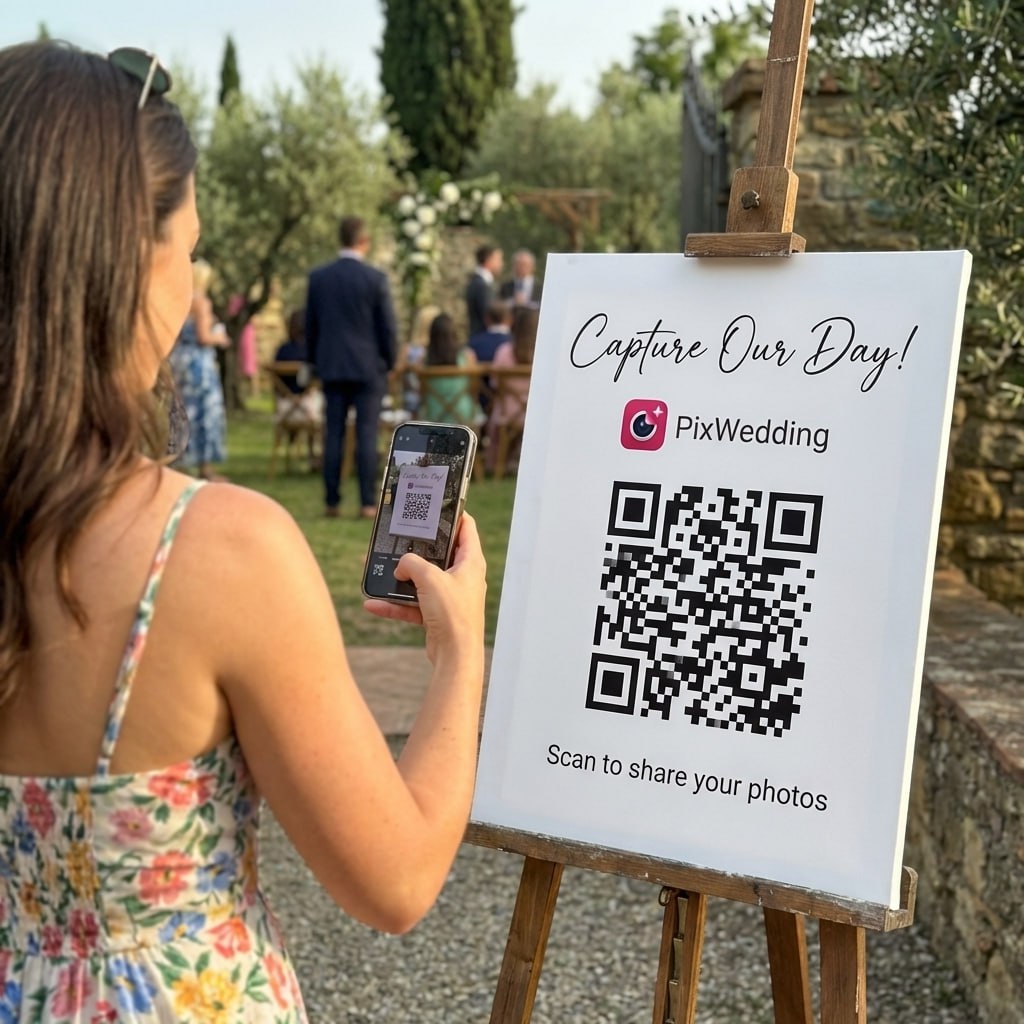
Pix Wedding QR album
Free to start
Every guest's photos and videos, full resolution
No dud rate, no developing, no waiting
One QR code, no app, no account
A QR album gets you every guest's photo for free, while 10 disposable cameras cost about $228 for roughly 105 usable shots. That is around $2 per keeper.
Estimates use 2026 market prices (camera $12-18, develop + scan $10-15) and real-world wedding data: roughly 30-50% of cameras walk out and 30-40% of exposures come back unusable. Adjust the inputs to match your plan.
First dance
You guys!!
Skip the dud rate. Get every guest's photo, free.
Disposable cameras lose a third of their shots to the dark and walk off the tables. A QR album collects every guest's photos and videos in full resolution, no app, no developing, no waiting.
How many disposable cameras do you need for a wedding?
The common rule of thumb is one disposable camera per table, which usually works out to one camera for every 8 to 10 guests. For a 100-guest wedding that is roughly 10 to 12 cameras. Some couples add a few extras at high-traffic spots like the bar, the gift table, and the photo backdrop.
More cameras means more chances at a candid moment, but it also multiplies your cost fast, because every camera has to be bought and then developed. The calculator above lets you set your own coverage and see the total instantly.
•1 camera per table of 10 is the standard starting point.
•For a livelier crowd, go to 1 per 8 guests.
•On a tight budget, 1 per 15 guests still covers the room.
•Add 2 to 3 extra cameras for the bar, gift table, and dance floor.
The true cost of disposable cameras at a wedding
The sticker price is only half the story. A single 27-exposure disposable camera runs about $12 to $18, and developing plus scanning adds another $10 to $15 per camera, so the real cost is closer to $25 to $30 each once you can actually see the photos.
Scale that to a full wedding and it adds up quickly. Twenty cameras can total $600 or more after tax and developing, and that is before you account for the cameras that go missing and the shots that come back unusable.
•Camera: $12 to $18 each (Fujifilm QuickSnap, Kodak FunSaver).
•Develop and scan: $10 to $15 per camera.
•True per-camera cost: about $25 to $30.
•20 cameras: roughly $600 to $650 all in.
Why so many disposable camera photos never make it
Two things quietly shrink your photo count. First, 30 to 50 percent of cameras walk out the door with guests or get left behind if no one is assigned to collect them. Second, of the photos that do come back, 30 to 40 percent are too dark or blurry to use, almost always because guests forget the flash button in a dim reception hall.
Put together, a wedding that buys 20 cameras and 540 exposures often ends up with well under 200 usable photos. That is why the calculator shows a realistic usable-photo count, not just the theoretical maximum, and why a free QR photo album, which captures every guest's shots in full resolution with no dud rate, has become the popular modern alternative.
Disposable camera brands compared
Not all single-use cameras handle a dim reception the same way. The film inside is what decides how forgiving the camera is when a guest forgets the flash.
Camera
Film
Price
Low-light forgiveness
Best for
Kodak FunSaver
Kodak MAX 800
$10 to $18
High, ISO 800 is forgiving
Indoor receptions, the most popular pick
Fujifilm QuickSnap
Fujicolor Superia 400
$10 to $18
Medium, sharper but needs flash
Crisp, high-contrast color in good light
Ilford Ilfocolor
Color 400
$12 to $20
Medium
A retro color look
Ilford HP5 / XP2
Black and white
$20 to $30
Medium to high
A timeless black-and-white set
Prices reflect 2026 retail; bulk packs of 5 to 10 drop the per-camera cost to around $5 to $8. Buy at Walgreens, CVS, Target, Walmart, Costco, Amazon, or Adorama.
The one that matters most: the Kodak FunSaver runs ISO 800 film, which is far more forgiving when a guest forgets the flash in a dark hall. If you are buying disposables for an indoor wedding, FunSavers come back with noticeably fewer black frames than Fuji QuickSnaps.
Where to develop disposable cameras: cost and turnaround
Developing is the hidden half of the cost, and where you take them decides both the price and whether your photos survive. Drugstores are cheapest but return low-resolution scans and sometimes damage negatives.
Where
Cost per camera
Turnaround
Scan quality
Watch out for
Walmart
$12.96 to $14.96
7 to 10 days
1 to 4 MP
Lowest-res scans
Walgreens
$14.99 to $16.99
3 to 10 days
1 to 4 MP
Quality varies by store
CVS
$15.99 to $17.99
7 to 10 days
1 to 4 MP
Negatives sometimes damaged or lost
Pro lab
$15 to $22
Often faster
6.5+ MP
Slightly pricier, far better results
Mail-in (Darkroom etc.)
$15 to $22 plus shipping
7 to 12 days
High
Adds shipping time each way
Developing prices and turnaround verified for 2026. A pro lab costs about the same as CVS but returns 6.5+ MP scans versus 1 to 4 MP, and handles your negatives carefully.
How to actually get usable photos
The dud rate is not random, it comes from a few fixable mistakes. Do these and you cut the dark, blurry frames dramatically.
1
Write 'FLASH ON' on every camera
The number one cause of dark photos is guests not sliding on the flash. Write it in bold on the front and back of each camera so nobody misses it.
2
Tell guests to get close
A disposable flash only reaches about 10 feet. Add a note to shoot within arm's reach or two, anything further back comes out dark.
3
Buy ISO 800 film cameras for indoors
Kodak FunSavers use more light-sensitive film than Fuji QuickSnaps, so they forgive a forgotten flash far better in a dim reception.
4
Add a one-line instruction card
A small tent card per table: 'Flash on, stay close, don't cover the lens.' Three reminders that fix most ruined frames.
5
Set up a return station
Put a basket by the exit with a sign so cameras come back to you instead of walking out in handbags. This alone saves a third of your cameras.
6
Time the drop, after speeches
Put cameras out just after the speeches as the dance floor opens, when the energy peaks and guests are looking for something fun to do.
7
Develop at a pro lab, not a drugstore
For a dollar or two more than CVS you get 6.5+ MP scans instead of 1 to 4 MP, and your negatives come back intact.
Pros and cons of disposable cameras at a wedding
Pros
Nostalgic film look: the grainy, warm aesthetic that is back in style with younger couples.
A fun table activity: guests enjoy the novelty, especially older relatives who skip apps.
Unposed angles: candid shots your photographer is not standing in the right place to get.
No screens: a tactile, phone-free moment in a phone-heavy day.
Cons
High dud rate: 30 to 40 percent of frames come back too dark or blurry to use.
Cameras walk off: 30 to 50 percent disappear without a return station.
Expensive per keeper: about $25 to $30 per camera once developed, for a handful of usable shots.
A week-plus wait and no video: you wait days to develop and get no moving moments.
The honest read: disposables are a charming extra, not a reliable way to document your day. Most couples now run a few cameras for the look and a free QR album for the actual coverage.
Disposable cameras vs the modern alternatives
Option
Cost (100 guests)
Photos you keep
Video
See them
Pix Wedding QR album
Free to start
Every guest's photos, full res
Yes
Instantly, live
Disposable cameras
~$300 to $360
~160 usable after losses
No
1 to 2 weeks
Digital point-and-shoots on tables
$300 to $1,000+
All shots, no dud rate
Some
After the event
Disposable camera apps (POV, Lense)
Free to ~$30
All phone shots
Some
Reveal later
The pattern: disposables cost the most per usable photo and make you wait longest. A free QR album collects every guest's shots in full resolution with no dud rate, which is why couples increasingly pair a few cameras for the look with a QR album for the real coverage.
Photo challenge prompts that get cameras used
A camera on the table gets ignored. A camera with a printed challenge gets picked up. Drop a few of these on each tent card to turn guests into your candid photographers.
A bubbly drinkPeople laughingThe happiest couple in the roomA spontaneous dance-offYour whole tableSomeone you just metThe best outfit you can findA sweet moment between guestsThe dessert tableA selfie with the camera at arm's lengthThe bride or groom mid-laughYour shoes under the table
Tip: pair the prompts with an "I Spy" header and a return basket by the door, the two cheapest ways to lift both how many cameras get used and how many come back.
If you are weighing disposables against a QR photo album for the guest-photo portion of the day, our own dataset of 203 real weddings on Pix reports 197 average guest photos per wedding on the QR side (median 149) with the full methodology stated. A useful baseline to compare against the disposables numbers above.
Really good experience honestly. One older guest needed help scanning but once my cousin showed him he uploaded 60 photos by himself. Album loads fast and the live slideshow at the reception was a hit. Only wish the setup emails were a bit shorter
Aaron L.·Phoenix, AZ
Verified couple · February 2026
Used the free QR designer, printed the table cards at FedEx for like $20. Guests scanned without asking a single question. A few of these are framed in our apartment now
Paige U.·Raleigh, NC
Verified couple · November 2025
My wife was skeptical because we paid for a really expensive photographer. Now she says Pix is her favorite part of the whole day. Candids no photographer could ever get, her aunts taking selfies in the bathroom, the kids hiding under the table lol
Mason O.·Chicago, IL
Verified couple · February 2026
Wedding Camera Questions
Disposable Camera Calculator FAQ
Everything you need to know about our free tools and how they help your wedding day.
For 100 guests, plan on about 10 cameras at one per table of 10, or roughly 12 to 13 if you want one per 8 guests. Add 2 to 3 extras for the bar and gift table. The calculator above works it out instantly for any guest count and coverage level.
Developing plus scanning a single disposable camera costs about $10 to $15. Combined with the $12 to $18 purchase price, the true cost per camera is roughly $25 to $30 once you can actually see and keep the photos.
One disposable camera per table is the standard, which usually means one camera for every 8 to 10 guests. Tables of 10 get one camera each. If you want more candids, drop to one per 8 guests; to save money, stretch to one per 15.
They are a fun, nostalgic touch, but the value is mixed. Expect 30 to 50 percent of cameras to go missing and 30 to 40 percent of the returned photos to be too dark to use, so you pay $25 to $30 per camera for a relatively small number of keepers. Many couples now pair a few cameras with a free QR album that captures every guest's photos with no dud rate.
The number one reason is guests forgetting to slide on the flash, which most disposable cameras require manually. Wedding receptions are usually dimly lit, so without the flash the film is badly underexposed. This is the single biggest cause of unusable disposable wedding photos.
A QR-code photo album is the most popular alternative. Guests scan one code and upload photos and videos from their phones, with no app and no account, and you get every shot in full resolution with no developing cost and no dud rate. Pix Wedding is free to start, which makes it cheaper than even a handful of disposable cameras.
Far fewer than the exposure count suggests. A 27-exposure camera in theory gives 27 photos, but after the cameras that go missing and the 30 to 40 percent of shots that are unusable, a 20-camera wedding often ends up with under 200 keepers from 540 possible exposures.
No. Disposable cameras shoot still photos on film only, with no video and no instant viewing. If you want the funny, moving moments of the reception, a phone-based QR album is the only option that captures video alongside photos.
Explore more free wedding tools
Everything you need to make your wedding day stress-free and unforgettable.