
Scared to Get Married Again? Here Is What Is Actually Going On
This is not ordinary pre-wedding jitters. This is a fear built from a real, lived memory of how a marriage can end. It deserves a real answer, not a pep talk.
The Short Answer
Being scared to get married again after a divorce or the loss of a spouse is a normal, protective response, not a sign that you should not do it. The fear exists because your nervous system learned, the hard way, that marriage can end in real pain. That is different from first-time wedding nerves, which are usually about the unknown. Your fear is about the known: you have specific evidence of how it can go wrong.
The work is not to talk yourself out of the fear. It is to separate what belongs to your first marriage from what is actually true about this one, name the fear out loud to your partner instead of letting it leak out sideways, and handle the practical parts a remarriage specifically calls for (blended families, finances, kids) as calm planning rather than an afterthought. Do that, and the fear usually loosens its grip well before the wedding date.
Why This Fear Feels Different From Ordinary Wedding Nerves
Someone getting married for the first time is usually nervous about an unknown. They have not lived through a wedding day, a first year of marriage, or the daily reality of being someone's spouse, so the nerves are anticipatory and vague. If that describes you more than what follows, our general wedding nerves guide may be the better starting point.
If you have been married before, the fear usually is not vague. It is anchored to a specific memory: a particular fight, a particular betrayal, a particular moment you realized it was over. That specificity is actually useful. A named, specific fear can be examined and tested against your current relationship. A vague dread cannot. The goal below is to help you do exactly that examining, on purpose, instead of letting the old memory quietly run the show.
What Is Actually Different the Second Time
Some of what feels like fear is really just the mindset shift nobody warned you about. Naming the shift makes it less disorienting.
| Aspect | First marriage mindset | Remarriage mindset |
|---|---|---|
| Trust | Extended by default, mostly untested | Rebuilt deliberately, verified through consistency over months, not declared on day one |
| Conflict | The first real fight can feel like a crisis or a bad omen | You already know an argument is not the same thing as a marriage ending |
| Merging lives | Finances, homes, and routines often merge quickly, sometimes before you fully know each other | You likely enter with an established life, and merging happens on a slower, more negotiated timeline |
| Partner selection | Often chemistry-led, guided by how a relationship feels in the moment | More often compatibility and shared-values led, informed by knowing what actually broke last time |
| Family structure | Usually starts as just the two of you | Often includes kids, co-parents, and stepfamily dynamics from the very first year |
| Assumption of forever | Taken for granted, rarely questioned out loud | Actively examined, because you know firsthand that forever is not automatic |
| The fear itself | Abstract and anticipatory, about an unknown future | Specific and lived, tied to a real memory of exactly how a marriage can end |
None of the differences in the right column are worse than the left. They are simply less automatic. What used to happen by default now happens on purpose, which is often exactly why a remarriage, done with attention, can hold up better than the first one did.
Reflection Prompts: Processing the Baggage Without Projecting It
The goal of these is not to relive your first marriage. It is to figure out exactly what belongs to it, so it stops leaking into this one.
What specifically ended my last marriage, in one honest sentence?
Not your ex's flaws in general. The actual, specific thing. Vague blame keeps the fear vague too.
Which of those specific things was mine to own, and which was not?
Both can be true at once. Owning your part is not self-blame, it is information you can use.
Is there a behavior my current partner does that reminds me of my ex, and is it actually the same behavior or does it just feel familiar?
A raised voice from an ex who yelled and a raised voice from a partner who is simply frustrated are not the same event.
What would I need to see, over what period of time, to trust that this relationship is not a repeat?
Naming a real answer, not just a feeling, turns a vague fear into a concrete, checkable thing.
Am I bringing an old rule into this relationship that made sense with my ex but does not apply here?
Example: never letting a partner see you cry, or never asking for help with money. Old survival rules can outlive their usefulness.
If my new partner never does the thing that hurt me last time, will I actually be able to believe it, or will I keep waiting for it?
This is often the real question underneath 'I'm scared to get married again.' It is worth sitting with.

First dance
You guys!!
This time, the memories take care of themselves.
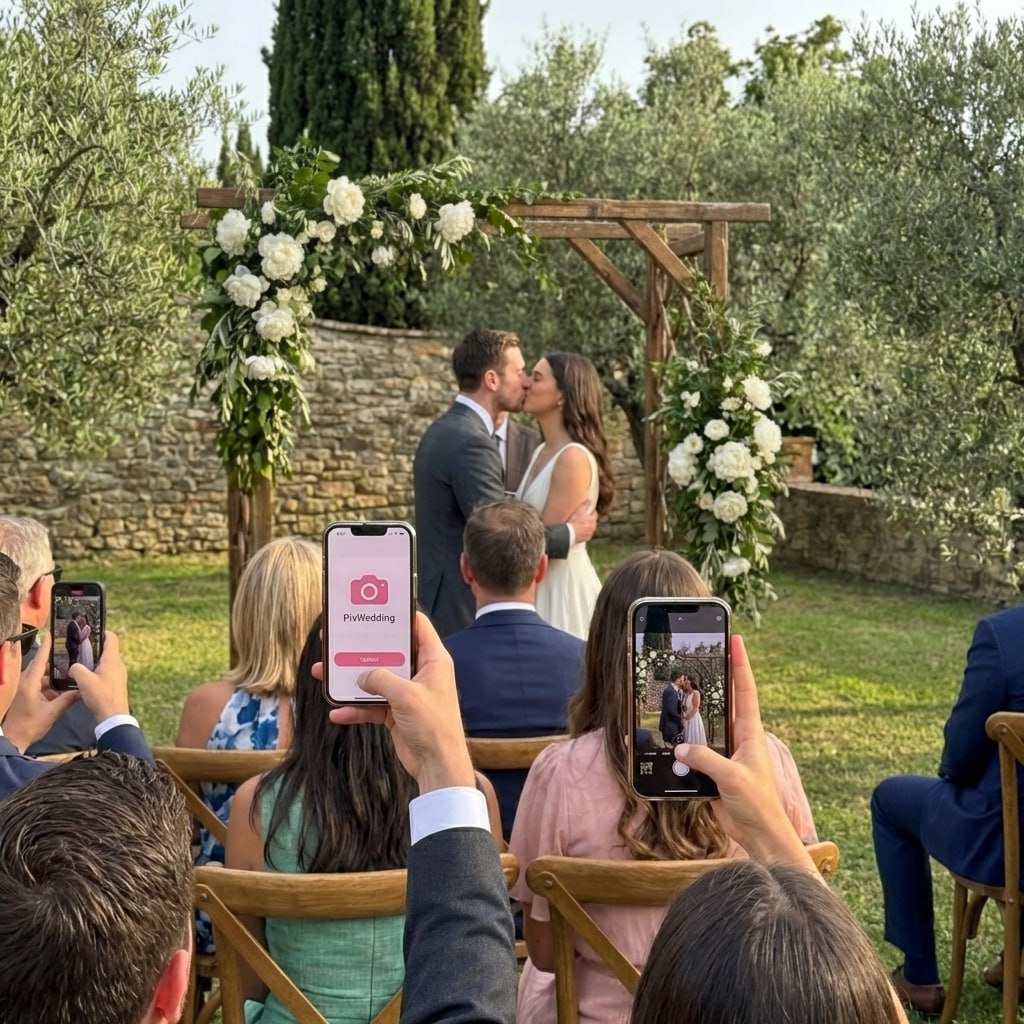
A shared QR album means you are not the one chasing down everyone's photos afterward. One less thing to manage on a day that already carries enough.
From Mom
Scan to join the album
No app, no account
UPLOADING
Saving your moment
THE ALBUM
Emma & Jack
June 21, 2026
647 photos · 95 guests





SCAN TO TRY
pix.wedding/
your-wedding
Small logistics add up more than people expect on a second wedding, especially with a blended guest list of two families, old friends, and new ones meeting for the first time. Guests scan a QR code at their table and every photo they take lands in one shared album automatically, so nobody is texting a dozen relatives afterward asking who has the pictures of a particular moment. It will not resolve the fear discussed above, but it does mean you get to actually be present for the day instead of managing it.
Practical Considerations a First Wedding Never Required
These are not romantic topics, which is exactly why they are worth handling calmly and early instead of avoiding them.
Blended families
If either of you has kids, the marriage is joining an existing family, not starting a blank one. Stepfamily researchers describe common friction points as loyalty binds (a child worrying that liking a stepparent is being disloyal to the other parent), unclear parenting roles, and two family cultures merging at once. None of that means it will go badly. It means it deserves its own conversations, separate from wedding planning, ideally with input from a family therapist experienced with blended families.
Source: The Gottman Institute on remarriage →Finances and a prenup
A second marriage often means two sets of assets, maybe a mortgage, retirement accounts, or child support obligations that a first marriage never had to account for. A prenuptial agreement is worth treating as a calm planning conversation rather than a referendum on trust. Many financial advisors suggest having the conversation early, in a low-stakes moment, framed around protecting both people and any children involved rather than around expecting the marriage to fail.
Telling the kids
How and when you tell children about a remarriage matters more than most couples expect going in. A generally sound approach: let the relationship exist for months before introducing the word marriage, keep the conversation age-appropriate and low-pressure, and make space for a child to have complicated feelings without needing to talk them out of it. If custody or legal guardianship is involved, a family law attorney in your state can confirm what, if anything, needs to be formally addressed before the wedding.
None of the above is legal or financial advice. A family law attorney and a financial advisor licensed in your state can speak to your specific situation; this section is meant to normalize having the conversations, not to tell you what the outcome should be.
Scripts for Naming the Old Fear to Your Partner
Fear that stays unspoken tends to come out as testing, distance, or overreaction. Fear that gets named out loud usually gets smaller.
Naming the fear itself, before it leaks out sideways
“I want to tell you something and I need you to just hear it, not fix it. I'm scared to get married again. Not because of you, because of what I went through last time. I don't want that fear steering us if I never say it out loud.”
When something innocent triggers an old wound
“What you just did reminded me of something from my last marriage, and I reacted bigger than the moment probably called for. I don't think you did anything wrong. I think I got scared for a second. Can we talk about it?”
Bringing up a prenup without it sounding like distrust
“I'd like us to talk to someone about a prenup, not because I think this will end, but because I want us to handle the practical stuff early and calmly, while we both feel good, instead of leaving it until it's harder to talk about.”
Before telling the kids
“We want to tell the kids together, and we want to leave room for them to have big feelings about it, even happy-sounding news like this can be complicated for a kid. Can we agree on what we'll say, and that neither of us will push them to react a certain way?”
Common Mistakes That Let the Old Fear Drive
Rushing the timeline because you feel like you are 'behind' or trying to prove the last marriage does not define you
Expecting a new partner to single-handedly repair the trust your ex broke, instead of rebuilding it together over time
Merging finances, homes, or legal decisions fast, before the practical conversations that a second marriage specifically calls for have happened
Avoiding the prenup conversation because bringing it up feels like admitting you expect it to fail
Making your new partner compete with a ghost, comparing them constantly to your ex instead of evaluating who they actually are
Introducing marriage to your kids before the relationship itself has had time to become real and steady to them
Treating any friction in the new relationship as proof it is 'happening again,' instead of ordinary relationship friction
Are You Ready, or Just Ready to Stop Being Scared?
Those are two different feelings. This is a rough way to tell them apart.
Signs the Timing Feels Right
- You can describe what went wrong last time in specific, honest terms, not just “they changed” or “it just didn't work”
- You notice when you are about to project the past onto your partner, and you can usually catch it before it becomes an accusation
- You feel calm and clear about this specific person, separate from how you feel about “marriage” as an idea
- You and your partner have actually talked through logistics: money, kids, where you'll live, not just the wedding itself
- Time has passed since the divorce or loss, and the grief or anger has softened into something you can talk about without it taking over the room
Signs It Is Worth Slowing Down
- !You are still actively grieving or processing anger from the last marriage and have not had space (or therapy) to work through it
- !You find yourself testing your partner, picking fights to see if they will leave, instead of naming the fear directly
- !The relationship moved from meeting to engaged in a matter of weeks, without much room to see how you handle real conflict together
- !You have not had a single real conversation about finances, kids, or a prenup, and are hoping it will “sort itself out”
- !Friends or family who know you well have gently flagged that this feels fast, and you have not been able to sit with that feedback
What You Know Now That You Did Not Know Then
Your history is not only baggage. Some of it is wisdom a first-time couple does not have access to yet.
You know what you actually need in a partner
Your first marriage taught you your non-negotiables, your communication patterns, and what you cannot live without. That is not guesswork anymore.
You know love alone was never going to be enough
You have learned, the hard way, that marriage also requires compatibility, effort, and shared values. That realism is protective, not cynical.
You know you can survive something this hard
Divorce or losing a spouse is one of the most painful things a person goes through. You are still here, still open to love. That resilience does not disappear.
You know yourself with more precision
The end of a marriage tends to force real self-reflection. Whatever you learned about your own patterns during that process is now an asset, not a liability.
Questions That Do Not Fit Neatly Into a Checklist
Some of what comes up is more specific than "am I ready." Here are direct answers to a few of those.
What if my partner has never been married and does not understand my fear?
They likely will not understand it the way another divorced or widowed person would, and that is fine. What matters is not that they relate to it, but that they take it seriously when you name it. Ask for what you actually need: patience with a specific trigger, or just to be heard without being fixed. You are not asking them to have lived it. You are asking them to believe you about it.
Does remarrying after losing a spouse mean I am replacing them?
No. Loving someone new does not retroactively shrink what you had before, and it is not a competition between the two relationships. Grief and new love are able to exist in the same person at the same time. If guilt about this keeps surfacing and does not ease, a grief counselor can help you work through it separately from the decision to remarry itself.
What if the fear is actually about my partner, not my past?
This is worth taking seriously rather than assuming it is only old baggage. Use the "ready vs. worth slowing down" comparison above on your specific relationship, not on marriage as a general idea. If the worry is tied to a real, current behavior your partner has not addressed after being asked more than once, that is a different conversation than processing a previous marriage, and it deserves to be treated as its own issue.
How This Fear Can Show Up (Illustrative Examples)
These are composite, illustrative scenarios meant to show a pattern, not real individuals or specific case studies.
Example: the financial vigilance pattern
Imagine someone whose first marriage ended partly over hidden debt. In a new relationship, they might find themselves quietly checking a partner's bank statements or bristling at a normal purchase, not because the new partner has done anything wrong, but because money once meant danger. Naming that pattern out loud, rather than acting on it silently, is usually what turns vigilance back into ordinary trust.
The trigger is old. The response can still be new, once it is named.
Example: the silence-equals-withdrawal pattern
Consider someone whose ex went quiet for days before finally asking for a divorce. In a new relationship, an ordinary quiet evening from a tired partner could set off real alarm, even when nothing is actually wrong. Learning to say 'you're quiet tonight, are we okay?' instead of assuming the worst is often the entire fix.
A specific, named question defuses a fear that vague dread never will.
Example: the blended-family loyalty worry
Picture a parent worried that a child warming up to a new stepparent means betraying the other parent. Left unaddressed, that worry can make a parent unconsciously discourage the closeness. Naming it directly, 'it's okay to like them, that doesn't change how much you love your other parent,' tends to relieve a child faster than either avoiding the topic or forcing bonding.
Loyalty binds usually loosen once they are said out loud, for kids and adults alike.
A Short Glossary for Remarriage Conversations
Terms that come up often once you start actually talking through a remarriage instead of just worrying about it.
Blended family
A household formed when at least one parent brings a child from a previous relationship into a new marriage, alongside a new partner and sometimes their children too.
Loyalty bind
The uncomfortable feeling a child can have that liking or bonding with a stepparent is somehow being disloyal to their other biological parent.
Blank slate fallacy
The mistaken assumption that a second marriage starts from zero. In practice it starts with existing kids, finances, routines, and emotional history for at least one partner.
Predictive fear vs. protective fear
Protective fear says pay closer attention this time. Predictive fear insists this will end the same way. Only the first is generally useful to act on directly.
Prenuptial agreement (prenup)
A legal agreement signed before marriage that outlines how assets and debts would be handled if the marriage were to end, often recommended for second marriages.
Family-of-origin pattern
A relationship habit absorbed from a previous marriage or from one's own upbringing that can resurface unconsciously in a new relationship.
If the Fear Does Not Loosen, That Is Information Too
For most people who have done the reflection above, named the fear to their partner, and had the practical conversations, the anxiety softens well before the wedding date. But if you have done that work honestly and the fear still feels just as sharp, that is not a personal failure. It is worth taking seriously rather than pushing through.
A persistent fear that does not ease with reflection, honest conversation, and time is worth bringing to a licensed therapist or counselor, ideally one with experience in remarriage or blended families. This guide can help you think it through, but it is not a substitute for that kind of support, and there is no shame in needing it. Getting help before the wedding is far easier than untangling the same fear years into a new marriage.
Related: doubts, fears and cold feet
The Psychology of Fear Rooted in a Previous Marriage
Fear of remarriage is a distinct psychological experience from general marriage anxiety because it is built on specific, lived evidence rather than an abstract worry. Your nervous system formed a real association between commitment and a real loss, whether that loss was a divorce or the death of a spouse. That association is not irrational. It is your brain doing exactly what it is supposed to do after something painful.
The useful distinction is between protective fear and predictive fear. Protective fear says, 'I want to pay closer attention and communicate more deliberately this time.' That fear is worth listening to. Predictive fear says, 'This will end the same way because the last one did.' That fear is worth questioning, ideally with a therapist, because it treats your new partner and relationship as a copy of the old one rather than what they actually are.
- •Fear after divorce or loss is a recognized emotional response, not evidence you should not remarry
- •Naming a fear specifically, out loud, tends to reduce its intensity more than trying to ignore it
- •Individual therapy is often more useful than couples conversation for processing grief or anger from a previous marriage
- •Blended family stress is a real and separate factor from remarriage fear itself, and benefits from its own planning
- •A persistent fear that does not soften with reflection and time is worth a licensed counselor, not just more self-reflection
When You Are Actually Ready to Move Forward
Readiness for remarriage is not about hitting a specific number of years since the divorce or loss. It is about reaching a point where your history informs your choices without controlling them. When you can describe your first marriage's ending with clarity and some acceptance, rather than raw anger or unprocessed grief, you are usually closer than you think.
The clearest sign is being able to separate your current partner from your ex in the moment, not just in theory. If a specific behavior reminds you of the past, can you pause and check whether it is actually the same behavior, or does the resemblance alone feel like enough evidence? People who can ask that question in real time, even imperfectly, tend to be genuinely ready. People who cannot yet ask it may benefit from more time or more support first, and that is a completely reasonable thing to give yourself.
Explore more free wedding tools
Everything you need to make your wedding day stress-free and unforgettable.
Seating Chart Planner
Plan your reception seating visually.
Guest List Manager
Track RSVPs and dietary needs.
Budget Allocator
Turn your total into a category-by-category plan.
Venues by State
Explore venues across all 50 states.
Countdown Timer
Count down the days to your big day.
Wedding Checklist
Month-by-month planning checklist.
Bachelorette Party Games
15+ games with rules, supplies, and timing.
Alternative to Wedding Guest Book
15 creative alternatives guests enjoy.
Frequently Asked Questions
Straight answers to the questions people ask most about this topic.
Yes, very normal. Anyone who has been through a divorce or lost a spouse has earned the right to feel cautious about remarrying. The fear is your nervous system trying to protect you from experiencing that pain again. It is not a sign you should not remarry. It is a sign worth paying attention to, naming out loud, and working through rather than ignoring.
The picture is more specific than a single number. Researchers such as the National Center for Family and Marriage Research at Bowling Green State University and the Gottman Institute have cited higher overall divorce rates for second marriages compared with first marriages, though the risk is closely tied to factors like how quickly the couple remarried and whether stepchildren and blended-family stress are part of the picture, rather than remarriage itself being the cause. Your individual odds depend far more on your specific relationship and how you handle those factors than on a headline percentage.
Start by getting specific. When you feel triggered, pause and ask whether your partner is actually doing the thing that hurt you before, or whether it just resembles it on the surface. Naming the difference out loud, either to yourself or to your partner, breaks the automatic association. If it keeps happening despite that effort, a therapist can help you work through the underlying association more directly.
Many financial advisors and family law professionals recommend at least discussing one for second marriages, particularly when children, existing assets, or debts are involved. A prenup is not a prediction that the marriage will fail. Framed well, it is a practical, unemotional way to protect both people and any kids involved, and it tends to land better when it is brought up early and calmly rather than close to the wedding.
Let the relationship become real to your kids before introducing the word marriage, keep the conversation age-appropriate, and make room for mixed feelings without trying to talk your child out of them. Many family therapists who work with blended families suggest framing it as an addition to the family rather than a replacement for anything, and following up with ongoing one-on-one time so kids do not feel replaced.
There is no single correct number of years. What tends to matter more is whether you can talk about your previous marriage's ending with some clarity and acceptance, whether you have identified your own patterns rather than only your ex's, and whether you are choosing your current partner for who they specifically are. If those things feel true, the timing is likely reasonable regardless of the calendar.