
Micro Wedding Planning Guide
What actually counts as micro, real 2026 cost data, guest-list frameworks that work, and how it differs from an elopement or minimony.
Start Your Free Wedding ChecklistA micro wedding is a real wedding day, ceremony and reception, with a deliberately curated guest list of roughly 10 to 50 people. It is not the same as an elopement (0-2 people) or a minimony (3-10 immediate family). Search interest in this format has climbed to some of its highest recorded levels, and industry data shows a meaningful share of couples now scaling back guest counts by choice rather than only by budget necessity.
This guide walks through the full planning process: how to set a guest-count ceiling without alienating family, what actually gets cheaper at micro scale versus what stays fixed, realistic venue categories, and a sample timeline for pulling the whole day together in under six months.
Elopement vs Minimony vs Micro vs Small Wedding
These terms get used loosely. Here is how the wedding industry generally draws the lines.
Elopement
0-2 guestsJust the couple, sometimes with an officiant or photographer present. No reception element.
Minimony
3-10 guestsA term popularized during 2020, a scaled-down ceremony with only the closest immediate family, often planned with the intent to have a larger celebration later.
Micro wedding
10-50 guestsA full wedding day, ceremony plus reception, with a deliberately curated guest list. This is the format this guide covers.
Small wedding
50-100 guestsBelow the average guest count (117 nationally per The Knot) but still resembling a traditional wedding in scale and structure.
Why Search Interest Is at an All-Time High
Google Trends data tracked across wedding-industry search analyses shows queries related to small and micro weddings climbing to some of their highest levels on record over the past two years. Several forces are converging: cost pressure (The Knot 2026 Real Weddings Study found about 40% of couples scaled back some part of their wedding due to cost), a cultural shift toward more intentional, present-focused celebrations, and social platforms normalizing smaller, more personal wedding content over large ballroom productions.
Zola's trend reporting has separately found that a meaningful share of couples now describe choosing a smaller wedding as a preference, not a compromise, citing the ability to actually spend time with every guest rather than making brief rounds through a large room.
None of this means large weddings are disappearing, the national average guest count is still 117 per The Knot's 2026 study. What has changed is that micro is now a deliberate, well-supported format rather than a fallback, with venues, caterers, and photographers increasingly building packages specifically around 10-50 guest counts instead of treating them as an afterthought to their standard offering.
Sources: The Knot 2026 Real Weddings Study, Zola Wedding Trends Report.

First dance
You guys!!
Small guest list, zero missed moments.
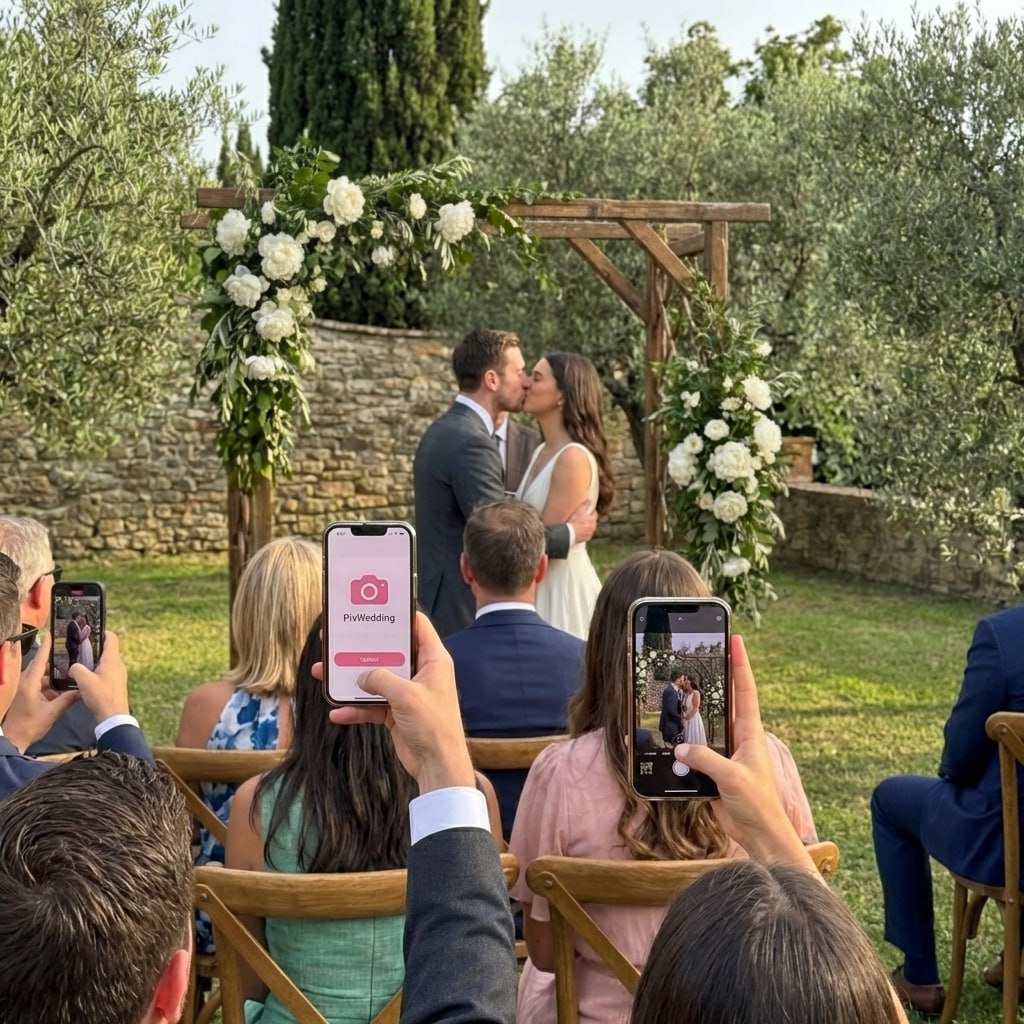
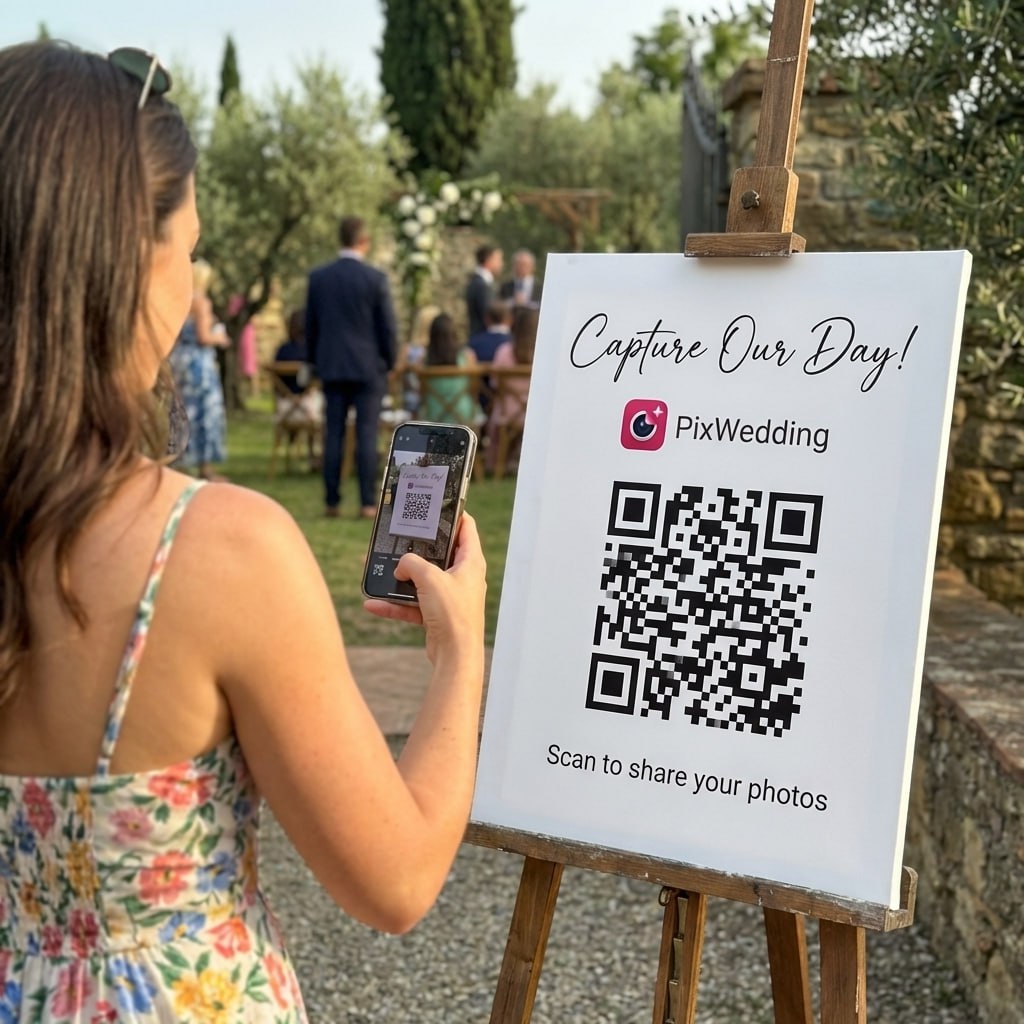
With 50 guests or fewer, every phone in the room belongs to someone you actually want photos from. A free Pix Wedding QR album collects them all in one place, automatically.
From Mom
Scan to join the album
No app, no account
UPLOADING
Saving your moment
THE ALBUM
Emma & Jack
June 21, 2026
647 photos · 95 guests




SCAN TO TRY
pix.wedding/
your-wedding
Guest List Frameworks That Actually Work
Getting from a 150-name draft list down to 50 or fewer is the hardest part of planning micro. These four filters do most of the work.
If you would call them with real news at 2am, they make the list. If you would text them a photo afterward, they do not need to attend in person. This single filter cuts most bloated lists to under 50 fast.
At micro scale, blanket plus-ones for single guests eat capacity fast. Reserve plus-ones for married or long-term partners, and consider a firm "no blanket plus-ones" policy stated plainly on the invitation.
Coworkers, distant cousins, and "we should invite them so they invite us" names are the first cut at 50 guests. They are rarely the first cut at 150, which is exactly why micro guest lists feel more intentional.
Do not invite someone purely because you attended their wedding. Obligation invites are the single most common reason micro guest lists creep past their target size.
What Actually Scales Down With Guest Count
Not every category shrinks proportionally. Here is which ones do, and which stay closer to full price.
| Category | How it scales |
|---|---|
| Venue (small-capacity space or private home) | Many venues have a per-event minimum regardless of headcount, so a 30-guest wedding does not always cost proportionally less than 80 guests at the same venue. |
| Catering | The most directly guest-count-scalable category. Plated or family-style service becomes realistic at micro scale in a way it rarely is above 100 guests. |
| Photography & video | Pricing is typically hourly or package-based, not guest-count dependent, so this line often stays close to full-wedding pricing regardless of size. |
| Flowers & decor | Scales down meaningfully since fewer tables and a smaller space need less florals to feel complete. |
| Officiant | Usually a flat fee, unaffected by guest count. |
| Rentals (chairs, tables, linens) | Scales close to linearly with headcount, one of the more predictable savings areas. |
At the national average of roughly $292 per guest (The Knot 2026 Real Weddings Study), a 30-guest micro wedding built purely on that average would land near $8,760, before venue minimums or fixed vendor fees are added. Use our Budget Allocator to build a realistic total for your own guest count.
Venue Types That Fit a Micro Guest List
Categories, not specific businesses, since availability and pricing vary heavily by city. Search each type locally alongside your target guest count.
Independent restaurants with a separate room often welcome 15-40 guest bookings and include catering by default, cutting one vendor conversation entirely.
The lowest fixed-cost option, but budget for rentals (tent, chairs, portable restrooms) that a traditional venue would otherwise include.
Many estate properties that market to full-size weddings also offer a reduced-rate off-peak or weekday micro package for smaller guest counts.
Combine a legal ceremony with an afterward gathering at a restaurant or rented space, splitting the day into two simpler bookings instead of one large one.
Hotels with a small function room often bundle catering, tables, and linens together, useful when you want fewer vendors to manage.
Parks, gardens, and beaches with day-use permits work well for micro ceremonies since capacity limits that would block a large wedding are a non-issue at 30 guests.
A Sample Micro Wedding Day-Of Schedule
Illustrative timing for a 30-guest wedding with a single venue for ceremony and reception. Adjust for travel time if your ceremony and reception are in different locations.
A compressed schedule like this is one of the quiet advantages of going small, less downtime between segments since there is no large room to reset or manage.
A Compressed Planning Timeline
Micro weddings move faster than full-size ones. Many couples plan one in under six months.
Mistakes Couples Make Planning Small
Large rooms make small guest counts feel sparse and photograph poorly. Look specifically for venues that market to micro or elopement-size groups.
Fewer guests does not mean fewer moving parts. A 30-guest wedding still has a timeline, a caterer, and a photographer who all need to be in the same place at the same time.
Fixed-fee vendors (photography, officiant, planner) do not shrink with guest count. Budget them at close to full price regardless of size.
A curated 30-person list can read as a snub if relatives are not told directly and warmly why the day is small. A short personal call beats a group text every time.
Live photo sharing or a same-day video montage gives excluded relatives a way to feel present without expanding the guest list itself.
Standard vendor packages are often quoted for 100+ guests by default. Ask specifically for micro-scale pricing tiers rather than accepting a pro-rated version of a large package.
Pros and Cons of Going Micro
Pros
- More time with each guest instead of a rushed room-wide greeting
- Wider venue options, private dining rooms and small estates become viable
- Faster planning timeline, often under six months
- Room in the budget to upgrade categories that matter most to you
Cons
- Difficult guest-list conversations with extended family or friend groups
- Fixed-fee vendors do not get cheaper just because the guest list is smaller
- Some venues have per-event minimums that erase per-guest savings
- Family members left off the list may need direct, warm communication to avoid hurt feelings
Guest List Etiquette: Do and Don't
Do
- Tell close family the guest-list decision before invitations go out, not after
- Set a firm guest-count ceiling before you start drafting names
- Offer a livestream or same-day photo link to relatives who are not attending
- Confirm your venue's actual minimum guest count and fee structure before assuming savings
Don't
- Post about the wedding publicly before uninvited close family hears the news privately
- Assume every category will get cheaper just because the guest count did
- Let the guest list creep back up after you have already set a ceiling
- Skip a coordinator entirely just because the day feels simple on paper
Small-Wedding Terms, Explained
A wedding with roughly 10-50 guests, including a ceremony and reception, distinguished from an elopement (0-2 guests) or minimony (3-10 guests) by still functioning as a full wedding day.
A term that gained wide use in 2020 for a scaled-down ceremony with only immediate family, often planned alongside intent for a larger celebration later.
A hard cap set before venue shopping begins, used to filter venues and guide invitation decisions from the start rather than cutting names after a list balloons.
A vendor category (photography, officiant, planner) priced by package or hour rather than per guest, meaning cost does not shrink proportionally at micro scale.
Total spend divided by guest count, the most useful way to compare a micro wedding budget fairly against a full-size wedding budget.
Average cost per guest nationally, The Knot 2026 Real Weddings Study.
Average guest count for a full-size US wedding in the same study.
Share of couples who reported scaling back some part of their wedding due to cost.
Typical guest-count range wedding vendors use to define "micro wedding."
Stats reflect national US averages and general format definitions used by wedding planners and vendors. Regional pricing and guest-count norms vary, use these as a baseline, not a ceiling.
Questions to Ask Before You Commit to Micro
A Worked Scenario (Illustrative)
The following is an illustrative example built to show how the fixed-cost problem plays out in practice, not a real couple.
A couple planning for 150 guests gets quotes: venue and catering around $18,000, photography $4,000, flowers $3,000. They cut the guest list to 35 to save money. Catering drops close to proportionally, to around $4,200. But the venue has a $6,000 minimum regardless of headcount, and photography stays at $4,000 since it was never priced per guest. The total drops from roughly $25,000 to $14,200, real savings, but nowhere near the 77% reduction the guest-count cut alone would suggest. The lesson: model fixed-fee categories separately from per-guest categories before assuming savings scale with the guest list.
A Few More Questions Couples Ask
Can I upgrade to a bigger wedding later if I start micro?
Some couples plan a micro wedding now and a larger anniversary party later, which sidesteps the guest-list debate entirely by treating the two events as separate occasions with separate expectations.
How do I tell people they are not invited without it feeling like a rejection?
A short, direct, personal message (call or text, not a group announcement) explaining that you are keeping the day intentionally small goes further than any wording on the invitation itself. Most people respond well to honesty delivered warmly and early.
Does a micro wedding still need a photographer for the full day?
Many couples book fewer hours of coverage since there are fewer formal segments to document (a shorter guest list means faster group photos), but the hourly rate itself typically does not change with headcount.
Related Guides
Whatever size you land on, the planning fundamentals are the same: set the real number first, lock the fixed-cost categories early, and communicate guest-list decisions to family directly rather than letting them find out from an invitation.
Sources
- The Knot, "Average Wedding Cost" (2026 Real Weddings Study), cost-per-guest, average guest count, and scaled-back-due-to-cost figures.
- Zola, Wedding Trends Report, guest-count and small-wedding preference data.
Why Micro Weddings Are Having a Moment
Search interest in small and micro wedding formats has climbed to some of its highest levels on record, according to Google Trends data tracked by wedding-industry analysts. Part of that is cost-consciousness: The Knot 2026 Real Weddings Study found that roughly 40% of couples say they scaled back some part of their wedding due to cost concerns. Part of it is a genuine shift in what couples want their wedding day to feel like, more intimate, less performative, and centered on the people who matter most rather than a full guest list built from obligation.
Zola's wedding trend reporting has found that a meaningful minority of couples are choosing to go smaller by design, not by necessity, citing a desire for a more relaxed, present day-of experience over a bigger production.
How This Guide Differs From Our Other Small-Wedding Content
This page focuses specifically on the micro wedding format: 10 to 50 guests, still a reception, still a guest list. If you are leaning toward zero guests and just the two of you, our elopement photo sharing with family guide covers how to keep family included without them physically attending. If your main goal is cutting cost regardless of size, our how to plan a wedding on a budget guide has frugal tactics that apply at any guest count.
Explore more free wedding tools
Everything you need to make your wedding day stress-free and unforgettable.
QR Sticker Designer
Design custom print-ready stickers.
Photo Sharing QR
The best way to collect guest photos.
Hashtag Generator
Create unique wedding hashtags.
How to Collect Guest Photos
5 methods ranked by participation rate and ease.
Share Wedding Photos with Guests
Compare every sharing platform by ease and participation.
Best Way to Get Guest Photos
The single method with the highest participation rate.
How to Make a Shared Wedding Album
Step-by-step setup for every platform.
Alternative to Disposable Cameras
Better, cheaper options than disposable cameras.
Micro Weddings: Common Questions
Straight answers to the questions people ask most about this topic.
There is no single legal definition, but wedding planners and vendors generally use "micro wedding" for weddings with roughly 10 to 50 guests, distinct from a minimony (a handful of immediate family, often under 10) and an elopement (just the couple, sometimes with an officiant or photographer). The line is guest count, not budget or formality.
Cost scales with guest count more than any other factor. The Knot 2026 Real Weddings Study puts the national average cost per guest at around $292, so a 30-guest micro wedding built around that average lands near $8,760 before venue minimums or fixed vendor fees are factored in. Real totals vary widely by region and how many fixed-cost vendors (photographer, officiant, planner) you book regardless of size.
Usually, but not proportionally. Per-guest costs (catering, favors, rentals) drop with the headcount, but fixed costs like photography, a venue minimum, or a planner do not shrink just because fewer people are invited. Many couples find their savings come more from skipping large-format extras (big bands, elaborate florals, multiple events) than from the guest count alone.
An elopement traditionally involves just the couple, sometimes with an officiant, witness, or photographer present. A micro wedding still has a guest list, typically 10 to 50 people, and usually still includes a reception element like a meal or toast. If you want family involved without a large event, a micro wedding fits; if you want the day to be just the two of you, an elopement fits better. See our elopement photo sharing with family guide if you are leaning toward eloping but still want relatives included virtually.
It is optional more often than with a full-size wedding, since fewer moving parts means fewer vendors to coordinate. Many couples plan a micro wedding themselves using a checklist, while others still hire a day-of coordinator for peace of mind. It comes down to how many vendors you are booking and how comfortable you are managing timelines yourself.
Yes, and it is often easier logistically. Photography and video pricing is not usually guest-count dependent, and a QR-code photo sharing setup like Pix Wedding works well for micro weddings because every guest at a 20 to 50 person event is someone you actually want photos from, not a stranger three tables away.