
How to Write Your Own Vows: Find Your Voice and Say Something True
Writing your own vows is not about being a great writer. It is about being a specific witness to your relationship. Journaling exercises, authenticity techniques, and practical guidance to help you find what only you could say.
Try the AI Vow GeneratorThe Short Answer: How the Whole Process Works
Writing your own vows follows a predictable arc, start to finish. You decide together to do it and confirm with your officiant, spend a few weeks gathering raw material through journaling and memory-mining, draft in a structure with a clear beginning, middle, and end, coordinate with your partner on length and tone without swapping actual sentences, revise for authenticity and specificity, then spend the final one to two weeks practicing aloud before delivering the vows on the day with a backup copy on hand.
None of these steps require professional writing skill. What they require is starting early enough that each stage has room to breathe. This guide walks through the complete journey below, from the first decision to hold the card on the wedding day, with a week-by-week timeline, a drafting workflow, a coordination plan for you and your partner, and the practical logistics of the ceremony itself.
Why "Write Your Own" Matters
Generic vows have been spoken at millions of weddings. Your partner has only one. The case for writing your own is not about being original for originality's sake. It is about being honest in a context that deserves honesty.
It is unmistakably yours
Your partner knows your voice. When they hear it in your vows, the experience is irreplaceable.
It honors the specific relationship
Generic vows describe an idea of love. Personal vows describe your love. That difference lands.
It is a keepsake
Many couples frame or revisit their vows. Generic ones rarely hold up under that kind of reflection.
The writing clarifies your commitment
The act of articulating your promises in writing forces a clarity that vague sentiment never achieves.
First dance
You guys!!
Your own vows. Your own album.
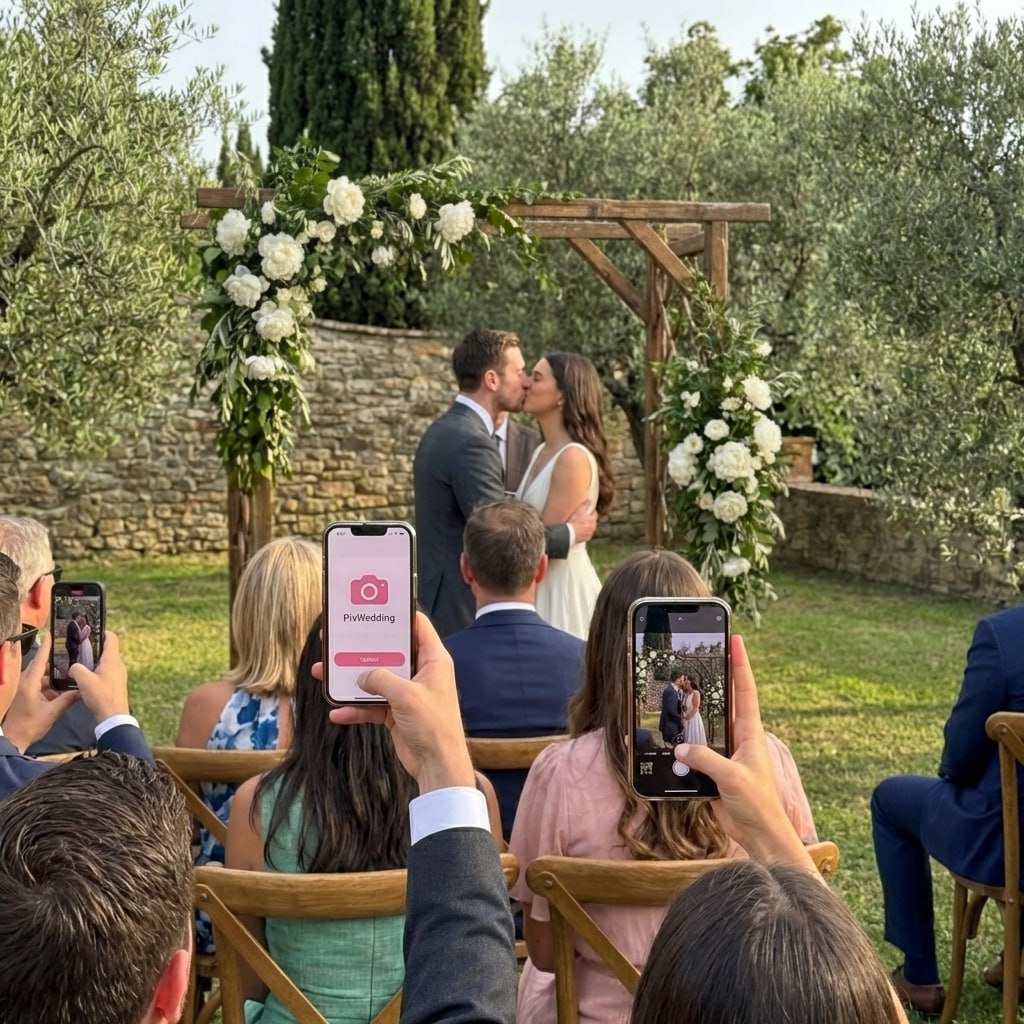
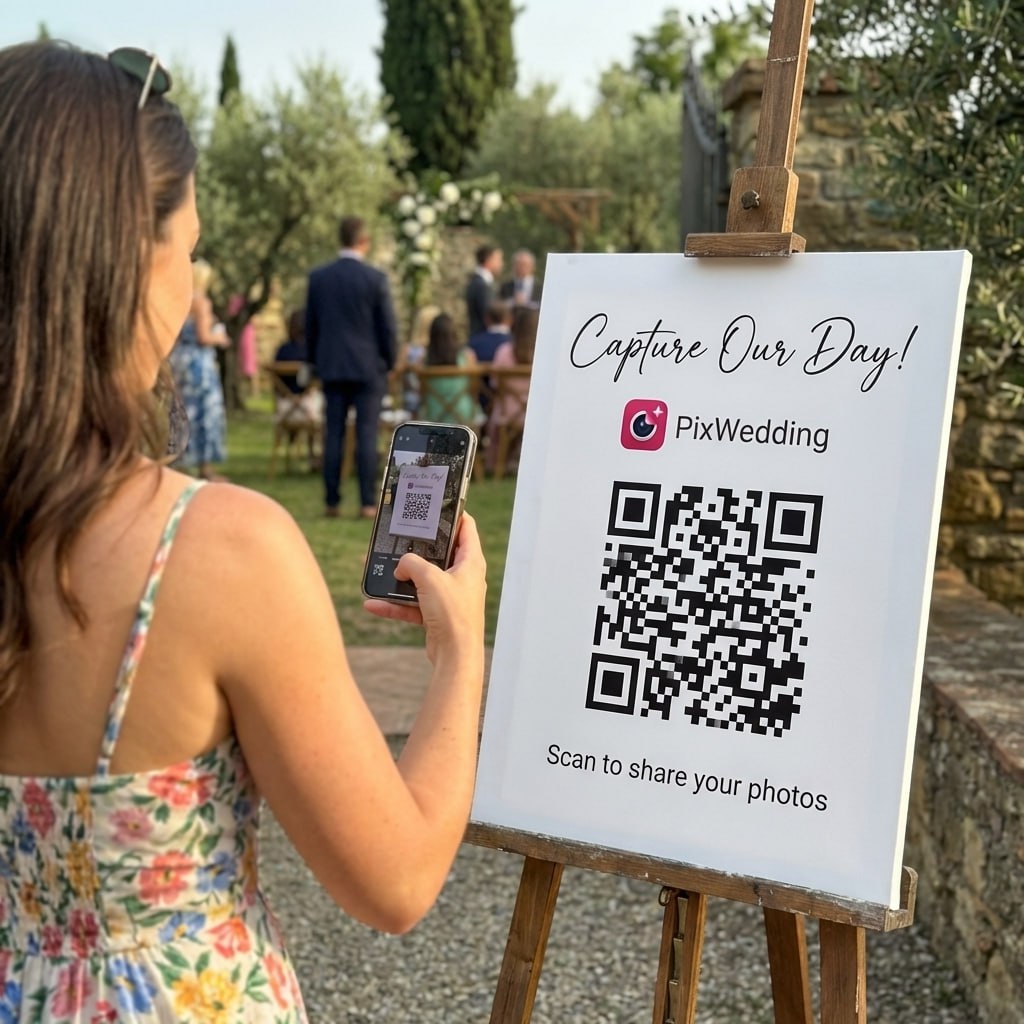
Writing your own vows means making the day personal - Pix Wedding extends that to the photos too, with every guest capturing their view in one shared album.
From Mom
Scan to join the album
No app, no account
UPLOADING
Saving your moment
THE ALBUM
Emma & Jack
June 21, 2026
647 photos · 95 guests
SCAN TO TRY
pix.wedding/
your-wedding
The Full Timeline: From "We're Writing Our Own" to "I Do"
This is the complete arc, not just the writing week. Wedding planning guides generally agree the biggest mistake is starting too late. The Knot's vow-writing guide recommends starting at least three months out and aiming for a final length of roughly 250 to 300 words, about two to three minutes spoken aloud, while Wedding Words' timeline guide lays out a longer runway starting a full year out for couples who want zero last-minute pressure. Use whichever start point fits your engagement length. The stages below stay the same either way.
- Agree with your partner that you are both writing your own vows
- Ask your officiant whether any specific language is legally or religiously required
- Set a rough shared word or time limit so neither of you over- or under-writes
- Start the journaling exercises below across several short sessions, not one long one
- Keep a running note on your phone for stray lines that show up outside of writing time
- Read a few example vows only for structure, never to copy phrasing
- Pick a structure (past-present-future, promise list, or hybrid) and write a complete draft in one sitting
- Do not edit while drafting. Get the whole thing down first
- Set it aside for at least three days before reading it again
- Compare length and tone with your partner using the parameters you set, not the actual text
- Run the specificity and voice checks described later in this guide
- Produce a near-final version and read it aloud twice
- Read the vows aloud daily, ideally at the same time each day so it becomes routine
- Record yourself at least once and listen back for pacing
- Decide whether you are reading, reciting from memory, or using a hybrid
- Print the final copy in a large, readable font
- Save a digital copy and email or text it to yourself and one trusted person
- Give a spare printed copy to your officiant or a member of your wedding party
- Do one last quiet read-through before the ceremony, not a full rehearsal
- Keep your copy on you or confirm who is holding it until the moment you need it
- Take one breath before you begin and look at your partner, not the crowd
6 Journaling Exercises to Find Your Vow Voice
The best vow material rarely comes from staring at a blank page labeled "write vows here." It comes from answering specific prompts with honesty and no editing. Try these exercises across multiple sessions.
The letter exercise
15 minutesWrite a personal letter to your partner as if they will never read it. No editing, no performance anxiety. Say the things you have thought but never quite said out loud. Mine this letter for vow material afterward.
The uniqueness inventory
10 minutesWrite the answers to "What makes us specifically us?" List at least 10 things: recurring jokes, rituals, phrases, challenges you faced, places that are yours, songs or films. Pick the most resonant 2 to 3 for your vow material.
The "who I am now" reflection
10 minutesWrite the version of yourself before this relationship, then the version now. What changed? Who did your partner help you become? This contrast is often the backbone of the most moving vow lines.
The promise brainstorm
10 minutesList 15 specific promises with no filter. Not "I will love you" but "I will drive you to the airport at 4am." Go back and pick the most honest, specific ones. These become your concrete commitments.
The difficulty acknowledgment
5 minutesWrite one difficult thing about loving this person, or about being loved by them, that you are choosing anyway. This is where the deepest vow honesty usually lives.
The memory mine
10 minutesList 10 specific moments from your relationship: the first, the hardest, the funniest, the quietest, the most surprising. For each, write one sentence about what it meant. These sentences are ready-made vow lines.
For more practical tips on finding your own words before you sit down to draft, this short video is a useful primer.
The Drafting Workflow: Turning Raw Material Into a First Draft
Journaling gives you raw material. This is how you turn it into an actual draft. Maggie Sottero's vow-writing guide and The Knot both point to a similar shape: a declaration of who your partner is to you, a section built on shared memory, and a set of concrete promises for the future. The specific steps below are how to actually get from a blank page to that shape.
- 1
Pick one structure and commit to it
The most common working structure is past, present, future: how you met or fell in love, what your partner means to you now, and the promises you are making for what comes next. A promise-list structure (a series of "I promise to..." lines) works equally well if prose does not come naturally to you. Do not mix three structures in one draft. Pick one.
- 2
Write the opening line last, not first
The opening line is the hardest to write and the easiest to get stuck on. Skip it. Start with the middle, the part you already know you want to say, and come back to the opening once the rest exists. A strong opening usually reveals itself once you can see the whole draft.
- 3
Build the body from your journaling material
This is where the letter exercise, the uniqueness inventory, and the memory mine from your raw-material sessions get assembled. Pick two or three specific memories or observations rather than trying to summarize the whole relationship. Depth on a few things beats breadth on everything.
- 4
Make your promises concrete, not abstract
A promise like "I will always be there for you" is a placeholder, not a finished line. Push it further: there for you doing what, specifically? The promise brainstorm exercise exists for exactly this reason. Concrete promises are also easier to remember when you are nervous, because they are anchored to an image rather than a vague sentiment.
- 5
Close with a forward-looking line
Endings that work best point at the future rather than summarizing the past you already covered. One sentence about the life you are building together, delivered simply, lands harder than a grand closing statement.
- 6
Write the full draft before you edit anything
The single most common way a first attempt stalls is trying to perfect sentence one before sentence two exists. Write the whole thing badly first. Editing a complete, imperfect draft is a manageable task. Editing a perfect first paragraph that never gets a second one is not a draft at all.
Authenticity Over Perfection
What authenticity sounds like
"I still get nervous when you walk into a room and I've known you for four years."
"I promise to be honest with you even when it is uncomfortable, because you deserve that."
"You have made me braver. I do not think I would have [specific thing] if I had not met you."
"I do not know what the next 40 years will look like, but I know I want to be confused about it alongside you."
How to self-edit for voice
- Read it aloud: if you would never say those words in conversation, change them
- Remove any sentence that could appear in a greeting card
- Replace every abstract word (love, support, cherish) with a concrete example
- Add at least one detail that only the two of you would understand
- Cut anything that is there to impress the audience rather than speak to your partner
- Ask yourself: would I be embarrassed if this were read aloud without attribution?
Incorporating Personal Stories: What to Include and What to Leave Out
Personal stories make vows specific. But not every story belongs in a public ceremony. Here is the filter to apply.
Include
- Stories that require minimal context for guests to follow
- Moments that show your partner's character clearly
- Challenges that you both already talk about openly
- Specific details that make guests feel like they glimpsed something real
Leave out
- Stories that require long explanation to make sense
- Details that would embarrass your partner publicly
- Difficult events your partner has not fully processed
- Anything involving exes, family conflict, or health details they have not shared widely
Coordinate With Your Partner Without Spoiling the Surprise
Most couples write separately, and most guides agree that is the right default. The Knot's guide is specific about why: if one partner envisions something light and the other writes something solemn, the mismatch can create real discord in the middle of the ceremony. The fix is not to read each other's drafts. It is to agree on the parameters up front, in a single short conversation, and then keep the actual sentences a secret.
The coordination conversation: what to agree on
- Target length in words or minutes, so nobody is caught reading two sentences opposite three paragraphs
- Overall tone: mostly serious, mostly light, or a genuine mix of both
- Whether humor or inside jokes are welcome, and roughly how much
- Whether either of you plans to mention family members, past struggles, or health topics that need the other's comfort level checked first
- A shared deadline to have a near-final draft ready, so one partner is not still writing the morning of
- Who is keeping the actual words secret from the other until the ceremony itself
Writing separately
Pros
- Full surprise on the day
- Each person writes without self-censoring
- More individual voice in each set
- Higher emotional impact at the ceremony
Cons
- Risk of mismatched length or tone
- No shared reference points
- More individual pressure
- Possible thematic overlap or contradiction
Writing together
Pros
- Guaranteed tonal alignment
- Shared process is itself meaningful
- Lower individual anxiety
- Can create parallel structure or shared lines
Cons
- No surprise on the day
- Risk of one partner dominating the direction
- Less individual voice
- May feel more like a document than a personal statement
Your 30-Day Personal Vow Writing Plan
Once you are inside the final month, here is how to break the actual writing and revision work into weekly sessions. This plan works whether you are a natural writer or not.
- Complete the letter exercise (write a letter you will never send)
- List 10 specific relationship memories
- List 15 specific promises (no filter)
- Answer: who was I before this person, and who am I now?
- Choose your format (prose, promise-list, or hybrid)
- Write a complete first draft without stopping to fix anything
- Read it aloud the same day you write it
- Put it away for 3 to 4 days
- Return with fresh eyes and read aloud again
- Do the specificity audit: replace every abstract word with a concrete example
- Do the voice check: cut anything that does not sound like you
- Coordinate length and tone with your partner
- Produce the final written version
- Practice reading aloud daily
- Record yourself at least once
- Read to one trusted friend for honest feedback
- Print final copies and make a phone backup
Practice and Memorize: The Final Two Weeks
A finished draft is not the same as a ready one. The gap between the two is closed by practice, not by more writing. This is where most couples underinvest, and it is the single easiest stage to fix with a bit of planning.
Decide your delivery method early
Reading from a card, reciting fully from memory, and a hybrid (memorized with a card as backup) are all legitimate choices. Wedding planning resources like The Knot note that many couples now keep their vows in a small vow book rather than on a phone or loose paper, partly for the photos and partly because a bound copy is harder to lose track of mid-sentence.
Read aloud daily for the final two weeks
Silent reading and spoken delivery are different skills. A line that reads smoothly on the page can trip you up out loud. Daily practice, even five minutes, builds the muscle memory that carries you through nerves on the day.
Record yourself at least once
Listening back reveals pacing problems, filler words, and lines that sound better on paper than spoken. This is standard advice across wedding planning guides, including Maggie Sottero's vow-writing guide, which recommends practicing in front of a mirror or recording yourself to hear how the vows actually land.
Memorize the shape, not every word
You do not need word-perfect recall. Memorize the sequence of ideas and the two or three lines that matter most, and let the connecting language flex slightly if your memory slips. A vow delivered with small wording changes still lands. A vow you freeze on because you are chasing a single missing word does not.
Practice in front of one honest person
A friend, sibling, or wedding party member who will give real feedback catches problems you cannot hear in your own head. Ask specifically: does this sound like me, and is there a moment where I lose you?
Dealing with Performance Anxiety
Practice reading aloud at least 7 times before the ceremony, not just once
Record yourself reading and listen back. Hearing it reduces the novelty and the anxiety
Practice in front of one person who will give you honest feedback
Print vows in large font with line spacing so you can find your place easily even with shaking hands
Mark breathing pause points with a slash before you practice so pausing feels intentional, not lost
Know that tears are welcome. The audience will cry with you, not judge you
Remind yourself: your partner is not evaluating you. They are simply receiving you.
Wedding-Day Delivery: Logistics That Actually Matter
Everything above gets your vows written and rehearsed. This section covers the small logistical details that determine whether the delivery goes smoothly on the day itself, from who is physically holding the card to where you look while you speak. A long-running thread on Weddingbee's forum about vow cheat sheets at the ceremony is a good snapshot of how real couples actually solve this: most either hold their own card, hand a copy to their officiant ahead of time, or have a member of the wedding party carry a spare.
Decide who holds the copy
Couples handle this a few different ways, and wedding forum threads on the topic show most land on one of three setups: you hold your own card, your officiant holds both copies and hands them over at the right moment, or a best man or maid of honor carries a spare. Decide this in advance so nobody is improvising during the processional.
Always prepare a backup copy
Nerves and long dresses do not mix well with a single fragile piece of paper. Print a spare, save a digital copy, and hand one printed copy to your officiant ahead of time. If yours goes missing or gets damp from nervous hands, the ceremony does not stall.
Keep eye contact with your partner, not the crowd
A tip echoed across wedding advice outlets, including Fox News's coverage of ceremony vow delivery, is to look at your partner rather than the guests. Looking your partner in the eyes brings a sense of calm and makes the moment feel like the two of you, even with an audience present.
Take one breath before you start
A single deliberate breath before your first word resets your pacing and stops the opening line from coming out rushed. Officiants who run ceremonies regularly will often build in a small pause here on purpose. Use it.
Expect your voice or hands to shake, and let them
A slightly unsteady voice does not read as failure to anyone watching. It reads as sincerity. Trying to suppress visible nerves usually makes a reader more rigid, not less. Let the emotion show. It is part of what makes the moment land.
There is also more than one valid delivery format. Fox News's roundup of vow delivery advice notes a growing trend of couples exchanging vows privately during a "first look" before the ceremony rather than in front of all their guests, and some couples write their vows as letters exchanged the morning of the wedding instead of reading them aloud at all. None of these are more correct than reading in front of your guests. Pick whichever format actually fits your comfort level.
The Deeper Reason to Write Your Own Vows
There is an obvious reason to write your own vows: they are more personal, more specific, and more moving when they succeed. But there is a deeper reason that is worth naming.
The act of writing your own vows forces a clarity that borrowed language never produces. When you sit down with a blank page and try to articulate what you actually believe about commitment, about your partner specifically, and about the life you are choosing together, you have to think. You have to decide. You have to figure out what you actually mean rather than reaching for a formula that sounds approximately right.
Many couples report that the process of writing their vows was one of the most clarifying experiences of their engagement. Not because writing is therapeutic in a general sense, but because the specific task of naming your promises in concrete language forces you to confront what you are actually committing to. What does "I will support you" mean, specifically? What does it look like on a Tuesday when everything is going wrong and you are both exhausted and neither of you is at your best? Writing personal vows asks you to answer those questions, at least partially, before you say yes.
That clarity is a gift to the marriage, not just to the ceremony. Couples who have articulated their commitments in specific language have a reference point they can return to. "I said I would do this" is a more useful anchor in a difficult moment than a vague memory of promising to love through everything. The specific promise has edges. It can be held to. It can be kept.
All of this is to say: even if your vows are imperfect by literary standards, the process of writing them has value that extends well beyond the ceremony. The struggle of finding the words is part of the point. Do not outsource it entirely, even if you use tools like our AI Vow Generator as a starting point. The thinking the process requires is something you owe yourself and your partner.
Finding Your Voice: What It Actually Means in Vow Writing
"Write in your voice" is advice that gets repeated constantly in vow writing guidance and rarely explained. What does it actually mean to write in your voice, as opposed to someone else's?
Your voice in writing is the sum of your natural vocabulary, your characteristic rhythms of speech, your tendency toward certain kinds of humor or seriousness, and the specific way you frame observations. It is what distinguishes a text message you wrote from one your partner wrote, even if you are communicating the same information. Your partner knows your voice. They will recognize it immediately when they hear it in your vows, and they will notice just as immediately when it is absent.
The fastest way to lose your voice in vow writing is to read a lot of other people's vows before you start. This fills your head with other people's cadences and phrases and makes it much harder to find your own. If you have already done this, the antidote is to write your first draft immediately after having a real conversation with someone you trust, so that your natural speech patterns are fresh and accessible.
The voice memo strategy described earlier in this guide works for the same reason: speaking naturally before writing gives you access to your actual voice rather than the voice you think you should write in. The gap between those two voices is where generic vows are born. Closing that gap is what makes personal vows personal.
Practically speaking, writing in your voice means: using contractions if you use them in speech. Using sentence lengths that match how you naturally talk. Using the vocabulary you would actually reach for in a real conversation. Avoiding words like "cherish," "embark," "bestow," and "henceforth" unless those words genuinely appear in your regular vocabulary. Avoiding metaphors that feel borrowed rather than lived.
Your voice is not inadequate for the occasion. It is exactly adequate. The occasion requires authenticity, and authenticity requires your voice, not a more formal or more poetic version of it.
Real Questions About Writing Your Own Vows
These are the most common genuine concerns that come up in the process of writing personal vows. Straightforward answers, no reassuring fluff.
What if my partner's vows are much better than mine?
Vows do not compete with each other. They complement each other. Different writing styles, different depths of emotion, and different structures are all fine. The only standard is authenticity. A simple, true set of vows is not inferior to a literary one.
What if I write something and then change my mind at the last minute?
The last-minute anxiety rewrite almost always makes vows worse. Trust the version you spent time on. Revision under pressure produces generic language. If you have worked through the process above, your final draft is better than the one you would write at midnight before the wedding.
Is it cheating to use AI or a template to get started?
No. A starting draft from any source is just raw material. What matters is that the final version is in your voice and contains things only you could say. Using our AI Vow Generator as a starting point that you then personalize is a legitimate and effective strategy.
What if I freeze up on the day?
Hold your printed copy. Always. Reading from paper is not failure. It is preparation. Your partner will not be disappointed that you held notes. They will be moved by what you say.
The Authenticity Checklist: Is This Really Yours?
Run your finished draft through this checklist before calling it final. Every "no" answer points to a specific revision opportunity.
Could I read this aloud without it feeling strange in my mouth?
If the language is unfamiliar to your tongue, it is not your voice.
Does at least one line contain a detail only the two of us would recognize?
Shared-only details are the clearest signal of a personal vow vs a generic one.
Have I named at least one specific promise rather than only abstract ones?
Specific promises are what make a vow feel like a commitment rather than a sentiment.
Is there a line I almost cut because it felt too honest?
That line is almost always the best one. The things that feel most vulnerable are often most true.
Would my partner know immediately that this came from me, not a template?
If the answer is uncertain, add more specificity. Generic sections are the culprit.
Have I read it aloud at least three times and heard it as a listener would?
Silent reading misses rhythm, breath points, and emotional pacing that only appear in speech.
Is the length balanced with my partner's approximate length?
Wildly mismatched lengths create an awkward ceremonial imbalance regardless of quality.
Before and After: Finding Your Voice
See how generic vow language transforms when you add specificity and authentic voice. Each example shows the same emotional intention expressed two ways.
Generic version
""You have always been there for me through the good times and bad, and I know you will continue to be my rock.""
Personal version
""When my dad was in the hospital last spring, you slept in the waiting room chair for three nights. You have never mentioned it since. I think about it often.""
Generic version
""You are my best friend, my soulmate, and the person I want to spend the rest of my life with.""
Personal version
""You are the first person in my life who has been both completely honest with me and completely on my side at the same time. I did not know those two things could go together.""
Generic version
""I promise to love you unconditionally and to always be there for you no matter what.""
Personal version
""I promise to answer when you call, even when I said I was busy. I promise to tell you the truth even when it is easier not to. I promise to keep showing up.""
The "What Makes Us Unique" Brainstorm
Every couple has a set of details that belong only to them. These are the raw materials for vows that cannot be replicated. Answer the questions below to excavate yours.
What is our recurring inside joke or phrase?
A line only you two use, even if it would mean nothing to anyone else.
What do we do together that is specific to us?
A ritual, a route, a restaurant, a Sunday habit. Something that became ours.
What was the hardest thing we went through together?
How you two navigated difficulty says more about your partnership than the easy times.
What does my partner do that nobody else does?
The specific way they handle something, say something, or show up in a situation.
What did I think I wanted before I met them?
Who you were before, and how your idea of partnership changed when this person arrived.
What future detail do I most want to be true?
One specific image of the future you are building. Vows that point toward something concrete are more powerful than ones that stay abstract.
More Vow Writing Resources
What Makes Vows Truly Yours
Anyone can write a wedding vow. The challenge is writing one that could not have been written by anyone else. The difference between generic and personal vows is almost never quality of writing. It is specificity of detail.
When we say "write your own vows," we do not mean be a good writer. We mean be a specific witness to your own relationship. Name the actual moments. Make the actual promises. Use the words you would actually say if you were alone together.
Authenticity in vows is not about being poetic. It is about being true. A clumsy sentence that says a real thing is worth more than an elegant one borrowed from a template.
- •Personal vows reflect the specific texture of your relationship, not a generalized idea of love
- •Guests connect most to moments that feel witnessed, not constructed
- •Your partner knows the difference between your voice and a borrowed one
- •The most moving moments in wedding ceremonies almost always come from specific, surprising truth
Together vs Separately: A Balanced View
The choice of whether to write vows together or separately is more nuanced than it first appears. Writing separately preserves surprise and allows each person to write freely without self-censoring around what the other will think. The emotional impact on the day is maximized when neither partner has heard the other's words.
Writing together, however, works for couples who are deeply collaborative, who find the act of writing stressful alone, or who want to craft something with a shared structure (alternating lines, parallel promises). Some couples co-write the opening and closing while keeping the middle personal.
Whichever approach you choose, agree in advance on length, tone, and whether specific themes are off-limits. The coordination conversation itself can be meaningful.
- •Writing separately: more emotional surprise, more individual voice, more privacy
- •Writing together: shared process, guaranteed compatibility, lower individual anxiety
- •Hybrid: co-write structure, separately fill personal sections
- •Either way: compare finished lengths at least one week before the ceremony
Explore more free wedding tools
Everything you need to make your wedding day stress-free and unforgettable.
AI Speech Pro
Banger toasts for Best Man & more.
Hashtag Generator
Create unique wedding hashtags.
Thank You Notes
Generate personalized thank you notes.
Father of the Bride Toast
Full example toasts, structure, and delivery tips.
Invitation Wording
Perfect wording for your invitations.
Couple Name Combiner
Blend your names into the perfect couple name.
Photo Sharing QR
The best way to collect guest photos.
Wedding Checklist
Month-by-month planning checklist.
Writing Your Own Vows FAQ
Everything you need to know about our free tools and how they help your wedding day.
Absolutely. Personal vows are now common in most Western ceremonies and increasingly welcomed in religious ones too. Consult your officiant to confirm any required language, but writing your own vows allows you to say something true and specific rather than repeating a script that has been used at millions of weddings.
Focus on three things: who your partner is to you specifically, what you are promising in concrete terms, and what future you are committing to. The best material comes from real memories, private observations, and genuine promises you can keep. Avoid things that sound borrowed from greeting cards.
Most couples write separately to preserve the surprise and emotional impact. However, you should coordinate on length, tone, and whether humor is welcome. Writing separately with agreed parameters gives you both individual expression without the risk of one partner delivering three heartfelt paragraphs while the other reads two sentences.
Read your vow draft aloud immediately after writing it. If you would never say those words in a conversation, they are not in your voice. Replace formal or literary language with how you actually speak. Then show it to one close friend and ask: does this sound like me? Their honest answer will tell you everything.
Three strategies help most: practice reading aloud until the words feel so familiar they require no active thought; bring a physical copy to hold (it gives your hands something to do and is a safety net); and remind yourself that this audience is on your side. Nobody at your wedding wants you to fail. They are actively hoping for something beautiful.
Use the "half the story" rule: share enough context that the story is understood, but leave out details that are too private for a public ceremony. The goal is for guests to feel the emotional truth of a moment without needing to know everything that happened. One specific detail (a place, a phrase, an object) is almost always enough.