
How Long Should Wedding Vows Be?
About 1 to 2 minutes per person is the range most wedding planning guides agree on. This guide breaks that down by ceremony type, gives you an interactive estimator for your own draft, and shows sample vows at 30 seconds, 1 minute, and 2 minutes so you can hear the difference.
How long should wedding vows be? About 1 to 2 minutes each
Wedding vows should generally run 1 to 2 minutes per person, about 150 to 300 words at a natural, emotional pace. The Knot's editorial guidance lands on 250 to 300 words for a vow that reads in about two minutes. Go shorter for a micro-ceremony, and cap yourself at 4 to 5 minutes even for the most detailed vows.
The rest of this guide breaks that answer down by ceremony type, gives you a live estimator for your own draft, and shows what 30 seconds, 1 minute, and 2 minutes sound like out loud.
What's the average word count for wedding vows?
Most named sources land between 150 and 300 words per person. The table below translates any draft's word count into an actual spoken time, using a calm ceremony pace of about 130 words a minute.
| Word count | Spoken time (~130 wpm) | Where it falls |
|---|---|---|
| 100 words | ~0:46 | Below most named guidelines; fine for an elopement or a second reading |
| 150 words | ~1:09 | Bottom of Wedding Frontier's 150 to 300 word range |
| 200 words | ~1:32 | Comfortably inside every major source's recommended window |
| 250 words | ~1:55 | Bottom of the 250 to 300 word sweet spot cited by wedding planning guides |
| 300 words | ~2:18 | Top of the most commonly cited recommended range |
| 350 words | ~2:41 | Still under Bridebook's 4-minute ceiling, but getting long |
| 400 words | ~3:05 | At or past the point most sources suggest trimming |
These figures assume a calm, deliberate ceremony pace, not everyday talking speed. Nerves and emotion on the actual day tend to slow delivery further, so treat these numbers as a floor rather than a guarantee.
What is the average vow length, according to wedding planning sources?
Named sources agree on the same neighborhood with slightly different edges. Here is what each one says, checked directly on their own pages.
"Vows should last somewhere between 30 seconds and three minutes."
"Typically, wedding vows range from one to two minutes, translating to about 150 to 300 words."
"Aim for an average of 2 to 3 minutes, at least 1 minute but no longer than 4 minutes per person."
Vow length by ceremony type, from Catholic Mass to elopement
Different ceremony formats commonly leave different amounts of room for personal vows. These are typical ranges reported by wedding planners and officiants, not a fixed rule, so confirm your own officiant's expectation before you write your final draft.
The most flexible format. Officiants and venues typically expect it.
Prescribed vow text with limited room for personal additions.
More flexibility than a Catholic Mass; confirm with your pastor first.
Varies by denomination; Orthodox ceremonies tend to be more structured.
The most personal vow flexibility; the venue's time slot is usually the only limit.
No audience pressure, so go as long or as short as feels right.
Scale runs 0 to 6 minutes per person.
The best reactions happen in the seats, not at the altar
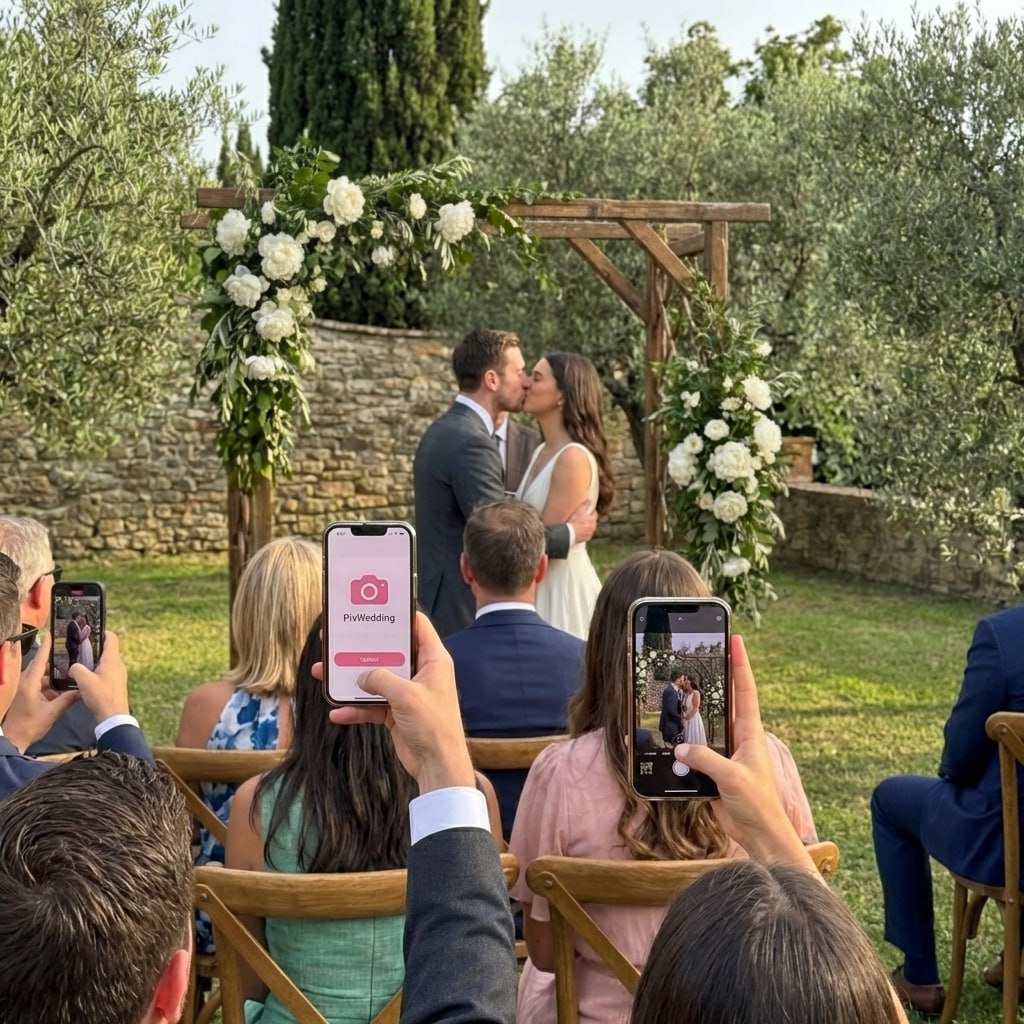
Whatever length your vows run, the room's reaction only happens once. Put a QR code on the tables and every guest adds their photos and videos to one shared album, no app and no account needed.
Scan to join the album
No app, no account
UPLOADING
Saving your moment
THE ALBUM
Emma & Jack
June 21, 2026
647 photos · 95 guests
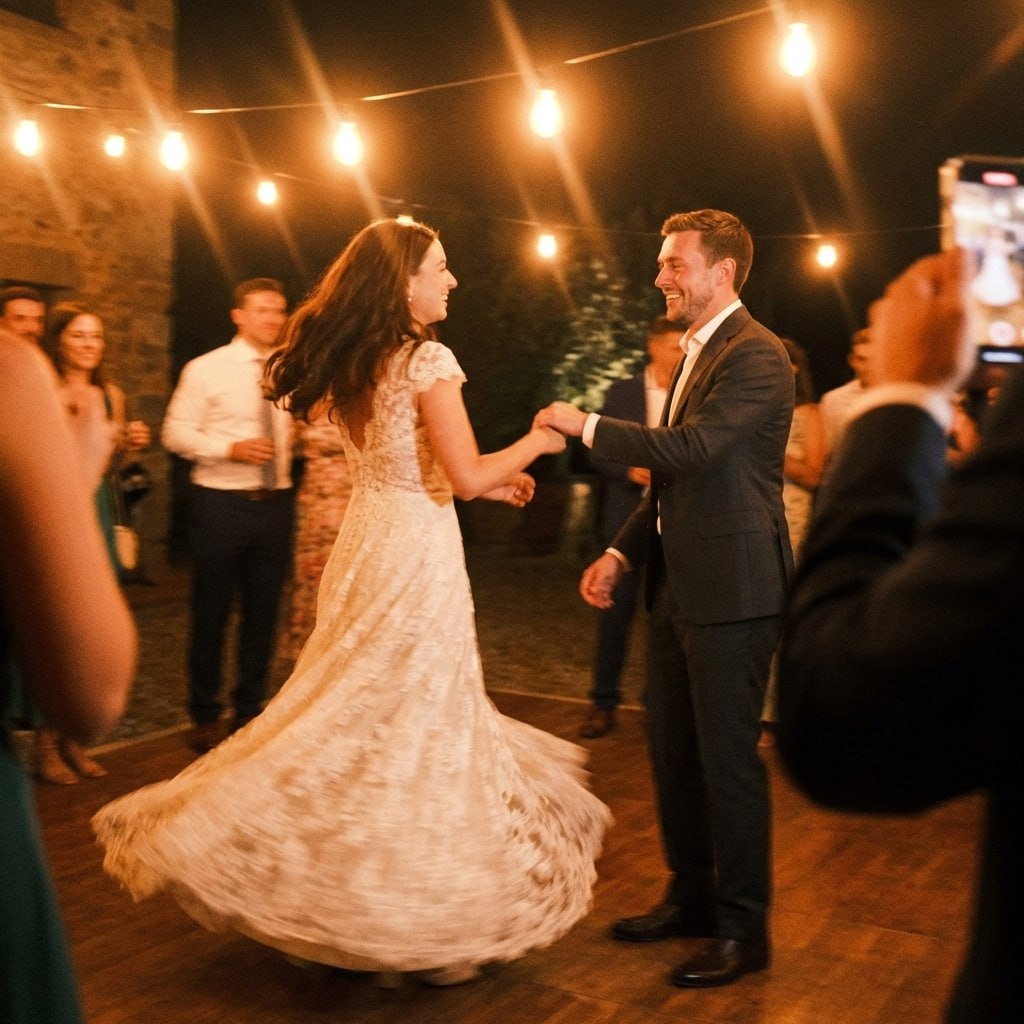
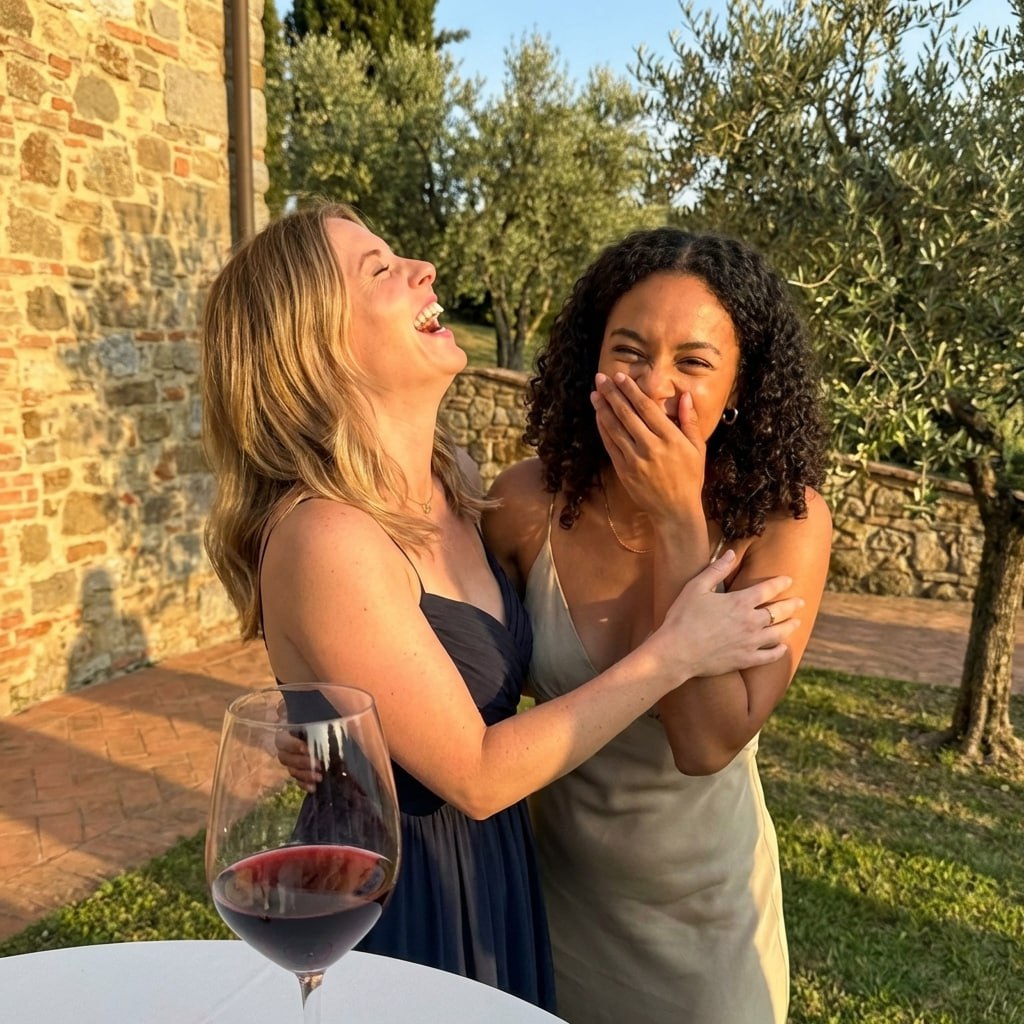
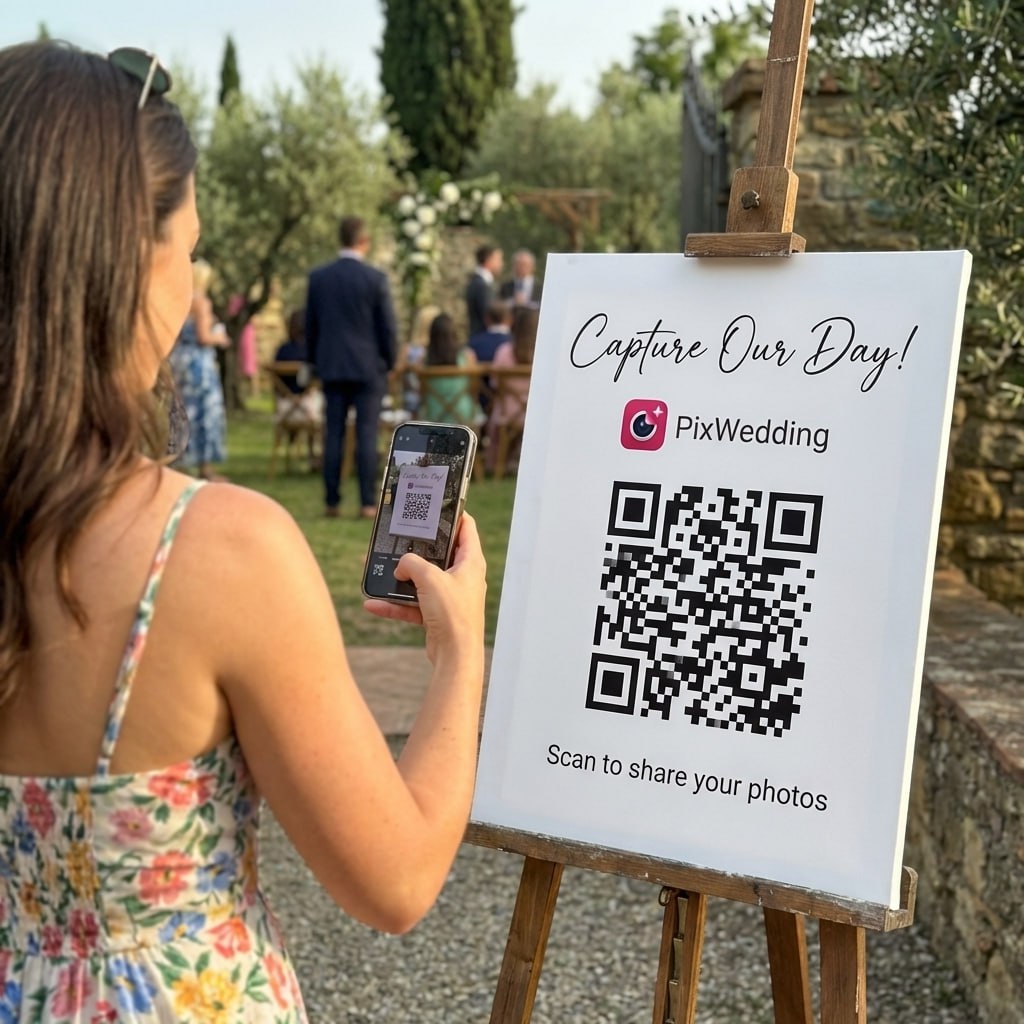
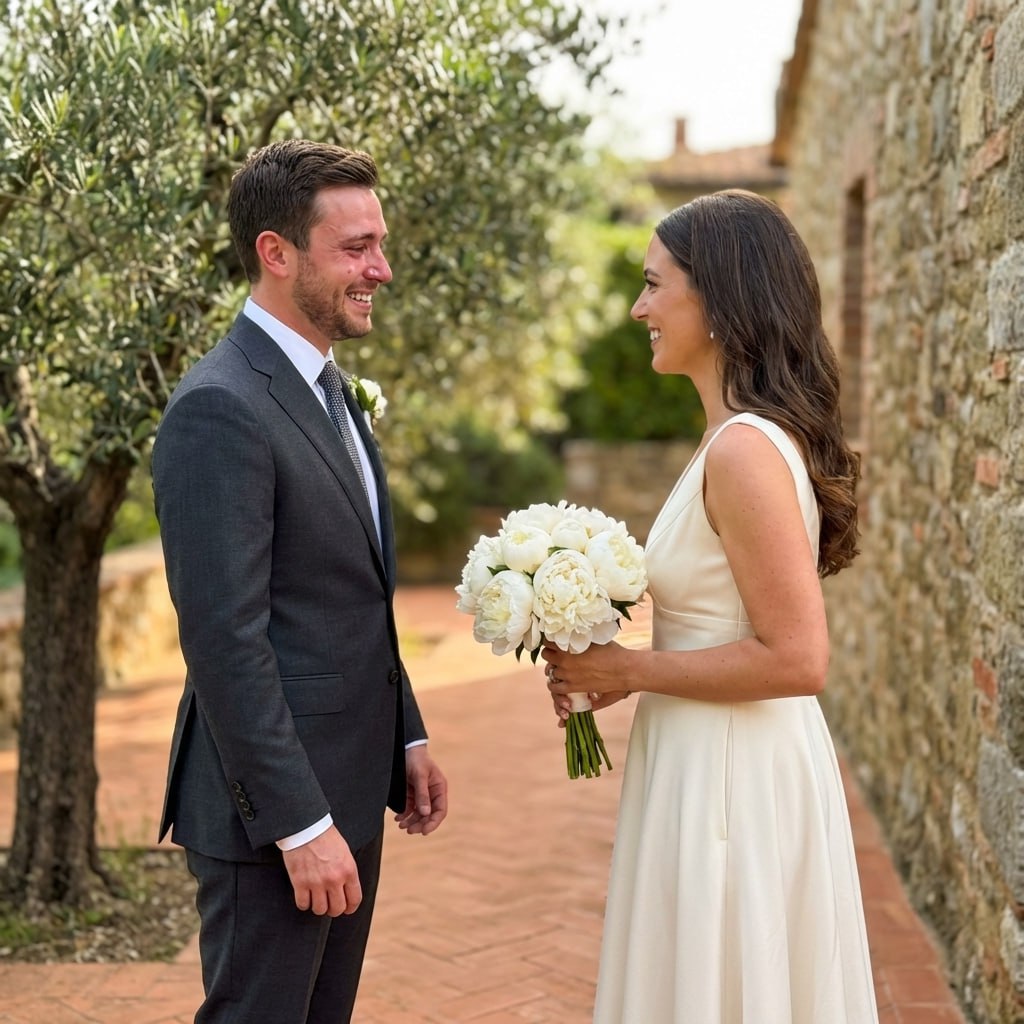
How long will your vows really take?
Drag the slider for a quick estimate, or switch to paste in your own draft for a live word count and speaking time, using the same 130 words a minute baseline as the table above.
Right where most wedding-planning guidance lands: about 1 to 2 minutes.
Scale runs 0 to 500+ words. This is a planning estimate, not a stopwatch, since nerves and emotion on the day tend to slow delivery further.
Are 3-minute vows too long? Are 1-minute vows too short?
Neither, on its own. Both sit inside most named guidance. Bridebook's ceiling is 4 minutes per person and Zola's outer edge is 3 minutes, so a 3-minute vow is on the long end but not past it. A 1-minute vow, around 130 words, is a common, safe length rather than a warning sign.
Signs a vow is running too long
- You lose your place more than once during a practice read
- The story needs backstory the guests were not there for
- You have made the same promise twice in different words
- Your officiant has gently asked about your target length
- A practice read runs past 4 minutes with pauses included
Signs a vow is running too short
- It reads in under 30 seconds, even with pauses
- There is no specific story, only general statements
- You have one promise instead of three to six
- It feels more like a caption than something spoken aloud
- You wrote it in five minutes and have not revised it once
Sample vows at 30 seconds, 1 minute, and 2 minutes
These are original examples written for this page, not a real couple's words, so treat them as a skeleton for rhythm and structure rather than something to copy. Word counts are shown so you can see how little you truly need.
"I promise to choose you, on the easy days and the ones that test us. To listen before I answer, and to laugh with you more than at you. I promise to build a life that feels like home, wherever we land, and to keep choosing you, on purpose, every single day. Today, in front of everyone we love, I make that promise official. I love you, completely."
Good fit: A micro-ceremony, an elopement, or a shy speaker who wants every word to count.
"Before I met you, I thought love was supposed to be loud, some big gesture, a grand line you rehearse in the mirror. Then I met you, and I learned it is quieter than that. It is the way you check on me without being asked. It is the way you remember the small thing I forgot to mention I needed. I promise to notice you the way you notice me. I promise to choose patience over being right, and honesty over comfort. I promise to build a home with you that feels like rest, not performance, and to keep laughing with you long after the joke stops making sense to anyone else. You are my favorite person, and today you become my family."
Good fit: The range most wedding planning guides point to, and a safe default for most ceremonies.
"Before I met you, I thought love was supposed to be loud, some big gesture, a grand line you rehearse in the mirror. Then I met you, and I learned it is quieter than that, and steadier. It is the way you check on me without being asked. It is the way you remember the small thing I forgot to mention I needed, and hand it to me before I ask. I have watched you show up for the people you love in a hundred small, unglamorous ways, and I want to spend my life on the receiving end of that kindness, and handing it right back. So here is what I promise, plainly, not the poetry version. I will notice you, on the ordinary days and not just the big ones. I will choose patience over being right, most of the time, and apologize fast on the days I do not. I will keep the hard conversations honest and the easy ones frequent, because both matter. I will build a home with you that feels like rest, not a performance for anyone watching. I will hold your hand through whatever scares us, and I will still be laughing with you when we are old and slow and neither of us can hear the joke on the first try. You are my favorite person, and today, in front of everyone who loves us, you become my family. I love you, and I intend to spend the rest of my life proving it, one ordinary day at a time."
Good fit: A non-denominational or outdoor ceremony with room to spare, or a couple who loves detail.
Want more full examples to adapt? See vow examples for her, short wedding vows, or short and sweet wedding vows.
Where do vows fall in the ceremony?
Vows are one segment inside a run of show that usually lasts 20 to 45 minutes total. Knowing what surrounds them helps explain why officiants care about your length: every minute of vows is a minute somewhere else in a booked window.
- Step 1ProcessionalWedding party and couple enter
- Step 2WelcomeOfficiant opens the ceremony
- Step 3ReadingsOptional, one or two short pieces
- Step 4VowsPersonal or traditional, the focus of this guide
- Step 5Ring exchangeRings are placed and blessed
- Step 6PronouncementOfficiant declares the marriage
- Step 7RecessionalCouple and wedding party exit
Do this, not that
A few habits separate a vow that reads at the right length from one that only looks right on paper.
Do
- Time a practice read aloud, not a silent read
- Agree a rough length with your partner beforehand
- Ask your officiant what they recommend for your ceremony
- Cut a repeated idea before you cut a real memory
- Read the final draft aloud at least three times
Don't
- Guess at length without a timed read-through
- Write to a word count instead of a spoken feel
- Add a story back in after you already cut it once
- Wait until the week of the wedding to time it
- Assume your partner's vows match your length
How to trim your vows down to a comfortable length
Six steps, in order. Most drafts only need the first three to land inside the 150 to 300 word range.
- 01
Read it aloud and time it
Silent reading underestimates duration by a wide margin. A stopwatch read is the only honest measurement.
- 02
Find your three strongest promises
Most drafts have five or six. Keep the three that are most specific to your relationship and cut the rest.
- 03
Cut any line that repeats an idea
If two sentences make the same point in different words, the vow only needed one of them.
- 04
Remove backstory the guests do not need
You can reference a memory without explaining the whole story behind it. Trust your partner to know what you mean.
- 05
Shorten your opening line
The first line sets your pace. A long wind-up before the point often signals the whole draft runs long.
- 06
Read it aloud again to confirm
Time the new draft. If it still runs past your ceremony's comfortable window, repeat the process once more.
Scan. Upload.
Every reaction in the room.
Watch how guests scan the QR code and add their photos to one shared gallery in under 30 seconds, no matter how long the vows run.
WEDDING ALBUM
Priya & Owen
Example album
The exact second the vows landed
From the second row
The right length vow. The full ceremony captured.
However long your vows run, Pix Wedding makes sure no guest misses a beat. One QR code at every table collects photos, videos, and voice messages into one shared album.
From the best man
Scan to join the album
No app, no account
UPLOADING
Saving your moment
THE ALBUM
Priya & Owen
Example album
647 photos · 95 guests
SCAN TO TRY
pix.wedding/
your-wedding
Working within your officiant's guidelines
Officiants manage total ceremony time closely, and vow length is one of the few variables you fully control. A short conversation early on prevents a rewrite the week of the wedding.
Ask early
In your first planning meeting, ask directly how long your officiant recommends for personal vows. Most have a clear answer.
Share your draft length
Tell your officiant your target word count or duration so they can flag any conflict with the venue's booked time.
Check venue time slots
Most venues book ceremonies in 30 or 60-minute windows. Vow length is one of the few variables you fully control inside that window.
Confirm religious requirements
Some traditions use a fixed vow text with limited room for personal additions. Confirm before you write 400 words that may not fit.
Still need to find someone to officiate? See how to find a wedding officiant and what a wedding officiant costs.
Sources and further reading
Every specific figure on this page traces back to a named source, checked directly on their own page on 27 September 2026.
- Zola, average wedding vow length: 30 seconds to 3 minutes.
- Wedding Frontier, how long should wedding vows be: 1 to 2 minutes, about 150 to 300 words.
- Bridebook, how long should wedding vows be: average of 2 to 3 minutes, 1 to 4 minute range per person.
- The Knot's widely cited 250 to 300 word, roughly two-minute guidance is included in the short answer above as an established, previously published figure.
Common mistakes with vow length
Most length problems trace back to one of these four habits.
Writing for the room instead of your partner
If a line exists to get a laugh from the guests, it usually belongs in a toast, not the vows.
Guessing at length instead of timing it
Most couples who skip a timed read-through end up running long, since emotion naturally slows delivery on the day.
Not matching length with your partner
A large mismatch, one person speaking for 30 seconds and the other for 4 minutes, can feel unbalanced. Agree on a rough length beforehand.
Skipping the officiant conversation
Officiants manage total ceremony time closely. A quick check on expected vow length prevents a rewrite the week of the wedding.
An officiant explains vow length in 73 seconds
A short, direct answer from someone who runs ceremonies for a living.
How long should my vows be?
Wedding officiant Shawn of Young Hip & Married answers the question directly: a short, practical take from someone who watches couples deliver vows every weekend.
Wedding Officiant Shawn on YouTube, Jul 2023, 1:13Glossary of vow-length terms
The officiant's full run-of-show, including where personal vows sit relative to readings and the ring exchange.
An optional ritual (sand pouring, handfasting, and similar) that adds time to the ceremony and can affect how long vows should run.
Vows written by the couple, as opposed to a traditional or religious script with fixed wording.
A maximum length an officiant sets for personal vows to keep the ceremony inside its booked time slot.
Reading a vow draft aloud with a stopwatch to measure its actual spoken length before the day.
Checking whether a line would embarrass or confuse an older relative, a common trim signal for length and content.
Both partners' vows added together, relevant when a venue or officiant caps the vows portion as one block.
The full ceremony and reception timeline that vow length has to fit inside.
More on writing your vows
Reading speed and vow timing: the math behind the numbers
Every timing figure on this page uses roughly 130 words per minute, a conservative midpoint for a calm, emotional ceremony read. Everyday conversational speech runs faster, but nerves, pauses for breath, and pausing to collect emotion slow delivery down on the actual day.
Using that baseline: 130 words is about 1 minute, 260 words is about 2 minutes, and 390 words is about 3 minutes. Couples who write vows without timing them tend to read longer than expected in practice, since emotion naturally slows delivery further than a flat read-through suggests.
Planning vow length together, without reading each other's drafts
Most couples keep the actual words a surprise but still agree on a rough length beforehand, either directly or through their officiant. A large mismatch, one partner speaking for 30 seconds and the other for 4 minutes, is one of the more common regrets couples mention after the fact.
A simple fix: each partner privately times a read-through and shares only the number, in minutes, not the draft itself. If the two numbers are more than a minute apart, that is worth a short conversation before the final version is printed.
How Pix Wedding fits into the ceremony, not just the vows
However long your vows run, the moment itself only happens once. Pix Wedding is a QR code photo and video sharing app: guests scan one code at their table or on the program and upload their photos and videos straight from their phone, no app download and no account required.
That means the reactions in row three, the parent wiping their eyes, and the exact second you both laugh mid-vow all end up in one shared album instead of scattered across a dozen phones that never get shared. Plans start free with paid one-time upgrades for larger galleries.
Explore more free wedding tools
Everything you need to make your wedding day stress-free and unforgettable.
AI Vow Generator
Write "banger" vows in seconds.
AI Speech Pro
Banger toasts for Best Man & more.
Hashtag Generator
Create unique wedding hashtags.
Thank You Notes
Generate personalized thank you notes.
Father of the Bride Toast
Full example toasts, structure, and delivery tips.
Invitation Wording
Perfect wording for your invitations.
Couple Name Combiner
Blend your names into the perfect couple name.
Photo Sharing QR
The best way to collect guest photos.
Vow length, answered
Straight answers to the questions couples ask most about how long wedding vows should be.
The average wedding vow length is about 1 to 2 minutes per person, roughly 150 to 300 words at a calm, natural speaking pace. Zola frames the acceptable window as 30 seconds to 3 minutes, Wedding Frontier puts written vows at 150 to 300 words (one to two minutes read aloud), and Bridebook suggests an average of 2 to 3 minutes with a 4-minute ceiling per person.
Most named sources land between 150 and 300 words per person. At a calm ceremony pace of about 130 words a minute, that reads in roughly 1 minute 9 seconds to 2 minutes 18 seconds. Use the word count to speaking time table on this page to translate your own draft's word count into an actual spoken time.
Not necessarily. Bridebook puts a 4-minute per-person ceiling on vows, and Zola's outer edge is 3 minutes, so a 3-minute vow sits inside most published guidance rather than past it. It runs long mainly in a religious ceremony with a fixed liturgy, a large formal reception with a packed run of show, or if your partner's vows are notably shorter. Time a practice read and check with your officiant if you are close to that mark.
No. A 1-minute vow, around 130 words at a calm pace, sits inside every major source's recommended range and is a common, safe length. It only reads as too short if it lacks a specific story or any real promise, since brevity and vagueness are different problems. A tight, specific 1-minute vow usually lands better than a rambling 3-minute one.
Aim for 1 to 2 minutes per person, about 150 to 300 words, then adjust using your ceremony type, your officiant's guidance, and how your length compares with your partner's. Go shorter for a micro-ceremony or elopement, and treat 4 to 5 minutes as a hard outer limit even for the most detailed, literary vows.
Yes. A Catholic Mass typically leaves room for only 1 to 2 minutes of personal vows because of the fixed liturgy, while a non-denominational ceremony usually allows 3 to 5 minutes since the venue's booked time is the main limit. See the vow length by ceremony type section on this page for a full breakdown.
Yes. Vows under about 75 words, less than 30 seconds, often read as rushed or underprepared, even if that was not the intent. Guests have gathered for this moment, and a very brief vow with no specific story can feel anticlimactic. A short vow works well when it is specific and deliberate, not just short because it was rushed.
Read it aloud and time it first, since silent reading underestimates spoken duration. Then find your three strongest promises and cut the rest, remove any line that repeats an idea already made, and drop backstory your partner does not need explained. Read it aloud again afterward to confirm the new length. The trim checklist on this page walks through the full process.
Not identical, but close. A large mismatch, one partner speaking for 30 seconds and the other for 4 minutes, is a common regret couples mention afterward. Most couples keep the words themselves a surprise but privately time a read-through and share the number of minutes, either directly or through their officiant, so neither side is caught off guard.
Yes. Most venues book a ceremony inside a fixed 20 to 45 minute window that also includes the processional, readings, the ring exchange, and the recessional. A longer vow leaves less room for everything else in that window, which is part of why officiants often ask about vow length during planning.