
How to Write Wedding Vows for Any Ceremony
Religious or secular, traditional or modern, there is a right way to write vows for your specific ceremony. This guide covers denominational requirements, cultural traditions, reading integration, and coordination with your officiant.
Generate Vows with AIReligious vs Secular Vows: The Key Differences
Understanding what each ceremony type requires before you write saves you from having to rewrite entirely after your officiant meeting.
Religious Vows
- May include required canonical language that cannot be changed
- Usually invoke God or a divine witness explicitly
- Officiant plays a central role in the vow structure
- Personal additions may need prior approval
- Often include responsorial elements (repeat after me)
- Length is frequently constrained by ceremony structure
Secular Vows
- No required language, complete creative freedom
- No religious witness invocation required
- Couple writes entirely in their own voice
- No pre-approval needed unless officiant prefers to review
- Length is only limited by ceremony timing
- Can incorporate any reading, poem, or cultural element
Vow Requirements by Denomination
Flexibility ranges from full creative control in non-denominational ceremonies to very strict required language in some traditions. Always verify with your specific officiant since practices vary even within denominations.
Required language
Canonical consent formula ("I take you..."). Additions permitted by some priests.
Practical tip
Consult your priest 3+ months out. Personal reflections often allowed before the canonical lines.
Required language
Varies by denomination. Most require acknowledgment of God as witness.
Practical tip
Many pastors welcome personal vows if they align with scripture and church values.
Required language
No strict required text. May include Harei At/Atah optionally.
Practical tip
Personal vows are welcomed. Coordinate with your rabbi on Hebrew phrases if desired.
Required language
Harei At/Atah formula is legally required. Personal additions are not part of the ceremony.
Practical tip
Personal vows can be exchanged privately before or after the ceremony.
Required language
Saptapadi (seven steps) is central. Each step corresponds to a promise.
Practical tip
The Saptapadi itself IS the vow structure. Adding English translations or modern promises after is common in diaspora weddings.
Required language
Nikah requires Ijab (offer) and Qabul (acceptance). No personal vow element.
Practical tip
Personal love letters or promises are sometimes exchanged privately; they are not part of the legal ceremony.
Required language
No required language. Complete flexibility.
Practical tip
This is where you have the most creative freedom. The process guide applies fully.
How to Incorporate Readings Into Your Vows
A reading before or within your vow exchange adds depth and sets an emotional tone without requiring you to write everything from scratch. Here are four ways to do it well.
Reading as an opener
Have the officiant read a poem or scripture as the transition into the vow exchange. This primes the emotional atmosphere. Popular choices: 1 Corinthians 13, Rainer Maria Rilke's "Letters to a Young Poet," Pablo Neruda's Sonnet XVII.
Quote as your vow opening line
Open your personal vows with a line from a book, song, or poem that defines your relationship, then say "Those words feel true for us because..." and transition into your personal voice.
Reading between partner vows
After the first partner reads their vows, the officiant reads a short passage before the second partner speaks. This creates a rhythm and brief emotional reset.
Shared reading as closing
Both partners read a single short passage together after exchanging personal vows. This creates a ceremonial closing statement and is particularly powerful in interfaith ceremonies.
Vow Traditions Around the World
Wedding vows are not a Western invention. Every culture has codified the act of public commitment differently. Understanding your own heritage, or your partner's, can enrich how you write and structure your vows.
Saptapadi
Seven steps around the sacred fire, each step representing a promise: sustenance, strength, prosperity, happiness, progeny, longevity, and friendship.
Community witness
Vows are made not just to each other but witnessed and affirmed by the extended family and community present. The couple's parents often participate in the exchange.
Paebaek
After the Western ceremony, the couple dresses in Hanbok and performs deep bows to each family member, with promises of respect and care embedded in the ritual.
Arrhae coins
The groom presents 13 coins to the bride during vows, symbolizing his promise to provide. The bride receives and returns them, symbolizing shared stewardship.
Handfasting
Cords are bound around joined hands while vows are spoken. The phrase "tying the knot" originates here. The couple states promises as each cord is wound.
Ketubah signing
The marriage contract (Ketubah) is signed before the ceremony and often read aloud. It codifies the groom's obligations to the bride in writing.
Officiant Coordination: What to Ask and When
Your officiant is your most important collaborator in vow writing. This is the timeline and checklist for a smooth coordination process.
- Schedule a ceremony content meeting
- Ask about any required language
- Share your intended tone (heartfelt, humorous, both)
- Ask about time limits for vow exchange
- Share a draft for review if required
- Confirm the order of the vow exchange
- Ask how they will cue you (or if you go independently)
- Discuss whether they will repeat lines for you
- Send your final vow text so they are not surprised
- Confirm they have a copy as backup
- Run through the ceremony sequence verbally
- Clarify any signal words or gestures during the exchange
Writing Vows for Interfaith Ceremonies
Interfaith ceremonies require extra care to honor both traditions without diminishing either. The vow writing process benefits from a shared framework the couple agrees on together.
Parallel structure
Each tradition contributes one element to the vow exchange. Example: the Harei At blessing is followed by a Christian call to love passage, then personal vows from each partner.
Universal language
Frame shared values in language that resonates across traditions: commitment, faithfulness, partnership, love. Avoid language that excludes one partner's background.
Ritual before words
If your traditions have physical rituals (lighting a unity candle, the Saptapadi, handfasting), consider placing them before personal vows so the words follow and affirm the ritual action.
Two officiants
Having clergy from both traditions present, each speaking to their tradition's vow meaning, is a powerful statement that both backgrounds are being fully honored.
The History and Meaning of Wedding Vows Across Traditions
Wedding vows have existed in some form in virtually every culture that has practiced marriage as a social institution. The specific words, rituals, and requirements differ dramatically, but the underlying function is consistent: a public declaration of commitment witnessed by the community. Understanding where vows come from helps demystify the requirements around them and clarifies what the ceremony is actually doing.
In Western Christian tradition, formal vow language dates to the 1549 Book of Common Prayer in England, which established the "to have and to hold, from this day forward" formula that millions of couples still recognize. This was not the beginning of wedding vows but rather the codification of them: an attempt to standardize what had previously varied by region and local custom. Catholic canon law developed its own required consent language independently, rooted in the theology of marriage as a sacrament.
Jewish vow traditions operate differently. The legal core of a Jewish marriage is the Ketubah (marriage contract) and the Harei At/Atah formula spoken by the groom. These are legal declarations, not personal promises in the Western sense. The emotional and relational content that Western couples put in vows is typically expressed elsewhere in the ceremony through blessings, readings, and family rituals.
Hindu traditions center the Saptapadi (seven steps) as the legal and spiritual core of the ceremony. Each step around the sacred fire represents a promise: sustenance, strength, prosperity, happiness, progeny, longevity, and friendship. These are not personal vows in the Western sense but sacred commitments embedded in ritual movement. The vows are inseparable from the physical ceremony.
Secular vow writing as a widespread practice is relatively recent, gaining prominence in the 1970s and 1980s as non-religious weddings became more common. The creative freedom of secular vow writing is both its greatest strength and its greatest challenge: without a required structure, couples must create their own architecture. This guide provides that architecture regardless of your ceremony type.
Quick-Start Checklist: Before You Write a Word
Complete these steps before your first draft session. Each one makes the writing itself significantly easier and the result significantly better.
Meet with your officiant and ask specifically: "Is there any required language for our ceremony type?"
Find out the ceremony structure so you know where your vow exchange falls and how much time you have
Confirm with your partner on general format (prose, promise-list) and target length
Complete at least three of the brainstorming exercises from this guide before starting a draft
Decide whether you are incorporating any readings and where they will fall relative to your vows
If religious: understand whether personal additions go before or after the required canonical language
If interfaith: talk to both officiants about the structure and where personal vows fit
Give yourself a first draft deadline at least four weeks before the wedding
Schedule a second draft session at least two weeks before so you have time for feedback and revision
Plan your practice sessions: at least daily for the week leading up to the ceremony
What All Great Wedding Vows Share Across Every Tradition
Beneath all the variation in religious requirements, cultural traditions, and ceremony types, the wedding vows that prove most durable share a set of qualities that transcend their specific context. Understanding these qualities helps you write vows that honor your ceremony's requirements while still containing the substance that makes them worth revisiting decades later.
The first quality is public commitment. Regardless of whether the vows are religious or secular, the act of speaking them in the presence of witnesses transforms them from a private sentiment into a social fact. The community becomes part of the commitment. This is why vow exchanges that happen "just between the two of us" in a private moment, while beautiful, carry a different weight than the ceremony itself. The witnesses matter.
The second quality is specificity of person. The best vows from any tradition make clear that they are spoken to a particular individual, not to the institution of marriage or to a generic partner. In religious traditions, this specificity often comes through the naming of the individual during the consent formula. In personal vows, it comes through the specific details and observations that only this partner could recognize. Either way, the vow must reach past ceremony and arrive at a person.
The third quality is an acknowledgment of future difficulty. The most enduring vow language, from "in sickness and in health" to the personal promise to "love you on the days it requires more of me than I have ready," contains the recognition that what you are promising will not always be easy. This is what separates a promise from a description of current feelings. It says: I know what I am signing up for, and I am choosing it anyway.
Whether your ceremony is Catholic or civil, Jewish or non-denominational, these three qualities, public commitment, specificity of person, and acknowledgment of future difficulty, will make your vows worth the effort it took to write them.
Why Ceremony Context Changes Everything About How You Write
The best vow writers understand that they are not just writing words. They are writing for a specific moment in a specific ceremony in a specific community. The ceremony context shapes what your vows need to do, how long they should be, what tone is appropriate, and what content will land most powerfully.
A small, intimate ceremony of fifteen close friends allows for a more personal, even conversational vow register. The intimacy of the setting supports it. A large formal ceremony in a cathedral calls for language that can carry across a larger acoustic and emotional space. An outdoor ceremony in a beautiful garden invites a different tone than a courthouse civil ceremony. None of these contexts is better or worse. They are different, and the vows should reflect the difference.
Religious ceremonies add an additional layer of context: the community of faith and the tradition they represent. When you write vows for a Catholic ceremony, you are writing within a tradition that has its own understanding of what marriage means, what commitment looks like, and what the ceremony is theologically doing. Personal additions should be in conversation with that understanding, not in tension with it. This is not about limiting creativity. It is about respecting the full meaning of the context your vows will be spoken in.
Interfaith ceremonies require the most careful contextual thinking. Both traditions are present. Both deserve to be honored. The vow content should draw from the values that genuinely overlap between the traditions, while the ceremony structure (who reads what, in what order, with what ritual accompaniment) does the work of honoring both specifically.
Whatever your ceremony context, start by understanding it fully before you write a word. Meet with your officiant. Understand the structure. Know what is required and what is flexible. Then write from that informed place rather than from a generic template that ignores the specific context you are writing for.
What to Actually Put in Your Wedding Vows
Whether religious or secular, the substance of great vows falls into three categories: observation (who your partner is), promise (what you commit to specifically), and vision (what future you are building). The ratio and emphasis can vary, but all three should appear in some form.
Observation
What you have noticed about your partner that others might miss. Specific character observations, growth you have witnessed, private qualities that the public ceremony can acknowledge without oversharing.
Promise
Concrete commitments. Not "I will always love you" but the specific behaviors and choices that love looks like in your relationship. At least two or three promises that are specific enough to keep and check.
Vision
One or two sentences about the particular future you are committing to. Not generic "growing old together" but a specific image of the life you are choosing. This is what makes a vow forward-looking rather than just retrospective.
Writing Secular Vows: Making the Most of Full Creative Freedom
Secular vow writers often underestimate how much freedom they have, and then either under-use it (producing vows that are personal but thin) or over-use it (producing vows that are too long and lose emotional focus). Here is how to use the freedom well.
Start with your actual values, not generic ones
What do you and your partner actually believe about love, commitment, and partnership? Not the conventional version. Your version. These beliefs are the foundation of secular vow language that feels personal rather than borrowed.
Let the ceremony context shape the tone
A civil ceremony in a courthouse calls for something different than a garden party ceremony surrounded by close friends. Secular vows can and should match the atmosphere. Adjust your register accordingly.
Resist the urge to reference religion to fill a gap
Some secular vow writers reach for quasi-spiritual language when they run out of personal material. This creates a tone mismatch. If you are writing secular vows, stay in secular language. The gap is filled by specificity, not by gesturing toward the transcendent.
Use the full structure: observation, promise, vision
Secular vows have no required structure, which means they need a chosen structure. Use the three-part framework: observe who your partner is, promise specific things, describe the future you are choosing together.
End with something that closes the arc
Without a traditional closing formula, secular vows can feel like they trail off. Write a closing sentence that signals completion and forward motion. "And I choose this, today and every day that follows" is a simple example.
The Vow Writing Timeline: When to Do What
Starting too late is the most common vow writing mistake. This timeline gives you enough space to write something real without the pressure of a deadline hovering over every word.
Meet with your officiant. Confirm any required language. Learn the ceremony structure. Ask about timing, cueing, and format constraints.
Complete all brainstorming exercises. Write a letter to your partner that you will never send. List 10 specific memories. Write the first draft without stopping to edit.
Revise your draft. Read aloud three times. Cut anything generic. Add at least one specific detail. Share the draft with your officiant if required.
Coordinate with your partner on length and tone. Share word counts. Agree on whether humor is welcome. Do a second revision pass based on feedback.
Lock your final vow text. Begin daily read-aloud practice. Record yourself. Mark pause points. Print final version in large font.
Read through once more. Have your printed copy and phone backup ready. Stop editing. The vows are done. Trust the work you put in.
Breathe. You know these words. Your partner is not judging your performance. They are simply receiving you. That is all this is.
5 Elements Every Strong Wedding Vow Contains
Regardless of whether your ceremony is religious, secular, or cultural, the vows that stand out over decades contain these five elements in some form.
A specific observation
Something true about your partner that is only visible to someone who has been paying very close attention.
An acknowledgment of difficulty
A line that shows you understand that what you are promising is not always easy. This makes the promise feel credible.
At least one concrete promise
Not "I will support you" but the specific form that support takes in your relationship.
A forward-looking statement
Something that looks toward the future you are building together, not just the relationship you have had.
Your actual voice
If it does not sound like you talking, it does not belong. The most moving vow lines are always in the speaker's natural register.
Popular Readings Paired with Personal Vows
These readings work well as ceremony elements paired before or after personal vow exchanges. Each entry notes the tone and ceremony type it suits best.
1 Corinthians 13 ("Love is patient, love is kind")
Reverent, universalChristian ceremonies of any denomination; also works in non-religious ceremonies for those raised with the text
Rainer Maria Rilke, Letters to a Young Poet (excerpt on love)
Literary, philosophicalSecular ceremonies for intellectually oriented couples. Particularly effective for couples who met through books or ideas.
Pablo Neruda, Sonnet XVII ("I do not love you as if you were salt-rose")
Deeply romantic, poeticSecular ceremonies. Very popular for couples who want something beautiful without religious content.
Apache Wedding Prayer ("Now you will feel no rain")
Warm, community-orientedSecular or lightly spiritual ceremonies. Note: this text is often attributed incorrectly; verify with your officiant.
Ruth 1:16 ("Where you go, I will go")
Faithful, relationalChristian ceremonies and interfaith ceremonies where one partner has Jewish heritage. Deeply personal language.
Captain Corelli's Mandolin excerpt ("Love is a temporary madness")
Literary, wise, matureSecular ceremonies for couples who have thought carefully about the nature of long-term commitment.
Related Vow Writing Resources
First dance
You guys!!
Written, delivered, and worth remembering.
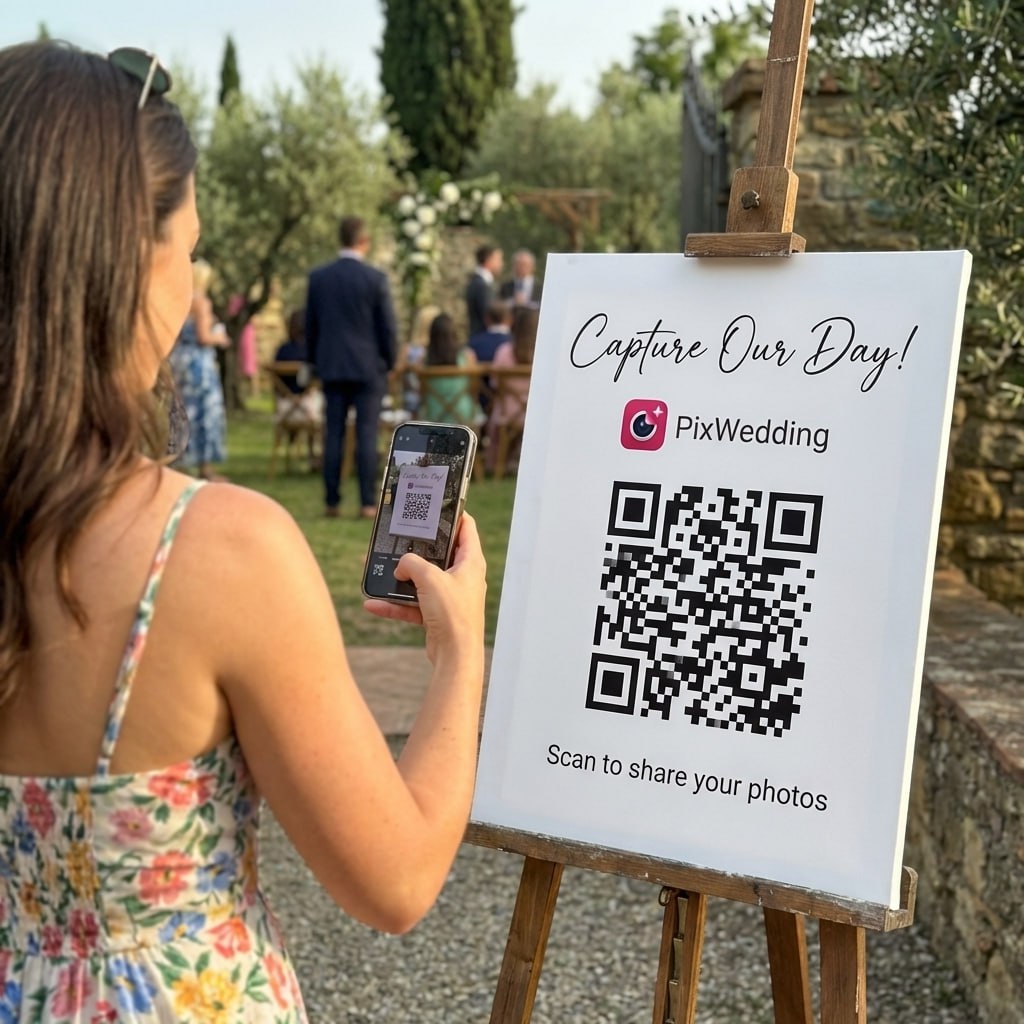
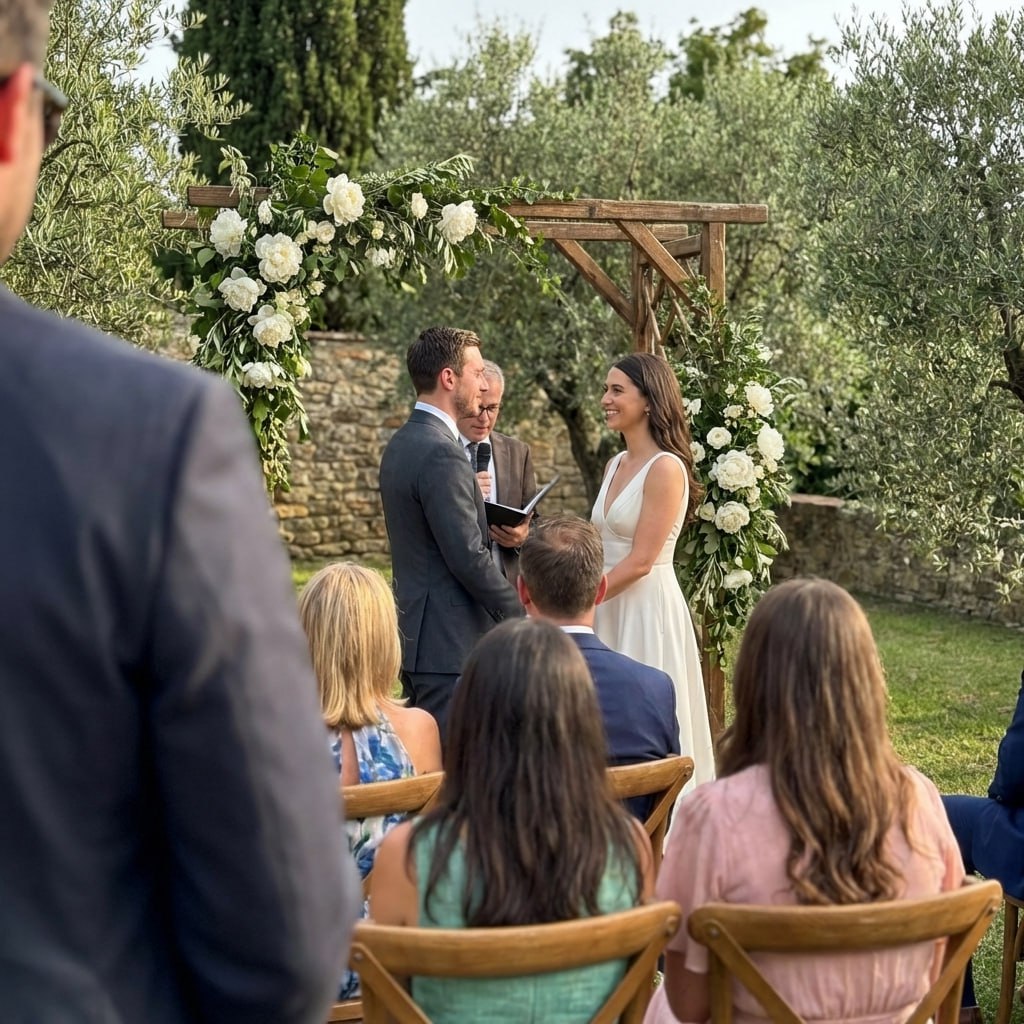
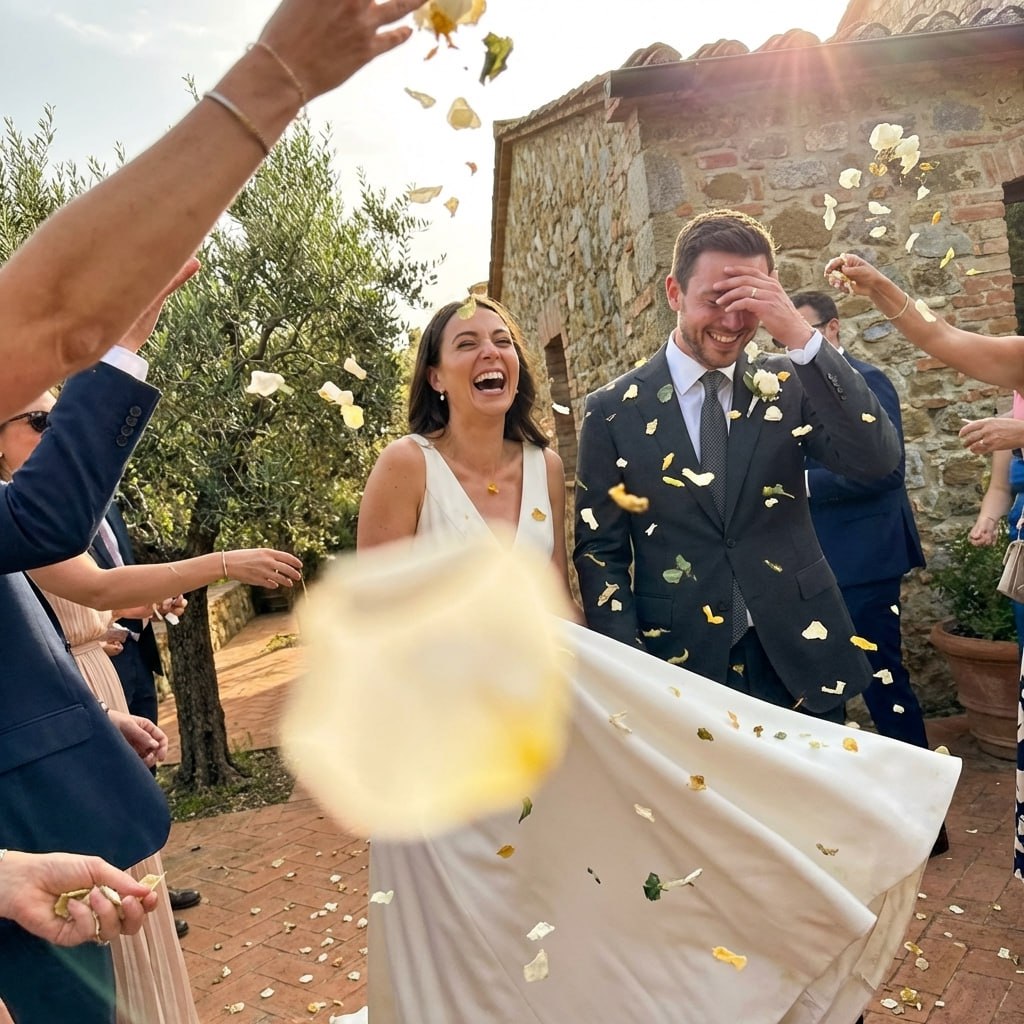
All that work writing your vows deserves a record. Pix Wedding lets every guest capture the ceremony - photos, videos, even voice messages - in one shared album.
From Mom
Scan to join the album
No app, no account
UPLOADING
Saving your moment
THE ALBUM
Emma & Jack
June 21, 2026
647 photos · 95 guests
SCAN TO TRY
pix.wedding/
your-wedding
Writing Vows That Honor Both Your Ceremony and Your Relationship
The tension between ceremony requirements and personal expression is real for many couples. Religious traditions carry centuries of meaning and community expectation. Personal vows carry the weight of your specific story. The best wedding vow writing finds the overlap between those two things rather than treating them as opposites.
For religiously observant couples, the canonical or traditional vow language often serves as the foundation, with personal additions layered around it. For secular couples, the blank page is both freedom and challenge. In either case, the process of writing forces you to articulate what commitment means to you specifically, which is the real point.
Cross-cultural and interfaith weddings present a particular opportunity: you can draw on multiple traditions, selecting elements from each that resonate, and create something genuinely new that honors all parts of your background.
- •Always check with your officiant before finalizing any language
- •Required religious phrases can be the opening, with personal vows following
- •Readings can bridge the gap between traditional ceremony and personal expression
- •Interfaith couples benefit from a ceremony outline meeting with both officiants if applicable
The Universal Elements of a Great Wedding Vow
Across all traditions, religious and secular, the most moving vows share three qualities: they are specific, they acknowledge difficulty, and they make a clear promise. Generic declarations of love are expected. Specific ones are remembered.
The structure of "who you are to me, what I promise, and what future I am choosing" works in virtually every ceremony context. Even within required religious language, these elements can be layered as personal additions before or after.
- •Specific: mention at least one detail only the two of you would recognize
- •Honest about difficulty: acknowledge that you are promising through imperfection
- •Clear promise: say at least one concrete thing you will actually do
- •Forward-looking: reference the future you are building together
- •In your voice: if it does not sound like you talking, it does not belong
Explore more free wedding tools
Everything you need to make your wedding day stress-free and unforgettable.
AI Speech Pro
Banger toasts for Best Man & more.
Hashtag Generator
Create unique wedding hashtags.
Thank You Notes
Generate personalized thank you notes.
Father of the Bride Toast
Full example toasts, structure, and delivery tips.
Invitation Wording
Perfect wording for your invitations.
Couple Name Combiner
Blend your names into the perfect couple name.
Photo Sharing QR
The best way to collect guest photos.
Wedding Checklist
Month-by-month planning checklist.
Wedding Vow FAQ
Everything you need to know about our free tools and how they help your wedding day.
Catholic canon law requires specific consent language ("I take you as my wife/husband"). However, many priests allow couples to add personal reflections before or after the canonical vows. Always consult your priest at least three months before the wedding to understand what is permitted in your diocese.
Religious vows typically invoke God or a higher power as witness, include denomination-specific language, and may have required phrases that cannot be omitted. Secular vows have no required language and can be entirely personal. Both can be equally meaningful and moving.
Yes. A common approach is to have the officiant read a poem or scripture passage just before the personal vow exchange. You can also open your vows with a quoted line, then transition into your personal promises. Just keep the total ceremony section under five minutes combined.
Traditional Jewish ceremonies (Orthodox and Conservative) use the Harei At/Atah formula and do not typically include personal vows as part of the legal ceremony. Reform and Reconstructionist ceremonies often invite personal vows. Check with your rabbi for specific requirements.
Hindu ceremonies center around the Saptapadi (seven steps), each representing a promise. Nigerian Yoruba ceremonies include a community witness element. Filipino weddings often include the Arrhae coin exchange representing shared prosperity. Korean Paebaek ceremonies involve bows and promises to family. Each tradition has its own vow structure.
Schedule a meeting with your officiant at least 6 to 8 weeks before the wedding. Bring a draft of your vows, ask about any required language, and discuss timing. Ask specifically: "Are there any words or phrases that cannot appear?" and "Will you cue us or do we go independently?"