
Wedding Vows Examples for Her
15+ complete vow examples across romantic, poetic, humorous, traditional, and modern styles. With emotional tone guides, word choice tips, and promise frameworks.
Generate Personalized Vows FreeThe fastest way to write vows for her is to start from a finished example that already matches your natural tone, then replace every generic line with a specific memory or promise. Below are 15 complete, illustrative vow examples grouped by style (romantic, poetic, humorous, traditional, modern, faith-based, and more), each one annotated with what makes it work, plus a fill-in-the-blank template you can adapt in minutes. This library format mirrors how top vow-writing resources organize inspiration, from AMM's roundup of examples for her to The Paris Officiant's breakdown of personal vow styles: pick a tone first, then personalize.
None of the vows below are real couples' words. They are illustrative templates, written to be edited, not recited word for word. Aim to land around 150 to 250 words once you have personalized one, the length Zola's wedding vow writing guide and most officiants recommend for a ceremony reading that runs one to two minutes. If you want the full step-by-step writing process instead of finished examples, see our how to write vows for her guide; this page is built for couples who want to start from a complete example and adapt it.
Choose Your Tone Before You Write
The right tone depends on how she gives and receives love. Match the emotional register of your vow to the language of your actual relationship.
Best for: Partners who communicate love through depth and feeling
Key words: Certain, home, witness, always, completely
Best for: Partners who love literature or expressive language
Key words: Ordinary, space, carry, slowly, clearest
Best for: Couples whose relationship is built on laughter
Key words: Honest, figure out, plan, promise, always
Best for: Partners who value equality and partnership framing
Key words: Build, equals, choose, partner, becoming
Best for: Partners who value ceremony and established forms
Key words: Honor, cherish, faithful, heart, completely
Best for: Partners who value precision over elaboration
Key words: See, choose, show up, easy, hard
First dance
You guys!!
Her vows are words worth keeping.
The promises she made out loud deserve more than memory. Pix Wedding captures every guest photo, video, and voice message so the whole day is preserved.
From Mom
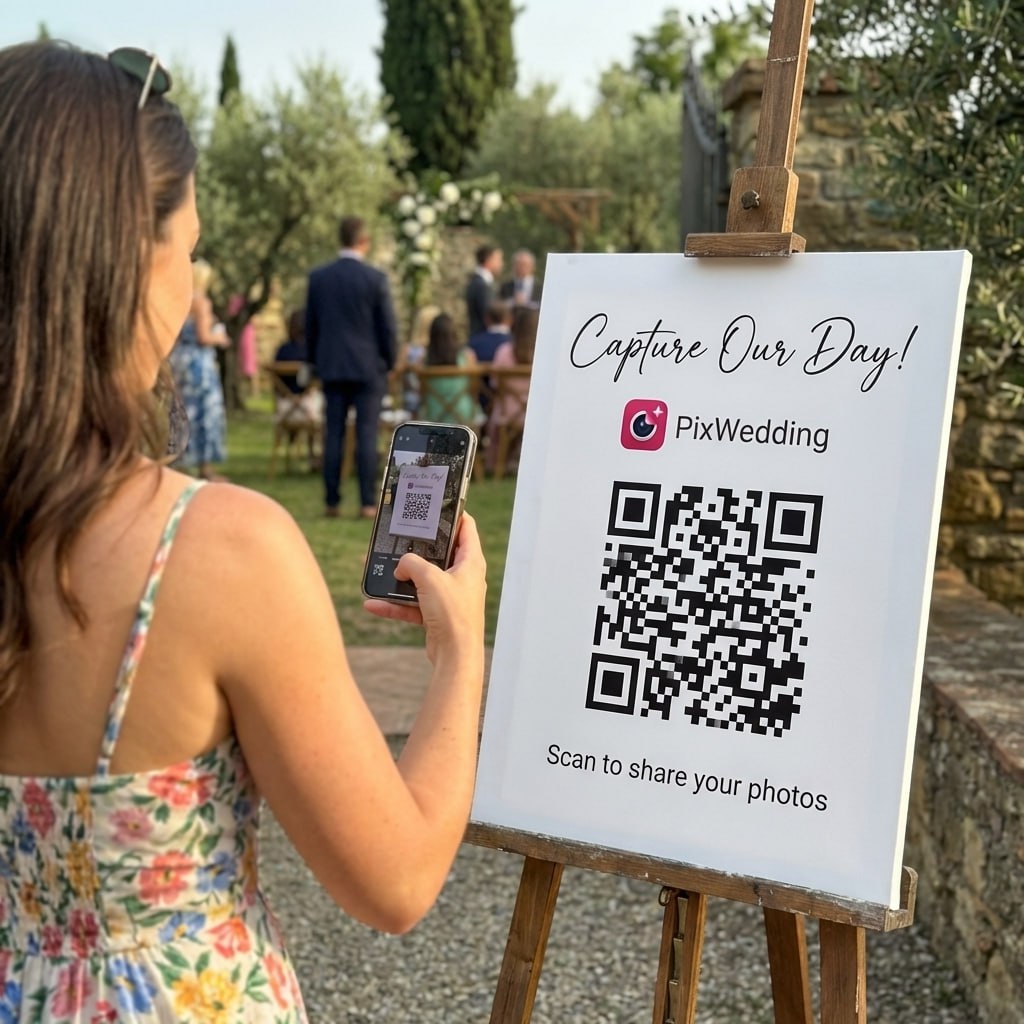
Scan to join the album
No app, no account
UPLOADING
Saving your moment
THE ALBUM
Emma & Jack
June 21, 2026
647 photos · 95 guests
SCAN TO TRY
pix.wedding/
your-wedding
15 Complete Vow Examples for Her
Use these as starting points. Every great vow replaces the general with the specific. Swap in your own memories, details, and language to make it truly yours.
I have written this a hundred times in my head and none of those versions are as real as standing here. You are the clearest thing I have ever known. I promise to love you with intention, to choose you daily, and to build a life that makes the you of today proud of who we become. You are home to me.
There is a kind of love that asks nothing and gives everything. I found that love in you. Not in a single moment, but slowly, in the ordinary spaces: Tuesday mornings, a shared look across a crowded room, the way you carry other people's grief as if it were your own. I choose that love, and you, for every ordinary day that follows.
I want to be very honest with you in front of everyone we love. You are too good for me. I have known this since our second date. I plan to spend the rest of my life making sure you never figure that out. I promise to try harder every day, and to always, always take your side.
I take you to be my wife, my partner, and my best friend. I promise to honor and cherish you, to be faithful in times of joy and in times of challenge. I will love you as you are and as you grow. With these words and this ring, I give you my heart, completely and without reservation.
I am not here to complete you, because you were already complete when I met you. I am here to build something with you. A partnership of equals, a home full of honesty, and a life where both of us keep becoming who we want to be. I choose you as my partner in all of it.
I see you. I choose you. I will keep choosing you. On the easy days and the days when it is hard. That is my promise.
I was not sure I was capable of this, before you. Of staying, of being fully known, of trusting someone with the parts of me I keep hidden. You changed that quietly, without asking me to be different. I want to spend my life being that safe for you in return. You have all of me.
I knew the moment you [personal memory here]. That specific, unrepeatable moment. And I thought: I want to be near this person for as long as they will let me. Today they are letting me forever. I promise to never stop paying attention to you, because the details of you are the best thing I know.
I do not know what our life will look like in ten years. I do not know what we will face, what we will lose, what we will become. What I know is that I want to face all of it next to you. I promise to be curious about our future, brave in our challenges, and grateful for the ordinary days in between.
I promise to witness your life. To pay attention to who you are changing into. To celebrate what you accomplish and sit with you in what is hard. You will never be invisible to me. I see your strength and your fear and your kindness, and I love every version of you I have ever met.
You make everything feel worth something. The hard things feel survivable and the good things feel richer when you are next to me. I promise to always make room for you: in my schedule, in my heart, in the decisions I make. You are a priority I will never stop choosing.
Love is not a feeling, I have learned. It is a practice. A decision made again every morning. Today I am making it out loud, in front of everyone we love. And tomorrow I will make it quietly, in the kitchen, before you have had coffee. And the day after that. Every day until there are no days left.
I am not good at speeches. But I am very good at showing up. And that is what I am promising you today. That I will show up. Consistently, honestly, and with my whole heart. You can count on me. That is the thing I most want you to know.
I am so excited about our future together. Not because I know what it holds, but because I know who I get to face it with. You are the person I want to call first. The one I want to tell everything to. The person I want to look across the table at when we are old. Today I am making that official.
Thank you for choosing me. I do not take that lightly. You could have chosen anyone and you chose this: us. I promise to be worthy of that choice every day. I promise to thank you with my actions, my attention, and the life I help us build together. I love you completely.
What Makes Each Example Work
Reading a finished vow is useful, but understanding why it works is what actually helps you write your own. Here are annotations on five of the examples above, breaking down the specific technique behind each one.
Opens with a confession ("I have written this a hundred times") that signals vulnerability before a single promise is made. The phrase "you are home to me" lands last because it is the shortest, plainest sentence in the vow, which makes it feel the most true.
The joke is entirely at the speaker's own expense ("you are too good for me"), never at hers. That is the safest and most effective form of vow humor because it celebrates her without risking a joke that lands wrong in front of family.
Four short sentences carry the entire vow. The repetition of "I choose you" mimics a real decision made more than once, which is more convincing than a single grand declaration. Short vows work especially well for couples who get visibly emotional in front of a crowd.
The bracketed placeholder is intentional: this example only works once a real, specific memory is dropped in. It demonstrates the single most important rule in any vow, illustrated by nearly every ranking guide on the topic, including the example collections at AMM and The Paris Officiant: specificity is what separates a vow that is remembered from one that is forgotten.
Built entirely around one promise, repeated three ways: to pay attention, to celebrate, and to sit with her in hard moments. Repeating a single idea in different language is a technique borrowed from song lyrics and speeches, and it makes a short vow feel complete rather than incomplete.
The "I Love You Because" Framework
This three-layer structure creates vows that are specific, deep, and impossible to confuse with a vow someone else wrote. Apply it to anything you genuinely love about her.
Name a specific trait, not a generic one. Not "kind" but "the way you remember what matters to people and bring it up months later when they think you forgot."
Describe what she does with that quality. How does it show up in the world, in her relationships, in the space between you?
Describe who you have become because of her. This layer is the most powerful because it makes her the agent of your growth, not just a recipient of your love.
"I love your stubbornness (quality). The way you fight for people who have given up fighting for themselves (action). Knowing you has made me braver about the things that matter and quicker to let go of the things that do not (effect on you). I want to be near that quality for the rest of my life."
Word Choices That Resonate Most
Certain words carry more emotional weight than others in vows. These are consistently identified by wedding audiences as the most moving language in ceremony speech.
Conveys emotional protection. One of the deepest things a partner can offer.
Signals deliberate selection over default. Powerful in a world of infinite options.
Captures belonging without location. Resonates across all backgrounds and styles.
Signals presence and attention. Promising to see someone is a profound act.
In a world of ambiguity, certainty about a person is one of the most romantic declarations.
Acknowledges her strength without defaulting to conventional compliments.
Using her actual name, an actual memory, an actual date makes any vow unforgettable.
Superlatives without a specific reason attached read as generic.
No one believes it, and it sets an impossible standard for the marriage.
Loses meaning if it appears in every sentence instead of the one that matters most.
"Hereby" and "henceforth" sound like a contract, not a promise from you to her.
More Styles: Faith-Based, Tearjerker, and Lighthearted
A few styles deserve their own space because they lean on very different techniques than the examples above: scripture and ritual language, raw emotional vulnerability, and pure lightness.
Before God and everyone we love, I promise to be your faithful partner in this life. I will pray with you in hard seasons and give thanks with you in good ones. I promise to lead with kindness, to forgive quickly, and to build a home rooted in grace. With God as our witness, I give you my heart today and every day after.
I used to think love was a feeling. Now I know it is a choice you make on the hard days too. You have seen me at my most afraid and stayed anyway. You have held my hand through things I never thought I would survive. There is no version of my life story that is not better because you are in it. I promise you all of me, for as long as I have breath to promise it.
I promise to always laugh at your jokes, even the ones I have heard forty times. I promise to let you pick the restaurant even when I am starving and indecisive. I promise to be your favorite dance partner at every wedding we ever attend, including this one. Underneath all the silliness, I promise to love you completely, on purpose, every single day.
How to Personalize These Examples
Every example on this page is a starting point, not a finished vow. Follow these six steps to turn any of them into something that sounds unmistakably like you, written to her. A vow-writing expert quoted in this Fox News feature on writing your own vows puts it simply: start from why you want to spend your life with her, then let the specifics follow.
Specificity matters for a less obvious reason too: a widely discussed real-life story about a groom whose draft vows described a memory his fiancée did not recognize is a reminder to always personalize, never copy-paste a template or someone else's vow line for line. Every bracket in the examples below should be filled with something that is verifiably true about her.
Do not force a poetic vow if you naturally talk in short, direct sentences. The example that requires the least editing to sound like you is usually the right starting point.
Anywhere an example says "you make me happy" or "you are amazing," replace it with the actual moment, habit, or trait that is true only of her. This is the single change that turns a template into a real vow.
A memory with a place and a rough time attached (a specific trip, a specific Tuesday, a specific argument you made up from) carries more emotional weight than any adjective could.
Most officiants and vow-writing guides, including Zola's writing guide, recommend this range so the vow runs about one to two minutes read aloud, long enough to feel complete without losing the room.
Once alone, once to a trusted friend. Vow-writing experts consistently flag the same two failure modes: vows that run too long, and vows built entirely from generic clichés instead of specific language.
The line you are proudest of on paper is sometimes the one that feels the most performative out loud. If it does not sound like something you would actually say to her, cut it, even if it is well written.
Swap-In Template: Fill In Your Own Details
If none of the 15 examples above feel exactly right, start from this bare-bones template instead. Fill each bracket with something true and specific to her, then read it aloud and cut anything that does not sound like you.
"[Her name], I love you for [a specific quality, not a generic one]. I still think about [a specific memory or moment], and how it showed me [what it revealed about her or about you]. I promise to [a concrete promise about how you will show up for her], to [a promise about how you will handle conflict or hard seasons], and to [a promise about the kind of future you want to build together]. You are my [word that captures what she means to you, such as home, my person, my favorite decision], and I choose you today and every day after."
Prefer a guided version of this same idea? The AI Wedding Vow Generator asks you these same prompts and writes a first draft in your voice, which you can then edit using the personalization steps above.
If you would rather work from a full illustrative example than a blank template, scroll back up to the 15 examples and the faith-based, tearjerker, and lighthearted styles above, then apply this same bracket-by-bracket swap to whichever one matches your voice.
Common Mistakes to Avoid
Even a well-intentioned vow can lose impact for avoidable reasons. Big roundups of wedding vow examples are useful for inspiration, but the mistakes below are the ones that most often separate a memorable vow from a forgettable one.
Replace "you are beautiful, kind, and smart" with the one trait only someone who truly knows her would name.
Feelings about the past are only half a vow. Give equal space to concrete commitments for the future.
Formal, flowery language you would never actually speak reads as performance, not sincerity, in front of a crowd.
A template that has not been personalized reads as generic to everyone in the room, including her.
Vows over 300 words start to lose the room. Trim ruthlessly to the 150-250 word range.
Words that read well on a page can feel awkward or too fast when spoken. Practice at ceremony pace, at least twice.
A private joke can still work if you translate it into a line the audience can follow too.
Memory can fail under pressure. Print your vows or keep them on an index card even if you plan to recite from memory.
A Simple Timeline for Writing Vows for Her
Vows written the night before tend to lean on clichés because there is no time to find the specific detail that makes them feel like her. Spreading the work out over a few weeks makes room for that specificity.
Pick your example and tone. Read through the styles above, choose the one closest to your natural voice, and set aside 20 minutes to brainstorm memories, traits, and promises before you start editing.
Write your first full draft using the fill-in-the-blank template or a chosen example. Do not aim for perfect. Get every idea onto the page first.
Edit for specificity and length. Cut generic lines, add one dated memory, and trim to the 150-250 word range. Read it aloud twice.
Get a second opinion from a trusted friend, not your partner. Ask them whether it sounds like you, not whether the writing is impressive.
Print two copies (one for a pocket, one as backup with an officiant or day-of coordinator). Do not attempt a major rewrite this close to the ceremony.
Quick Glossary of Vow-Writing Terms
A few terms come up repeatedly across vow-writing guides. Here is what each one means in plain language.
A vow structured primarily around future commitments rather than past memories or compliments.
A three-layer technique: name a quality, describe an action tied to it, then describe how it changed you.
One specific, dated moment used inside a vow to make it unmistakably about her and no one else.
The practice of reading vows to each other before the ceremony, as opposed to keeping them a surprise.
The traditional exchange an officiant leads, distinct from personal vows a couple writes themselves.
Related Vow Resources
How to Choose the Right Tone for Her
The most important question before writing is: how does she communicate love? Some people feel most loved through precise, serious declarations. Others feel most seen when you capture a specific, funny, tender memory. Getting the tone right matters more than getting the words perfect.
If she tends to communicate warmth through humor and lightness, a vow that is entirely earnest may feel unlike you, and may even feel uncomfortable for her to receive in public. If she values depth and sincerity, a joke-heavy vow may feel like you did not take the moment seriously.
The safest approach for most couples is 70 to 80% earnest, with one moment of lightness or humor that captures something true about your dynamic. This ratio feels complete, not one-note, and gives the audience something to laugh at before they feel something.
- •Match the tone to how she gives and receives love
- •Use language that sounds like you, not wedding magazine language
- •Include at least one hyper-specific detail (a memory, a habit, a moment)
- •Make promises that are concrete enough to be held accountable to
- •End on your strongest, most true line
- •Read it aloud to confirm the words feel natural in your mouth
Future Promise Categories: What to Commit To
Great vows balance feelings about the past with promises for the future. Many people front-load their vows with memories and compliments and then rush the promise section. Promises are actually the heart of a vow, so give them equal weight.
Promise categories that resonate most in vows for her include: emotional presence (being there when it is hard), respect in disagreement (fighting fair, choosing her side even when it costs something), growth commitments (becoming the partner she deserves, not just the one you are today), and playfulness (not letting life make you forget how to have fun together).
Avoid generic promises like "I will always love you" which are implied by the ceremony itself. Promises that are specific and slightly scary to say out loud are the ones that land hardest and are remembered longest.
- •Emotional presence: "I will show up when it is hard, not just when it is easy"
- •Respect in conflict: "I promise to fight for us, not against you"
- •Growth: "I promise to keep becoming someone worthy of you"
- •Witness: "I promise to pay attention, to notice you, to see you clearly"
- •Playfulness: "I promise not to let us forget how to be ridiculous together"
- •Partnership: "I promise to make decisions with you, never for you"
Delivering Your Vows on the Day
A well-written vow can still fall flat if it is delivered too quickly, read in a monotone, or rushed because of nerves. Delivery is part of the craft, not an afterthought.
Practice at the pace you would actually speak in conversation, not faster. Most people speed up under pressure, so rehearsing slightly slower than feels natural usually lands at the right ceremony pace. Keep a printed copy or index card as backup even if you intend to recite from memory, since adrenaline can make familiar words disappear.
Make eye contact with her, not the card, for the lines that matter most to you. Pausing before your final promise gives the moment room to land, both for her and for the room.
Explore more free wedding tools
Everything you need to make your wedding day stress-free and unforgettable.
AI Speech Pro
Banger toasts for Best Man & more.
Hashtag Generator
Create unique wedding hashtags.
Thank You Notes
Generate personalized thank you notes.
Father of the Bride Toast
Full example toasts, structure, and delivery tips.
Invitation Wording
Perfect wording for your invitations.
Couple Name Combiner
Blend your names into the perfect couple name.
Photo Sharing QR
The best way to collect guest photos.
Wedding Checklist
Month-by-month planning checklist.
Wedding Vows for Her FAQs
Everything you need to know about our free tools and how they help your wedding day.
Great vows for her include three elements: who she is (specific traits you love), how she has changed or shaped you, and concrete promises about how you will show up in the marriage. The most resonant vows for women include specificity about what makes her uniquely her, not generic praise.
Words that research and wedding writers consistently identify as resonant: "safe," "chosen," "home," "witness," "certain," "gentle," "brave," and "always." These carry more emotional weight than superlatives like "amazing" or "incredible" which read as generic.
The I-love-you-because framework works in three layers: love a quality in her, love something she does with that quality, and love who you become because of it. Example: "I love your stubbornness (quality), the way you fight for people who cannot fight for themselves (action), and how knowing you has made me braver (effect on you)."
Humor works beautifully if it is affectionate and specific to her. The key is that the humor celebrates her rather than teasing her in front of family. Self-deprecating humor (about yourself) almost always works. Humor about her quirks works if she would laugh first.
Aim for 150 to 250 words, which delivers a vow of roughly 1 to 2 minutes. This is long enough to include a specific memory, a few promises, and a closing statement without running over the ceremony timeline.
The most common mistakes: using generic compliments ("you are beautiful, kind, and smart"), not including any specific memories, ending without a clear promise, using overly formal language that does not sound like you, and not practicing aloud so timing is accurate on the day.