
How to Write Vows for Her, With 13 Examples
You do not need to be a writer. You need one true story, a few promises you can keep, and about two minutes. This guide walks you from a blank page to a printed card in nine steps, then gives you 13 complete wedding vows for her to adapt, grouped by tone.
How do you write vows for her? In four parts
To write vows for her, open with her name and what she means to you, tell one short story only the two of you share, make three to six specific promises you can keep, and close with one line about your future. Keep it to 150 to 300 words, about two minutes, and read it aloud five times.
Every step below serves those four parts. If you only have ten minutes, fill them in with real details and stop there.
- 01
Open with her
Say her name and one sentence about who she is to you. Talk to her, not to the room.
- 02
Tell one story
One moment only the two of you share: when you knew, or a small day that stuck. Four or five sentences, no more.
- 03
Make real promises
Three to six promises you can keep on a Tuesday. Specific actions beat big words.
- 04
Close forward
One or two lines about the life ahead, then stop. The last line is the one she will repeat to friends.
The same shape shows up across officiant advice: Matt Dallow of Eloping Is Fun teaches "start with the feels, share a moment, make promises", and Robyn Walker uses one story, a set of concrete promises and a forward-looking line.
What to say in vows to her: start with a list, not a line
The blank page is the hard part, so skip it. Answer these twelve questions in a notes app with a 15-minute timer and no editing. You will use maybe a quarter of what you write, and that quarter will be better than anything you could invent from scratch.
Who she is
- What do people get wrong about her that you get right?
- What does she do when nobody is watching?
- Which of her habits would you miss first?
What you have lived
- When did you know? Where were you standing?
- What hard stretch did you get through together?
- What ordinary day do you still think about?
What she changed
- What do you do now that you did not do before her?
- What are you braver about because of her?
- What did she see in you before you did?
What you will do
- What does she need more of that you can give?
- What will you protect when life gets busy?
- What small thing will you keep doing at 80?
Stuck on the very first line?
That is its own problem with its own fixes. Our guide on how to start wedding vows has opening lines by style, and the full vow-writing guide goes further on turning memories into lines.
How to write vows for her, step by step
Nine steps, spread over a few weeks. None of them takes more than an evening, and the last three are what separate vows that sound written from vows that sound like you.
- 01
Brainstorm for 15 minutes without editing
Set a timer and answer the questions above in a notes app. Bad sentences are welcome. You are collecting material, not writing vows yet.
- 02
Sort the list into three piles
Who she is, what you have lived, what you will do. Circle the two or three items in each pile that made you smile or tense up while writing them.
- 03
Drop the best items into the four parts
Open with her, one story, promises, a forward-looking close. Most first drafts have too much story and too few promises, so check the balance.
- 04
Write an ugly first draft in one sitting
Write it the way you would say it to her in the car. Do not fix anything yet. A finished bad draft is easier to improve than a perfect first line.
- 05
Run the specificity filter
Read each line and ask: could someone say this about a different woman? If yes, swap the adjective for a detail. "You are kind" becomes the thing she did that proved it.
- 06
Cut to 150 to 300 words
That is one to two minutes out loud. Cut the second story, the backstory and any line that explains a joke. Short lines are easier to say through a lump in your throat.
- 07
Run the grandparent test and the memory check
Would her grandmother be confused or embarrassed by any line? Move it to a private letter. Then check that every memory in the draft is hers and yours, not a story from before her.
- 08
Read it out loud five times
Time yourself. Mark where you run out of breath or choke up and add a pause there. Rewrite any line you trip over twice, because you will trip on it on the day too.
- 09
Print it and give your officiant a copy
Large type, double spaced, on a card or in a vow book. Keep your phone in your pocket. A spare copy with the officiant means a lost card is not a crisis.
Want the general version of this process for any partner? How to write wedding vows covers it from the top.
Wedding vow examples for her, grouped by tone
Every vow below is original writing for this page, not a real couple's words. Use them as a skeleton: keep the rhythm you like, then swap every general line for a detail from your own relationship. Word counts are included so you can see how little you need.
Romantic vows for her
For a bride who loves the big declaration. Keep the images concrete so it reads as yours, not a card.
The Love Letter
"I have written this a hundred times in my head, and none of those versions are as real as standing here. You are the clearest thing I have ever known. I promise to love you on purpose, to choose you every day, and to build a life that would make the woman you are today proud of who we become. You are home to me."
The Ordinary Days
"There is a kind of love that asks for nothing and gives everything, and I found it in you. I found it slowly, in the ordinary spaces: Tuesday mornings, one look across a crowded room, the way you carry other people's sadness as if it were your own. I choose that love, and you, for every ordinary day that follows."
The First Call
"I have no idea what our future holds, and I am excited anyway, because I know who I get to face it with. You are the person I want to call first. The one I tell everything to. The face I want across the table when we are old. Today, in front of everyone we love, I am making that official."
Heartfelt vows for her
For a bride who will cry at the vows no matter what. Honest and a little vulnerable, with promises that carry weight.
The Safe Place
"Before you, I was not sure I was capable of this. Of staying. Of being fully known. Of trusting someone with the parts of me I keep hidden. You changed that without ever asking me to be someone else. I want to spend my life being that safe for you in return. You have all of me, today and every day after."
The Witness
"I promise to witness your life. To pay attention to who you are becoming. To celebrate what you build and to sit with you in what is hard. You will never be invisible to me. I see your strength and your fear and your kindness, and I love every version of you I have ever met."
The Thank-You
"Thank you for choosing me. I do not take that lightly. You could have chosen anyone, and you chose us. I promise to be worthy of that choice every day, and to thank you with my attention, my patience and the life I help us build. I love you completely."
Short vows for her
For a shy speaker or a quick ceremony. Under 50 words, and every line still points at her.
The Essential
"I see you. I choose you. I will keep choosing you, on the easy days and the days when it is hard. That is my promise."
The Show-Up
"I am not good at speeches, but I am very good at showing up. So that is my promise to you today: I will show up. Honestly, consistently and with my whole heart. You can count on me, always."
The Three Promises
"Three promises, and I mean every one. I will listen before I answer. I will make you laugh when the day goes wrong. And I will love you out loud, for the rest of my life."
Faith-based vows for her
For couples marrying in a church or bringing faith into the vows. Check with your officiant first, since some traditions have set words.
The Blessed Union
"Before God and everyone we love, I promise to be your faithful partner in this life. I will pray with you in the hard seasons and give thanks with you in the good ones. I promise to lead with kindness, to forgive quickly, and to build a home rooted in grace. With God as our witness, I give you my heart today and every day after."
The Answered Prayer
"For years I prayed for someone to share my life with, and I did not know I was praying for you. You make my faith braver and my days lighter. I promise to love you the way I am loved: patiently, faithfully and without keeping score. Wherever God leads us, I will walk beside you."
Lighthearted vows for her
One smile, then a sincere turn. If you want a full comedy set, the funny page below has more.
The Playful Promise
"I promise to laugh at your jokes, even the ones I have heard forty times. I promise to let you pick the restaurant, even when I am starving and have no opinion. I promise to be your favorite dance partner at every wedding we ever attend, starting with this one. And under all of that, I promise to love you completely, on purpose, every single day."
The Honest One
"I want to be honest with you in front of everyone we love. You are too good for me, and I have known it since our second date. I plan to spend the rest of my life making sure you never figure that out. I promise to try harder every day, and to always take your side."
Want shorter or funnier?
For more one-minute options, see short and sweet wedding vows. For full comedy vows, head to funny wedding vows for her. If you want a draft built from your own answers, try the free AI wedding vow generator, then rewrite it in your voice.
How long should vows for her be? About two minutes
Planners and officiants land in the same place: short enough that she can take in every line, long enough to hold one story and a few promises. Here is what three named sources say.
| Source | Words | Time | Worth knowing |
|---|---|---|---|
| ZolaWedding planning guide | 150 to 250 words | 1 to 2 minutes | "Most wedding vows are between 1-2 minutes when spoken aloud." |
| Robyn WalkerNYC wedding officiant | 150 to 300 words | 1 to 2 minutes per person | Also suggests agreeing on a similar length with your partner so neither set feels lighter. |
| Heidi Ellert-McDermottFounder of Speechy, speechwriting company | 500 words at most | 3 minutes at most | Her ceiling, quoted by Fox News in May 2023, not a target. |
Words is where both officiant and planner advice lands. Our pick: aim for about 200 and a finished read under two minutes.
Is a comfortable finish line. Read it aloud with a timer, then cut until you land under it with pauses included.
Words is the ceiling in the Fox News interview. Past that, guests drift and you are more likely to lose your place.
The highlighted band is the range Zola and Robyn Walker agree on, about one to two minutes read aloud. Past 500 words you are into Heidi Ellert-McDermott's three-minute ceiling.
Match her, too. If she plans one minute and you plan four, the gap is what guests remember. More on timing in how long wedding vows should be.
How do you make vows to her sound personal?
Most vows go flat because they list qualities: kind, beautiful, funny. Plenty of women at the wedding are some of those. The fix is a three-layer sentence that turns a label into a line only you could say.
The quality
"I love how stubborn you are..."
Names something true about her. On its own it is a label anyone could use.
The action
"...the way you drove four hours to sit with my dad in the hospital when I could not get there..."
Proves the quality with something she did. This is the part only you can write.
The effect on you
"...and I stopped being afraid of asking for help."
Shows what she changed in you. This is usually the line that makes her cry.
Vows for her in seven lines
- 1[Her name], the first time I [specific moment], I knew [what you realized].
- 2I love the way you [small habit only you notice].
- 3You have made me [braver / calmer / kinder] by [something she did].
- 4I promise to [concrete action] when [real situation].
- 5I promise to [concrete action], even when [honest hard day].
- 6I promise to always [small everyday thing she loves].
- 7Whatever comes next, I want to [forward-looking line]. I love you.
Filled in, this usually lands under 200 words. Add a second story line only if you are well short of 150.
- amazing (says nothing)
- perfect (she knows she is not)
- "always" three times in a row
- "hereby" and other legal words
- soulmate quotes from Pinterest
How do I start and end my vows to her?
The first line gets you talking and the last line is the one she repeats later. Borrow a shape from these, then fill it with your own detail.
Opening lines
- "[Name], I have been trying to write this for weeks, and every version starts with you."
- "The first thing I noticed about you was [detail]. The thing I noticed next changed my life."
- "I have told a lot of people about you. Today I finally get to tell you, in front of all of them."
- "Before I met you, I thought [old belief]. You proved me wrong in the best way."
Closing lines
- "You are my favorite person, and today you become my family."
- "I cannot wait to find out what we become."
- "I choose you. Today, tomorrow, and every day we get."
- "That is my promise. I will spend my life keeping it."
An officiant's reminder"What makes vows moving is not perfection, but sincerity."
Laura Montorio, The Paris Officiant
More openers by style in how to start wedding vows.
Can vows for her be funny? One laugh, then mean it
Yes, if that is how the two of you talk. The safe pattern is one light line early, then a sincere turn, like the lighthearted examples above. The risk is tone: Heidi Ellert-McDermott told Fox News you need a sense of what your partner is doing, because mismatched vows get awkward. Find out roughly what she is planning first.
Want the full comedy version?
Our funny wedding vows for her page has complete funny vows, lines that get laughs without embarrassing her, and how to land the sincere ending.
Funny vows for her"I promise to laugh at your jokes, even the ones I have heard forty times. I promise to let you pick the restaurant, even when I am starving and have no opinion. I promise to be your favorite dance partner at every wedding we ever attend, starting with this one. And under all of that, I promise to love you completely, on purpose, every single day."66 words, one light line up front, a sincere line to close.
How do you read vows without falling apart?
You will probably get emotional, and that is fine. These habits keep you going when it happens.
Print, do not scroll
Robyn Walker recommends large, double-spaced type in a vow book rather than a phone. A card does not light up with a group chat mid-sentence.
Mark your pauses
Put a slash wherever you choked up in practice. Pausing there on purpose looks calm, even when you are not.
Look up at her
Between lines, look at her, not at the guests. Zola notes memorizing is not required, so the paper is there to free your eyes.
Give the officiant a copy
If your hands shake or the card goes missing, your officiant can hand you the spare or read a line for you to repeat.
How To Write Wedding Vows
Wedding planner Lauren Goodman shares her tips for writing your own vows when the task feels overwhelming. It is part one of her two-part ceremony series and a good watch the week you start your draft.
In The Making with Lauren Goodman on YouTube, Mar 2024, 14:56You will be watching her. Guests will catch you both
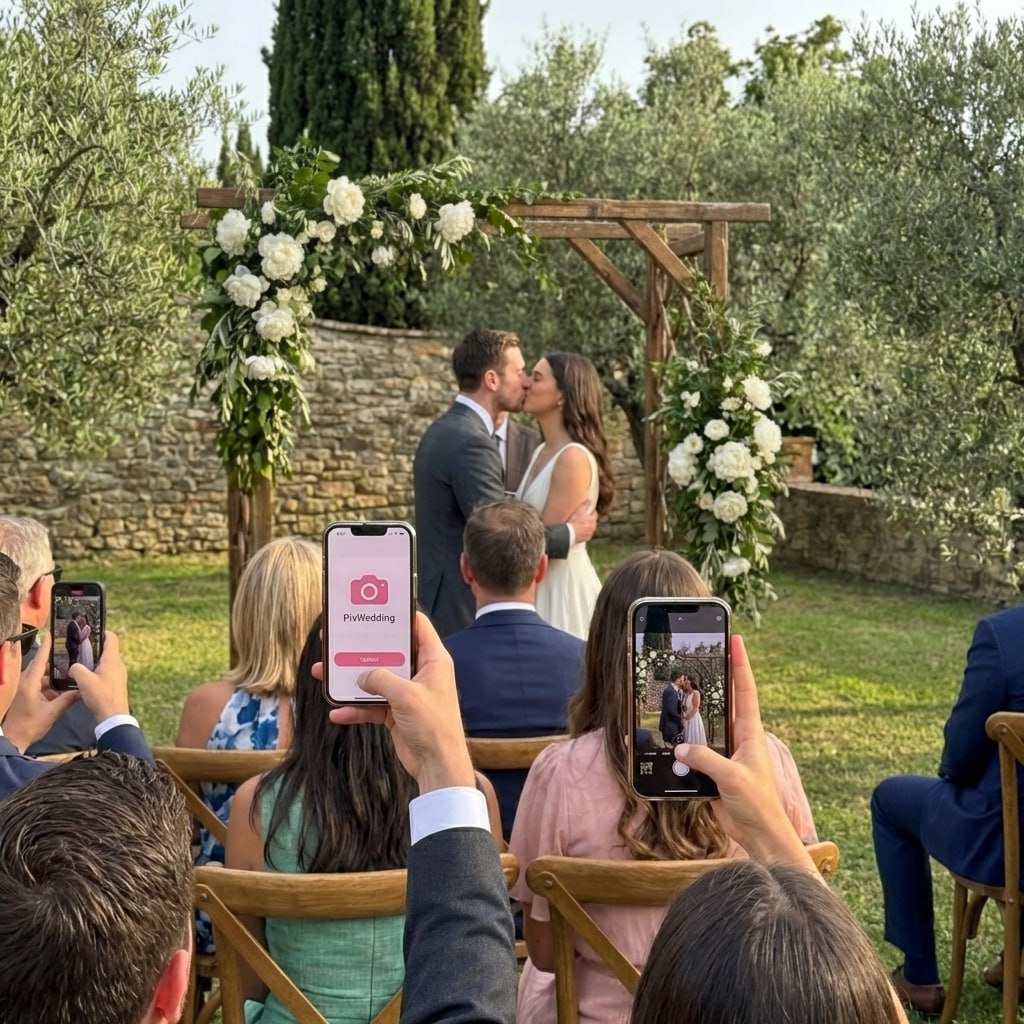
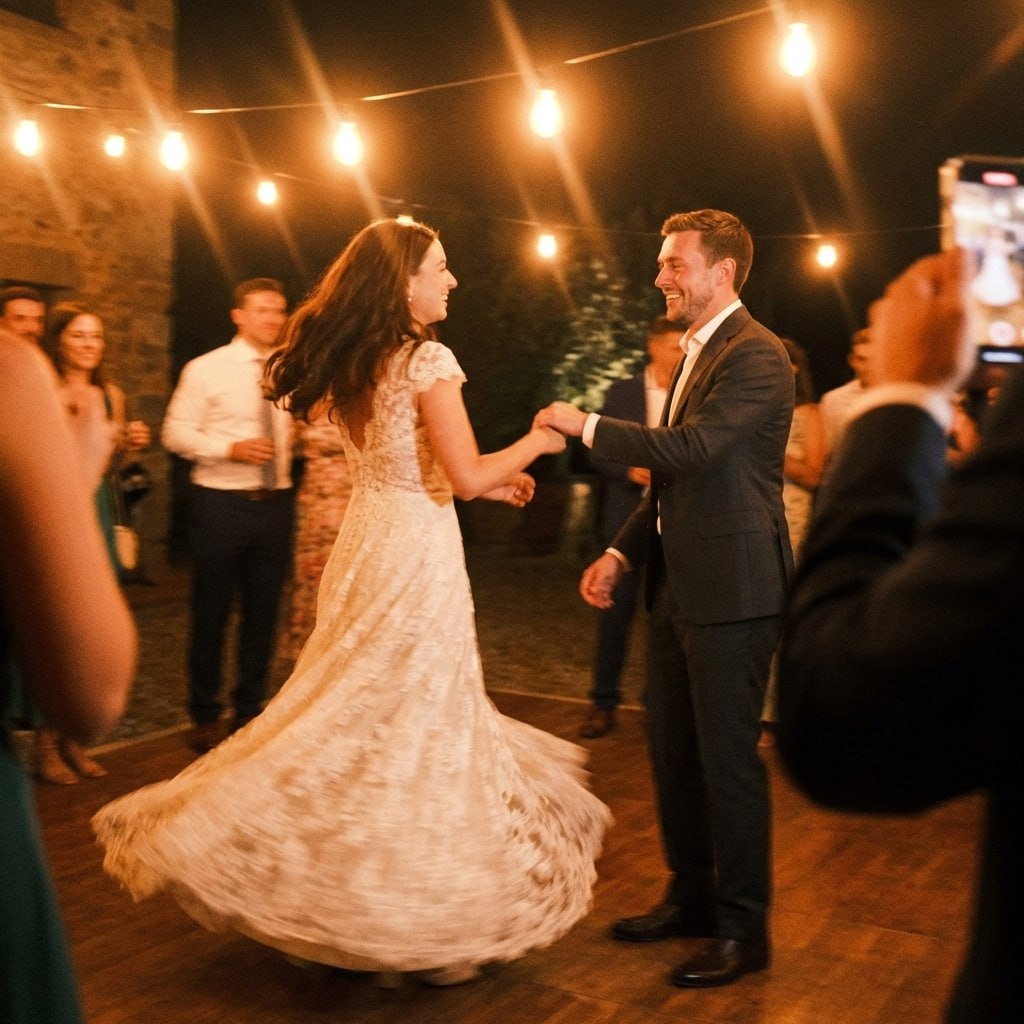
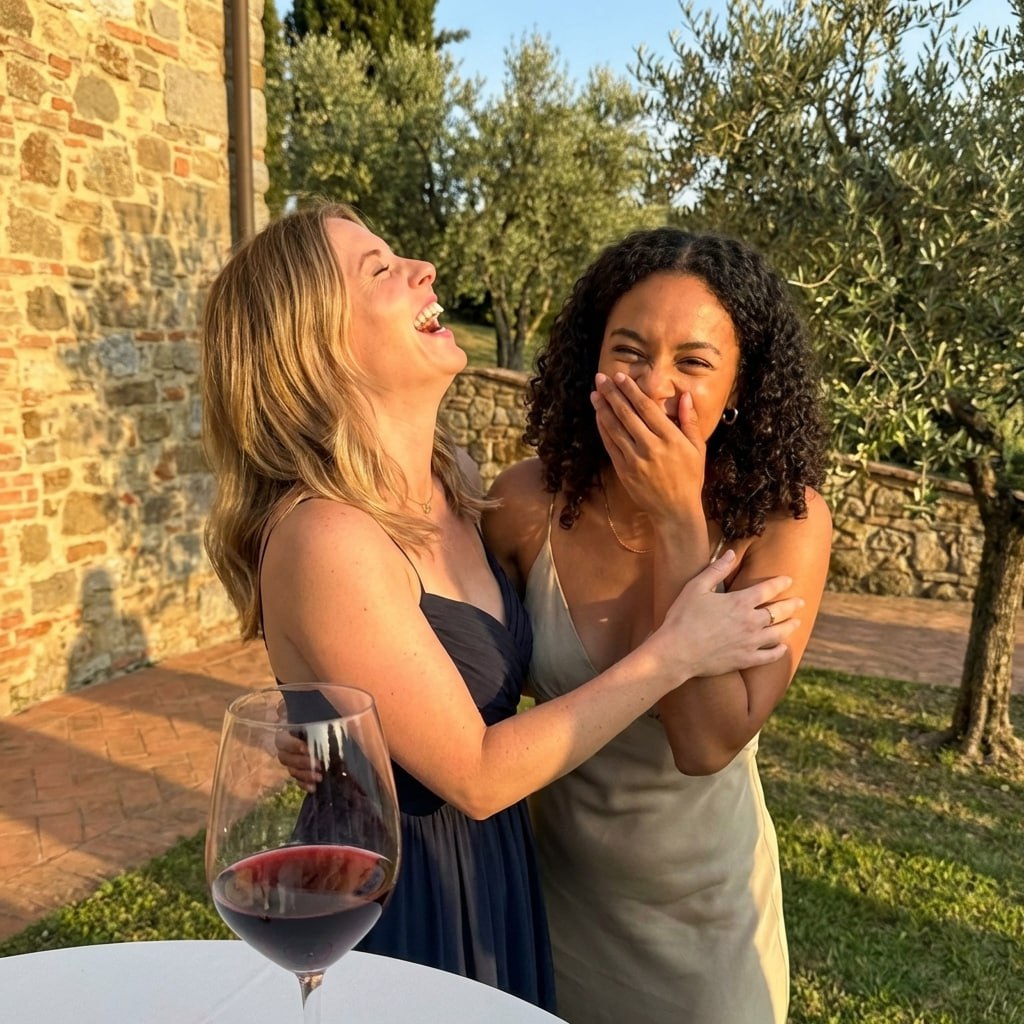
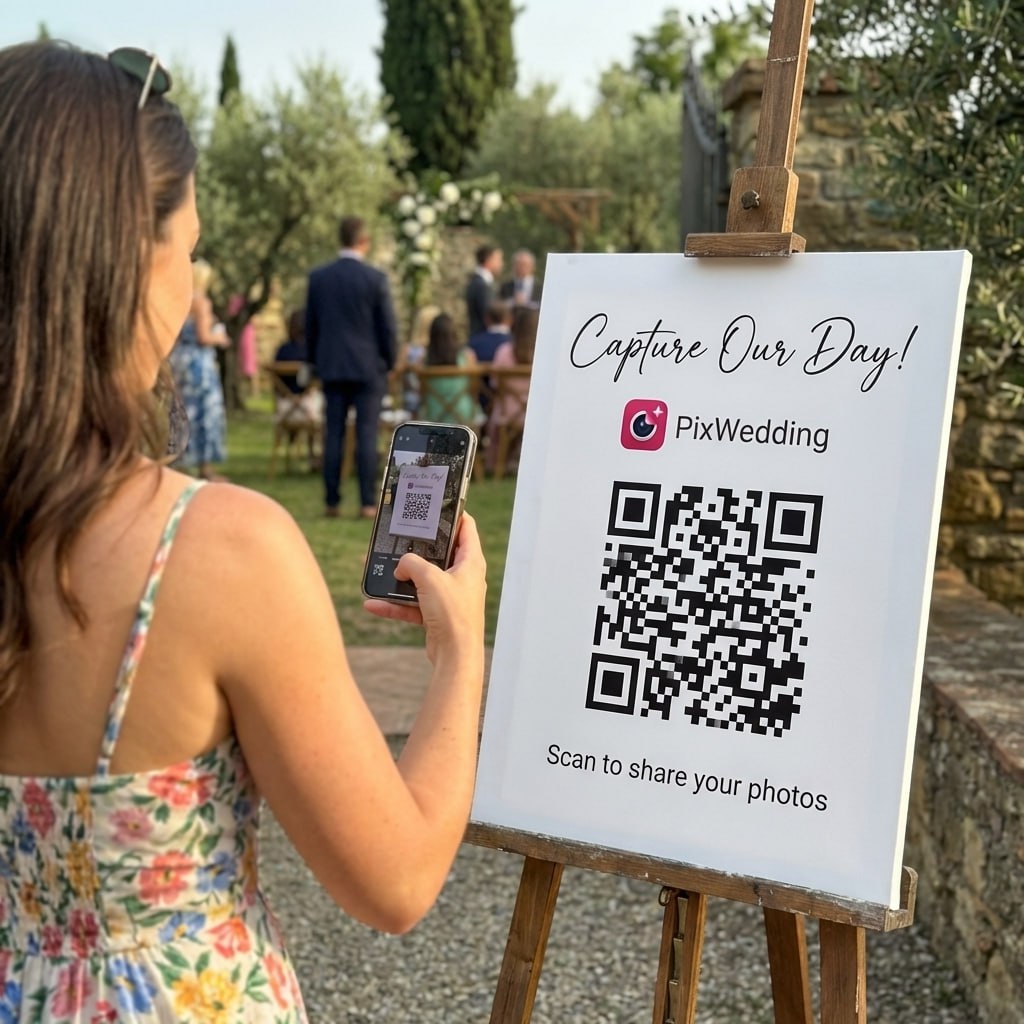
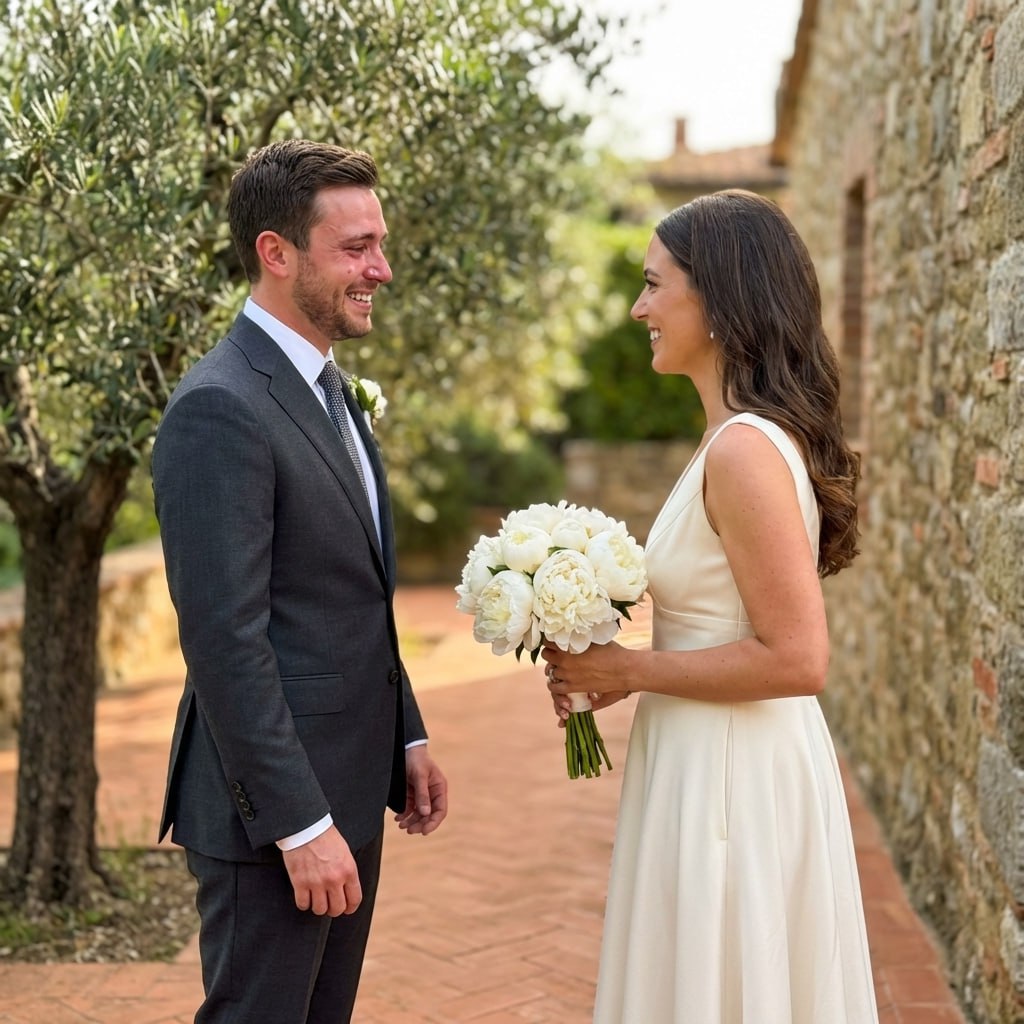
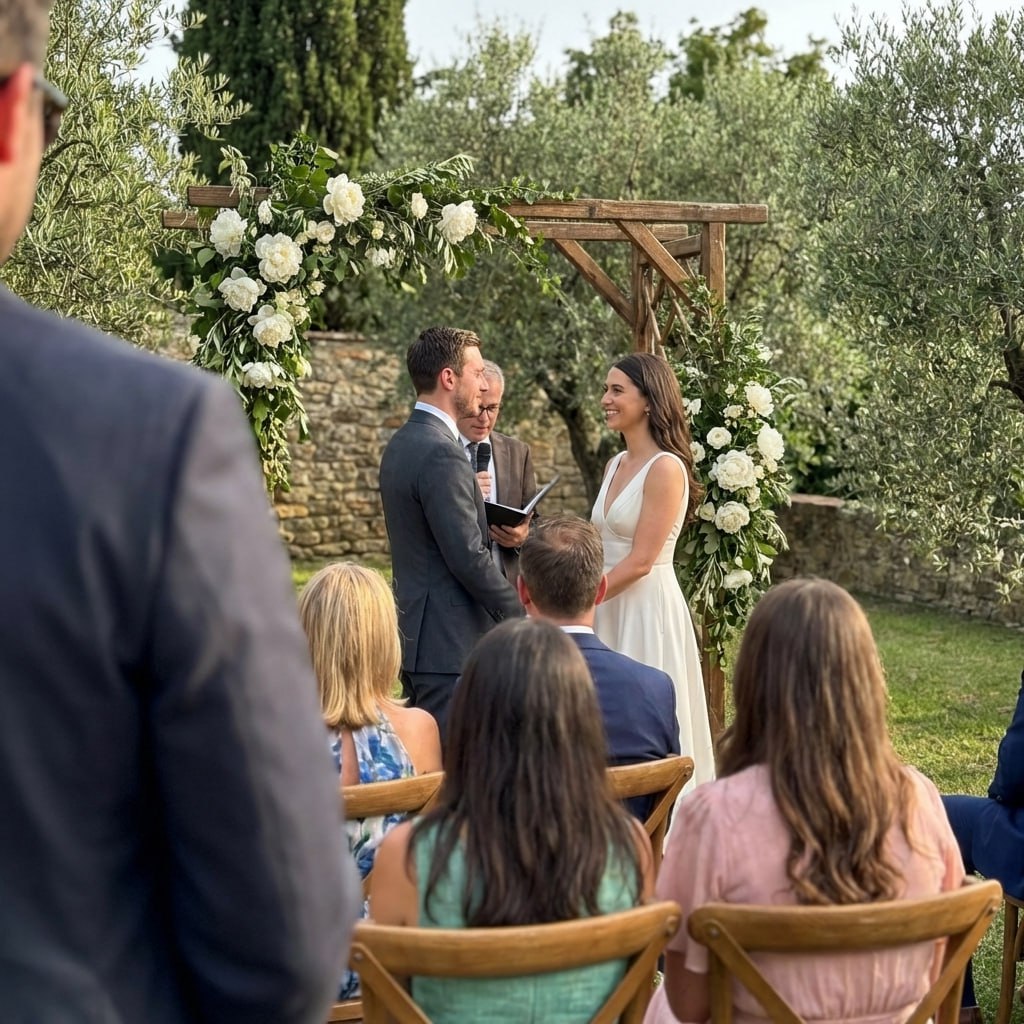
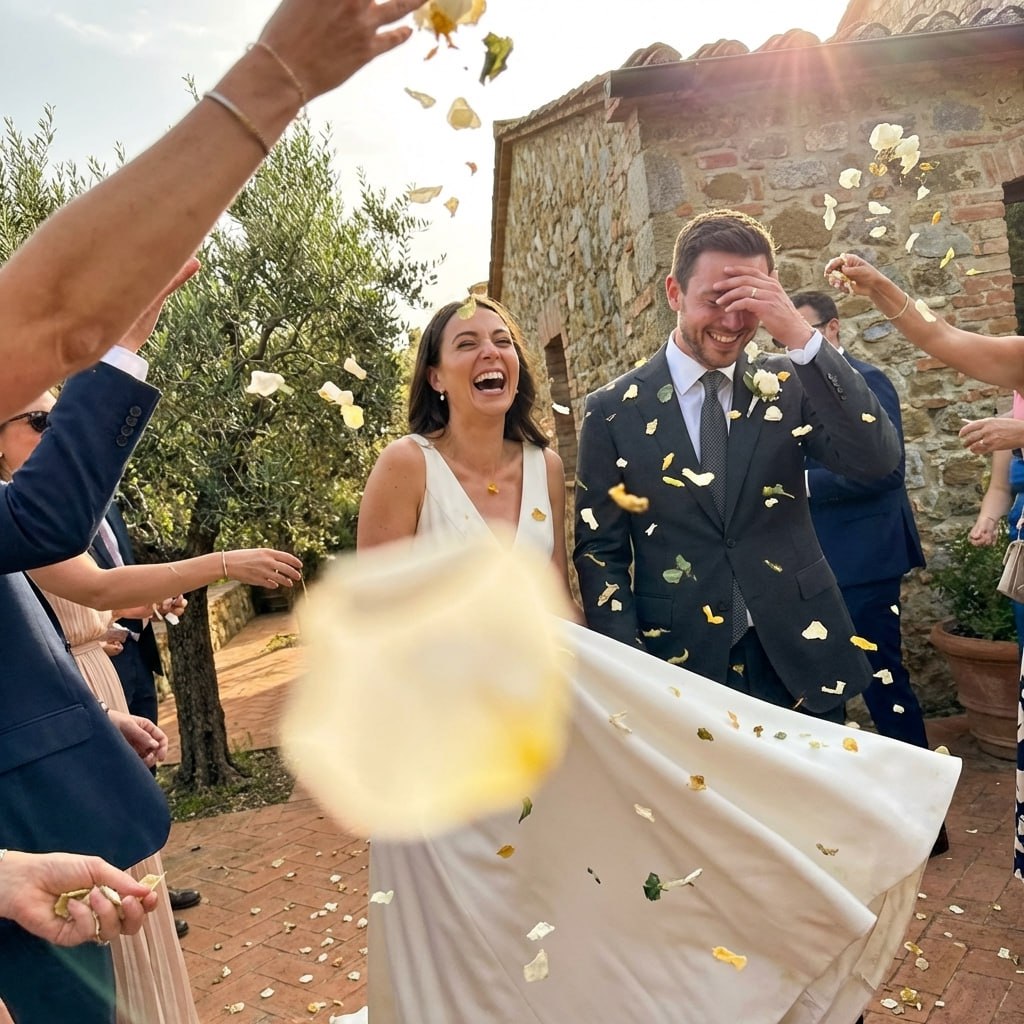
The best photos of your vows come from the rows behind you. Put a QR code on the tables and every guest adds their photos and videos to one album, with no app and no account.
Scan to join the album
No app, no account
UPLOADING
Saving your moment
THE ALBUM
Emma & Jack
June 21, 2026
647 photos · 95 guests
What not to say in wedding vows to her
Most vow mistakes come from forgetting who is listening: her, her family, and everyone who loves her. These are the ones officiants and speechwriters warn about most.
Talking to the room
Vows are to her. If a line is there to get a laugh from the groomsmen, it belongs in the reception speech.
Inside jokes with no context
Officiant Robyn Walker warns against them. If a line needs a backstory for the guests to follow, cut it.
A memory that is not hers
In a story People covered, a bride-to-be said her fiance's draft described a yellow dress she never owned, and she believed the memory came from an ex. Check every detail.
Borrowed quotes
A famous line tells her you looked something up. Heidi Ellert-McDermott names generic Pinterest quotes as something to cut.
Going past three minutes
Long vows feel longer at the altar. Guests stand, the photographer waits, and she is holding flowers.
Promises you cannot keep
"I will never make you sad" breaks the first bad week. Promise the behavior, not the outcome.
The yellow dress story: People via AOL, from a post on Reddit's r/TwoHotTakes. Inside jokes: Robyn Walker. Pinterest quotes: Fox News.
| Instead of promising | Promise this |
|---|---|
| I will make you happy every day. | I will notice when you are not okay and ask before I try to fix it. |
| I will never argue with you. | I will argue fair, and I will be the first one to come back to the table. |
| I will give you everything you want. | I will take your dreams as seriously as my own. |
| I will always be perfect for you. | I will keep working on the parts of me that make things harder for us. |
| I will never let anything bad happen to you. | When something bad happens, you will never face it alone. |
Worried about sounding over the top? How to write vows without sounding cheesy has a line-by-line fix list.
When should you start writing your vows?
About six to eight weeks out gives you time to write badly first, which is the whole trick. This is a suggested plan, not a rule: squeeze it into two weeks if you have to, but do not squeeze it into the night before.
- 6 to 8 weeks out
Brainstorm
Fifteen minutes with the question lists. Keep a notes file open for anything she does that you want to mention.
- 4 weeks out
First draft
Write the ugly version in one sitting using the four parts. Leave it alone for a few days.
- 2 to 3 weeks out
Cut and check
Specificity filter, word count, grandparent test. Agree length and tone with her through your officiant.
- 1 week out
Print and practice
Print the final in large type. Read it aloud once a day, timing each read.
- The day before
Hand it over
One last read, then give your officiant a copy. Do not rewrite anything tonight.
Writing as the groom and want the full picture? See how to write vows as a groom.
Final checklist for your vows to her
Run through this the week before. If every box is ticked, stop editing.
- Her name is in the first line
- One story, told in five sentences or fewer
- Three to six promises, each one an action
- Every memory in it is hers and yours
- No inside joke that needs a backstory
- 150 to 300 words, under two minutes out loud
- Passes the grandparent test
- Read out loud at least five times
- Printed in large type, not on your phone
- A spare copy is with the officiant
Do
- Use words you would say in a normal conversation with her
- Pick details only the two of you would recognize
- Promise things you can do on an ordinary Tuesday
- Leave room to breathe between short lines
- End on the future, then stop
Don't
- Copy an example word for word without making it yours
- Mention exes, even as a joke
- Share anything she told you in confidence
- Read from a phone that can light up with messages
- Try to top her vows or turn it into a contest
Scan. Upload.
Every angle of her face.
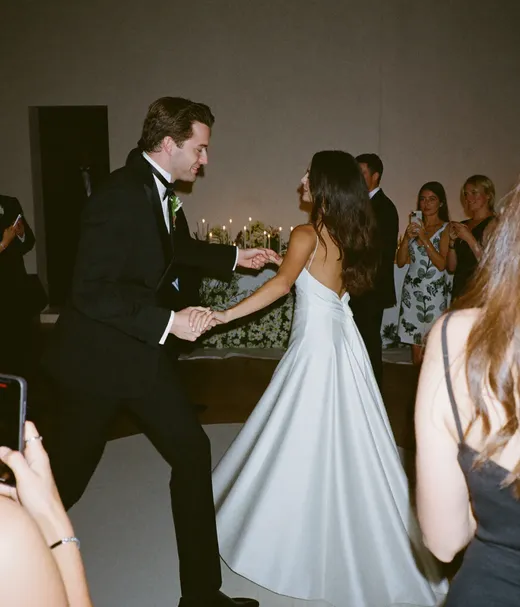
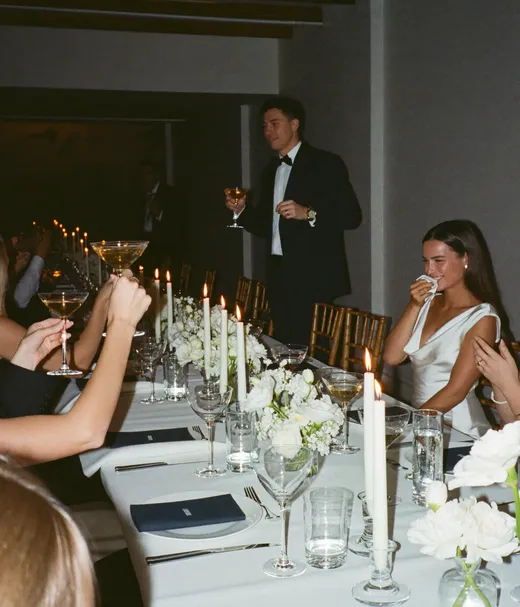
You will be looking at your card and at her. Your guests will be looking at both of you. Watch how a guest scans the QR code and adds photos and videos from the phone browser in seconds, with no app and no account.
WEDDING ALBUM
Maya & Leo
Example album

The second she laughed
From row three
You will remember the words. Guests will catch her reaction.
Put one QR code on the tables and every guest can add the photos and videos they took during your vows, straight from the phone browser with no app and no account. The first 20 uploads are free, no card.
From her sister
Scan to join the album
No app, no account
UPLOADING
Saving your moment
THE ALBUM
Maya & Leo
Example album
647 photos · 95 guests
SCAN TO TRY
pix.wedding/
your-wedding
More vow guides and free tools
This page is about writing to her. These cover the rest of the words you will say on the day.
How to write vows for her in five lines
If you remember five things about writing wedding vows for your bride:
- Use four parts: open with her, one story, three to six promises, a forward-looking close
- Keep it to 150 to 300 words, about two minutes out loud
- Swap every general compliment for something she did
- Check that every memory is hers and every line passes the grandparent test
- Print it in large type, read it aloud five times, and give your officiant a copy
Using wedding vow examples for her
Examples are useful for rhythm and length. The 13 on this page are all under 70 words and cover romantic, heartfelt, short, faith-based and lighthearted tones.
Treat each one as a frame. Keep the structure, replace the general lines with your own details, and read the result aloud. If it sounds like something you would say to her at home, it is ready.
Explore more free wedding tools
Everything you need to make your wedding day stress-free and unforgettable.
AI Vow Generator
Write "banger" vows in seconds.
AI Speech Pro
Banger toasts for Best Man & more.
Hashtag Generator
Create unique wedding hashtags.
Thank You Notes
Generate personalized thank you notes.
Father of the Bride Toast
Full example toasts, structure, and delivery tips.
Invitation Wording
Perfect wording for your invitations.
Couple Name Combiner
Blend your names into the perfect couple name.
Photo Sharing QR
The best way to collect guest photos.
Questions about writing vows for her
Length, tone, reading them out and using examples: short answers with sources.
Skip the poetry and use the four-part structure: say her name, tell one short story, make three to six specific promises, and close with one line about the future. Plain words that are true to her land better than fancy ones. Start by answering a few questions in a notes app for 15 minutes, then shape the best answers into those four parts.
Aim for 150 to 300 words, which reads in about one to two minutes. Zola puts most vows at 1 to 2 minutes (150 to 250 words), NYC officiant Robyn Walker suggests 150 to 300 words per person, and speechwriter Heidi Ellert-McDermott sets a ceiling of 3 minutes or 500 words.
Tell her who she is to you, share one moment only the two of you know, promise specific things you will do, and end with the life you want to build. The strongest lines usually follow the pattern quality, then action, then effect: what she is like, what she did that proved it, and what it changed in you.
Mostly sincere, with room for one light moment if that is how you two talk. Match her tone: if she is writing heartfelt vows and yours are a comedy set, one of you will feel exposed. Agree a rough tone and length with her, or through your officiant, without reading each other's vows. For full funny vows, see our funny vows for her page.
You can, but she will hear that it could have been written for anyone. Use the examples on this page as a skeleton: keep the rhythm, then replace every general line with a detail from your relationship. Even swapping in one real memory and one real promise makes an example yours.
Read them. Zola says memorization is not required, and officiant Robyn Walker recommends printing your vows in large, double-spaced type in a vow book rather than reading from a phone. Practice enough that you can look up at her between lines.
Most couples keep the words a surprise but agree on length and tone ahead of time. Heidi Ellert-McDermott told Fox News you need a sense of what your partner is doing, because mismatched vows get awkward. Your officiant can read both and tell you if they match.
It can help you get unstuck on structure or a first line, but the details have to come from you, because a tool does not know the day she drove four hours to see you. Treat any generated draft like an example on this page: a starting shape to rewrite in your own words.