
How to Write Personal Wedding Vows Only You Could Write
Most vows could be spoken by anyone. The most powerful vows can only be spoken by you, about this person, at this moment. Here is how to mine your relationship for the raw material that makes that possible.
Try the AI Vow GeneratorPersonal wedding vows come from mining your own relationship for specific, unrepeatable detail, not from finding better romantic language. The method is: answer a set of memory-prompt questions in writing, take each vague feeling you land on and rewrite it as one concrete scene, then build the result into a short structure that moves from where you started to what you promise next. The raw material is always already in your history together. The work is digging it out and being specific enough that no other couple could have written the same line.
This guide is built around four tools for that digging process: a bank of memory-prompt questions, a technique for turning vague feelings into concrete detail, a story inventory worksheet covering your first meeting, a hard season, a daily habit, and a private promise, and a specificity checklist to run your draft through before the ceremony.
Why Generic Vows Feel Hollow
The problem with most wedding vows is that they describe a universal version of love rather than a specific relationship. Your partner knows what your love actually looks like. Describe that.
Your Partner Knows the Truth
They know your real personality, your actual habits, your specific version of love. Vows that do not reflect those truths feel performative rather than genuine.
Stories Beat Statements
Telling your partner you love them is expected. Telling the story of the moment you knew is unforgettable. Stories are the vehicle for emotional truth.
Guests Feel Authenticity
People in the room who know you can tell immediately when vows are genuine. Specific details make guests lean in. Generic lines make them look at their phones.
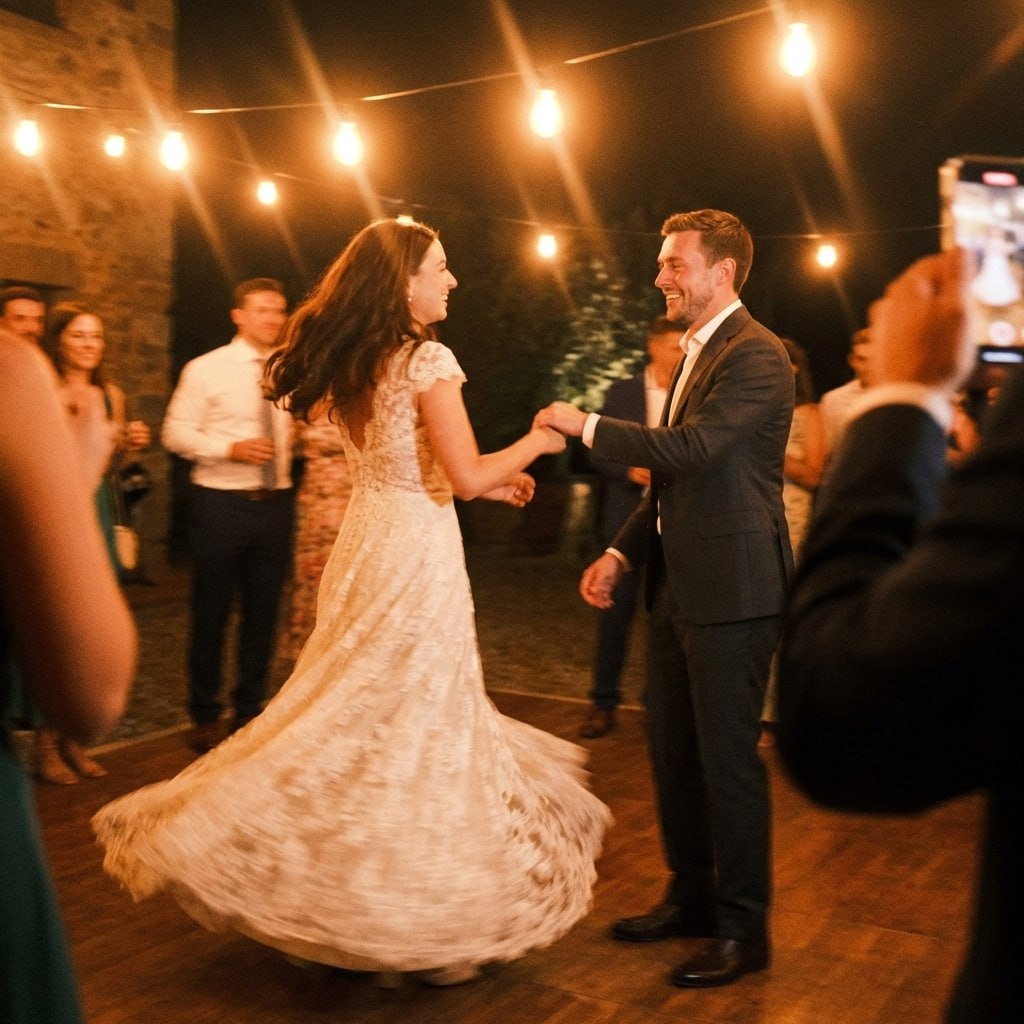
First dance
You guys!!
Personal vows deserve a personal archive.
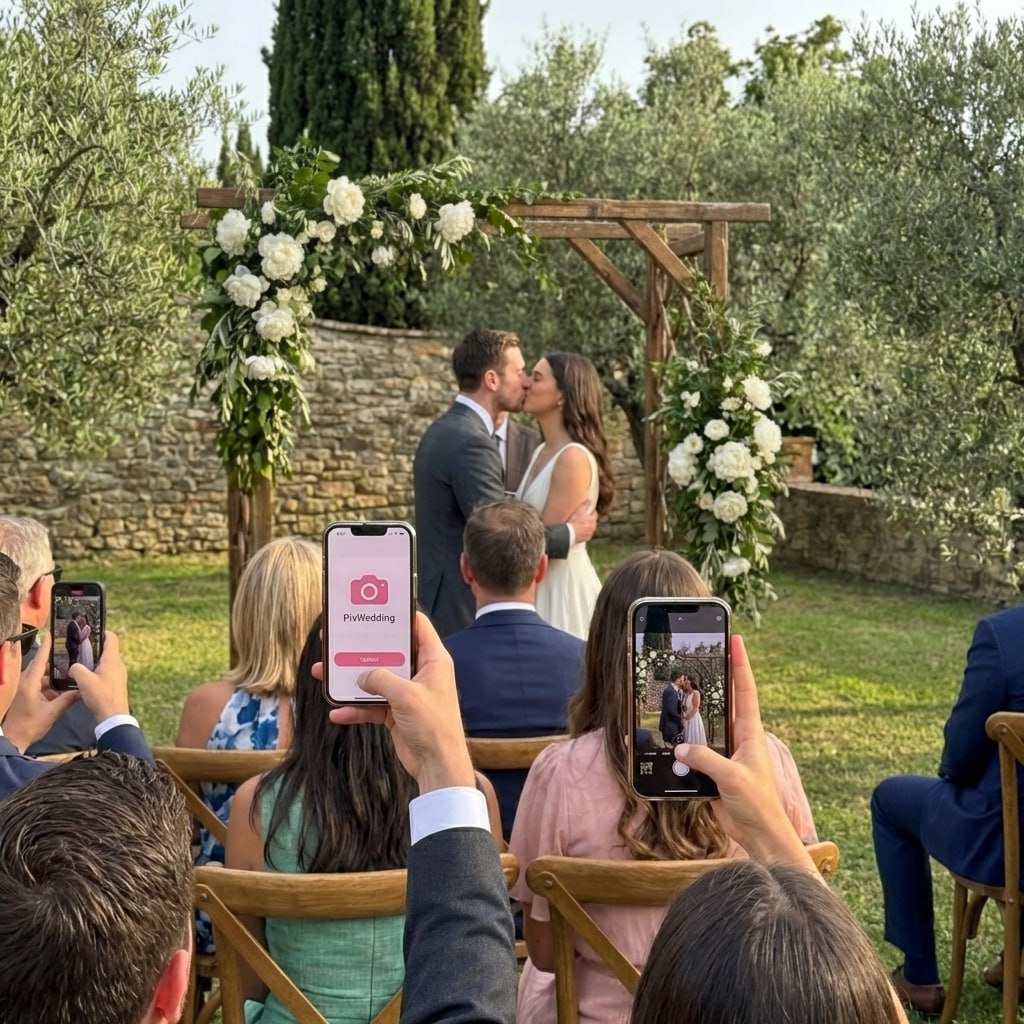
Your vows were mined from your own story - Pix Wedding captures the whole ceremony, with guest photos, videos, and voice messages all flowing into one shared album.
From Mom
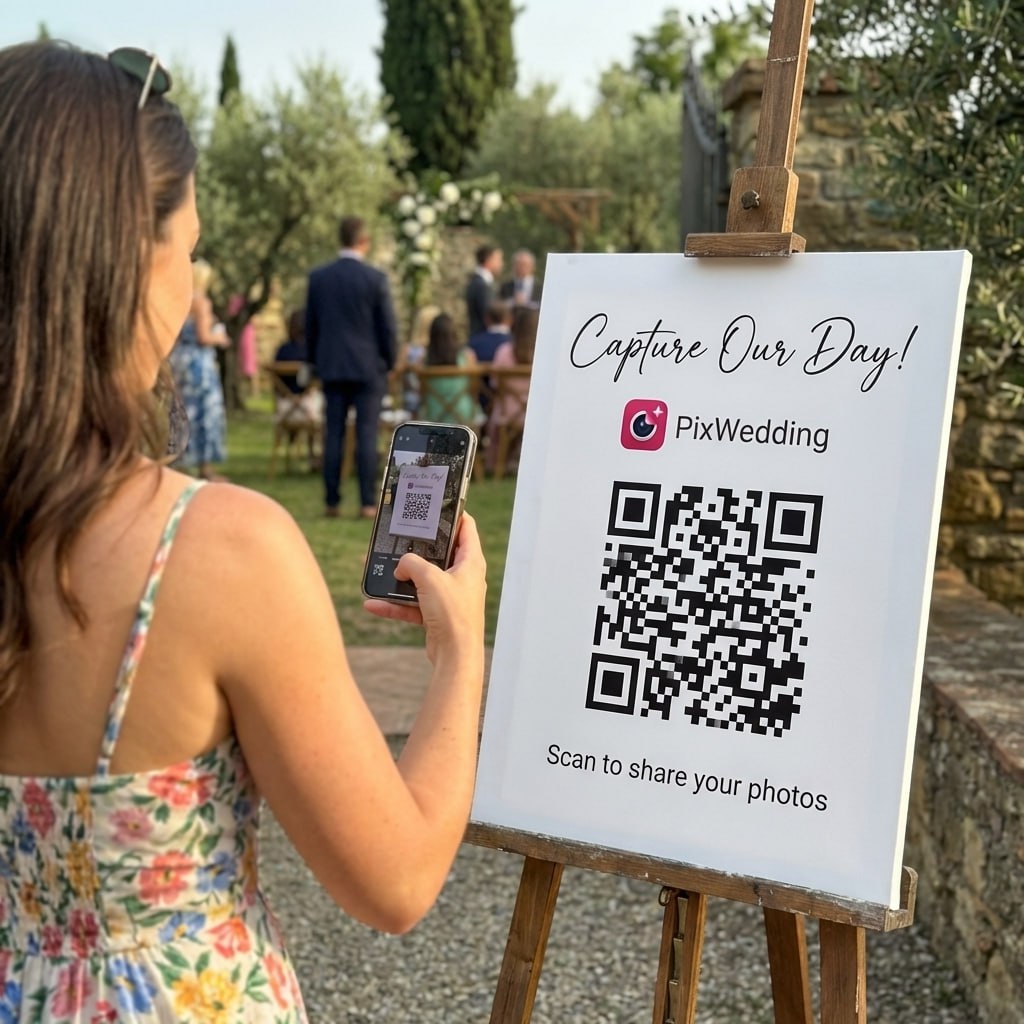
Scan to join the album
No app, no account
UPLOADING
Saving your moment
THE ALBUM
Emma & Jack
June 21, 2026
647 photos · 95 guests
SCAN TO TRY
pix.wedding/
your-wedding
The Vague-to-Specific Technique
Almost every first draft is full of true but generic feelings. The fix is not to feel more, it is to translate the feeling into one concrete scene. Take any vague sentence from your draft and ask: what is the actual moment that made me believe this? Write that moment instead.
"You make me so happy."
"You make me happy in the particular way you narrate the movie plot to me even though I am sitting right next to you watching the same screen."
"You are always there for me."
"You drove ninety minutes at midnight the week my grandmother was in the hospital, and you did not once make it about you needing to be thanked for it."
"I love how funny you are."
"I love that you still do the voice from that road trip when we are both too tired to talk, and it works every single time."
"You support my dreams."
"You read every draft of my application three times and told me the one paragraph that was not quite me yet, and you were right."
"We just fit together."
"You load the dishwasher wrong and I have stopped correcting you, because watching you do it wrong on purpose to make me laugh is better than a clean dishwasher."
Watch this step-by-step walkthrough for turning your own memories into vows that sound like you instead of a template.
12 Questions That Mine Your Relationship
Set a timer for 20 minutes. Answer these questions in writing without editing. The answers will contain everything you need to write extraordinary vows.
What was the exact moment you knew this was the person? Not the romantic version you tell at parties. The real one.
What does your partner do in the first five minutes after waking up that you would recognize anywhere?
What have you become because of them that you were not before?
What was the hardest thing you navigated together, and what did you learn about them during it?
What specific thing do they do that makes you feel most at home?
What does your partner do that makes you feel proud in a way they probably do not know about?
What is the biggest way your partner is different from you, and how has that difference made your life larger?
What ordinary Tuesday ten years from now do you hope looks exactly like now?
Is there a physical object, song, or place that, if your partner saw or heard it, would mean nothing to a stranger but everything to the two of you? What is it?
Think of a disagreement you both handled well. What did your partner do during or after it that made you trust the relationship more?
What word or phrase exists only inside your relationship, and what does it actually mean when you say it?
What is something your partner has watched you do, badly or well, that no one else has ever seen?
Your Story Inventory Worksheet
Before you write a single line of vows, fill in these six prompts. Together they form a personal inventory of your relationship, the raw material every technique in this guide pulls from.
First Meeting
Where were you standing, what were you wearing, and what is the one line of dialogue you both still remember word for word?
A Hard Season
Name the specific stretch of time (a month, a diagnosis, a move, a job loss). What did your partner do in the middle of it that you have never properly thanked them for?
A Small Daily Habit
Describe one completely unremarkable thing your partner does every day, at a specific time, in a specific way, that you would notice instantly if it stopped.
A Promise Only You Two Would Get
Write a promise using a word, place, or reference that means nothing to a stranger but is instantly understood by your partner. What is the promise, and what is the private reference inside it?
The Turn
Was there a single conversation, trip, or ordinary evening where your relationship quietly shifted from casual to permanent in your mind? Describe the room.
The Apology
Recall a time your partner apologized in a way that actually landed. What did they say or do, specifically, that made the apology real instead of just words?
A Worked Example, Start to Finish
Here is how one prompt from the story inventory travels all the way to a finished vow line, using the vague-to-specific technique from above. This example is illustrative, not a real couple's actual vows.
The prompt: "A Small Daily Habit." What is one unremarkable thing your partner does every day that you would notice instantly if it stopped?
First pass, unedited: They always check the door is locked twice before bed, even when I already checked it. It used to annoy me. Now I would miss it.
A first attempt at using it in vows: "I love your caring, careful nature."
Apply the vague-to-specific technique: name the actual behavior, not the trait it implies. "I love that you check the door twice every night, even after I already have, because you would rather be a little bit extra than let anything happen to us."
Turn the detail forward into a promise, closing the loop from evidence to commitment: "I promise to let you check that door as many times as you need to, for as long as it takes both of us to feel safe."
The "Our Story" Framework
This six-part structure gives personal vows a natural arc that moves from where you started to where you are going. It works for both romantic and practical personalities.
The Before
Who you were before this person. One or two sentences, enough to establish where you started. This creates contrast for everything that follows.
The Encounter
The specific moment or period when your story began. Use a concrete scene, not a summary. Sensory details welcome.
The Revelation
The moment you understood what this person was to you. Often a quiet, unexpected moment rather than a dramatic one. Reach for the real one.
The Evidence
Three to five specific proofs of love. Not feelings but behaviors. What have you done for each other that demonstrates what you mean to each other?
The Promises
Three specific, behavioral commitments. Forward-looking versions of the evidence section. What will you keep doing, and what new thing will you add?
The Close
One sentence so true and specific it could only have been written by you, about this person. This is the line that gets remembered.
Vulnerability Without Oversharing
The most personal vows contain at least one moment of genuine emotional exposure. Here is how to find it without going further than you want to.
Name What Changed
Describe one way you see yourself differently because of this person. "Before you, I thought I was someone who did not need..." is a low-risk, high-impact vulnerability opener.
Admit a Need
State one specific thing you need from them in the future. Not a fear, but a need. "I am going to need you to remind me to slow down when..." creates intimacy without exposure.
Credit Them for Growth
Attribute a positive change in you directly to them. This is vulnerability because it acknowledges that you were incomplete, and they completed something. That admission is powerful and safe.
Say the Unsaid Thing
Every couple has one thing they both feel but rarely say directly. Vows are the moment to say it plainly. It does not have to be dramatic. It just has to be true.
Making Inside Jokes Meaningful
Inside jokes are private intimacy made public. Used well, they invite guests into your world. Used poorly, they exclude. Here is the difference.
What Does Not Work
Referencing the joke with no context: "and you know what I mean about the Tuesday"
Pausing for a laugh that only two people in the room will give
Spending more than ten seconds on a reference guests cannot follow
Using the joke as a substitute for genuine emotional content
What Works
One sentence of context that lets everyone understand the reference
Using the joke to illustrate a real truth about your relationship
Landing the joke before your partner's reaction gives it away
Connecting the joke to a sincere promise so it earns its place
Matching Vow Style to Relationship Personality
Your vows should sound like your relationship, not the idealized version. Different relationship personalities call for different vow approaches.
The Intellectual Couple
Reference ideas, books, or conversations that shaped your relationship. Frame promises as thought experiments or hypotheticals that reveal how you think about your future together.
The Adventure Couple
Structure vows around specific trips, misadventures, or challenges conquered together. Ground promises in real experiences of navigating the unknown side by side.
The Funny Couple
Lead with warmth, not just wit. One or two sharp, specific jokes land best when they are surrounded by genuine sentiment. The humor should feel like relief, not defense.
The Quiet Couple
Lean into understatement. Short, plain sentences about specific true things are often more powerful than elaborate declarations. Quiet vows from a quiet couple feel profoundly right.
The Family-First Couple
Reference the families you come from and the family you are building. Acknowledge what each partner is bringing to the new unit and what you are building together for the next generation.
The Practical Couple
Frame promises as plans. Practical vows that commit to specific behaviors and decisions can be deeply romantic when they reveal how seriously you have thought about building a life together.
The Specificity Checklist
Run your finished draft through this checklist before the ceremony. If you cannot check a box, that line is a candidate for the vague-to-specific technique above.
Every sentence names a specific moment, object, place, or line of dialogue rather than a general feeling
At least one detail in the vows could only be true of your relationship, not copy-pasted onto any couple
You have replaced at least one "always" or "never" with an actual example
A stranger reading your vows would learn one true, unglamorous fact about your relationship
Each promise describes a behavior your partner can picture you actually doing, not an abstract virtue
You read the vows aloud once and cut any line that could be said by literally any couple at any wedding
Story-Mining Glossary
Quick, one-sentence definitions for the terms used throughout this guide.
Story Mining
The process of systematically answering memory-prompt questions to surface specific, unrepeatable material from your relationship before you write any vows.
Vague-to-Specific Pass
A revision step where every general feeling in a draft ("you make me happy") is rewritten as the one concrete scene that actually proves it.
Founding Story
One of the three to five origin stories a couple retells most often, used as the emotional anchor for a section of vows.
Story Inventory
A worksheet covering first meeting, a hard season, a daily habit, and a private promise, used to gather raw material before drafting.
Specificity Pass
A read-through of a finished draft, checking each line against the specificity checklist and cutting anything a stranger could have written.
Common Mistakes When Personalizing Vows
These are the patterns that quietly flatten personal vows back into generic ones. Watch for them in your second draft.
Writing to the room instead of your partner
Vows aimed at impressing guests read as a performance. Address the specific person standing in front of you, not the crowd behind them.
Staying in the abstract the whole time
Words like "amazing," "everything," and "soulmate" carry no information about your actual relationship. Every abstraction should be followed by the concrete example that earns it.
Borrowing someone else's founding story
A movie-quality meet-cute you saw online will never beat the true, slightly awkward version of how you actually met. The real story is the one only you two own.
Skipping the specificity pass entirely
A first draft is almost always generic. The work of personalization happens in the second and third pass, when you go back and replace vague lines with concrete detail.
Over-explaining an inside joke
A joke that needs thirty seconds of setup loses the room. One sentence of context is enough; if it needs more, the reference belongs in a private moment, not the ceremony.
Forgetting the forward-looking promise
Vows built entirely from memories describe the past. Every memory should connect to a specific promise about what you will keep doing, not just what you have already done.
What Wedding Experts and Real Couples Say
The story-mining approach on this page builds on established vow-writing advice. Here is where to read further, including a real couples' forum thread on getting unstuck.
Recommends writing in your own voice and gathering mementos (photos, tickets) from shared memories to spark specific material.
Offers 22 reflection questions as a starting framework when you are staring at a blank page.
Suggests reflecting on when you knew you were in love and the challenges you have overcome together before drafting a single line.
Advises starting a month or more ahead, drafting once, then revisiting with fresh eyes to sharpen the language.
A real couples' forum thread where soon-to-be-married members trade the exact stuck points (blank page, fear of getting emotional) and how they worked through them.
More Vow Writing Resources
The Personal Mythology Concept
Every long-term relationship develops its own mythology: the stories you tell about how you got together, the near-misses that could have kept you apart, the moment you both knew. These are not just anecdotes. They are the founding texts of your partnership, the stories your children will eventually hear, the moments that made you into "we" instead of "I and I."
Personal mythology in vows means drawing on these founding stories deliberately. Name the moment the mythology was made. "We almost did not make it to that party" carries more weight in vows than any abstract declaration of fate. Specificity in the founding story gives your vows an origin point that feels fated without using the word "fate."
To access your mythology, ask: What is the story of how we happened? What was the first version of us that surprised me? What is the story we tell most often about early in our relationship, and what does it reveal about us? These questions unlock the material most couples overlook because it feels too familiar to be special. It is, in fact, the most special thing you own.
- •Identify the three to five founding stories of your relationship
- •Find the detail in each story that only the two of you would notice
- •Use one founding story as the emotional anchor of your vows
- •Connect the founding story to a forward-looking promise
Shared Language and Cultural Weaving
Couples develop private language over time: words with altered meanings, phrases that have become shorthand, sounds or gestures that communicate entire paragraphs. This shared vocabulary is one of the most intimate things about any long relationship, and it belongs in your vows.
If your relationship bridges two cultures or languages, vows are a profound opportunity to honor that complexity. A line spoken in both languages, a reference to a tradition from each family, a moment that names what it taught both of you to build a life at the intersection of two worlds. These touches create vows that guests from both sides of the family recognize as specifically theirs.
The key is always to contextualize enough that the uninitiated feel included rather than excluded. One sentence of context transforms a private reference into a shared moment of warmth for the whole room.
- •List three words or phrases that exist only in your relationship's private vocabulary
- •Include one of them in your vows with just enough context for guests to smile
- •If bridging cultures, name one tradition from each that found a home in your shared life
- •Translate or explain just enough to include everyone without losing intimacy
When to Mine and When to Draft
Mining and drafting are different tasks and work best kept separate. Mining is the open-ended, generative work of answering the memory-prompt questions and filling out the story inventory. Drafting is the disciplined work of shaping that raw material into vows with a beginning, middle, and end. Doing both at once usually produces neither good mining nor good drafting.
A workable timeline gives mining three to four weeks before the wedding, so the questions have time to surface memories you did not expect on the first sitting. Some of the best material shows up a few days after you first answer a prompt, once your subconscious has kept working on it. Save drafting for one to two weeks out, once the inventory is full enough to choose from rather than stretch to fill.
If you get stuck mid-draft, the fix is almost always to go back to mining rather than to push through the blank page. A stalled draft is usually a sign you are trying to write from a feeling instead of a memory. Return to the questions, find one more specific scene, and the sentence that was stuck usually resolves itself.
- •Weeks 4 to 3 out: answer the memory-prompt questions and fill the story inventory worksheet
- •Weeks 2 to 1 out: draft using the Our Story framework, applying the vague-to-specific technique line by line
- •Final days: read the draft aloud once, run it through the specificity checklist, and cut anything that could apply to any couple
- •If you stall while drafting, stop and mine one more question rather than forcing the sentence
Explore more free wedding tools
Everything you need to make your wedding day stress-free and unforgettable.
AI Speech Pro
Banger toasts for Best Man & more.
Hashtag Generator
Create unique wedding hashtags.
Thank You Notes
Generate personalized thank you notes.
Father of the Bride Toast
Full example toasts, structure, and delivery tips.
Invitation Wording
Perfect wording for your invitations.
Couple Name Combiner
Blend your names into the perfect couple name.
Photo Sharing QR
The best way to collect guest photos.
Wedding Checklist
Month-by-month planning checklist.
Personal Vow Writing: Common Questions
Everything you need to know about our free tools and how they help your wedding day.
The fastest path to personal vows is answering ultra-specific questions: What moment did you realize this was the person? What do they do when they think no one is watching that you love? What have they changed about the way you see yourself? Mine these answers for material before you write a single sentence.
Yes, if handled correctly. Inside jokes work best when you briefly explain their context so guests are in on it, then deliver the punchline. This creates a moment of shared intimacy rather than exclusion. Uncontextualized inside jokes can make guests feel left out.
Name the specific traditions, languages, or family rituals from each background and show how they have woven together in your life. You might say a phrase in both languages, reference a ritual from each family, or describe a moment where the two cultures collided in a funny or beautiful way.
Vulnerability in vows does not require confessing your deepest fears. It can be as simple as naming something your partner does that you used to take for granted. Even a small admission of need or gratitude opens an emotional door without requiring full exposure.
Absolutely. Shared cultural references are a form of inside language that signals deep familiarity. Reference the specific scene, lyric, or moment that became significant to your relationship rather than the title alone. That specificity is what makes it feel personal rather than generic.
Start by describing your relationship to a stranger in three sentences. Include the weird, the funny, and the unexpected parts. Those three sentences contain your relationship personality. Write vows that a stranger could read and immediately understand the particular flavor of your love.