
How Long Should Wedding Vows Be?
How ceremony format, officiant guidelines, religious constraints, outdoor weather, and attention span research combine to set the ideal vow length for your wedding.
Generate My Vows FreeMost wedding planning sources land on the same range: personal wedding vows should run about 200 to 300 words, which reads aloud in roughly 1.5 to 3 minutes per person at a calm ceremony pace. The Knot recommends 250 to 300 words recited at 125 to 150 words per minute, which comes out to about two minutes, and calls two to three minutes "a good length for wedding vows." Zola frames the acceptable window more broadly, saying vows "should last somewhere between 30 seconds and three minutes."
Other named sources agree on the same neighborhood with slightly different edges. Wedding Frontier puts written vows at roughly 150 to 300 words, or about one to two minutes read aloud. Bridebook widens the outer limit to a hard ceiling of four minutes per person, with two to three minutes as the ideal, noting that combined vows for both partners tend to land around six minutes total. If you only take one number away from this page, aim for roughly 200 to 250 words per person, about 90 seconds to 2 minutes read at a deliberate, unhurried pace, then adjust up or down using the factors and self-test further down this page.
The Numbers That Matter
Recommended per partner in most ceremonies
Average total ceremony length guests expect
Peak audience attention window per vow speaker
Maximum per person before significant attention drop
First dance
You guys!!
Right timing on vows. Right tool for memories.
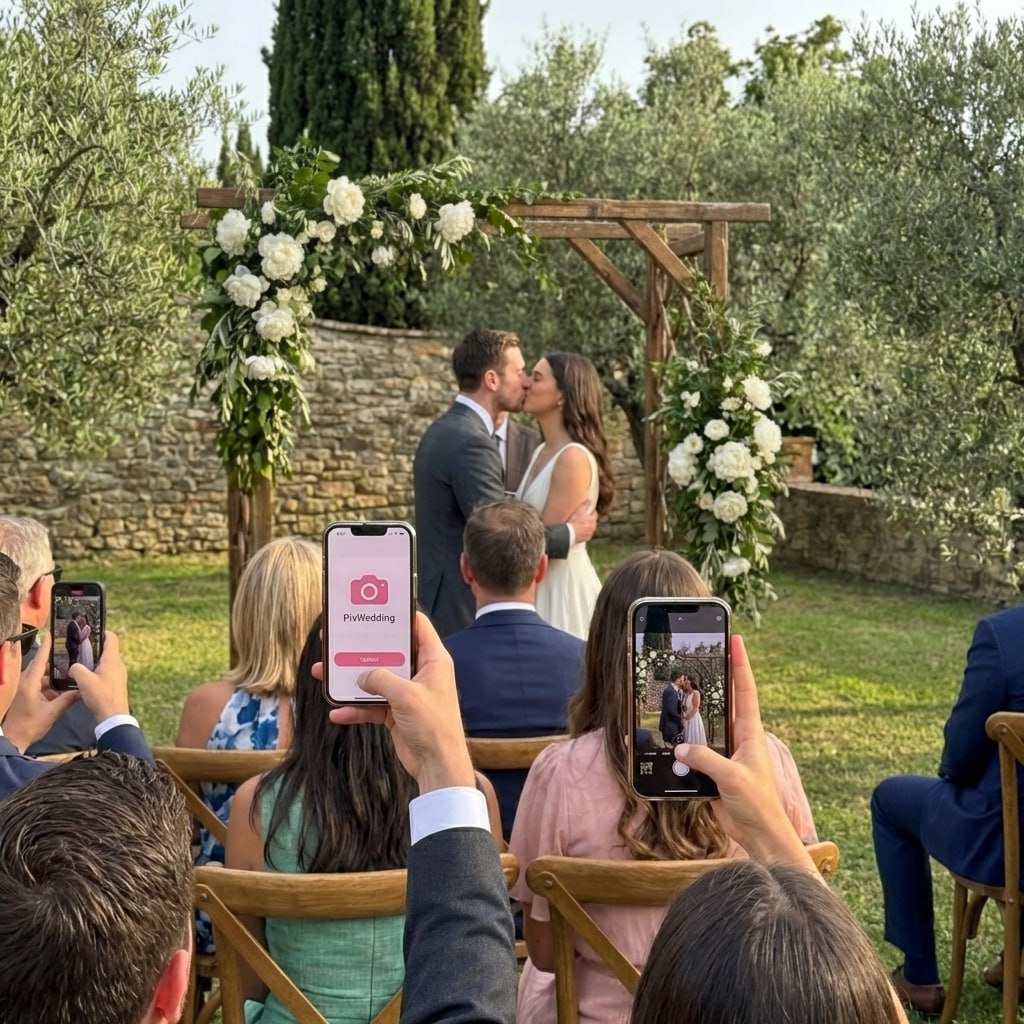
You have figured out the ideal vow length - now make sure the ceremony lasts forever. Pix Wedding collects every guest photo and video in one shared album.
From Mom
Scan to join the album
No app, no account
UPLOADING
Saving your moment
THE ALBUM
Emma & Jack
June 21, 2026
647 photos · 95 guests
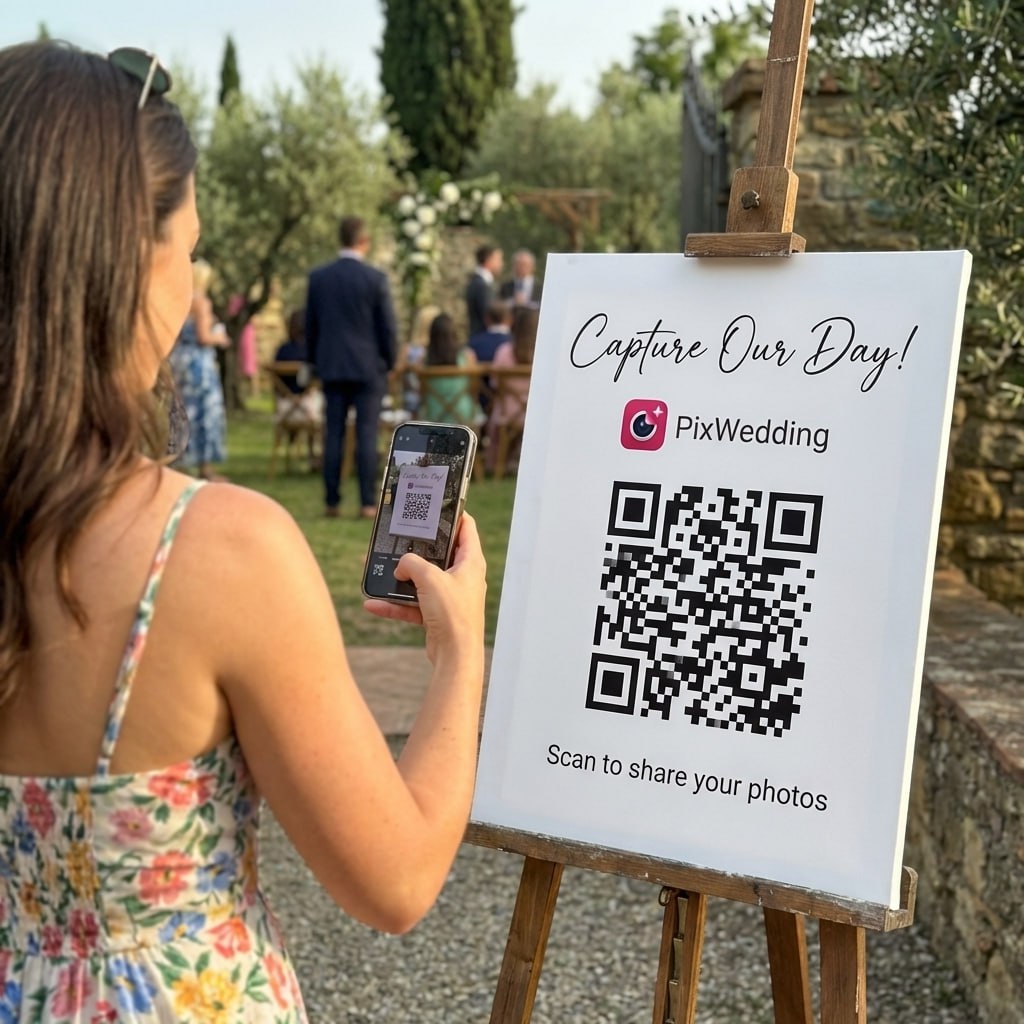
SCAN TO TRY
pix.wedding/
your-wedding
Word Count to Speaking Time, in Real Numbers
The Knot cites a calm-delivery pace of 125 to 150 words per minute for read vows. The table below uses roughly 130 words per minute, a conservative midpoint of that range, so you can translate a draft word count into an actual spoken time before you stand in front of your officiant.
| Word Count | Spoken Time (~130 wpm) | Where It Falls |
|---|---|---|
| 100 words | ~46 seconds | Below most named guidelines; fine for an elopement or a second reading |
| 150 words | ~1 min 9 sec | Bottom of Wedding Frontier's 150-300 word range |
| 200 words | ~1 min 32 sec | Comfortably inside every major source's recommended window |
| 250 words | ~1 min 55 sec | Bottom of The Knot's cited 250-300 word sweet spot |
| 300 words | ~2 min 18 sec | Top of The Knot and Wedding Frontier's recommended range |
| 350 words | ~2 min 41 sec | Still under Bridebook's 4-minute ceiling, but getting long |
| 400 words | ~3 min 5 sec | At or past the point most sources suggest trimming |
These figures assume a calm, deliberate ceremony pace, not your everyday talking speed. Nerves and emotion on the actual day tend to slow delivery further, so treat these numbers as a floor rather than a guarantee.
Vow Allocation by Ceremony Type
Different ceremony formats allocate different amounts of time for personal vows. Understanding your format before you write prevents surprises on the day.
Most flexible format; venue staff typically expect 20-30 min total
Prescribed vow text with limited personal additions
More flexibility than Catholic; check with pastor
Varies by denomination; Orthodox more structured
Most personal vow flexibility; only limit is venue time
No audience pressure; go as long or short as feels right
Working Within Officiant Guidelines
Officiants are ceremony architects. They know exactly how many minutes each element takes and they manage total ceremony time with precision. Understanding their perspective helps you write vows that fit seamlessly.
In your first planning meeting, ask specifically: "How long do you recommend for personal vows?" Every good officiant has an answer and it saves re-editing later.
Tell your officiant your target word count or planned duration. They will flag if it conflicts with the venue booking window or other ceremony elements.
Most venues book ceremonies in 30 or 60-minute windows. A 35-minute ceremony in a 30-minute slot incurs fees and stresses all vendors. Vow length directly affects these calculations.
Catholic ceremonies require the exchange of consent using specific approved vows. Personal additions are permitted by many priests but are typically brief. Confirm before writing 400 words.
Outdoor Ceremony Weather Considerations
Outdoor ceremonies are magnificent but come with variables that directly affect optimal vow length. Plan for these before your writing session.
Guests in formal attire lose attention faster in heat. Shorter vows are a form of hospitality and care.
Physical discomfort competes with emotional engagement. Brief and powerful beats long and beautiful.
Speaking against wind slows delivery. A 2-minute indoor vow may run 2.5 minutes outdoors.
Comfortable weather allows audiences to be fully present. This is your best window for longer vows.
Have a short version (90 seconds) ready if the weather changes and a longer version for ideal conditions.
Altitude affects both speaker breath support and audience comfort. Pacing and brevity become especially important.
Factors That Change Your Ideal Vow Length
There is no single correct number. The ranges cited by The Knot, Zola, and Wedding Frontier above are starting points; these factors tell you where inside (or outside) that range you actually belong.
A Catholic Mass or Orthodox ceremony leaves little room for lengthy personal additions, while a non-denominational ceremony gives you the most latitude. See the ceremony breakdown table above for specifics.
A living-room elopement of 8 people can hold a 3-minute vow with ease. A 200-guest ballroom wedding needs tighter pacing because attention naturally fragments in larger crowds.
Nerves slow delivery, shorten breath, and make long paragraphs harder to land cleanly. If public speaking is not your comfort zone, a shorter, well-rehearsed vow will read as more confident than a long one you are fighting to get through.
Some couples read full-length vows to each other the night before and deliver a shorter, more distilled version at the ceremony. This lets you have both the depth and the brevity.
A ceremony packed with readings, a unity ritual, and a choir needs shorter vows to stay inside its booked window. A vows-focused ceremony has more room to spend on this one element.
Outdoor wind, heat, and echoey indoor halls all slow effective delivery and guest attention. See the outdoor weather considerations above for specific adjustments.
Audience Attention Span Research Applied to Vows
Academic research on passive listening attention provides useful benchmarks. Wedding audiences are more emotionally engaged than average, but the basic curve still applies.
Full engagement; guests are emotionally primed and listening closely
Still fully engaged; best window for your most important promise
Comfortable; guests follow well if content remains varied and specific
Some guests begin to shift; strong emotional peaks keep them anchored
Noticeable drift; only the most emotionally engaged guests hold attention
Most guests are on autopilot; wrap up quickly and close strong
When Longer Vows Are the Right Call
Longer vows are not wrong. In the right context, they are the most memorable thing a ceremony can offer. Here are the conditions where going longer pays off.
Small audiences have individual attention. A 3-minute vow in a room of 20 close loved ones lands completely differently than in a ballroom of 150.
If both of you are comfortable speaking in public and love storytelling, longer vows play to your strengths. Do not artificially shorten what would be genuinely good.
If your ceremony is built entirely around personal vows with minimal other elements, longer vows are the main event rather than one component among many.
Comfort enables attention. A seated indoor audience in a beautiful space can sustain engagement for 3 to 4 minutes per partner without difficulty.
Signs Your Vows Are Too Long, or Too Short
Word counts are a guideline, not a rule. These practical signals from real rehearsal experience matter more than hitting an exact number.
- Your third practice read still clocks over 3 minutes per person
- You need index cards or a printed sheet running past one page
- Your officiant or a trusted friend has gently suggested cutting content
- You are telling two or three full stories instead of centering one strong image
- You lose your place or run out of breath partway through in rehearsal
- Under 30 seconds and it feels rushed rather than intentional
- You are leaning entirely on humor with no sincere, specific moment
- A guest asks afterward, gently, if that was really all of it
- You cut meaningful content only to match your partner's length instead of finding a middle ground together
- The vow lists promises with no personal detail or shared memory anchoring them
How to Trim Vows Without Losing Meaning
If your practice reads keep coming in over the range you are aiming for, work through this checklist in order. Each step removes bulk without removing sincerity.
Long preambles like extended scene-setting before the actual promise begins are usually the first safe cut. Start closer to your point.
If you promise to "support," "stand by," and "be there for" your partner in three separate sentences, that is one idea said three times. Pick the strongest phrasing and keep only that.
A single well-chosen word does more work than four soft ones stacked together. Precision reads as more sincere than volume.
You do not have to fit your entire relationship into the vow itself. A secondary story can live in a toast, a card, or a private reading instead.
A phrase you trip over in rehearsal will likely trip you up on the day too, especially under nerves. If it is not natural in your mouth, it can go.
Ask your officiant, a detail-oriented friend, or your partner (if you are comfortable sharing early) to mark anything that reads as filler rather than feeling.
The Read-Aloud Timing Self-Test
Word count is a proxy. The only number that actually matters is how long your vow takes when you read it the way you plan to say it at the ceremony. Real couples on forums like Weddingbee report vows landing anywhere from about 90 seconds to well over 5 minutes, with most agreeing the comfortable range sits closer to one to three minutes. Run this self-test to find your actual number instead of guessing from a word count alone.
Print or pull up the vow exactly as you plan to deliver it, not a rough draft. Formatting and phrasing changes affect pacing.
Read at the slower, deliberate pace you would actually use at the altar, not your normal conversational speed. This alone often adds 20 to 30 seconds.
Audio lets you listen back for pacing and awkward phrasing, not just watch a stopwatch. Note where you naturally pause for emotion.
Do this in the week before the wedding, not just once. Average your three times rather than trusting a single read.
Add 10 to 15 seconds to your average. Wedding-day emotion reliably slows delivery beyond what rehearsal predicts.
Check your final number against the word count to speaking time table and your officiant's stated preference before locking your draft.
Tip: record the self-test in the same room type (indoor vs outdoor) you will actually marry in whenever possible; acoustics change your natural pace.
What Different Lengths Actually Sound Like
These are illustrative examples only, written to show pacing and structure at different word counts, not real couples' vows. Use them to calibrate how much content actually fits inside each time bracket.
"I promise to choose you, on the easy days and the hard ones. To laugh at your jokes even when I have heard them twice. To show up, fully, for whatever comes next. This is illustrative only, not a real couple's vow."
One central promise, minimal setup, no supporting story. Works well for a quick civil ceremony or a second, shorter vow read at the altar.
"When we first met, I did not expect to be standing here. But somewhere between the ordinary Tuesdays and the big, loud milestones, you became my favorite person to tell things to. I promise to keep choosing that, to keep choosing you, through the years that are easy and the ones that ask more of us. I promise to listen first, to laugh often, and to never stop being genuinely curious about who you are becoming. This is illustrative only, not a real couple's vow."
One brief origin note, two to three specific promises, and a closing line. This is roughly the length The Knot and Wedding Frontier both point to as a sweet spot.
Quick Glossary: Ceremony Timing Terms
Officiants and venue coordinators use a handful of terms when they talk about ceremony timing. Knowing them makes it easier to have a precise conversation about where your vows fit.
The minute-by-minute schedule of every ceremony element, from processional to recessional, that your officiant or planner uses to keep things on time.
The portion of the ceremony where you speak your own words, as opposed to repeating a standard or prescribed vow text.
A fixed, traditional vow text required by some religious ceremonies, which personal additions supplement rather than replace.
The specific segment of the ceremony, usually a few minutes, allocated to both partners speaking their vows.
The formal entrance at the start of the ceremony; a longer processional can eat into the time budget available for other elements, including vows.
The document your officiant reads from, into which your vow timing is built so the whole ceremony flows without awkward gaps.
A poem, passage, or text read by a guest or officiant, often placed near the vows and competing for the same time budget.
The closing exit after the pronouncement; ceremony coordinators plan backward from this moment when allocating time to the vows.
The Bottom Line
Aim for 200 to 300 words per person, roughly 1.5 to 3 minutes read at a calm pace, and adjust inside that range using your ceremony format, audience size, and comfort level as your guide. That range reflects the consensus across The Knot, Zola, Wedding Frontier, and Bridebook, and it matches what real couples describe on forums like Weddingbee.
When in doubt, run the read-aloud self-test above rather than trusting a word count alone. Your actual delivery pace, nerves, and venue acoustics matter more than any single number on this page.
Related Vow Guides
Reading Speed Calculator: Turning Words Into Minutes
Most people read aloud at 120 to 150 words per minute in normal conditions. At a wedding ceremony, emotion, pauses, and the desire to let words land all slow that pace to roughly 110 to 130 words per minute. Using 120 words per minute as a planning baseline works well for most people.
Here is the math: a 150-word vow takes approximately 75 seconds. A 200-word vow takes about 100 seconds (1 minute 40 seconds). A 260-word vow clocks in around 130 seconds (2 minutes 10 seconds). A 390-word vow runs approximately 3 minutes 15 seconds.
The most reliable test is recording yourself reading your actual vow on your phone at a calm, deliberate pace. Do this three times on separate days in the week before the wedding and average the times. Your emotions on the day itself will slow you further, so budget an extra 10 to 15 seconds on top of your average.
- •100 words = approximately 50 seconds
- •150 words = approximately 75 seconds (1 min 15 sec)
- •200 words = approximately 100 seconds (1 min 40 sec)
- •260 words = approximately 2 minutes 10 seconds
- •325 words = approximately 2 minutes 45 seconds
- •390 words = approximately 3 minutes 15 seconds
When Shorter Vows Are the Right Call
There is a persistent belief that longer vows signal deeper love. This is not true. The most emotionally powerful moments in ceremony footage are often single sentences delivered with full presence. Brevity forces precision, and precision is intimate.
Shorter vows are the right call in at least six situations: outdoor summer or winter ceremonies, venues with capacity noise or echo problems, ceremonies with guests who have physical limitations or are very young, religious ceremonies with built-in structure, ceremonies where the couple is visibly nervous and a shorter commitment reduces the pressure, and any ceremony where both partners have agreed that words are not their primary love language.
If one partner is a natural speaker and the other is not, shorter vows can protect both of them. The expressive partner avoids overwhelming the ceremony, and the less expressive partner avoids feeling inadequate. Equality in ceremony is a form of respect.
- •Outdoor ceremonies in extreme temperatures
- •Venues with acoustic challenges or ambient noise
- •Religious ceremonies with prescribed structure
- •When guests include elderly, very young, or mobility-limited individuals
- •When total ceremony has multiple readings, music, and rituals
- •When one or both partners are very nervous or private individuals
Coordinating Length Between Partners
A mismatch in vow length is one of the most common sources of ceremony anxiety, more so than the actual word count itself. If one partner writes a tight 90-second vow and the other reads a 4-minute letter, the shorter vow can suddenly feel underwhelming by comparison, even if it was exactly the right length on its own.
The fix is not forcing identical word counts. It is having a length conversation before either of you finalizes a draft. Agree on a target range together, for example "somewhere between 150 and 250 words each," and let both drafts land inside that shared window. This keeps both vows feeling proportionate without flattening either person's voice.
If you want to share vows privately before the ceremony, exchanging drafts a few weeks out (not the night before, when nerves are highest) gives you time to adjust pacing, cut overlap, and make sure neither of you is caught off guard by a length or tone gap on the day itself.
- •Agree on a shared target range before either of you writes a full draft
- •Exchange drafts early enough to adjust, not the night before
- •Match total length loosely, not sentence for sentence
- •If one of you is naturally more concise, that is fine, do not pad to match
- •Tell your officiant if there is a planned length difference so they are not caught off guard either
Explore more free wedding tools
Everything you need to make your wedding day stress-free and unforgettable.
AI Speech Pro
Banger toasts for Best Man & more.
Hashtag Generator
Create unique wedding hashtags.
Thank You Notes
Generate personalized thank you notes.
Father of the Bride Toast
Full example toasts, structure, and delivery tips.
Invitation Wording
Perfect wording for your invitations.
Couple Name Combiner
Blend your names into the perfect couple name.
Photo Sharing QR
The best way to collect guest photos.
Wedding Checklist
Month-by-month planning checklist.
Wedding Vow Length FAQs
Everything you need to know about our free tools and how they help your wedding day.
For a standard 20-30 minute ceremony, each partner should aim for 1 to 2 minutes of personal vows (roughly 130 to 260 words). This leaves adequate time for readings, music, the ring exchange, and the pronouncement without the total ceremony running long.
Yes. Most officiants request that personal vows stay between 1 and 2 minutes per person. Officiants managing ceremony timing need to fit readings, music, and legal pronouncements into a booked window at the venue. Many will specifically ask you to cap vows at 2 minutes during your planning meeting.
Catholic, Orthodox, and many traditional Protestant ceremonies have prescribed liturgy that limits personal vow additions to 30 to 90 seconds each. You typically personalize within a template rather than writing from scratch. Check with your officiant or priest before assuming you can write lengthy personal vows.
Shorter vows are better at outdoor summer ceremonies, venues with noise or acoustic challenges, ceremonies with elderly or very young guests, micro-weddings under 20 guests where the reception toast can carry more sentiment, and any ceremony where the total schedule is already tight.
Research on passive audience attention suggests engagement peaks in the first 90 seconds of any spoken segment and begins to dip after 2.5 to 3 minutes without an interactive element. Wedding audiences are emotionally engaged beyond average, but even so, vows beyond 4 minutes per person risk losing some guests.
Absolutely. If your ceremony has multiple readings, a unity candle, a sand ceremony, and a choir performance, the vow portion should be shorter to keep the total ceremony under 30 to 35 minutes. If your ceremony is vows-only, you have more latitude to go longer.